2 Min Series 15 November 2025

THEIASHUB
Get an Instant Call Back from Our Expert Mentors Now!
+91

 15th November 2025


  1. Man-portable Autonomous Underwater Vehicles (MP-AUVs): Recently, the Defence Research and Development Organisation (DRDO) announced the successful development of a new generation of Man-portable Autonomous Underwater Vehicles (MP-AUVs).
  • About MP-AUVs: Designed for advanced mine countermeasure operations.
    • The breakthrough comes from DRDO’s Naval Science & Technological Laboratory (NSTL) in Visakhapatnam.
  • Each AUV carries Side Scan Sonar and underwater cameras for real-time detection and classification of mine-like objects.
  • Deep-learning–based onboard target recognition enables autonomous classification, reducing operator workload and mission duration.
  • Integrated underwater acoustic communication allows inter-AUV data exchange for enhanced situational awareness.
  • Recent field trials at NSTL/Harbour successfully validated major system parameters and mission objectives.
  • Multiple industry partners are engaged, and the system is expected to be production-ready within months.
  1. Lithium-Rich Red Giant Stars: Recently, astronomers discovered a link between lithium-rich red giant stars and enhanced helium abundance, based on data from the Himalayan Chandra Telescope and archival observations.
  • Key Highlights: Helium in cool stars cannot be directly observed; it is inferred through impacts on structure, evolution, and other spectral features.
  • Researchers measured hydrogen abundance by comparing magnesium from atomic vs. molecular lines (Mg I vs. MgH).
  • Any reduction in hydrogen abundance was translated into helium enhancement using model atmospheres with varying He/H ratios.
  • Sample included 18 red giants and 2 supergiants observed using high-resolution spectra.
  • Six of the twenty stars showed higher-than-normal helium abundance (He/H > 0.1).
  • Of these six, five were red giants and one was a supergiant.
  • Key Findings: All helium-enhanced red giants were super-lithium-rich, though not all lithium-rich giants had elevated helium.
  • This establishes a new empirical correlation between photospheric helium enrichment and lithium enrichment in red giants.
  • Marks the first spectroscopic measurement of photospheric helium abundance in normal and lithium-rich field giants.
  • Helium-enriched, lithium-rich giants are found across the entire red giant evolutionary phase.
  1. CSIR–ISRO Space Meet 2025: Recently, the Council of Scientific and Industrial Research (CSIR) and the Indian Space Research Organisation (ISRO) announced that they will jointly host the CSIR–ISRO Space Meet 2025.
  • Key Highlights: Aim: To strengthen collaboration in human spaceflight research, microgravity studies, and space technology innovations to support India’s space self-reliance.
  • 150–200 delegates expected, including scientists, technologists, astronauts, and global experts.
  • Participation from ESA, JAXA, CNES, DRDO, IISc, IAF, French Consulate, and other institutions.
  • Focus areas: Human spaceflight physiology, biomedical instrumentation, Materials science, Life sciences in microgravity, Spacecraft maintenance and operations, Space agriculture (plant growth in space), Space food development, Microfluidics and ceramic metamaterials and Microbial corrosion prevention.
  • Meet aims to build deeper research linkages and strengthen the ecosystem for space medicine, human factors engineering, and translational technologies.
  • Expected outcome: a roadmap for future human spaceflight missions and new avenues for CSIR–ISRO joint R&D.
  • Represents a major step toward technological self-reliance, global collaboration, and the vision of Viksit Bharat @ 2047.
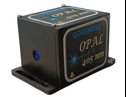
  1. High-Precision Compact Diode Laser: Recently, a National Quantum Mission (NQM)–supported startup, Prenishq Pvt. Ltd. (an Indian Institute of Technology Delhi spin-off), developed India’s first indigenous high-precision compact diode laser for quantum technologies.
  • About High-Precision Compact Diode Laser: The laser is a major milestone for quantum-encrypted communication and quantum computing in India.
  • Offers exceptional beam quality, superior stability, long-term reliability, and integrates with diverse scientific/industrial systems.
  • Covers a wide wavelength range from ultraviolet to near-infrared, enabling multiple quantum applications.
  • Expected to benefit banking and financial sectors by enabling quantum-safe transactions and secure data protection.
  • Supports photonic quantum computers for complex tasks like drug discovery and chemical process analysis.
  • Features include integrated driver electronics, temperature-controlled operation, low power consumption, compact build, and plug-and-play usability.
  • Supports both free-space and fiber-coupled outputs for easy integration into labs.
  • Enhances India’s capability in indigenous quantum-grade instrumentation and quantum optical research.
  • Stands out for low cost of ownership, minimal maintenance, and assured domestic availability.
  1. Patent in India: Recently, India became the world’s 6th largest patent filer, registering over 64,000 patents, with more than 55% filed by Indian residents.
  • Key Highlights: Marks a major shift from earlier dependence on foreign institutions for research and mentorship.
  • Reflects India’s strengthening domestic innovation ecosystem and rising global competitiveness.
  • Supported by sustained policy intervention, research incentives, and a strong S&T environment under PM Modi.
  • India has risen from Rank 81 to Rank 38 in the Global Innovation Index.
  • Major scientific achievements cited: Chandrayaan-3, India’s first DNA vaccine, indigenous antibiotics, and successful gene therapy trials.
  • Events like INNOTECH’25 showcase India’s growing private sector and start-up participation in deep tech.
  • Government-backed conclaves help connect industry, researchers, VCs, and young innovators for faster commercialization.
  • Entrepreneurship and applied sciences now offer better opportunities than traditional government jobs.
  • Schemes such as Mudra, PM-SVANidhi, and PM-Vishwakarma provide funding, mentorship, and skills to youth.
  • NEP 2020 promotes flexibility, multidisciplinary learning, and aptitude-based education pathways.
  1. Cyber Exercise: Recently, India hosted a three-day Strategic Cyber Exercise for five Central Asian countries: Kazakhstan, Kyrgyz Republic, Tajikistan, Turkmenistan, and Uzbekistan.
  • About Cyber Exercise: Organized by National Security Council Secretariat in partnership with MEA and NCIIPC.
  • Exercise fulfilled a major commitment under the India–Central Asia Meeting of Security Councils/NSAs.
  • Participants included technical teams from national CERTs, cybersecurity agencies, and security institutions of all five countries.
  • Focus: building advanced cyber threat hunting and incident response capabilities for protecting critical infrastructure.
  • Combined intensive technical skill-building with strategic policy-level decision-making
  • Heads of cybersecurity agencies held discussions on long-term strategic cyber cooperation.
  • Marks a milestone in moving from isolated national cyber defences to a coordinated and resilient regional cyber ecosystem jointly shaped by India and Central Asia.
  1. Wild Poliovirus: Recently, Germany confirmed the presence of wild poliovirus in a sewage sample from Hamburg, marking Europe’s first detection of the virus in 15 years, according to health authorities.
  • About Polio: A viral disease that mainly affects children under five; around 1 in 200 infections leads to irreversible paralysis, and up to 10% of paralysed patients die.
  • There are two forms of polio: Wild polio – now endemic only in Afghanistan and Pakistan, causing tens of cases annually.
  • Vaccine-derived polio – rare but causes several hundred cases globally, linked to use of live oral polio vaccine.
  • The strain found in Germany is genetically linked to the Afghanistan strain.
  • Detection likely indicates importation of the virus, not local spread; no infections reported in Germany so far.
  • Germany’s high vaccination coverage means low risk to the public.
  • Many countries conduct sewage surveillance, and this detection signals the monitoring system is working well.
  • Wild polio has occasionally appeared in countries previously considered virus-free, such as Malawi and Mozambique in 2022, via importation.
  • Vaccine-derived polio detections in polio-free regions occur more frequently and have been reported in Europe and the U.S. in recent years.
  • Protection advice: ensure full vaccination (oral or injectable), especially for children or anyone unsure of their immunisation status.
  • Global eradication remains difficult; the Global Polio Eradication Initiative (GPEI) faces a 30% budget cut, complicating efforts.
  • Detection reinforces the message: “polio anywhere is a risk everywhere”, underscoring the need to complete eradication efforts.
  1. Rural Technology Action Group (RuTAG): Recently, the Principal Scientific Adviser (PSA) to the Government of India chaired the second annual review meeting of the Rural Technology Action Group (RuTAG) 2.0 initiative.
  • About RuTAG Initiative: Launched in 2004 by the Office of the Principal Scientific Adviser (OPSA).
  • It was created as a platform to deliver advanced Science & Technology support to rural regions.
  • The initiative focuses on demand-driven technological interventions, addressing grassroots needs, closing technology gaps, upgrading tools and processes, and offering hands-on training and demonstrations.
  • Objectives:  Stakeholder Collaboration: Work with NGOs, SHGs, community groups, and start-ups to identify technology requirements in different sectors.
  • Demand-Based Solutions: Develop technologies aligned with socio-economic data and national/regional development priorities.
  • Prototype Validation: Test and validate prototypes and assess their scalability and commercialization prospects.
  • Commercialization: Bring validated technologies to market for national and global use.


UPSC QEP 2026 Batch 5 - English
Buy now View Details
Submit Your Details to Learn More
I agree to give my consent to receive updates through SMS/Email & WhatsApp*.

NEEV GS + CSAT Foundation 2026/27
Buy now View Details


Join theIAShub’s Mains Answer Writing Program

Refine your answer writing skills and elevate your UPSC preparation with personalized support and expert feedback.

Fill out the form to get started with the program or any other enquiries !

I agree to give my consent to receive updates through SMS/Email & WhatsApp*.

Best IAS Coaching In Delhi, UPSC Online & Offline Classes by IAShub

Are you dreaming of becoming an IAS officer? Then, IAShub can be your best guide. It is one of the Best IAS Coaching in Delhi. Many students who want to clear the UPSC exam join IAShub for learning. The institute gives both online and offline classes. Their teachers are experienced and helpful. They easily explain every topic. Students also get notes, tests, and tips to do well in the exam.

UPSC Online Classes by IAShub

IAShub is in Delhi and is trusted by many UPSC students. It offers coaching for every part of the UPSC exam – Prelims, Mains, and Interview. The classes are simple and easy to understand. The teachers are experts and guide students in the right way. IAShub is also known for its helpful notes, test series, and answer-writing practice. IAShub is the best coaching in Delhi and also gives UPSC Online Classes. This helps students from any place in India to learn. The online classes are live and also recorded. So, students can watch them anytime. These classes cover the full UPSC syllabus.

Key Offerings Provided by IAShub

Here are some important services provided by IAShub:

  • UPSC Prelims: IAShub teaches for Prelims with a focus on basics. It also gives daily current affairs and monthly magazines.
  • Classroom Courses: IAShub has classroom learning for students in Delhi. The environment is good and peaceful for study.
  • Live Classes: Students who live far can join live UPSC online classes. These classes are just like real classes.
  • QEP for Mains: The Quality Enrichment Program (QEP) is special for Mains preparation. It helps students write better and faster.
  • Answer Writing: Regular answer writing practice is given. Teachers also check answers and give tips to improve.
  • Free Resource: IAShub gives free notes by toppers and helpful Main Booster material.
  • Test Series: Test series are available for every subject. These help students know their weak points and improve.
  • Interview Guidance Session: IAShub also gives interview practice sessions with experts. These help students feel confident.

UPSC Exam Overview

The UPSC Civil Services Exam has three parts:

  • Prelims: It has two papers: General Studies and CSAT.
  • Mains: It has nine papers, including essays and optional subjects.
  • Interview: It tests the personality and confidence of the student.

This exam is tough, but with the right guidance, it becomes easy to manage. Students must study smart and stay regular.

How IAShub Helps in the UPSC Journey

IAShub supports students from the beginning to the end. It gives the right books, tests, and notes. The classes are easy to follow, and the teachers are always ready to help. Students get personal doubt sessions too. The test series and answer checking help students learn where they need to do better. Also, free study materials save time and money.
IAShub also guides students during the final stage – the interview. Experts take mock interviews and give useful tips. This full support makes IAShub one of the best IAS coaching in Delhi.

Best IAS Coaching In Delhi FAQs

Yes, IAShub offers live and recorded online classes. Students can attend from any part of India.

Classes are available in both English and Hindi, so students can choose the language they are comfortable with.

The classroom centre is located in Delhi. Students can visit and join offline batches there.

IAShub gives interview guidance sessions to help students prepare for the final round of UPSC.