


 theIASHub | 10 Oct, 2025


1. National Red List Roadmap and Vision: Recently, India unveiled its National Red List Roadmap and Vision 2025–2030 at the IUCN World Conservation Congress 2025.
Key Highlights: Launched by Union Minister of State for Environment, Forest and Climate Change, at the Asia Pavilion.
Aim: To create a comprehensive, science-based framework for assessing and conserving India’s flora and fauna.
The roadmap will guide India’s conservation strategy through 2030 and serve as a foundation for future biodiversity policies.
Key Features: Developed by the Zoological Survey of India (ZSI) and the Botanical Survey of India (BSI) in collaboration with IUCN India and the Centre for Species Survival.
Promotes a nationally coordinated and inclusive approach to biodiversity assessment.
Aims to prepare National Red Data Books for flora and fauna by 2030.
India’s Biodiversity Significance: India is among the 17 megadiverse countries in the world.
Home to 4 global biodiversity hotspots: The Himalayas, Western Ghats, Indo-Burma & Sundaland
Occupies 4% of the world’s land area but harbours nearly 8% of global flora and 7.5% of global fauna.
2. Saksham: Recently, the Indian Army began inducting the indigenously developed ‘Saksham’ Counter-Unmanned Aerial System (CUAS) Grid System.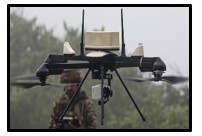
About Saksham: The system is designed to detect, track, identify, and neutralise hostile drones and unmanned aerial systems (UAS) in real time.
o Purpose: Ensures comprehensive airspace security across the Tactical Battlefield Space, including the Air Littoral (airspace up to 3,000 metres / 10,000 feet above ground level).
Developed in response to drone-related vulnerabilities revealed during Operation Sindoor.
Expands the Army’s operational domain from the Tactical Battle Area (TBA) to the broader Tactical Battlefield Space (TBS) — covering both land and low-altitude air zones.
Developed by: Indian Army in collaboration with Bharat Electronics Limited (BEL), Ghaziabad.
Full form: Saksham – Situational Awareness for Kinetic Soft and Hard Kill Assets Management.
Operates on the secure Army Data Network (ADN).
3. Paramyrothecium Strychni: Recently, scientists identified a new phytopathogenic fungus species named Paramyrothecium strychni in Kerala, India.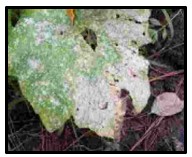
About Paramyrothecium strychni: Endemic Location: Western Ghats, India
Local Names: Kanjiram or Modirakanjiram
Medicinal Importance: Contains alkaloids with analgesic, anti-inflammatory, and antimicrobial
Traditional Uses: Treats fever, digestive disorders, rheumatism, and nervous ailments.
Conservation Status: Vulnerable (VU) under the IUCN Red List.
Major Threats: Habitat degradation and overexploitation.
This newly discovered fungus is associated with leaf spot and blight disease affecting Strychnos dalzellii (Family: Loganiaceae), an endemic medicinal plant of the Western Ghats.
The discovery is supported by detailed morpho-cultural characteristics and multigene molecular phylogenetic analysis, confirming it as a distinct species.
According to the Index Fungorum, there are 25 recognized species of Paramyrothecium worldwide, the majority of which are plant pathogens responsible for leaf spot and blight infections across diverse plant species.
4. DRAVYA: Recently, the Ministry of Ayush launched an innovative digital platform called DRAVYA (Digitised Retrieval Application for Versatile Yardstick of Ayush).
About DRAVYA: An AI-ready digital portal designed to catalogue and unify research on Ayush medicinal substances.
Developed by the Central Council for Research in Ayurvedic Sciences (CCRAS).
Aim: To create a comprehensive, evidence-based digital repository for Ayush substances, integrating classical knowledge with modern scientific data.
Marks a key step toward digital transformation and evidence-based integration in traditional medicine.
Designed to support cross-disciplinary innovation, global research collaboration, and policy development
Key Features: Equipped for future integration with artificial intelligence tools for analysis and data mining.
Will interlink with the Ayush Grid and other Ministry initiatives related to drug policy and medicinal substances.
Allows researchers, practitioners, and students to access verified, dynamic information.
5. Breathable Art: Recently, the Ministry of Environment, Forest and Climate Change (MoEFCC) inaugurated ‘Breathable Art’, a living art installation made of air-purifying plants to promote awareness about air quality, sustainability, and clean urban living.
Under: ‘Breath of Change – Clean Air, Blue Skies’ campaign
o Key Features: Constructed with air-purifying plant species such as Areca Palm, Money Plant, Spider Plant, Peace Lily, and Bamboo Palm, known to absorb pollutants like formaldehyde and benzene.
Equipped with QR codes that provide visitors with information on air-purifying plants and sustainable practices.
Serves as an educational and engagement platform for students, schools, RWAs, and volunteers.
Designed as a strategic urban intervention in pollution hotspots to enhance air quality and urban aesthetics
6. National Agriculture Market (e-NAM): Recently, the Government of India expanded the National Agriculture Market (e-NAM) by adding 9 new commodities, raising the total number of tradable items to 247.
Objective: To promote uniformity in agricultural marketing, eliminate information asymmetry between buyers and sellers, and ensure transparent price discovery based on demand, supply, and quality.
o Key Features: Digital Marketplace: Links APMCs, private markets, and buyers across India on a single online platform.
Price Transparency: Ensures real-time electronic auctioning and fair price determination for farmers.
Quality Assurance: Incorporates assaying systems to enable value-based bidding and quality-linked pricing.
Ease of Transaction: Supports online payments, warehouse-based trading, and a mobile app for easy access to market data.
Inclusive Platform: Benefits farmers, traders, processors, exporters, and mandis, promoting seamless trading and integration.
7. Bridgeoporus Kanadii: Recently, researchers discovered a new fungus species, Bridgeoporus kanadii, in the forests of Arunachal Pradesh, northeast India.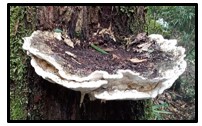
About Bridgeoporus Kanadii: This remarkable fungus is noted for its enormous fruiting bodies, some measuring over three meters in radius—large enough to support the weight of a person.
The species has been named in honour of Indian mycologist Dr. Kanad Das, recognizing his significant contributions to the study of Indian macrofungi.
The only other known species in this genus, Bridgeoporus nobilissimus, occurs in North America and produces fruiting bodies up to 5 meters, making B. kanadii roughly twice as large.
Ecologically, Bridgeoporus fungi are vital to forest regeneration, as they decompose dead wood and recycle nutrients back into the ecosystem.
Most kanadii specimens were observed growing on dead fir trees in the region.
8. Lightweight Multirole Missile (LMM): Recently, India and the United Kingdom finalized a £350-million ($468 million) deal for supplying Lightweight Multirole Missile (LMM) systems to the Indian Army.
It is designed to deliver accuracy, versatility, and low collateral damage in air, land, and naval operations.
The LMM provides effective engagement against a wide range of modern battlefield threats.
o Key Specifications: Weight: 13 kg (super lightweight)
Operational Range: Over 6 km
Speed: Greater than Mach 1.5
Guidance System: Laser beam riding technology
Warhead: Triple-effect warhead with a proximity fuse
Key Features: Laser beam riding system ensures accurate targeting with minimal risk to surroundings.
Can target light armoured vehicles, wheeled or tracked platforms, and low-flying aerial threats.
Suitable for air defence, land-based combat, and naval protection missions.
Optimised for effectiveness across diverse and challenging combat environments.
9. Surrogacy Act: Recently, the Supreme Court of India ruled that the Surrogacy Act’s age limits won’t apply to couples who started the process before the law began.
Key Highlights: The Court clarified that the Act cannot be applied retrospectively to couples who had already completed embryo freezing under earlier legal conditions.
The right to surrogacy for these couples was established at the time of embryo freezing, which took place before the introduction of any age limits.
The judgment reinforces that reproductive autonomy and parenthood are fundamental rights under Article 21 of the Constitution.
Legal Context: Under Section 4(iii)(c)(I) of the Surrogacy Regulation Act, 2021, surrogacy is permitted only if:
The woman is between 23–50 years
The man is between 26–55 years
The Court said that once the embryo is frozen, the couple’s intention to pursue surrogacy is crystallised.
The state cannot retrospectively impose restrictions that invalidate lawful actions taken under previous rules.



Refine your answer writing skills and elevate your UPSC preparation with personalized support and expert feedback.
Fill out the form to get started with the program or any other enquiries !




Are you dreaming of becoming an IAS officer? Then, IAShub can be your best guide. It is one of the Best IAS Coaching in Delhi. Many students who want to clear the UPSC exam join IAShub for learning. The institute gives both online and offline classes. Their teachers are experienced and helpful. They easily explain every topic. Students also get notes, tests, and tips to do well in the exam.
IAShub is in Delhi and is trusted by many UPSC students. It offers coaching for every part of the UPSC exam – Prelims, Mains, and Interview. The classes are simple and easy to understand. The teachers are experts and guide students in the right way. IAShub is also known for its helpful notes, test series, and answer-writing practice. IAShub is the best coaching in Delhi and also gives UPSC Online Classes. This helps students from any place in India to learn. The online classes are live and also recorded. So, students can watch them anytime. These classes cover the full UPSC syllabus.
Here are some important services provided by IAShub:
The UPSC Civil Services Exam has three parts:
This exam is tough, but with the right guidance, it becomes easy to manage. Students must study smart and stay regular.
IAShub supports students from the beginning to the end. It gives the right books, tests, and notes. The classes are easy to follow, and the teachers are always ready to help. Students get personal doubt sessions too. The test series and answer checking help students learn where they need to do better. Also, free study materials save time and money.
IAShub also guides students during the final stage – the interview. Experts take mock interviews and give useful tips. This full support makes IAShub one of the best IAS coaching in Delhi.
 Detailed Solutions & Explanations
Improve Your Answer Writing & Strategy
Detailed Solutions & Explanations
Improve Your Answer Writing & Strategy

