


 theIASHub | 04 Dec, 2025


1. India’s First All-Electric Green Tug: Recently, the Union Minister for Ports, Shipping and Waterways inaugurated the steel-cutting ceremony for India’s first all-electric green tug, marking a new milestone in the country’s maritime decarbonisation efforts.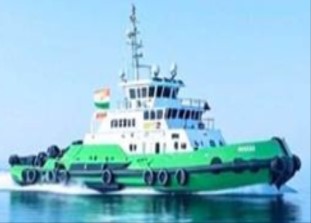
About India’s First All-Electric Green Tug: The tug will operate with zero emissions, silent propulsion and optimised energy efficiency.
2. National Forensic Infrastructure Enhancement Scheme (NFIES): Recently, the Union Cabinet approved the National Forensic Infrastructure Enhancement Scheme (NFIES), aimed at strengthening India’s forensic capacity through modern infrastructure and skilled manpower.
About NFIES: To strengthen India’s forensic ecosystem by expanding infrastructure and developing highly trained professionals.
A Central Sector Scheme under the Ministry of Home Affairs (MHA).
Approved in 2024. Implementation period: 2024–25 to 2028–29.
Objectives: Establish a robust network of forensic labs across India.
Prepare world-class forensic professionals through expanded training institutions.
Ensure scientific, fast and reliable examination of evidence.
NFIES Is Needed: New laws mandate forensic investigation for offences punishable with seven years or more.
Expanded legal requirements have increased the burden on FSLs.
Significant manpower gaps in Forensic Science Laboratories across states.
Case backlogs remain high due to limited infrastructure and personnel.
Strategic Goal: Strengthen India’s criminal justice system and push conviction rates above 90%.
3. Acid Attack Survivors: Recently, the Supreme Court highlighted delays in compensation and free treatment for acid attack survivors, directing the National Legal Services Authority (NALSA) to provide State-wise data.
Key Highlights: Since 2013–15, States are required to pay ₹3 lakh compensation, including ₹1 lakh within 15 days and the remaining within two months.
NGO Acid Survivors Saahas Foundation informed the court that victims often receive only the initial ₹1 lakh. States like Maharashtra and Uttar Pradesh reported almost no payments for reconstructive surgeries.
Private hospitals must provide free critical care, including medicines, bed, food and emergency treatment. They may refer victims to specialised facilities, but only after providing stabilising care. E.g.: Hospitals can be held criminally liable for refusal.
Ground Reality Presented to Bench: Counsel for the NGO reported hospitals demanding full payment before treatment.
NALSA directed to gather detailed information from all State Legal Services Authorities on compensation disbursed.
Court instructed State Chief Secretaries to ensure timely release of funds to legal services authorities for disbursement to victims.
4. RBI Integrated Ombudsman Scheme (RB-IOS): Recently, the Reserve Bank of India’s latest Annual Report noted a 55% rise in complaints under the RBI Integrated Ombudsman Scheme (RB-IOS) in FY25, indicating growing public reliance on the central bank’s grievance-redress system.
About RB-IOS: Launched on November 12, 2021. Merged three earlier schemes: Banking Ombudsman Scheme, 2006; Ombudsman Scheme for NBFCs, 2018 and Ombudsman Scheme for Digital Transactions, 2019
Scheme is jurisdiction-neutral, removing location-based barriers.
g.: Customers can file complaints irrespective of branch or regional jurisdiction.
Objective: To offer a speedy, cost-effective and expeditious alternate grievance redress mechanism for customers of regulated entities (REs). E.g.: Fair and timely resolution without litigation.
Key Features: “Deficiency in service” is the main basis for complaints, excluding specified exceptions.
Applies to all commercial banks, NBFCs, RRBs, payment system operators, major UCBs (≥ ₹50 crore deposits) and credit bureaus.
A central RBI centre in Chandigarh handles complaints in any language via physical or email submission.
Ombudsman may award up to ₹20 lakh for losses plus ₹1 lakh for harassment, mental anguish, time loss or related expenses.
5. INS Aridhaman: Recently, the Indian Navy prepared to induct its third nuclear-powered ballistic missile submarine (SSBN), INS Aridhaman, marking a significant boost to India’s sea-based nuclear deterrence and underwater strategic capabilities.
About INS Aridhaman: India’s third indigenously developed nuclear-powered ballistic missile submarine.
It is the second submarine in the Arihant class.
Constructed under the Advanced Technology Vessel (ATV) Project at the Ship Building Centre, Visakhapatnam.
Key Features: Displacement Capacity: 6,000 tonnes surfaced, 7,000 tonnes submerged
Powered by an 83 MW pressurised water reactor built by Bhabha Atomic Research Centre (BARC).
Equipped with four vertical launch tubes.
Fitted with anechoic tiles for noise reduction.
Enhanced detection capabilities and underwater situational awareness.
Ballistic Missile Options: K-15 Sagarika missiles (range 750 km) — up to 24 can be carried.
K-4 intermediate-range missiles (range 3,500 km) for long-range nuclear strikes.
6. Bitra Island: Recently, the Indian Navy said its new detachment on Bitra Island is nearly complete, boosting surveillance and security in the Arabian Sea.
About Bitra Island: Situated in the northern Lakshadweep region in the Arabian Sea.
Smallest inhabited island in the Union Territory.
Despite its tiny land area, Bitra has a 61 sq. km lagoon.
Home to a shrine dedicated to Malik Mulla, an Arab saint said to be buried here.
A pilgrimage site for residents of neighbouring islands.
As per 2011 Census, the population stands at 271.
Once covered in dense shrubs and a major seabird breeding habitat.
Bird populations declined in the 19th century due to human activity.
Climate of Bitra Island: Similar to Kerala’s weather patterns.
Temperature ranges 25°C to 35°C.
Geopolitical Significance: Bitra holds high strategic value due to its location in the Arabian Sea.
New Defence Presence: Will become the third island in Lakshadweep with a defence establishment.
Other naval bases: INS Dweeprakshak, Kavaratti and INS Jatayu, Minicoy.
7. Child Marriages: Recently, Parliamentary data showed a sharp 47% rise in child marriages in Madhya Pradesh, with 538 cases reported in 2025 — the highest in five years.
About Child Marriage Hotspot: A ‘hotspot’ refers to a persistent cluster of districts reporting disproportionately high child marriages.
Concentrated mainly in Bundelkhand, central MP, Gwalior–Chambal region, and tribal belts.
Statewide Increase: Cases rose from 366 (2020) to 538 (2025) — a 47% jump despite multiple awareness and prevention campaigns.
Damoh alone accounts for 21% of all cases in 2025. Cases jumped from 33 (2024) to 115 (2025).
Most cases come from Bundelkhand, tribal belts and economically backward pockets.
Implications of Rising Child Marriages: Leads to loss of education, poorer health outcomes and restricted economic opportunities.
Higher chances of early pregnancies, maternal mortality and domestic violence.
8. Opium Poppy Cultivation: Recently, a new UNODC report showed that Myanmar’s opium poppy cultivation has increased by 17%, reaching 53,100 hectares — the highest level in a decade.
About Opium Poppy Cultivation: Opium poppy (Papaver somniferum) is cultivated for its latex-rich capsules, which produce opium and its derivatives.
Its alkaloids feed both pharmaceutical industries and illegal drug markets.
Opium cultivation became a government-controlled monopoly under the East India Company and later British rule.
After 1950, India placed all opium-related activities under Central Government control.
Regulated today through the NDPS Act, 1985.
Characteristics: Thrives in cool, dry climates with low humidity and well-drained soil.
Green capsules are lanced to release a milky latex containing morphine, codeine and other alkaloids.
Annual winter crop maturing in around 120 days.
Uses of Opium: Used across Ayurveda, Unani and Homoeopathy. E.g.: Essential ingredient for controlled pharmaceutical production.
Poppy seeds consumed as food and used for edible oil. E.g.: Widely used in Indian cuisine.
9. Department of Animal Husbandry and Dairying: Recently, the Department of Animal Husbandry and Dairying (DAHD) expanded multiple national programmes to enhance milk productivity, strengthen genetic improvement in bovines, and build climate resilience across India’s dairy sector.
Key Initiatives:
Refine your answer writing skills and elevate your UPSC preparation with personalized support and expert feedback.
Fill out the form to get started with the program or any other enquiries !
Are you dreaming of becoming an IAS officer? Then, IAShub can be your best guide. It is one of the Best IAS Coaching in Delhi. Many students who want to clear the UPSC exam join IAShub for learning. The institute gives both online and offline classes. Their teachers are experienced and helpful. They easily explain every topic. Students also get notes, tests, and tips to do well in the exam.
IAShub is in Delhi and is trusted by many UPSC students. It offers coaching for every part of the UPSC exam – Prelims, Mains, and Interview. The classes are simple and easy to understand. The teachers are experts and guide students in the right way. IAShub is also known for its helpful notes, test series, and answer-writing practice. IAShub is the best coaching in Delhi and also gives UPSC Online Classes. This helps students from any place in India to learn. The online classes are live and also recorded. So, students can watch them anytime. These classes cover the full UPSC syllabus.
Here are some important services provided by IAShub:
The UPSC Civil Services Exam has three parts:
This exam is tough, but with the right guidance, it becomes easy to manage. Students must study smart and stay regular.
IAShub supports students from the beginning to the end. It gives the right books, tests, and notes. The classes are easy to follow, and the teachers are always ready to help. Students get personal doubt sessions too. The test series and answer checking help students learn where they need to do better. Also, free study materials save time and money.
IAShub also guides students during the final stage – the interview. Experts take mock interviews and give useful tips. This full support makes IAShub one of the best IAS coaching in Delhi.
 Detailed Solutions & Explanations
Improve Your Answer Writing & Strategy
Detailed Solutions & Explanations
Improve Your Answer Writing & Strategy

