18th September 2025
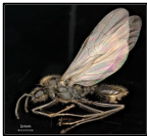
1. Messor Ibericus: Recently, a groundbreaking study published in
Nature revealed the unique reproductive strategy of the Mediterranean harvester ant
Messor ibericus.
- Key Findings: Queens of Messor ibericus can produce not only their own species but also males of another species, Messor structor.
- Unusual reproduction: This discovery overturns the standard biological rule that offspring belong to the same species as the parents.
- Hybrid workers: All Messor ibericus workers were found to be hybrids, carrying about half of their DNA from Messor structor.
- Puzzle: Colonies existed in regions without Messor structor males, raising the question of how hybrid workers were being produced.
- DNA evidence: Genetic analysis showed Messor structor drones inside Messor ibericus colonies had Messor ibericus mitochondrial DNA, meaning their mothers were Messor ibericus
- Direct confirmation: When isolated, Messor ibericus queens produced eggs, ~10% of which developed into pure Messor structor
- Mechanism: Scientists propose that queens clone Messor structor genetic material from stored sperm in the spermatheca, producing Messor structor males with Messor ibericus
2. AI in National Electricity Grid: Recently, India announced plans to integrate
artificial intelligence (AI) into its national electricity grid, the largest unified power grid in the world. The move aims to enable real-time risk detection, fault prediction, cyber security, and market surveillance.
- Key Highlights: With renewable energy expected to exceed 500 GW before 2030, the grid’s growing complexity demands machine-speed decision-making.
- AI will shift operations from reactive post-fault analysis to predictive, pre-fault detection and correction.
- AI will process streaming data at 40-millisecond resolution to detect weak points and prevent cascading blackouts.
- Systems will trigger corrective actions or alerts within seconds, enhancing grid stability.
- AI will guard against malware, cyberattacks, and coordinated threats on SCADA systems.
- AI will monitor behavioural patterns of market participants to detect price manipulation, insider collusion, and cross-market risks.
- Government to introduce safeguards, explainable AI, human-in-the-loop oversight, escalation protocols.
- AI aims to transform India’s grid into a data-rich, intelligent system capable of self-diagnosis and self-correction in real time.
3. New Guidelines for EVM Ballot Papers: Recently, the Election Commission of India (ECI) issued
new guidelines for EVM ballot papers, introducing colour photographs of candidates instead of the black-and-white images used since 2015.
- Key Highlights: Aimed to reduce voter confusion, especially in constituencies where candidates have same or similar names.
- Serial numbers: Candidate serial numbers and NOTA option will be printed in the international form of Indian numerals for clarity.
- Font clarity: Candidate names will appear in the same font type, but with large font size (30, bold) to ensure easy readability.
- Paper specifications: EVM ballot papers will be printed on 70 GSM paper; for Assembly elections, pink-coloured paper with specified RGB values will be used.
4. India and Venezuela: Recently,
India and Venezuela agreed to launch pilot projects in agriculture, pharmaceuticals, and digital public infrastructure.
- Key Highlights: Training & AI: Venezuela expressed interest in training and capacity building in AI, planning to send technical personnel for courses in India.
- Agriculture focus: Parallel discussions between India’s Ambassador and Venezuela’s Agriculture Minister on cooperation in agriculture and livestock.
- Trade data: India–Venezuela bilateral trade in 2024–25 was $1.8 billion (India’s exports $216 million, imports $1.6 billion).
- Pharma exports: Pharmaceuticals are India’s major export, meeting ~40% of Venezuela’s annual requirement (~$110 million in 2024–25). India also supplies vaccines and medicines on grant for emergencies.
5. Japanese Encephalitis Virus: Recently, a study published in
Science Translational Medicine found that waning immunity against
Japanese encephalitis virus (JEV) can worsen dengue outcomes. The findings highlight the complex interactions between related
flaviviruses.
- Key Findings: Both JEV and dengue belong to the Orthoflavivirus genus; cross-reactivity between their antibodies influences outcomes.
- Conducted in Dharan, Nepal (2019–2023), where JE vaccination coverage is high but dengue exposure was historically low, allowing isolation of JEV’s effect on dengue.
- 546 dengue patients (ages 15–65), recruited early in illness across 3 outbreaks (2019, 2022, 2023).
- Chymase enzyme levels (validated marker of severe dengue) were significantly higher in patients with JEV immunity.
- Individuals with mid-range anti-JEV antibody titres (1:160) had 3x higher risk of dengue with warning signs or severe dengue compared to JEV-naïve patients.
- JE vaccination remains crucial but antibody levels decline after 5 years (only ~63% retain neutralising antibodies).
- Especially relevant for Asia, including India, where dengue is spreading rapidly due to climate change (rising temperatures, extended monsoons).
- Reinforces chymase as a useful biomarker for predicting severe dengue progression.
6. Drone Training Hubs: Recently, the Indian Army announced it will establish
drone training hubs at 19 premier training academies nationwide to integrate drones as a standard weapon system.
- Key Highlights: Drone training to become part of the standard curriculum for all ranks, following Operation Sindoor and the recognition of drones as standard weapon systems.
- Procurement plan: Nearly 1,000 drones (nano, micro, small, medium, First-Person View (FPVs)) and ~600 simulators to be acquired under emergency revenue procurement.
- Facilities to include 24×7 outdoor manoeuvre ranges, indoor training areas, simulators, and certification setups.
- Drone categories & uses: Nano drones – basic manoeuvring, hand-eye coordination.
- Micro drones – remote pilot training, basic surveillance.
- Small drones – day/night surveillance, mission planning.
- Medium drones – ISR (intelligence, surveillance, reconnaissance), mission planning, target grid corrections.
- FPVs – for manoeuvring, surveillance, kamikaze skills.
7. Frontier 50 Initiative: Recently,
NITI Aayog launched the
Frontier 50 Initiative under the
Frontier Tech Hub, to boost grassroots adoption of advanced technologies and expand their impact.
- About Frontier 50 Initiative: It will support 50 Aspirational Districts/Blocks in selecting use cases from the Frontier Tech Repository and deploying frontier technologies to speed up service saturation under ADP/ABP themes.
- The Frontier Tech Repository highlights 200+ impact stories across Agriculture, Healthcare, Education, and National Security, showcasing how states and startups are leveraging technology to transform livelihoods.
- About NITI Frontier Tech Hub: Created to anticipate major technology shifts and ensure India’s preparedness for inclusive growth, supply chain resilience, and national security.
- Brings together experts from government, industry, and academia to assess and guide the adoption of frontier technologies like AI, quantum computing, and biotechnology.
- Works on evaluating opportunities and risks of these technologies, and developing strategies to harness them for Viksit Bharat@2047.
8. Hand, Foot, and Mouth Disease: Recently, a surge in
Hand, Foot, and Mouth Disease (HFMD) cases among children in Delhi and neighbouring Haryana has led health experts and schools to issue advisories.
- About HFMD: A highly contagious viral illness, named after the blister-like rash on the hands, feet, and painful sores in the mouth.
- The rash can also appear on the chest, back, arms, legs, genitals, and buttocks.
- Mostly affects infants and children under 5 years, though adults can also contract it (rare).
- Spreads easily in daycare centres and schools.
- Not related to foot-and-mouth disease in animals (different viruses; no cross-infection).
- Spread through unwashed hands, contact with feces, saliva, nasal mucus, or blister fluid.
- Symptoms: Fever, sore throat, painful mouth sores and rash on hands, feet (sometimes elsewhere on the body)
- Treatment: No specific cure or vaccine Usually resolves on its own in 7–10 days with little or no medical treatment.
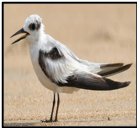
9. Saunders’s Tern : Recently,
Saunders’s Tern was observed at the Adyar Estuary in Chennai, marking a noteworthy sighting.
- About Saunders’s Tern (Sternula saundersi): A small, ground-nesting marine bird belonging to the family Laridae.
- Found sparsely along the north-western Indian Ocean
- Geographical Range: Breeds in the Red Sea and Persian Gulf, extending to islands between India and Sri Lanka.
- Winters mainly in the Seychelles, Maldives, and Cocos (Keeling) Islands.
- Habitat: Inhabits coastal areas such as estuaries, shallow tropical and subtropical inshore waters, tidal lagoons, and harbours.
- Nests on the ground, up to 2 km inland, usually on uncovered sandy sites, shingles, or dried mud.
- Diet: Feeds on small fish, crustaceans, and mollusks.
- Breeding Season: Occurs between March and June.
- Conservation Status: Listed as Least Concern on the IUCN Red List.
10. Operation Weed Out : Recently, the Directorate of Revenue Intelligence (DRI) seized 108.67 kg of hydroponic cannabis within 20 days as part of its nationwide anti-drug campaign,
Operation Weed Out.
- About Operation Weed Out: A nationwide crackdown against trafficking syndicates smuggling hydroponic (high-potency) cannabis into India.
- Launched by: DRI under the Central Board of Indirect Taxes and Customs (CBIC), Ministry of Finance.
- Objectives: Prevent illegal inflow of hydroponic cannabis from Southeast Asia.
- Disrupt drug syndicates and break supply chains.
- Support the government’s Nasha Mukt Bharat Abhiyan (Drug-Free India).
- Key Features: Pan-India reach: Simultaneous action at airports and cities.
- Multi-agency coordination: Collaboration with customs, state police, and airport security.
- Financial investigations: Tracking drug money, financiers, and masterminds.
- Strict enforcement: Arrests and prosecution under the NDPS Act, 1985.
- Significance: Prevents drug abuse, especially among the youth.
- Disrupts international narco-networks exploiting India.
- Cuts off illegal proceeds fueling organised crime.


 theIASHub | 18 Sep, 2025









 Detailed Solutions & Explanations

