2 Minute Series_16 September 2025

THEIASHUB
Get an Instant Call Back from Our Expert Mentors Now!
+91

16th September 2025


  1. Eco-Friendly Battery: Recently, Indian researchers developed a foldable, touch-safe, and eco-friendly battery that overcomes the overheating and explosion risks of conventional lithium-ion batteries.
  • Key Highlights: Unlike lithium-ion batteries (prone to overheating and explosion), this battery is safe to touch and foldable like paper.
  • Key materials used: Aluminum (abundant, cost-effective, eco-friendly)
    - Water-based electrolyte (safer, sustainable)
    - Cathode: Copper hexacyanoferrate (CuHCFe) with pre-filled aluminum ions
    - Anode: Molybdenum trioxide (MoO₃)
  • Performance: Retains 77% capacity after 150 charge–discharge cycles
    - Highly flexible – works even when bent or folded completely in half
    - Demonstrated by powering an LCD display under extreme bending
  • Benefits: Safer (no explosion risk)
    - Cheaper (aluminum-based, abundant materials)
    - Eco-friendly (less environmental hazard compared to lithium-ion)
    - Durable and reliable for long-term daily use 
  1. Annual Report on Registration of Births and Deaths: Recently, the national capital witnessed a decline in both the sex ratio at birth and the birth rate in 2024, according to the Annual Report on Registration of Births and Deaths.
  • Key Highlights: Sex ratio at birth in Delhi fell from 922 females per 1,000 males in 2023 to 920 in 2024 (933 in 2020).
  • A 1% dip in sex ratio at birth equals nearly 1,800 fewer females, according to experts.
  • Birth rate declined to 14 per 1,000 population in 2024, down from 66 in 2023.
  • Death rate increased to 37 per 1,000 population in 2024, up from 6.16 in 2023.
  • Out of total births, 09% (2,94,464) were institutional and 3.91% (11,995) were domiciliary.
  • Mother’s age at delivery: 25–29 years: 36.98% (highest)
    - 20–24 years: 27.11%
    - 30–34 years: 24.57%
    - 19 years or less: 2.57%


  1. International Electrotechnical Commission: Recently, India inaugurated the 89th International Electrotechnical Commission (IEC) General Meeting in New Delhi, marking a milestone in global standardisation efforts.
  • Key Highlights: India becomes the 13th country to issue the OIML(International Organization of Legal Metrology) pattern approval certificate, a milestone in legal metrology.
  • Inflation at lowest in 11 years, monitored through 474 price monitoring centres
  • Upcoming project to disseminate precise Indian Standard Time in collaboration with NPL and ISRO, from 5 sites across India.
  • Bureau of Indian Standards (BIS) achievements: Nearly 24,000 standards
    - Certification coverage expanded from 106 products (2014) to 769 products under 186 QCOs (2025).
    - HUID-based hallmarking (gold) since 2021: Over 48 crore articles hallmarked, centres increased from 285 (2014) to 1,600 (2025).
    - Silver jewellery hallmarking also introduced.
    - Laboratory network expanded from 81 labs (2014–15) to 382 (2025); empanelled labs from 62 to 287.
    - Outreach in 600+ districts to spread awareness of quality standards.
  • India’s manufacturing sector adopting Industry 4.0, automation, cyber-physical systems.
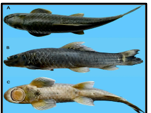
  1. Garra Nambashiensis: Recently, researchers identified a new species of freshwater fish, named Garra nambashiensis, in Manipur.
  • About Garra nambashiensis: Taxonomy: Belongs to the Labeonine family.
  • Location of discovery: Found in Taretlok, a tributary of the Chindwin River, near Nambashi Valley in Manipur’s Kamjong district.
  • Habitat: Collected from swift-flowing riffles with algae-covered gravel beds and a mixed substrate of cobbles, boulders, pebbles, sand, fine silt, and coarse sediments.
  • Distinct features: Quadrate-shaped proboscis
    - 7–8 acanthoid tubercles on the anterolateral margin
    - Black spots on the opercle
    - 8–11 dorsal-fin scales
    - Six black stripes running up to the hypural plate
  • Size: Typically measures 9–14 cm (90–140 mm). Locally known as Nutungnu.
  • Diversity of Garra in Northeast: Around 60 species recorded from the Eastern Himalayan and Indo-Burma regions.


  1. Global Plastic Outlook: Recently, the OECD’s ‘Global Plastic Outlook’ reported that plastic pollution is reaching alarming levels, with waste projected to triple by 2060 to 1.2 billion tonnes, posing a grave ecological threat.
  • Key Findings: Global plastic production doubled between 2000 and 2019, reaching 460 million tonnes, largely driven by packaging and fast consumption.
  • Poor Recycling: Only 9% of plastic waste is recycled, with the rest ending up in landfills, rivers, and open dumps.
  • Ocean Pollution: Around 11 million tonnes of plastic enter the oceans every year, endangering marine life and contaminating the food chain.
  • Microplastic Spread: Plastics break down into micro and nano particles, now found in air, water, soil, and even human blood and lungs.
  • Future Outlook: OECD warns that by 2060, global plastic waste could nearly triple to 1.2 billion tonnes, overwhelming waste management systems.


  1. Eustoma: Recently, Exotic Eustoma bloomed for the first time in Odisha in a polyhouse at Sanatanpali, Sambalpur district, developed by CSIR–NBRI. The National Botanical Research Institute (NBRI) is a research arm of the Council of Scientific and Industrial Research (CSIR).
  • About Eustoma (Lisianthus / Prairie Gentian): A herbaceous annual flower from the gentian family, also known as Lisianthus or Prairie Gentian.
  • Valued worldwide as a premium ornamental flower for its vibrant colors and long vase life.
  • Native to Mexico, the southern United States, the Caribbean, and northern South America.
  • Typically found in grasslands and disturbed habitats, thriving in warm climates.
  • Key Features: Large, funnel-shaped blooms in shades of pink, purple, white, and blue, popular in global floriculture.
    - Grows 30–90 cm tall
    - Diversity: Available in single, double, and rare bicolored varieties, widely used for weddings, décor, and exports.


  1. Manki-Munda System: Recently, Ho tribals in Jharkhand’s Kolhan region protested against alleged interference in their traditional Manki-Munda self-governance system following the removal of some Mundas.
  • About Manki-Munda System: A traditional, decentralised self-governance system practiced by the Ho community in Jharkhand’s Kolhan region. 
  • Based on a hierarchy of village heads (Mundas) and pidh heads (Mankis) who jointly handle dispute resolution and community affairs.
  • Origin & Historical Background: Pre-British Era: Entirely community-driven, with no taxation or outside authority.
  • Mankis and Mundas became intermediaries between the colonial state and the tribe, ensuring local autonomy while linking Kolhan to British India.
  • How the System Functions:
  • Munda: Village-level head, resolves disputes and manages local order.
  • Manki: Leader of a pidh (cluster of 8–15 villages), acts as an appellate authority if Munda-level mediation fails.
  • Decisions are based on customary laws, not statutory legislation, and the framework continues post-Independence.
  1. International Seabed Authority: Recently, India received a licence from the International Seabed Authority to explore polymetallic sulphides in the Indian Ocean.
  • India’s New Exploration Rights: Agreement signed in September 2025 with the Jamaica-based ISA.
  • Grants India rights to explore 3,00,000 sq. km in the Carlsberg Ridge.
  • Polymetallic sulphides here are rich in manganese, cobalt, nickel, and copper — critical for batteries, renewable energy, and high-tech industries.
  • India becomes the first country to secure exploration rights in this region, making it a pioneer in tapping its mineral wealth.
  • Strategic Importance: Ensures access to critical minerals for electric vehicles, renewable energy storage, and advanced electronics.
  • Strengthens India’s leverage in global supply chains amid resource competition.
  • Geopolitical angle: Reports of Chinese exploration in the region spurred India’s 2024 ISA application.
  • Serves both economic and national security goals, preventing rival claims.


  1. Grey Rhino Event: Recently, scientists described Kerala’s Wayanad landslide (July 2024) as a “grey rhino event” in the report Sliding Earth, Scattered Lives (Sept 2025). The report highlights how policymakers ignored years of warnings about ecological fragility and rainfall risks.
  • About Grey Rhino Event: A “grey rhino” refers to a highly probable, high-impact event that is visible and foreseeable, yet often ignored until it results in major damage.
  • Unlike “black swan events” (which are rare and unpredictable), grey rhinos highlight obvious but neglected risks.
  • Origin of the Concept: Coined by Michele Wucker, a U.S. policy analyst, in her 2016 book The Gray Rhino: How to Recognize and Act on the Obvious Dangers We Ignore.
  • Key Features: Predictable: Risks are already known and documented (e.g., ESA flagged Wayanad slopes as unstable).
    - Visible: Early warning signs are evident (e.g., extreme rainfall of over 600 mm in 48 hours was modeled as a trigger).
    - Neglected: Authorities may overlook them due to complacency, politics, or economic pressures.
    - High-Impact: When triggered, they cause widespread social, economic, and environmental consequences.
    - Actionable: Unlike black swans, grey rhinos allow for preventive measures if acted upon in time.
  • Significance: Risk Governance: Encourages policymakers to identify and prioritise foreseeable but under-addressed risks.
    - Disaster Preparedness: Promotes proactive action such as early evacuations, strict zoning laws, and eco-sensitive development.


UPSC QEP 2026 Batch 5 - English
Buy now View Details
Submit Your Details to Learn More
I agree to give my consent to receive updates through SMS/Email & WhatsApp*.

NEEV GS + CSAT Foundation 2026/27
Buy now View Details


Join theIAShub’s Mains Answer Writing Program

Refine your answer writing skills and elevate your UPSC preparation with personalized support and expert feedback.

Fill out the form to get started with the program or any other enquiries !

I agree to give my consent to receive updates through SMS/Email & WhatsApp*.

Best IAS Coaching In Delhi, UPSC Online & Offline Classes by IAShub

Are you dreaming of becoming an IAS officer? Then, IAShub can be your best guide. It is one of the Best IAS Coaching in Delhi. Many students who want to clear the UPSC exam join IAShub for learning. The institute gives both online and offline classes. Their teachers are experienced and helpful. They easily explain every topic. Students also get notes, tests, and tips to do well in the exam.

UPSC Online Classes by IAShub

IAShub is in Delhi and is trusted by many UPSC students. It offers coaching for every part of the UPSC exam – Prelims, Mains, and Interview. The classes are simple and easy to understand. The teachers are experts and guide students in the right way. IAShub is also known for its helpful notes, test series, and answer-writing practice. IAShub is the best coaching in Delhi and also gives UPSC Online Classes. This helps students from any place in India to learn. The online classes are live and also recorded. So, students can watch them anytime. These classes cover the full UPSC syllabus.

Key Offerings Provided by IAShub

Here are some important services provided by IAShub:

  • UPSC Prelims: IAShub teaches for Prelims with a focus on basics. It also gives daily current affairs and monthly magazines.
  • Classroom Courses: IAShub has classroom learning for students in Delhi. The environment is good and peaceful for study.
  • Live Classes: Students who live far can join live UPSC online classes. These classes are just like real classes.
  • QEP for Mains: The Quality Enrichment Program (QEP) is special for Mains preparation. It helps students write better and faster.
  • Answer Writing: Regular answer writing practice is given. Teachers also check answers and give tips to improve.
  • Free Resource: IAShub gives free notes by toppers and helpful Main Booster material.
  • Test Series: Test series are available for every subject. These help students know their weak points and improve.
  • Interview Guidance Session: IAShub also gives interview practice sessions with experts. These help students feel confident.

UPSC Exam Overview

The UPSC Civil Services Exam has three parts:

  • Prelims: It has two papers: General Studies and CSAT.
  • Mains: It has nine papers, including essays and optional subjects.
  • Interview: It tests the personality and confidence of the student.

This exam is tough, but with the right guidance, it becomes easy to manage. Students must study smart and stay regular.

How IAShub Helps in the UPSC Journey

IAShub supports students from the beginning to the end. It gives the right books, tests, and notes. The classes are easy to follow, and the teachers are always ready to help. Students get personal doubt sessions too. The test series and answer checking help students learn where they need to do better. Also, free study materials save time and money.
IAShub also guides students during the final stage – the interview. Experts take mock interviews and give useful tips. This full support makes IAShub one of the best IAS coaching in Delhi.

Best IAS Coaching In Delhi FAQs

Yes, IAShub offers live and recorded online classes. Students can attend from any part of India.

Classes are available in both English and Hindi, so students can choose the language they are comfortable with.

The classroom centre is located in Delhi. Students can visit and join offline batches there.

IAShub gives interview guidance sessions to help students prepare for the final round of UPSC.