13th September 2025
1. Translocation of Tigers: Recently, the Union Environment Ministry approved the capture and translocation of eight tigers from the
Tadoba-Andhari and Pench Tiger Reserves to the
Sahyadri Tiger Reserve in western Maharashtra.
- Objective: To revive tiger population in the northern Western Ghats.
- Conditions: Adequate veterinary care during capture and translocation.
- Measures to prevent post-capture complications.
- Ensure minimal trauma to tigers.
- Expert Involvement: Wildlife Institute of India (WII) gave a positive appraisal for preparations.
- Prey Base & Habitat: Healthy prey base available; will be regularly augmented.
- Soft Release: Tigers will first be kept in temporary enclosures before full release into the wild.
- Project Phase: Second phase of long-term recovery plan. First phase focused on strengthening habitat and prey base.
- About Sahyadri Tiger Reserve (STR): Spread over 1,165 sq km across Kolhapur, Sangli, Satara, Ratnagiri.
- Established in 2010 by merging Chandoli National Park & Koyna Wildlife Sanctuary.
- Ecological Importance: Revival crucial for forest protection and watershed conservation (Koyna & Warna rivers). Helps maintain tiger habitat connectivity between northern Western Ghats and forests in Goa & Karnataka.
2. Retail Inflation: Recently, India’s
retail inflation edged up to 2.07 per cent in August, marking an increase of 46 basis points from the revised figure of 1.61 per cent in July, according to data released by the Ministry of Statistics and Programme Implementation (MoSPI).
- Key Highlights: RBI Target: Still well below the Reserve Bank of India’s 4% inflation goal.
- Rural vs Urban: Rural inflation: 69% and Urban inflation: 2.47%
- Food Inflation (CFPI): Stayed in the negative zone for the 3rd consecutive month at -0.69%.
- Rural food inflation: -0.70%
- Urban food inflation: -0.58%
- Reason for Increase: Driven mainly by inflation in vegetables, meat & fish, oils & fats, personal care items, and eggs.
3. World Food India (WFI) 2025: Recently, the Prime Minister of India was scheduled to inaugurate the 4th edition of
World Food India (WFI) 2025, the flagship global food event, at Bharat Mandapam in New Delhi.
- Key Highlights: Organizer: Ministry of Food Processing Industries (MoFPI), Government of India.
- Dates: 25–28 September 2025.
- Aim: Position India as the “Food Hub of the World” through collaboration, innovation, and investments.
- Participation: Partner Countries: New Zealand, Saudi Arabia.
- Focus Countries: Japan, UAE, Vietnam, Russia.
- Large participation from domestic and international exhibitors.
- Key Features: High-level knowledge sessions & panel discussions with global experts.
- Sectoral exhibitions on innovations, technologies, packaging, cold chain, and allied industries.
- B2B and B2G networking for partnerships and collaborations.
- Culinary experiences & Chef Competitions showcasing Indian food diversity and global trends.
4. National Forest Martyrs Day: Recently,
National Forest Martyrs Day was observed across India, during which tributes were offered to Forest Department personnel who sacrificed their lives in the line of conservation duty.
- About the National Forest Martyrs Day: Observed every year on September 11 to honor the sacrifices of those who gave their lives protecting India’s forests and wildlife.
- The day recognizes forest personnel and environmental protectors who face risks while safeguarding natural resources.
- Historical Background: The observance is rooted in the Khejarli Massacre of 1730 in the Marwar Kingdom.
- Maharaja Abhai Singh ordered the felling of Khejri trees from Khejarli village for his palace construction.
- The Bishnoi community, led by Amrita Devi Bishnoi, resisted by hugging trees to protect them.
- Amrita Devi and around 363 villagers were killed while defending the trees.
- This sacrifice later inspired conservation movements like the Chipko Movement, shaping India’s environmental ethos.
- In 2013, the Ministry of Environment, Forest and Climate Change officially declared September 11 as National Forest Martyrs Day.
5. Bent-Toed Gecko: Recently, a new species of
bent-toed gecko was recorded in the montane forests of central Assam, adding to the region’s biodiversity.
- About Bent-Toed Gecko (Cyrtodactylus vanarakshaka): Belongs to the Cyrtodactylus khasiensis group.
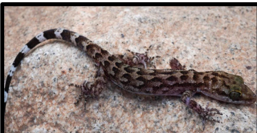
- Found on the forested slopes of Jatinga in Dima Hasao, an ecological transition zone within the Barail Hills.
- Named in honor of the Assam Forest Department.
- The name derives from Sanskrit: vana (forest) and rakshaka (protector), signifying “forest protector.”
- Known for endemism and restricted distribution.
- With this discovery, the number of Cyrtodactylus species in Assam rises to five.
6. Biodiversity Heritage Site: Recently, the Karnataka government officially designated an ~8.61-acre area in the
Cantonment Railway Colony,
Bengaluru, as a
Biodiversity Heritage Site.
- About Biodiversity Heritage Sites: Biodiversity-rich areas that play a vital role in local ecosystems and are conserved and managed by communities.
- They are unique ecosystems known for: Rich diversity of wild and domesticated species or their sub-varieties.
High levels of endemism.
- Presence of rare, threatened, keystone, or evolutionarily significant species.
- Occurrence of wild ancestors of cultivated/domesticated species.
- Fossil beds or sites of past biological importance with cultural, ethical, or aesthetic value.
- They may exist across terrestrial, aquatic, coastal, inland, or marine ecosystems.
- Legal Provisions: Declared under Section 37 of the Biological Diversity Act, 2002 by State Governments, in consultation with local bodies. Declaration of a BHS does not restrict traditional practices or usages of local communities, unless voluntarily decided by them.
- The main aim is to improve the quality of life of local communities through the conservation of these ecologically and culturally significant sites.
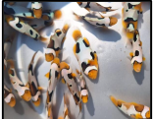
7. Designer Clownfish: Recently, scientists at the
National Bureau of Fish Genetic Resources (NBFGR) developed
designer clownfish through cross-breeding for the ornamental trade and community aquaculture.
- About Clownfish: Also known as anemonefish, they are small marine fish characterized by their bright orange bodies with white stripes.
- Habitat: Prefer shallow coral reefs in the tropical Pacific and Indian Oceans.
- Global Distribution: Found from the Red Sea to French Polynesia, including Japan and Australia.
- India Range: Present in the Andaman-Nicobar Islands, Lakshadweep, and Gulf of Mannar–Palk Bay.
- Symbiosis: Live in mutual association with sea anemones, gaining protection while offering defense to the host.
- Hermaphroditism: All individuals are born male; the dominant male can transform into a female.
- Conservation: IUCN Status: Least Concern.
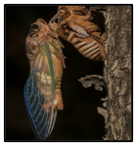
8. Cicadas: Recently, ecologists noted the
tentative return of cicadas to Silent Valley National Park, which may indicate either ecological recovery or environmental disruption.
- About Cicadas: These are hemipteran insects recognized for their loud, complex, and species-specific acoustic signals (songs).
- Global Diversity: India and Bangladesh together have the highest cicada diversity in the world, followed by China.
- Survival Strategy: Their emergence timing often coincides with periods when predators are dormant, improving survival chances.
- Habitat: Mostly canopy dwellers, commonly found in natural forests with large trees.
- Over 3,000 species globally, divided into two groups: Annual Cicadas and Periodical Cicadas
- Ecological Significance: Help prune mature trees and aerate soil. After death, their bodies enrich the soil with nitrogen, benefiting tree growth.
9. Small Satellite Launch Vehicle (SSLV): Recently, ISRO signed a technology transfer agreement with HAL for the production of the Small Satellite Launch Vehicle (SSLV), marking the 100th transfer facilitated by INSPACe.
- About SSLV: A 3-stage, cost-effective launch vehicle developed by ISRO for deploying small satellites.
- Uses three solid propulsion stages plus a liquid-fuel Velocity Trimming Module (VTM) for final orbit precision.
- Objectives: Cater to the rising global demand for small satellite launches.
- Offer low-cost, quick turnaround, and launch-on-demand capability with minimal ground infrastructure.
- Specifications: Size: ~34 m tall (like an 11-storey building), 2 m wide.
- Weight: ~120 tonnes at liftoff.
- Payload Capacity: Up to 500 kg in a 500 km orbit.
- Capabilities: Can launch single or multiple satellites in one mission.
- Specially designed for nanosatellites, microsatellites, and minisatellites (10–500 kg range).
- Provides flexible, fast, and economical launch solutions for both Indian and international customers.
10. Enteromix: Recently, Russian scientists reported that
Enteromix, an mRNA cancer vaccine, showed 100% efficacy in trials.
- About Enteromix: Uses modified messenger RNA to instruct cells to produce tumour-specific antigens.
- Viral Support: Employs four non-pathogenic viruses to help destroy malignant cells and trigger immune responses.
- Personalisation: Based on genetic analysis of tumours, creating vaccines tailored to each patient.
- Target Cancer: Initially developed for colorectal cancer, the world’s third most common cancer.
- Therapeutic Edge: Enables safe, repeatable, and personalised treatment.
- Evidence Gaps: Current findings are based on a small sample size, lack peer-reviewed validation, and have no proven large-scale efficacy.
- About mRNA: A single-stranded RNA molecule carrying genetic sequences that ribosomes read to produce proteins


 theIASHub | 13 Sep, 2025








 Detailed Solutions & Explanations

