06th September 2025
1. National Awards on Teachers: Recently, on the occasion of Teachers’ Day, the President of India, conferred the
National Awards on Teachers at a ceremony held in New Delhi.
- About National Awards to Teachers: Instituted in 1958 to honour outstanding teachers and headmasters who strive to improve the quality of school education and enrich students’ learning experience.
- This programme celebrates the unique contributions of some of the finest teachers in the country.
- The awards are presented every year on 5th September (Teachers’ Day) by the President of India or the Vice President of India, giving public recognition to meritorious teachers serving in primary, middle, and secondary schools.
- The Ministry of Education (MoE) oversees the execution of the awards.
- Eligibility Criteria: Teachers and heads of schools working in recognized primary, middle, high, and higher secondary schools are eligible under the following categories:
- Schools run by State Governments/UT Administrations, local bodies, state-aided institutions, and private schools affiliated with State/UT boards.
- Central Government schools, including Kendriya Vidyalayas (KVs), Jawahar Navodaya Vidyalayas (JNVs), Sainik Schools (Ministry of Defence), schools under the Atomic Energy Education Society (AEES), and Eklavya Model Residential Schools (EMRS) run by the Ministry of Tribal Affairs.
2. Debrigarh Wildlife Sanctuary: Recently,
Odisha’s Debrigarh Wildlife Sanctuary has been prepared to be declared as India’s newest tiger reserve.
- About Debrigarh Wildlife Sanctuary: Situated in Bargarh district, Odisha, near the Hirakud Dam on the Mahanadi River. Hirakud is the longest dam in India and also the longest earthen dam in the world.
-
Establishment: Declared a wildlife sanctuary in 1985.
-
Historical Significance: Associated with freedom fighter Veer Surendra Sai, who used Barapathara (within the sanctuary) as his base during his rebellion against the British.
- Vegetation & Flora: Dominated by mixed and dry deciduous forests.
Major tree species: Sal, Asana, Bija, Aanla, Dhaura, and others.
- Fauna: Hosts diverse wildlife including Indian leopards, sloth bears, chousingha (four-horned antelope), sambar deer, gaurs (Indian bison), wild boars, and Indian wild dogs.
- Avifauna: Important wintering grounds for migratory birds. Notable bird species include crested serpent eagle, flower peckers, red-vented bulbul, tree pie, drongo, and oriental white-eye.
3. Emerging Science, Technology and Innovation Conclave (ESTIC): Recently, the
Department of Science and Technology (DST) announced it will host the first-ever
Emerging Science, Technology and Innovation Conclave (ESTIC) in November.
- This event is seen as a possible replacement for the Indian Science Congress (ISC), one of the country’s oldest and most prestigious gatherings of scientists, first established before Independence.
- About ESTIC: A platform focused on scientific dialogue, innovation, and global collaboration.
- Unlike the India International Science Festival (IISF), which is more of a public science fair, ESTIC is designed as a serious conclave for researchers, innovators, and global experts.
- Highlights of this year’s conclave (as per ESTIC website):
- 11 thematic technical sessions
- 75 exhibition stalls showcasing innovations from deep-tech start-ups.
4. Technology Perspective and Capability Roadmap: Recently, India unveiled the
Technology Perspective and Capability Roadmap (TPCR-2025), a 15-year plan aimed at bolstering its nuclear deterrence and expanding drone warfare capabilities.
- About TPCR-2025: A 15-year blueprint for India’s military preparedness.
- Nuclear Deterrence: Focus on sustaining credible nuclear deterrence through survivability systems and advanced delivery platforms.
- Plans for nuclear command-and-control infrastructure, radiation detection tools, and mobile decontamination units.
- Deployment of unmanned ground vehicles for CBRN (Chemical, Biological, Radiological, Nuclear) reconnaissance.
- Stealth Remotely Piloted Aircraft: Range up to 1,500 km, altitude 60,000 ft, equipped for electronic warfare, NBC detection, and artillery guidance.
- Loitering Munitions: AI-enabled targeting, reusable warheads, and precision strike ability.
- Integrated Drones: Surveillance and targeting systems to strengthen mechanised forces.
- Counter-Drone Measures: Adaptive jamming systems and 15 km electronic denial bubbles to counter hostile swarms.
5. 2D Materials: Recently,
NITI Aayog’s Frontier Tech Hub, in partnership with IISc Bengaluru, unveiled the 4th edition of its Future Front Quarterly Insights, titled “
Introduction to 2D Materials”, emphasizing their importance and the need for India to focus on them.
- About 2D Materials: Ultra-thin materials, only one atom thick, far thinner than conventional materials. Example: Graphene, MoS₂ (molybdenum disulfide), WS₂.
- Structure: Flat, sheet-like at the atomic scale, giving them unique properties absent in bulk (3D) materials.
- Discovery: Graphene was isolated in 2004 by peeling it off graphite using tape — discovery awarded the 2010 Nobel Prize in Physics.
- Types: Graphene (pure carbon)
- TMDCs (Transition Metal Dichalcogenides) – e.g., MoS₂, WS₂
- Hexagonal Boron Nitride (h-BN)
- “Xenes” – new class including silicene, phosphorene, etc.
- Applications: Semiconductors: 2D transistors (e.g., MoS₂, WS₂) → extend Moore’s Law into the angstrom era.
- Neuromorphic Computing: Atom-thin memristors mimic brain synapses → efficient AI hardware.
- Optoelectronics: Enable ultra-thin photodetectors, LEDs, solar cells via tunable band gaps.
- Bulk Applications: Graphene composites for aerospace, coatings, water purification, batteries, and EV supercapacitors.
6. The Vulture Network: Recently, an Assam-based foundation launched
The Vulture Network, India’s first dedicated vulture conservation portal.
· About The Vulture Network: A cloud-based portal serving as a comprehensive knowledge and awareness platform on India’s vultures.
- First-of-its-kind initiative to connect individuals and groups working on vulture conservation.
- Launched by: We Foundation India, in collaboration with Gauhati University’s Department of Zoology. Supported by: Assam Bird Monitoring Network, LASA Foundation, Suraksha Samitee, Bihongo Bondhu, and local conservationists.
- Aim & Purpose: To highlight the importance of vultures and the urgent need for their conservation. Portal compiles scientific information, provides awareness materials, and offers freely downloadable outreach resources for campaigns.
- Awareness Day: Linked to International Vulture Awareness Day, observed every year on the first Saturday of September.
- Special focus on the Slender-billed Vulture, with only ~800 mature individuals
7. Land Subsidence: Recently, Uttarakhand’s Chamoli district (Nanda Nagar) has been witnessing widespread
land subsidence, further adding to the state’s ongoing struggles with natural disasters such as cloudbursts, flash floods, and landslides.
- About Land Subsidence: A gradual settling or sudden sinking of the Earth’s surface when the ground loses its ability to support the weight above it.
- Causes: Natural factors – volcanic/seismic activity, collapse of underground cavities, compaction of fine-grained deposits.
- Anthropogenic factors – excessive groundwater extraction, mining, and subsurface energy withdrawal.
- Nature: Typically develops gradually over years or decades, but has serious socioeconomic, environmental, and security impacts.
- Impacts: Infrastructure damage – roads, railways, pipelines, and buildings incur high maintenance costs.
- Flood risk – subsidence lowers land elevation, increasing vulnerability to floods.
- Aquifer depletion – permanent reduction in groundwater storage capacity.
- Water management issues – altered stream gradients and drains, risk of saltwater intrusion in coastal areas.
8. Beas River: Recently, the
Beas river in Himachal Pradesh recorded its highest-ever monsoon inflow, reaching 11.70 billion cubic meters (BCM).
- Since the Pong dam’s storage capacity is capped at 5.5 BCM, excess water was released downstream, leading to accusations of mismanagement and flooding in Punjab and Himachal Pradesh.
- Beas River: Flows through Himachal Pradesh and Punjab in north-western India.
- It is one of the five rivers that give Punjab its name (“Land of Five Rivers”).
- Originates at Rohtang Pass (elevation: 14,308 ft / 4,361 m) in the western Himalayas, Himachal Pradesh.
- Flows south through Kullu Valley, collecting tributaries from surrounding mountains and turns west past Mandi, then enters Kangra Valley.
- After crossing Kangra, flows into Punjab, where it veers south and southwest.
- Finally, it merges with the Sutlej River at Harike.
- Length: ~470 km (290 miles)
- Drainage Basin: ~20,303 sq. km (7,839 sq. miles)
- Tributaries: Bain, Banganga, Luni, Uhal, Banner, Chakki, Gaj, Harla
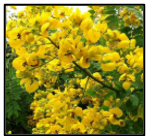
9. Senna Spectabilis: Recently, Kerala launched India’s
first science-based, community-led eradication programme of Senna spectabilis, aiming to restore degraded forest ecosystems in South India.
- About Senna spectabilis: Invasive species native to tropical America.
- Common Names: Popcorn Bush Cedar, Archibald's Cassia, Calceolaria Cassia, Golden Shower, Scented Shower, Fetid Cassia.
- Appearance: Tree with a dense, spreading crown, growing 7–18 metres tall and resembles Cassia fistula (Kanikkonna), Kerala’s state flower.
- Ecological Impact: Forms dense, sterile thickets that choke out native plants.
- Alters soil chemistry and deprives herbivores of food.
- Known for aggressive growth, making it hard to control.
- Uses: Planted for fuelwood, ornamental purposes, and shade in agroforestry.
- Conservation Status: Listed as Least Concern under the IUCN Red List.


 theIASHub | 06 Sep, 2025









 Detailed Solutions & Explanations

