2 Minute Series_29th August 2025

THEIASHUB
Get an Instant Call Back from Our Expert Mentors Now!
+91

29th August 2025

  1. National Annual Report and Index on Women’s Safety: Recently, the National Annual Report and Index on Women’s Safety (NARI) 2025, revealed significant differences in women’s safety across Indian cities.
  • Key Findings: Safest City: Kohima, Visakhapatnam, Bhubaneswar, Aizawl, Gangtok, Itanagar, Mumbai.
  • Least Safe: Patna, Jaipur, Faridabad, Delhi, Kolkata, Srinagar, Ranchi.
  • Top-ranked cities correlate with higher gender equity, civic participation, better policing, and women-friendly infrastructure.
    • National safety score: 65%, cities categorized as “much above”, “above”, “below”, or “much below” this benchmark.
    • 60% of women felt safe in their city; 40% felt “not so safe” or “unsafe”.
    • About 91% reported safety at workplaces, but half were unclear if POSH policies existed.
  • 7% experienced harassment in public spaces in 2024, doubling to 14% among women under 24.
  • Harassment hotspots: neighbourhoods (38%) and public transport (29%).
  1. UDISE+ 2024-25 Report: Recently, the Ministry of Education (MoE) released the Unified District Information System for Education Plus (UDISE+) 2024-25 report, revealing a notable decline in school enrolment across India.
  • Key Findings:
  • Decline in School Enrolment: Ages 3–11 (Anganwadi, pre-school, Class 1–5): dropped by ~25 lakh, from 12.09 crore (2023-24) to 11.84 crore (2024-25).
  • Total enrolment (Class 1–12): declined by 11 lakh, from 24.8 crore to 24.69 crore, the lowest since 2018-19.
  • Reasons for Decline: Falling birth rates and demographic shifts; TFR dropped to 91 per woman by 2021, below replacement level (2.1).
  • Migration and increasing presence of children in standalone pre-primary private institutions.
  • States with TFR above replacement: only Uttar Pradesh, Bihar, Meghalaya.
  • Gross Enrolment Ratio (GER) has improved across levels: middle school rose from 89.5% to 90.3%, while secondary school increased from 66.5% to 68.5%.
  • Dropout rates have declined significantly: preparatory stage fell from 3.7% to 2.3%, middle school from 5.2% to 3.5%, and secondary school from 10.9% to 8.2%.
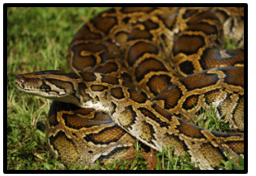
  1. Burmese Pythons: Recently, non-native Burmese pythons have become a major ecological threat in Florida, preying heavily on local wildlife. Their large size, camouflage, and secretive behavior make them difficult to catch, prompting authorities to seek innovative control methods.
  • Innovative Approach: The South Florida Water Management District has deployed animatronic rabbits (Robot Rabbits) to attract pythons. Key features of these robot decoys include:
  • Movement, body heat, and scent that mimic live marsh rabbits.
  • Cameras that alert wildlife teams when a python approaches.
  • Designed to draw pythons out of hiding in forests and swamps near Everglades National Park.
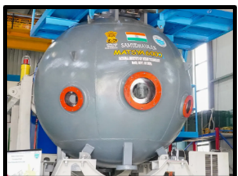
  1. Samudrayaan Project: Recently, India announced that it will join a select group of countries, including the United States, Russia, China, Japan, and France, capable of deep-sea exploration through its Samudrayaan Project.
  • The mission plans to send three humans to a depth of 6,000 metres by 2027, unlocking the vast potential of India’s deep oceans.
  • About Samudrayaan Mission: Part of India’s Deep Ocean Mission (approved 2021, ₹4,077 crore over 5 years) to explore and sustainably utilise deep ocean resources.
  • Human Submersible: Development of a crewed submersible to carry three humans up to 6,000 metres below sea level.
  • Technology Development: Focus on underwater vehicles, robotics, and deep-sea mining technologies.
  • Deep-Sea Mineral Exploration: Survey and extraction of polymetallic nodules containing nickel, cobalt, and rare earth elements.
  • Ocean Climate Services: Establish advisory services using observations and predictive models to study climate change.
  • Biodiversity Conservation: Exploration and protection of deep-sea biodiversity.
  • Energy and Water Extraction: Innovating technologies to derive energy and freshwater from the ocean.
  • Strategic Goal: Strengthen India’s blue economy by leveraging the country’s 11,098 km coastline for sustainable economic growth.
  1. Export Promotion Mission: Recently, the government is considering providing support worth approximately Rs 25,000 crore to exporters under the Export Promotion Mission announced in the Budget, spanning six financial years from 2025 to 2031.
  • About Export Promotion Mission: Promote broad-based, inclusive, and sustainable export growth, especially for MSMEs, addressing bottlenecks beyond conventional mechanisms.
  • Lead and Collaborating Ministries: Department of Commerce (lead), along with Ministries of Commerce & Industry, MSME, and Finance.
  • Implementation: Through two sub-schemes:
  • Niryat Protsahan (₹10,000+ crore) – includes interest equalisation support (₹5,000+ crore), alternative trade finance, e-commerce credit card, and other liquidity-bridging mechanisms.
  • Niryat Disha (₹14,500+ crore) – covers export quality compliance (₹4,000 crore), overseas market development, branding, warehousing, logistics, and capacity building to integrate Indian enterprises into global value chains.
  • Goal: Enhance export competitiveness, improve access to credit, and help Indian exporters tackle non-tariff barriers
  1. National Biofoundry Network: Recently, India launched its first National Biofoundry Network under the BioE3 Policy, advancing indigenous biomanufacturing and aiming for a bioeconomy valued at $300 billion by 2030.
  • About National Biofoundry Network: Build indigenous biomanufacturing capacity and support a projected $300 billion bioeconomy by 2030.
  • Nodal Ministry: Department of Biotechnology (DBT), Ministry of Science & Technology.
  • Structure: A collaborative platform of six premier institutions working as a unified national network.
  • Functions: Scale biotech research into deployable solutions.
  • Facilitate synthetic biology, gene editing, climate-smart agriculture, and green biotech.
  • Support research-to-market translation for biotech products.
  • Sustainability & Employment: Focus on climate resilience, waste reduction, creation of biotech jobs, and start-up incubation.
  1. Semiconductor OSAT: Recently, one of India’s first end-to-end Semiconductor OSAT (Outsourced Semiconductor Assembly and Test) Pilot Line facilities was inaugurated in Sanand, Gujarat.
  • This marks a significant step toward India’s ambition to become a global semiconductor hub under the India Semiconductor Mission (ISM).
  • About CG Semi OSAT Pilot Line: One of India’s first end-to-end Outsourced Semiconductor Assembly and Test (OSAT) plants.
  • Investment: Over ₹7,600 crore (~USD 870 million) to develop two facilities (G1 & G2) in Sanand, Gujarat.
  • G1 Facility: Peak capacity ~0.5 million units/day; commercial production expected in 2026.
  • G2 Facility: Under construction, expected completion by end of 2026; capacity ~14.5 million units/day.
  • Capabilities: End-to-end solutions for chip assembly, packaging, testing, and post-test services.
  • Equipped with high-yield equipment, Manufacturing Execution System (MES), and in-house labs for reliability and failure analysis.
  • Currently undergoing ISO 9001 and IATF 16949 certification.
  • Supports Atmanirbhar Bharat vision and strengthens India’s semiconductor ecosystem.
  • CG Semi Joint Venture: CG Power & Industrial Solutions Ltd. (Murugappa Group), Renesas Electronics, Stars Microelectronics (Thailand).
  1. Gorumara National Park: Recently, the population of one-horned rhinos at Gorumara National Park in Jalpaiguri increased with the birth of two calves in mid-August, according to senior foresters.
  • About Gorumara National Park: Location: Jalpaiguri, West Bengal; second-largest rhino habitat in the state after Jaldapara National Park.
  • Establishment: Wildlife sanctuary in 1949; declared a national park in 1992.
  • Geography: Forests and riverine grasslands in the Terai region of the Eastern Himalayas, on the banks of Rivers Murti and Raidak.
  • Fauna: Indian rhinoceros, Asian elephant, Indian bison, leopard, sambar deer, barking deer, spotted deer, wild boar, peafowl, red jungle fowl, Indian hornbill, and more.
  • Flora: Sal forests, teak, rain tree (Albizia lebbeck), silk cotton (Bombax malabaricum), bamboo groves, Terai grasslands, riverine reeds, and numerous tropical orchids.
  1. Cotton: Recently, in response to declining cotton production, the Central government withdrew the 11% import duty that had been imposed in February 2021.
  • About Cotton: Main raw material for the textile industry.
  • Global Position: India is the second-largest cotton producer and has the largest area under cotton cultivation, grown by nearly six million farmers.
  • Current Production: Domestic cotton output has fallen to 294 lakh bales, the lowest in 15 years, against a requirement of 318 lakh bales.
  • Seasonal Drop: 2024-25 season production is estimated 20 lakh bales lower than the previous season.
  • Imports: Likely to be highest at 40 lakh bales, mainly from Australia, U.S., Brazil, and Egypt; only 2 lakh bales in transit will arrive duty-free by September 30.
  • Government Support: Cotton Corporation of India purchased ~100 lakh bales at MSP during the ongoing season.
  • MSP hike: 8% for 2025-26 season.
  • Industry Concerns: High raw material costs due to import duty affect international competitiveness for garment exporters. Calls for stable government policies, annual duty suspension in non-peak season (April–September), and 5% interest subvention for working capital to help mills, especially MSMEs, procure cotton.
  1. 2+2 Intersessional Dialogue: Recently, India and the US engaged in a productive 2+2 Intersessional Dialogue to strengthen bilateral ties.
  • About 2+2 Intersessional Dialogue: A 2+2 dialogue involves Foreign and Defence Ministers from both countries meeting to discuss common issues and strengthen bilateral ties.
  • Key Discussion Areas: Trade and investment
  • Energy security, including civil-nuclear cooperation
  • Critical minerals exploration
  • Counter-narcotics and counterterrorism cooperation
  • Defense Cooperation: Plan to sign a new 10-year Framework under the India-US Major Defense Partnership
  • Strengthening defense industrial, science, and technology cooperation, operational coordination, regional collaboration, and information-sharing
  • COMPACT Initiative: Both sides agreed to build on progress under India-US COMPACT (Catalyzing Opportunities for Military Partnership, Accelerated Commerce & Technology).
  • Regional Commitment: Reaffirmed dedication to a safer, stronger, and more prosperous Indo-Pacific, aligned with QUAD objectives.


UPSC QEP 2026 Batch 5 - English
Buy now View Details
Submit Your Details to Learn More
I agree to give my consent to receive updates through SMS/Email & WhatsApp*.

NEEV GS + CSAT Foundation 2026/27
Buy now View Details


Join theIAShub’s Mains Answer Writing Program

Refine your answer writing skills and elevate your UPSC preparation with personalized support and expert feedback.

Fill out the form to get started with the program or any other enquiries !

I agree to give my consent to receive updates through SMS/Email & WhatsApp*.

Best IAS Coaching In Delhi, UPSC Online & Offline Classes by IAShub

Are you dreaming of becoming an IAS officer? Then, IAShub can be your best guide. It is one of the Best IAS Coaching in Delhi. Many students who want to clear the UPSC exam join IAShub for learning. The institute gives both online and offline classes. Their teachers are experienced and helpful. They easily explain every topic. Students also get notes, tests, and tips to do well in the exam.

UPSC Online Classes by IAShub

IAShub is in Delhi and is trusted by many UPSC students. It offers coaching for every part of the UPSC exam – Prelims, Mains, and Interview. The classes are simple and easy to understand. The teachers are experts and guide students in the right way. IAShub is also known for its helpful notes, test series, and answer-writing practice. IAShub is the best coaching in Delhi and also gives UPSC Online Classes. This helps students from any place in India to learn. The online classes are live and also recorded. So, students can watch them anytime. These classes cover the full UPSC syllabus.

Key Offerings Provided by IAShub

Here are some important services provided by IAShub:

  • UPSC Prelims: IAShub teaches for Prelims with a focus on basics. It also gives daily current affairs and monthly magazines.
  • Classroom Courses: IAShub has classroom learning for students in Delhi. The environment is good and peaceful for study.
  • Live Classes: Students who live far can join live UPSC online classes. These classes are just like real classes.
  • QEP for Mains: The Quality Enrichment Program (QEP) is special for Mains preparation. It helps students write better and faster.
  • Answer Writing: Regular answer writing practice is given. Teachers also check answers and give tips to improve.
  • Free Resource: IAShub gives free notes by toppers and helpful Main Booster material.
  • Test Series: Test series are available for every subject. These help students know their weak points and improve.
  • Interview Guidance Session: IAShub also gives interview practice sessions with experts. These help students feel confident.

UPSC Exam Overview

The UPSC Civil Services Exam has three parts:

  • Prelims: It has two papers: General Studies and CSAT.
  • Mains: It has nine papers, including essays and optional subjects.
  • Interview: It tests the personality and confidence of the student.

This exam is tough, but with the right guidance, it becomes easy to manage. Students must study smart and stay regular.

How IAShub Helps in the UPSC Journey

IAShub supports students from the beginning to the end. It gives the right books, tests, and notes. The classes are easy to follow, and the teachers are always ready to help. Students get personal doubt sessions too. The test series and answer checking help students learn where they need to do better. Also, free study materials save time and money.
IAShub also guides students during the final stage – the interview. Experts take mock interviews and give useful tips. This full support makes IAShub one of the best IAS coaching in Delhi.

Best IAS Coaching In Delhi FAQs

Yes, IAShub offers live and recorded online classes. Students can attend from any part of India.

Classes are available in both English and Hindi, so students can choose the language they are comfortable with.

The classroom centre is located in Delhi. Students can visit and join offline batches there.

IAShub gives interview guidance sessions to help students prepare for the final round of UPSC.