2 Minute Series_26th August 2025

THEIASHUB
Get an Instant Call Back from Our Expert Mentors Now!
+91

26th August 2025

  1. Letter of Intent for Global Hunger: Recently, the Government of India took a major step to tackle global hunger by signing a Letter of Intent (LoI) with the World Food Programme (WFP), marking an important milestone in international humanitarian cooperation.
  • Key Highlights: The Department of Food and Public Distribution (DFPD) will supply fortified rice from India to vulnerable populations in crisis zones worldwide.
  • Glob  al Partnership: The initiative leverages India’s agricultural surplus to deliver life-saving aid.
  • Humanitarian Philosophy: India follows the principle of Vasudhaiva Kutumbakam (“the world is one family”) in its humanitarian efforts.
  • WFP Appreciation: WFP officials appreciated India’s commitment to global food security amid rising food insecurity and constrained humanitarian funding.
  • Background: The LoI follows discussions at the February 2025 Executive Board side event in Rome between Indian government and WFP representatives.
  • Future Collaboration: Discussions also covered ongoing and potential projects like Supply Chain Optimization, Fortified Rice Rollout, Grain ATMs, Jan Poshan Kendra, Smart Warehousing, and Mobile Storage Units (Flospans).
  • Key Participants: Senior officials from DFPD, Food Corporation of India, and WFP were part of the event.
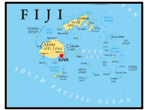
  1. Fiji: Recently, India announced that it will provide training and equipment to strengthen Fiji’s maritime security, as stated by the Prime Minister of
  • About Fiji: Location: South Pacific Ocean, northeast of New Zealand, southwest of Hawaii.
  • Geography: Archipelago with ~300 islands and 540 islets over ~1,000,000 sq miles (3,000,000 sq km).
  • No land borders with other countries.
  • About 100 islands are inhabited.
  • Capital: Suva, located on the southeast coast of the largest island, Viti Levu.
  • Languages: English (official), Fijian
  • Currency: Fiji dollar (FJD).
  • Largest Island: Viti Levu accounts for more than half of Fiji’s land area.
  • Terrain: Rugged, with a central mountain range; Mount Tomanivi (1,324 m / 4,344 ft) is the highest peak.
  • Geology: Formed mainly by volcanic action, sedimentary deposits, and coral formations.
  • Land Cover: Nearly 50% forested, with dry grasslands in western areas.
  • Population: Majority are mixed Melanesian-Polynesian, with a significant South Asian minority.
  1. OpenAI: Recently, OpenAI launched its India-first Learning Accelerator, an initiative designed to transform education through the use of artificial intelligence.
  • Key highlights: A $500,000 research partnership with IIT Madras aims to study how AI can improve learning outcomes and innovative teaching methods, informed by cognitive neuroscience.
  • OpenAI’s ChatGPT Study Mode is tailored to deliver high-quality answers aligned with Indian curricula, with plans to expand support for local languages.
  • Over the next six months, ~500,000 ChatGPT licenses and training will be provided to educators and students via partnerships with the Ministry of Education, AICTE, and ARISE.
  • AI is positioned as a personal tutor for students and a tool to free up educators for core teaching tasks, while helping institutions improve teaching and research infrastructure.
  • OpenAI recognizes India’s diverse education ecosystem, from IITs to rural schools with limited resources.
  • OpenAI plans to work with both central and state governments to integrate AI into education effectively.
  1. Bloom Syndrome: Recently, Bloom Syndrome, a rare genetic disorder with fewer than 300 reported cases worldwide (294 registered in the Bloom Syndrome Registry as of 2023), drew attention.
  • A patient with the syndrome underwent a bone marrow transplant using donated stem cells.
  • About Bloom Syndrome: A genetic disorder caused by mutations in the BLM gene, which is responsible for DNA maintenance and repair.
  • Other Names: Bloom-Torre-Machacek syndrome, congenital telangiectatic erythema.
  • Cause: Autosomal recessive inheritance – occurs when a child inherits defective BLM genes from both parents.
  • High-risk Population: More common among Eastern European (Ashkenazi) Jewish population.
  • Symptoms & Health Implications: Growth delays, abnormal features, sun-sensitive skin, immune deficiencies, insulin resistance, reproductive issues, and higher early-onset cancer risk.
  • Treatment: No specific cure; managed through a multi-disciplinary approach to alleviate symptoms. Interventions like bone marrow transplants may help in severe cases.
  1. Study on Microbes: Recently, researchers at IIT-Bombay found that even small changes in how microbes get their nutrients can make them develop in completely different ways.
  • The study was published in npj Systems Biology and Applications and BMC Ecology and Evolution.
  • Key Highlights: Microbes were fed chemically related sugars (glucose and galactose) either as simple mixes or as complex sugars (lactose, melibiose) to see how “meal presentation” affects evolution.
  • Evolutionary Divergence: Over 300 generations, microbes evolved along distinct paths: some coli grew faster, others produced more biomass; yeast showed similar divergence.
  • Genetic Basis: Multiple mutations contributed to these adaptations, showing that nutrient presentation can influence which mutations are beneficial.
  • Pleiotropic Response: When evolved microbes were placed in new sugar environments, their growth patterns showed predictable side effects, linking past adaptations to performance in new environments.
  • Applications: Findings can help direct microbial evolution for faster growth or efficiency, with potential uses in food, pharmaceuticals, biofuels, and strategies to combat antibiotic resistance.
  • Key Insight: Evolution is both flexible and constrained; understanding hidden rules of adaptation can help anticipate evolutionary outcomes despite unpredictability.
  1. Anamalai Tiger Reserve: Recently, a year-long study by the Tamil Nadu Forest Department focused on the dense forests of the Anamalai Tiger Reserve, famous for the rare synchronous flashing of
  • The study found that these forests are home to at least eight different species of fireflies.
  • About Anamalai Tiger Reserve: Situated at an altitude of 1,400 m in the Anamalai Hills, covering parts of Pollachi and Coimbatore districts in Tamil Nadu.
  • Lies south of the Palakkad Gap in the Southern Western Ghats.
  • Bordered by Parambikulam Tiger Reserve (east), Chinnar Wildlife Sanctuary and Eravikulam National Park (southwest), and Nenmara, Vazhachal, Malayattur, and Marayur reserved forests of Kerala.
  • Establishment: Declared a tiger reserve in 2007.
  • Indigenous Communities: Home to six tribes: Kadar, Muduvar, Malasar, Malai Malasar, Eravalar, and Pulayar.
  • Flora: Rich in wild relatives of cultivated plants like mango, jackfruit, wild plantain, ginger, turmeric, pepper, and cardamom.
  • Fauna: Key wildlife includes tiger, Asiatic elephant, sambar, spotted deer, barking deer, jackal, leopard, and jungle cat.
  1. Space-Based Projects: Recently, the Indian Space Research Organisation (ISRO) has stepped up its activities in Ladakh through several space-based projects.
  • These initiatives aim to improve remote sensing, communication, natural resource management, and disaster preparedness.
  • Key Highlights: Projects include Resourcesat-3/3A, Resourcesat-3S/3SA, HRSAT, G20 Satellite, and TRISHNA mission, expected to be operational by 2027–28, enhancing monitoring of land, water, and environmental changes.
  • Current Satellite Support: Ladakh already benefits from satellites such as Cartosat, Resourcesat, RISAT-1A, INSAT-3DR/3DS, Oceansat-3, SARAL, and Indo-US NISAR for remote sensing, telecommunication, and broadband coverage.
  • Communication Expansion: 12 Indian satellites provide telecommunication and broadband; permissions granted to 10 foreign satellites and three LEO/MEO constellations for operations over India, including Ladakh.
  • Natural Resource Monitoring: Ladakh is part of ISRO’s Natural Resources Census Programme and Mountain Ecosystem Studies, tracking land degradation, desertification, natural hazards, and geodynamic changes.
  • Ladakh-Specific Projects: Ladakh Modelling and Space Applications Programme: Geoportal-based climate, environment, and resource studies.
  • Geo-Ladakh portal: Supports agriculture, horticulture, water conservation, artificial glaciers, renewable energy, and flood hazard assessment.
  • AMRUT-1.0 and 2.0: Satellite-based urban planning and waterbody information systems for Leh and Kargil.
  1. National Youth Award 2024: Recently, the Ministry of Youth Affairs & Sports, India, announced the call for nominations for the National Youth Award 2024.
  • About National Youth Award: Sponsored by Ministry of Youth Affairs & Sports, Government of India.
  • Purpose: To recognize and motivate Indian youth (aged 15–29 years) for outstanding contributions in social service and national development.
  • Objectives: Encourage youth to achieve excellence in national development or social service. Recognize voluntary organizations working with youth for national development/social service.
  • Award Details: Categories: Individual Category – usually up to 20 awards per year and Organization Category – usually up to 5 awards per year.
  • Prize Money: Individuals: ₹1,00,000, medal, and certificate and Organizations: ₹3,00,000, medal, and certificate.
  • Eligibility: Individuals or organizations showing excellent work in:  Health, research & innovation, culture, human rights, arts & literature, tourism, traditional medicine, active citizenship, community service, sports, academic excellence, and smart learning.
  1. Lesser flamingo: Recently, a rare lesser flamingo, also called Raj Hamsa, was spotted near the Fish Mill in Malpe, exciting bird watchers and ornithologists. This marks the first-ever sighting of this species on the Udupi coast.
  • About Lesser Flamingo (Phoeniconaias minor): Smallest and most numerous of all flamingo species.
  • Distribution: Native to sub-Saharan Africa and western India; occasional sightings further north are considered vagrants.
  • Habitat: Prefers highly alkaline or saline lakes, lagoons, and mudflats.
  • Features: Appearance: Vivid pink color, long thin legs, striking red eyes.
- Bill: Deep red with black tip; adapted for filter-feeding on microscopic algae and diatoms.
- Hind Toe (Hallux): Present, unlike some other flamingos.
- Size: Adult males are larger than females.
  • Behavior: Serially monogamous – pairs stay together while raising young.
    - Gregarious – found in large flocks with synchronized movements.
  •  Conservation Status:

- IUCN Red List: Near Threatened

- CITES:Appendix II.


UPSC QEP 2026 Batch 5 - English
Buy now View Details
Submit Your Details to Learn More
I agree to give my consent to receive updates through SMS/Email & WhatsApp*.

NEEV GS + CSAT Foundation 2026/27
Buy now View Details


Join theIAShub’s Mains Answer Writing Program

Refine your answer writing skills and elevate your UPSC preparation with personalized support and expert feedback.

Fill out the form to get started with the program or any other enquiries !

I agree to give my consent to receive updates through SMS/Email & WhatsApp*.

Best IAS Coaching In Delhi, UPSC Online & Offline Classes by IAShub

Are you dreaming of becoming an IAS officer? Then, IAShub can be your best guide. It is one of the Best IAS Coaching in Delhi. Many students who want to clear the UPSC exam join IAShub for learning. The institute gives both online and offline classes. Their teachers are experienced and helpful. They easily explain every topic. Students also get notes, tests, and tips to do well in the exam.

UPSC Online Classes by IAShub

IAShub is in Delhi and is trusted by many UPSC students. It offers coaching for every part of the UPSC exam – Prelims, Mains, and Interview. The classes are simple and easy to understand. The teachers are experts and guide students in the right way. IAShub is also known for its helpful notes, test series, and answer-writing practice. IAShub is the best coaching in Delhi and also gives UPSC Online Classes. This helps students from any place in India to learn. The online classes are live and also recorded. So, students can watch them anytime. These classes cover the full UPSC syllabus.

Key Offerings Provided by IAShub

Here are some important services provided by IAShub:

  • UPSC Prelims: IAShub teaches for Prelims with a focus on basics. It also gives daily current affairs and monthly magazines.
  • Classroom Courses: IAShub has classroom learning for students in Delhi. The environment is good and peaceful for study.
  • Live Classes: Students who live far can join live UPSC online classes. These classes are just like real classes.
  • QEP for Mains: The Quality Enrichment Program (QEP) is special for Mains preparation. It helps students write better and faster.
  • Answer Writing: Regular answer writing practice is given. Teachers also check answers and give tips to improve.
  • Free Resource: IAShub gives free notes by toppers and helpful Main Booster material.
  • Test Series: Test series are available for every subject. These help students know their weak points and improve.
  • Interview Guidance Session: IAShub also gives interview practice sessions with experts. These help students feel confident.

UPSC Exam Overview

The UPSC Civil Services Exam has three parts:

  • Prelims: It has two papers: General Studies and CSAT.
  • Mains: It has nine papers, including essays and optional subjects.
  • Interview: It tests the personality and confidence of the student.

This exam is tough, but with the right guidance, it becomes easy to manage. Students must study smart and stay regular.

How IAShub Helps in the UPSC Journey

IAShub supports students from the beginning to the end. It gives the right books, tests, and notes. The classes are easy to follow, and the teachers are always ready to help. Students get personal doubt sessions too. The test series and answer checking help students learn where they need to do better. Also, free study materials save time and money.
IAShub also guides students during the final stage – the interview. Experts take mock interviews and give useful tips. This full support makes IAShub one of the best IAS coaching in Delhi.

Best IAS Coaching In Delhi FAQs

Yes, IAShub offers live and recorded online classes. Students can attend from any part of India.

Classes are available in both English and Hindi, so students can choose the language they are comfortable with.

The classroom centre is located in Delhi. Students can visit and join offline batches there.

IAShub gives interview guidance sessions to help students prepare for the final round of UPSC.