


 theIASHub | 17 Sep, 2025


Interstellar Dust: Recently, astronomers from the Aryabhatta Research Institute of Observational Sciences (ARIES), under the Department of Science and Technology, created a detailed map of interstellar dust veiling the Milky Way.
Key Highlights: Analysis based on more than 6,000 Open Clusters using data from European Space Agency (ESA) Gaia Early Data Release 3 (EDR3).
Objective: To chart the distribution of interstellar dust across the Milky Way’s Galactic Plane (disk).
Findings: Dust forms a thin, wavy layer below the central Galactic plane, called the “reddening plane”.
The “reddening plane” shifts up and down in a wave-like pattern across the Galaxy.
Dust distribution is uneven—densest toward the Galactic Center, thinner in other regions.
Maximum dust concentration at Galactic Longitude 41°, minimum around 221°.
The Sun is located about 50 light-years (~15.7 parsecs) above this dusty layer.
Significance: Provides a clearer understanding of star formation regions and the structure of the Milky Way Galaxy.
Confirms most dust is concentrated in a narrow band where new stars actively form.
How Brain Interprets Illusions: Recently, a study published in Nature Neuroscience revealed new insights into how the brain interprets illusions.
Key Findings: Illusions occur when the brain interprets ambiguous information in ways that differ from physical reality (e.g., identical colours looking different depending on background, equal lines appearing unequal).
Study investigated how the brain processes illusory contours, such as the Kanizsa triangle.
Researchers discovered specialized neurons in the primary visual cortex, called IC-encoders that respond to illusory shapes as if they were real edges.
IC-encoders integrate predictions from higher brain areas and broadcast them, allowing the brain to "fill in" missing parts for a coherent whole.
Artificial stimulation of IC-encoders produced illusions even without actual visual stimuli.
This shows illusions exploit the brain’s normal perceptual process: combining partial evidence with prior expectations to infer the most likely picture.
The study highlights that perception relies on sensory inference to resolve incomplete or ambiguous sensory information.
Ahmednagar Railway Station: Recently, the Ahmednagar railway station was officially renamed Ahilyanagar in honour of the revered 18th-century Maratha ruler Lokmata Devi Ahilya Bai Holkar.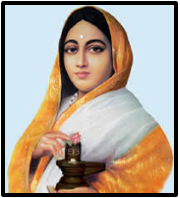
Served first as regent, later as independent ruler of the Holkar dynasty with capitals at Maheshwar and Indore.
Her reign marked the zenith of Holkar power, ensuring peace, prosperity, and cultural growth.
Passed away on 13 August 1795 (age 70); succeeded by Tukoji Rao Holkar and later Jaswant Rao Holkar.
Titles: Punyashlok and the Philosopher Queen (John Keay).
Contributions: Known for fair and impartial justice (even sentenced her own son for a capital offense).
Established courts for justice and arbitration.
Made Maheshwar a hub of literature, music, art, and industry.
Built and renovated hundreds of temples, dharmashalas, forts, wells, and roads.
Restored Kashi Vishwanath Temple (1780).
Exercise Pacific Reach 2025: Recently, Indian Naval Ship Nistar entered Changi Naval Base in Singapore to participate in Exercise Pacific Reach 2025.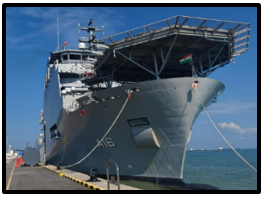
Conducted in two phases: Harbour Phase: Focus on submarine rescue systems, Subject Matter Expert Exchanges (SMEE), medical symposium, and cross-deck visits.
Sea Phase: Includes multiple intervention and rescue operations in the South China Sea, with active participation of INS Nistar and Submarine Rescue Unit (E).
Acts as Mothership (MoSHIP) for the Deep Submergence Rescue Vehicle (DSRV).
Equipped with Side Scan Sonar, Work & Observation class Remotely Operated Vehicles (ROVs), and advanced deep-sea diving systems.
Red Coral Kukri Snake: Recently, a rare Red Coral Kukri Snake (Oligodon kheriensis), unseen since 1936, was discovered trapped in a net near Pilibhit Tiger Reserve in Uttar Pradesh.
Behavior: Nocturnal and fossorial (burrowing).
Special Feature: Possesses curved teeth resembling a kukri (Nepalese knife), hence the name “Kukri”.
Appearance: Uniform bright coral-red body including the head.
Underside is yellowish or pinkish.
Head is short, not broader than neck, with an obtusely pointed snout.
Doctrine Of Escheat: Recently, the Supreme Court of India clarified that a State Government cannot invoke the doctrine of escheat under Section 29 of the Hindu Succession Act, 1956, if a Hindu male has left behind a valid Will duly probated by a Court.
In such cases, the property must devolve according to the testator’s intent rather than to the State.
Purpose: Maintains order in succession, prevents wastage of assets, and safeguards societal interests.
Situations Covered: Death without a Will and without heirs.
Property left unclaimed or abandoned for a prescribed period.
Principle: Property must always have a legal owner; in the absence of heirs, ownership passes to the State.
Unified Pension Scheme (UPS): Recently, the Cabinet approved allowing central government employees to opt for the Unified Pension Scheme (UPS) under the National Pension System (NPS).
Both current and future employees under NPS can choose either UPS or continue with NPS.
Once an employee switches to UPS, the decision is final and binding.
The Pension Fund Regulatory and Development Authority (PFRDA) may issue regulations for its implementation.
Pension Formula: 50% of average basic pay of the last 12 months before retirement, subject to 25 years of service.
Employees with 10–25 years of service get pension on a proportionate basis.
Minimum assured payout: ₹10,000 per month for employees with at least 10 years of service.
Voluntary Retirement: Employees retiring after 25 years of service will start receiving payout only from the date they would have attained normal superannuation.
Family Pension: After the pensioner’s death, the legally wedded spouse will receive 60% of the payout.
Dearness Relief: Payable on both pension and family pension, calculated on the same lines as Dearness Allowance (DA) for serving employees.
Exclusions: Employees who are removed, dismissed, or resigned from service will not be eligible for UPS assured payout.
Sarnath: Recently, the Archaeological Survey of India (ASI) started changing the Sarnath plaque to give credit to the Benares ruler’s family for saving the site, instead of the British. This update is being done before a visit by a UNESCO team.
One of the most important sites in the Buddhist world.
Known as the place where Gautama Buddha delivered his first sermon after attaining enlightenment at Bodh Gaya.
This sermon, called Dharmachakra Pravartana (Turning of the Wheel of Dharma), marked the formal beginning of the Buddhist Sangha (community).
Historical Significance: Buddha’s First Sermon (c. 528 BCE): Taught the Four Noble Truths and the Eightfold Path to his five ascetic disciples, laying the foundation of Buddhist philosophy.
Mauryan Patronage (3rd century BCE): Emperor Ashoka visited Sarnath, built stupas and monasteries, and erected the Ashokan Lion Capital, now India’s National Emblem.
Gupta Period (4th–6th century CE): Sarnath flourished as a major monastic and educational center, with significant contributions to Buddhist art and architecture.
Coast Guard Global Summit: Recently, India announced it will host the 5th Coast Guard Global Summit (CGGS) in Chennai in 2027, marking the Golden Jubilee of the Indian Coast Guard.
About 5th CCGGS: A premier multilateral forum of Coast Guards, maritime security agencies, and international organizations.
Enhance global maritime cooperation and interoperability.
Foster trust-building, information sharing, and collective response to maritime challenges.
Occasion: To coincide with the Golden Jubilee of the Indian Coast Guard (ICG).
Recognized as the fourth armed force of India.
Establishment: Originated from recommendations of Nag Committee (1970) and F. Rustamji Committee (1974).
Inaugurated on 19 August 1978 at Naval Dockyard, Mumbai, by Prime Minister Morarji Desai.
Core Functions: Anti-smuggling, anti-poaching, enforcement of Maritime Zones of India Act.
Protecting fishermen and seafarers in distress.
Responsible for coastal security and protection of India’s Exclusive Economic Zone (EEZ).
Pollution control and preservation of marine ecosystems.
Safeguarding critical offshore installations like Mumbai High.
Works in coordination with the Indian Navy and other agencies for coastal defence.



Refine your answer writing skills and elevate your UPSC preparation with personalized support and expert feedback.
Fill out the form to get started with the program or any other enquiries !




Are you dreaming of becoming an IAS officer? Then, IAShub can be your best guide. It is one of the Best IAS Coaching in Delhi. Many students who want to clear the UPSC exam join IAShub for learning. The institute gives both online and offline classes. Their teachers are experienced and helpful. They easily explain every topic. Students also get notes, tests, and tips to do well in the exam.
IAShub is in Delhi and is trusted by many UPSC students. It offers coaching for every part of the UPSC exam – Prelims, Mains, and Interview. The classes are simple and easy to understand. The teachers are experts and guide students in the right way. IAShub is also known for its helpful notes, test series, and answer-writing practice. IAShub is the best coaching in Delhi and also gives UPSC Online Classes. This helps students from any place in India to learn. The online classes are live and also recorded. So, students can watch them anytime. These classes cover the full UPSC syllabus.
Here are some important services provided by IAShub:
The UPSC Civil Services Exam has three parts:
This exam is tough, but with the right guidance, it becomes easy to manage. Students must study smart and stay regular.
IAShub supports students from the beginning to the end. It gives the right books, tests, and notes. The classes are easy to follow, and the teachers are always ready to help. Students get personal doubt sessions too. The test series and answer checking help students learn where they need to do better. Also, free study materials save time and money.
IAShub also guides students during the final stage – the interview. Experts take mock interviews and give useful tips. This full support makes IAShub one of the best IAS coaching in Delhi.
 Detailed Solutions & Explanations
Improve Your Answer Writing & Strategy
Detailed Solutions & Explanations
Improve Your Answer Writing & Strategy

