Social Reform Movements and British Legislation in Colonial India: Success, Impact & Limitations

Explore major social reform movements and British social legislation in colonial India. Learn about key reformers like Raja Ram Mohan Roy, Jyotiba Phule, and their impact on caste, gender equality, education, and religious reform.

THEIASHUB
Get an Instant Call Back from Our Expert Mentors Now!
+91

Social Reform Movements and British Social Legislation in Colonial India

The British rule in India for the first time established the supreme authority of law in social matters, ensuring uniformity in law and social order which India did not have till then, influencing future Social Reform Movements.
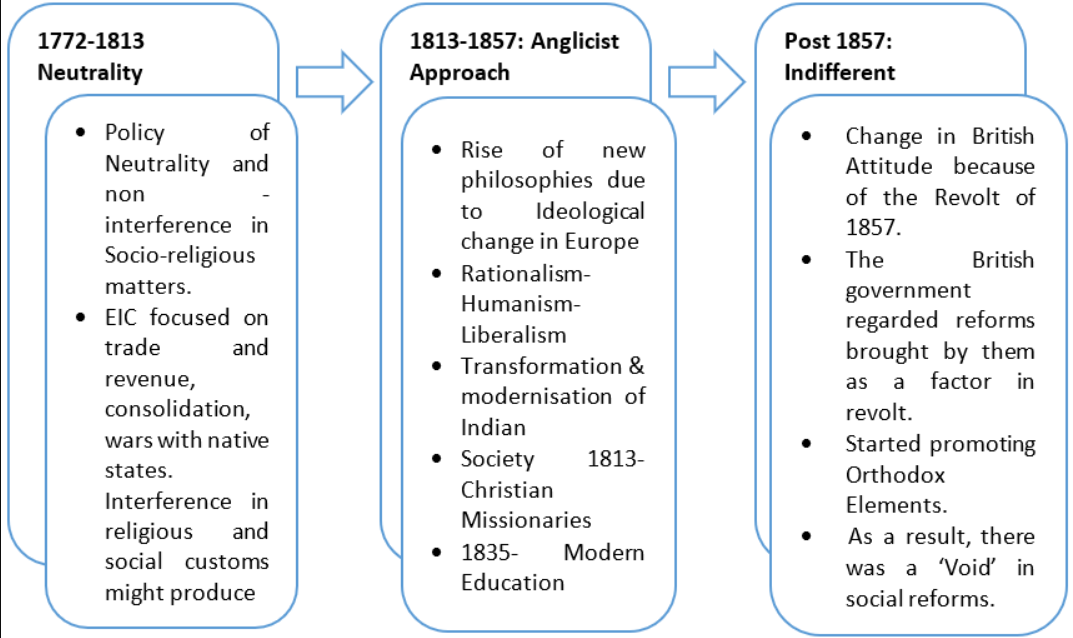
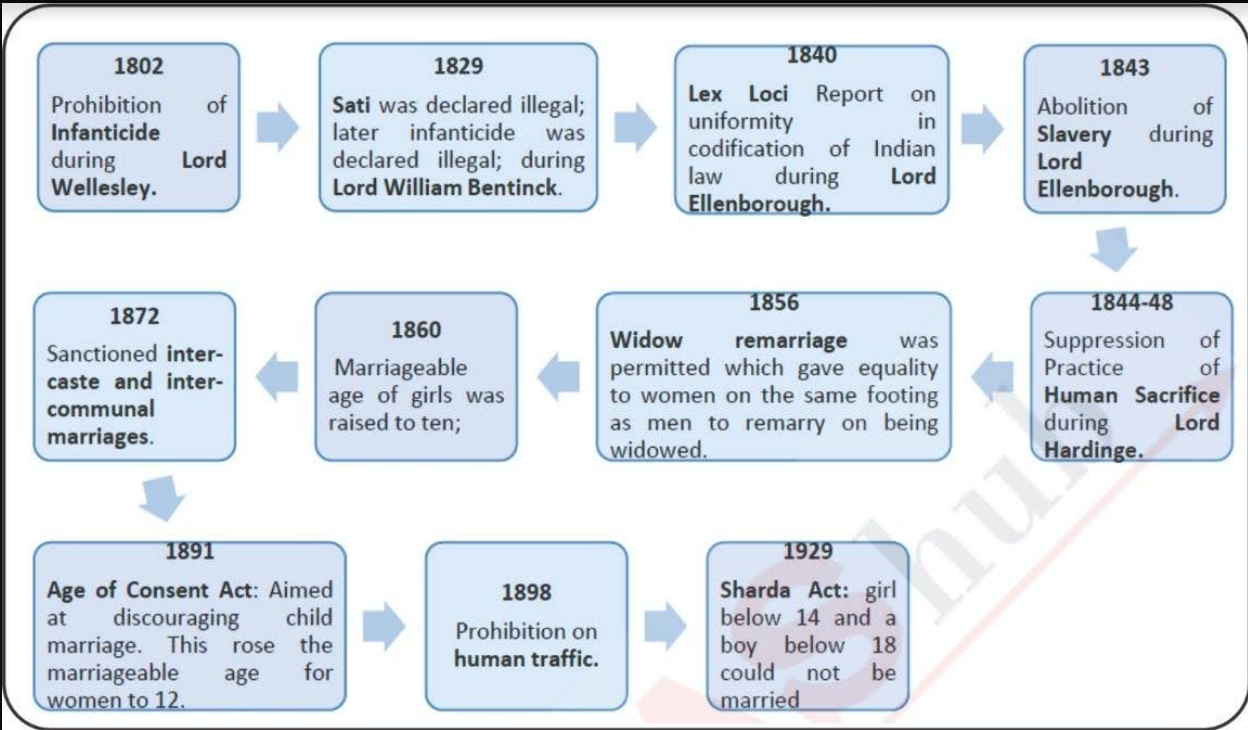


Success Stories of Social Reform Movements in Colonial India

  • Abolition of Sati and Widow Remarriage: Visionaries such as Raja Ram Mohan Roy and Ishwar Chandra Vidyasagar led Social Reform Movements to abolish the practice of Sati and promote widow remarriage, marking pivotal strides in women’s rights and gender equality.
  • Caste Reforms: Social Reform Movements led by reformers advocated for the rights of lower castes, challenging caste-based discrimination and laying the foundation for India's social justice movement.
  • Promotion of Education: They established educational institutions to spread modern education universally, including among girls and lower castes, recognizing education as a catalyst for social upliftment through Social Reform Movements.
  • Religious Syncretism: Movements such as the Brahmo Samaj and Arya Samaj aimed to reform religion by advocating monotheism, rationality, and religious tolerance, fostering unity among diverse religious communities as part of broader Social Reform Movements.
  • Empowerment of Women: Pandita Ramabai and Tarabai Shinde championed women’s education, social reform, and gender equality, paving the way for increased female participation in social and political realms through their contributions to Social Reform Movements.
  • Nationalistic Sentiments: Swami Vivekananda and Bankim Chandra Chattopadhyay fostered national pride and unity among Indians, significantly influencing the later independence struggle against colonial rule, inspired by the ideals of Social Reform Movements.

Impact and Legacy of Social Reformers in British India
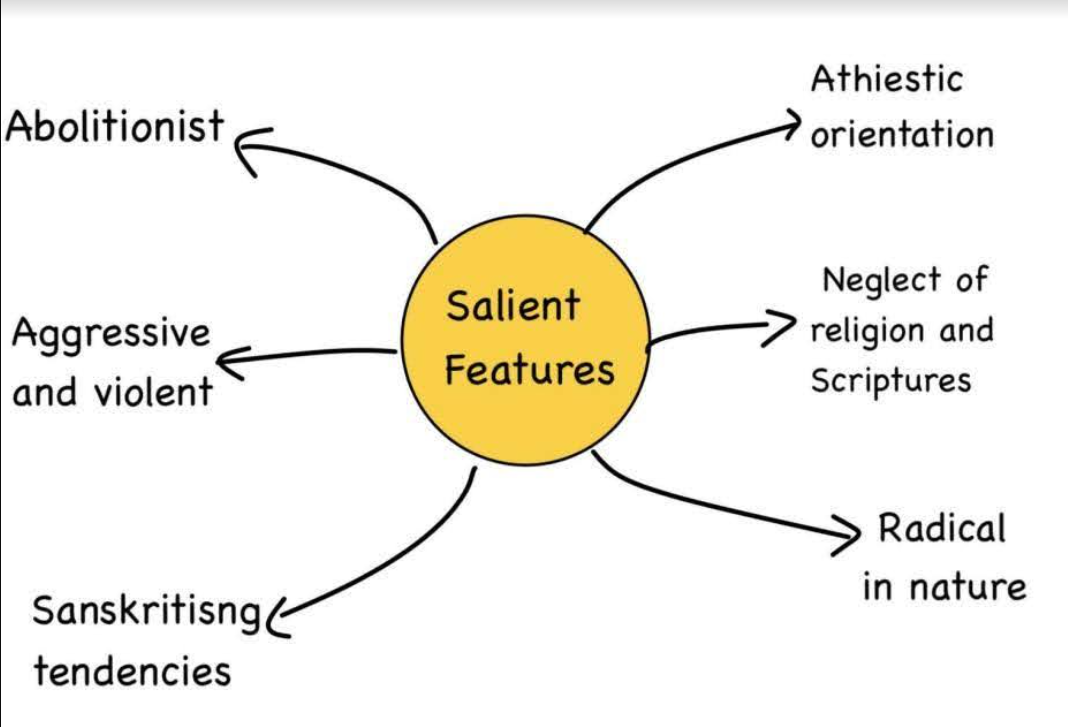
  • Raja Ram Mohan Roy: He worked for eradicating evils like sati, child marriage and purdah system, championed widow remarriage and women's education and favored English system of education in India. He founded the Brahmo Sabha in 1828. It emerged as a major religious movement of the middle-class educated Bengalis, based on the essential principle of monotheism. 
  • Jyotiba Phule: Known for challenging social inequalities and untouchability, Jyotiba Phule founded the Satyashodhak Samaj to promote education and combat caste discrimination. He established schools for girls and lower castes and campaigned against practices like child marriage and widow remarriage.
  • Narayana Guru: Hailing from Kerala, Narayana Guru was a prominent social reformer who fought against caste-based discrimination and advocated for social equality. He stressed the importance of education and worked to uplift the lower castes through spiritual and social reforms. Narayana Guru also championed the rights of Dalits and campaigned against untouchability.
  • Dr. B.R. Ambedkar: A fierce opponent of caste discrimination, Dr. B.R. Ambedkar dedicated his life to empowering Dalits. He played a pivotal role in drafting laws and provisions to safeguard the rights and welfare of marginalized communities in the Indian Constitution.

Failure of Social Reform Movements in India

Despite the sincere efforts and notable achievements of early reformers, the failure of social reform movements lies in their inability to uproot entrenched societal norms. Many regressive practices, such as caste-based discrimination, gender inequality, and child marriage, still endure—reflecting how these movements, though impactful, fell short of achieving comprehensive social change.
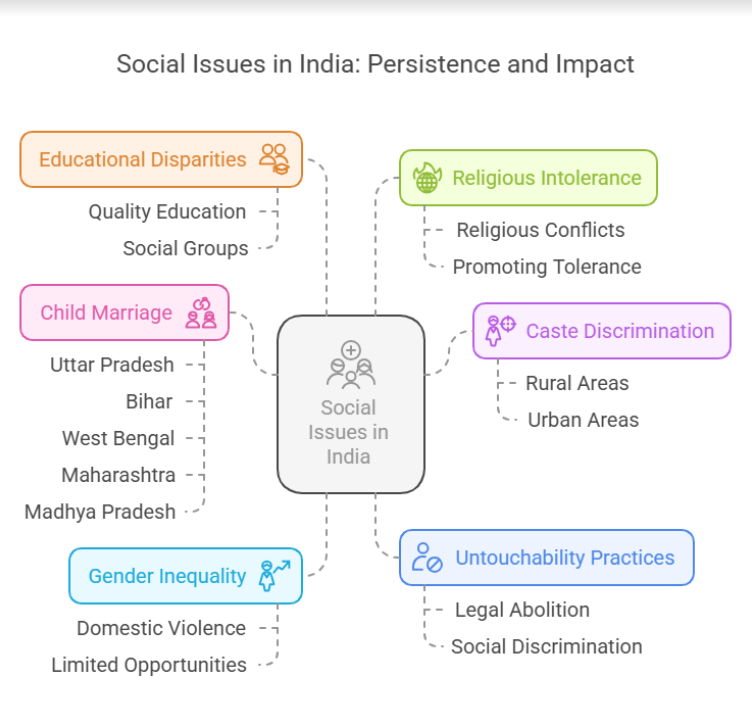
  •  Persistence of Child Marriage: Despite reformers' efforts to eradicate child marriage, this practice still persists in many parts of India today.
  • According to UNICEF, over half of Indian child brides live in five states: Uttar Pradesh, Bihar, West Bengal, Maharashtra and Madhya Pradesh.
  • Caste Discrimination: Efforts to abolish the caste system have not fully succeeded, as caste-based discrimination and violence remain significant issues.
  • The caste system persists in both rural and urban India, evident in matrimonial sites where people specify and seek partners from their own caste.
  • Gender Inequality: Reform movements worked to improve women's status, but gender inequality, including domestic violence and limited opportunities, continues to be a problem.
  • India closed 64.1% of its gender gap in 2024, ranking 129th globally.
  • Untouchability Practices: While untouchability was legally abolished, social ostracism and discrimination against lower castes still exist in contemporary society.
  • Educational Disparities: Reformers promoted education for all, yet disparities in access to quality education between different social groups are still prevalent.
  • Religious Intolerance: The goal of promoting religious tolerance has not been fully realized, as religious conflicts and intolerance are still common in various parts of India.

UPSC PREVIOUS YEAR QUESTIONS (PYQs)

  1. Trace the rise and growth of socio-religious reform movements with special reference to Young Bengal and Brahmo Samaj. (2021, 10 Marks)
  2. The women’s questions arose in modern India as a part of the 19th-century social reform movements. What are the major issues and debates concerning women in that period? (2017, 15 Marks)


UPSC QEP 2026 Batch 5 - English
Buy now View Details
Submit Your Details to Learn More
I agree to give my consent to receive updates through SMS/Email & WhatsApp*.

NEEV GS + CSAT Foundation 2026/27
Buy now View Details


Join theIAShub’s Mains Answer Writing Program

Refine your answer writing skills and elevate your UPSC preparation with personalized support and expert feedback.

Fill out the form to get started with the program or any other enquiries !

I agree to give my consent to receive updates through SMS/Email & WhatsApp*.

Best IAS Coaching In Delhi, UPSC Online & Offline Classes by IAShub

Are you dreaming of becoming an IAS officer? Then, IAShub can be your best guide. It is one of the Best IAS Coaching in Delhi. Many students who want to clear the UPSC exam join IAShub for learning. The institute gives both online and offline classes. Their teachers are experienced and helpful. They easily explain every topic. Students also get notes, tests, and tips to do well in the exam.

UPSC Online Classes by IAShub

IAShub is in Delhi and is trusted by many UPSC students. It offers coaching for every part of the UPSC exam – Prelims, Mains, and Interview. The classes are simple and easy to understand. The teachers are experts and guide students in the right way. IAShub is also known for its helpful notes, test series, and answer-writing practice. IAShub is the best coaching in Delhi and also gives UPSC Online Classes. This helps students from any place in India to learn. The online classes are live and also recorded. So, students can watch them anytime. These classes cover the full UPSC syllabus.

Key Offerings Provided by IAShub

Here are some important services provided by IAShub:

  • UPSC Prelims: IAShub teaches for Prelims with a focus on basics. It also gives daily current affairs and monthly magazines.
  • Classroom Courses: IAShub has classroom learning for students in Delhi. The environment is good and peaceful for study.
  • Live Classes: Students who live far can join live UPSC online classes. These classes are just like real classes.
  • QEP for Mains: The Quality Enrichment Program (QEP) is special for Mains preparation. It helps students write better and faster.
  • Answer Writing: Regular answer writing practice is given. Teachers also check answers and give tips to improve.
  • Free Resource: IAShub gives free notes by toppers and helpful Main Booster material.
  • Test Series: Test series are available for every subject. These help students know their weak points and improve.
  • Interview Guidance Session: IAShub also gives interview practice sessions with experts. These help students feel confident.

UPSC Exam Overview

The UPSC Civil Services Exam has three parts:

  • Prelims: It has two papers: General Studies and CSAT.
  • Mains: It has nine papers, including essays and optional subjects.
  • Interview: It tests the personality and confidence of the student.

This exam is tough, but with the right guidance, it becomes easy to manage. Students must study smart and stay regular.

How IAShub Helps in the UPSC Journey

IAShub supports students from the beginning to the end. It gives the right books, tests, and notes. The classes are easy to follow, and the teachers are always ready to help. Students get personal doubt sessions too. The test series and answer checking help students learn where they need to do better. Also, free study materials save time and money.
IAShub also guides students during the final stage – the interview. Experts take mock interviews and give useful tips. This full support makes IAShub one of the best IAS coaching in Delhi.

Best IAS Coaching In Delhi FAQs

Yes, IAShub offers live and recorded online classes. Students can attend from any part of India.

Classes are available in both English and Hindi, so students can choose the language they are comfortable with.

The classroom centre is located in Delhi. Students can visit and join offline batches there.

IAShub gives interview guidance sessions to help students prepare for the final round of UPSC.