


Discover the importance of DPSP in India and how these directive principles influence governance, promote social justice, and support a welfare state.
 theIASHub | 08 May, 2025

The Importance of DPSP (Directive Principles of State Policy) lies in their role as the foundation of a welfare state. Though not enforceable by law, they guide the Indian government in policy making and legislation. Embedded in Part IV (Articles 36 to 51) of the Indian Constitution principles, DPSPs reflect the commitment to social justice in India, economic equality, and overall development.
The Directive Principles are inspired by the Irish Constitution and are included in the Indian Constitution principles. They act like an “Instrument of Instructions” to the state, providing a roadmap to ensure economic, political, and social justice in India.
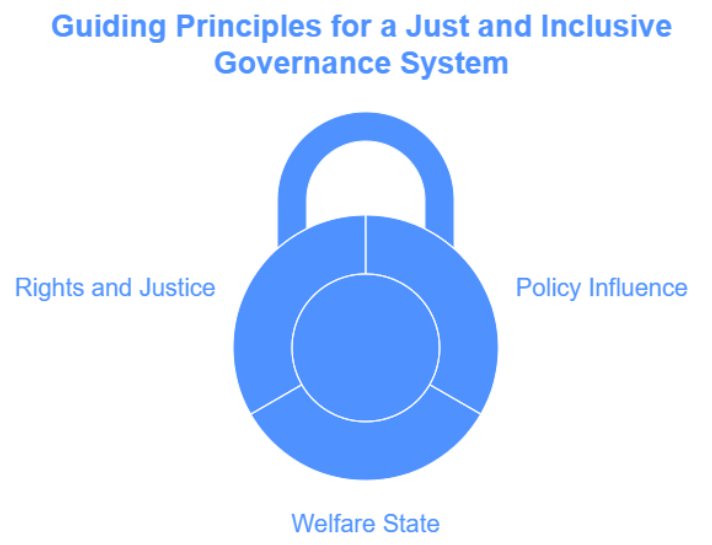
As per Article 37, the Importance of DPSP is that they are fundamental in governance. While not justiciable, these principles influence the government's policies and laws for the welfare of citizens.
A key Importance of DPSP is to promote the idea of a welfare state by ensuring education, employment, health, and social security. For example:
The Importance of DPSP is also seen in bridging the gap between Fundamental Rights and socio-economic justice.
The Importance of DPSP is visible in key welfare laws like:
These laws aim to uplift underprivileged sections and promote social justice in India.
A major concern around the Importance of DPSP is their non-enforceability. Their success depends on political will and awareness.
In the Kesavananda Bharati case (1973), the court said DPSPs cannot override rights but can harmonize with them. Later, the 44th Amendment removed the Right to Property from Fundamental Rights to prioritize DPSPs.
The Minerva Mills case (1980) emphasized the need for balance between DPSPs and Fundamental Rights, highlighting the Importance of DPSP in constitutional interpretation.
The Importance of DPSP in India lies in their ability to shape an inclusive, fair, and balanced society. Though not enforceable by courts, they have deeply influenced policies, laws, and reforms. For effective implementation, political commitment, judicial support, and public awareness are crucial. The future of India's development depends on respecting the Importance of DPSP and aligning them with democratic goals.




Refine your answer writing skills and elevate your UPSC preparation with personalized support and expert feedback.
Fill out the form to get started with the program or any other enquiries !
Are you dreaming of becoming an IAS officer? Then, IAShub can be your best guide. It is one of the Best IAS Coaching in Delhi. Many students who want to clear the UPSC exam join IAShub for learning. The institute gives both online and offline classes. Their teachers are experienced and helpful. They easily explain every topic. Students also get notes, tests, and tips to do well in the exam.
IAShub is in Delhi and is trusted by many UPSC students. It offers coaching for every part of the UPSC exam – Prelims, Mains, and Interview. The classes are simple and easy to understand. The teachers are experts and guide students in the right way. IAShub is also known for its helpful notes, test series, and answer-writing practice. IAShub is the best coaching in Delhi and also gives UPSC Online Classes. This helps students from any place in India to learn. The online classes are live and also recorded. So, students can watch them anytime. These classes cover the full UPSC syllabus.
Here are some important services provided by IAShub:
The UPSC Civil Services Exam has three parts:
This exam is tough, but with the right guidance, it becomes easy to manage. Students must study smart and stay regular.
IAShub supports students from the beginning to the end. It gives the right books, tests, and notes. The classes are easy to follow, and the teachers are always ready to help. Students get personal doubt sessions too. The test series and answer checking help students learn where they need to do better. Also, free study materials save time and money.
IAShub also guides students during the final stage – the interview. Experts take mock interviews and give useful tips. This full support makes IAShub one of the best IAS coaching in Delhi.
 Detailed Solutions & Explanations
Improve Your Answer Writing & Strategy
Detailed Solutions & Explanations
Improve Your Answer Writing & Strategy

