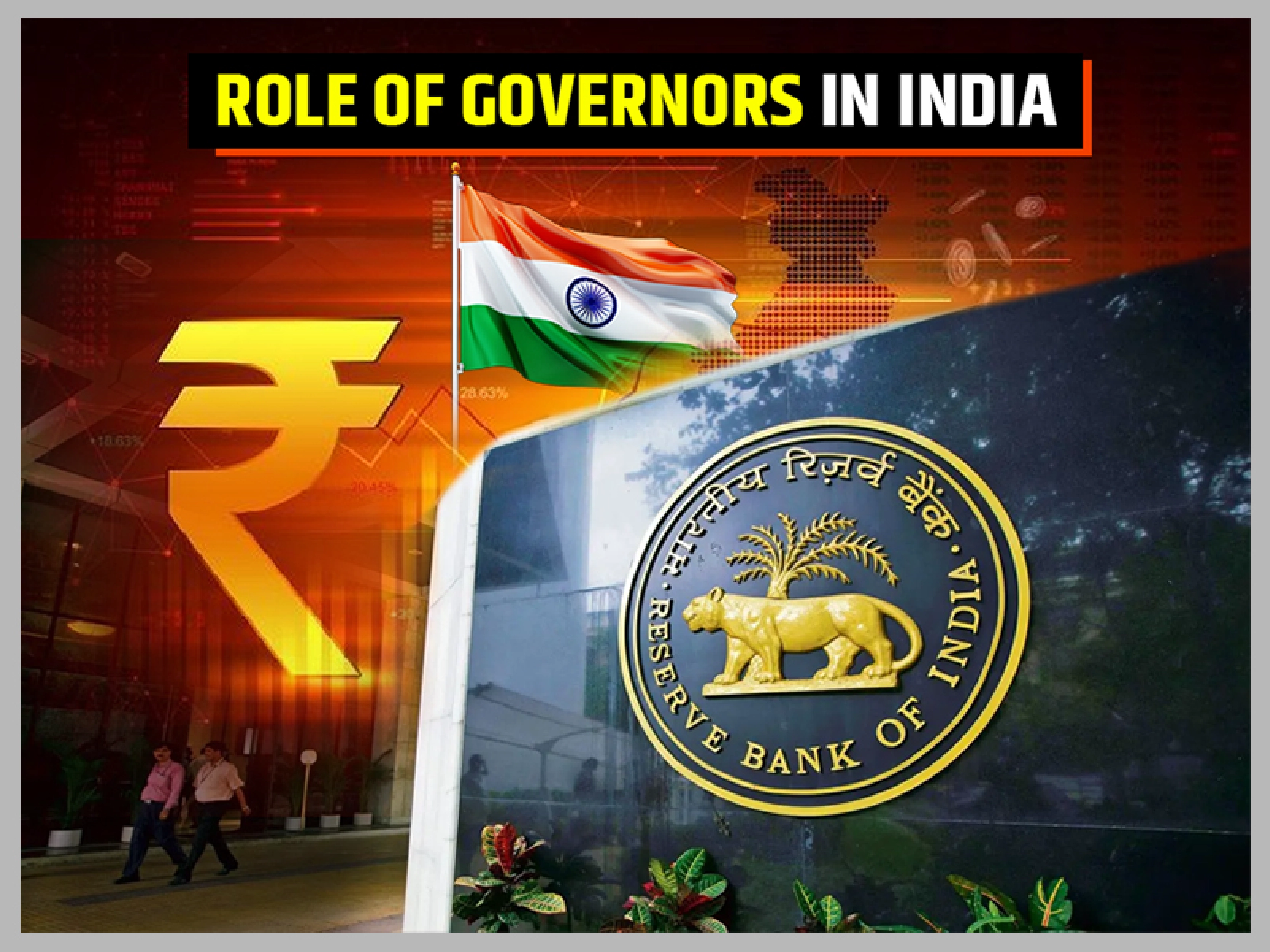
Role of Governors in India Powers, Issues, and Reforms

Explore the role of Governors in India, their powers, controversies, Supreme Court rulings, and recommended reforms for a balanced federal structure.

THEIASHUB
Get an Instant Call Back from Our Expert Mentors Now!
+91

Introduction

The role of Governors in India has been a subject of debate due to frequent controversies and political conflicts. The Governor serves as the constitutional head of a state, acting as a bridge between the state and the central government. However, concerns over the misuse of discretionary powers, politicization of the office, and conflicts with state governments have raised the need for reforms. This article explores the constitutional role of Governors, related controversies, judicial interpretations, and recommendations for strengthening this office.

Constitutional Role of Governors

Executive Powers

  • Head of the State (Article 153 & 154): The Governor is the constitutional head of the state and exercises executive powers on behalf of the President.
  • Appointment of Chief Minister & Council of Ministers (Article 164): The Governor appoints the Chief Minister and other ministers based on the legislative majority.
  • Discretionary Powers (Article 163): The Governor can use discretion in situations like recommending President's Rule under Article 356 or calling a floor test (Article 175).

Legislative Powers

  • Assent to Bills (Article 200): Every bill passed by the state legislature requires the Governor’s assent before becoming law.
  • Dissolution & Summoning of Assembly (Article 174): The Governor can summon, prorogue, or dissolve the legislative assembly.
  • Reservation of Bills for Presidential Assent (Article 200): Certain bills can be reserved for the President’s approval.

Special Powers

  • Administrator of Union Territories (Article 239): In some cases, the Governor acts as an administrator.
  • Emergency Powers (Article 356): The Governor can recommend President’s Rule in case of constitutional breakdown in the state.
  • Chancellor of State Universities: The Governor serves as the Chancellor of state universities, with powers over appointments and administration.

Controversies and Challenges

Politicization of the Governor’s Office

The post of Governor is often seen as a political reward for retired politicians or party loyalists. Frequent removals and transfers based on political considerations weaken the neutrality and credibility of the office.

Misuse of Discretionary Powers

  • Delaying Assent to Bills: In states like Tamil Nadu and Kerala, Governors have refused to give assent to bills passed by elected legislatures.
  • President’s Rule Recommendation: There have been instances where Governors have recommended President’s Rule on questionable grounds, leading to political instability.
  • Government Formation Controversies: In hung assemblies, Governors have allegedly favored certain political parties while inviting them to form the government, as seen in Maharashtra and Karnataka.

Conflict with State Governments

  • Non-cooperation with the Elected Government: Instances like the Rajasthan Governor refusing to convene an assembly session in 2020 highlight conflicts with the state executive.
  • Interference in Day-to-Day Governance: Some Governors have been accused of interfering in administrative matters, leading to friction with Chief Ministers.
  • Role in University Administration: States like Kerala and West Bengal have passed laws to limit the Governor’s role as Chancellor, citing excessive interference.

Judicial Interpretations

Several landmark Supreme Court judgments have clarified the role of Governors:

  • Shamsher Singh v. State of Punjab (1974): The Governor must act on the aid and advice of the Council of Ministers.
  • S.R. Bommai v. Union of India (1994): Governor’s report for President’s Rule must be based on objective material.
  • Rameshwar Prasad Case (2006): Governors cannot act on personal discretion without constitutional justification.
  • BP Singhal v. Union of India (2010): Arbitrary removal of Governors is unconstitutional.
  • Nabam Rebia Case (2016): The Governor cannot summon the assembly without consulting the state government.
  • Karnataka Election Case (2018): The Governor’s discretion in appointing a Chief Minister must be fair and unbiased.

Recommendations for Reforms

Appointment and Removal Reforms

  • Sarkaria & Punchhi Commission Recommendations: The Governor should be an eminent person with no recent political background.
  • Independent Selection Panel: A multi-stakeholder committee, including the Chief Minister, should be involved in the selection process.
  • Fixed Tenure: Governors should have a fixed term to prevent arbitrary removals.

Limiting Discretionary Powers

  • Clear Guidelines for President’s Rule: Article 356 should be used as a last resort, with Governors providing detailed justification.
  • Transparent Government Formation Process: The process of inviting parties to form the government in case of a hung assembly should follow clear rules.
  • Time-bound Decisions: Governors must approve or return bills within a fixed timeframe to prevent unnecessary delays.

Redefining the Governor’s Role in Universities

  • Restricting Role to Constitutional Functions: Governors should not hold additional administrative roles that create conflicts with the state government.
  • State Legislature Oversight: University governance should be left to state legislatures rather than Governors.

Strengthening Federalism and State Autonomy

  • Cooperative Federalism Approach: Both the Governor and the state government should work collaboratively in the interest of governance.
  • Institutionalized Dispute Resolution Mechanism: Instead of escalating disputes to the President, an independent body should mediate conflicts between Governors and state governments.
  • Restoring Legislative Powers to State Assemblies: The powers of elected state governments should be safeguarded to ensure accountability and democratic governance.

Conclusion

The role of Governors in India is crucial for maintaining constitutional balance, but the frequent political controversies surrounding their actions highlight the need for urgent reforms. A neutral and non-partisan Governor, acting within clearly defined constitutional limits, is essential for a strong and cooperative federal structure. Implementing recommendations from expert commissions and Supreme Court judgments can help ensure that the Governor’s role remains a stabilizing force in India’s democracy.



UPSC QEP 2026 Batch 5 - English
Buy now View Details
Submit Your Details to Learn More
I agree to give my consent to receive updates through SMS/Email & WhatsApp*.

NEEV GS + CSAT Foundation 2026/27
Buy now View Details


Join theIAShub’s Mains Answer Writing Program

Refine your answer writing skills and elevate your UPSC preparation with personalized support and expert feedback.

Fill out the form to get started with the program or any other enquiries !

I agree to give my consent to receive updates through SMS/Email & WhatsApp*.

Best IAS Coaching In Delhi, UPSC Online & Offline Classes by IAShub

Are you dreaming of becoming an IAS officer? Then, IAShub can be your best guide. It is one of the Best IAS Coaching in Delhi. Many students who want to clear the UPSC exam join IAShub for learning. The institute gives both online and offline classes. Their teachers are experienced and helpful. They easily explain every topic. Students also get notes, tests, and tips to do well in the exam.

UPSC Online Classes by IAShub

IAShub is in Delhi and is trusted by many UPSC students. It offers coaching for every part of the UPSC exam – Prelims, Mains, and Interview. The classes are simple and easy to understand. The teachers are experts and guide students in the right way. IAShub is also known for its helpful notes, test series, and answer-writing practice. IAShub is the best coaching in Delhi and also gives UPSC Online Classes. This helps students from any place in India to learn. The online classes are live and also recorded. So, students can watch them anytime. These classes cover the full UPSC syllabus.

Key Offerings Provided by IAShub

Here are some important services provided by IAShub:

  • UPSC Prelims: IAShub teaches for Prelims with a focus on basics. It also gives daily current affairs and monthly magazines.
  • Classroom Courses: IAShub has classroom learning for students in Delhi. The environment is good and peaceful for study.
  • Live Classes: Students who live far can join live UPSC online classes. These classes are just like real classes.
  • QEP for Mains: The Quality Enrichment Program (QEP) is special for Mains preparation. It helps students write better and faster.
  • Answer Writing: Regular answer writing practice is given. Teachers also check answers and give tips to improve.
  • Free Resource: IAShub gives free notes by toppers and helpful Main Booster material.
  • Test Series: Test series are available for every subject. These help students know their weak points and improve.
  • Interview Guidance Session: IAShub also gives interview practice sessions with experts. These help students feel confident.

UPSC Exam Overview

The UPSC Civil Services Exam has three parts:

  • Prelims: It has two papers: General Studies and CSAT.
  • Mains: It has nine papers, including essays and optional subjects.
  • Interview: It tests the personality and confidence of the student.

This exam is tough, but with the right guidance, it becomes easy to manage. Students must study smart and stay regular.

How IAShub Helps in the UPSC Journey

IAShub supports students from the beginning to the end. It gives the right books, tests, and notes. The classes are easy to follow, and the teachers are always ready to help. Students get personal doubt sessions too. The test series and answer checking help students learn where they need to do better. Also, free study materials save time and money.
IAShub also guides students during the final stage – the interview. Experts take mock interviews and give useful tips. This full support makes IAShub one of the best IAS coaching in Delhi.

Best IAS Coaching In Delhi FAQs

Yes, IAShub offers live and recorded online classes. Students can attend from any part of India.

Classes are available in both English and Hindi, so students can choose the language they are comfortable with.

The classroom centre is located in Delhi. Students can visit and join offline batches there.

IAShub gives interview guidance sessions to help students prepare for the final round of UPSC.