
theIAShub
21 Jul, 2025
Table of Contents

Get an Instant Call Back from Our Expert Mentors!
Context
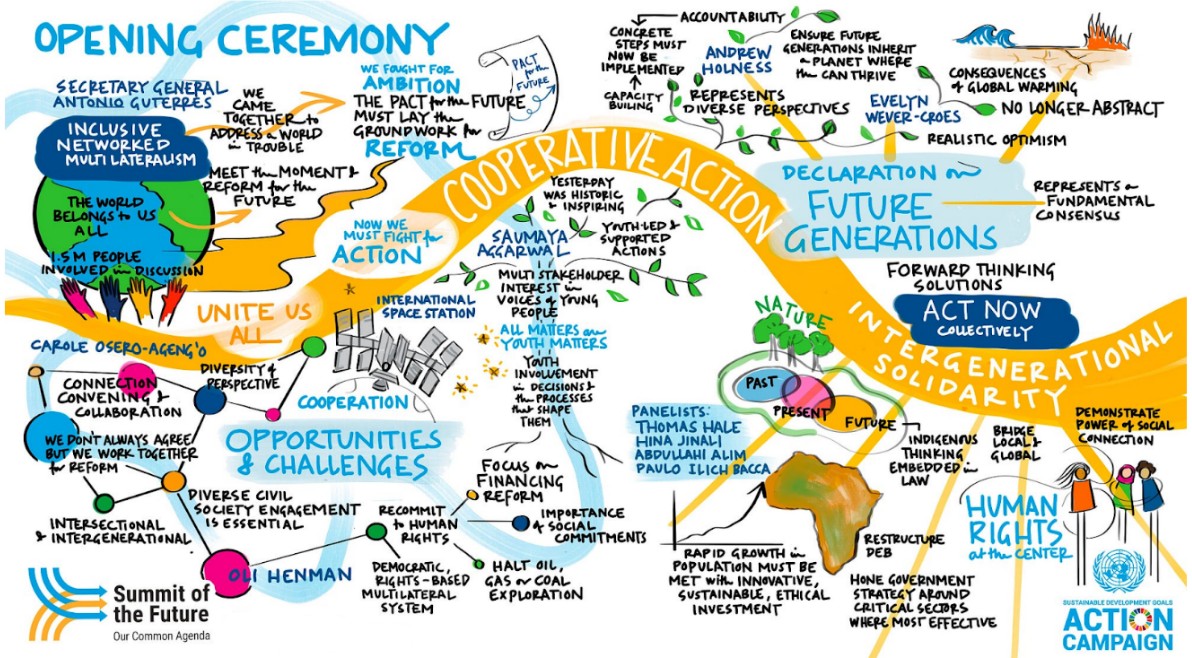
- India has called for urgent and time-bound UN Security Council reforms while reiterating its strong commitment to the implementation and review of the “Pact for the Future” agreement to strengthen global cooperation.
About Pact for the future: What is it?
- It was adopted at the UN “Summit of the Future”, September 2024.
- A non-binding yet significant political declaration among UN Member States.
- Its aim is to strengthen multilateralism, improve global cooperation, and tackle present and emerging global challenges.
About United Nations Security Council
- The UN Security Council is one of the six principal organs of the United Nations, entrusted with the primary responsibility of maintaining international peace and security.
- The Council comprises 15 members in total:
- 5 permanent members (P5): China, France, Russia, the United Kingdom, and the United States.
- These nations possess veto power, enabling any one of them to block the adoption of substantive resolutions.
- 10 non-permanent members, elected by the UN General Assembly for two-year terms, based on regional representation.
- Notably, over 50 UN member states have never served as members of the Security Council.
Need for Reform in UNSC
- The UNSC has failed to take timely and unified actions on pressing global crises like the COVID-19 pandemic, Climate-induced security threats, etc
- To make the UNSC more Inclusive and Representative.
- The current structure does not reflect the democratic values of a
- multipolar world.
- Expanding the Council is essential to building a fairer and more equitable
- international governance system.
- There is inadequate representation from Asia, Africa, Latin America, and the Caribbean, regions home to the majority of the global population.
- The Council's inability to act decisively in situations involving P5 interests (e.g., the Ukraine war, the Israel-Gaza conflict) has eroded global trust.
- The veto-wielding power of the P5 often paralyses the Council.
- The decision-making process is still rooted in the post-WWII power structure, which no longer reflects today’s world dynamics.
India Demand for Permanent membership of UNSC
- India is a founding member of the UN and has served on the UNSC eight times as a non-permanent member.
- India consistently supports the interests of developing nations, particularly in Asia, Africa, and Latin America. India champions a balanced and equitable world order.
- With its strategic location in the Indian Ocean, India plays a key role in maritime security and acts as a net security provider in the IndoPacific.
- India is the 4th largest economy in the world and most populous country in the World.
- India has been an active member of the UN and has participated actively in UN peacekeeping operations around the globe.
- India is also the Largest Democracy in the world and permanent membership will strengthen the Voice Of Democracy at global Level.
Challenges in Reforming the UNSC
- A two-thirds majority in the UN General Assembly (129 of 193 members), and Ratification by two-thirds of UNSC members, including all P-5 nations which makes the amendment process very cumbersome and difficult.
- The P-5 countries (the US, UK, France, Russia, China) are reluctant to dilute their privileged position.
- Lack of Consensus Among Member States.
- Size of expansion in both permanent and non-permanent categories.
- Regional representation (e.g., who should represent Asia, Africa, Latin America)
- Whether new permanent members should have veto powers.
India’s Efforts for UNSC Reform
- India has actively participated in the Inter-Governmental Negotiations (IGN)—the official UN platform for discussions on UNSC reform.
- India has consistently demanded expansion in both permanent and non-permanent categories, and enhanced representation for developing countries, especially from Asia, Africa, and Latin America.
- India is a founding member of the G4 grouping, along with Japan, Brazil, and Germany.
- These four nations support each other’s candidatures for permanent membership and advocate for comprehensive reforms in the Council.
- India is also part of the L.69 Group. This group seeks to enhance the voice and representation of developing nations in global decisionmaking, especially within the UNSC.
Way Forward
- Ensure greater representation from Africa, Asia-Pacific, Latin America, and the Caribbean to enhance the Council’s legitimacy and inclusivity.
- Transition the Intergovernmental Negotiations (IGN) process into formal text-based negotiations to move beyond general statements and develop actionable proposals.
- Support G4’s proposal for a new category of longer-term nonpermanent seats as a transitional arrangement.
- Reform representation based on financial, military, and peacekeeping contributions.
- Countries like Germany, Japan, and India, being major contributors, should have a larger say in global decision-making.

2026-27 UPSC Mains English QEP Power Pages
View DetailsSubmit Your Details to Learn More



