
theIAShub
24 Jul, 2025
Table of Contents

Get an Instant Call Back from Our Expert Mentors!
Context
- The plastic industry has come under renewed scrutiny for allegedly deploying tactics to influence environmental policy in its favour, particularly during global treaty negotiations on plastic pollution.
About
- Reports and investigations indicate that the industry, backed by powerful fossil fuel interests, has employed tactics strikingly similar to those once used by the tobacco industry: sowing public doubt, delaying regulation, and manipulating narratives to shift responsibility from corporations to consumers.
- These strategies are gaining prominence as governments globally attempt to tighten controls on plastic production and waste, particularly through the formulation of a potential UN treaty on plastic pollution.
Environmental Concerns
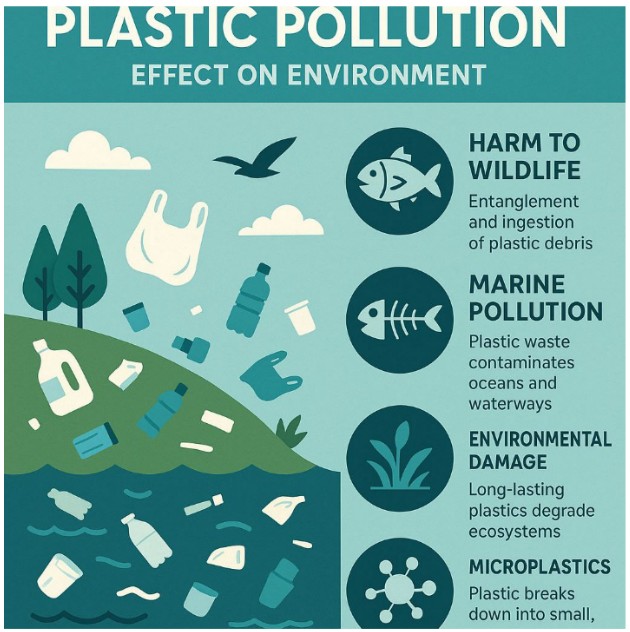
- Pollution: Single-use plastics and mismanaged waste have led to severe marine and terrestrial pollution threatening sustainable development and Marine Environment.
- Carbon Footprint: Plastics are fossil fuel-derived, contributing significantly to greenhouse gas emissions throughout their lifecycle.
- Non-Biodegradability: Plastics can persist for hundreds of years, clogging waterways, harming wildlife, and affecting agriculture.
Tobacco Industry Playbook: Its Echoes
- Shifting Responsibility to Consumers
- While tobacco ads famously carried disclaimers like “Smoking is injurious to health”, even as they promoted smoking, the plastic industry blames consumers for not recycling effectively, thereby sidestepping the industry’s responsibility in creating unsustainable plastic systems.
- Greenwashing and Mislabelling
- Much like “light” cigarettes falsely marketed as healthier, today’s biodegradable and compostable plastics often fail to break down as claimed, especially in India’s underdeveloped waste management systems.
- Corporate greenwashing further distorts consumer understanding and weakens public demand for accountability.
- One prominent example was Coca-Cola, which, despite promoting its sustainability image, quietly dropped its target of 25% reusable packaging by 2030 and backtracked on key recycling goals.
Influence on Environmental Policy Making
- Policy Resistance from the Industry
- Lobbying Power: The plastic and petrochemical industries are influential lobbyists, often opposing stringent environmental regulations that threaten profits which has a effect on Ruling Governments
- Framing and Greenwashing: Big Companies may promote recycling as a primary solution to avoid bans or restrictions, despite its limited effectiveness.
- Funding Research: Industry-funded studies sometimes downplay environmental risks or shift blame to consumer behavior rather than production practices.
India’s Landscape on Plastic Pollution
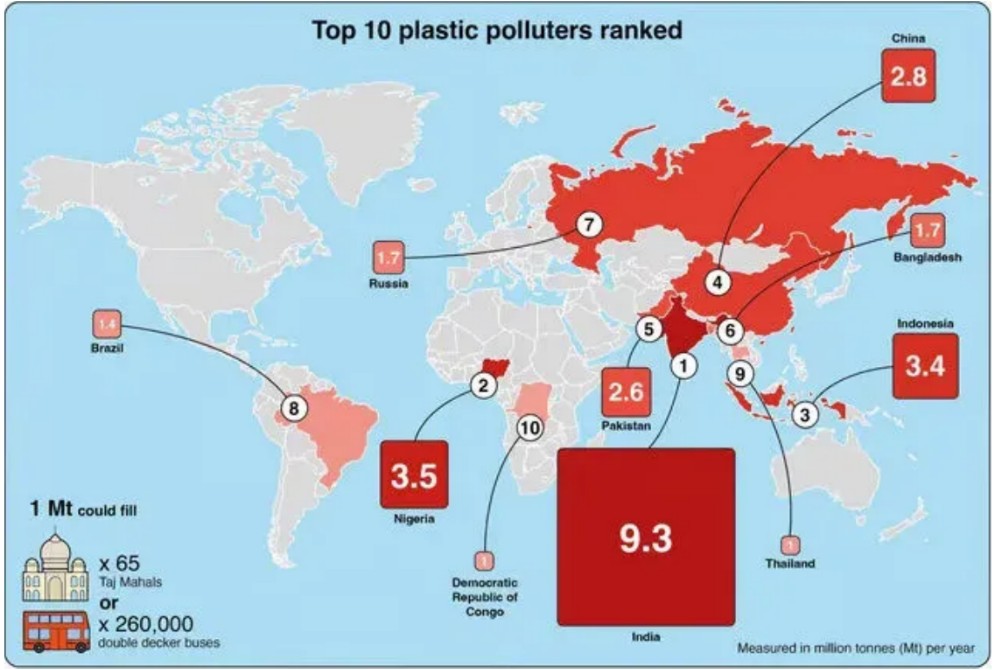
- India has emerged as the world’s top plastic polluter, releasing 9.3 Mt of plastic annually and amounting to roughly one-fifth of global plastic emissions.
- Plastic emissions are greenhouse gases (GHGs) released throughout the life cycle of plastic, from production to disposal.
- While India’s official plastic waste generation rate (which is about 0.12 kilograms per capita per day) is likely underestimated, waste collection figures are inflated.
Efforts to Reduce Plastic Pollution
- India – The Plastic Waste Management Amendment Rules (2021):
- In 2022, India brought into effect the Plastic Waste Management Amendment Rules (2021) that banned 19 categories of ‘single-use plastics’ – disposable goods that are made with plastic but are generally use-and-throw.
- Plastic Waste Management (Amendment) Rules, 2022, has introduced the guidelines on Extended Producer Responsibility (EPR) for plastic packaging.
- India is a signatory to MARPOL (International Convention on Prevention of Marine Pollution).
- The “India Plastic Challenge – Hackathon” has been launched as a unique competition calling upon start-ups /entrepreneurs and students of Higher Education Institutions (HEIs) to develop innovative solutions to mitigate plastic pollution and develop alternatives to single-use plastics.
- Prakriti & Green Initiatives for Effective Plastic Waste Management.
- The Union Ministry of Environment has launched Mascot ‘Prakriti’ to spread awareness about small changes that can be sustainably adopted in the lifestyle for a better environment for plastic pollution.
Industry Lobbying in Global Negotiations
- Recent rounds of the UN Intergovernmental Negotiating Committee (INC) for a global plastics treaty have been notably influenced by industry lobbying.
- At INC-3, fossil fuel and chemical industry lobbyists outnumbered their previous participation by 36%
- Civil society groups raised concerns about industry-backed delegates slowing down progress on binding commitments
- Internal documents and reports from the Centre for Climate Integrity and Centre for International Environmental Law (CIEL) have exposed how the plastic industry has long known the inadequacy of recycling as a solution but continued to promote it to avoid scrutiny.

2026-27 UPSC Mains English QEP Power Pages
View DetailsSubmit Your Details to Learn More



