BIMSTEC Ports Conclave

India hosted the 2nd BIMSTEC Ports Conclave in Visakhapatnam, focusing on the Blue Economy, innovation, and regional maritime cooperation. The conclave advances BIMSTEC's Maritime Transport Pact, port-led growth, and India's Act East Policy.

upsc-daily-current-affairs
THEIASHUB
Get an Instant Call Back from Our Expert Mentors Now!
+91

Context

  • The Union Minister of Ports, Shipping & Waterways (MoPSW) inaugurated the second edition of BIMSTEC Ports Conclave.

About Ports Conclave

  • The two-day BIMSTEC Ports Conclave was held under the auspices of the Visakhapatnam Port Authority.
  • Theme: Blue Economy, Innovation and Sustainable Partnerships. 
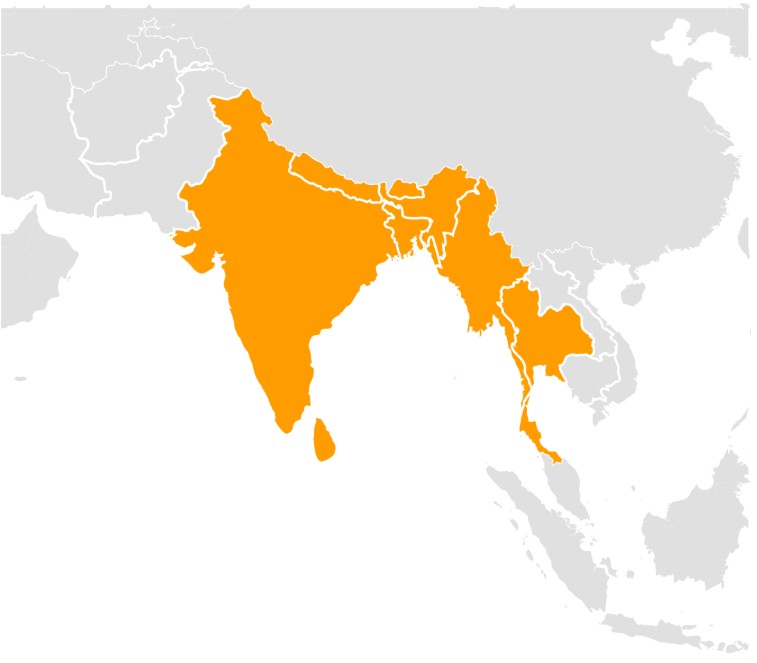
  • Representatives of ministries from port authorities of BIMSTEC member nations of Bangladesh, Bhutan, India, Myanmar, Nepal, Sri Lanka, and Thailand participated in it.
  • Aim: To operationalise the recently signed BIMSTEC Agreement on Maritime Transport Cooperation (AMTC), facilitate dialogue on port-led development, and foster deeper integration in maritime trade, logistics, cruise tourism, and skill development. 
  • BIMSTEC Sustainable Maritime Transport Centre is going to be established under the Indian Ocean Centre of Excellence for Sustainable Maritime Transport (IOCE-SMarT) at Mumbai.
  •  The Panels explored plans for port-linked industrial zones, digital integration, and sustainable cruise routes, alongside proposals for a BIMSTEC Ports Coordination Centre and a regional Port Community System.

About BIMSTEC

  • It is a regional organization established in 1997 with signing of the Bangkok Declaration.]
  • It was originally formed with 4 Members (Bangladesh, India, Sri Lanka & Thailand) with the acronym 'BIST-EC'.
  • Secretariat: Dhaka, Bangladesh
  • Member States (7): Bangladesh, Bhutan, India, Myanmar, Nepal, Sri Lanka, and Thailand.
  • BIMSTEC Charter: Foundational document that outlines the goals, principles, and structure of the BIMSTEC. It was finalized in the 5th Summit (2022) in Sri Lanka.
    • Charter confers legal personality on the grouping and paves the way for external partnerships and admission of observers and new members.
Objective

  • To create an enabling environment for rapid economic development and social progress and maintain peace and stability in the Bay of Bengal region.
  • 7 Priority Areas/Pillars (each led by 1 Member country):  Trade & Investment (Bangladesh); Environment & Climate Change (Bhutan); People-to-People Contacts (Nepal); Agriculture & Food Security (Myanmar); Science &Technology and Innovation (Sri Lanka) and Connectivity (Thailand).
  • India is the Lead Country for Security pillar under which there are 3 sub-sectors – Counter-Terrorism and Transnational Crime, Disaster Management and Energy Security.

Significance for Ports Conclave for India

  • Advancing Maritime Connectivity and Trade Efficiency: The conclave emphasized the operationalization of the BIMSTEC Coastal Shipping and Maritime Transport Agreements, which is vital for India’s ambitions to become a regional maritime logistics hub.
  • Strengthening India’s ‘Act East’ and ‘Neighbourhood First’ Policies: By engaging BIMSTEC countries the conclave reinforces India’s ‘Act East’ policy, which seeks deeper ties with Southeast Asia.
  • Operationalizing the Kaladan Multi-Modal Transit Transport Project: The conclave showcased India’s flagship Kaladan project, which connects Kolkata Port → Sittwe Port (Myanmar) → Inland waterway to Paletwa → Road to Mizoram.
    • This corridor is a model for multi-modal regional connectivity and vital in improving access to its northeastern states.
  • Promoting the Blue Economy and Sustainable Development: The conclave promoted sustainable maritime practices, this aligns with India’s Blue Economy Policy Framework, which seeks to balance economic growth with ocean ecosystem protection.

Way Forward

  • While the BIMSTEC Ports Conclave has opened up vast opportunities for India to become the maritime centre of the Bay of Bengal, several challenges — infrastructural, institutional, geopolitical, and logistical — must be addressed. 
  • A coordinated push involving capacity building, diplomatic engagement, infrastructure financing, and security cooperation is necessary to translate vision into outcomes.


UPSC QEP 2026 Batch 5 - English
Buy now View Details
Submit Your Details to Learn More
I agree to give my consent to receive updates through SMS/Email & WhatsApp*.

NEEV GS + CSAT Foundation 2026/27
Buy now View Details


Join theIAShub’s Mains Answer Writing Program

Refine your answer writing skills and elevate your UPSC preparation with personalized support and expert feedback.

Fill out the form to get started with the program or any other enquiries !

I agree to give my consent to receive updates through SMS/Email & WhatsApp*.

Best IAS Coaching In Delhi, UPSC Online & Offline Classes by IAShub

Are you dreaming of becoming an IAS officer? Then, IAShub can be your best guide. It is one of the Best IAS Coaching in Delhi. Many students who want to clear the UPSC exam join IAShub for learning. The institute gives both online and offline classes. Their teachers are experienced and helpful. They easily explain every topic. Students also get notes, tests, and tips to do well in the exam.

UPSC Online Classes by IAShub

IAShub is in Delhi and is trusted by many UPSC students. It offers coaching for every part of the UPSC exam – Prelims, Mains, and Interview. The classes are simple and easy to understand. The teachers are experts and guide students in the right way. IAShub is also known for its helpful notes, test series, and answer-writing practice. IAShub is the best coaching in Delhi and also gives UPSC Online Classes. This helps students from any place in India to learn. The online classes are live and also recorded. So, students can watch them anytime. These classes cover the full UPSC syllabus.

Key Offerings Provided by IAShub

Here are some important services provided by IAShub:

  • UPSC Prelims: IAShub teaches for Prelims with a focus on basics. It also gives daily current affairs and monthly magazines.
  • Classroom Courses: IAShub has classroom learning for students in Delhi. The environment is good and peaceful for study.
  • Live Classes: Students who live far can join live UPSC online classes. These classes are just like real classes.
  • QEP for Mains: The Quality Enrichment Program (QEP) is special for Mains preparation. It helps students write better and faster.
  • Answer Writing: Regular answer writing practice is given. Teachers also check answers and give tips to improve.
  • Free Resource: IAShub gives free notes by toppers and helpful Main Booster material.
  • Test Series: Test series are available for every subject. These help students know their weak points and improve.
  • Interview Guidance Session: IAShub also gives interview practice sessions with experts. These help students feel confident.

UPSC Exam Overview

The UPSC Civil Services Exam has three parts:

  • Prelims: It has two papers: General Studies and CSAT.
  • Mains: It has nine papers, including essays and optional subjects.
  • Interview: It tests the personality and confidence of the student.

This exam is tough, but with the right guidance, it becomes easy to manage. Students must study smart and stay regular.

How IAShub Helps in the UPSC Journey

IAShub supports students from the beginning to the end. It gives the right books, tests, and notes. The classes are easy to follow, and the teachers are always ready to help. Students get personal doubt sessions too. The test series and answer checking help students learn where they need to do better. Also, free study materials save time and money.
IAShub also guides students during the final stage – the interview. Experts take mock interviews and give useful tips. This full support makes IAShub one of the best IAS coaching in Delhi.

Best IAS Coaching In Delhi FAQs

Yes, IAShub offers live and recorded online classes. Students can attend from any part of India.

Classes are available in both English and Hindi, so students can choose the language they are comfortable with.

The classroom centre is located in Delhi. Students can visit and join offline batches there.

IAShub gives interview guidance sessions to help students prepare for the final round of UPSC.