
theIAShub
25 Jul, 2025
Article List
- India - UK: Historic FTA (CETA) Signed
- Judicial Accountability and In- House Inquiry
- Semiconductor Sector in India: Attracting Record Investments
- The Vanuatu Case: Historic ICJ Ruling on Climate Change
- Study on Coral Cover
- Indian Regional Navigation Satellite System (IRNSS)
- Scheme for Promotion of Culture of Science (SPoCS)
- SC/ST (Prevention of Atrocities) Act, 1989: A Bulwark for Social Justice
- Sohrai, Pattachitra, and Patua: Ancient Arts
- Lumpy Skin Disease
- Henley Passport Index 2025
1. India - UK: Historic FTA (CETA) Signed
Context
- India and the United Kingdom signed a landmark Comprehensive Economic Trade Agreement (CETA) during Prime Minister Narendra Modi’s visit to the U.K.
- India and the United Kingdom have taken a major step in building a stronger economic partnership with the signing of the Comprehensive Economic and Trade Agreement (CETA) today under the visionary leadership of Prime Minister Shri Narendra Modi. The agreement was signed by Commerce and Industry Minister, Mr. Piyush Goyal and Secretary of State for Business and Trade, Mr. Jonathan Reynolds in the presence of the two Prime Ministers.
Key Highlights
- CETA secures unprecedented duty-free access for 99% of India’s exports to the UK, covering nearly the entire trade basket.
- This is expected to open new opportunities for labour-intensive industries such as textiles, marine products, leather, footwear, sports goods, toys, and gems and jewellery, alongside fast-growing sectors like engineering goods, auto components, and organic chemicals.
Service Sector
- The agreement provides greater market access in IT and IT-enabled services, financial and legal services, professional and educational services, and digital trade.
- Indian professionals, including those deployed by companies to work in the UK across all services sectors, professionals deployed on contracts such as architects, engineers, chefs, yoga instructors, and musicians, will benefit from simplified visa procedures and liberalised entry categories, making it easier for talent to work in the UK.
Agriculture Sector: Boosting Rural Economy
- Duty free export for 95% of Agri Products.
- No tariff concession on UK dairy product apples, Oats and edible oils
- Major beneficiary states, Maharashtra, Punjab, Haryana, Gujrat, Kerala and North Eastern States.
New Avenues for Plantation Sector
- Duty free access to India’s instant coffee, tea, spices and rubber.
- Export of Darjeeling tea from West Bengal and Araku Coffee from Andhra Pradesh to Soar.
- Duty- Free access to processed foods like Mango-pulp, pickles, pulses and ready to eat foods.
- More Income for farmers and increased Rural Employment.
Unleashing Power of Blue Economy
- Zero Duty access for 90% of Marine Exports.
- Coastal states like West Bengal, Odisha, Andhra Pradesh, Tamil Nadu, Kerala, Karnataka, Gujrat to benefit from export led job creation.
- Indian Fisherman to have greater expansion into the UK's $5.4 billion marine Market.
Textiles & Apparel: Enhanced Competitiveness.
- Coverage: 1,143 product categories, all duty-free.
- Market Impact: India may gain 5% more UK market share.
- Key Products: Ready-made garments, carpets, handicrafts, home textiles.
- Advantage: Levels playing field with Bangladesh and Cambodia.
Engineering Goods: Export Surge Expected
- Current Status: $4.28B exports to UK; UK imports $193.5B globally.
- Tariff Cuts: Up to 18% duties scrapped.
- Projection: Engineering exports may double to $7.5B by 2030.
Leather and Footwear
- From 16% to Zero: Duty-free access for leather and footwear.
- It will increase the global competitiveness of our MSME in hubs like Agra, Kanpur and Chennai.
- Greater brand recognition of products like Kolhapuri Chappals.
- It will boost income for local artisans, jobs and Cultural Identity.
Gems and Jewellery
- Duty Free access into UK’S gems and jewellery market.
- E-Commerce, digital tools, sustainable production technologies, efficiency to enhance market reach.
Chemicals & Plastics
- Chemical Sector: Exports to rise 30–40% to $650–750M in FY26.
- Plastic Sector: Focus on films, sheets, kitchenware; 15% export growth targeted.
- Advantage: More competitive pricing versus global suppliers.
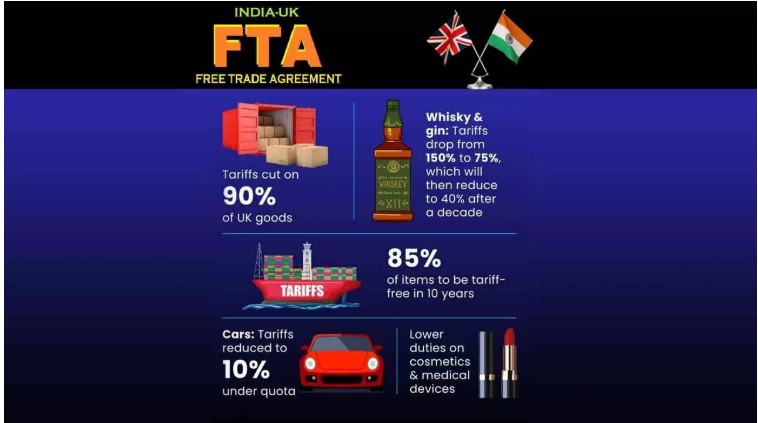
Impact of India-UK Trade Deal
- Gains for Indian Sectors – India’s key export sectors — including agriculture, processed food, textiles, footwear, seafood, gems and jewellery, and engineering goods — will enjoy expanded market access in the U.K. thanks to reduced tariffs.
- Benefits for British Exports – British exporters will also benefit significantly. The deal is set to ease the sale of whisky, cars, and other British goods in India, helping diversify and broaden the trade portfolio.
- Boost to Bilateral Trade – UK exports to India are projected to grow by nearly 60%, contributing an additional £15.7 billion by 2040. Overall bilateral trade is expected to surge by 39%, adding £25.5 billion annually compared to trade levels in the absence of the agreement.
- Services and Mobility Provisions – The FTA includes chapters on services, innovation, and intellectual property, offering enhanced mobility for Indian professionals.
- Additionally, a Double Contribution Convention Agreement will prevent Indian workers in the UK from paying into both Indian and British social security systems..
Conclusion
- This CETA marks a milestone in the trade relations between two major economies, setting an ambitious and balanced framework. It unlocks tariff-free access on 99% of Indian exports to the UK, covering nearly 100% of trade value- including labour-intensive sectors advancing the ‘Make in India’ initiative and setting the stage for bilateral trade to double by 2030.
- This FTA will serve as a catalyst for inclusive growth, benefiting farmers, artisans, workers, MSMEs, startups, and innovators while safeguarding India’s core interests and accelerating our journey towards becoming a global economic powerhouse.”
2. Judicial Accountability and In- House Inquiry
Context
- The Chief Justice of India has agreed to constitute a Bench to hear a petition filed on behalf of Justice Yashwant Varma (Allahabad High Court), challenging the constitutional validity of the in-house inquiry mechanism.
Background
- In March 2025, unaccounted cash was allegedly found at Justice Yashwant Varma’s residence, prompting an in-house committee to recommend his removal without granting him a personal hearing.
- After he refused to resign, a removal motion was initiated in Parliament.
- The case has triggered a serious debate over judicial independence, the doctrine of separation of powers, and the limits of internal judicial oversight.
In-House Procedure for Investigation
- To address judicial misconduct outside the formal impeachment process, the Supreme Court in 1999 adopted an “in-house procedure” for conducting investigations;
- Filing Complaints: Complaints can be made to the CJI, High Court Chief Justice, or the President.
- Preliminary Inquiry: The Chief Justice of the High Court seeks a response from the accused judge and forwards the findings to the CJI.
- Fact-Finding Committee: If serious allegations arise, the CJI appoints a committee comprising two Chief Justices of other High Courts and one High Court judge to investigate.
- Recommendations and Action: If the committee finds sufficient grounds for removal, the CJI may advise the judge to resign. If the judge refuses, the report is forwarded to the President and the Prime Minister for further action, paving the way for impeachment.
Constitutional and Legal Issues
- Constitutional Validity of In-House Procedure: The petition contends that the in-house inquiry lacks constitutional or statutory backing, violating Article 124(4) and Articles 218, which lay down the exclusive parliamentary procedure for removing High Court and Supreme Court judges.
- Violation of Principles of Natural Justice: The petition claims no personal hearing or access to the full report was provided, and the evidence—photos and videos—lacked procedural validity, undermining due process under Articles 14 and 21.
- Separation of Powers: The removal of judges is, by constitutional design, a parliamentary function, not a judicial one. Critics argue that by creating and enforcing an internal mechanism for judge accountability, the judiciary is effectively usurping the powers of Parliament.
Way Ahead
- Need for Institutional Clarity: There is an urgent need to codify the process for preliminary inquiries against judges, with safeguards similar to those in the Judges (Inquiry) Act, 1968.
- The in-house mechanism must be made more transparent, accountable, and procedurally fair.
- Balance Between Independence and Accountability: Judicial independence must not translate into immunity from scrutiny.
- Simultaneously, disciplinary measures must not undermine judges’ rights to due process.
3. Semiconductor Sector in India: Attracting Record Investments
Context
- The semiconductor design ecosystem in India is getting stronger day by day. Startups supported under the Ministry of Electronics and IT’s (MeitY) Design Linked Incentive (DLI) Scheme and Chips to Startup (C2S) Programme are now gaining significant traction.
About the News and Schemes
- Netrasemi, a startup supported under the government’s chip design scheme, has received Venture Capital (VC) investment of ₹107 crore. The company is working on making chips for smart vision, CCTV cameras, and Internet of Things (IoT) applications.
Commitment of 234 Crore to Indian Startups
Since the launch of the DLI Scheme in 2022
- Government had committed the support of ₹234 crore for the chip design projects from 22 companies with a total project cost of ₹690 crore
- These chips will be used in CCTV cameras, mobile networks, satellites, cars, smart devices, etc.
- These startups have together raised over ₹380 crore from VC investors
- Five startups have already built and tested their chip designs with global chip manufacturers
- More than 72 companies have been given access to advanced software tools to help them design chips
About Semiconductors
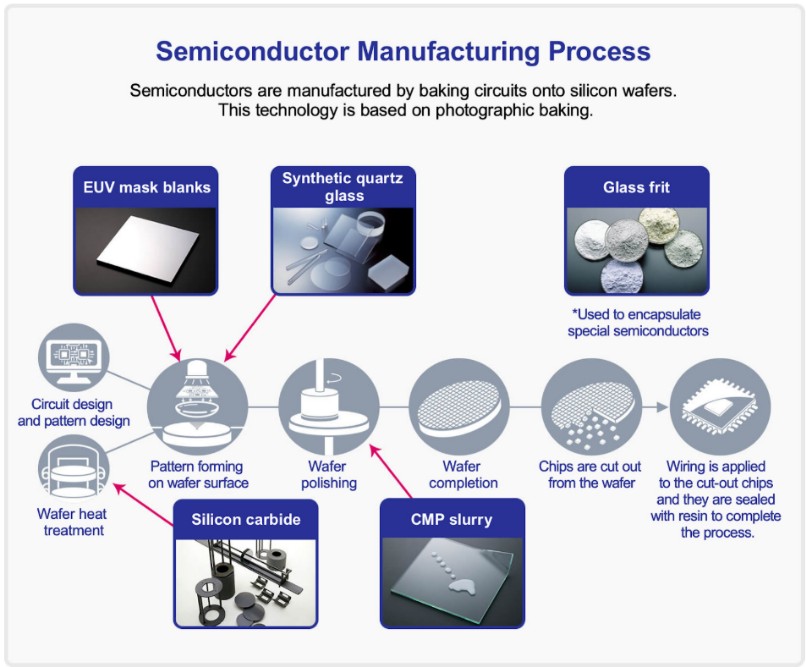
- Semiconductors are materials with electrical properties that fall between those of conductors (like metals) and insulators (like rubber).
- They have a unique ability to conduct electricity under certain conditions while acting as insulators under others.
- They are sometimes referred to as integrated circuits (ICs) or microchips made from pure elements, typically silicon or germanium.
- In a process called doping, small amounts of impurities are added to these pure elements, causing large changes in the conductivity of the material.
- Applications: Semiconductors are used in a vast range of electronic devices.
- Transistors, which are fundamental components of modern electronic circuits, rely on semiconductor materials.
- They act as switches or amplifiers in everything from computers to cell phones.
- Semiconductors are also used in solar cells, LEDs, and integrated circuits.
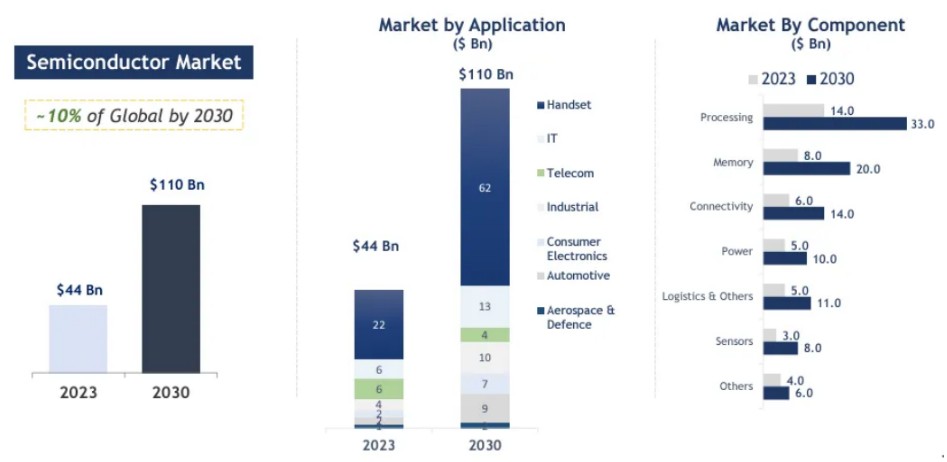
Semiconductor Market
- Industry estimates place the Indian semiconductor market at approximately $38 billion in 2023, with projections indicating growth to $109 billion by 2030.
- This growth is driven by strong demand and government initiatives like the production-linked incentive scheme.
- According to a report by the India Electronics and Semiconductor Association and Counterpoint Research, mobile handsets and IT sectors are leading the market by contributing over 75 percent of revenues.
Focus on Semiconductor Sector: Need for it
- Strategic Significance: Given their importance to the economy, semiconductors have become a key strategic industry sector for many countries, with governments and companies alike investing heavily in research and development to maintain competitiveness and innovate.
- Dependence on Global Supply Chain: A serious shortage of those chips in 2021, underlined how dependent the global industry is on a few key suppliers.
- Taiwan is currently the world’s largest chipmaker, holding approximately 44% of global market share, followed by China (28%), South Korea (12%), the U.S. (6%) and Japan (2%)
- In an effort to cut that dependency governments are spending huge sums to create stronger domestic chip industries.
Steps by Government
- Semicon India: The initiative is for the development of semiconductor and display manufacturing ecosystem in the country.
- The programme aims to provide financial support to companies investing in semiconductors, display manufacturing and design ecosystem.
- India Semiconductor Mission: It functions as a dedicated division within the Digital India Corporation.
- Its main goal is to nurture a strong semiconductor and display ecosystem to position India as a prominent global player in electronics manufacturing and design.
- The government offers incentives for manufacturing setup in India:
- Under the Semiconductor Fab Scheme, fiscal support of 50% of the project cost on an equal footing for all technology nodes.
- Under the Display Fab Scheme, fiscal support of 50% of the project cost on an equal footing basis.
- Under the Compound Semiconductor Scheme, fiscal support of 50% of the capital expenditure on an equal footing basis, including support for discrete semiconductor fabs.
- Under the Chips to Startup (C2S) Programme being implemented at 113 academic institutions/ R&D organizations/ Start-ups/ MSMEs, 85,000 number of high-quality and qualified engineers are being trained in several areas.
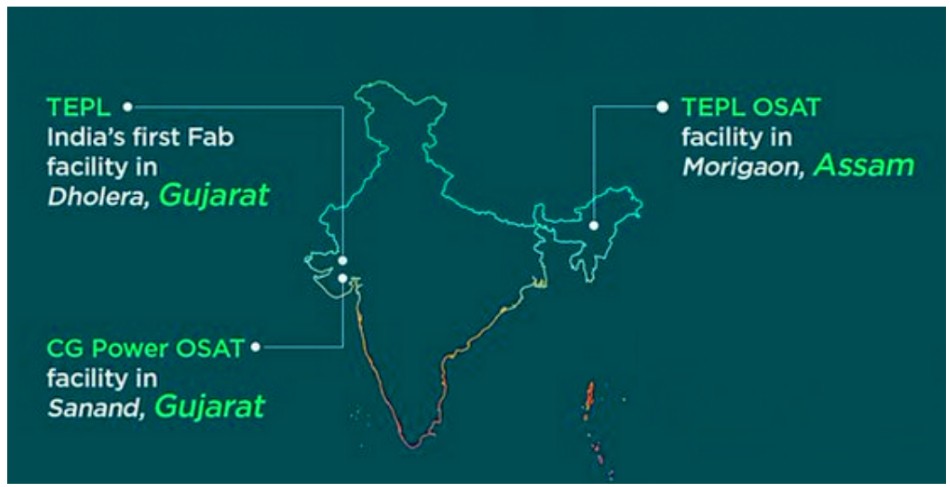
- In February 2024, the government approved the establishment of three semiconductor plants, two in Gujarat and one in Assam.
Way Forward
- With the rise of digital technologies, AI, IoT, and 5G, the demand for semiconductors is skyrocketing. India, with its burgeoning tech industry, is well-positioned to capitalize on this trend.
- Foreign Investment: Major global players like Intel, TSMC, and others are exploring opportunities in India. This influx of foreign investment will help develop local expertise and infrastructure.
- Startup Ecosystem: India has a vibrant startup ecosystem focused on semiconductor design and related technologies, fostering innovation and contributing to the overall growth of the sector.
- Infrastructure Development: Improved infrastructure, including special economic zones (SEZs) for electronics manufacturing, is being established to facilitate the growth of the semiconductor industry.
- Talent Pool: India boasts a large pool of engineering graduates and skilled professionals, which can support the workforce needs of the semiconductor sector.
4. The Vanuatu Case: Historic ICJ Ruling on Climate Change
Context
- In a historic advisory opinion, the International Court of Justice (ICJ) ruled that access to a clean, healthy, and sustainable environment is a fundamental human right. The case was initiated by Vanuatu and supported by over 130 nations vulnerable to climate change.
About the Issue: What was It
- In 2023, the UN General Assembly requested the ICJ’s opinion on state obligations under international law to tackle climate change and the legal consequences for inaction.
- States’ obligations under international law to protect the environment
- Legal consequences for failing to meet these obligations.
Origin of the Initiative
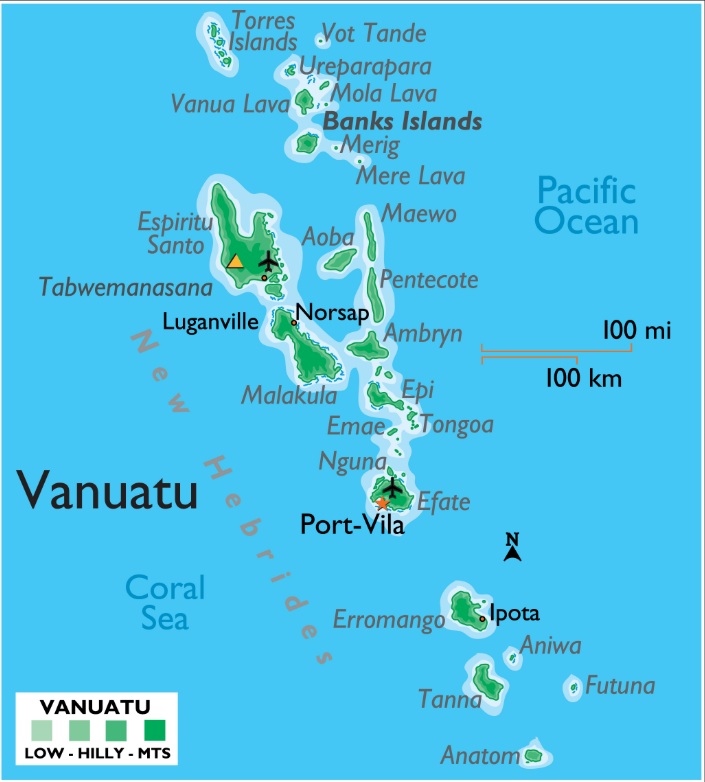
- In September 2021, the Pacific Island nation of Vanuatu launched a campaign to seek an advisory opinion from the ICJ on climate change.
- The move highlighted the urgency for stronger legal action, especially for vulnerable small island nations threatened by rising sea levels.
Legal Framework and Importance
- Under the UN Charter, both the General Assembly and the Security Council have the authority to request advisory opinions from the ICJ.
- Although these opinions are not legally binding, they carry significant legal and moral weight, serving to clarify and advance the development of international law.
Key Highlights of ICJ Ruling
- Clean, Healthy, and Sustainable Environment is Human Rights: States are bound by treaties like the Universal Declaration of Human Rights and must act on climate change to protect these rights.
- States Obliged to Limit Emissions: States must prevent harm from greenhouse gas (GHG) emissions, and ensure meeting the Paris Agreement target of limiting global warming to 1.5°C above pre-industrial levels.
- Global temperatures have already increased by 1.3°C since pre-industrial times.
- Consequences for Non-Compliance: If states fail to meet obligations, they:
- incur legal responsibility and may be required to cease the wrongful conduct, and
- may be required to offer guarantees of non-repetition, and make full reparation depending on the circumstances.
Some countries, like the US and Russia, have opposed any court-mandated emission cuts. But ICJ’s opinion adds growing legal pressure.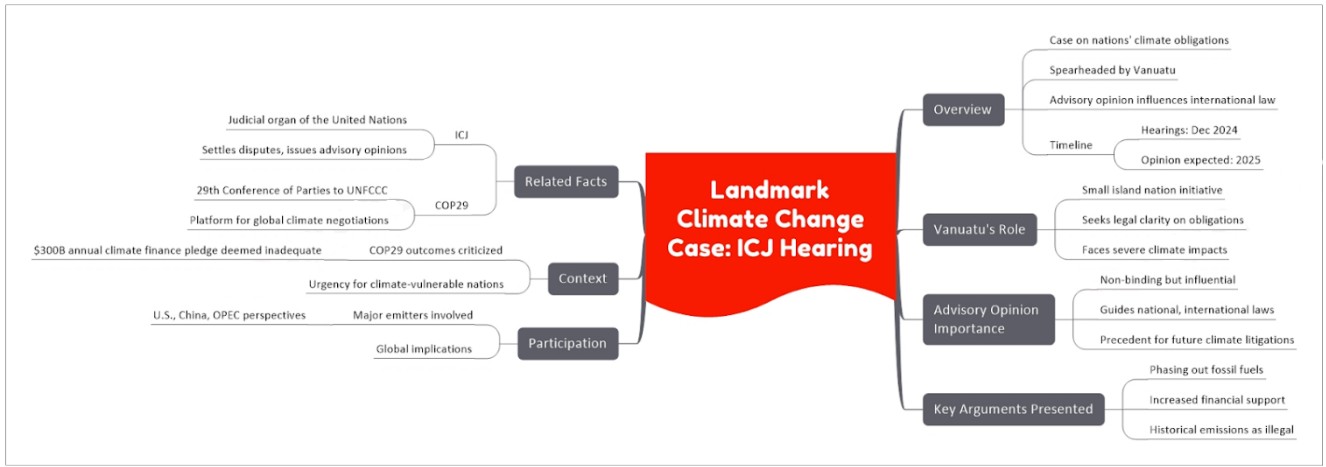
Significance of the Opinion
- Although not legally binding, the ICJ’s advisory opinion is the most authoritative interpretation of international law on climate obligations.
- It is expected to influence courts globally and could shape future litigation against countries and corporations for inadequate climate action.
- The ruling comes at a time when progress on climate change is faltering.
- Many countries, particularly in the developed world, are falling short of their 2030 emission targets.
- The ICJ’s opinion reaffirms that countries have legal obligations—not just voluntary commitments—to take meaningful climate action.
- This strengthens the voice of vulnerable nations demanding accountability.
Implications for India and Global Climate Law
- Legal precedent for future domestic and international climate litigation.
- Empowers developing nations and SIDS in UNFCCC negotiations.
- Reinforces India’s constitutional commitment under Article 21 and Article 48A for environmental protection.
- Can strengthen judicial actions like Delhi air pollution cases, waste management PILs, and climate adaptation suits in NGT and Supreme Court.
International Court of Justice (ICJ)
- Genesis: Established: In 1945 as the main judicial body of the UN.
- Headquarter: Peace Palace, Hague, Netherlands.
- Key Function
- Settling disputes between countries.
- Provides advisory opinions on legal questions that have been referred to it by other authorised UN organs.
- Limitation: Can only hear cases when requested by states
- Composition
- 15 judges elected for 9-year terms by the UN General Assembly and Security Council
- Judges act independently, not as government representatives
- Relevance: Known as the "World Court", ICJ is the only international court for resolving disputes among 193 UN member states.
5. Study on Coral Cover
Context
- Recently, a comprehensive 24-year-long scientific study has brought to light a stark reality about coral cover in the Lakshadweep archipelago.
- It shows that coral cover has declined largely due to repeated marine heatwaves caused by global climate change.
Key Highlights
- Study titled "Local Environmental Filtering and Frequency of Marine Heatwaves Influence Decadal Trends in Coral Composition", published in Diversity and Distributions.
- Introduces a predictive framework to identify: Vulnerable reefs
- Potentially resilient reef zones across the Lakshadweep archipelago and possibly beyond.
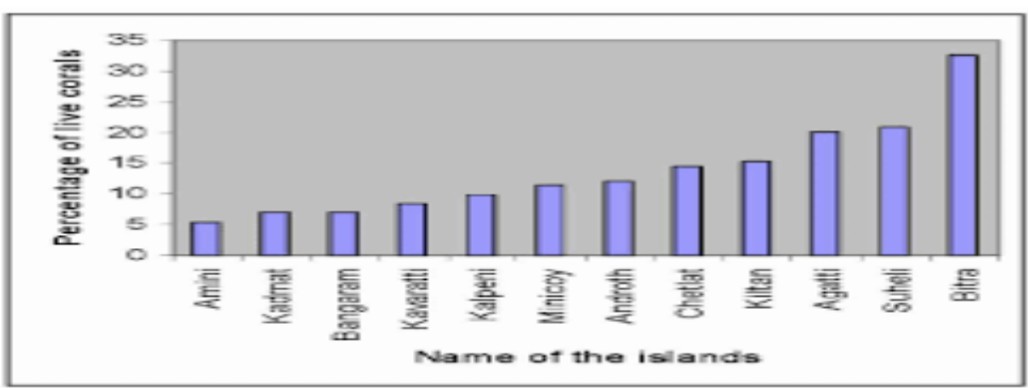
- Coral cover in Lakshadweep declined by ~50%, from 37.24% in 1998 to 19.6% in 2022.
- Primary cause: Repeated marine heatwaves, especially during El Niño years (1998, 2010, 2016), worsened by global climate change.
- Local conditions like wave exposure and reef depth play a critical role in shaping bleaching impact and recovery.
Coral Coverage in Island
About Coral
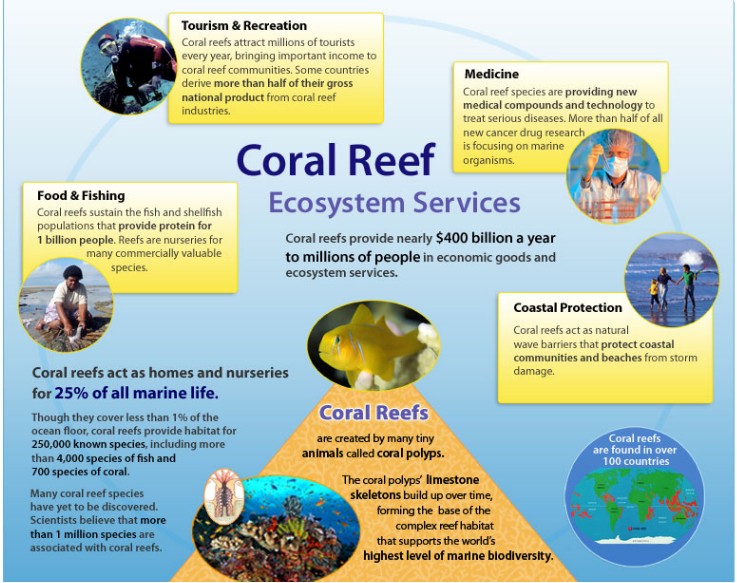
- Sessile marine animals that attach to the ocean floor. They live in symbiosis with zooxanthellae (algae) that provide nutrients via photosynthesis.
- Corals also capture food using tentacle-like structures.
- An individual coral animal is called a polyp, and many polyps form a colony.
- Hard corals have limestone skeletons and build coral reefs over thousands of years soft corals do not.
- Coral reefs are known as the "rainforests of the sea", existing for over 450 million years.
- They are critical marine ecosystems, supporting thousands of marine species.
6. Indian Regional Navigation Satellite System (IRNSS)
Context
- Recently, in a move to strengthen India's indigenous navigation capabilities, the Indian Space Research Organisation (ISRO) announced plans to launch three new satellites for the Indian Regional Navigation Satellite System (IRNSS) by 2026.
- The first satellite in the upcoming series, NVS-03, is scheduled for launch by the end of 2025. The subsequent satellites, NVS-04 and NVS-05, are expected to follow in six-month intervals, bringing the navigation fleet closer to its intended capacity.
About IRNSS
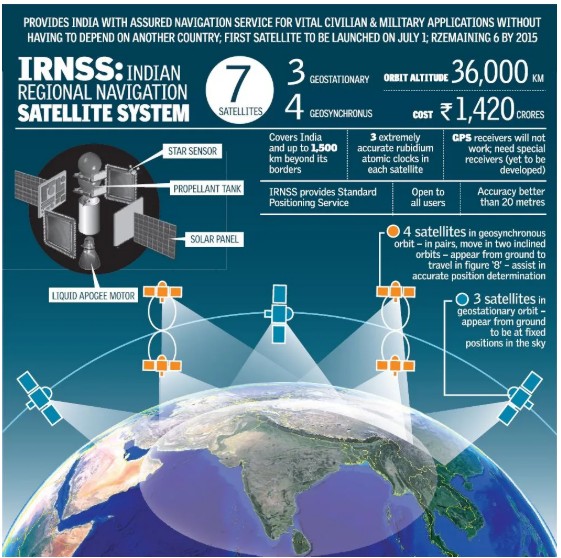
- Also known as NavIC (Navigation with Indian Constellation), is an indigenous, standalone navigation system developed by ISRO. Operational since 2018, it is fully under Indian control, including the space, ground, and user segments.
- Aims to reduce reliance on foreign satellite navigation systems, particularly in strategic and defence sectors.
Key Features
- Satellite Constellation: 7 satellites (3 in Geostationary Orbit, 4 in Inclined Geosynchronous Orbit).
- Ground Segment: Includes control centres, monitoring stations, timing facilities, and ranging stations. •
- Service Area: Primary: India and region up to 1500 km from its borders.
- Extended: Between 30° S to 50° N latitude and 30° E to 130° E longitude
- Services Provided: Standard Positioning Service (SPS) - for all users.
- Restricted Service (RS) - encrypted, for authorised users only.
Significance and Need
- Strategic Autonomy: Ensures independent navigation capability, crucial during conflicts (e.g., GPS denial during Kargil War).
- Civilian Utility: Supports accurate navigation for aviation, transport, maritime, agriculture, and public services.
- Disaster Management: Aids in real-time location tracking for effective disaster response and risk reduction.
- Global Navigation Satellite Systems (GNSS) include: GPS - United States, GLONASS - Russia, Galileo - European Union & BeiDou - China
7. Scheme for Promotion of Culture of Science (SPoCS)
Context
- Recently, 27 Science Centres have been established across India under the Scheme for Promotion of Culture of Science (SPoCS), launched by the Ministry of Culture, to actively promote scientific temper among the youth.
About SPoCS
- Aims to establish Science Cities and Science Centres across all states to promote scientific temper and innovation.
Implementing Agency
- Executed by the National Council of Science Museums (NCSM), under the Ministry of Culture.
Key Components
- Science Cities: Offer immersive, experiment-based learning environments to foster inquiry and creativity.
- Science Centres - Promote hands-on learning through interactive exhibits and self-discovery of scientific concepts.
- Innovation Hubs - Act as platforms to nurture new ideas and innovations.
8. SC/ST (Prevention of Atrocities) Act, 1989: A Bulwark for Social Justice
Context
- Recently, the Madras High Court ruled that complaint under the SC/ST (Prevention of Atrocities) Act, 1989 that discloses a cognisable offence must lead to immediate registration of an FIR, without the need for a preliminary inquiry.
About SC/ST (Prevention of Atrocities) Act, 1989
- Aims to prevent atrocities against members of SCs and STs by persons not belonging to these communities.
- Ensures protection, legal remedies, and justice for victims.
Key Provisions
- Punitive Measures: Prescribes punishment for 37 identified offences that violate the dignity, rights, and self-respect of SCs/STs.
- Exclusion Clause: Does not apply to crimes committed between SCs and STs.
- Central Authority: Central Government empowered to frame rules; State Governments implement the Act with central assistance.
Investigation
- Offences under the Act must be investigated by a police officer not below the rank of Deputy Superintendent of Police (DSP).
- Exclusive Special Courts to be established in each district for speedy trials.
Punishments
- Minimum punishment: 6 months' imprisonment.
- Maximum: Up to life imprisonment or death penalty (in severe cases).
- Neglect by Public Servants: Section 4 penalizes officials (non-SC/ST) for willful neglect of duties under the Act (up to 6 months' imprisonment).
Immediate Relief
- As per PoA Rules, 1995, relief in cash/kind to be provided by District/SubDivisional Magistrates.
- Includes food, water, shelter, clothing, transport, medical aid, and other basic necessities for victims and their dependents.
9. Sohrai, Pattachitra, and Patua: Ancient Arts
Context
- Recently, a group of artists practising Sohrai, Pattachitra, and Patua art forms called on the President of India, at Rashtrapati Bhavan.
- These artists from Jharkhand, Odisha, and West Bengal participated in the second edition of Kala Utsav 2025 under the 'Artists in Residence Programme'.
About Sohrai Painting
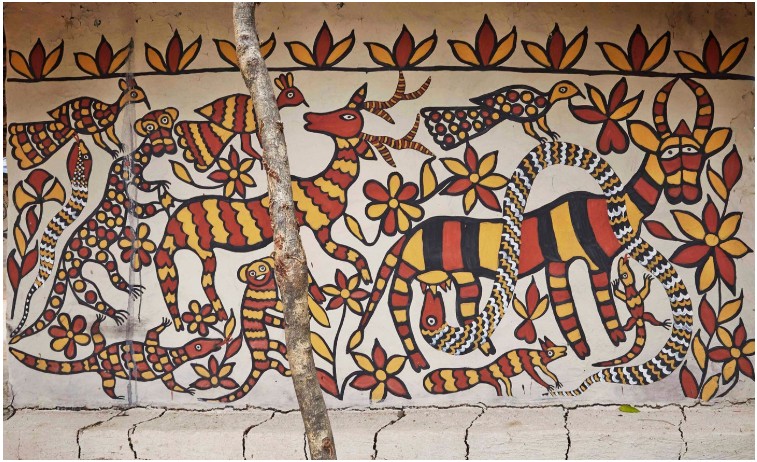
- ‘Primarily in Jharkhand (especially Hazaribagh). Also found in parts of Bihar, Odisha, and West Bengal.
Theme
- Based on nature and animal motifs - forests, rivers, birds, cattle, etc. Often linked with agricultural cycles and the Sohra
- GI Tag: Sohrai Khvar painting from Hazaribagh, Jharkhand has received the Geographical Indication (GI) tag
About Pattachitra (Patachitra)
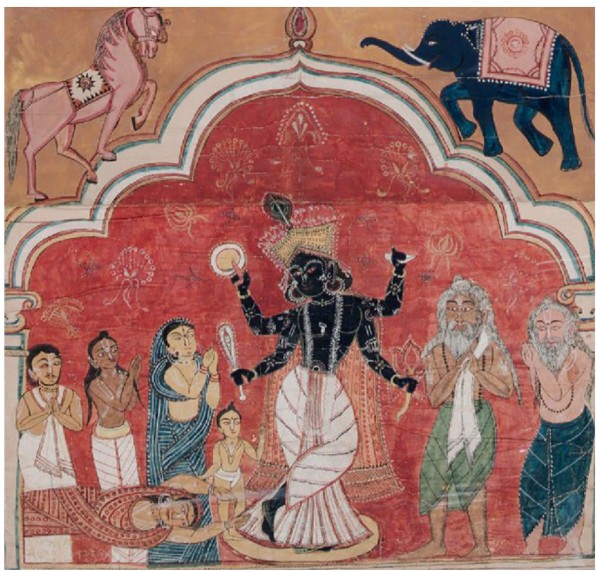
- Practiced in Odisha and West Bengal
- Theme: Hindu Mythology(Jagannath, Krishna Lila, Dasavatara) in Odisha, Goddess Durga and folk tales in Bengal.:
- Decorative borders, floral motifs, temple architecture, and deities O GI Tag: Odisha version registered as "Orissa Pattachitra"
- Bengal version registered as "Bengal Patachitra"

About Patua Art
- Originates from West Bengal and Bangladesh
- Theme: Traditional storytelling of epics (Ramayana, Mahabharata), Local myths (Radha-Krishna, village lore)
- Modern: social awareness, environment, health, gender, etc.
10. Lumpy Skin Disease
Context
- Recently, with over 900 cattle infected and new cases reported daily, Pune district of Maharashtra is facing a growing threat of reduced milk production due to the spread of Lumpy Skin Disease.
About Lumpy Skin Disease
- A highly contagious viral disease that affects cattle and water buffalo across all breeds.
- It is caused by the Lumpy Skin Disease Virus (LSDV), which belongs to the Capripoxvirus genus in the Poxviridae family (which also includes smallpox and monkeypox viruses).
- Zoonotic Potential: LSDV is not transmissible to humans.
- Geographical Spread: Once endemic to Africa and the Middle East, the disease is now spreading rapidly in Europe and Southeast Asia.
- Seasonal Pattern: Outbreaks are most common during wet summer and fall, especially low-lying, water-rich regions, but can also occur in dry seasons.
- Affected Species: While both cattle and buffalo can be infected, cattle suffer more severely, with higher morbidity and mortality.
Economic Impact
- Significant reduction in milk production, affecting dairy farmers' income.
- It can cause temporary or permanent infertility in bulls, hampering breeding efforts.
- The disease results in damage to the hides, reducing their commercial value
- In severe cases, especially in animals with low immunity or no prior exposure, the infection can prove fatal.
Transmission
- By blood-feeding insects such as certain species of mosquitoes, flies, and ticks.
- Also shed through saliva and nasal secretions, contaminating shared feed and water sources.
Treatment
- Vaccination is the most effective prevention, while infected animals are given supportive care with antibiotics, pain relievers, and antiseptic wound treatment.
11. Henley Passport Index 2025
Context
- Recently, the Henley Passport Index 2025 revealed a notable rise in global mobility, with more than 80 countries climbing at least 10 positions in the rankings.
Key Highlights
- Singapore holds the top position in 2025, offering visa-free access to 193 destinations.
- India's passport has improved notably, rising from 85th to 77th rank within the first half of 2025.
- Japan and South Korea share the second spot, with visa-free travel to 190 destinations.
- The United States has dropped from 9th to 10th place, providing access to 182 countries.
- The global average for visa-free access has significantly increased, going from 58 countries in 2006 to an estimated 109 in 2025.
About Henley Passport Index
- It ranks global passports based on the number of destinations a holder can access without a prior visa.
- It uses data provided by the International Air Transport Association (IATA).
- First launched in 2006 as the Henley & Partners Visa Restrictions Index (HVRI)
- The index currently covers 199 passports and 227 travel destinations worldwide.

2026-27 UPSC Mains English QEP Power Pages
View DetailsSubmit Your Details to Learn More



