
theIAShub
31 Dec, 2025
Table of Contents

Get an Instant Call Back from Our Expert Mentors!
31st December 2025
- Kavach 4.0: Recently, Indian Railways commissioned Kavach 4.0, its Made-in-India Automatic Train Protection (ATP) system, on Gujarat’s Bajwa (Vadodara)–Ahmedabad section (96 km).
- About Kavach: Indigenously developed ATP system of Indian Railways
- Certified to Safety Integrity Level–4 (SIL-4), among the highest global signalling safety standards
- Designed to prevent human error–induced accidents through automatic intervention
- With this, over 2,200 route kilometres are now covered under Kavach, marking a significant milestone in indigenous rail safety technology.
- Why Kavach 4.0 is a Technological Leap: Improved location accuracy for precise train positioning
- Enhanced signal aspect visibility in large and complex station yards
- Station-to-station Kavach interface via optical fibre for faster communication
- Direct integration with electronic interlocking systems, ensuring seamless coordination with existing signalling infrastructure - Global Validation: Certified by Independent Safety Assessor (ISA) to meet international safety standards.
- Strategic Significance: Strengthens passenger safety, operational reliability, and supports a safer, smarter, high-density rail network in India.
- Jal Seva Aankalan: Recently, Union Minister of Jal Shakti e-launched Jal Seva Aankalan, a Gram Panchayat–led digital assessment tool, on the Jal Jeevan Mission (JJM) portal.
- About Jal Seva Aankalan: A Gram Panchayat–led digital tool for assessing the functionality and performance of rural drinking water services.
- It is a community-owned self-evaluation mechanism, not an inspection or external audit.
- Focuses on day-to-day service delivery performance rather than mere infrastructure availability.
- Core Objective: Ensure regular, adequate, safe and sustainable drinking water supply.
- Enable villages to assess and monitor their own water services.
- Strengthen local governance, transparency and accountability in rural water management. - Parameters Assessed: Regularity and adequacy of drinking water supply
- Quality of drinking water
- Operation and maintenance of water supply systems
- Sustainability of water sources
- Village-level institutional and management arrangements
- Ensures public disclosure of results through eGramSwaraj and the Meri Panchayat App.
- Somaliland: Recently, Israel formally recognised the self-declared Republic of Somaliland as an independent and sovereign state.
- About Somaliland: Location: Situated in the Horn of Africa.
- Possesses a strategic coastline along the Gulf of Aden.
- Bordered by Djibouti, Ethiopia, Somalia, and the Puntland region.
- Historical Background: Functioned as a British protectorate from the late 19th century.
- Gained independence on 26 June 1960 as the State of Somaliland.
- Voluntarily united with Italian Somaliland on 1 July 1960 to form the Somali Republic. - Capital: Hargeisa
- Governance Structure: Operates as a de facto independent state with its own constitution, elected government, judiciary, security forces, currency, and national symbols.
- Governance blends modern democratic institutions with traditional clan-based systems to maintain stability and resolve conflicts.
- Features a bicameral legislature, including the House of Elders (Guurti). - Economy: Predominantly livestock-based, with exports to Gulf countries forming a major source of revenue.
- Dhruv NG: Recently, HAL’s Dhruv NG multi-role helicopter successfully completed its maiden flight in Bengaluru.
- About Dhruv-NG: The next-generation variant of the Advanced Light Helicopter (ALH) Dhruv, developed as a multi-role, multi-mission civil helicopter.
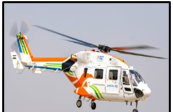
- It is the civil variant of Dhruv Mk-III, widely operated by Indian defence forces.
- Designed and manufactured indigenously by Hindustan Aeronautics Limited (HAL).
- Classified as a 5-tonne, light, twin-engine helicopter.
- Engineered for day and night operations.
- Optimised for Indian terrain while meeting global civil aviation requirements.
- Significance: Upgraded to deliver enhanced safety, improved performance, and greater passenger comfort.
- Represents a major milestone in India’s indigenous rotary-wing capability.
- Supports Atmanirbhar Bharat and the expanding civil aviation and regional connectivity ecosystem. - Powered by twin indigenous Shakti 1H1C engines with Category ‘A’ performance.
- Equipped with a civil-certified Glass Cockpit compliant with AS4 (Applicability Statement-4)
- Features a modern avionics suite providing superior situational awareness and operational safety.
- PathGennie: Recently, scientists at the S. N. Bose National Centre for Basic Sciences, Kolkata (DST), developed a new computational method called PathGennie for drug discovery.
- Key Highlights: Core Problem Addressed: Traditional molecular dynamics (MD)simulations struggle with rare events like drug unbinding due to long time scales.
- Why It Matters: Drug “residence time” on protein targets is often more important than binding strength for drug effectiveness.
- Limitation of Existing Methods: Conventional approaches use artificial forces or high temperatures, distorting real molecular behavior.
- About PathGennie: Uses direction-guided adaptive sampling inspired by “natural selection” of trajectories.
- How It Works: Launches many ultra-short, unbiased MD trajectories
- Selectively extends only those progressing toward the target outcome
- Discards unproductive paths - Key Advantage: Bypasses long waiting times of rare events without applying external bias, preserving true kinetic pathways.
- Technical Flexibility: Works with any collective variables, including high-dimensional and machine-learned CV spaces.
- Broader Applications: Applicable to chemical reactions, catalysis, phase transitions, and self-assembly processes.
- Parasynnemellisia Khasiana: Recently, Parasynnemellisia khasiana, a newly discovered fungal species, was identified from the bamboo forests near Mawsynram, Meghalaya.
- Key Highlights: The discovery adds both a new species and a new genus to scientific records from the region.
- The species name honours the Khasi Hills, reflecting its geographic origin.
- Found growing on dead stems of thorny bamboo (Chimonocalamus griffithianus).
- Discovered during a systematic survey of bamboo litter in the Mawsynram area.
- Laboratory analysis confirmed it did not belong to any known fungal genus.
- Researchers therefore established a new genus, Parasynnemellisia, with P. khasiana as the type species.
- It represents a distinct evolutionary lineage within the fungal family Phaeosphaeriaceae.
- Clearly separated from other bamboo-associated fungi found elsewhere in Asia.
- Ulcerative Colitis (UC): Recently, new research suggests that ulcerative colitis (UC) may begin with early immune cell damage, rather than inflammation alone at later stages.
- Key Findings: A toxin-producing strain of Aeromonas hydrophila implicated in early disease stages.
- New Mechanism Proposed: Aeromonas produces aerolysin, a pore-forming toxin.
- Aerolysin selectively damages intestinal macrophages beneath the gut lining. - Early Invisible Damage: Macrophage density reduced by ~67% in UC patients’ colon samples.
- Damage not visible in routine scans or endoscopy. - Why Macrophages Matter: These cells act as a first immune shield, clearing invading bacteria and maintaining gut balance.
- Microbial Evidence: 72% of UC patients harboured Aeromonas vs 12% of healthy controls.
- Only a subset carried harmful, toxin-producing strains. - Therapeutic Implications: Antibodies neutralising aerolysin prevented colitis in mice.
- Opens scope for toxin-targeted and personalised therapies. - Diagnostic Potential: Future tests may classify UC patients by microbial subtype.
- Broader Significance: Shifts understanding of UC towards early microbiome-driven vulnerability, before symptoms appear.
- Qin Straight Road: Recently, archaeologists in China discovered a 2,200-year-old section of the Qin Straight Road, a major imperial highway built during the reign of Emperor Qin Shi Huang, China’s first emperor.
- About Qin Straight Road: Location: The newly uncovered section lies in Shaanxi Province, north-western China.
- A 13-kilometre stretch has been unearthed.
- It forms part of an extensive 900-km road network built during the Qin Dynasty, linking the imperial core with frontier regions.
- Historical Background: Construction began in 212 BC under Qin Shi Huang.
- Completed in 207 BC during the reign of Qin Er Shi.
- The same period also witnessed the initiation of the Great Wall. - Purpose of the Road: Establish a direct north–south route from Xianyang (Qin capital, present-day Shaanxi) to Jiuyuan (modern-day Baotou, Inner Mongolia).
- Facilitate rapid movement of troops and supplies against the Xiongnu nomads.
- Strengthen imperial authority and control over border regions. - Significance: Considered the second-largest national defence project of ancient China after the Great Wall.
- Symbolises the Qin dynasty’s vision of political unification, military efficiency and centralized control through infrastructure.
- Fungal Contamination in Cassava: Recently, the Journal of Agricultural Chemistry and Environment revealed alarmingly high levels of fungal contamination in cassava across Africa, ranging from 85% to 95%, with an average prevalence of about 90%.
- About Cassava (Manihot esculenta): A staple food for millions in Africa, often called the “Bread of the Tropics.”
- Regional Patterns: West Africa (Nigeria, Ghana, Benin): Contamination consistently above 90% and linked mainly to poor drying practices enabling mold growth and mycotoxin production.
- East Africa (Uganda, Kenya): Average contamination around 88% and warm, humid climate favours fungi like Rhizopus and Penicillium.
- Central Africa (Cameroon): Average contamination about 87% and influenced by storage facilities, handling practices, and socio-economic conditions. - Health Concerns: Common fungi include Aspergillus, Penicillium, and Fusarium.
- These produce mycotoxins such as aflatoxins, ochratoxin A, and fumonisins.
- Health risks include cancer, kidney damage, and weakened immunity.

2026-27 UPSC Mains English QEP Power Pages
View DetailsSubmit Your Details to Learn More



