

Get an Instant Call Back from Our Expert Mentors!
30th December 2025
1. INSV Kaundinya: Recently, the Indian Navy sent INSV (Indian Naval Sailing Vessel) Kaundinya from Porbandar to Muscat on a special voyage, recalling India’s ancient sea routes and highlighting its age-old cultural links with West Asia.
-
About INSV Kaundinya: A traditional stitched sail ship, inspired by a 5th century CE vessel depicted in Ajanta Cave paintings.
-
Name and legacy: The vessel is named after the legendary Indian mariner Kaundinya, believed to have undertaken voyages from India to Southeast Asia in ancient times.
-
Traditional construction: Built using age-old stitching techniques rather than metal nails, with Kerala artisans employing coconut fibre, coir rope, wooden joinery, natural resins, and cotton sails.
-
Collaborative project: Developed as a joint initiative of the Indian Navy, the Ministry of Culture, and Hodi Innovations.
-
Cultural symbolism: Sails display motifs of the Gandabherunda (the mythical two-headed eagle associated with the Kadamba dynasty) and the Sun.
-
The bow is adorned with a sculpted Simha Yali.
-
A Harappan-style stone anchor is placed on the deck.
-
Significance: Highlights India’s ancient maritime heritage, underscoring the country’s historical role in seafaring trade, cultural exchanges, and contemporary maritime diplomacy.
2. Project Tiger: Recently, Madhya Pradesh recorded 55 tiger deaths in 2025, the highest toll since the launch of Project Tiger in 1973.
-
-
Key Highlights: Tiger deaths stood at 46 in 2024; earlier years recorded 45, 43 and 34 fatalities.
-
-
Around 11 deaths were due to unnatural reasons; nearly eight linked to electrocution.
-
Illegal live electric fences, often without safety cutoffs, pose major risks to tigers.
-
Madhya Pradesh had 785 tigers as per the 2022 All-India Tiger Estimation report.
-
About Project Tiger: A flagship tiger conservation initiative of India, launched in 1973 as a Centrally Sponsored Scheme under the Ministry of Environment, Forest and Climate Change (MoEF&CC). It is implemented through the National Tiger Conservation Authority (NTCA).
-
-
Objectives: To ensure a sustainable population of the endangered Bengal tiger in its natural habitats.
-
To safeguard tigers from threats such as poaching, habitat loss, and human interference.
-
To preserve ecologically important areas as natural heritage, representing diverse ecosystems across India’s tiger landscapes.
3. Pinaka Long Range Guided Rocket (LRGR-120): Recently, the Defence Research and Development Organisation successfully conducted the maiden flight test of the Pinaka Long Range Guided Rocket (LRGR-120) from the Integrated Test Range, Chandipur.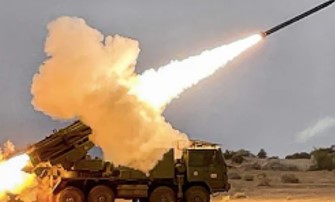
-
-
About Pinaka LRGR-120: A fully indigenous, precision-guided rocket developed as an advanced variant of the Pinaka multi-barrel rocket system, intended for long-range, highly accurate strikes.
-
-
Designed by the Armament Research and Development Establishment (ARDE), DRDO, in collaboration with the High Energy Materials Research Laboratory (HEMRL).
-
Aim: To extend the operational strike range of the Pinaka rocket system.
-
To deliver precision firepower with reduced collateral damage.
-
To enhance battlefield flexibility while using existing Pinaka launch platforms.
-
Key features: Capable of engaging targets up to 120 km, substantially expanding operational reach.
-
Equipped with advanced navigation and control systems for high accuracy.
-
Capable of executing planned trajectory corrections during flight.
4. Parvati–Arga Bird Sanctuary: Recently, the Government notified the Parvati–Arga Bird Sanctuary in Uttar Pradesh as an Eco-Sensitive Zone (ESZ).
-
-
About Parvati–Arga Bird Sanctuary: Located in Gonda district, Uttar Pradesh.
-
-
Wetland features: A permanent freshwater ecosystem comprising two oxbow lakes—Parvati and Arga.
-
International status: Recognised as a Ramsar Site for its wetland importance.
-
Fauna: Critically endangered White-rumped Vulture (Gyps bengalensis)
-
Indian Vulture (Gyps indicus)
-
Endangered Egyptian Vulture (Neophron percnopterus)
-
Presence of invasive species such as Water Hyacinth (Eichhornia crassipes)
-
Flora: Vegetation typical of the Indo-Gangetic ecosystem.
-
Purpose of declaring ESZs: To function as buffer or shock absorber zones by regulating human activities around protected areas.
-
To serve as a transition zone between areas of strict protection and regions with lesser restrictions.
5. IndiaAI Mission: Recently, the IndiaAI Mission under the Ministry of Electronics and Information Technology briefed on the vision, themes, and progress of the India AI Impact Summit 2026.
-
-
Key Highlights: India AI Impact Summit 2026 will centre on “Democratizing AI, Bridging the AI Divide”.
-
-
Core vision: AI should be a widely accessible, horizontal enabling technology supporting inclusive human development.
-
Key concern flagged: Risk of AI concentration in a few geographies and corporations highlighted by MeitY.
-
Infrastructure access: Emphasis on global access to compute, AI models, and data to reduce inequities.
-
Guiding framework: Summit anchored in three Sutras—People, Planet, Progress.
-
Operational structure: Seven thematic Chakras to guide deliberations and outcomes.
-
Human Capital Chakra: Focus on AI skills, literacy, reskilling, and inclusive workforce transition.
-
Inclusion & Empowerment: Ensuring linguistic, cultural, and contextual representation in AI systems.
-
Science Chakra: Strengthening inclusive AI research ecosystems and Global South collaboration.
-
Democratising AI resources: Equitable access to datasets, compute infrastructure, and foundational models.
6. Industrial Hemp: Recently, industrial hemp has gained attention as a non-psychoactive variety of Cannabis sativa grown for fibre, seeds, and biomass, with THC (Tetrahydrocannabinol) content below 0.3% and no intoxicating effect.
-
About Industrial Hemp: Indigenous to Central and South Asia, with centuries-old use in textiles, ropes, paper, and traditional medicine.
-
Today, it is legally cultivated in many regions of Europe, North America, and Asia under strict THC regulations.
-
Key characteristics: Contains less than 0.3% THC and offers high fibre and seed output.
-
-
Uses about half the water required by cotton and thrives on marginal land.
-
Matures within 70–140 days.
-
Naturally suppresses weeds and improves soil structure through deep root systems.
-
Suitable for fibre, oilseed, or dual-purpose cultivation.
-
Applications: Hempcrete provides lightweight insulation and acts as a carbon-negative building material.
-
Offers an eco-friendly pulp source with reduced chemical use and biodegradable outputs.
-
Hemp oils and extracts support pain relief and anti-inflammatory uses without psychoactive effects.
-
Hemp seed oil, rich in essential fatty acids, is widely used in skincare and haircare products.
-
Hemp biomass enables renewable fuels and biodegradable plastics, promoting a circular, low-carbon economy.
7. Alice in Wonderland Syndrome (AIWS): Recently, Alice in Wonderland Syndrome (AIWS) has been described as a rare perception disorder that is not dangerous but can cause confusing and disturbing experiences.
-
-
About AIWS: It is a rare neurological condition marked by brief episodes of distorted perception involving size, distance, body image, and the passage of time.
-
-
The condition is named after Lewis Carroll’s Alice’s Adventures in Wonderland.
-
AIWS was formally described in 1955 by British psychiatrist John Todd, who observed that affected individuals experienced bizarre perceptual changes while remaining aware of reality. Hence, it is also called Todd’s Syndrome.
-
Symptoms: Episodes typically last from a few minutes up to about 30 minutes.
-
Objects may appear unusually small or large (micropsia or macropsia).
-
Perception of distance may be altered, with objects seeming nearer or farther than they are.
-
Sensations of body parts, such as hands or head, shrinking or expanding.
-
Time may feel unusually fast or slow.
-
Neurological basis: The condition is thought to arise from disturbances in the temporo-parietal-occipital junction, an area responsible for integrating visual, spatial, and sensory inputs.
-
Risk profile: Although it can occur at any age, children recovering from viral illnesses and adults experiencing migraine aura are at higher risk.
-
Treatment: There is no specific cure for AIWS. Management focuses on addressing the underlying cause—allowing infections to resolve, controlling migraines, treating epilepsy or brain lesions—and providing reassurance to the patient.
8. Defence Acquisition Council (DAC): Recently, the Defence Acquisition Council (DAC) approved capital acquisition proposals worth about ₹79,000 crore for the Indian Army, Navy, and Air Force, significantly boosting India’s combat readiness and indigenisation drive.
-
-
Key Highlights:
-
-
Army: Loiter Munition Systems: Designed to carry out highly accurate precision strikes against tactical and high-value enemy targets.
-
Low Level Light Weight Radars (LLLWR): Intended to strengthen detection, tracking, and monitoring of small, low-altitude unmanned aerial vehicles.
-
Pinaka Long Range Guided Rocket (LRGR) Ammunition: Aims to substantially enhance the operational range and accuracy of the Pinaka Multiple Launch Rocket System (MRLS).
-
Integrated Drone Detection and Interdiction System (IDD&IS) Mk-II: Developed to provide extended-range protection of critical military assets and hinterland areas against hostile drones.
-
Indian Navy: Bollard Pull (BP) Tugs: Procured to assist naval ships and submarines during berthing, unberthing, and manoeuvring operations within confined harbour waters.
-
High Frequency Software Defined Radio (HF SDR) Manpack Systems: Intended to ensure secure, long-range communications during boarding, landing, and maritime operations.
-
High Altitude Long Endurance (HALE) Remotely Piloted Aircraft Systems (RPAS) (Leased): Meant to provide persistent intelligence, surveillance, and reconnaissance (ISR) and enhance maritime domain awareness across the Indian Ocean Region.
-
Indian Air Force: Automatic Take-off and Landing Recording System: A system to improve aerospace safety through high-definition, all-weather recording of take-off and landing phases.
-
Astra Mk-II Beyond Visual Range Air-to-Air Missiles (BVRAAM): Equipped with extended engagement range to strengthen the air combat capability of fighter aircraft.
- Full Mission Simulators: Advanced simulation systems to enhance pilot training for the Light Combat Aircraft (LCA) Tejas in a safe and cost-effective environment.
- SPICE-1000 Guidance Kits: Long-range precision guidance kits designed to significantly improve the Indian Air Force’s strike accuracy and stand-off attack capability.

2026-27 UPSC Mains English QEP Power Pages
View DetailsSubmit Your Details to Learn More



