
1. Gini Index
Gini Index : Recently, the Indian government, in an official release, asserted that India is not only the world’s fourth-largest economy but also “one of the most equal societies today.”
o Citing the World Bank’s latest Poverty and Equity Brief, it highlighted that India’s Gini Index stands at 25.5, placing it as the fourth most equal country globally, behind the Slovak Republic, Slovenia, and Belarus.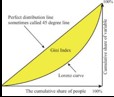
- About Gini Index : Also known as the Gini Coefficient or Gini Ratio is a widely used statistical measure to gauge income or wealth inequality within a country.
o Origin: It was developed in 1912 by Italian statistician Corrado Gini.
o Scale: The index ranges from 0 to 1 (or 0% to 100%), where:
- 0 indicates perfect equality (everyone has the same income or wealth).
_ 1 indicates perfect inequality (one person has all the income or wealth, and everyone else has none).
o Mathematical Basis: The Gini Index is derived from the Lorenz Curve, which:
- Plots population percentiles (horizontal axis) against cumulative income or wealth (vertical axis).
- Highlights the distribution gap between perfect equality and actual distribution.
o Interpretation: It reflects the degree of inequality, not the absolute level of income or wealth in a country.
o Data Concerns: In countries like India, the accuracy of the Gini Index can be affected by the source & type of data used, as regular surveys may not fully capture income & wealth data.
- About Lorenz Curve : A graphical representation that illustrates how income or wealth is distributed among different sections of a population. Its primary use is to demonstrate the level of inequality in the distribution of income or wealth within a society.
2. Catastrophe Bonds
Catastrophe Bonds : Recently, India has initiated steps to adopt catastrophe bonds as a novel financial strategy to strengthen its disaster risk management framework.
o This move comes in response to the growing frequency and intensity of natural disasters, highlighting the need for enhanced climate resilience.
- About Catastrophe Bonds : Also called as Cat Bonds, are hybrid financial instruments that combine features of insurance and debt, allowing at-risk entities (often sovereign governments) to transfer disaster-related financial risk to global investors.
o They offer an innovative alternative to traditional disaster insurance, by turning hazard exposure into a tradable security.
o Structure and Working: Sponsor (e.g., a government) pays premiums to set up the bond.
- Investors purchase the bonds, and their principal is held in a special account.
-If a predefined disaster (like a cyclone or earthquake) occurs, investors lose part or all of their principal, which is used for relief and reconstruction.
- If no disaster occurs, investors receive their full principal back, along with a high coupon (interest) rate.
- Rising Climate Vulnerability: India faces growing exposure to climate-induced disasters, including: Floods, cyclones, forest fires and earthquakes.
o Disaster insurance coverage remains very low, leaving large sections of the population economically vulnerable.
o Public finances are strained due to heavy reconstruction costs after each disaster.
- Cat Bonds Can Help India: Protect public funds by ring-fencing disaster recovery budgets.
o Leverage India’s strong sovereign credit rating to secure favourable bond terms.
o Transfer risk to global capital markets, ensuring faster access to relief funds when disasters occur.
o India’s commitment to disaster preparedness, including an annual allocation of ₹15,000 crore ($1.8 bn) for mitigation can help lower the cost of cat bonds (i.e., bond premiums).
3. Syama Prasad Mookerjee
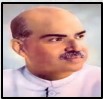
Syama Prasad Mookerjee : Recently, the Department of Posts, Government of India, issued a commemorative postage stamp to celebrate the 125th birth anniversary of Syama Prasad Mookerjee, a prominent nationalist, educationist, and constitutional thinker.
- About Syama Prasad Mookerjee : Born in Calcutta (now Kolkata), Dr. Mookerjee was the son of Sir Ashutosh Mookerjee, a renowned educationist and Vice-Chancellor of Calcutta University.
o Represented Calcutta University at the Conference of the Universities of the British Empire in England.
o Became the youngest Vice-Chancellor of Calcutta University in 1934, at the age of 33.
o Started "Bang Wani", a Bengali journal (1922), and "The Nationalist" in the 1940s.
o Strong proponent of nationalism, Hindu cultural identity, and a united India.
o Died in 1953 and remembered as "The Lion of Parliament" for his powerful debates and principled stance on national issues.
- Political Journey: Joined the Indian National Congress in the 1920s but resigned due to ideological differences.
o Later joined the Hindu Mahasabha and became Finance Minister in Bengal's Progressive Coalition government (1937).
o Served as Acting President of the Hindu Mahasabha in 1940 and strongly advocated for complete independence.
o Founded the All India Bharatiya Jan Sangh in 1951, which later evolved into the Bharatiya Janata Party (BJP).
o Appointed Minister for Industry and Supply in the Interim Government after independence.
4. Australian Bat Lyssavirus
Australian Bat Lyssavirus : Recently, the Australian bat lyssavirus has drawn attention after some cases were reported, sparking concerns over public health and safety.
- About Australian Bat Lyssavirus : A rare but fatal zoonotic virus that can be transmitted from bats to humans.
o It belongs to the Rhabdoviridae family, the same family as the rabies virus, and causes a similar illness in humans.
o The virus was first identified in 1996 in a fruit bat in northern New South Wales, Australia.
o Detected in various bat species across Australia, including: Flying foxes, Fruit bats and Insectivorous microbats.
o Modes of Transmission: Bites or scratches from infected bats
- Exposure of broken skin to bat saliva
- Contact of bat saliva with mucous membranes (eyes, nose, mouth)
- Symptoms in Humans: The disease mimics rabies and progresses rapidly:
o Initial symptoms: Fever, headache, fatigue (flu-like)
o Advanced stages: Severe neurological complications such as delirium, paralysis, convulsions, and eventually loss of consciousness
- Treatment and Prevention: No cure exists once symptoms begin; the disease is almost always fatal at this stage.
o Prompt post-exposure prophylaxis (PEP) using rabies vaccine and immunoglobulin is essential after any potential exposure.
5. National Overseas Scholarship Scheme
National Overseas Scholarship Scheme : Recently, the Union Ministry of Social Justice and Empowerment has sought an increased budget allocation for the National Overseas Scholarship scheme to strengthen its implementation and accommodate a greater number of beneficiaries.
- About National Overseas Scholarship Scheme : Central Sector Scheme to support low-income students from marginalized communities in pursuing Master’s and Ph.D. degrees abroad.
o Target Beneficiaries: Students belonging to: Scheduled Castes (SCs), Denotified, Nomadic, and Semi-Nomadic Tribes, Landless Agricultural Labourers and Traditional Artisans.
o A total of 125 new scholarships are awarded annually, subject to fund availability(30% of scholarships are reserved for female candidates).
- Eligibility Criteria: Applicant must be below 35 years of age as of 1st April of the selection year.
o Academic Requirement: Must have secured at least 60% marks or equivalent grade in the qualifying examination.
o Admission Criteria: Must have an unconditional offer of admission to a recognized Master's or Ph.D. program from an accredited university/institute abroad.
o Income Limit: The total family income (from all sources) should be less than or equal to ₹8 lakh per annum.
6. Nistar
Nistar : Recently, the Indian Navy achieved a major milestone with the delivery of ‘Nistar’, its first indigenously designed and built Diving Support Vessel (DSV), by Hindustan Shipyard Limited (HSL) in Visakhapatnam.
- About Nistar : Name is derived from Sanskrit, meaning liberation, rescue, or salvation.
o Design & Classification: Built in accordance with the classification rules of the Indian Register of Shipping (IRS).
- Represents a strategic deep-sea capability possessed by only a few navies worldwide.
- Features approximately 75% indigenous content, reinforcing the Government of India’s vision of Aatmanirbhar Bharat and the Make in India initiative.
- Features : Length: 118 metres and Displacement: Approximately 10,000 tonnes
o Equipped with cutting-edge diving systems for Deep Sea Saturation Diving up to 300 metres.
o Includes a Side Diving Stage for operations up to 75 metres.
o Designed to serve as the ‘Mother Ship’ for the Deep Submergence Rescue Vessel (DSRV), enabling the rescue and evacuation of submarine personnel during underwater emergencies.
o Fitted with Remotely Operated Vehicles (ROVs) capable of conducting diver monitoring and salvage operations up to 1000 metres depth.
7. Bayeux Tapestry
Bayeux Tapestry : Recently, the Bayeux Tapestry, one of the world’s most iconic medieval artefacts, has been scheduled for display in the United Kingdom for the first time in nearly a thousand years.
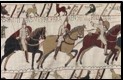
- About Bayeux Tapestry : Though commonly called a “tapestry,” it is actually an embroidered cloth, not a woven textile.
o Origin and Date: Created in the 11th century, believed by many historians to have been stitched in Kent, England, shortly after the Norman conquest of England.
o Length: Measures approximately 70 metres in length.
o Narrative Content: Depicts the events leading up to the Battle of Hastings in 1066.
- Shows the Norman invasion led by William the Conqueror and the defeat of the Anglo-Saxon king, Harold II.
o Visual Detail: Consists of 58 scenes , includes 626 human figures and 202 horses
- Serves as a rich visual record of medieval warfare, life, customs, and attire
o Cultural Significance: Considered one of the most iconic and detailed narratives of medieval history.

2026-27 UPSC Mains English QEP Power Pages
View DetailsSubmit Your Details to Learn More



