

- Ethics & Human Interface: Principles, Sources & Significance
- Human Values: Definition, Importance & Impact on Society
- Dimensions of Ethics: Branches, Theories & Practical Applications Explained
- Attitude: Definition, Characteristics, & Impact on Behavior
- Aptitude & Foundational Values for Civil Services
- Emotional Intelligence: Inspiring Quotes and Key Concepts to Enhance Your EQ
- Exploring Diverse Philosophies: Indian, Western, and Contemporary Perspectives
- Public Administration: Characteristics, Ethics & Challenges
- Probity in Governance: Principles, Challenges & Role in Public Service
- Uniform Civil Codes & Ethical Dimensions
- Freebies in Elections: Ethics, Impact, and Economic Implications
- Ethical Issues in Migration and Refugee Policies: Global & Indian Perspectives
- Refugee Crisis: Issues, Challenges & Way Forward
- Public Outrages: Violence through Protests, Mob Lynching
- Ethical Corporate Governance in Startups: Importance, Challenges & Principles
- Ethical Journalism in India: Principles, Values, Guidelines
- Rising Alcohol and Drug Abuse in India: Challenges and Solutions
- Match Fixing
- AI Ethics and Responsibility: Autonomous Cars, Bias, Privacy, Human Oversight
- Metaverse
- Police Corruption in India: Causes, Ethical Challenges & Solutions
- Use of Bulldozer and Principle of Natural Justice
- Demolition of illegal structures of accused
- War
- Opinion Polls and Ethics
- Cognitive Dissonance: Causes, Examples, Signs & Ways to Overcome Mental Conflict
- Custodial Violence
- Clinical trials
- Child Artists
- Social Media Use by Civil Servants: Guidelines, Merits, Challenges
- Defection and Instability of Government
1. Ethics & Human Interface: Principles, Sources & Significance
"A man without ethics is a wild beast loosed upon this world." - Albert Camus
“In just about every area of society, there’s nothing more important than ethics”- Henry Paulson
Ethics
- The term ‘ethics’ is derived from the Greek word ‘ethikos’ which can mean custom, habit, character or disposition.
- Ethics is the branch of philosophy that deals with moral principles and values that govern individual and collective behaviour. It involves critical thinking about what is right and wrong, and the principles and values that should guide human conduct.
Source of Ethics
- Religion: Different sects of individuals are affected differently by religion. It is the most significant source of ethics since religious teachings frequently outline what is right and wrong and society as a whole upholds these standards.
- Example: Christianity – Compassion, Hinduism -Buddhism – Peace etc.
- Leadership: The leadership of a society influence its followers to determine the conduct.
- Example: The leaders of the independence movement have instilled democratic, liberal, secular, and tolerant traditions in us.
- Philosophies: Various philosophers and thinkers subscribe to different sets of ethics.
- Example: Bhakti movement teaches Inclusiveness, Tolerance, selfless service etc.
- Human conscience: A man's conscience aids in his ability to distinguish between right and wrong.
- Example: Inner conscience for not taking a bribe, showing a compassionate view for animals etc.
- Culture: It defines certain behaviour as acceptable and others as unacceptable; hence, values vary with cultures.
- Example: Western cultures - Individualistic, Indian culture - Universalism and Multiplicity
- Family: It is a wellspring of ethics. The family system comprises traditional or cultural values relevant to the family's composition, purpose, roles, and underlying principles.
- Example: Family teaches to respect elders and feelings of love, trust etc.
- Legal System: It acts as a guiding source for human behaviour in society. It is expected that the rules laid down by these Laws are followed strictly.
- Example: The Indecent Representation of Women (Prohibition) Act, 1986 prohibits indecency, etc.
- Thinkers and Philosophers: They serve as role models for people and aid in society’s quest for new virtues.
- Example: Philosophy of Chaitanya Mahaprabhu teaches us about selfless service, dedication and submission to God.

Significance of Ethics
- Treat everyone equally: Ethics promotes equality and shapes society based on ethical values.
- Example:
- Right to equality, life, and freedom for all, Upholding of rules, laws and regulations etc.
- Democratic nations like India, the USA, where all people have equal rights. This is not possible without the majority of citizens behaving in an ethical manner.
- Make Society better: Ethical values like Tolerance, Compassion, integrity etc. make society better for society.
- Example: Tolerance promotes acceptability in a society like refugees are being welcomed in Europe, India etc.
- Succeed at business: A company's ethical practices also influence the level of consumer loyalty it experiences.
- Example:
- Tata’s compassionate business model helped it reach out worldwide.
- Valued Products made by Apple
- Reduce Stress: Right moral decision, or taking a principled perspective on an issue, reduces stress.
- Example:
- Avoiding speculative games, help to balance private and professional relation
- Engaging in corruption, and unfair means like Match fixing in Cricket leads to stress in life
- Provides Moral Map: Ethics provides us with a moral map, a framework that we can use to find our way through difficult issues.
- Example: Compassion-based Talisman of Mahatma Gandhi
- Solution for moral issues: Ethics does provide good tools for resolving moral issues. It can eliminate confusion and clarify the issues.
- Example: Decision required to be taken in a Conflict of Interest
- Ensures individual and social good: By putting moral ideas into practice, ethics aims to regulate behaviour and assist man in living a good life. It strives for the overall good of humanity.
- Example: Assist to balance between Personal and Professional relation
- Resolves ethical dilemmas: Ethical values such as integrity, trustworthiness, responsibility etc. help guide us along a pathway to deal more effectively with ethical dilemmas.
- Example: Decision to optimum balance b/w development and environment like infrastructure work in the Western Ghats, construction of dams in Uttarakhand, Himachal Pradesh etc.
- Frees from Bias and prejudices: The application of moral principles and ethical values in our life helps to deconstruct the wrong conceptions and attitudes and helps to avoid bias and prejudices.
- Example: Recruitment process based on merit, voting pattern in election, balanced development works by the politician in his/ser constituency
- Effective Decision making: Ethics guides us to make right, just and inclusive decisions aimed at personal as well as societal interests.
- Example: Attainment of the Highest good: "Summum Bonum"
Effects of Lack of Ethics
|
Lack of Ethics at - |
Impact |
Example |
|
Individual level |
|
|
|
Societal level |
|
|
|
Political level |
Criminalisation of politics, Nepotism, power concentration, defectionsInstability to government, violence, communalism, use of money and muscle power, abuse of the constitution |
|
|
Bureaucratic level |
Conflict of interest, abuse of power, neglect of public welfare, poor implementation of schemes and welfare programmes. |
|
International level |
Encroachment at border areas, cross-border terrorismDrug trafficking, human trafficking, organised crimeSafe tax havens, protectionism, Vaccine nationalismNuclearization, conflict-war, erodes the legitimacy of international institutions etc. |
|
Environmental Level |
Illegal deforestation, encroachment of natural water bodiesAnimal rights violation, illegal mining and depletion of natural resources, wildlife crime. |
Illegally poaching and trading threatened species.Constructing large dams on rivers to change the course of rivers like China’s dam in the Tibbet regions on Yarlung Zangbo river.Excessive use of fertilisers, water, etc. Exploitation of natural resources. |
Evaluation of Ethics
Evaluation of Ethical conduct means respecting the rights of participants and ensuring the minimisation from potential harm.
- Autonomy: A choice is evaluated for ethical or unethical when it is chosen from available options freely.
Example: A batsman knows that he is out, but waiting for the third umpire signal.
- Knowledge: We cannot exercise free will in an ethical manner, unless and until we have knowledge of its consequence.
- Example:
- Actions of baby or mentally challenged people of destroying something is not unethical, because he/she does not have knowledge of it.
- Husband suffering from schizophrenia mistreats his wife
- Fear: If someone tries to kill you and you kill him in self-defence, you’re acting in fear for your life. So, it’s subject to legal scrutiny but not ethical scrutiny.
Example:
- Fire by Policemen on self - defence
- Killing of Leopards to save human lives
- Pathological status:This is not subject to ethical scrutiny because one is suffering from a mental disorder and lacks knowledge and free will.
- Example: Crime committed by a person with a mental disorder
- Habit: Repeated reinforcement of human behaviour results in a habit.
- Example: Japanese people are taught to apologize even for the smallest error or inconvenience they may have caused to another person. It cannot be considered unethical if an American working in Japan behaves differently. Because it is not common in the USA.
- Value system: Values are standards of behaviour, such standards can be on the basis of individual, societal human values etc.
- Example: Rather than being tortured by his foes, a wounded Samurai warrior would choose ritual suicide. Considering that it is a component of his Bushido code of honour. If a fallen American soldier doesn’t commit suicide, it can’t be evaluated on ethical grounds.
Character, Conduct & Behaviour

Ethics is about the study of behaviour such as character and conduct. Its aim is to understand which behaviour is right or wrong. (Based on established standards)
Ethics and Religion
Religious values precede the emergence of ethical values. Therefore, religion has a profound influence on ethics. Hence, Ethics cannot be separated from religion.
Comparative Facts of Ethics and Religion
|
Parameter |
Ethics |
Religion |
|
Based on |
Based on facts, rationality and reasoning |
Based on faith, belief |
|
Flexibility |
It can be questioned and hence the possibility of acceptance/ rejection |
As faith cannot be questioned and hence limited scope for question |
|
Range |
Broader than religious science |
Different religions have different sets of core values |
|
Example |
Ex. Family ethos, social life |
Ex. Karma Concept, Nishkam karma |
Ethics and Law
- Law is defined as an ordinance of reason to achieve the common good. It is based on facts and reasons.
- Ex. Medical Termination of Pregnancy Act provides termination of certain pregnancies to save the life of women, avoid unwanted pregnancy etc.
- There may be instances wherein an action may be legal but not ethical.
- Ex. The death penalty is legal in many countries including India, but it is not ethical to take the life of an individual.
- The ethical standard of society keeps changing with time but the pace of change in law does not match with the pace of change in societal values.
- Ex. Homosexuality, Rights of LGBTQ Community, Live in Relationship,
|
Parameters |
Ethics |
Law |
|
Based on |
Based on facts, rationality and reasoning |
It cannot define intention, honesty, self- commitment etc. |
|
Application |
It is adhered to in both letters and spirit |
It may be adhered to in letter but not in the spirit |
Range |
Broader than existence law Ex. Betting is unethical but not illegal in many countries like Macao |
Law is guided by ethics Ex. Chopping trees are prohibited to protect the environment |
|
Example |
Any type of unfair means is unethical |
Tax evasion is not illegal until a law is framed for that |
Morals
- Derived from the Latin word ‘moralis’, meaning “traditional customs”.
- Morals are the social, cultural and religious beliefs or values of an individual or group which tell us what is right or wrong. They are the rules and standards made by the society or culture which are to be followed by us while deciding what is right.
- Example:
- Selfless service is given by local people during the Balasore Train accident
- Do not cheat, always tell the truth etc.
Difference between Ethical standards and Morality
|
Ethical Standards |
Morality |
|
|
To be ethical one has to conform to the established standard but to be moral one has to conform own’s standard of behaviour. Ethics and Morality can have the following three types of relationship –
- Ethical and Moral:
- Selfless,
- Respect for human dignity
- Moral but not Ethical:
- Child Marriage in some parts of Rajasthan, People consider Western culture as vulgar
- Jallikatu, Animal sacrificing
- Societal values like LGBT, Legal Rights
- Ethical but not Moral:
- Universal values conflicting with moral values
Social Morality & Constitutional Morality
- Social Morality is a set of values and norms that exist in society. These are the rules that govern the members of a society on how they should behave with each other for their welfare and well-being.
- It varies from culture to culture depending on various beliefs, practices, traditions, or customs prevalent in society.
- It is about how people behave towards others in their community.
- It provides the guidelines for society to live in peace. It helps people live together in harmony and avoid conflict and tension among themselves.
- It can be done through social, economic, environmental, and political means.
Components of Social Morality
- Shared Values: Shared values consist of what people in a culture or society think are good or bad, desirable or undesirable.
- Norms: Norms are social rules that guide behaviour in a culture or society. These norms may be written down in law or unwritten customs. They may vary from place to place within a culture or society. Sometimes, these norms may change over time as people's opinions about acceptable change with time.
Characteristics
- Importance of reciprocity: It ensures that people will treat others how they want to be treated in return.
- Importance of hierarchy: Society needs some form of organization, so it's necessary for there to be a governing body.
Constitutional Morality
- Constitutional Morality means adherence to or being faithful to bottom line principles of the constitutional values. It includes commitment to inclusive and democratic political process in which both individual and collective interests are satisfied.
- Constitutional morality is the soul of the constitution which is to be found in the preamble of the constitution. It has been regarded as a paramount reverence for the constitution.
- The major elements of the constitutional morality in the context of Indian constitution are – Rule of law, right to equality, rule of law, social justice, unity and integrity of nation, social justice, secularism, individual liberty and freedom of expression etc.
- Example:
- The SC had relied on constitutional morality to allow entry of women of all ages into the Sabarimala temple under a 4-1 majority verdict.
- In the Navtej Singh Johar vs Union of India the SC struck down the archaic provision of Section 377 and upheld constitutional morality.
Values, Human Values and Moral Values
- Values are the general standard of behaviour and therefore they will have broader coverage than human values.
- Human Values: These values are the essence of human being existence. They determine the core characteristics of the goodness of human behaviour
- Moral Values are an individual standard of behaviour.
Example:
- Being Vegetarian is a Moral standard and not a human value whereas Being Responsible can be both a Moral standard as well as human value

Ethics and Values
|
Parameters |
Ethics |
values |
|
Definition |
It refers to the guidelines for conduct that address questions about morality. |
It is defined as the principles and ideals that helps them in making judgement of what is more important |
|
They are- |
System of Moral Principles |
Stimuli - for thinking |
|
Consistency |
Uniform |
Differs from Person to person |
|
Convey - |
About morally correct or incorrect for a particular situation |
Provides direction in the determination of right versus wrong or good versus bad |
|
Determines |
Extent of rightness and wrongness of our options |
Level of importance |
|
Function |
Constrains |
Motivates |
Ethics, Morality and values

- Ethics and morals are values, but values are not ethics.
Example
- Bravery, is a value but not ethics. People who are not brave cannot be considered unethical.
- Similarly, Conservation is a value but not ethics in our society.
- Values provide direction in the determination of right versus wrong or good versus bad.
Example:
- Punctuality is a value but also ethics in some countries like Japan. Hard work is a value but not ethics.

|
Values |
Description |
Example |
Relative and Absolute values |
|
Absolute Values: Non-violence, equality, Non-discrimination etc. Relative Values: materialistic values |
|
Protected values |
The value which an individual is unwilling to trade off no matter what the benefits of doing so may be. |
|
Sacred Values |
Some values are considered sacred and are moral imperatives for those who believe in them. Sacred values will seldom be compromised because they are perceived as duties. |
|
|
Personal & Community Values |
|
The dignity of Labour, Sensitivity, Cleanliness, Politeness, Honesty, etc. Caring & respecting elders |
|
Intrinsic and Extrinsic Values |
|
Intrinsic Values: love, truth, and freedom Extrinsic Values: Wealth, Fame |
Constitutional Values |
|
Importance of Values
- Guides Human Behaviour - Values are the principles and fundamental convictions which act as general guide to behaviour. Values tend to influence attitudes and behaviour.
Example:
- Values: to Respect elder, shape our behaviour like we offer chair to them, listen their words etc.
- Value – Patriotism, Ready to die for the cause of the country
- Driving force in ethical decision-making - Values are universally recognized as a driving force in ethical decision-making. They are the basis of their intentional activities and influence the choices made by an individual.
Example:
- Values: Universal Peace, India’s stand of using Nuclear war only in self defence, India’s neutral stand in Russia – Ukraine war
- Internal reference for good living - Personal values provide an internal reference for what is good, beneficial, important, useful, beautiful, desirable and constructive.
Example:
- Integrity helps to balance professional and personal life
- Caring & respecting elders
- Differentiate what is right and wrong - All values are effective, cognitive and directional aspects, they guide us shape our priorities in deciding what is right and wrong.
Example
- Equality, Non-discrimination
- Promotes Peace and stability - Human values are a tool to manage human relations and a tool for peace when the tension is high. Values permit us to live together in harmony, and personally contribute to peace.
Example:
- Tolerance, Vasudhaiv Kutumbakam, Non-violence
- Identification of the goals - Value education helps us to accurately identify our wants and goals, as well as how to go about achieving them.
- Transcend specific actions and situations: Values go beyond specific actions and situations. Example:
- Obedience and honesty are values that may be relevant at work or in school, in sports, business, and politics.
Values and Skills
- Values and Skills are complementary to one another. Goal-achieving abilities are facilitated by skills, while decision-making is influenced by values. Skills enable us to accomplish our goals while values help us identify them.
Comparison between Values and Skills
|
Values |
Skills |
|
|

Values Associated with Past generation and Present Generation

Nolan Committee: Seven principles in public life
In honour of its first Chairman, Lord Nolan, the Committee on Standards in Public Life was occasionally referred to as the Nolan Committee. The Committee has outlined the following seven principles of public life.

- Accountability: It is the first chapter in the book of public service. Officials are accountable for their decisions and actions to the public and must submit themselves to whatever scrutiny is appropriate to their office.
Example:
- All party meetings like on Manipur Violence
- Formation of JPC on an issue of public importance such as It was first formed on the Bofors Scandal
- Governor of a state asking the CM to give details of the work
- Enforcing President law in a state by the Central government
- Teachers of the government school of Chhattisgarh are accountable for the performance of students in board exam
How to Uphold Accountability
- Control and monitoring: Ex. Institutions of CAG, CVC, Judiciary, ED, NHRC, Head of Department
- Checks and balances Ex. Annual Appraisal, Written explanation for any rules deem to be violated
- Conduct rules: Ex. Citizen charter, RTI
- e-governance Ex. Aadhar Card, Pan Card and Mobile number linkage, CCTVs
- Judicial: Ex. Writ jurisdiction, Advisory notice
- Legislative: Ex. Financial control, Parliamentary discussions and motions
- Technological intervention: Ex. Centralised CCTVs, Data storage
- Selflessness: Holders of public office should take decisions solely in terms of public interest. They should not do so in order to gain financial or other material benefits for themselves, their family or their friends.
Example:
- Fakir Chand from Haryana (a Waste Collector) contributed till now more than 90% of his total earning till now.
- Sindutai Sapkal known for her selfless work in raising orphaned children in India.
- Dasrath Manjhi from Gaya made a road by cutting a hill with his own effort only.
- Integrity: Holders of public office should not place themselves under any financial or other obligation to outside individuals or organizations that might influence them in the performance of their official duties.
Example:
- U. Sagyam (civil servant from Tamil Nadu) has been transferred around 20 times in the 20 years of his service. Heis the first IAS officer to make his assets public.
- Mahatma Gandhi and Abraham Lincoln were exemplary leaders who were famous for their integrity. Both in times of crisis adhered with their values like Lincoln sticking to abolition of slavery and Gandhi towards non-Violence.
- Objectivity: It refers to taking decisions on fair basis without any bias or external influence.
Example:
- With objectivity of financial empowerment, D Subba Rao brought about reforms for financial inclusion, and financial literacy and organised village outreach programmes.
- Sam Manekshaw in his approach to the preparation of Indo – Pak war of 1971, and delivered India one of its swiftest and most remarkable military victories.
Use for civil servants: In carrying out public business, including making public appointments, awarding contracts or recommending individuals for rewards and benefits, holders of public office should make choices on merit
- Openness: Holders of public office should be as open as possible about all the decisions and actions they take. They should give reasons for their decisions and restrict information only when the wider public interest clearly demands.
Example:
- The answerability of civil servants to RTI applications provide openness to their decisions.
- Vinod Rai, former CAG turned the office of CAG into a powerful force for openness and transparency by unearthing 2G scam.
- Honesty
- It can be defined as “being trustworthy, loyal, fair and sincere”. An honest person is free of deceit, is truthful and sincere and does not tell a lie.
- Holders of public office have a duty to declare any private interests relating to their public duties and to take steps to resolve any conflicts arising in a way that protects the public interest.
Example:
- Second Covid wave hit street vendors hard but less than 1 in 5 defaulted on relief loans (Only 17.5%).
- Leadership: A leader is someone who knows the way, goes the way and shows the way. Holders of public office should promote and support these principles by leadership and example.
Example:
- IAS Jharkhand Cadre Ramesh Gholap started ‘Sarkar AapkeDwar’ Campaign to provide government services
- Telangana Doctor drove Covid victim’s body in Tractor to crematorium after driver stayed away in fear.
- IPS Officer Harsh Poddar’s innovative policing strategies have won him widespread acclaim. His unique ‘Youth Parliament Championship’ created some two lakh young leaders against crime and terror in Maharashtra.
These seven principles are most comprehensive statements of what constitutes ethical standards for holders of public office and are of general applicability in every democracy.
The Seven Social Sins, as quoted by Mahatma Gandhi in “Young India,” 1925
|
Politics without principles Example:
Wealth without work Example:
Pleasure without conscience Example:
|
Knowledge without character Example:
Commerce without morality Example:
Trade of arms by world Power in Yamen to continue the fight |
Science without humanity Example
Worship without sacrifice Example: Politician of Pseudo democratic system worship the temple of democracy but failed to adhere with the principles of the Democracy |
2. Human Values: Definition, Importance & Impact on Society
Human Values are fundamental to human existence, shaping our behavior and guiding our interactions. They've evolved over time, influenced by society, religion, and location, yet some, like freedom, love, and wisdom, are universally upheld.
Human Values
- It is the essence of human being existence. They determine the core characteristics of the goodness of human behaviour.
- They have evolved over a period of time and are linked with emotions and feelings of humans.
- Although society, religion, location, and other factors influence value systems, some values are universal among people.
- All value systems contain these principles, and all people uphold them. They are referred to as human values. Human values have been essential to the evolution of human society.
Example:
- Freedom, Creativity, Love & Wisdom
Human Values: Freedom
- Every living creature needs freedom to function. They always detest being bound or constrained.
- The pursuit of individual freedom has been a guiding theme of human civilisation throughout most of history. The foundation of the entire human civilization is this ongoing pursuit of freedom.

Human Values: Love
Human Values in Public and Private Life
- It refers to the moral standards one may uphold when engaging with others and conducting business in their professional life.

Principles in Public Relations

- Selflessness: Public officials ought to act solely in the public interest.
Example:
- Super 30 by Anand Kumar and Abhayanand (the former D.G.P of Bihar) to provide free coaching to poor and marginalised students.
- CSR Activities of TATA Group like starting a Cancer hospital in Assam etc.
- Mother Teressa cancelled the Nobel Prize launch program for feeding poor kids
- ISCKON Temples has been feeding people daily the serving the humanity
- “Pibanti Naddhah, Swayameva Naambha” - Rivers don’t drink their own water, they give it away altruistically
- Integrity: Holders of public office shouldn't be tied down in any way, whether financially or otherwise, to individuals or groups outside of their position.
Example: A policeman ordered to fire on unarmed peaceful protestors. Honest policemen will obey the order. A policeman of integrity will refuse to fire.
- Objectivity: Decisions should be taken based on merit only.
Example: A judicial magistrate with objectivity would go by the merits of a drug abuse case related to Bollywood, instead of a media trial.
- Accountability: It is the first chapter in the book of public service. Holders of public office should be accountable for their actions taken by them.
Example:
- Portugal’s health Minister Marta Temido has resigned after a pregnant Indian tourist died due to her decision to temporarily close emergency obstetric services in Lisbon.
- PM Narendra Modi came forward to support the team of the Chandrayaan -2 Mission after the unsuccessful landing of the ‘Vikram’.
- Vikram Sarabhai accepted the failure of ISRO’s first mission without actually putting it on the mission head (APJ Abdul Kalam)
- Openness: Holders of public office should be as open as possible.
Example: Honesty: Honesty is the fastest way to prevent a mistake from becoming a failure. Holders of public office must declare any private interests relating to their public duties
- Loyalty to the Organization
Example:
- Doctors and front-line workers showed loyalty to the organization during Covid – 19 pandemics.
- The employee of Taj Hotel Mumbai showed their highest form of loyalty during the 26/11 terror attack while serving, they went beyond their call of duty to save lives.
- Spirit of Service:
Example
- Poonam Nautiyal, a healthcare worker in Uttarakhand, used to traverse a path of 8-10 km in the mountains for vaccinating people who cannot come to the vaccination centres such as elderly people, lactating mothers, divyangjan etc.
- ‘Collector Bro’ - A civil servant started the ‘Compassionate Kozhikode’ and ‘Compassionate Keralam’ for cleaning ponds, feeding the hungry, improving lives after floods and involving the youth for the betterment of society.
- Fairness & Justice
Example:
- Justice HR Khanna’s judgement during the emergency.
- A judge imposing the same fine on a rich and poor man when both have done the same crime may be objective but not fair
|
Philosophical Reference Gita: Selfless performance of duty (Nishkam Karma) M.K. Gandhi: Service to people especially vulnerable, downtrodden sections of society.Vivekananda: Service to men is service to God. Kant: Moral command is given to the person by his own conscience to act in a selfless manner. It is a moral duty. |
Public Relations and Civil Servants
Civil servants must conduct their public lives within an ethical framework. When somebody enters public life, he can’t say that they will conduct their life normally. They are supposed to be strictly guided by the code of conduct and moral code.
However, in recent times moral erosion of public servants has been observed. It could be due to the following reasons
- Priority to materialism over Ethics: These things are sacrificed in comparison to materialism and worldly success. Public servants adopt corrupt practices for fulfilling materialistic needs.
- Example: IAS Chhavi Ranjan and Pooja Singhal linked to Corruption charges.
- Social Acceptance: Society as a whole has started to accept corrupt people. Failure on the part of family, schools, society and institutions to inculcate values.
- Example: 43% of 17thLok Sabha MPs have criminal record
- Institutional issues: These include mega Administration, slow operation and decision-making delays. A number of vertical and horizontal departments have created confusion in the hierarchy leading to delays in decision-making.
Example:
- As per the National Judicial Data Grid (NJDG) more than 5.9 crore cases are pending in courts.
- Most of the CICs offices are running below strength and hence getting delay in reply of RTIs
- Lack of accountability and responsibility: If anything goes well, there is no shortage of people to claim that they are behind that. But if anything goes wrong, nobody is ready to take responsibility.
- Politico-business-bureaucracy nexus: The public doesn’t resent wrongdoings. It gives decision-makers more liberty to commit such crimes in future.
Example:
- Adarsh Society Scam of Mumbai
- Coalgate issues
- Neerav Modi defaulted on loan
Private Relations
- It refers to the moral standards that one upholds when interacting with others and confronting challenges in daily life. It mostly concerns interactions with family and friends.
- They are informal in nature as they are based on feelings rather than on formal rules that regulate them.
- A person’s private life can act as a motivating factor but many times can be depressing. The surrounding, ambience from which a person comes to the office daily certainly influences his behaviour for the rest of the day.
Principles in Private Relationships
Although private ethics differ from person to person, some common principles are shared and accepted by society. For example –
- Honesty: Being truthful and transparent in your personal relationships is important.
- Example: Truthful to your family regarding the source of income
- Respect: Respecting the boundaries, beliefs, and opinions of others is essential in maintaining healthy relationships.
- Example: Mutual respect among friends, life partners like Dashrath Manjhi from Gaya who made road in the memory of his wife
- Feeling of Respect for elders of the family
- Fairness: Treating others with fairness is important.
- Example: Parents take care of their children with the feeling of fairness
- Confidentiality: Maintaining confidentiality and privacy in personal relationships and not sharing personal information without their consent.
- Example: Avoid sharing controversial happenings of the past with the next generation
- Communication: Effective communication is essential in maintaining healthy relationships.
- Example: Learning regional languages of friends
- Loyalty: Loyalty to the partner and family members is essential.
- Example: Among Business Partners like Burger King & McDonald’s
- Shubhra Chadda and Vivek Prabhakar – Chumbak
- Ghazal Alagh and Varun Alagh - MamaEarth
- Empathy: Demonstrating empathy and compassion towards others by listening to and understanding their concerns.
- Example: Daughter of Lalu Yadav donated her kidney to him
- Helping senior citizens in relations with compassion
Relation between Private Ethics & Public Ethics
Similarity
- The distinction between private and public ethics is dubious because a person generally upholds the same moral principles in both their private and public lives.
- Furthermore, there is no clear distinction between a civil servant's private and professional lives.
- It is unreasonable to expect someone who lacks moral integrity in public to uphold moral principles in private and vice versa.
Example:
- A government servant's treatment of female co-workers is a reflection of how he treats women in his own home.

Differences
- Personal and professional ethics shouldn't collide since doing so could result in frustration, guilt, confusion, anger and other negative emotions.
- According to the Civil Service's founding principles, a person loses their individuality and joins the greater system when they join the civil service.
Example:
- Personally, one may feel abortion is morally wrong, but as a doctor, he needs to do an abortion as per professional ethics.
- Killing a person is unethical but firing on border areas to neutralise terrorists is professional ethics of the army.
- When performing a role in public, one must separate his personal life and strictly follow a professional code of conduct.
Ways to Separate Personal and Professional Relations
- Adhere to Objectivity: Take decisions rationally and objectively based on facts and merits only.
- Follow Code of Conduct: Go by the code of conduct when faced with dilemmas.
- Impartiality: Be impartial always and ensure that your actions aren’t only impartial but look to be impartial too.
- Importance to family life: Spend quality time with family and separate work with family. Make them feel that you are not ignoring them, so they are helpful when you are in important public concerns and do not bother you.
Difference between Ethics in Private Relations and Ethics in Public Relations
|
Parameters |
Ethics in Private Relations |
Ethics in Public Relations |
|
Nature |
Informal, Ex. Relation among Friends |
Formal, Ex. Professional Relations in Office |
Flexibility |
Flexible, Ex. No need to follow protocol |
Less Flexible, sometimes show Rigidness, Ex. Relation is based on Code of Conduct, Protocol like in Police department, Army |
|
Level |
Personal, Ex. Emotion and Feeling base |
Professional, Ex. Hierarchy base |
|
Motive |
Self Interest, Ex. Going a Tourist place along with friends |
Public Interest/ Organisation interest, Ex. Budget making Process of the Central government, Teamwork to launch Public welfare scheme |
|
Association |
Privacy |
Openness |
Values Associated with Work Life

Role of Family Society and Educational Institutions in Inculcating Human Values
Socialization
- The process of socialization is how a person acquires the values necessary to function as a contributing and productive member of society.
- It is a lifelong process of shaping an individual’s social tendencies so that he becomes and remains a valuable and productive member of his community.
- A young biological infant goes through this process to become a contributing and active member of his society.
- Culture is passed down from one generation to the next through this procedure.

Mechanism of Socialization
|
Mechanism |
About |
Observational Learning |
It is the practice of learning by observing others. Social role models like parents, teachers, friends, siblings, etc. serve as conduits for it.
|
Conditioning |
It is an intentional effort to socialize people by using rewards and punishments to promote and prevent certain behaviours.
|
Role Playing |
It is the act of imagining and visualizing oneself as another person and acting in that person's place. The person can learn about others while acting out these roles and can then adjust his response accordingly. Ex. Street players use this approach to convey specific message (like patriotism in the role of Bhagat Singh) in the society |
|
Trial & Error |
It is based on own experiences and self-learning. Ex. Driving, Painting etc. |
It is the informal agency of socialization. Family is a network of relationships marked by cooperation, continuity and emotionality not duplicated in any other system.
Role of Families in the Formation of Human Values
- There is close contact between the parents and children. Parents are more accessible to the child than other members of the family.
- The minds of children develop in a major way through the process of non-formal education at home. Home is often said to be the first school, and parents are the first teachers.
How do Parents help in the Formation of Human Values?
Parents contribute in the formation of values in their children in following ways–
- Observations: Since a child spends maximum time around their parents, it is natural that they observe them keenly and start to inculcate values shown by their parents.
Example:
- Learning of mother tongue, Food habit, Dressing pattern, Religious rituals etc.
- Conditioning: Those values which are rewarded by the parents become strong, and who are punished become weak. Hence, parents, via this, help in the formation of values in children.
Example:
- Reward for study, motivate a child to excel in that whereas punishment for engaging in specific activities like playing game discourage them to do that.
- Role of Customs and Traditions: Customs and traditions taught by the family help the children to be disciplined and organized.
Example:
- If the female members of the family do not have freedom or if they are not allowed to work outside, children would develop the same patriarchal mindset.
- Ensures smooth integration into society: Family inculcates the values which conform to societal norms and thus ensures value consensus to integrate the child into society.
Example:
- Tolerance, Respecting the religious values of others, Compassion, Truthfulness
- Emotional Experience: If children grow among secure individuals, they start to trust people around them and their thinking becomes positive.
Example:
- Helping children with good reading
- Democratic decision-making: The family should allow the child to participate in decision-making and let children put their views and thereafter take decisions. It helps in inculcating democratic values.
Example:
- Treating all members equally irrespective of gender and age
- Cooking of food of choice of each member in rotational basis
Role of Family in the Socialization of Children with Human Values
Styles of Parenting: It is the behaviour displayed by parents to discipline their children and inculcate values in them. Parents translate their love and affection for their children into different styles of parenting.
Depending upon the style of parenting, it can be classified into three types-
|
Authoritarian |
Democratic |
Permissive |
|
They believe in restricting the autonomy of their children. They impose their value system on their children. Hence, children of Authoritarian parents are generally –
|
They deal with their children in a rational & issue-oriented manner. Unlike authoritarian parents who rely on physical punishment to discipline their children, democratic parents use the threat of withdrawal of love as a principle mechanism to discipline their children. It is based on Patience and Tolerance. |
Permissive parents provide their children with as much freedom as is consistent with the child’s physical survival. Their parenting will be characterized by neglect, apathy and non-involvement. Parents have indifferent behaviour towards their children, and as a result, children will develop the following values – Avoidance, Non Involvement, Indifference |
Role of Education
Quotes:
- Intelligence plus character that is the true goal of education. – Martin Luther King
- Education without values, as useful as it is, seems rather to make man a cleverer devil. – C S Lewis
- "If a man carefully cultivates values in his conduct, he may still err a little but he won't be far from the standard of truth." - Confucius
- “Education without values, as useful as it is, seems rather to make man a cleverer devil.” - C.S. Lewis
- “Destiny of nation is being shaped in her classroom”. What we learn in the class room that should be reflected through our behaviour in the society.
- Dr APJ Abdul Kalam’s quotes on education/teachers
- “The aim of the teacher should be to build character; human values enhance the learning capacity of children through technology and build the confidence among children to be innovative and creative which in turn will make them competitive to face the future."
- “If a country is to be corruption free and become a nation of beautiful minds, I strongly feel their key societal members who can make a difference. They are the father, the mother and the teacher.”
Role of School
- School is the formal agency of socialization. It steps into the life of a child when a child is 4-5 years old.
- School acts as a bridge between family and society and prepares the child for adult life.

Agents that are at play in value development at School
|
Teacher’s effort |
Imparting values to Disciples |
Curriculum |
Extracurricular Activities |
|
Unbiased Treatment Ex. Saint Ramanada from Bhakti movement, enrolled disciples from all sections of society |
Impartiality Ex. Disciples like Kabir, Sur Das, Dhana propagated the values of inclusivity and tolerance in the society |
Ex.
|
|
|
Commitment and diligence Ex. Kautilaya |
Values of hard work, keeping commitments and observing punctuality Ex. Chandragupta Maurya |
||
|
Imparting Knowledge Ex. Padam shree H. C. Verma |
Value of rational and objective thinking Ex. Revolutionised Physics lessons in schools |
Education Policy on Role of Education
- As per National Education Policy, education is regarded as the most potent tool to inculcate values in children.
- School is a place where systematic learning takes place in the earlier year of life. It provides maximum opportunity and exposure to children.
- Also, in the school a child is introduced for the first time to members of community outside his family i.e., his peer students, teachers and other staff. This enables the child to learn how to regulate his behaviour in society
Efforts to be made to further strengthen the role of Schools
- Etiquettes and values: World’s Best Practice -
- Japanese system: First four years basic etiquette and values are taught to children. Children are also taught to clean their toilets.
- Netherlands: In starting few years students are taught in natural environment so that they can develop positive value towards nature. Plastic is also not used in class
- Government Policy framework: Example -
- The National Institute of Educational Research of Japan has figured out twelve moral values to inculcate in students loke Caring for others; Concern for the welfare of the society, environment, cultural heritage; Self-esteem and self-reliance; Social responsibility; Spirituality; Peaceful conflict resolution; Equality; Justice; Truth and freedom. Similar to this can be started in Indi
- Syllabus and text books: Curated syllabus to provide insight into children.
- Strategy to improve sports activity: Values of sportsmanship, team spirit, and Opportunity to participate in various sports at a tender age help to develop team spirit among students
- Overall personality development: For integrated development schools can focus on activities like activities for Environment protection,
- Inculcating compassion, truth, mutual coexistence between different cultures, Yoga, workshops on Unity in diversity, constitutional morality, and lessons from philosophers like Gandhi.
- Deconstructing wrong values - Apart from inculcating values, educational institutions and teachers can play an important role in deconstructing wrong values learned by the students.
- Ex– gender bias, hatred, communalism or casteism learned by students can be deconstructed inculcating a rational approach.
- Technology and Skill training: Value education is needed to train future technocrats by making them fully aware of both the constructive as well as destructive aspects of technology.
- Ex. AI and counter AI technology

Role of Society in Fostering Human Values
Quotes:
“There are no such things as a self-made man. We are made up of thousands of others” – George Mathew Adams
- The society is a place of informal learning that guarantees inheritance to its members. The social tradition carries values of intimacy, language, love, equality, wishes to live, action, conduct, morality, unity, attachment and jealousy.
Society as a learning institution facilitates the following -
- Conformity: It involves changing one’s behaviour to match the responses of others and to fit in with those around us.
Example:
- Gaming habits among children
- New Dress pattern among youth
- Development of interests/hobbies among college going students
- Tolerance: If one is living in a surrounding with people from a variety of caste, religion and regional background, develop tolerance.
Example:
- Gated society comprises people from different cultures and traditions
- Residential schools and colleges
- Discipline: Individual discipline is brought by society through sanctions and rewards.
Example:
- People assembled for the national anthem use to follow code of conduct
- Socially Responsible: Society encourages individuals to become ethical.
Example
- Community serving during COVID, Langar (food serving) in Gurudwara strengthens the ethics in the society.
- Stability and Harmony: Society inculcates such values among people which match with those of the society. This ensures that individuals fit in with society and the social order is sustained. Example:
- Peace Committee including people from all sections of societies
- Society teaches young persons to respect its old traditions and customs.
- Social inclusiveness: Society removes the evils of social indifferences like caste, and religion through collective struggle.
Example:
- Community celebration of Durga Puja, Ganesh Utsav
- Workplace where everyone works together
Similarly, society may play a deciding role in developing a crime as a sub cultural phenomenon. If it does not disapprove the unethical behaviors/acts, it may lower the standards of ethics in the society and it may result into increase in criminal activities. For ex- supporting extra judicial killings/encounters for fast justice paves.
Reasons for the Erosion of Human Values
- Materialism: Growing obsession with materialistic gains coupled with rapid commercialisation is eroding values and ethics in society.
Example:
- Commodification of day-to-day activities like applications for making friends
- Commercialisation of eco-sensitive zone of the Western Ghats like Lavasa city.
- Collapse of moral values: The growing cynicism, gulf between rights and duties, materialistic tendency, moral degradation and violence have affected the powers of man’s wisdom.
Example:
- Old age homes for parents
- Increase in Rape incidents
- Social breakdown: The vested interests, religious chauvinism, disruption and access attachment to worldly life have created a vacuum in social cohesion and stability.
Example:
- Voting patterns based on religious belief
- Mob lynching and murder on fanaticism like Kanhaiya Lal murder in rajasthan
- Religious persecution like Rohingya in Myanmar, Hindus in Pakistan, Afghanistan and Bangladesh etc.
- Post truth: In the post-truth era, publication/promotion of false results, their dissemination via new social media is also diminishing the importance of values.
Ex. Fake news and sensationalism
- Disappearing sources of values: Disintegration of traditional joint families, promotion of bigotry, unworthy rituals, religious fanaticism are some reasons for the disappearing sources of values and eroding values in the society.
Ex.
- Social media and its evil: Misuse of social media platforms, propagation of fake news, deep fake are spread through social media and is among the reason for erosion of values.
- Ex. Child Pornography
- Life Threatening game like Blue Whale
- Misinformation on Covid vaccines
- Counter productivity: Social institutions apply highly illogical and unexplained enforcement mechanisms to punish those who deviate from social norms. Most of the time, it turns out be counter-productive.
- By standers apathy – Silence of good people is more dangerous than the violence of good people. The bystander effect occurs when the presence of others discourages an individual from intervening in an emergency situation.
- Ex. During Covid, many neighbours refused to come for help
Conclusion
The decline in values has led to increased greed and corruption, exploitation and degradation of the environment. It is thus important to contain erosion and distortion of social values. Chasing for materialistic achievements only will not be sustainable in the long-run. Without human dignity and social harmony, higher economic growth can't bring peace and prosperity
3. Dimensions of Ethics: Branches, Theories & Practical Applications Explained
There are 4 branches of ethics and they deal with following types of questions:
- Descriptive ethics - What do people think is right?
- Meta-ethics - What does "right" even mean?
- Normative (prescriptive) ethics - How should people act?
- Applied ethics - How do we take moral knowledge and put it into practice?

|
Branches of Ethics |
Definition |
Examples |
Description |
|
Normative (prescriptive) ethics |
|
Example:
|
Because it is based on the principles that determine whether an action is ethical or wrong, it is also known as prescriptive ethics. |
Descriptive ethics |
|
Example:
|
It is value-free approach to ethics. It does not make judgements about the morality of the practices and beliefs but simply describe the practices observed in the different groups or cultures. |
Meta-ethics |
|
Example:
|
Metaethics investigates the origin and meaning of ethical concepts. It doesn’t consider, whether an action is good or bad, rather it questions the goodness and badness of morality itself. |
|
Applied ethics |
It is about application of ethics in organisation and field. |
Example: Media Ethics, Bio Ethics, Sport Ethics etc. |
Conflicts are resolved by using the conceptual tools of metaethics and normative ethics. |
Comparison between Normative and Descriptive Ethics
|
Normative [or prescriptive] ethics |
Descriptive Ethics |
|
|
Applied Ethics
- Applied ethics refers to the practical application of moral considerations. It is ethics with respect to real-world actions and their moral considerations in the areas of private and public life, the professions, health, technology, law, and leadership.
- It is concerned with the philosophical investigation of specific moral dilemmas in private and public life including moral judgements.

Bioethics
- Bioethics is the study of the ethical issues emerging from advances in biology and medicine.
- The field of bioethics has addressed a broad swathe of human inquiry; ranging from debates over the boundaries of life (e.g. abortion, euthanasia), surrogacy, the allocation of scarce health care resources (e.g. organ donation, health care rationing), to the right to refuse medical care for religious or cultural reasons.
- The scope of bioethics expanding with biotechnology, including cloning, gene therapy, life extension, human genetic engineering, Astro ethics and life in space.

Business Ethics
- It refers to implementing appropriate business policies and practices with regard to arguably controversial subjects.
- Some issues that come up in a discussion of ethics include corporate governance, insider trading, bribery, discrimination, social responsibility, and fiduciary responsibilities.
Example:
- Recent, Hindenburg report on corporate governance of Adani Group
- Corporate management issues in NSE Exchange, in which CMD shared confidential information with others.
- Panama and Pandora papers which revealed how politicians and public figures created offshore shell companies to hide money in tax havens.

Environmental Ethics
- Environmental Ethics deals with the ethical problems surrounding environmental protection.
- It aims to provide ethical justification and moral motivation for the cause of global environmental protection.
- Environmental ethics guides us for sustainable development, conservation of biodiversity, mutual existence avoiding human-animal conflict, non-harming to animals etc.


Example:
- Ban on Single Use Plastic
- Zero Emission target adopted by India, USA, China and other European Countries
- Initiatives for Green Mobility, Green building, Green Energy
- Uttarakhand High court judgement on river Ganga as an individual, National Green tribunal for environmental justice.
International Ethics

- It refers to upholding ethical values and applying ethical principles in international relations. It directs us for making decisions and choices ethically in the international and global sphere.
- International ethics helps to resolve some of the major international problems, and issues, provides insight into international conflicts.
- It directs us in the direction of building an international community in which every other community can actively and fruitfully participate and flourish.
Examples
- Russia – Ukraine war and loss of many lives
- Refuge crisis across the world due to Conflict in Syria, Yemen, Congo, Myanmar etc,
- Human Rights violations of Rohingya in Myanmar, Uyghurs in China.
- Minorities Rights issues in Pakistan, Afghanistan
Media Ethics
- Media ethics is concerned about the question of what is right or wrong, good or bad, acceptable or unacceptable about the means and ways that the media collects and presents information and news.

- Media ethics tries to prevent any monopoly over information diffusion
- Upholds pluralism instead of the uniform gloss over media content that is typically brought on by authoritarian regimes
- Maintains objectivity by providing different sides of an issue, which empowers audiences to formulate their own judgments and increases levels of truthfulness in reporting.
Issues of Media Ethics: media trials, paid news, fake news, string operation, sensationalisation, live telecast of combat operations etc.
Example:
- Recent TRP scandal involving some media houses/TV channels ofrigging TRP via some of their relationship managers, underscores the need for media ethics.
- Media Trial: Sushant Singh Rajput Suicide Case
- Aryan Khan drug case: Media playing the role of courts by declaring someone a criminal even without trial in.
- Media house and Politician nexus
Digital Media Ethics
- Digital media ethics deals with the ethical problems and ethics issues of digital news media.
- Ethical issues are emerging out of digital media Plagiarism, digitally altering images or video, Using anonymous sources, Omnidirectional imaging, digital intrusion and violation of privacy, fake news & rumours, deep fake etc.
Example:
- Cybercrime through Digital Media
- Spread of Hate message like recent Kolhapur controversy
Artificial Intelligence Ethics
- According to the European Commission, ethics of AI focuses on the ethical issues raised by the design, development, implementation, and use of AI.
- It involves issues like facial recognition bias, prejudices etc.
Example:
- Using of Counter Artificial Intelligence
- Many studies revealed discrimination against people of colour, women, and other minorities.
Ethics and Artificial Intelligence
- Human agency and oversight: AI systems should encourage user agency, uphold fundamental rights, and allow for human monitoring in order to maintain a democratic, prosperous, and egalitarian society.
Example: Ethical AI in Democratic institution and Process
- Technical robustness and safety: AI systems need to be resilient and secure.
Example: AI in Auto driving vehicle
- Privacy & Data governance- Besides ensuring full respect for privacy and data protection, adequate data governance mechanisms must also be ensured, considering the quality and integrity of the data, & ensuring legitimized access to data.
Example: Ethical AI should maintain privacy in Healthcare.
- Transparency: AI systems should be based upon the principle of explainability, encompass transparency and communication of the elements involved: the data, the system and business models.
Example: AI system used to deliver welfare services to the Public
- Diversity and non-discrimination: Involves avoidance of unfair bias, encompassing accessibility, universal design and stakeholder participation throughout the lifecycle of AI systems apart from enabling diversity and inclusion.
Example: Facial recognition used for crime detection
- Societal and environmental well-being: AI systems should benefit all human beings, including future generations. It must hence be ensured that they are sustainable and environmentally friendly.
Example: Curbing of Auto piloted weapons of mass destruction
- Accountability: The requirement of accountability complements other requirements and is closely linked to the principle of fairness.
Philosopher Thinkers
|
Theory |
Thinker |
Philosophy |
|
Virtue Ethics |
|
|
|
Deontology |
|
|
Teleology |
Utilitarian
|
|
|
Contractarian
|
|
|
|
Contractarian John Rawles |
|
|
|
Feminist Ethics (Ethics of Care) |
|
Ethics of Care
|
Utilitarian Ethics
About
- According to the ethical theory of utilitarianism, the best course of anaction is one which maximizes utility.
- Utility can be defined in a variety of ways, such as pleasure, financial well-being, and the absence of suffering.
- It is a form of consequentialism where the results of one's actions have moral importance.
- Two of the most important exponents of classical utilitarianism were English philosophers and economists Jeremy Bentham and John Stuart Mill.

Limitations of Utilitarian Ethics
- Ignore Minority view: It ignores the welfare of minorities such as LGBQs communalities. such as LGBQs communalities, Linguistic and religious minorities.
- Example: Turkey’s decision to convert the Hagia Sophia back to a mosque, will be defended by the Utilitarian principle as majority of people were happy.
- Only Black & White: A limitation of utilitarianism is that it tends to create a black-and-white construct of morality. In utilitarian ethics, there are no shades of grey, either something is wrong or it is right.
Example: Investment in Share markets may be a mix of right and wrong instead of absolute Right and Wrong
- Unable regarding outcome: Utilitarianism also cannot predict with certainty whether the consequences of our actions will be good or bad—the results of our actions happen in the future.
Example: Unable to decide the future benefit/harm of the Policy of government
- Trouble accounting: It also has trouble accounting for values like justice and individual rights.
Example: A healthy person donating his organs to multiple persons to save their lives. This will be supported by the Utilitarian as more people will be benefited but not giving justice to the donor, he may be taken such steps because of economic needs.
- Difficult to measure Pleasure: It’s impossible to quantify, compare, or measure happiness or well-being. It does not account for things like feelings and emotions, culture, or justice.
Conclusion
- When confronting difficult moral and policy issues, utilitarianism provides a convincing ethical framework that prospective civil servants should take into account.
- Its emphasis on maximizing general well-being and enjoyment is consistent with the objectives of ethical leadership, social justice, and inclusive development.
Utilitarian Ethics in Governance
- Welfare Policy making: Utilitarianism can help policymakers prioritize resource allocation and develop policies that aim to maximize overall well-being in areas ranging from healthcare and education to environmental preservation and social welfare.
- Example: Decision of the government to start a scheme like Ayushman Yojana is based on Utilitarianism principle.
- Promote inclusiveness: Utilitarianism is a secular ideology that is primarily concerned with humans and hence promotes inclusiveness.
- Example: Electoral process conducted by ECI
- Transparency: It encourages evidence-based decision-making, transparency, and accountability in governance processes.
- Impartial and Practical: Utilitarianism principle is based on impartiality and also practical in approach.
Act Utilitarianism and Rule Utilitarianism
|
Act Utilitarianism |
Rule Utilitarianism |
|
Thisapproach considers justice and individual rights, as it promotes rules that benefit everyone in the long run without disadvantaging certain groups more than others. |
Deontology
- Deontology is a branch of moral philosophy that focuses on the actions themselves rather than the outcomes. It teaches that some actions are good or bad in and of themselves, regardless of the results, and that individuals should behave accordingly.
- It emphasizes duty and moral obligation, regardless of the consequences. It asserts that certain actions are always right or wrong, regardless of their outcomes.
Example:
- Gandhi jii adopted path of Non-violence
- lying is considered morally wrong even if it helps to avoid negative consequences.
- A hacker is always wrong even if he hacks code of Nuclear Arsenal to avoid mass destruction of human being.
- This theory is associated with philosopher Immanuel Kant. Kant believed that ethical actions follow universal moral laws, such as “Don’t lie. Don’t steal. Don’t cheat.”
Limitations
- Lack of Flexibility: Rigidly following deontology can produce results that many people find unacceptable.
Example:
- Many countries are buying crude oil at lower price from Russia during war time. As this is against the moral principles of Deontology but required from the economy of a country.
- As per the Deontological approach a civil servant needs to follow the given rule and regulations without thinking about the consequences.
- you should not lie, even if it (the lie) saves the lives of millions of people.
- Lack of importance of emotions: As per this theory, there is no place for human inclinations, emotions and consequences. In some situations, emotional intelligence (empathy) is required to bring harmony or achieve a greater good.
Example:
- Lord Krishna motivated Arjuna (When he kept aside his ‘Gandiva’) to fight in the war against the Kaurav because of your duty.
- Doctors does operation despite pain of patient.
- Sometimes Lack majority view: It may produce consequences that can be unacceptable to most.
- For example, you should not lie, even if it (the lie) saves the lives of millions of people.
- Lack Critical thinking: Some argue Deontology missed the critical thing of ethical decision making by ignoring the consequences of actions.

4. Attitude: Definition, Characteristics, & Impact on Behavior
- Attitude is a tendency or predisposition to evaluate an object or symbol of that object in a certain way - Katz and Scotland
- Attitude is a little thing that makes a big difference - Winston Churchill
Characteristics of Attitude
- Learnt: It is learned and is not innate.
- Abstract construction: It is a tendency to evaluate things in a certain way.
- Form of expression: It is an expression of favour or disfavour towards a person, place, thing or event.
- Observation: Attitude helps us define how we see situations and define how we behave toward the situation or object.
- Summary of Experience: An attitude is a summary of a person’s experience; thus, an attitude is grounded in direct experience and predicts future behaviour more accurately.
- Reflect Personality: It includes certain aspects of the personality as interests, appreciation, and social conduct. It indicates the total of a man’s inclinations and feelings.
- Point of View: An attitude is a point of view, substantiated or otherwise, true or false, which one holds towards an idea, object, or person.
- Consent: It refers to one’s readiness for doing Work.
- Depends on personal aspects: It may be positive or negative and may be affected by age, position, and education. Influence of attitude on behaviour
- Mutable/ Fluctuating- It can vary from time to time.
The Connection Between Attitude and Behaviour
Behaviour
- A person's response to a specific action, person or circumstance is referred to as his/her behaviour. It refers to how one conducts or controls themselves around others.
- Behaviour is a reflection of character and conduct.
Attitude and Behaviour
- The relationship between attitude and behaviour is thin. Attitude is an internal component of our cognition whereas behaviour is the manifestation (exhibition) of such attitude. Ex. -
- Attitude: Negative outlook regarding safety measures in Trains (Cognition- Trains do not adhere to safety standards)
- Behaviour: She does not travel by train (Manifestation: Avoid travelling by train)
- Attitude refers to how someone feels about something. For example, a person has a negative outlook toward social media.
- Behaviour is how someone acts in response to their feelings. For example, That person has not installed social media applications like Twitter, Instagram, Whatsapp etc.

Attitude as a guiding factor for an individual’s Behaviour

Steps to be taken to increase the correlation between Attitude & Behavior
- Emotional intelligence: It facilitates to act aptly depending upon the situation. Ex. An attitude of helping nature shows compassion behaviour for needy people.
- Introspection: People aware of their feeling shows better attitude behaviour correlation.
- Attitude literacy: Identify good and bad attitudes through learning.
- Connecting with conscience: To understand the reasons behind holding a particular attitude
- Integrity and truthfulness: This shows ways to motivate oneself and develop a positive attitude as well as behaviour.
Degree of Influence of Attitude on Behavior

- True vs Expressed attitude: An expressed attitude may not be a person’s true attitude because of the influence of other factors.
- For Example- India may have a negative attitude towards the Taliban but help them by sending essential items.
- One Instance vs Aggregate: An individual act may be different from aggregate behavior.
- For Example- Our teachers who always active to teach us (Aggregate behavior) but sometime may become rude. (One instance)
- Attitude strength: Stronger attitudes influence behavior more intensely. Attitudes formed through personal experience are stronger. Ex. Dog bite resists from feeding anything in future
- Economic Status and Occupations: Economic power and Occupations shape the attitude of a person. Ex. Wealthy people use their money carelessly.
- Educational and Religious Institutions: Secular character is imbibed while studying in schools. Ex. The patriotic curriculum of Delhi schools, imbibing an attitude of Nationalism.
Functions of Attitude
- Decision Making: Our choices are determined by how we assess the circumstances. Decision-making is facilitated by attitude.
- Ex. Attitude of citizen-centric governance of the Indian government led to the evacuation of students from Ukraine
- Knowledge function: It helps individuals to organize and simplify information about the world. Ex. As smoking is injurious to health and hence we avoid smoking.
- Ego defensive function: It protects us from accepting real or bitter truths about our-self.
- Ex. A civil servant urges the villagers to enroll their children in school as responsible fathers (ego-defensive), instead of engaging them in menial jobs.
- Adjustment Function: It helps people to adjust to the environment. Ex. A person patient starts doing exercise after being diagnosed with diabetic
- Utilitarian/Instrumental function: It leads to behaviour that optimizes one’s interest. Ex. If a person has a positive attitude for the gym then he is likely to engage in that.
- Self Awareness: It facilitates knowing the situation and act accordingly. Ex. An attitude of safety always motivates one to wear a helmet while driving.

Components of Attitude

Attitude Formation

There are the following factors which affect the formation of Attitude -
- Experience: Attitude can form because of direct experience or observation. Ex. Newly recruited jawans are disciplined by observing fellow colleagues
- Prejudice: An attitude could include prejudice, which occurs when we make assumptions about a situation before carefully considering all the available information.
- Ex. Media trial post suicide of Susant Rajput before the verdict of the court
- Media: It plays a major role in shaping people’s opinions and beliefs. Ex. Opinion Polls before the election helps in shaping people's opinion.
- Direct expierence: Ex. A person who has faced racism in his life develops a negative attitude towards it eg Mahatma Gandhi was evicted from the train by a white man making him stand against apartheid policies.
- Social Factors: Social institutions like family, region, caste, religion etc. affect the formation of Attitude.
- Ex. Not accepting intercaste marriages, leads to honour killing.
- Politicisation of caste i.e. Giving votes to members of the same caste.
- Learning institution: Itlays the foundation of understanding and moral values and hence affects attitude formation.
- Role Modelling: People, particularly children, try to emulate the people they admire, and this includes accepting the attitudes held by these people as one’s own.
- Ex. Children started emulating the action of ‘Shaktiman’ after watching the serial.
Moral Attitude
- It is based on moral convictions of what is right and what is wrong. Family, society, religion and education play an essential role in framing those moral convictions.
- All attitudes are not associated with Moral attitudes. Ex. Attitude towards Cricket matches has nothing to do with morality.

Characteristics of Moral Attitude
- Reverence: This attitude takes the highest rank in terms of deriving moral attitude, it stands for respecting things, actions or situations. Ex: Standing up in attention at times of National songs played in the theatre.
- Faithfulness: It is required when the sanctity of the human being needs to be weighed and measured. Ex. Husband shows faithfulness when getting married and even after that till they exist.
- Veracity: It conveys sincerity, loyalty, and a sense of accountability. A lack of honesty makes a person's personality crippled.
- Ex. Pakistan has lost veracity after failing to curb cross-border terrorism despite multiple assurances.
- Goodness: It emanates from an intentional act of love. It is the fundamental mindset that facilitates practising generosity and charity.
Political Attitude
- It refers to the emotional set with which an individual approach a political issue and which determines his line of conduct towards the issues.
- It can be learned. Ex. Radical, liberal, progressive, conservative or reactionary etc.
Factors Affecting Political Attitude
- Religion: Many people cast their votes based on religious biases. Religion shapes our moral attitude which in turn shapes Political attitude.
- Ex. People supported a Party which declared to prohibit same-sex marriage as it was against religious belief
- Economic Status: Middle class adhere to the capitalist system ideology, whereas the poor adhere to the socialistic ideology.
- Ex. Socialist people cast their votes for parties that promise freebies and subsidised services.
- Education: The political ideologies are significantly shaped by the curriculum and philosophy of the school.
- Ex. Military schools imbibe nationalist ideology among students from the beginning
- Social Media: Social media has emerged as a key propaganda tool which affects people's political ideas.
- Ex. Twitter and Instagram following guides political attitudes of youth
- Family: It helps to inculcate political ideology in their children.
- Ex. Discussion on the political topic in family shapes the political attitude of kids
- Age: New generation like privacy, an independent lifestyle and liberal thoughts whereas old-generation people show rigidity in their thoughts.
- Ex. New-gen youngsters support that candidate who promises individuality and freedom
Importance of Political Attitude
- Influence Political process: It determines how individuals engage in politics, who they support and which political parties they vote for.
- Ex. People having Liberal political attitudes favour parties based on liberal thoughts.
- Represents Moral Attitude:Religion shapes our moral attitude which in turn shapes Political attitude.
- Ex. People develop moral attitude against living in relationships and support party which upholds their ideas.
- Determines values of Society: Societal values like service to the needy, and empowering the marginalized are evolved through political attitude.
Ex. During COVID people came forward to support people by emulating their leaders
- Enforce Ethics in Politics: Positive political attitudes like tolerance, nationalism, and social service reinforce ethics in politics.
Democratic Attitude
- The attitude of authority that promotes people's participation in decision-making is called Democratic Attitude.
- Compassion, tolerance, and inclusiveness are prioritized more than rules and restrictions.
- Merits of Democratic Attitude
- Strengthen democracy: Decision is based on the majority and hence strengthens the democratic system at the grass root level. Ex. Framing of legislation by including civil society
- Accountable system: Authority is accountable to the public for their work. Ex. Cooperative society accountable to its members
- Transparency: It promotes characteristics of transparency in working. Ex. All stakeholders know about the action
- Demerits of Democratic Attitude
- Delays in execution: Taking everyone on board takes considerable time. Ex. Electoral process
- Barrier in development approach: Every segment of society is tough to please. Such a mindset might occasionally impede the process of development.
- Ex. Land pooling for infrastructural projects, clearance for Mining activities in Scheduled areas, because of mandatory consultation under the Forest Act 2006.
Bureaucratic Attitude
- It refers to the attitude which precisely complies with norms, rules, and regulations. It weighs less importance to public opinion and the elected representatives.
- Merits ofBureaucratic Attitude
- Adherence to SoP: There is strict compliance with the standard operating procedure. Ex. The Mock drill before the beginning of voting in an election
- Quick decision: It involves less number of stakeholders, and hence a quick decision is possible. Ex. Army deployment during Disaster
- Easy to fix responsibility: Due to the hierarchical nature of the decision-making process, fixing responsibility is easy. Ex. Departmental punishment for any guilty
- Demerits ofBureaucratic Attitude
- Red Tapism: Decisions are not taken on a priority basis. Ex. Pending cases in courts
- Rigid outlook: They are opposed to changes in the system, leading to stagnation.
- Indifference towards common citizen: This attitude shows apathy towards common people as rule is supreme and not citizens

5. Aptitude & Foundational Values for Civil Services
Aptitude without attitude is blind; and attitude without aptitude is lame. — Richard Marcel I.
Aptitude And Foundational Values For Civil Services are essential components that shape the ethical, intellectual, and administrative capabilities of a civil servant. Aptitude refers to an individual’s innate ability to acquire and apply skills in complex situations, such as policy implementation, crisis management, or public service delivery. It can be mental or physical and plays a crucial role in effective governance. Foundational values, on the other hand, reflect the moral compass of a civil servant—principles such as integrity, impartiality, empathy, and dedication that uphold the spirit of the Constitution and public interest. In the evolving landscape of public administration, where adaptability, innovation, and citizen-centric approaches are vital, the integration of aptitude with strong ethical values ensures that civil servants not only perform efficiently but also serve justly. This synergy is the cornerstone of responsive and responsible governance in India.
Definition and Understanding of Aptitude
- It is one's ability to learn/acquire new skills. Ex. Start swimming after getting training
- Aptitude is inborn and varies to different degrees in different individuals. Ex. Virat Kohli has an inborn skill to excel in Cricket.
Aptitude Categorization
|
Physical Aptitude |
Mental Aptitude |
|
|
Aptitude, Proficiency & Achievement

Aptitude & Skill


Aptitude for Civil Services and its Role
- Innovation: IAS Rajat Bansal (Chhattisgarh) started “THINK- B” startup incubator for helping individuals/ companies to acquire talent to scale up businesses.
- Leadership Skill:Harichandra DM Narayanpet(Telangana) started “Toilet on Wheel” to achieve ODF status.
- Adaptability:Civil servants need to change as per modern technology. Ex. SVAMITVAScheme aims to use Drone Surveying
- Professionalism: Ex. Debo Na Lebo Na, DM Cacher drops boxes outside all government officials to stop corruption.
- Persuasive Skill:Kisan Naik use to visit the remotest part and persuade parents to get their children educated.
- Inclusivity:Pawan Kadyan (DM Cooch Bihar) via waste management lucrative called Nirmal Cooch Bihar focuses on Women’s Mensural Health by providing sanitary napkins.
- Communication Skills: Project Nidaan for better implementation of Central schemes
- Stewardship: Mission Nirmal CoochBihar to segregate Municipal Solid waste and convert them into VermiCompost from Biodegradable waste

Foundational Values for Civil Services
Values & Foundational Values
- Values are long-lasting beliefs that serve as the foundation for an individual to make a judgement. These preferences illustrate what is significant in a person's life. Human values are influenced by family, educational institutions, peers, role models etc.
- Ex. Traditional values of Indians are – “Vasudhaiv Kutumbakam”, Universal brotherhood, Atithi Devo Bhava, Toleranceetc.
- Foundational values are those that are fundamental in nature, define a civil servant's core identity, and are necessary to accomplish the objectives, such as compassion, integrity, etc.
- Ex. As per 2nd ARC, foundational values for civil servants are Integrity, Objectivity, Impartiality, Dedication, Compassion, Neutrality, courage etc.
Need for Foundational Values
- Public Interest:Civil servants should be guided solely by public interest in their official decision making.
- Ex. Smita Sabharwal alsoknown as people’s officers constructed many public utilities through the program of ‘Fund your city’
- Effective Administration:The voids left by the legislation are filled by the administration and actions of bureaucrats, which improve administration.
- Ex.Santha Sheela Nair is known as an administrator par excellence. She is credited with saving Chennai city from a water crisis.
- Uphold Constitutional values:Civil servants are granted extensive and arbitrary powers, and in the absence of guiding principles, there is a risk that corruption and the misuse of authority would undermine the goals of the Constitution.
- Ex.Values like Non-partisanship, Neutrality helps the Election commissioner to take action against candidates flaunting moral code
- Ex. Bengal Governor Jagdeep Dhankar visited areas of post-violence to entrust confidence among citizens
- Shifting priorities:Work domain is being shifted due to a change in the priorities of work. Foundational values act as a guide to select the most appropriate work suited for the situation.
- Ex. Values like innovation to facilitate DBT instead of subsidised products (Sugar, kerosene)
- Technological evolutions: Frequent use of Artificial intelligence has been changing technology of objects frequently. Values like adaptability, learning, innovative approach can help civil servants to adjust as per need.
- Ex. Use of AI in criminal tracking, Intelligent Transport system of Mysore
Inculcation of Foundational Values among Civil Servants
- Ethical Training: Training on societal values, Personal and professional valueswill help in the inculcation of foundational values.It helps to develop values of tolerance, humanitarianism etc.
- Ex. Yoga training, Workshops on administrative and management skills in Ramayana and Mahabharata
- Field Posting: Working in the field among people encourages bureaucrats to experience the feelings in first-hand.
- Ex. Visit of Senior officials on their first posting and observing the changes made thus far will inculcate emotions and dedication in bureaucrats.
- Rules book:Central Civil Services (Conduct) Rules, 1964 and the All-India Services (Conduct) Rules, 1968 mentions values like integrity and devotion to duty.
- Ex.Deviation of conducts from the Rule books may lead to departmental enquiry and hence civil servants motivate to adhere to foundational values.
- Role Modelling: The work of Successful civil servants may be used as a case study for the newly recruited civil servants. It will help them to imbibe good practices.
- Ex. Waste management and city transport of Indore started by Municipal Commissioner Manish Singh can be emulated by others
Evolution of Foundational Values among Civil Servants
- Rules and Conduct manuals: The Central Civil Services (Conduct) Rules of 1964 and the All-India Services (Conduct) Rules of 1968 both make reference to virtues like loyalty to one's duty and integrity.
- Legislative measures:The 2007 Draft Public Service Bill outlined principles such as
- Adherence to the Constitution's ideals, good governance as the main objective,
- Apolitical operation, objectivity, impartiality, accountability, and transparency in decision-making
- Merit-based hiring of civil servants, avoiding wasteful spending, etc.
- Committee recommendations:The Second Administrative Reforms Commission's 10th Report recommended values like the highest standards of integrity and conduct, impartiality and non-partisanship, objectivity, dedication to public service, empathy and compassion towards the weaker sections, in addition to upholding the spirit of the Constitution.
- Adoption of Best practices: Foundational values of civil servants also evolves with the best practices usedacross the world. Ex.
- Foundational values mentioned in Nolan Committee
- Basawan Committee report on Civil service reforms
- Best practices adopted by NITI Aayog
Foundational Values

Antipathy, Apathy, Sympathy, Empathy & Compassion
|
Values |
Definition |
Features |
Examples |
|
Antipathy |
Attempt to cause suffering and discomfort to target group |
Negative emotions towards the target group, but not hate them |
If a poor person comes to an administrative officer without adequate documents for PMAY, the authority just scold him instead of helping |
|
Apathy |
Behaviour of indifference, disinterest with regards to the needs of others. |
Absence of Attachment |
The authority remains indifference to the person and does not show any will to look at the issues |
|
Sympathy |
It refers to acknowledging another person’s pain and providing comfort and assurance |
Focus on Awareness,just feel Sorry and Pity |
Ex. Ifa poor person comes to an administrative officer without adequate documents for PMAY, if the authority just shows his concern, it is sympathy |
|
Empathy |
It is the ability to place oneself in another‘s position and understand feelings and experience and emotion. |
Focus on Experience i.e. Putting one’s leg in other shoes |
Ex. If authority consoles the person and tells him that he shares his agony and suffering, then it is empathy. |
|
Compassion |
It refers to one step further, where a person not only feels empathetic but also desires to alleviate the suffering of the other person. |
This is Action based i.e. Empathy + Action = Compassion |
Ex. If authority not only shows his solidarity but also uses his discretionary powers to allocate him PMAY fund, it is compassion. |
Quotes based on Compassion and Empathy
- Lord Krishna to Arjuna in the Bhagavad Gita - A devotee should feel universal empathy. He will be a perfect yogi, by comparison to his own self, sees the true equality of all beings, in both their happiness and their distress.
- Compassion is at the root of tree called Dharma –HolyBhagavad Gita
- The Eightfold path of Lord Buddha tells us to reach out to the weakest and the poorest in our societies. It is a path to a more sustainable planet.

Integrity
- Integrity is the practice of being truthful and demonstrating a consistent and unwavering dedication to ethical and moral excellence.
- A person with integrity will always be in harmony in their words, acts, and thoughts. This builds a person's strong character.
- Ex. Swami Vivekananda
- It indicates adherence to moral and ethical principles, as well as a code of ethics and conduct. It is the trait of being trustworthy and possessing high moral standards.
Examples -
- The Great Mahabharata Warrior Karna didn’t compromise with his integrity, with his principles and sided with Duryodhana despite knowing the fact that the Pandavas were his own brothers, his own flesh and blood.
- Second Covid wave hit street vendors hard but less than 1 in 5 defaulted on relief loans (Only 17.5%).
- If a doctor does not have any integrity, he or she might be strongly influenced by drug companies that might recommend for getting tests or procedures which one doesn't need’.
Significance of Integrity for Civil Servants
- Discretionary Power: Civil servants have huge discretion in decision-making.
- Ex. A district Magistrate has the authority of financial approval as well as an administrative authority
- Ensure ethical standards: Civil servants follow of code of conduct and code of ethics in their actions.
- Ex. Doctors adhere to Medical ethics while prescribing medicines or doing the operation
- Sense of justice: A person of integrity does his/her duties with a conscience.
- E.g. Policeman ordered to fire on unarmed peaceful protestors. Honest policemen will obey the order. A policeman of integrity will refuse to fire.
- Public trust: Civil servants are the mirror of society, any corruption associated with them not only tarnishes the image but also breaches the public trust.
- Ex.The recent arrest of IAS Chaavi Ranjan by ED defames the image of bureaucrats.
- Importance of good governance: Good governance can only be possible where integrity is upheld in letter and spirit.
- Ex. Countries which are low on the Corruption perception index also perform poorly in good governance.
Method to Inculcate Integrity
- Training: Ethical training can help to uphold integrity while taking decisions.
- Ex. Workshops based on ethical practices in the administration of our epics (The Ramayana, Mahabharata), Kautilya, Yoga etc.
- Institutional guidelines: Laws, rules and regulations can help to inculcate integrity.
- Ex. 2nd ARC recommends setting up a code of ethics for all departments of the government. Similarly, the speaker could monitor the disruption of the house and publish a report on this.
- Random trials:Random officers can be tried to bribe to check their integrity.
- Sharing experiences of senior officers: Officers who have upheld integrity in their careers can be chosen to provide training and guide new officers.
- Ex. E. Shreedharan, Rajni Sekhri Sibal, D Subba Rao etc.
- Technological intervention: Using of Camera, GPS, monitoring money transactions, digital transactions, self-declaration etc. can help to promote Integrity.
- Practicing Emotional Intelligence: EI helps to take decisions and practice of EI can help to take action based on mandate and under the rules and laws.

Integrity in the words of Scriptures/ Institution/ Personality
- 2nd RC - Integrity means that civil servants should be guided solely by the public interest in their official decision-making instead of financial or other consideration.
- “Sheelam Pradhanam Purushe” meaning character, or integrity, is the most important thing in man. - The Mahabharata
- Real integrity is doing the right thing, knowing that nobody's going to know whether you did it or not. - Oprah Winfrey
- “Courage combined with integrity is the foundation of character.” - Brian Tracy
- There is no integrity without courage and there is no leadership without integrity.
- Integrity without knowledge is weak and useless, but knowledge without integrity is dangerous and dreadful.
Types of Integrity

Honesty
- Honesty is defined as "truthfulness," or the absence of deception and fraud, as well as fair and straightforward behavior.
Difference between Honesty and Integrity
|
Honesty |
Integrity |
|
It refers to being truthful |
Being honest consistently and sticking to the moral and ethical code |
|
Honesty without Integrity is possible |
Integrity without honesty is not possible |
|
Telling what one thinks is true based on the available information and knowledge |
Integrity is being honest not only for the sake of others but also for self-satisfaction |
|
Ex.You are honest while driving; you stop at the red light. But you lack integrity when you exceed the speed limit when you are alone. |
|
Impartiality and Non- Partisanship
Impartiality
- It asserts that judgments should be based on objective standards rather than biased or prejudicial.
- According to the principle of impartiality, civil servants must make decisions only on the basis of merit when performing their official duties.
- Ex. Judge cannot convict a person based on media trials
- Non- Partisanship: It is non – disposition of civil servants towards any political party/entity, i.e. exhibit political neutrality regardless of his/her own political thoughts.
- Ex. Non alignment Movement, India’s positions on Ukraine war
|
Impartiality |
Non- Partisanship |
|
Decisions based on merit only |
Not to side with any group/parties |
|
Example:
|
Advice should be without any fear of backlash.
|
|
It is a type of behaviour in a particular situation |
It is a kind of Attitude |
|
Stakeholders for Civil servants are People as well as political executive |
It deals mostly with Political executives |
Significance of Impartiality
- To control disruptions: During riots/arsons impartial decisions of the Civil servants can control in a short span of time.
- Ex. Recent migrant issues in Tamil Nadu were controlled through impartial views
- Team spirit: Impartial value is crucial to build a competitive team.
- Ex. Selection of team for International matches
- Appraisal of Subordinates: Seniors should uphold an impartial view while apprising annual performance reports of subordinates.
- Ex. Career progression, Recruitment
- Assist marginalised society: Thinking about the underprivileged as much as the wealthy helps to promote equality, liberty, and fraternity.
- Ex. Same priority for the rich and the poor in the University.
How to ensure non-partisanship
- Professional relations: Maintaining contact only at a professional level with industrialists, builders, NGOs, politicians etc.
- Avoid gift culture: Regulate gifts and pprivileges from stakeholders.
- Transparency: Ensuring transparency via a website for the departments where all decisions and reasons for taking the decision will be uploaded on a real-time basis.
- Time-bound work: Ensuring accountability by assigning time-bound tasks to officers and monitoring the progress.
- Guidelines issued by the government: In accordance with the Central Civil Services Conduct Rules, 1964, and the All India Services Conduct Rules, 1968, civil servants are required to uphold non- partisanship.
Neutrality and Objectivity
Neutrality
- Neutrality refers to not being biased in providing facts, feedback, opinions etc. to the political executives.
- Political neutrality deals with the relationship between the civil servants and the political executives.
Challenges of Neutrality
- Lack of independent institutions: There is a lack of independent institutions for transferring, posting, and other service conditions. As a result, the civil servants align with one or the other political party to get their favourite postings and other perks.
- Secrecy: Secrecy in official functioning, as a result there develops nexus between the political executive and civil servants to fulfil their illegitimate gratifications.
- In-service and intra-service rivalry: In each government service, there are various factions based on language, religion, caste and region. To gain promotion and perks for their faction, they’d bend to the wills of politicians.
- Illegitimate Political agendas: Wrong notion of committed bureaucracy, where the civil servants try to fulfil the political agenda of a particular political party.
- Election and corruption: Ministers need a lot of money to finance election campaigns, so they prefer a convenient subordinate. Many don’t like an officer who gives free and frank advice.
Significance of Political Neutrality
- Promotes cooperative Federalism: Ex. Roles of Governor
- Upheld Constitutional values: Ex. Decisions of the Speaker in the House
- Institution integrity: Ex. Chief Secretary giving advice to the Chief Minister
- Public trust: Ex. Development works initiated by the Public Representative in areas where he/she does not have voters
- Rule base order: Ex. SP of a city taking action based on rules instead of political vendetta
Objectivity
- It deals with decisions based on established facts and figures instead of personal opinion or bias. Objectivity promotes a scientific approach and rational thinking.
- Ex. DGCA gives clearance to flights based on a checklist instead of years of operations.
Significance of Objectivity

- Consensus building among stakeholders. Ex. Wearing of Mask during Covid - 19
- Minimise interference of emotions in decision-making. Ex. Selection of candidate for election.
- Corruption-free appointment: It facilitatesimpartiality and integrity among personnel.Ex.Merit-based recruitment
- Accelerate the process, as litigation is minimised as the decision is facts based. Ex. Distribution of government benefits, land acquisition for expressway
Method to Inculcate Objectivity
- Training: It ensures that the individual is aware of procedures and updated with new changes.
- Ex.Training for Tax officers after the implementation of GST
- Transparency: It ensures that facts—not whims and fantasies—are used to make the decisions.Ex.Right to information act
- Accountability: Within judicial/administrative procedure, there should be a mechanism for the appellate board to review the decisions of the authorities.
- Ex:Taxation, land acquisition etc.
- Critical thinking: It acts as a checklist and facilitates balanced decisions.
- Ex. Lack of critical thinking led to gold hunting by ASI in Uttar Pradesh
- Information management system:Decisions could not be taken in the lack of adequate information.
- Ex.Transparent Taxation - Honouring the honest platform” to provide fearless assessment, faceless appeal and taxpayer charter
Tolerance
- Tolerance refers to a permissive attitude towards those whose opinions, practices, religion and nationality, etc., differ from one’s own.
- Tolerance accommodates people in society irrespective of their sexual orientation.
- Ex. Acceptance of LGBTQ community
For Examples
- Rohingya Persecution in Myanmar &Atrocities, curtailment of rights for minorities
- Communal tensions in Nigeria lead to economic repercussions
- Public officials need to be secular in outlook. To do this, the value of tolerance is necessary.
- Ex: All India services call upon civil servants to serve culturally different people. A Punjabi civil servant may find it difficult to serve in South India if he does not have aptitude of tolerance
- Tolerance also means being open to diverse views which is fundamental in our constitution.
- Ex. The constitution through articles 25 -30 upholds the secular principle entailed in the preamble accommodating the diversity of different communities and religions.
Quotes/ Constitutional provisions
- We may have different religions, different languages, and different coloured skin, but we all belong to one human race - Kofi Annan
- Our ability to reach unity in diversity will be the perfect present for the test of our civilisation - Mahatma Gandhi
Other Important Values
Courage
- Courage is the virtue that enables a person to restrain fear in the face of danger, difficulty, hardship, or uncertainty. Courage is not the absence of fear, but the triumph over it.
- Ex. Sam Manekshaw during 1971 War.
- People with courage may accept harsh repercussions for their deeds.
- Ex.Hindenburg disclosure on the corporate governance of MNCs across the world. Whistle-blowers like Edward Snowden often pay a heavy price for disclosures.
- Without courage, it is difficult to exhibit traits like leadership which entails laying out roadmaps for the future amidst uncertainty.
- Ex.Afghan youth scolding Ex-army chief of Pakistan Paris
- Non-violence of Gandhiji against the oppressive colonial regime
- It motivates people to make certain decisions and try things they have never done before.
- Ex.Investments made by Angel investors in new-era tech startups
- Without courage, a number of personal, social, and professional achievements are impossible.
- Ex. Raja Rammohan Roy would not have battled Sati if he lacked bravery.
- Courage is more than just heroic acts of violence. Life provides daily opportunities and instances of courageous acts like
- Director, of Primary Education Rajuni Sibal withstood pressure from the government and exposed the JBT recruitment scam
- Raising voices against injustice, and supporting cleanliness in public places.
Prudence
- Prudence is the ability to govern one’s behaviour by the use of reason, insight, wisdom and knowledge.
- Ex. Recent, RBI monetary policy decision to halt the increase in rate as inflation is coming down
- Fact-check any information before taking action
- It is often associated with wisdom, insight and knowledge. Prudence avoids extreme actions and focuses on a middle path as suggested by Buddhism.
- Ex. During Covid -19, when people were losing their jobs and getting impacted by severe pay cuts, IAS Dr Adarsh used the time to generate for migrants returning to their homes.
Relevance for Civil Servants
- Prudence is the mother of all virtues. It is essential for directing and controlling the other virtues.
- Prudence is care, caution and good judgement as well as wisdom in looking ahead.Ex.
- Strengthening of the embankment before the onset of Monsoon in Kosi areas by the Dm of the district
- IAS Shalini Agarwal tackled the Varsha Kal Nidhi scheme to tackle the shortage of water by an ingenious solution of setting up rainwater harvesting.
Temperance
- It is described as voluntary self-control or restraint. This involves Restraining oneself –
- From retaliation tofollowing forgiveness and nonviolence
- Ex.Buddhism advocates always choosing the middle course
- From arrogance to adhere modesty and humility
- Ex. Dhoni’s response after winning the IPL titles five times
- From extreme rage to desire for something and maintaining composure and self-control
- Ex. Response of Police during farmers’ Protest
Confidentiality
- It refers to retaining or keeping secret certain facts and matters from the public eyesight in the interest of the larger public interest. Ex.
- Caste data of Socio - Economic Census has not been made public to avoid division of society on region, caste, religion base
- Preparation of Annual budget
Difference between Privacy and Confidentiality
|
Factors |
Privacy |
Confidentiality |
About |
|
*It refers to a state when it is intended or expected from someone to keep the information secret. |
|
Relates to |
|
It relates to information |
|
||
|
Examples |
Breach of personal data of women from Zivame company
|
|
|
Essential for |
|
|
6. Emotional Intelligence: Inspiring Quotes and Key Concepts to Enhance Your EQ
Emotional Intelligence, often more critical than IQ, empowers individuals to navigate emotions constructively. This concept, enriched by inspiring quotes, psychological insights, and practical applications, is essential for building resilience, empathy, and meaningful relationships.
Quotes Highlighting Emotional Intelligence
- Anyone can become angry —that is easy. But to be angry with the right person, to the right degree, at the right time, for the right purpose, and in the right way —this is not easy. - Aristotle
- When dealing with people, remember that you are not dealing with creatures of logic, but with the creatures of emotion. - Dale Carnegie
- Give me that man that is not passion’s slave, and I will wear him in my heart’s core. (Hamlet to his friend Horatio)
- “What really matters for success, character, happiness and life long achievements is a definite set of emotional skills - your EQ — not just purely cognitive abilities that are measured by conventional IQ tests.” — Daniel Goleman
- Whatever begins in anger, ends in shame.” —- Benjamin Franklin
- Emotional intelligence is the ability to sense, understand, and effectively apply the power and acumen of emotions as a source of human energy, information, connection, and influence - Robert K. Cooper
Understanding Emotions and Their Role in Emotional Intelligence
- Emotions are often defined as strong feelings, either positive or negative, directed at someone or something. For instance, happiness, sadness, fear, disgust, wrath, surprise, and so on. There are 3 vital elements of emotions:
|
Subjective experience A person's unique emotional experience. Ex. Anger, can range from slight dissatisfaction to blazing rage. |
Physiological response Changes in heart rate, blood pressure, and so forth |
Behavioral response visible manifestations of interior reactions |
Function of Emotions

Characteristics of Emotions
- Reaction to an event: Emotions are felt in response to certain internal or external, physical or intangible acts or events.
- Ex. Hearth beat increases during first public speaking
- Mahendra Singh Dhoni’s reactions after winning the title of IPL 2023
- Saurav Ganguly reacted enthusiastically after winning the Netwest trophy at the Lord’s Stadium London
- Action motivation: An action motive is triggered, i.e., seeking objects and activities that provide pleasure and avoiding those that cause pain or unpleasantness. Ex.
- A. P J Abdul Kalam motivated to develop arms like arrows after watching Ramayana
- The role of senses and thoughts: Emotions come from our sensations, perceptions, and thoughts about objects, people, and circumstances.
- Intensity variation: The intensity of emotions varies as per situation like tense, jolly, historic achievement etc.
- Ex. Intensity of emotions is very high while going through published result
- Neil Arm Strong’s hearth beat increased sharply when he put his steps on the Moon
- Desirable or undesirable: Emotions can be desirable or undesirable to a person based on whether the experience is seen as 'good' or 'negative'.
EMOTIONAL INTELLIGENCE (EI)
- Intelligence is a set of cognitive abilities that allow us to learn, gain knowledge, and solve problems.
- Emotional Intelligence is defined as "the ability to identify one's own and others' emotions, harness and apply them to tasks, and regulate and manage them.
- "The term was coined by two researchers – Peter Salovey and John Mayer in 1990. However, it was popularized by Daniel Goleman’s book ‘Emotional Intelligence: Why It Can Matter More Than IQ’ in 1996.
Elements of Emotional Intelligence
- Self-Awareness: It is the ability to be aware of and understand one's emotions as they develop and evolve.
Techniques to become self-aware:
|
Techniques |
Methodology & Examples |
Introspection |
Examination of one’s own consciousness, thoughts and feelings. Ex. Meditation, Writing Diary |
Emotional literacy |
Knowing about different kinds of emotion Ex. Communicate with local people in their regional languages |
Meta-cognition |
Introspection of our thinking process whether our thinking process is rational or objective. Ex. Raising Questions on our activities, Feedback mechanism, Talking to trusted friend |
|
Regular feedback at workplace |
Ex. Using Poll method, Social media, Performance rating, Appraisal |
- Self-Regulation is the process of controlling one's emotions, which means that instead of reacting hastily, one may reign in one's emotions and thus consider before responding.
Techniques to regulate emotion:
|
Techniques |
Methodology & Examples |
Engaging one’s senses |
Listening to music, going to gym, reverse-counting |
Yoga and meditation |
Training the mind to connect with inner selves |
|
Laughing therapy |
Laughter Challenge show, Standup Comedy |
|
Use of humour |
Raju Shrivastava’s situational comedy practice |
|
Energized |
Balanced Diet, Avoid angriness attitude, Avoid people who invalidate you |
- Self-motivation: It includes a person's internal drive to improve and attain devotion to one's goals, initiative, or readiness to act on opportunities, optimism, and resilience.
Steps to stay motivated
|
Techniques |
Methodology & Examples |
Defining one’s goal |
Career goal, Fitness target, Sustainable Development Goal for Environment |
|
Having clear understanding of the ideas |
Update with Current happenings, Enrich domain skill and knowledge, Inquisitive thoughts |
|
Eliminate distractions |
Avoid negative news and incidence, Distance himself/herself from Fake news, fanatic social media platform |
|
Strive for possibilities |
Looking for opportunities for better career options, Balanced opinion and middle path, Scientific temperament |
- Empathy/ Social Awareness: It is the knowledge of the needs and feelings of others, both individually and in groups, as well as the ability to see things from the perspective of others.
Steps to develop empathy
|
Techniques |
Methodology & Examples |
Good Listener |
Listening to others with patience instead of controlling, commanding, criticizing, judging them |
|
Role Playing |
“Putting yourself in their shoes”, Role playing put yourself their place and think from their perspective |
|
Social outreach |
Meeting culturally diverse people like students, Social Workers, Politician, religious people etc. |
|
Challenging prejudice and stereotype |
Rational thinking and raise alarm for injustice to any one and for wrong doings. Ex. Fake News fact checker |
- Social skills: These are the ability to empathize with others and balance their wants and needs with one's own. It entails developing positive relationships with people.
Steps to improve social skill or relationship management:
|
Techniques |
Methodology & Examples |
|
Use of non-verbal communication |
Posture, facial expressions, and eye contact, it also involves the way we present ourselves to others |
Use emotion to make decisions |
The compassionate approach of bureaucrats while dealing with issues of children, old age people. Ex. IPS Anukriti Sharma responded compassionately to facilitate Electricity connection in the home of woman of Uttar Pradesh. |
|
Respect others |
Attitude of honouring cultures, traditions and practices of others. Ex. Politicians, Public figures celebrate festivals of all |
|
Unconditional regard to other people |
It can be made in practice with the value of Tolerance and inclusiveness attitude. |
Benefit of Emotional Intelligence
- Performance at workplace: Daniel Goleman asserts that 80% of success at workplace is due to emotional quotient and 20% due to intelligence quotient.
- Physical & mental health: Inability to control stress level may lead to many serious health problems like high/low blood pressure, suppressed immune system, speeding up the aging process, anxiety and depression.
- Ex. Patience of Diabetics have increased significantly due to overthinking, haphazard lifestyle
- Enhanced relationship & interpersonal skills: Good relations in the personal, social and professional sphere and also balance among them.
- Ex. India having good relation with Israel, Saudi Arab, Philistine and Iran, however they have hostile relation in themselves.
- Effective conflict management
- Ex. Issues of Naxalism has been controlled by using tools of Emotional intelligence like social skills, empathy
- Enthusiastic work environment: It helps to increased productivity, effective problem-solving decision making ambient.
- Ex. Work culture of new age startups, ISRO’s lab, Google etc.
- Higher Creativity: Ex. Country’s top in World Happiness Index also performing excellent in Innovation index like Iceland, Swedan, Norway etc.
Application of Emotions in Governance
- Relationship between different entities of government: Governance is the way resources are utilized for the development. Relationships are the DNA of governance and EI is at the core of any relationship. Without people who can develop trusting relationships with other people, there is no governance.
Ex. Swastaya Swaraj is trying to make good health a reality for the poorest and most disadvantaged people. It has established model community health programmes in tribal areas such as the Thuamul Rampur Block of Odisha's Kalahandi district
- Civil service values: Foundational values of empathy & Compassion, tolerance, impartiality etc requires EI.
Ex. When an angry mob is protesting for justice for a rape victim, a Civil Servant should be able to get hold of public emotions and should be able to pacify them with his/her words
- Social capital: It refers to the bonds of mutual respect and care among members of a collective. Social capital allows for reducing the transaction costs of economic exchange. The higher the level of group emotional intelligence, higher is the level of social capital.
- Good decision making: “power with rather than power over”. Emotional intelligence, focuses like a laser beam what is important to us. Without the signals communicated by emotions, life would be drab, colorless and meaningless.
- Leadership: manager relation: Ex. A civil servant high on emotional intelligence will be able to solve difficult issues such as IAS Office OP Choudhary solved the problem of lack of availability of skilled labour with education initiative ‘Choo Lo Aasman’.
Challenges for the development of Emotional Intelligence
- Work pressure: There is excessive work pressure on the bureaucracy which leads to development of “do whatever it takes” approach.
- Example: Police of a state use to work more than 15 hours per day, which cause them to become casual for time being.
- Cultural gap: There is also cultural gap between the bureaucracy and public, which reduces the empathy, understanding of the public among the bureaucracy and increases the communication gap between them.
- Example: Migrant workers come from North Eastern states to Delhi use to feel gap of communication
- Use of technology: Technology is being increasingly used in the administration now. However, technology lacks emotions and becomes a hinderance in emotional intelligence.
- Example: A girl, Santoshi Kumari from Jharkhand died due to starvation because of denial of ration as the family’s ration card was not linked with Aadhar card.
- Excessive anonymity and hierarchy: Anonymity is considered the strength of the bureaucracy. However, excessive anonymity and hierarchy might sometimes lead to lack of motivation for taking up responsibility.
- Example: A government official can refuse to grant PDS benefits to a destitute (eligible but lacking required documents) by making an excuse over want of order from higher officials.
- Lack of training: Indian bureaucracy is largely trained on the technical part of the task but not on the emotional intelligence. Also, there is reluctance/red tapism in changing the curriculum of training.
- Ex. Ticket checker (TC) has been provided tablet to update with current status, but some of them are not adapting themselves
|
Bhagavad Gita on Emotional Intelligence
|
|
Anger and Forgiveness
Examples
|
Areas of Emotional Intelligence according to Mayer & Salovey Ability Model
- The ability to perceive emotions in oneself and others accurately.
- The ability to use emotions to facilitate thinking.
- The ability to understand emotions, emotional language, and the signals conveyed by emotions.
- The ability to manage emotions so as to attain specific goals.
Emotional Quotient, Intelligence Quotient and Emotional Intelligence

Success Trinity
- Creative Quotient (CQ): It is used to assess intelligence’s ability to be creative and adventurous.
- Intelligent Quotient (IQ): This is your mental or reasoning aptitude, as well as your ability to learn and understand.
- Emotional Quotient (EQ): the ability to notice, appraise, and control one's own and others' emotions.

Examples/ Best Practices
Best Practices
- Save life Foundations - Focused on enabling bystander care or community-driven emergency medical response for road accident victims. As people do not indulge in these cases for fear of the formalities and police issues, they have also been working on a supportive legal framework for bystanders to help the victims of road accidents.
- Video Volunteers - An international community media organisation that trains women and men in developing countries in critical thinking, creative, activist, and video journalism skills. It facilitates communities to expose underreported stories and take action to correct the wrongs of poverty, injustice, and inequality. As a result, it encourages community producers to speak up and be recognised.
- Arth India: Academy for Applied Research and Training in Healthcare in India is a non-government initiative striving for the attainment of better health of the community supplementing, and not substituting, the existing and future government systems and networks in healthcare in India.
- NGO CRY - During the lockdown period, CRY’s (Child Rights and You) efforts, along with its partner NGOs, have been concentrated on reaching all households as far as possible, with basic health and hygiene kits for the children and their families.
- Salaam Bombay Foundation has taken up certain initiatives to keep the slum children engaged, mentally and emotionally while using technology to hone their skills and create an environment which is positively reinforcing.
- Compassion Unlimited Plus Action (CUPA), Bangalore, Karnataka CUPA is a non-profit and non-government organisation.
- The Swasth Foundation was founded with the objective of "Health and Joy for Everyone." The organisation's network of primary healthcare centres offers low-cost services that cut out-of-pocket expenses for individuals in need by more than half.
- CanKids KidsCan - It is India's first national Charity that works throughout the entire spectrum of kids cancer care. CanKids' signature programme, YANA (You Are Not Alone), provides holistic support to a child with cancer from the moment of diagnosis.
- DoctorsForSeva Foundation Arogya (Aarogya Seva) - Aarogya Seva is a humanitarian volunteer organisation that provides quality healthcare services to diverse strata of society through micro-volunteering.
- MAYA (Movement for Alternatives and Youth Awareness) is a Karnataka-based non-profit that works to promote a fair society by systematically addressing issues of livelihood, education, and health. MAYA (Movement for Alternatives and Youth Awareness) is a Karnataka-based non-profit that works to promote a fair society by systematically addressing issues of livelihood, education, and health.
7. Exploring Diverse Philosophies: Indian, Western, and Contemporary Perspectives
Philosophy, as a discipline, seeks to uncover the deeper truths about existence, knowledge, reality, and human values. Across cultures and centuries, diverse philosophical traditions have emerged, offering distinct yet often overlapping perspectives on life, the universe, and the human condition. From the rational and metaphysical systems of Indian philosophy to the logic-driven discourse of Western thought and the integrative insights of contemporary approaches, each tradition contributes to a broader understanding of the world and our place within it.
Indian philosophies—rooted in spiritual introspection and metaphysical inquiry—offer profound insights into liberation, ethics, and the self. Western philosophies, originating in ancient Greece and evolving through the Enlightenment to modern existentialism, emphasize logic, empiricism, and individualism. Eastern philosophies like Taoism, Confucianism, and Buddhism highlight harmony, discipline, and inner transformation. Meanwhile, contemporary perspectives blend these traditions with modern ethical frameworks such as utilitarianism, deontology, and virtue ethics to address the complexities of modern life.
By examining these varied philosophies, we gain a richer perspective on the values, beliefs, and intellectual traditions that continue to shape human thought and global society.
Indian Philosophies
The table below presents key Indian philosophical schools along with a brief description of their core teachings, founders, and focus areas.
|
Philosophy |
Description |
Nyaya Philosophy |
|
|
Sankhya Philosophy |
|
|
Yoga Philosophy |
|
|
Vaisheshika |
|
|
Purva Mimamsa |
|
|
Uttara Mimamsa (Vedanta) |
|
Sthitapragnya |
|
Western Philosophies
- Ancient Greek philosophy
- This school of thought includes the work of Socrates, Plato, and Aristotle, who sought to understand the nature of reality, ethics, politics, and knowledge.
- They believed that reason was the key to understanding the world and sought to uncover universal principles and laws that governed human behaviour.
- Medieval philosophy
- During this period, philosophers such as St. Augustine and Thomas Aquinas attempted to reconcile Christian theology with the works of ancient Greek philosophers.
- They explored questions related to God, faith, and morality, and sought to understand how humans could achieve salvation.
- Renaissance philosophy
- This period saw a renewed interest in humanism, individualism, and the revival of classical antiquity.
- Philosophers such as Machiavelli, Descartes, and Bacon focused on the role of the individual in society, the nature of knowledge, and the scientific method.
- Enlightenment philosophy
- Also known as the Age of Reason, it emphasised reason, science, and progress.
- Key thinkers included Locke, Hume, and Kant, who sought to understand human nature, ethics, and political theory through empirical observation and logical analysis.
- Continental philosophy
- Emerging in the 19th century, it emphasises subjective experience and social criticism.
- Prominent figures include Hegel, Nietzsche, and Foucault, who explored questions related to power, identity, and the nature of reality.
- Stoicism:
- It is a philosophy that originated in ancient Greece and was founded by the philosopher Zeno of Citium in the early 3rd century BC.
- One should strive to live a life of virtue, rationality, and self-control, and that one should not be overly attached to material possessions or external circumstances, as they are often beyond our control.
- Individuals should focus on what they can control and accept what they cannot control. This means that we should not be attached to things that we cannot control, such as the opinions of others or external events like natural disasters.
- Instead, we should focus on developing our own virtues, such as wisdom, courage, and justice, and strive to live in accordance with reason.
Eastern Philosophies
- Hinduism
- One of the oldest philosophical traditions in the world, Hinduism is a complex and diverse system that includes a wide variety of beliefs and practices.
- It emphasizes the interconnectedness of all things and the pursuit of self-knowledge through meditation, yoga, and other spiritual practices.
- Key concepts include karma (the law of cause and effect), dharma (one's duty or righteous path in life), and moksha (liberation from the cycle of birth and death).
- Buddhism
- Founded by Gautama Buddha in the 5th century BCE, Buddhism emphasizes the impermanence of all things and the pursuit of enlightenment through the Eightfold Path, which includes right understanding, intention, speech, action, livelihood, effort, mindfulness, and concentration.
- Buddhists believe that suffering arises from attachment and craving, and seek to overcome these through meditation and ethical behaviour.
- Confucianism
- A Chinese ethical and philosophical system founded by Confucius in the 5th century BCE, Confucianism emphasises the importance of education, social order, and moral behaviour.
- Key concepts include ren (benevolence), li (ritual propriety), and zhong (loyalty and honesty).
- Confucians seek to cultivate these virtues through education and practice, with the ultimate goal of creating a harmonious society.
- Taoism
- A Chinese philosophical tradition dating back to the 6th century BCE, Taoism emphasizes the harmony of nature and the cultivation of inner peace through meditation, simplicity, and non-action.
- Key concepts include the Tao (the underlying principle of the universe), wuwei (non-action or effortless action), adyin and yang (complementary forces that balance each other).
- Taoists seek to align themselves with the Tao and live in harmony with nature.
- Zen Buddhism
- A Japanese Buddhist school that emphasizes the practice of meditation and the attainment of enlightenment through direct experience rather than intellectual understanding.
- Zen practitioners seek to cultivate mindfulness and awareness in all aspects of life, with the ultimate goal of realizing one's true nature.
- Sufism
- A mystical Islamic tradition that emphasizes the pursuit of divine love and knowledge through meditation, music, and other spiritual practices.
- Sufis believe that the ultimate goal of human existence is to attain unity with God, and seek to achieve this through various forms of spiritual discipline.
- Jainism
- An ancient Indian religion that emphasizes non-violence, self-control, and the pursuit of enlightenment through asceticism and meditation.
- Jains believe that all living beings are interconnected and should be treated with compassion and respect.
- They also practice strict vegetarianism and often engage in fasting and other forms of self-denial as a means of purifying the soul
Various Approaches linked with different Philosophies
- Means vs Ends Approach
- This approach emphasizes the importance of both the means and the ends of any action. It asserts that the means used to achieve a goal must be just and ethical, not just the end itself.
Example:
- If a politician uses unethical means such as bribing voters to win an election, even if the end result is good governance, it would still be considered morally wrong.
- Golden Mean
- This concept comes from Aristotle's philosophy and emphasizes finding a balance between excess and deficiency. The idea is that virtuous behavior lies in finding the middle ground between these two extremes.
Example
- Courage could be seen as a virtue that lies in the middle ground between cowardice and recklessness.
- Madhyam Marg
- This is a concept from Indian philosophy, particularly Buddhism and Hinduism, which means the "middle way." It emphasizes finding a balance between extremes and avoiding attachment to worldly pleasures.
Example
- In Buddhism, the path to enlightenment involves avoiding both asceticism and indulgence.
- Mahatma Gandhi
- Gandhi was a prominent figure in India's struggle for independence, and his philosophy emphasized nonviolence, truth, and morality.
- He believed that the means used to achieve a goal were just as important as the goal itself, and he famously said, "Be the change you want to see in the world."
- Justice Approach
- This approach emphasizes fairness and equality, especially in terms of access to resources and opportunities.
- It seeks to create a just and equitable society by ensuring that all individuals are treated fairly and have equal access to basic necessities.
Example
- Policies that provide free education and healthcare to all citizens can be seen as reflecting a justice approach.
- Utilitarianism
- This ethical theory asserts that the best course of action is the one that maximizes overall happiness or pleasure for the greatest number of people.
Example
- Building a new hospital might cause some inconvenience to nearby residents, but it would ultimately benefit society as a whole.
- Deontology
- This approach to ethics emphasizes duty and moral obligation, regardless of the consequences. It asserts that certain actions are always right or wrong, regardless of their outcomes.
Example
- lying is considered morally wrong even if it helps to avoid negative consequences.
- Virtue Ethics
- This approach focuses on cultivating virtues or character traits such as honesty, compassion, and generosity, rather than adhering to specific rules or principles. The idea is that if individuals have virtuous character traits, they will naturally act ethically.
Example
- A doctor with a strong sense of empathy and compassion is more likely to provide high-quality care to patients.
- Objectivism
- This philosophical system was developed by Ayn Rand and emphasizes reason, individualism, and self-interest. It asserts that individuals should pursue their own self-interest and that this pursuit is ultimately beneficial for society as a whole.
Example
- A successful entrepreneur who creates jobs and contributes to economic growth is seen as benefiting society through their self-interested pursuits.
- Existentialism
- As mentioned earlier, existentialism emphasizes individual existence, freedom, and choice in the face of uncertainty, anxiety, and mortality. It highlights the importance of authenticity and personal responsibility in creating meaning and purpose in life.
Example
- A person who chooses to pursue a creative career that aligns with their values and passions, despite the risk of financial insecurity, is embodying existentialist ideals.
Convergence and Divergence between Eastern and Western Schools
- Similarity-
- Both Western and Indian philosophies share a concern with fundamental questions about the nature of reality, knowledge, and ethics.
- Both traditions have developed complex systems of thought that have influenced many aspects of culture, society, and governance.
- Both Western and Indian philosophical traditions have engaged in debates about the existence of God or ultimate reality and the role of religion in human life.
- The concept of morality and ethics is central to both Western and Indian philosophies.
|
Western Schools of Thought |
Eastern Schools of Thought |
|
|
Philosophical Thoughts
- Socrates and the Oracle of Delphi
- In ancient Greece, Socrates was renowned for his wisdom and philosophical insights.
- According to legend, he once visited the Oracle of Delphi and asked if anyone was wiser than him. The Oracle replied that no one was wiser than Socrates because he alone recognized the limits of his own knowledge.
- Buddha and the Beggar
- One day, as Buddha was walking through a village, a beggar approached him and asked for some money.
- Buddha replied, "I'm sorry, I have nothing to give you." The beggar then asked, "Well, what do you have?" Buddha replied, "I have everything. That's why I have nothing to give."
- Confucius and the Madman
- Confucius once encountered a madman who was wandering around shouting at people.
- When someone asked Confucius how to deal with such a person, he replied, "Treat him like anyone else. He too is a human being."
- Epictetus and the Slave Master
- Epictetus was a Stoic philosopher who was born into slavery. Despite his low status, he became renowned for his wisdom and teachings.
- Once, his slave master was berating him for teaching philosophy to others. Epictetus calmly replied, "You may fetter my leg, but not even Jupiter himself can control my thinking."
- Tagore and Einstein
- Rabindranath Tagore, the Indian poet and philosopher, met with Albert Einstein in 1930.
- During their conversation, they discussed the nature of reality and the interconnectedness of all things. Tagore argued that science and spirituality were not mutually exclusive but complementary perspectives on the world.
- Descartes' Dream Argument
- In his "Meditations on First Philosophy," the French philosopher René Descartes questions whether we can trust our senses, arguing that it is possible that all our experiences are just a dream or an illusion.
- This argument highlights the role of scepticism and critical thinking in philosophy.
- Confucius and the Tree Cutter
- According to legend, Confucius once saw a man felling a tree with a dull axe. He asked the man why he didn't sharpen his axe, to which the man replied that he was too busy cutting the tree to stop and sharpen the tool.
- This anecdote illustrates Confucius' emphasis on preparation, planning, and attention to detail.
- Aristotle's Golden Mean
- Aristotle believed that virtuous behaviour lies in finding the middle ground between excess and deficiency.
- He called this balance the "golden mean." This concept emphasizes the importance of moderation, balance, and self-control in achieving ethical behaviour.
- Simone de Beauvoir's Cafe Encounter
- In her book "The Ethics of Ambiguity," the French existentialist philosopher Simone de Beauvoir recounts an encounter she had in a cafe with a young woman who expressed her desire to live a life free from constraints.
- This conversation led de Beauvoir to reflect on the nature of freedom and responsibility, as well as the challenges of living an authentic life.
Contemporary Philosophical Thoughts –
- Postmodernism
- The emergence of fake news and “alternative facts” in recent years has highlighted the need to critically examine the role of language and power in shaping our understanding of reality.
- Postmodernism’s emphasis on challenging dominant narratives and questioning the nature of truth is particularly relevant in this context.
- Feminist Philosophy
- The #MeToo movement and ongoing discussions about gender and diversity in the workplace have brought issues of gender inequality to the forefront of public discourse.
- Feminist philosophy offers valuable insights into these issues and highlights the ways in which traditional philosophical concepts have excluded or marginalized women.
- Environmental Philosophy-
- Climate change and other environmental crises have underscored the urgent need for sustainability and responsible stewardship of the planet.
- Environmental philosophy emphasizes the interconnectedness of humans and nature and offers valuable perspectives on how to address these challenges.
- Existentialism-
- The COVID-19 pandemic has reminded us of the uncertainty and mortality that are inherent aspects of the human condition.
- Existentialism’s emphasis on individual freedom, choice, and responsibility in the face of adversity is particularly relevant in this context.
- Neurophilosophy-
- Recent advances in neuroscience have raised fundamental questions about the nature of consciousness and identity.
- Neurophilosophy seeks to engage with these questions and offers a bridge between the sciences and humanities.
- Global Philosophy-
- In an increasingly interconnected world, cross-cultural dialogue and understanding are more important than ever.
- Global philosophy offers a valuable perspective on different philosophical traditions from around the world and promotes mutual respect and cooperation across cultural boundaries.
8. Public Administration: Characteristics, Ethics & Challenges
Public Administration is the machinery through which government policies and programmes are implemented. It is characterized by certain foundational features that distinguish it from private administration, including its non-political nature, wide coverage, regulatory functions, and its vital role in both policy formulation and execution. These characteristics shape its functioning within a democratic and legal framework.
Characteristics of Public Administration
- Non-Political: It is a non-political public bureaucracy operating in a political system and it deals with the sovereign will, the public interests and laws
- Ex. India’s ambassadors in Nepal supervising the infrastructural projects initiated by the government of India.
- Policy formulation: It is concerned with policy-making as well as policy execution.
- Ex. Recently, 22nd Law Commission of India drafted the UCC code
- Coverage: It covers all three branches of the government, although it tends to be concentrated in the executive branch.
- Ex. Speakers, Governors in Legislation, Judicial Officers in Judiciary, Secretary in Executive
- Regulatory service: It provides regulatory and service functions to people to attain aquality lifestyle.
- Ex. FSSAI monitors the food quality and recommends accordingly
- Different from Private administration: It differs significantly from private administration, especially in its emphasis on the public with respect to means and ends.
- Ex. MNC companies largely draft policy for their companies whereas public administration covers the public at large
Public & Private Administration
- Public administration is concerned with government administration whereas private administration is concerned with the administration of private business organisations.
- Public Administration differsfrom Private Administration on the following principles.
|
Principles |
Public Administration |
|
Principle of uniformity |
Common and uniform laws and regulations. Ex. CCS Rules, Emoluments as per fixed pay matrix |
|
Principle of external financial control |
Legislative body control government revenues and expenditures. Ex. Finance Ministry prepares a budget every year |
|
Principle of ministerial responsibility |
Accountable to its political masters and through them to people. Ex. Cabinet ministers report to the Prime Minister |
|
Principle of marginal return |
The main objective of a business venture is profit; however, the objectives of public administration cannot be measured in monetary terms. Ex. Central government issued financial assistance to loss-making BSNL to provide network connectivity in remote and strategic regions. |
Need for Ethics in Public Administration
The ethical dimension the Public administration in India isas important as that of political, legal and financial domains, which can be summarised as:
- Public resource utilisation: Efficient and effective utilisation of resources with the absence of any kind of corruption provides benefits to citizens.
- Ex.Ethical practice in the allotment of tender can have avoided the collapse of the bridge on the Ganga river in Bhagalpur
- Social Justice: Ethical public administration is important to achieve the goal of social justice. It ensures equality and equity for vulnerable sections of the society.
- Ex. 50% reservation in jobs for Women in states like Bihar. SC/STs Act for Marginalised sections of society Monthly financial support through the ‘Ladli Bahna Scheme’
- Resolve dilemma: Ethics ensures priority-based distribution of public goods whichcould resolve conflicts and dilemmas.
- Ex.Priority to senior citizens and front-line workers for Covid vaccine accessibility
- Decision making: Public administrators take key decisions and when those decisions are based on objectivity, fairness, justice and above the personal interest, they yield the required results for the society.
- Ex. Government decision to shoot out rioters in Manipur to curb violence
- Public trust: Ethical public administration creates confidence and trusts in the people towards the competence, fairness, honesty, impartiality and sincerity of the public services.
- Ex. Fair exams conducted by UPSC for aspirants, Service provided by DMRC in Delhi
- Social capital: Ethical public administration ensures credibility in the eyes of the people and ensures civil society cooperation and thus building the social capital of the country.
- Ex. Presence of the railway minister on the site of the accident in Balasore encouraged all to work hard to open the track for the service before the scheduled date.
- Sarvodaya/Antyodaya: Ethical public administration brings empathy, and compassion for poor and vulnerable sections of society leading to a better understanding of societal problems and thus finding their solutions.
Ex. Implementation of Bonded Labour Abolition Act by IAS officer S. Shankaran in Tripura
Provisions for Inculcating Ethics in Public Administration
Legislative provisions |
Draft Public Service Bill, 2007:It envisagesmoral behaviour from the civil servants and enumerated certain values among public servants:
|
Conduct Rules |
Central Services Conduct Rules, 1964 It provides for do’s and don’ts for civil servantsSets out the standards of behaviour expected of those working in the public service All India Service Conduct Rules, 1968
Upheld values like integrity and honesty, political neutrality |
Ethical Codes |
Code of ethics, 1997: It was first initiative to introduce code of ethics for public servants in India aiming for better governance in India.
Receipt of gifts - Ex. Limitation on Gift receipts by the stakeholdersIncome and asset disclosure - Ex. Annual Self disclosure of Assets
Anti-Bribery and Anti-Corruption Training |
|
Workshops |
Workshops on lessons of management form epic of the Ramayana, Mahabharata |
World Best Practices |
|
Ethical Issues in Public Administration
- Misuse of discretionary powers: Public welfare is mainly ignored as discretionary powers are abused for personal benefit and favouritism in the administration.
Example:
- IAS Pooja Singhal used her power for personal benefit and favouritism
- Food Inspector of Kankerordered emptying a reservoir in search of his phone
- Undue importance to rules and regulations: Indian administration gives undue importance to rules and regulations, which leads to red-tapism and disregard for justice, fairness etc. For Example -
- High pendency of cases in courts due to adjournments on various rules & regulations
- Environment clearance for infrastructural projects such asAarey car shed of the Mumbai Metro
- Pensioners to be present in physical for live certificate
- Poor reward and punishment mechanism: Reward and punishment are determined by favouritism and political nexus instead of merit in the administration.
Example
- The practice of appointment of Governor from the ruling party
- Selection of Ministers based on social representation instead of performance
- Lack of communication: Indian administration is characterised by closed communication and limited public contact. Rigid hierarchy within the organisations further hinders communication.
Example
- Lack of feedback mechanism from the public to the administration
- Civil servants cannot approach media on issues of public interests
- Negligence: A public official either does not perform his professional responsibilities or performs them in a delinquent manner due to a lack of interestand responsibilities.
Example -
- Medical professionals fail to visit health centres in remote places
- Cleanliness of coaches in trains are ignored or not monitored appropriately
- Corruption: Bribery and corruption are seen as rewards for the performance of obligatory work and are considered necessary evilsthat grease the wheels of departments.
- Example: India has been ranked 85th in Corruption Perception Index, 2022.
- Evasive tendency: Administrators fail to take initiative when faced with a challenging circumstance, and the issue is avoided by shifting the responsibility from one department to another.
- Ex. Railway and Electricity Supplier Company have been transferring the issues at each other regarding the recent incidence of electrocution of a traveller at the Delhi Railway station.
- Patronage: Political patronage plays an important role in the appointment of administrators, especially at the higher levels.
- Example: Post-retirement assignments to senior officials to Regulatory bodies like NGT, CIC/IC, Membership for Rajya Sabha
- Excessive Security: Article 311 of the Constitution provides excessive security to public servants and this reduces the enforcement of accountability.
- Ill-conceived goals: When incentives are given for the achievement of any goal but they promote a negative behaviour.
- Example: The Bank Manager of Utkala Grameen Bank in Odisha insisted on the physical verification of a 100-year-old lady for withdrawal of money from Jan Dhan Account.
- Nepotism- The practice of nepotism may lead to the downgrading of the quality of public service.
Example:
- Political posts in Regional parties in India
- Allotment of a contract to family members
- Lack of compassion: Indifference towards the feelings or the inconvenience of an individual. Example -
- Debarring families to get Ration in the absence of proper documents
- Cancellation of exam post-paper leak leads to the inconvenience of students financially as well as mentally
- Overvaluing outcomes: It is about giving more importance to the end result and not to the process.
- Ex. Certifying a drug developed by a drug company, even if it has used unethical means.
- Lobbying: Pressure groups raise issues and advocate for their causes. Even though these requests may not always be in the best interests of the government or administration in the long run.
For Example:
- Ordinance to abandon Farm Bill
- Various political parties have given in the demands of loan waivers
Problems of Ethics in Indian Administration

- Lack of ethical literacy: It refers to making decisions solely on the basis of rule books and being unable to comprehend the ethical dilemmas present in any given circumstance.
- Ex. Sarus crane saved by a man in Uttar Pradesh and formed a bond with it, later officials took it to the wildlife sanctuary
- Secrecy: It leads to opaqueness in the working of public administration.
- Ex. Official Secret Act prohibit the disclosure of information
- Societal pressures: Irrational and unreasonable demands are made upon the officers by families, relatives, peers and other close ones.
- Ex. Undue advantages in government policies, Engage in corruption
- Political superiority: Bureaucrats are accountable to their political masters and they have to abide by their decisions.
- Ex. Showing constraint while dealing with mob violence, arson etc.
- Lack of grievance redressal mechanism: There should be an organisation which takes up the issuesof grievance redressal against officials.
- Ex. Nordic countries use - External involvement in the investigation of complaints against the police
- Information leaks: Sometimes officials are not able to hold on to sensitive issuesand the information is leaked into the public domain.
Example
- Government policy for giving rebates to apparel sectors, which use to have an impact on share price
- Recommendation of Committee
- Cost-cutting of staff etc.
- Lack of whistleblower protection: Whistle Blowers are victimized despite the existence of the Whistle Blower Protection Act, 2014, and there is no punishment for any public employee who abuses the complainant.
- Ex. Satyendra Dubey, Manjunath were killed for flagging corruption in their respective departments.
- Lack of knowledge of rights: There is also a lack of knowledge of rights among the public, mainly due to the complexity of administration and also due to the insular attitude of officials.
Ethical Dilemma in Government and Private Institutions
Ethical dilemmas faced by Public Servants are
- Conflict of interest: It is a situation involvingconflict between private interest and public interest when an individual is in a position of power and trust.
Example -
- Judge hearing the case of his own son (CJI SH Kapadia in Vodafone case)
- As a district collector, deciding the circle rate of properties where my ancestral property also lies.
- Conflict between National interests vs Interests of Human
- Example: India’s practice of abiding with Vasudhaivakutumbakam, on the other hand, there are Security threats, demographic bulge (more than 1 crore refugees)
- Conflict between personal values and values of public administration -
Example:
- A public servant may be against encounter but go ahead to save lives of others.
- Against the use of Aadhar because of privacy issues but accept to facilitate DBT
- Conflict between professional ethics and Seniors’ order
- Example: Bankersare against hair cut of resolution plans but accept the decisions of insolvency professionals.
- Code of conduct versus Gift offered by clients
- Example: A Public servant might be of the opinion that small gifts act as a motivation to perform his/her duty but that is against the code of conduct.
- Professional commitment versus public welfare
- Example: Taking a strict stand on issues related to corruption could result in delays in projects, tender allocation etc.
Resolving Ethical Dilemma in Government

Ethical dilemmas can be solved by adhering following processes-
- Prioritising public interest: Officials should put the public interest ahead of their own while taking action.
Example:
- Cancel personal trip to manage law and order during Ganpati Utsava in Mumbai
- Bomb squad team save the lives of many by risking their own lives
- Comprehensive evaluation: An ethical dilemma should be resolved by considering all the options and taking a decision that gives ‘maximum welfare to maximum people’.
For Example
- Compulsory retirement in MTNL & BSNL staff to reduce the cost of the company and provide cheaper services to consumers.
- Merging of government schools to improve efficiency and synergy of resources
- Disinvestment of PSUs like Shipping Corporation and BPCL to get funds for the development works
Value neutrality: Public employees should avoid biased views and make choices based on Neutrality.
- Ex.The speaker of the house should provide opportunities to all members based on the values of Neutrality
- Fusion: fusion of individual, organisational and social goals mitigate ethical dilemmas as a suitable option leads to all goals.
- Ex. Green routes were provided to all ambulances from Balasore Rail accidents to Hospital at Katak, by halting normal traffic
Rule of law:The rule of law is fundamental to politics and society in general. Law provides the minimum standard for ethics.
- Ex.Traffic rules and regulations bring order to city road traffic.
Ethical Issues in Private Institutions

Business ethics are relevant to the behaviour of both individuals and the entire organization and apply to all facets of business conduct.
Example: An honest salesman might have to sell a defective medical product which could affect the patient’s health.
Ethical Issues
Conflict of interest
- A situation in which an entity or individual becomes unreliable because of clash between personal interests and professional duties.
Example:
- UK new policy on Child care will benefit Koru Kids in which Akshata Murty (wife of UK PM Rishi Sunak) has invested.
- Insider trading and manipulation of share prices: People are frequently compelled to engage in immoral behaviour by excessive market rivalry. Some employees are poached by companies seeking insider information.
- Ex. SEBI held Rakesh Agarwal for insider trading and charged fine
- Nepotism and favoritism: Nepotism and favoritism are generally seen in employment and appointments in an organisation where caste, clan or other identities overtake merit. This is also seen in the positions of the board of directors.
- Ex. Chanda Kochar provided undue benefits to NuPower Renewables Private Limited a company owned by her husband, Deepak Kochhar.
- Integrity of audit process: Companies occasionally manipulate their financial statements in order to appear financially stable and maintain high credit ratings.
- Example: Hindenburg reports for the Adani enterprises flag audit reports of small firmshired by the group
- Monopolistic tendencies: Companies often indulge in monopolistic tendencies in order to kill the competition in the market.
- Example: Deep discounts by Online platforms and new tech companies
- Lobbying: Lobbying in some countries is ethical in which companies get benefits by lobbying the governments. Lobbying in a regulated manner is often recommended by experts.
- Example: Radia tape issues
- Cartelisation and manipulation of the market: Private business enterprises usually involve in cartelisation in order to displace new entrants in the market or to earn higher profits.
Example
- OPEC countries to manipulate the price of Petroleum
- Manipulation of prices by Arhartiyas in APMCs
Laws, Rules, Regulations and Conscience as a Source of Ethical Guidance
Law
- Society cannot be made strong by strong laws. For that people with good character is needed. - Swami Vivekananda
- Laws are usually based on an ethical framework and aim to bring social order while controlling the immoral and unethical behaviour of individuals in society.
Rules
- These are elaborated framework that is usually framed with an aim to bring simplification, facilitation, convenience etc. in order to guide the behaviour of individual or organisations.
- Example: Information Technology Act, 2000 is a law and Information Technology Intermediary Guidelines Rules 2021 are framed to give effect to the law.
Regulation
- It is an attempt of authority to modify the behaviour of an individual and businesses.
- Ex. Biometric Attendance system to avoid late arrival of employees
Difference between Laws and Rules
|
Parameter |
Rules |
Law |
Objective |
Rules usually focus on individual good. Ex.
|
Law seeks to increase public good and serve public interests. Ex.
|
Authority |
Rules can be set by individuals, or by organisations. Ex.
|
Laws are enacted only by those in the exercise of sovereignty or government. Ex.
|
Flexibility and violation |
Rules are more flexible and have lighter consequences when broken. Ex.
|
Laws are inflexible and carry stiff penalties including imprisonment and, in some cases, death. Ex.
|
|
Range |
Rules are based on narrow technicalities
|
Based on broad principles.
|
Laws, Rules and Regulations are a Source of ethical guidance
- Regulate discretionary powers: Public servants have discretionary powers for governance, and that can be used for personal benefit. Laws, rules and regulations regulate this power by laying specific ‘dos and don’ts.
Example:
- Mandatory audit regulates bank officers to adhere to procedures while sanctioning loan
- Right to appeal to higher courts to regulate the power of Tribunals
- Parliamentary procedures like Questions, Motions, and Parliamentary committees like JPC also limit the discretionary power of executives
- Regulate actions: Laws, rules and regulations act as positive and negative enablers and encourage or prohibit action.
- Example: The Prevention of Corruption Act prevents corruption and Mahatma Gandhi National Rural Employment Guarantee Act enables social audit.
- Foster social justice: Social justice is fostered by the laws, rules and regulations by ensuring equality, Freedom of Expression etc.
Example:
- Maternity benefits to women like paid leaves of 24 weeks
- Horizontal reservation for specially abled persons (Divyang)
- Prevention of Civil Rights Act 1955 prohibit untouchability
- Human rights protection: Laws, rules and regulations encourage empathy towards the needy and thus promote human rights protection.
Example:
- Minority Rights provided under the Constitution
- Freeing of Bonded labour, providing technical skills to prisoners for their livelihood post convictions
Limitations of Laws, Rules and Regulations as a Source of ethical guidance
- Lack of enforcement of laws: Laws, rules and regulations demand official machinery for their enforcement, lack of which might lead to unethical behaviour by individuals or organisations.
- Example: There are laws for the protection of IPRs, but violations of copyrights, Patents are difficult to enforce
- Evasive tendency: Enactment of laws, rules and regulations may not translate into ethical behaviour from individuals or organisations because of the tendency of non-compliance.
Example:
- Child marriage in Rajasthan, child labour in line hotels, brick klins, tea gardens, diamond industry have been continued by evading Children Protection laws
- People avoid fines under Motor Vehicle Amendment Act by carrying their vehicle by hand.
- Finding loopholes: Laws, rules and regulations might not be able to envisage every possible scenario and therefore people might find loopholes in them.
Example:
- Wilful defaulters like Vijay Mallya, Neerav Modi, Mehul Choksi etc. by tactically used provisions to escape loan payment
- Tax evasion by companies by finding loopholes in Income Tax Act.
- Loopholes were used to deposit notes of Rs. 2000 and 500 during “Notebandi”
- Negative perception: Some laws, rules and regulations might have negative perceptions among those who are obliged to perform under them.
Example:
- Sedition law is seen from the frame of harassment and political vendetta.
- Corporate Social Responsibility is perceived as an additional tax by some corporate.
- Lack of social maturity: Laws, rules and regulations might have good intentions but society might not be mature enough to accept them.
Example:
- A portion of Muslim society opposes the Triple Talaq law, and some sections of Hindu society disagrees with the Supreme Court's decision in the Sabarimala case.
- Cultural evils: Laws, rules and regulations cannot always provide protection against social evils.
Example:
- Misuse of the Dowry Act and Domestic Violence provisions to harass family members of in-laws.
- Sexual harassment of women at workplace despite having POSH Act.
- The act to prohibit Female infanticide was enacted in the 1870s, however, it has been continued till now.
- Maternity benefit provision also failed to provide facilities like Crèche and layoffs during pregnancies
- In spite of legal provisions for the protection of women but still rape/dowry cases are witnessed in literate societies like Kerala.
Conclusion
- Hence, laws, rules and regulations are external sources of ethics. However, an ethical society can be made by ethical conscience.
Conscience as a Source of ethical guidance
Quotes
- Conscience without intelligence is blunt and Intelligence without conscience is numb - Bhagwat Gita
- In a law a man is guilty when he violates the rights of others, in Ethics he is guilty even if he only thinks of doing so. - Immanuel Kant
About
- Conscience: It is the inner sense of right or wrong that helps a person make correct decisions.
- It also refers to a person's subjective awareness of their moral sense of right and wrong, which serves as a behavioural guide.
Example:
- Vibhishana listened to his conscience and chose the path of righteousness, refusing to support his brother in his war against Ram. He was well aware that his brother Ravana had erred by abducting a married woman.
Difference between Law and Conscience
|
Law |
Conscience |
|
Law applies principles of morality outside human beings.
|
Conscience acts within human beings and checks the morality of human actions.
|
|
Law states a general rule.
|
Conscience provides practical rules for specific actions and applies laws and rules to those specific actions.
|
|
Conscience is applicable even when the law is silent about our ethical course of action. Ex. To supply fo |
9. Probity in Governance: Principles, Challenges & Role in Public Service
Probity in governance refers to the adherence to the highest standards of integrity, honesty, and ethical conduct in public life. It is essential for ensuring trust in public institutions, upholding the rule of law, and delivering transparent and accountable governance.
Quotes on Probity in Governance
- ” No responsibility of government is more fundamental than the responsibility of maintaining higher standards of ethical behaviour”: John F Kennedy
- “The purpose of a government is to make it easy for people to do good and difficult to do evil”. Gladstone
- “Rivers do not drink their waters themselves, nor do trees eat their fruit, nor do the clouds eat the grains raised by them. The wealth of the noble is used solely for the benefit of others.”
Public Service and Its Role in Probity in Governance
- It refers to the goods and services that are available to the general public by institutions of government. It forms the interface between the citizens and the administration.
- These services are partially or fully funded by the government.
Example:
- Services such as healthcare, education, maintenance of law and order, public utility etc. are public services provided by the government.
Features of Public Service that Differentiate it from Private Sector

- Essential Services: Services such as water, transport, food etc. are vital for the existence of community itself.
- To Upheld Accountability: Public accountability is the essence of public services in a democracy.
Ex. Government was blamed for Poor Health conditions during Covid
- Social Goods: Public services are social goods and hence not profit oriented. It has to maintain the fairness of treatment.
- Provided by the organisation: Public services are usually provided by local or national monopolies institutions, especially in a sector which is natural monopoly. Ex. law & order, judiciary
- Large-scale participation of Administration: Public service is provided by the administration and works under political direction and scrutiny.
Concept of Probity in Governance (Satyanishtha in Hindi)
- Probity is an attribute of having strong knowledge of moral principles, honesty and decency and integrity (in personal or public relations).
- It represents a maximalist approach to life whereby a person adheres to the best principles and ideals rather than simply avoiding corrupt or dishonest practices in personal and public relations.
- It is regarded as strict adherence to code of ethics.

Example:
- When Former Supreme Court Judge Kurian Joseph visited the Vatican for the canonisation of Mother Teresa. He skipped the dinner that comprised senior officials of the Italian government to avoid perceived conflict of interest. He was a member of the bench adjudicating the dispute between India and Italy over the jurisdiction to try two Italian marines for allegedly shooting two fishermen off the Kerala coast in 2012.
- M. Vishvesvaraya was hard working, efficient, and having qualities of strong moral principles, honesty and integrity, which were reflected in every sphere of his activities.
Philosophical Basis for Probity in Governance
|
Philosophical Sources/Schools |
Features |
|
Indian scriptures |
The Mahabharata, Ramayana, Arthashastra, etc. are replete with philosophical guidance to ensure probity. |
|
Chinese philosophers |
|
|
Aristotle |
|
|
Immanuel Kant |
|
|
Socrates |
|
|
Machiavelli |
|
|
Thomas Hobbes |
|
|
Mex Weber |
|
Objectives of Probity in Governance
- Maintain Integrity: Ex. Time-bound corruption-free work in the office
- Ensure compliance: Ex. Zero Omission Zero Commission, Police working as per ethical conduct rule.
- Mutual Trust: To maintain public trust in the government's decision-making process.
Ex. Fulfilment of manifesto by the government before the election.
- Avoid fraud: To avoid the potential for fraud, misconduct and corruption.
Ex. Ensure proper functioning EVM before voting
- Equitable and sustainable development: It is an essential requirement for an efficient and effective system of governance as well as for socio-economic development.
Ex. Nordic Countries’ governance and quality of Public services offered by the government
- To serve the constitutional cause: Probity in Governance is required to serve the motto of the Constitution. i.e. to provide Social, Political and economic justice to all.
Ex. Special Provision for marginal section of the Society like Divyang, Women Sc/STs etc., Due Process of Law
- Participatory Governance: It helps address nepotism, favouritism, and Political partisanship. Public repose more trust in governance and therefore it facilitates participatory governance.
Ex. Law commission has asked feedback from public for Draft UCC Code
- Ensure accountability:
Ex. Compulsory resignation or termination of non performing officers.
Challenges for Probity in Governance
- Lack of implementation of acts: It is the implementation of the law that tests its effectiveness in addressing problems on the ground.
Example:
- Effective implementation of whistleblower act, RTI act
- Enforcement of section 5 of the Benami Transactions Act
- Colonial legacy: Due to ingrained culture of indiscipline resulting from colonial legacy of bureaucracy/executive functioning, those in authority can exercise power in an unchallenged way.
Example:
- IPC – 1860, Code of Civil Procedure 1908
- Social asymmetries of powers: Nearly 90% of the people work in the unorganized sector. Such asymmetry of power reduces societal pressure to conform to ethical behaviour.
- Erosion of Values of Institutions: The gross perversion of the Constitution and democratic institutions amounting to a wilful violation of the oath of office.
Example:
- Most of the Governors are appointed from Ruling Party
- CBI and CVC issues escalated by the chiefs of the respective institution
- Culture of Corruption ingrained in society: It is unfortunate that corruption has, for many, become a matter of habit. It is so deeply entrenched that corruption is now considered a social norm. Greed for Illegitimate Money, Over Centralisation is some of the reason for the culture of corruption.
Example:
- Transparency International Rank
- Bridge on the Ganga River Collapsed twice during its construction
- Lack of Transparency in Institutions: Transparency is a cornerstone for probity. Due to the opaque working ambient in the organisation, it is difficult to maintain probity in the governance of the Institutions.
Example:
- Political Parties are out of the ambit of RTI
Importance of Probity in Governance for Civil Services
Civil service is the executive branch of the government which excludes the army and the judiciary.
- Unifying nature of the service: Strong binding character and presence throughout the country.
Example:
- Civil servants from All India Services are liable to work across the country.
- Policy making: Effective policy making and regulation.
Example:
- Draft Bill by the law Commission such as Surrogacy, privacy, Uniform Civil Code
- RBI’s Monetary Policy Committee try to limit inflation within 4+-2%
- Coordination: Among government institutions.
Example:
- Governor working as linkage between Centre and States
- NITI Aayog framing policy across stakeholders and themes
- Leadership at different levels of governance.
Example:
- Cabinet Secretary
- Conflict: Significant role of N Ravi Naga peace talk
- Service delivery at the cutting-edge level.
- Example: Pota Cabins – Residential Schools started in Bastar regions (the LWE areas of Chhattisgarh)
- Continuity: Provides continuity and change to the administration.
Example: Phenomenal progress in Space technology due to the contribution of each successor of ISRO over the time period.
- Store house of knowledge: Civil servants work in the field and in various departments of the government. This helps them in giving effective policy advice to the ministers.
Example:
- Strengthens ethos of democracy: Civil servants are accountable to the public representatives who in turn are responsible to the people. They carry out the policies of the elected government and help in the smooth conduct of elections.
- Example: Panchayat Banks – Providing banking services at the Panchayat level and strengthening the decentralised service delivery
- Fulfils constitutional mandate: Helps toimplement social and economic development programs, ensuring law and order etc.
- Example: Andhra Pradesh - CM Office real Time Executive dashboard to monitor key Performance Indicators
Measures to Strengthen Probity in Governance
- Transparency in Governance: Accountability and transparency in governance can be achieved through digitisation and self-disclosures.
Example:
- Practice of evidence-based policymaking as use in Nordic Countries
- Availability of Contact numbers of senior servants to Public
- Details in Departmental websites
- Institutional reforms: Introducing public delivery of service agreements by executive agencies for ensuring accountability, objectivity and transparency. This can be achieved through -
- Citizen Advisory Boards
- Government Contract Committees
- Public Watchdog Groups
- Independent Anti-Corruption Agencies
- Capacity building of citizens and civil society groups
- Empowering Grassroot democratic institution: Allowing stakeholders to participate in various decision-making processes and encouraging and facilitating public participation.
Example:
- Strengthening Panchayati Raj Institutions as platform for citizen’s participation.
- Regularising social audit
- Grievance Redressal Mechanism: Easy access of government officials to the public is important for grievance redressal.
10. Uniform Civil Codes & Ethical Dimensions
Context: Recently, the 22nd Law Commission recently agreed to re-examine the subject and started soliciting opinions and recommendations on UCC from the public and acknowledged religious bodies.
About
It aims to replace the existing diverse personal laws that vary based on religious affiliations and to brings a set of laws that govern personal matters, including marriage, divorce, adoption, inheritance, and succession, for all citizens regardless of their religion.
Example:
- Rights of women regarding inheritance differ based on the religion –
|
Act/Personal Law |
Religion comes under the Law |
Inheritance Rights |
Hindu Succession Act of 1956 |
Governs the rights of Hindus, Buddhists, Jains, and Sikhs |
|
Muslim Personal Law |
For Muslim Women |
|
Indian Succession Act of 1925 |
Christians, Parsis, and Jews |
|
Ethical Approach
|
Ethical Approaches |
Analysis |
|
Utility Test |
|
|
Rights Approach |
|
|
Justice Test |
UCC will facilitate –
|
|
Common Good Test |
|
|
Gandhi’s Talisman |
|
|
Virtue Approach |
|
Ethical dimensions Related to UCC
|
In Favour: UCC |
Against: UCC |
|
Gender Justice – Equality and Self Respect for Women
|
Religious & Cultural Diversity A unified civil code could be perceived as a threat to this diversity. Ex. Marriage and divorce for of all religions would be govern by a single law, whereas at present Shariat law and Hindu Marriage Act, 1955 are for Muslim and Hindu respectively. |
|
Accommodate the aspiration of youth
|
Against the Right to Freedom of Religion UCC may require individuals to follow laws that may not be in accordance with their religious beliefs and practices.Ex. Practice of Divorce is different in Hindu and Muslim |
|
Make Coherent system of laws
|
Threat to harmony True integration in a democracy stands for tolerance and the coexistence of different communities.It is unlikely to foster goodwill between communities to wrench a community's valued laws and culture and push it to adopt new laws. |
|
Promotes Secularism
|
Threat to Multiculturalism:
|
Conclusion
- UCC's main objective is to achieve gender equality and eradicate all forms of discrimination in all personal laws. Legislators should therefore ensure that women from all communities are granted similar rights in cases involving inheritance, child adoption, divorce, etc.
- It is necessary to combine social awareness with significant legislative changes in the legislation. These actions will increase the Uniform Civil Code's influence and scope in India.
11. Freebies in Elections: Ethics, Impact, and Economic Implications
Political parties have announced freebies like Free bus ride, Free Electricity, 5kg – 10kg Rice, subsidised cylinders etc. during recent states assembly elections.
Quote/Statement:
- Give a man a fish and you feed him for a day, teach a man to fish and you feed him for a lifetime. Proverb
- "Freebies are never free... especially harmful are subsidies that distort prices”. When political parties offer such schemes, they must be required to make the financing and trade-offs clear to voters. – RBI Monetary Committee
Ethical Issues Associated with Freebies
- Dependency Syndrome: Freebies can create a negative pattern of dependency and entitlement among the recipients, who may expect more freebies in the future and become less motivated to work hard or pay taxes.
- For example: freebies such as rice 5 at Rs 1 per kg or electricity at zero cost can reduce the sense of responsibility and accountability of the beneficiaries and make them dependent on external aid
- Chances to fail Obligations: Freebies can have adverse consequences on the fiscal health and macroeconomic stability of the state or the country, by increasing public expenditure, subsidies, deficits, debts, and inflation.
- For example: loan waivers, unemployment allowances, or pension schemes can strain the budgetary resources and fiscal discipline of the government and affect its ability to invest in other sectors or repay its obligations.
- Induce Corruption: Policy of freebies also leads to lack of probity in governance, as a result, corrupt practices increase significantly.
- For example: freebies such as bicycles or laptops may be of inferior quality or outdated technology compared to those available in the market or those produced by other countries
- Compromise Quality: Freebies can lower the quality and competitiveness of the goods and services that are given for free, by reducing the incentives for innovation and improvement.
- Distort expenditure Priorities: Freebies can distort the expenditure priorities and allocation of resources, by diverting funds from more productive and essential sectors such as infrastructure, agriculture, industry, etc.
- For example, freebies such as mobile phones, laptops, or air conditioners can consume a large 6 share of public spending and crowd out investment in public goods such as roads, bridges, irrigation systems, or power plants.
- Degrade Environment: Freebies can have a negative impact on the environment, by encouraging overuse and wastage of natural resources, such as water, electricity, or fuel.
- For example
- Freebies such as free power, free water, or free gas cylinders can reduce the incentives for conservation and efficiency and increase the carbon footprint and pollution levels.
- A report by the CAG revealed that free electricity for farmers in Punjab led to overuse 7 and wastage of power, low tax compliance, and poor quality of service delivery by the state power utility.
Way Forward
- Transparency regarding available funds:?Political parties should be required to disclose the financing and trade-offs of freebies to the voters and the ECI before announcing them.
- Example: Due to freebies and subsidy, employees of a state are not getting salary on time.
- Upheld Integrity: The government should specify the sources of revenue, the impact on fiscal balance, the opportunity cost of public spending, and the sustainability of freebies.
- Change in Attitude of Voters:?Educating voters about the economic and social consequences of freebies and encouraging them to demand performance and accountability from political parties. This would include creating awareness among them about the cost benefit analysis of freebies.
- Inclusive Development:?It would address the root causes of poverty, inequality, and exclusion that make people vulnerable to freebies. Inclusive development would also create a more conducive environment for economic growth and social progress.
- Balanced Welfare and Freebie Policy:?Freebies must be understood from an economic perspective and?connected to taxpayers' money.
- Differences between subsidy and freebie are also essential?since subsidies are justified and specially targeted benefits meant to meet specific demands. The freebies, on the other hand, are quite different.
- Institutional Intervention: Institutions like judicial involvement is required in order to propose measures. The Supreme Court has suggested setting up an expert committee to look into the issue of freebies and their impact on the economy and democracy.
- Training: Campaigns, voter literacy programs, civil society initiatives, and media platforms can empower voters to make rational and ethical choices.
Advantages of Freebies
- Increase Trust and faith: Government freebies can increase public trust and satisfaction with the government, as they demonstrate its responsiveness and accountability to the people.
- Example: PM Kisan Samman Yojana, Old age and Widow Pension Yojana
- Enhance Accountability: Freebies can create opportunities for feedback and dialogue between the government and the citizens, enhancing transparency and democracy.
- Example: Bus services to be improved for Free Ride Bus service for women.
- Inclusive Growth: Freebies can stimulate economic growth by increasing the productive capacity of the workforce, especially in less developed regions.
- For example, freebies such as laptops, bicycles, or sewing machines can enhance the skills, mobility, and income opportunities of the poor and rural population.
- Social Welfare: They can provide basic necessities and social welfare to the poor and marginalized sections of society, such as food, education, health, electricity, etc.
- For example, freebies such as uniforms, textbooks, or health insurance can improve the literacy, health, and quality of life of the needy and vulnerable groups.
- Income Equality: Freebies can reduce income inequality and poverty by redistributing wealth and resources more equitably.
- For example, freebies such as loan waivers, or cash transfers can empower the indebted, or low-income households by giving them access to assets, credit, or income support.
- Availability of basic Essential items: A study by the Centre for Policy Research found that freebies of essential items such as Rice, laptops, bicycles, and cash transfers had a positive impact on voter turnout, political awareness, and satisfaction with the government
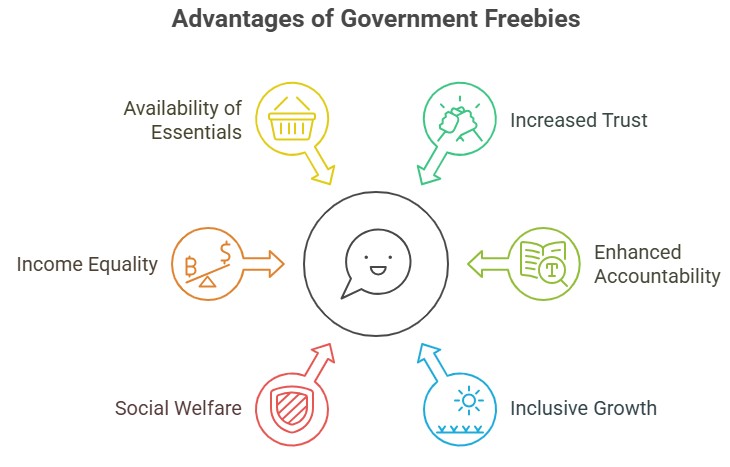
Conclusion
- While addressing the promises made during the election campaigns, it is not advisable to focus only on the political aspect.
- It is also important to keep in mind the Ethical, Social and Economic part because ultimately the feasibility, impact on society, budgetary allocation and resources are limited. Politics, Ethics and economy should go hand in hand when talking about freebies.
12. Ethical Issues in Migration and Refugee Policies: Global & Indian Perspectives
Migration shapes economies, cultures, and societies worldwide, yet it often raises complex moral and legal challenges. Addressing ethical issues in migration and refugee policies is essential to ensure fairness, human rights, and social harmony.
Context
- Migration issues exist in European countries - many migrants lose their lives while crossing the Mediterranean Sea.
- In India, Migration from the states like Bihar, West Bengal etc have been continued towards industrial states and from states like Kerala, Andhra Pradesh, Tamilandu, Punjab towards Gulf Countries, USA, Canada etc.
- Migrated people has been protesting in the cities of France over alleged racial discrimination.
Migration as an Asset and Liability
Migration is both seen as an asset and a liability by the world. In order to utilize asset and shun away liability, countries around the world devise policies and laws as per their suitability. Such policies often lack ethical principles.
Ethical Issues in Migration and Refugee Policies: Stakeholders and Interests
|
Stakeholders |
Issues involved |
Individual |
|
Origin Country |
|
Destination Country |
|
Rescuers |
|
|
International Organisation |
|
Ethical Issues in Migration and Refugee Policies: Key Ethical Concerns
- Utilitarian Approach: Policies give priority to the migration of skilled workforce and discourage the distress migration and refugees.
- Example: Engineers, doctors, etc. are given a warm welcome in developed countries but on the other hand when an illiterate from Syria or Lebanon arrives, they are not mainstreamed.
- Means and End: Labor economics emphasizes the movement of workers across borders to countries where their labour can be employed more productively than in their origin country. Humanity’s perspective is missing from it.
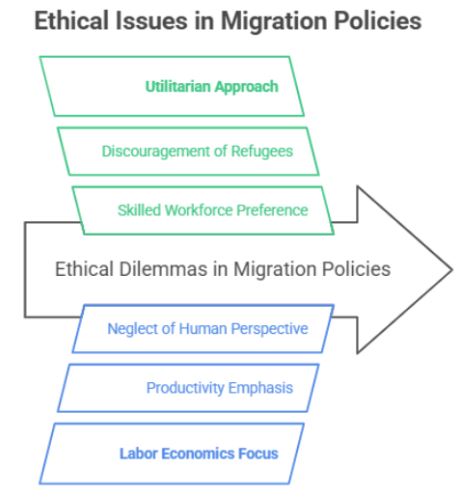
Example:
- Nordic countries allowed migrants to cop up with reducing populations and to engage them as service providers.
- Apathy: Thousands of Migrants and refugees die while moving toward their destination place.
Example:
- Many migrants have lost lives due to capsizes of boat in Mediterranean seas.
- North African migration to Europe is also a relevant example of it.
- Sensitiveness: At the global level, policies have not been formulated to deal with this fresh wave of Climate Refugees and Migrants.
- Example: Kafala system practice in Qatar.
- Ethics of temporary labour migration programs (TLMPs): Faced with labour and skills shortages in sectors such as social care and food production, many high-income countries have been actively considering the expansion of TLMPs, including for lower skilled migrant workers.
- TLMPs violate principles of domestic equality because they always afford migrant workers more restricted rights than those enjoyed by citizens.
- Violates Human Rights: Migration policies of a country do not comply with the rights enshrined in international laws such as the - Universal Declaration of Human Rights (1948), International Covenant on Civil and Political Rights (1966), UN General Assembly Resolution on the Protection of Migrants (2014), etc.
Impacts of Migration and Refugee Policy Making With and Without Ethical Principles
|
Spheres |
When Ethical Principles are not incorporated |
When Ethical Principles are Incorporated |
|
Citizenship Status |
Treated like a secondary citizen Ex. Migrants in Qatar and Saudi Arabia, Rohingaya in Bangladesh |
Treated equally in different arenas of Life Ex. Chakma and Hajong refugees in India |
|
Rights |
Social, Political and Economic rights are not entitled to them. Ex. Kafala system in Qatar |
Enjoy all rights in effective ways, this helps them to live a decent life Ex. Tech Migrants from India to USA |
|
Potential |
In adverse situations they are not able to give their best in different arena. Ex. Refugees from Iraq and Syria |
Due to equal opportunities, they are able to fully utilize their potential. Ex. Jews and Parasi Community in India |
|
Activities |
Persecution of refugees lead them to indulge in illegal actions like trafficking, drug abuse, terrorism etc. Ex. Trade of drug substances by refugees from Myanmar in North Eastern states of India. |
Along with their development, they contribute to the development of society and the country at large. Ex. Star Football player of France, Kylian Mbappe has deep roots in Africa Similarly, many Migrants are star players of European Football leagues |
|
Peace & Security |
Improper integration with society leads to various conflicts such as ideological, psychological etc. Ex. Issues of Rohingyas exodus |
They are well integrated into society. Principles of Tolerance, sympathy etc. are being upheld in society. Ex. Contribution of Parsis in India, jews in USA in economic development |
Way Forward
- Equality and non-discrimination: It prohibits distinction, exclusion, restriction or preference on the basis of a list of non-exhaustive grounds such as race, colour, descent, ethnic origin, etc.
- States should address direct and indirect discrimination against and unequal treatment of people in laws, policies, and practices, etc.
- Respecting Human Rights: Nations should refrain from human rights violations of migrants. This includes refraining from arbitrary detention, torture, or collective expulsion of migrants.
- Participation and inclusion: Everyone is entitled to active, free, and meaningful participation in decisions that affect the enjoyment of their rights.
- Migrants should be consulted and included in the development of relevant public policy.
- People-centric Approach: It recognizes that migrants and refugees are men and women who make often difficult choices and deserve fair and decent treatment. They are people with identities, skills, cultures, and preferences.
- Accountability and rule of law: States should ensure transparency in the design and implementation of their policies and ensure that rights-holders have access to redress mechanisms and enjoy effective remedies when human rights breaches occur.
- The system governing migration should allow migrants full access to justice, including redress and remedies if they experience human rights violations.
Conclusion
- The policies related to migration and refugee needs to be comprehensive and broad in nature. The interest of the vulnerable needs to be given priority.
- Sustainable Development goals will be achieved only when all the people of the world will prosper.
13. Refugee Crisis: Issues, Challenges & Way Forward
The global refugee crisis has intensified due to conflict, persecution, climate change, and economic instability, displacing millions across borders. Addressing their rights, safety, and integration remains a critical humanitarian and policy challenge.
Recent Refugee Situations
- Recently, houses of refugees who came from Pakistan, were demolished in Jaisalmer and Jodhpur regions. However, later separate land has been provided to them.
- Afghanistan’s people looking for Europe, Central Asia, and India (Especially minorities) because of economic, social and religious persecution.
- People from Ukraine have been seeking shelter in different parts of Europe.
- The Chakma and Hajong refugees: Many from the Chakma and Hajong communities—who once lived in the Chittagong hill tracts, have been living as refugees in India for more than five decades.
- Rohingyas are seeking shelter and safety from religious persecution in Bangladesh and India.
- Climate refugees displaced in Pakistan because of unprecedented floods of 2021.
Issues Associated with Refugee Populations
- According to the UN High Commissioner for Refugees (UNHCR), a refugee is someone who has been forced to flee his or her country because of persecution, war, or violence.
- Example: Rohingyas seeking shelter, safety from religious persecution in their own country.
- The refugees also have an impact on the economy and society of their host nations. Large numbers of refugees can have a devastating impact on the host nation.
- Example: During Liberation of Bangladesh in 1971, Lakhs of refugees came to India, which had impacted economy and society of that time.
- They could be used by terrorist organisations, sex or slave trade etc., thus denial of basic human rights, disruption of global peace.
- Example: Human trafficking, ISIS using refugees as terrorist
- It is often seen that immigrants are exploited for their cheap labour.
- Example: Immigrants working in the Gulf countries
- Immigration sometimes also becomes a social or political issue; racism is used to exploit feelings or as an excuse for current woes of the local population.
- Example: Recent violent protests in France because of alleged racial discrimination
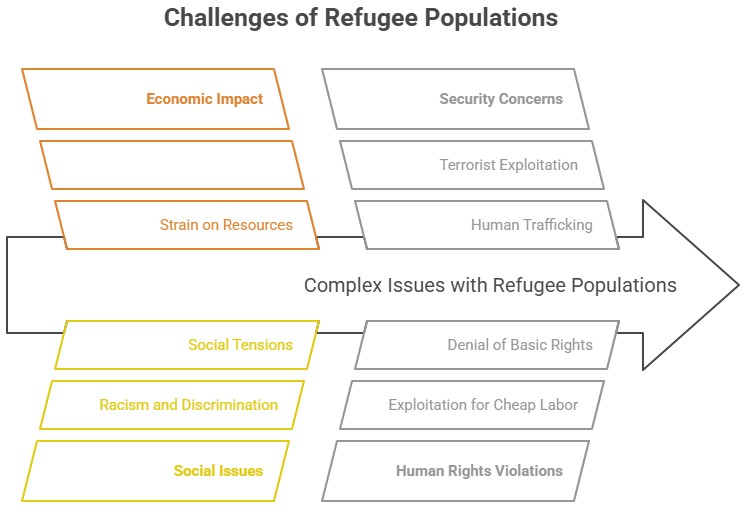
Why Are Refugee Rights Becoming a Favour on Part of the States?
The core issue in this scenario stems from the lack of empathy within the public of the host nation and limited resources at the ground level. These core reasons manifest themselves in following ways-
- Viewed as a security threat: The mistrust combined with lack of awareness and misinformation creates fear and makes the local population view refugees as a security threat.
- Example: Poland and Slovakia in Europe prohibit entry of Refugees from the Mediterranean regions.
- Issue of legal enforcement limits enforceability of rights: The limitation of international laws makes refugee rights contingent upon the discretion and perception of the host country.
- Example: many European countries tend to be more sympathetic to LGBTQIA+ refugees when compared to victims of war crimes in African countries.
- Limited capacity of the host: Fulfilment of all rights of refugees is dependent upon the capacity of resources within the host countries.
- Example: in many developing countries Right to Housing cannot be fulfilled for the domestic population, guaranteeing the same claim for refugees becomes difficult and hence becomes selective.
- Politicisation of the issue: The image of the refugees, the associated fear psychosis, and political implications of assimilating the refugees leads to politicisation of the issue. This has led to the emergence of the idea of selective humanitarianism.
- Mistrust as a norm: Lack of empathy with the refugees creates mistrust about the culture, situation, and genuineness of their claim for asylum.
- Perception as an economic competitor: Limited opportunities combined with the image of a refugee as a ‘freeloader from the other nation’ creates a perception of them being unworthy of rights.
- This makes ‘grant of rights’ a favour which is subject to collective sympathy.
Way Forward to Securing Refugee Rights
- Generating awareness about refugee situations and their rights: Creating awareness about the situation would translate to empathy for refugees and fading of the prevalence of fear against them. This may lead to more social acceptance and faster assimilation.
- Making objective procedures and authorities accountable: The anxiety and uncertainty faced by the refugees can be ameliorated to a large extent if procedures for granting asylum are made objective and clearly communicated.
- Also, making the criteria objective could be a first step in holding the authorities accountable and thus moving towards a rights-based approach.
- Creating an effective transition mechanism: The resolution of the refugee issue remains complicated considering its social, economic, and political implications and thus takes time.
- In this scenario, it becomes important that an effective transition mechanism be created that can provide at least limited rights to refugees.
- Strengthening the system of refugee camps: The system of refugee camps has emerged as an effective solution and hence should be adequately funded and managed.
- Cooperative approach among institutions: The capacity of states to fulfill the rights of refugees is constrained. For the realization of these rights, it is crucial that the host country, the country of origin, the group of refugees, and the entities active on the ground like NGOs, social groups, etc. work together.
- Link with SDGs for making rights accountable: Nonfulfillment of rights directly affects the realization of SDG 16 (Peace, Justice, and strong institutions) and indirectly affects other SDGs.
- Efforts should be made to make the authorities more accountable by linking refugee rights to SDG targets.
Conclusion
The essence of the resolution of the refugee crisis lies in the economic cost of refuge and its socio-political implications and the moral economy of asylum (Providing protection to refugees and the extent of humanitarianism among the host). Managing these two factors could provide a long-term solution to this crisis.
14. Public Outrages: Violence through Protests, Mob Lynching
Quote: The first and most important thing a man should keep away from is not doing harm of any kind knowingly to anyone, at any time. - Thiruvalluvar
Reasons behind Lynching
- Religious Chauvinism: Being a multi-religious and pluralistic society, the religious beliefs or principles play an important role with imposition of one’s beliefs on others.
- Ex. Pakistani man Mashal Khan lynched over alleged blasphemy remarks during rally
- Canadian resident lynched in Punjab's Rupnagar over objection to loud music
- The recent killings in Punjab over sacrilege issue
- Bovine-related mob-lynching
- Socio-cultural Influences: This includes the historical socio-cultural norms or moral principles which govern a person's behaviour or attitude towards an action.
- Ex. India reported 663 lynching due to witchcraft were reported between 2015 and 2021.
- Feelings of Fear or Hate: Often, the rumours of being kidnappers or actual action of person/s give rise to lynching.
- Ex. the killing of Sadhus in Palghar on rumour.
- In Dimapur (2015) an angry mob lynched a rape accused by breaking into the prison.
- Lack of trust in the efficacy of laws: Either due to dissatisfaction from implementation of laws or judicial delays, mob justice is seen by non-state actors as a discharge of public duty.
- Ex. Recent attack on the house of Panchayat head in Motihari, Bihar by the local public
Ethical Issues involved in Mob violence
- Dehumanization of the victim: Lynching incidents lead to dehumanisation of individuals or groups leading to ghettoization and hate crimes.
- Denial of Justice: Lynching goes against the rule of law and the extra-judicial elements or non-state actors’ award punishment beyond what is deserved under laws.
- Weaking of mutual trust: Lynching leads to higher distrust among people and society becomes more mechanical rather than organic, i.e. homogeneity based integration. Being a nation with large diversity, it can create challenges to the unity of nation.
- Ambience of intolerance: The level of intolerance and private security need rises in society as more people start taking law into their own hands for justice.
- Encourages use of violence: If not controlled, it can be used over non-agreement and becomes a threat to individual liberty, rationality and logical discussion.
Framework to Combat Mob lynching
|
Preventive measures |
Remedial measures |
Punitive Measures |
|
|
|
Way forward to curb Lynching:
- Integrated laws to curb Lynching:
- With police and public order being part of state subjects, India lacks a single law to specifically deal with mob lynching.
- In Tehseen Poonawalla vs UOI (2018), Supreme Court issued preventive, remedial and punitive guidelines to deal with mob violence and lynching.
- Calling it a “horrendous act of mobocracy”, the Supreme Court also asked Parliament to establish lynching as a separate offence with punishment.
- Presently, it is mainly dealt under various sections of IPC with a handful of states taking legal initiatives. This includes- Manipur, West Bengal, Rajasthan and recently, by the Jharkhand assembly.
- Societal Approach: With involvement of beliefs and emotions, regulation of social behavior is first step to stop mob violence and protect rights conferred to the citizens.
- Respect for Law: Law is the mightiest sovereign of a civilized society. Efforts should be made to increase the feeling of law being sacred in society.
- Culture of duty: Efforts should be made to universalize the basic duties such as- Duty of Justice, Duty of nonmaleficence etc. as part of social norms or actions.
- Governmental Approach: Apart from bringing laws and guiding society on social behaviour, the government should apply emotional intelligence to handle conflicts with equal condemnation of social and political violence to avoid revenge tendencies.
- People-centric Approach: As society and government are made by the people, it is vital that people should seek true freedom through a life based on reason (objectivity or rational will), self-control and virtues of empathy, compassion, and humanity.
Guiding Principles: Addressing Mob lynchings
Ethical & Institutional Skillset
- Emotional Intelligence:
- Objectivity:
- Impartiality:
- Compassion Towards Weaker Sections:
- Laws:
- Supreme Court Judgement:
- Constitution:
Conclusion:
Solution to lynching is essential not only for sustenance of law and order but for nation building as well.
15. Ethical Corporate Governance in Startups: Importance, Challenges & Principles
Corporate governance is the system that directs and controls companies to ensure efficient and ethical management. In startups, ethical corporate governance is crucial for building trust, sustaining growth, and fostering accountability in a rapidly evolving business environment.
About: Corporate Governance and Startups
- Corporate Governance is the system by which companies are directed and controlled.
- It represents the structure of rules, practices, and processes used to direct and manage a company for its efficient and effective functioning.
- If these rules, practices and processes are driven by moral principles or values to ensure efficiency, then it is called Ethical Corporate Governance.
- Principles of accountability, transparency, integrity, fairness, corporate social responsibility etc are core to this.
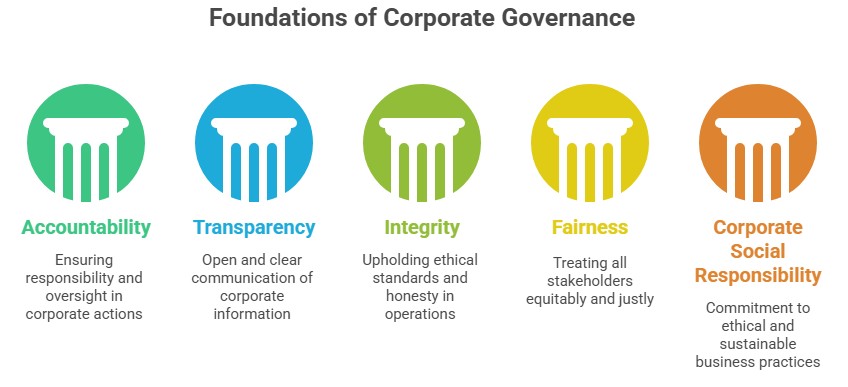
Need for Ethical Corporate Governance in Start-ups
- Unconventional nature: Startups are the early-stage companies focusing beyond conventional strategies for smart solutions to problems in a cost-effective manner.
- Ex Startups for Doors step delivery of Food
- High Valuations: Most of the Startups have high valuations.
- Ex. Paytm valuation dropped from $19 Billion (listing day) to $5 billion
- Accounting Issues: Presenting Gross revenue as net revenues.
- Ex. Rahul Yadav's 4B Networks, Zilingo
- Tax Evasion: Using shell companies for Tax evasion.
- Ex. B2B unicorn infra.market
- Misappropriation of Funds: Use of company’s expense account to fund own lavish style.
- Ex. Bharatpe, BYJU
- Large and growing numbers: India has the 3rd largest startup ecosystem in the world with 71,248 recognized startups, including 100 unicorns, with a total valuation of over ?25 lakh crore rupees.
- Sectoral omnipresence: They are present in almost every conceivable space and function as the new engines of growth, job creation and socio-cultural transformation In India.
- Young age of founders: limited business exposure and short-term interests like funding rather than long-term sustainability leads to increased ethical lapses.
- Ex. Zepto co-founder Kaivalya Vohra, who is just 19 years old
- Poor Self Compliances: Lack of due diligence and compliances by startups.
- Ex. BYJU’s financial issues
Challenges for Start-ups to adopt Ethical Corporate Governance
Unlike big corporate houses or listed companies with availability of guidelines, resources and experience, startups suffer from issues such as:
- Limited resources: In initial stages, most startups lack people or funds necessary for creating systems and processes for building an ethical workplace.
- Young-age of entrepreneurs: As number of startups are started by entrepreneurs with negligible or zero experience, they tend to have limited understanding of why ethical systems and corporate governance is essential for long-term growth.
- Workplace culture issues: The workplace culture prevalent in India is largely employer centric, creating issues like limited accountability, low emphasis on values such as fairness etc. This indirectly discourages start-ups to adopt an ethical culture organically.
- Short-term Focus: When started or in an early stage, the focus of most startups are attracting funding, which could lead to the neglect of ethical principles necessary in the long-term perspective.
- Underdeveloped Ecosystem: Indian startup ecosystem has some missing links such as proper mentorship and support; public interest-oriented Venture Funds etc.
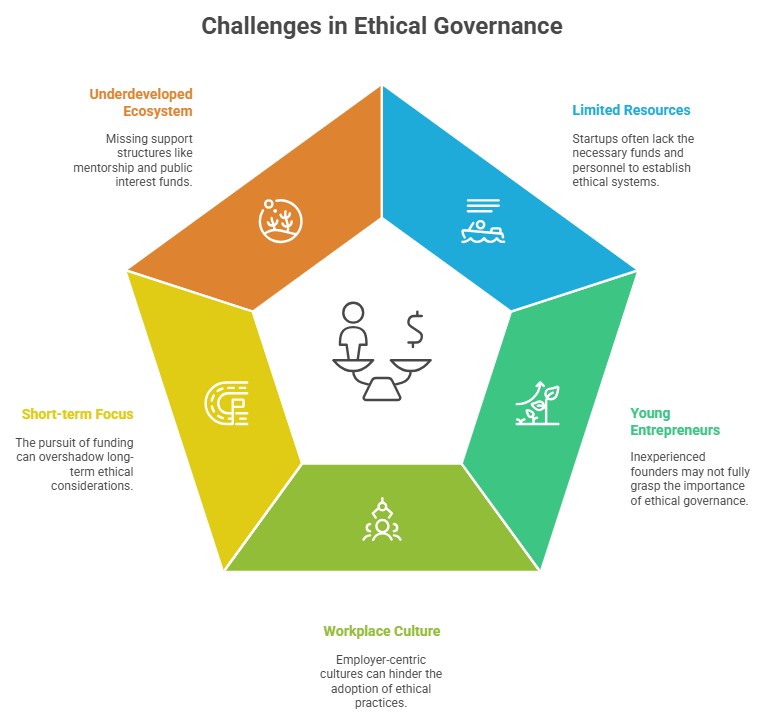
Ethical Principles Start-ups Should Follow for Good Corporate Governance
- Accountability: The Company Management should follow the obligation to explain and reason for the company’s actions and conduct.
- Ex. Streamlined methods can be adopted for this communication to avoid additional regulatory burden on Start-ups.
- Responsibility: On behalf of the company, the Board of Directors/investors should accept full responsibility for the powers they are given and exercise the authority.
- Transparency: Digital tools like weekly newsletters, updated website could be used to Inform stakeholders about the company’s activities as part of good governance.
- Fairness: The corporate strategy, developed and implemented by management, should focus on long-term value creation through timely disclosures; helping investors to assess the financial and business soundness and risks of the company.
- Corporate Social Responsibility (CSR): In decision-making, management should consider the interests of all company’s constituencies, including:
- Stakeholders such as employees, customers, suppliers, and the community, and
- Regard for environmental, health, safety, and sustainability for long-term value creation.
- Leadership: The top of startups should set the tone- demonstrating company’s commitment to integrity and legal compliance- to set the groundwork for an ethical work culture.
Role of Other Stakeholders in Promoting Ethical Corporate Governance
- Government: Developing a Code of Best Practices on corporate governance standards and providing tailor-made versions ethical practices for different sectors (in order to encourage compliance).
- Citizens: In addition to being customers, they are co-producers and evaluators of services. The choices that they by and large dictate the processes and products of companies. They can help by making more ethically responsible choices.
Conclusion
- Beginning a business is merely the first step on a lengthy journey. A startup can achieve this through establishing and maintaining a solid reputation, attracting and keeping competent personnel, and gaining confidence in its stated goals.
- An ethical startup ecosystem will create the groundwork for a moral society, a moral economy, and most crucially, a moral individual.
16. Ethical Journalism in India: Principles, Values, Guidelines
The Ministry of Information and Broadcasting has blocked several YouTube news channels from India as well as Pakistan for spreading “fake news”.

Ethical Journalism in India: Principles & Proactive Steps
Based on Gandhian Principle (Truth, Fairness, Humanity) & Utilitarian Principle (Minimising harm, Avoiding Libel)
Values |
Ethical Principle |
Steps to avoid conflicts with the principle |
Truth and Accuracy |
|
|
Independence |
|
|
Fairness and Impartiality |
|
|
Humanity |
|
|
|
Avoiding libel |
|
|
Proper attribution |
Journalists must never plagiarise. |
|
Harm minimization |
|
|
Ethics Violation by Journalist
- Publishing allegations by a single source without attempting to verify accuracy.
- Ex. Media house of China, North Korea
- Omitting facts that could lead to a different conclusion to the reader/viewer.
- Ex. Two-part documentary series aired by BBC on the PM Narendra Modi
- Calling for comment after normal business hours when there would have been time for the journalist to call earlier.
- Ex. Asking response from People coming out after casting votes
- Using editorial positioning of quotes to impact readers’ conclusions
- Ex. Putting quotes critical of an organisation in the lead paragraphs.
- Biases in ideology and focus on sensation of news to increase TRP.
- Ex. Political News like change in government in Maharashtra from MVA to NDA
- Media trial by the journalist.
- Ex. Aryan Khan Drug Case, Susant Singh case,

Conclusion
There are scores of codes and statements to guide journalists in their important work of sharing information with the public. Adhering to the Ethical guidelines brings transparency and accuracy in the information. It serves the core function of the fourth pillar of democracy.
17. Rising Alcohol and Drug Abuse in India: Challenges and Solutions
Alcohol and drug abuse in India is emerging as a serious social and public health challenge, affecting individuals, families, and communities. Incidents like hooch tragedies and rising addiction rates highlight the urgent need for awareness, regulation, and responsible policies.
Quotes:
- That’s all drugs and alcohol do, they cut off your emotions in the end. – Ringo Starr
- There’s not a drug on Earth that can make life meaningful.
- Drugs are a waste of time. They destroy your memory and your self-respect and everything that goes along with your self-esteem.” – Kurt Cobain
Rising Alcohol and Drug Abuse in India About
- Growing Drugs and alcohol consumption in India is becoming a major health hazard and a social menace.
- State like Punjab, North – Eastern States, Jammu & Kashmir have become home of drug abuse.
- Hooch Tragedy:
- In recent incident, over 40 people died in Gujarat’s Botad district
- 7 years since Bihar liquor ban: 199 deaths, 30 hooch cases (Police dat)
- These highlights the limitations of prohibition in addressing it; calling for a change in approach to address growing alcohol consumption
Stakeholders
|
Stakeholders |
|
Government |
Individual liberty Vs. Constitutional responsibilities under DPSPs
Revenues generation vs. Health and social issues Ethical Dilemma over contribution of liquor business in government revenues and its duty to protect weak, vulnerable, and impressionable individuals. |
Individuals and families |
Right of Freedom of Choice Vs. Privacy of Individuals
Avoiding indebtedness by reducing money spent on alcohol. |
Liquor Industry |
Tax collection/Job Opportunities Vs. marketing products with harmful impact on individual
Protecting jobs in the liquor industry by overcoming the challenges from illegal liquor business which grows due to prohibition. |
Local Administration |
Increasing awareness among people on ills of liquor consumption, helping to reduce crimes committed by intoxicated people |
Society |
Social norms Vs. Personal discretion
Also, within societies, the views on alcohol consumption differ as in some it is part of socio-religious rituals while others call to abstain. |
Ethical Skillset for a Civil Servant while taking Action
- Emotional Intelligence: To understand and manage the emotions of individuals and communications regarding alocohol consumption.
- Compassion: Towards women and children who face most of the social violence due to Alcoholism.
- Selflessness: To ensure action taken on public interests.
- Leadership skills: To influence people’s attitude and persuade them to overcome the bad habits of alcoholism through diligence.
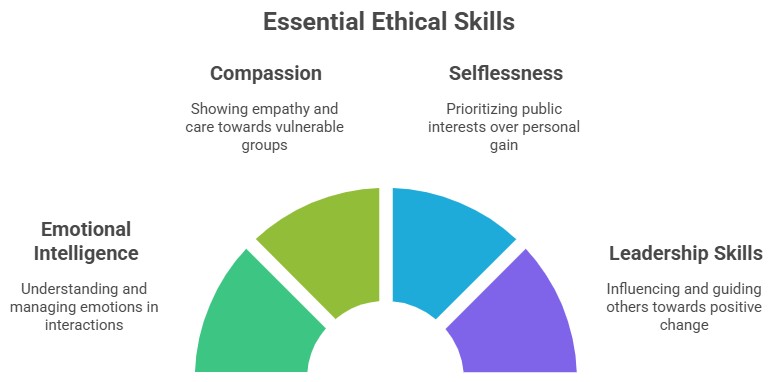
Way Forwards
- Progressive Laws: These encourage responsible behavior and compliance while being strong against domestic violence, drunk driving or illegal liquor industry or its smuggling.
- Ex. Uniform drinking age law across the country where no person below that should be permitted to buy alcohol.
- Regulations over liquor Industry: It will avoid indirect marketing tactics to promote liquor consumption (e.g., surrogate marketing) and also curb illicit liquor production.
- This could avert hootch tragedy which frequently occurs in states like Bihar, Gujarat etc.
- Labeling Standards: With adequate notices and cautions to help people in making informed decisions.
- Avoiding Arbitrary or Discretionary actions: while containing negative fallouts of prohibition on tourism and MICE (meetings, incentives, conferences and exhibitions) sector.
- Use of Corporate Social Responsibility: To ensure responsible drinking and increasing the de-addiction facilities.
- Community Participation: Gathering community support to avoid addiction and rehabilitate people suffering from addiction.
- Awareness: Information, Education and Awareness (IEC) campaigns from state and district administration to educate people about the ill effects of alcoholism.
Conclusion
With differing socio-religious opinions and dilemmas faced by multiple stakeholders, a participatory approach becomes vital for a good public policy. It can help in creating an atmosphere where each stakeholder, including individuals, understands their responsibility.
18. Match Fixing
- The organized participation is governed by various sports organisations who frame rules and patterns of behavior which should govern the activity.
- Ex. Olympic Charter codifying the fundamental principles of Olympics, to promote the values of excellence, friendship and respect while protecting the integrity and fairness of games.
- Manipulation of sport is nothing but to control the outcome of a competition or alter the natural course of a sporting event, or part of it to obtain an undue advantage for oneself or for others.
Forms of Manipulation of Sports Competition:
|
Manipulation |
Description |
Match Fixing |
|
|
Insider Information |
|
|
Spot Fixing |
|
Doping |
|
|
Tanking |
|
|
Others |
|
Ethical issues in manipulation of sports competition
- Unfair competition: It gives rise to unfair competition, discouraging honest sportspersons to follow the sports rules under trying circumstances.
- Lack of Sportsmanship: Manipulation of sports competition brings disrespect for the team, opponent, fans etc. with greed for money or fame taking away the positive and transformative power of sports.
- Disappointment for the viewers: News of sports manipulation may lead to lack of trust among the viewers and feeling of being cheated and resentment among the society.
- Blow to a country’s reputation: It puts the country on the global map for match-fixing, doping etc. related violations.
- Ex. in November 2015, the Russian Athletics Federation was suspended due to the state-organized doping system of athletes for national squad selections.
Challenges in addressing the manipulation of sports competitions
- Increase in market value of match fixing: Rising size and network of sports betting market with a more global and more complex structure due to emerging uses of technology, big data, and social media.
- Issues with disclosure of Forbidden substances: Delays in updating the list of forbidden substances when compared to the emergence of new products and in publication of doping tests.
- Targeted approach: Targeting entourage of athletes and grooming of young players for sports manipulation.
- Emergence of Digital Cheating: Digital doping or e-doping or technological cheating/hacking in E-Sports and Virtual gaming to manipulate data have been used significantly.
- Ex. in e-cycling competitions in 2019.
Way Forward
The increasing financial stakes, gains, for stakeholders and States alike from sports demand collective action against Manipulation of sports competition. This includes:
- Intelligence and Investigations
- To identify the manipulations, how (modus operandi) the manipulators do so and share it with other nations/bodies.
- Ex. An e-portal for athletes, coaches and support staff to report such manipulations can help in it.
- Awareness Raising and Capacity Building to determine the principles for respectful behavior
- It can also help in creating cognitive dissonance among elite athletes through visualization of how guilty they might feel when caught for sports manipulation.
- Legislative Approach: Lay down disciplinary and criminal sanctions of specific sports manipulation
- Collaborative approach: Ensure National and International cooperation, coordination, and exchange of information among all key stakeholders at national, bilateral, and multilateral level.
- Ex. to Coordinate with INTERPOL’s Match Fixing Task Force when conducting investigations.
19. AI Ethics and Responsibility: Autonomous Cars, Bias, Privacy, Human Oversight
Recent Incident: Elon’s car was caught on camera ramming into another car. But he pleaded not guilty. His argument was that his car was in autonomous mode, so the responsibility of the accident lies with the car manufacturer.
Ethical Aspects of AI Ethics
- Automation and unemployment: AI promises to automate a large section of the job market. Some experts suggest that the large-scale advent of AI will generate newer kinds of jobs, but how much it will be able to compensate remains to be seen.
- Privacy & Surveillance: The advent of AI amplifies the known issues of Data Surveillance, theft, profiling among others. For example, face recognition in photos and videos using AI-based image processing will aid profiling and searching for individuals.
- Manipulation of Behaviour: Given users’ intense interaction with data systems and the deep knowledge about individuals in the AI database, users are vulnerable to “nudges”, manipulation, and deception. o For instance, many advertisers use AI- identified psychological effects to maximise profit, including exploitation of behavioural biases, deception, and addiction generation.
- Opacity of AI Systems: The decisions taken by the AI system are not transparent. This opacity fuels absence of accountability, probity and most importantly fuels distrust among people.
- Bias in Decision Systems: Many AI systems rely on machine learning techniques in (simulated) neural networks that will extract patterns from a given dataset, these patterns mimic human biases such gender-bias, race-bias etc. o For example, the trial applications developed by predictive policing tend to profile people from certain communities as potential threats (i.e., racist or casteist robots).
- Human-Robot Interaction: Interaction with intelligent robots pose several questions like- how do we treat robots who emulate human emotions? How do we protect ourselves or the vulnerable section from getting physically or psychologically harmed? And how do we protect our privacy when interacting with social robots?
- Singularity: The idea of singularity is that if the trajectory of artificial intelligence reaches up to systems that have a human level of intelligence, then these systems would themselves have the ability to develop AI systems that surpass the human level of intelligence, i.e., they are “superintelligent”
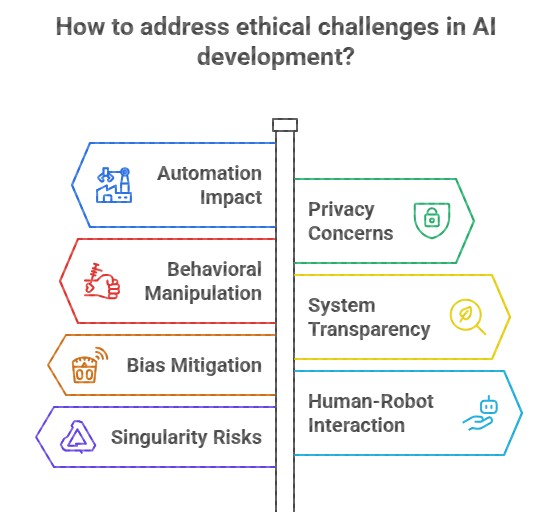
Ethical AI Ecosystem
Every day, new use cases of AI are emerging, it would be impossible to potentially foresee every possibility. To overcome this issue, 193 countries at UNESCO have collectively finalized following design principles for ethical use of AI-
- Proportionality and Do Not Harm: The choice to use AI systems and which AI method to use should be proportional to achieve a given legitimate aim, should not infringe upon human rights and should be based on rigorous scientific foundations.
- Fairness and non-discrimination: AI actors should promote social justice and safeguard fairness and non-discrimination of any kind in compliance with international law.
- Sustainability: The continuous assessment of the human, social, cultural, economic and environmental impact of AI technologies should be carried out.
- Right to Privacy, and Data Protection: Algorithmic systems require adequate privacy impact assessments, include societal and ethical considerations of their use and an innovative use of the policy by design principle.
- Human oversight and determination: Ensure that it is always possible to attribute ethical and legal responsibility for any stage of the life cycle of AI systems, as well as in cases of remedy related to AI systems, to physical persons or to existing legal entities.
- Transparency and Explainability: This opens up the AI system for clearer understanding of its processes. This will ensure that people fully appreciate the decision-making process and the associated consequences.
- Transparency and explainability relate closely to adequate responsibility and accountability measures, as well as to the trustworthiness of AI systems.
- Multi-stakeholder and adaptive governance and collaboration: Participation of different stakeholders throughout the AI system life cycle is necessary for inclusive approaches to AI governance, enabling the benefits to be shared by all, and to contribute to its sustainable development.
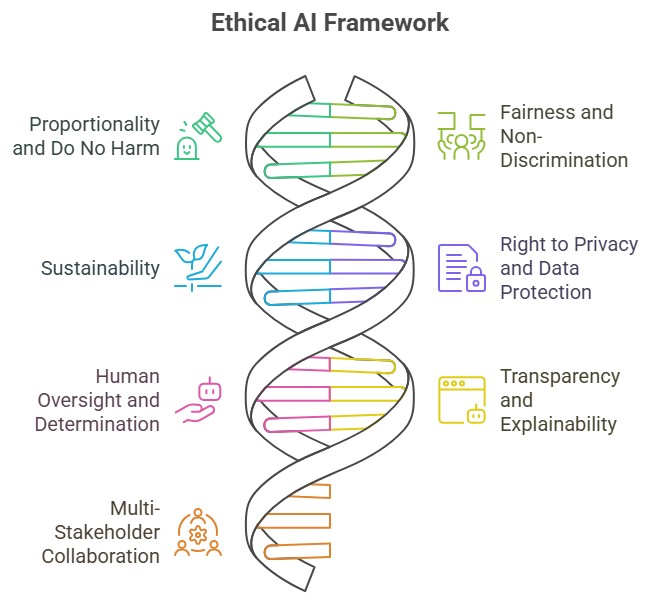
|
Biased AI |
|||
|
Gender biasness |
Ethical dilemma involved in choosing a decision |
Absence of responsibility and accountability norms for Machines/Robots |
Efficient but Unpredictable use of AI |
|
Ex.– If we search the “greatest player of all Time”, then the search engine will provide the list of prominent male personalities |
Ex. Autonomous Car – Imagine an autonomous car with broken brakes going at full speed towards a grandmother and a child. By deviating a little, one can be saved |
Ex. AI creates Art - Ex. Who will be designated as author? The company which orchestrated the project, the engineer, the algorithm or we all as a collective race? |
Ex. AI in the court of law: – The use of AI in judicial systems around the world is increasing. AI could presumably evaluate cases and apply justice in a better, faster and more efficient way than a judge. But will it uphold human rights and fundamental values? |
Conclusion
Some ethical questions are about mitigating suffering, some about risking negative outcomes. While we consider these risks, we should also keep in mind that, on the whole, this technological progress means better lives for everyone. Artificial intelligence has vast potential, and its responsible implementation is up to us. We need a human-centred AI.
20. Metaverse
Topic: Ethics of Metaverse
Quote: It is said- ‘In the digital realm, code dictates life’. The time has come when life should dictate the code
Metaverse is a combination of multiple elements of technology, including virtual reality, augmented reality and video where users "live" within a digitally enhanced surrounding.
Context: Recently, In Tamil Nadu a couple hosted India’s first wedding reception in Metaverse. The bride’s father had passed away but attended and blessed the couple in a digital avatar at the wedding.
Ethical issues related to Metaverse:
- Biometric data and privacy: Virtual and augmented reality devices are set to provide users with access to the metaverse but will track brain wave patterns and deduct user thought processes.
- Protecting the vulnerable: The vulnerable section, i.e., children, senior citizens and digitally unaware among others are more vulnerable to influences of the metaverse environment.
- Ex. hyper-reality experiences could trigger a sensory overload and induce fits or seizures in users who have a disorder like epilepsy.
- Toxicity: Platforms like metaverse have become a breeding ground for toxicity, bullies and hate speech. People vocalise opinions that they would never express in real life.
- Issues of inequality in the tech industry: The prevalence of metaverse could create further divide due to economic capacity, urban-rural gaps etc.
- Lack of Decentralisation: A centralised metaverse which is governed, owned, and operated by tech giants then the problems such as data privacy, thefts, manipulations, and conditioning to favour some and not to favour some, will come to rise.
- Misuse and unfair ownership of data: In a seamless environment such as metaverse, it would be difficult to implement the current consent-based permission structure for private data resulting in muddled ownership of data and increased vulnerability to misuse.
- Translation of Laws and Rights from Real to Digital space: In the absence of a regulatory framework in the form of laws or a constitution, it is difficult to understand what are the Rights that will be protected and how will they be protected.
- Psychological issues with multiple Identities: Metaverse would enable the individual to create a digital identity without the pushes and pulls of the society and the situation one is born in.
- This could create more identification with the digital identity leading to issues like self-pity and dissatisfaction with oneself in reality.
Way Forward:
- Regulatory frameworks and awareness: Preventing cyberbullying and sexual harassment and ensuring inclusivity through community guidelines and privacy protections. Projects involving children or other vulnerable populations should be given special consideration.
- Consumer centric approach: All aspects of Metaverse to be examined thoroughly which affects the life of the consumer legally, personally, socially and emotionally.
- Decentralisation: A democratised platform by all and for all will provide an environment of transparent and safe digital space.
- Transparency in Data Collection: Ensuring that privacy policies specifically mention Metaverse data and how that data will be used, shared, and protected.
- Tackling inequality in the tech industry: For the metaverse to be inclusive, digital divide to be bridged by reducing existing inequalities and creating digital environments where everyone can belong.
- Secure the experience: Use the best security protocols and protection to ensure that malicious actors cannot alter or harm users while they are in the VR experience. o For example, a community member might get voted off the island if enough token holders think someone is not operating in a way that adheres to the community guidelines.
Conclusion: In this dynamically evolving domain, to ensure that these principles are incorporated in both letter and spirit, the platform, developers and users will have to innovate continuously and proactively.
21. Police Corruption in India: Causes, Ethical Challenges & Solutions
Police corruption in India remains one of the most critical challenges in ensuring justice and public trust in law enforcement. It undermines the rule of law, encourages criminal activities, and weakens democratic institutions.
Quote: “Power corrupts and absolute power absolutely”

About Police Corruption in India
- Police corruption is a specific form of police misconduct designed to obtain financial benefits, other personal gain, or career advancement for a police officer or officers in exchange for not pursuing, or selectively pursuing, an investigation or arrest.
- One common form of police corruption is soliciting and/or accepting bribes in exchange for not reporting organized drug or prostitution rings or other illegal activities.
Ethical Challenges in Policing and Police Corruption in India
- Obedience versus Professional competence: Disobedience of operational order on grounds of professional competence goes against the disruption of hierarchy and discipline.
- Conflict between Obedience and legality:
- Ex. Higher authority giving instructions to frame charges under particular IPCs but the police officer in-charge seems those IPCs inappropriate for the case
- Conflict between means and ends: Police officers often face the dilemma of whether to use wrong means to achieve ends.
- Ex. Beating culprit to confess the crime or provide clue to recover evidences such as arms used for the crime
- Conflict between obedience and Political direction: Ex. Policemen has instruction to stop common people to meet with the ministers because of security reasons, but the minister wants to break the protocol of security.
- Conflict between Obedience and basic morality:
- Ex. Oder from the higher authority to fire on people protesting for a cause, however policemen with integrity may refuse to fire.
Challenges in Policing in India
- Remuneration and Service benefits: Salary structures, nature and hours of duty, accommodation problem and certain administrative and organisational problems are the main factors responsible for the police corruption.
- Political interference: Growing influence of unscrupulous public men and politicians also promotes corruption in Police system.
- Low strength and average training: According to a report, “the strength and the quality of the policemen have not kept pace with the demands of a rapidly expanding economy and administration.
- Ambiguities in legislation: Unclear laws coupled with the police discretion “to act or not to act” in respect of certain offences under them give ample opportunities to the personnel to resort to corrupt practices during the enforcement of such acts.
- Ex. offences like child labour, untouchability, immoral traffic on woman, indecent representation of women, etc., which are brought under the ambit of a plethora of social legislations.
- Absence of a strong institutional culture: Institutional value system creates an internal need to follow the ethos and decreases the need for any external or legal enforcer.
- Example: strong institutional culture practised in the Indian Armed Forces results in soldiers following the same discipline outside the military ecosystem despite having no external enforcer.
- Discretionary Power of officers: The major source of corruption in the police is the vast power vested in a police officer in a day to day working. Example: enforcement of prohibition laws.
- Vicious cycle of bribery: Police Persons, who have paid their way through, try to recover the amount as soon as possible and corruption becomes a tool for getting better return on investment.
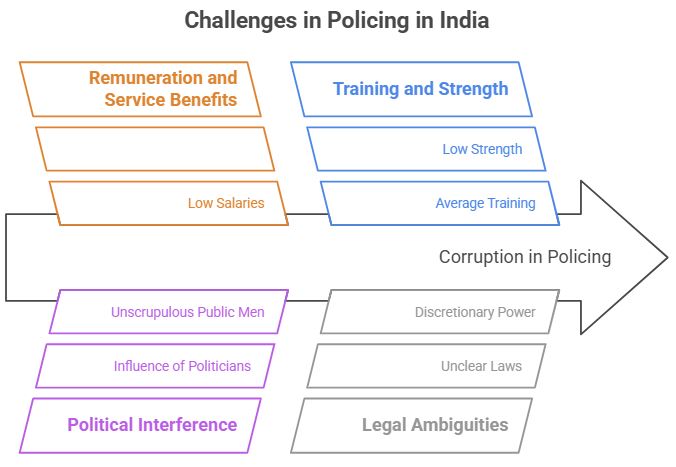
Way Forward to Reduce Police Corruption in India
- Community policing: allows police to continuously operate in the same area in order to create a stronger bond with the common public.
- Ex. Community policing in Canada, individual officers are encouraged to engage in neighbourhood extracurriculars, particularly those involving at-risk youth
- Transparency in Service matter: A system could be designed where postings are automatically generated by a software system after a given time interval.
- Supreme Court (in Prakash Singh Case) sought a minimum tenure for the Inspector General of Police so that they are not transferred mid-term by politicians.
- Ensure accountability: Public hearings, objective performance and efficiency indicators can be introduced to monitor the performance of the Police force.
- Prakash Singh judgement recommended setting up State Police Complaints Authority where common people aggrieved by police action could approach.
- Better Remuneration and service benefits: It can have a positive impact on police personnel who become coarse and turn cynical due to stress, strain and frustration of the law enforcement profession.
- Changing attitude of police leaders: There should be more flexibility, fluidity and individual innovativeness and initiative so that there would be meaningful deliberations and interactions at all levels of the force.
- Innovative mechanisms: Efforts should be made to redefine the core areas of policing and identify and delink those duties and tasks that give ample scope for the lower rungs of police to resort to corrupt practices.
- Use of Information Technology: Use of technology for reporting and handling of cases can play an important role in arresting corruption as non-registration of complaints is the most common grievance of citizens.
- Ex. Rajasthan has introduced an initiative named Aarakshi to improve the efficiency of police procedures.
22. Use of Bulldozer and Principle of Natural Justice
Context:
- Recently, it has been alleged that the authorities riding bulldozers have razed buildings or house extensions built "illegally" in neighbourhoods that recorded communal clashes in Uttar Pradesh, Delhi, Madhya Pradesh and Gujarat etc.
- Uttar Pradesh and Karnataka, Haryana have laws in place for the recovery of damages to the property during a disturbance. From the administrative point of view, it may appear to be reasonable but it also endangers the fundamental rights of citizens.
Anti- encroachment drive
Issues of encroachment:
- Constriction of the public space: land is a scarce commodity, and when the unplanned, illegal structures are built on public land it results in constriction of the public space eg. public roads. Pedestrians would suffer as people would have fewer spaces to walk.
- Non-enforcement of strict regulations: Regarding the public encroachment by the local authorities provides encouragement to the public to take this issue lightly.
- Lack of basic amenities: Areas coming out of illegal construction lack basic amenities such as water, electricity, sewage system severely. It leads to health issues.
- Issues of law and order: Unauthorised colonies also face issues of law and order, as access of police get limited due to temporary structure and constriction.
- Vulnerable to disasters such as Fire, water logging in rainy days, extreme weather.
- Unplanned growth of city population and expansion of slum areas, cause difficulty in expanding development work.
Ethical issues of anti-encroachment drive:
- Hardship to common people: The worst hit in the anti-encroachment exercise have been the pool of several thousand workers whose livelihood vanished.
- Loss of physical asset: Anti encroachment drive causes destruction of physical structure, It leads to loss of wealth and makes many people homeless.
- Children and old age people suffer a lot. Their school schedule get disrupted and old age people experience acute shortage of water, sanitation, medication etc.
Justifying the Demolitions:
- Punitive action: Such as demolition of illegal structure, against an accused person can demotivate others to act unlawfully or take law in his/her hand.
- Free Constricted space: Anti encroachment drives pave the way for the availability of open space and the public could get better life experiences.
- Avoid interfaith tension: Illegal constructions are used to create religious structure. Later the same structure can become a bone of contention among groups.
- Increase in revenue of the authority: Local and state authority can use the increased revenue post demolition in the rehabilitation of needy people.
Way Forward:
- Rehabilitation must be fixed according to the community or category of people being displaced which should ensure them basic amenities
- Creating awareness among the lot about community right’s provision
- Compassionate ground to be adopted towards vulnerable section such as pregnant women, children, old age people
- Right to hearing and principles of natural Justice to be followed.
23. Demolition of illegal structures of accused
Uttar Pradesh and Karnataka, Haryana have laws in place for the recovery of damages to the property during a disturbance. From the administrative point of view, it may appear to be reasonable but it also endangers the fundamental rights of citizens.
Ethical issues in demolition of illegal structures:
- Fairness: It involves a procedural requirement. It is also known as substantial justice or fundamental justice/ Universal justice or fair play in action. Action should not be taken based on political vendetta.
- Impartiality: The principles of natural justice should be free from bias and parties should be given a fair opportunity to be heard and all the reasons and decisions taken by the court should be informed by the court to the respective parties.
- Resorting to the destruction of the properties of alleged wrongdoers by means of bulldozing is clearly against our constitutional ethos and the criminal justice system, as also in violation of the rights of accused persons.
- Violation of Right to Property: According to Article 300A- No person shall be deprived of his property save by authority of law. However, actions which take away a person's property without accordance with an Act or Rules or other statutory instrument passed by the central or state government, are violation of Right to Property.
- Absence of law for demolition: In any case, even if certain people are ordered to pay compensation under the rule of law and their properties are attached to ensure payment is made, there is no provision in the law for the demolition of properties.
- Neither the Parliament nor any State Legislative Assemblies, allow the demolition of property of those accused of being involved in riots and damage to public/private property.
Conclusion:
- Any country which doesn't want to be a dictatorship or a feudal monarchy has to follow the laid principles of natural justice. These principles find their mention in the “Magna Carta” which argues in favour of the trinity of “hear, interrogate and adjudicate.”
- The contentious practice of using bulldozers to pull down residential and commercial properties of persons “suspected” goes against the spirit of impartial justice and results in irreparable harm to the residents of the area.
24. War
Quote:
- “So long as there are men, there will be wars.” - – Albert Einstein
- “Not every war is worth fighting….” – Naushad
Just Conduct of War
- Discrimination: Force must be directed at military targets only because civilians or non-combatants are innocent.
- Proportionality: Force should be proportional.
- Humanity: Force must not be directed ever against enemy personnel if they are captured, wounded or under control (prisoners of war).
- Last Resort: All non- violent options must have been exhausted
- Just Cause: The Purpose of war is to redress a wrong
- Legitimate Authority: Lawfully constituted government of a sovereign state can declare war, rather than a private individual or group.
- Right intention: War must be prosecuted on morally acceptable aims rather than revenge
- Reasonable prospect of success: War should not be fought in a hopeless cause Proportionality: Any response to an attack should be measured and proportionate
Way Forward:
- International Cooperation to establish peace Ex. Recently, Israel and UAE Normalization Agreement.
- Compassionate view towards vulnerable sections Ex. UN Peace army to establish peace in African Countries
- Mutual Agreement for long lasting peace
- End of arm race Ex. New Start Treaty between Russia and USA
- Mutual respect for respective sovereignty
Conclusion
Mahabharata outlines the principles and contours in the conduct of a just war. Some rules propounded where armies were allowed to collect bodies, personnel could meet for negotiations etc.
25. Opinion Polls and Ethics
Context:
Issue with authenticity and transparency of Opinion polls for recently conducted Assembly elections.
- An opinion poll is a pre-election survey to gather voters’ views on a range of election-related issues.
- On the other hand, an exit poll is conducted immediately after people have voted, and assesses the support for political parties and their candidates.
- Some opinion polls may be sponsored, motivated and biased. Also, almost all polls are non-transparent, providing little information on the methodology.
- With such infirmities, many “polls” amount to disinformation that can result in “undue influence”, which is an “electoral offence” under IPC Section 171 (C).
- It is a “corrupt practice” under section 123 (2) of the RP Act. It is unethical to release such data on the eve of an election since it can impact the mind of the voter.
Ethical issues with the Opinion Polls:
- Paid News: It is a very common action; therefore, it is highly possible that some opinion polls may be sponsored, motivated and biased.
- Undue influence: Opinion polls directly affect the sanctity and integrity of the electoral process. They are able to influence electoral behaviour and distort electoral outcomes.
- Disinformation: Almost all polls are non-transparent, providing little information on the methodology. With such infirmities, many “polls” amount to disinformation that can result in “undue influence”, which is an “electoral offence” under IPC Section 171 (C). It is a “corrupt practice” under Section 123 (2) of the RP Act.
- Suspicious affair: A survey getting some elections right is not proof of its credibility or robustness.
- Bandwagon effect: The bandwagon effect claims that voters “jump on the bandwagon,” which means that if a party is gaining in the polls, the party will gain additional support from the voters, and vice versa if the party is losing in the polls.
- Issues with the smaller parties: It adversely impacts the small and new parties because the voter sees two things – which is the party he likes and whether it is in a position to win.
- Vague and excessive claims: Pollsters make matters worse by making excessive claims, nothing short of black magic.
- Less focus on methods: A general unwillingness on the part of polling agencies and the media to share even basic methodological details about their polls compounds the problem.
- Based on Negligible data: Due to this, the opinion polls do not reflect the actual figure. Also, they are telecast before the elections only to benefit select political parties.
Way Forward:
- Code of Conduct: There should be a Code of conduct for the Opinion Polls. Sampling frame, sample size and the exact technique used to draw the sample; the social profile of the achieved sample to be disclosed.
- Transparency: The ownership and track record of the organisation carrying out the survey, details of the sponsor to be made in Public
- Effective alternative method: There is required efforts to explore alternatives to the present procedure of the Opinion polls, alternatives that have been successfully used all over the world.
- Methodology: Raw vote shares reported in the survey and how they were converted into vote estimates and seats forecast
Conclusion:
- Opinion polls do not just reflect the opinions of people but influence them to create an aura of winnability. Analysing the vulnerability of voters to such influence, there is a crying need to regulate this danger and protect the sanctity of India’s democracy.
- Once in place, such a mechanism would help the public tell the difference between a genuine and rogue poll and incentivise transparent practices. That would be a significant step forward in democratic public culture.
26. Cognitive Dissonance: Causes, Examples, Signs & Ways to Overcome Mental Conflict
Cognitive dissonance is the psychological discomfort that arises when a person’s actions conflict with their beliefs or values. It plays a crucial role in shaping attitudes, behaviours, and decision-making in everyday life and real-world issues.
Cognitive Dissonance and Attitude
- Attitude: content, structure, function; its influence and relation with thought and behaviour
Contexts of Cognitive Dissonance
- Uniform Civil Code: Whether to support or not
- Economic assistance to Pakistan by the international organsiation
- People of Russia – Whether to support their country or lean towards humanism
- Covid-19 treatment and medical Experts
About Cognitive Dissonance
(Behaviour is in contradiction to your belief system)
- It is Mental conflict or discomfort which occurs when a person holds conflicting beliefs or when actions contradict their beliefs.
- Cognitive dissonance is a sense of internal anxiety that is experienced when a person holds two inconsistent cognitions.
Examples of Cognitive Dissonance
- People believe that drinking and smoking are injurious to health. Still, they drink and smoke.
- Russian People have been facing Cognitive Dissonance whether to support their country in these testing times or lean towards humanism for understanding the plight of the Ukrainian people.
- Eating meat while also thinking of themselves as an animal lover who dislikes the thought of killing animals.
- Purchasing a new car that is not fuel efficient, despite being environmentally conscious
- Telling a lie despite the person thinking of themselves as honest.

Causes of Cognitive Dissonance
- Forced Compliance behaviour: (Acting against ones beliefs) -Sometimes one might find yourself engaging in behaviours that are opposed to your own beliefs due to external expectations. This might involve going along with something due to peer pressure, prior commitments or as one’s duty
- Making Decision: When faced with choices which involve conflicting beliefs, people often are left with feelings of dissonance.
- Gaining new Information: (Contradicting to new information) Sometimes learning new information can lead to feelings of cognitive dissonance. For example, if you engage in a behaviour that you later learn is harmful, it can lead to feelings of discomfort.
- Change the Conflicting Action or behaviour
- Reduce the Significance of the Conflicting belief
- Effort: Putting a great effort in achieving something, later realise that the accomplishment was not really that special, then it can cause serious cognitive dissonance
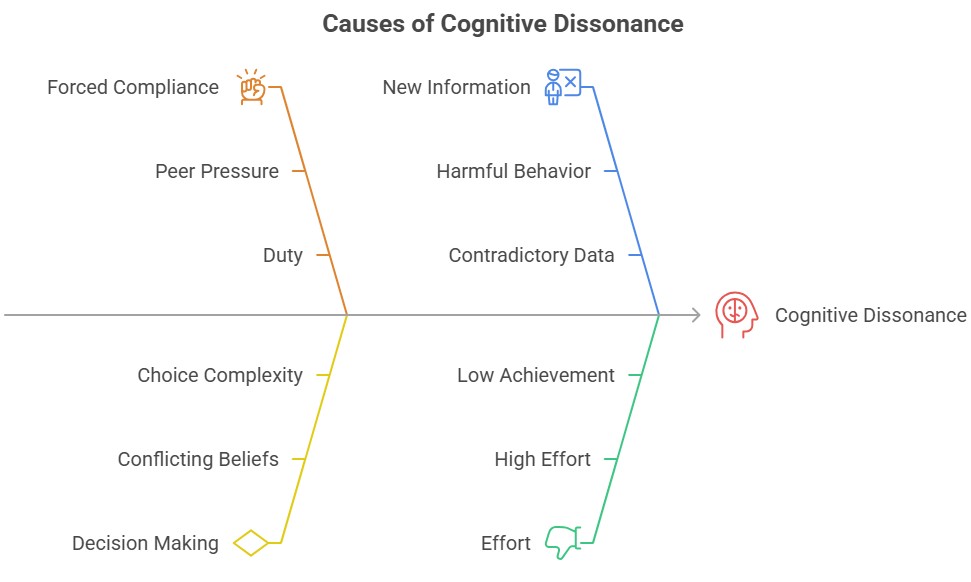
Signs of Cognitive Dissonance
- Feeling uncomfortable before doing something or making a decision.
- Trying to justify or rationalise a decision that you've made or an action you have taken
- Feeling embarrassed or ashamed about something you've done and trying to hide your actions from other people.
- Experiencing guilt or regret about something you've done in the past.
- Sense of internal anxiety that is experienced when a person holds two inconsistent cognitions.

Coping With Cognitive Dissonance
- Changing Attitude: Modify some of your beliefs, principles, personal values, attitudes and behaviour to bring consistency among them.
- Be open to new Information: Seek and be more accepting towards new information that can offset or counterbalance your contradictory beliefs.
- Question the value of Conflicting Cognitions: Analyze and lower the value you assign to your cognitions – thoughts, beliefs, attitudes and principles.
Way Forward: Cognitive Dissonance in COVID-19 Treatment
- Coordination: Address the lack of coordination between the National Task Force on COVID-19 and Central Drug Standard Control Organisation (CDSCO).
- Transparency: The drug’s approval should be more transparent, i.e., open and accessible for all to avoid misuse of power and make citizens more aware.
- Objectivity: CDSCO should have more objectivity in drug’s approval to avoid hasty approval and ensure that the efficacy of the drug is periodically monitored.
- Awareness: The medical professionals and citizens should be made aware of pros and cons of drugs to remove moral distress and ensure informed consent.
Cognitive Dissonance Among Russian People Over War
The Russian invasion of Ukraine has spotlighted the ambivalent attitude of many Russian people whether to support their country in these testing times or lean towards humanism for understanding the plight of the Ukrainian people.
This has been due to Cognitive dissonance faced by people because of issues such as:
- Disinformation: It has become a primary vehicle of the war waged by the Russian Federation against Ukraine, leveraging entrenched narratives to convince Russians how its military forces carry out a “special military operation” to liberate the people in Ukraine.
- State censorship and biased pollsters: Censorship over liberal voices and making a narrative in the favour of Russia by the state run media, has been causing to frame biased opinions. Brainwashing through media censorship, state propaganda, and disinformation are leading cognitive dissonance among the people.
- Geopolitical tensions: Cold war among world powers fumes feelings of chauvinism among common people. As a result, people start thinking of their own country as a super aggressor and zero tolerance towards others.
- Use of lethal weapons causing death of innocent people in Ukraine. Mass killing and destruction of infrastructures bringing thought of empathy towards humanism for understanding the plight of the Ukrainian people
Way Forward
- International Cooperation to establish peace Ex. Recently, Israel and UAE Normalization Agreement.
- Compassionate view towards vulnerable sections Ex. UN Peace army to establish peace in African Countries
- Mutual Agreement for long lasting peace
- End of arm race Ex. New Start Treaty between Russia and USA
- Mutual respect for respective sovereignty
27. Custodial Violence
Quote: Threat to Human Rights is the highest in Police stations. Custodial torture and other police atrocities are problems which still prevail in our society. In spite of constitutional declarations and guarantees, lack of effective legal representation at the police stations is a huge detriment to arrested/detained. - Ex CJI N.V.Ramana
Context:
- Riots erupted in the cities of France after Police action on a youth who jumped the Red signal.
- Killing of criminals Atiq Ahmed and others in Police custody
- As per the report of the National Crime Records Bureau (NCRB), the number of deaths in police custody between 2001 and 2018 was 1,727. But only 810 cases were reported, 334 were charge-sheeted out of which just 26 policemen were convicted.
Custodial Violence
- Custodial violence primarily refers to violence in police and judicial custody. It includes death, rape and torture.
- Aspect of Custodial Violence - Torture: Mental & Physical, Sexual Harassment, Rape, Death
Is Torture Justified in Certain Cases?
- According to the National Crime Records Bureau (NCRB), a total of 11,419 custodial deaths were reported in India between 2016-17 and 2021-22.
- Utilitarian view says that an act is right if it brings about the greatest good for the greatest number. For example,
- If someone has kidnapped a child and left him/her to die somewhere. In this case, If torturing someone is the only way to find out the whereabout of the child, then it might be the right thing to do.
- In similar case, if torturing a terrorist uncovers a plot, then it might save many lives.
Categorical Imperative:
- As per Immanuel Kant’s theory, not hurting others is a categorical imperative, which all human beings must follow throughout their lives.
- Torture is unjustified as it consists of intentional infliction of severe physical, mental or emotional suffering on the other person.
- Immanuel Kant also said one should never treat people merely as instruments; and just as means to one’s goals.
- Ex. There's a difference between a tape recorder and a person. If you’re having trouble getting information out of a tape recorder you can pound on it or kick it. This may not be very effective, but it isn’t immoral.’
- But if you want to get information out of a person, you should convince them to tell you what you want to know.
Human Rights approach:
- Torture of human beings consists of curtailment of individual autonomy. Given the moral importance of autonomy, torture is also unjustifiable on this account.
- It is sometimes also used to suppress independent thought and make people comply with the more accepted beliefs of the society.
- Torture treats the victim as a means to an end and not an end in themselves. It often explicitly dehumanize their victims to make it easier to torture them.
- It violates the rights and human dignity of the victim, including the legal right to remain silent when questioned.
Consequentialist Arguments against Torture
- Torture is a slippery slope: Each act of torture makes it easier to accept the use of torture in the future.
- Ineffective interrogation tool: It does not provides guarantee that the person who is being tortured will give the correct information because under torture a prisoner will eventually say anything to stop the pain.
- Damages the humanity: Those who carry out torture are likely to become brutalised by their acts, and desensitised to humanity.
- Institutional degradation: Torture damages the institution that carries it out. It damages the reputation and moral authority of the institution. Its use is likely to produce internal dissent among the members and so damages the integrity of the institution.
- Use as Propaganda by Non state actors: Torture provides ‘the enemy‘with something they can exploit for propaganda. For example, the terrorist organizations like ISIS use state brutalities as an excuse to radicalize the youths to pick up arms.
Way Forward: Though, torture is unjustified from many ethical perspectives, but there may be situations when the unity and integrity of the State is under threat or the lives of innocent people may be in danger.
- Under such situations, a law enforcement officer or a person with noble intentions might feel compelled to undertake any means necessary to protect the country or to save their lives.
Following efforts may be adopted -
- Ratification of UN Convention Against Torture. It means that exclusive mechanisms of redress and compensation will be set up for the victim besides institutions such as the Board of Visitors.
- Police Reforms: Guidelines should also be formulated on educating and training officials involved in the cases involving deprivation of liberty.
- Access to Prison
- Unrestricted and regular access to independent and qualified persons to places of detention for inspection should also be allowed.
- CCTV cameras should be installed in police stations including in the interrogation rooms.
- Surprise inspections by Non-Official Visitors (NOVs) should also be made mandatory which would act as a preventive measures against custodial torture
- This has also been suggested by Supreme Court in its landmark judgment in the DK Basu Case in 2015.
- Implementation of Law Commission of India’s 273rd Report: The report recommends that those accused of committing custodial torture – be it policemen, military and paramilitary personnel should be criminally prosecuted.
28. Clinical trials
- It is a set of practice that helps certify a new drug molecule as safe and efficacious before reaching the market.
Ethical Issues regarding Clinical Trials
- Side Effects: Medical research often entails minor pain, discomfort, or injury from invasive procedures, or potential harm from drug side effects.
- Lack of Transparency: Some researchers and sponsors may bypass the regulatory framework to expedite trials for increased profit.
- There also exists a significant challenge of nexus managing the intertwined relationships among sponsors, researchers, regulators, and ethics committees.
- Targeting Vulnerable Populations: Those in desperate financial situations can become easy targets for unethical clinical trials.
- Lack of Informed Consent: Complex language in consent forms can make them difficult to understand, particularly for those with low literacy levels.
- Compensation: Participants sometimes fail to receive compensation when clinical trials do not succeed. This raises questions about the extent to which financial incentives could encourage research subjects to provide misleading or false information.
- Stem Cell Research: Despite the proven therapeutic value of human stem cells, ethical concerns remain around their harvesting, particularly from human embryos.
- Drug Trials in Neonates: Ethical challenges include the inherent vulnerability of this population, their higher risk of mortality and morbidity, and the difficulties in obtaining informed parental consent.
Way Forward
- Regulatory Approval: The approval process is slow due to new requirements for the submission and review of clinical trials which needs to be streamlined.
- Patient Recruitment: The recruitment of patients depends on the availability of investigator sites and patient willingness. Increasing the number of investigator sites could help.
- Ensuring Quality and Compliance: Institutional ethics committees (ECs) should devote time and effort to understanding ethical issues - human protection, independent decision-making, handling conflict of interest, reviewing safety reports and compensation, and overseeing clinical trial conduct.
- Development of National Clinical Trial Infrastructure: Researchers in low- to middle-income settings need support and training to conduct clinical trials independently or collaboratively.
- Regulatory Approval: Clear and unambiguous regulatory provisions applicable to diverse situations would enhance the efficiency of trial approval.
- Education in Ethical Clinical Trials: Different stakeholders, including CDSCO functionaries, IEC members, academicians, CROs, and industry professionals, should be educated on ethical clinical trial practices.
- Compensation for Trial: Related Death or Injury: Insurance coverage should include all costs associated with investigations and treatments arising from trial participation, the limit and period of insurance coverage, liability per claim, and the aggregate liability.
Regulation of Clinical Trials in India
- Drugs and Cosmetics Act 1940: In India, regulations pertaining to clinical trials are placed in Schedule "Y" of the Drugs and Cosmetics Act 1940, and the rules framed thereunder.
- New chemical entities cannot be administered to human subjects in a clinical trial without permission from the Drugs Controller General of India.
- The Drugs Controller General of India (DCGI) is an official of the Central Drugs Standard Control Organization (CDSCO) who is the final regulatory authority for the approval of clinical trials in the country.
- ICMR Ethical Guidelines: It mandates setting up of Ethics Committees (EC's) at the institutional levels, for the purpose of scrutinizing and approving a clinical trial before it begins; and to conduct periodic reviews of the progress of the trial.
|
Stakeholders |
Ethical Aspects |
Customers |
|
|
Sponsors |
|
Research |
|
|
Regulatory Agencies |
|
|
Healthcare Providers |
|
Society |
|
29. Child Artists
|
Stakeholders |
Ethical Concerns |
Way Forward |
Children |
|
|
|
Parents/ Guardians |
|
|
|
Production Houses |
|
|
|
Viewers |
|
|
|
Governments |
|
|
Key provisions of the Guidelines
- Scope: Cover television programmes including reality shows, TV serials, news and informative media, movies, OTT platforms, content on social media platforms, performing arts, advertising and any other commercial entertainment activity.
- Registration of Child Artist with District Magistrate (DM): Children could be involved in any audio-visual production only after obtaining the permission from the DM.
- Producer should also furnish the consent of parents or guardians, and name of the individual responsible for safety and security of the child to the DM.
- Inspection of workplace: DMs have been empowered to instruct the District Child Protection Unit (DCPU) to inspect the workplace and accordingly issue a permit to the producer.
- Content Restrictions: No child/adolescent should be cast or made to participate in a role or situation or content.
- Involving the indecent or obscene representation of a child or nudity or sexual act. o Which is not advisable/ not certified to be viewed by them.
- Presence of one Parent/Guardian: If child is below the age of 6 years, at least one parent or guardian must be present.
- Working hours: No child shall be allowed to work for more than 5 hours in a day.
- Wages: At least 20% of the income earned by the child/adolescent from the production to be directly deposited in a fixed deposit account.
- Education: The work of child should not affect his/her school education and minimum number of working days and instructional hours in an academic year should be maintained.
- Children in news and media: Media and production houses shall ensure that child victims of sexual offences, trafficking, drug/substance abuse, organized crimes, and children used in armed conflicts, children in conflict with law and child witnesses etc. are automatically guaranteed anonymity for life.
Conclusion: Ensuring ethical conduct in the employment of children in the entertainment industry is of paramount importance. Industry stakeholders, parents, child rights organizations, and government should collaborate to develop and adhere to a comprehensive code of ethics for the employment of children.
30. Social Media Use by Civil Servants: Guidelines, Merits, Challenges
Quote: “Don’t fall into ‘Singham’ trap. Police uniform is not associated with authority and awe but inspires pride.” – Prime Minister Narendra Modi
Social Media has become a powerful tool for communication, enabling civil servants to interact with citizens, share information, and understand public opinion. Its effective use can enhance transparency, trust, and engagement in governance.
About Social Media
- Social media can be defined as any web or mobile based platform that enables an individual or agency to communicate interactively and enables exchange of user generated content.
- Ex. Meta, Twitter, Instagram etc.
- The advent of social media is transforming the manner in which information is shared and distributed. Civil Servants have generally been using it in the following ways:

Utility of Social Media |
|
|
Connecting with citizens |
|
|
Sharing information and improving awareness |
|
|
Understanding public viewpoint |
|
|
Personal usage |
|
Merits and Demerits of Using Social Media by Civil Servants
|
Merits of Social Media |
Demerits of Social Media |
|
Accessible to Common People Ex. Use of Social Media to provide real time information during Biparjoy Cyclone in Gujarat |
Principles of Neutrality and Anonymity
|
|
Public Service Delivery Ex. IAS Vivek Bhardwaj - put in place a transparent and non-reversible regime for coal block auctions |
Inconsistent with the Parliamentary form of government
|
|
Better Policy Making Ex. Recently, The Law Commission has asked for the feedback on Uniform Civil Code |
Blur the distinction between an individual’s professional and private life
|
|
Create a Positive Outlook
|
Undue self-Promotion
|
|
Awareness Ex. Ips Abhishek Pallava aware the citizens regarding cyber- crime, new age technology etc. |
Issues of confidentiality
|
Core Values for Effective Social Media Use by Civil Servants
- Identity: Always identify clearly who you are, what is your role in the department and publish in the first person. Disclaimer may be used when appropriate.
- Authority: Do not comment and respond unless authorized to do so especially in the matters that are sub-judice, draft legislations or relating to other individuals.
- Relevance: Comment on issues relevant to your area and make relevant and pertinent comments. This will make conversation productive and help take it to its logical conclusion.
- Professionalism: Be Polite, Be Discrete and Be Respectful to all and do not make personal comments for or against any individuals or agencies. Also, professional discussions should not be politicized.
- Openness: Be open to comments – whether positive or negative. It is not necessary to respond to each and every comment.
- Compliance: Be compliant to relevant rules and regulations. Do not infringe upon IPR, copyright of others.
- Privacy: Do not reveal personal information about other individuals as well as do not publish your own private and personal details unless you wish for them to be made public to be used by others.
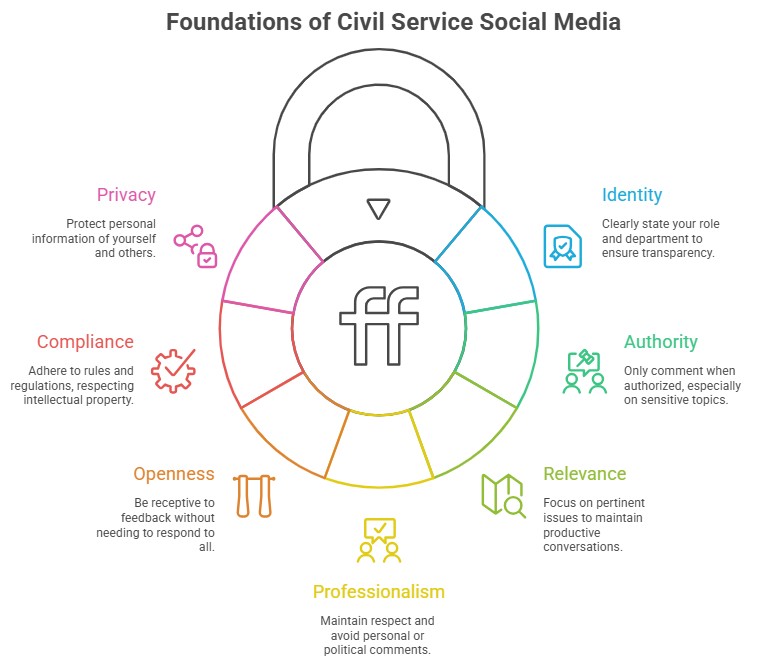
Conclusion
- When using social media, civil servants are essentially acting as government spokesmen. They must uphold and represent the ideals of the civil service, including fairness, integrity, transparency, and courage, in this situation. Therefore, any position held by a government servant must be contextually appropriate and pass the ethical public service litmus test.
31. Defection and Instability of Government
Context:
- The crisis of Madhya Pradesh Government in March, 2020, wherein Jyotiraditya Scindia along with 22 MLA’s gave resignation to the speaker of the assembly.
- Recently, vertical division took place in the regional parties Shiv Sena and NCP in Maharashtra.
About
- Relationships between representative and citizens built on trust and governed by commonly accepted ethical norms which are beneficial to both.
- However, such relationships are now being compromised because of vested interests.
Ethical issues associated with the defections of leaders –
- Dishonouring People’s mandate: Ex. In Bihar BJP and JDU contested assembly election together, however at present JDU and RJD are ruling the state.
- Political instability: Ex. Government in Maharashtra changed thrice in last four years.
- Horse trading: Ex. Cash for votes incident, Allegation of paying bribe to get supports of Mps/MLAs.
- Reduced Options to voters: Ex. Recently, Nagaland’s assembly became without opposition as all parties started supporting the government.
- Lack of Accountability: Ex. Minor government does not take policy-based decisions and also it becomes difficult to fix accountability
Conclusion:
- The Anti-Defections rules should include provisions mandating the formation of independent committees to look into allegations of horse trading between the parties and the imposition of punitive consequences on anyone found accountable.
- They should also be prohibited from running in elections, in order to prevent such factors from upending the nation's functioning democracy.
Examples
- Raj Yadav, IAS: (Innovation, Leadership) - Adopted 5 Sikkim villages and transformed over 7500 lives
- Shashanka Ala, IAS: (Innovation, Leadership, Compassion) Fighting malnutrition in Mizoram
- Sandeep Nanduri, IAS (Compassion, ) Launched a cafe which is run exclusively by differently-abled persons
- Awanish Sharan, IAS: (Compassion, Innovation) Sent Bike Ambulances to Tribal Doorsteps, Reducing Medical Costs by 90 per cent
- Asheesh Singh, IAS:(Compassion, Environment Friendly): Helped cleared 13 lakh metric tons of garbage from 100 acres of land
- Jitendra Kumar Soni, IAS: (Compassion, Persuasion) Stopped 1.5 lakh kids from walking barefoot to school by providing free footwear
- Dr Shahid Iqbal Choudhary, IAS (Compassion, Innovation ): Built 320 bridges to improve connectivity in vulnerable villages in Kashmir
- Umakant Umrao, IAS: (Leadership, Environment Friendly) Helped MP Farmers Battle Drought With Over 16,000 Ponds
- A Sridevasena, IAS: (Leadership, Dedication): Turned a high-risk dengue area into India’s cleanest district
- Vivek Bhardwaj: Put in place a transparent and non-reversible regime for coal block auctions)
- Naresh Gangwar (brought about a transformation in school education in Rajasthan) and
- Dinesh Arora (was a part of Aayushman Bharat after successfully implementing Rashtriya Swasthya Bima Yojana in Kerala) made things happen despite serious limitations.

2026-27 UPSC Mains English QEP Power Pages
View DetailsSubmit Your Details to Learn More



