

- Key Features of Indian Society: Culture, Family, Values & Diversity
- Caste System in India: Features, Changes, and Social Impact
- Religious and Linguistic Diversity in India: Unity in Plurality
- Unity in Diversity in India: Meaning, Factors, and Way Forward
- Kinship
- Family
- Marriage in Society: Types, Challenges & Legal Issues in India
- Tribes in India: Culture, Legal Provisions, and Challenges of Scheduled Tribes
- Women in India: Gender Gap, Political Participation & Social Challenges
- India’s Population: A Demographic Powerhouse and Economic Driver
- Poverty and Hunger in India: Causes, Impact & Government Measures
- Hunger in India: Causes, Data, Government Initiatives, Solutions
- Inequality: Types, Dimensions, Statistics, Solutions for a Just Society
- Urbanization in India: Trends, Challenges & Solutions
- Globalization in India: Impact, Factors, and Social Dimensions
- Social Empowerment & Tribal Rights: Enabling Vulnerable Groups for Self-Sufficiency
- Women
- Challenges Faced by Scheduled Castes in India & Government Empowerment Initiatives
- Minorities in India: NCM Act 1992, Issues, Schemes & Government Initiatives
- Senior Citizens
- Persons with Disability in India: Issues, Rights, Schemes, Accessibility
- Communalism in India: Causes, Types & Solutions
- Regionalism in India: Causes, Types & Impact Explained
- Secularism in India: Principles, Constitutional Provisions & Supreme Court Interpretations
1. Key Features of Indian Society: Culture, Family, Values & Diversity
India’s society is a vibrant mosaic of diverse cultures, languages, religions, and traditions. It is shaped by strong family ties, deep-rooted values, and a unique blend of modern progress and age-old customs.
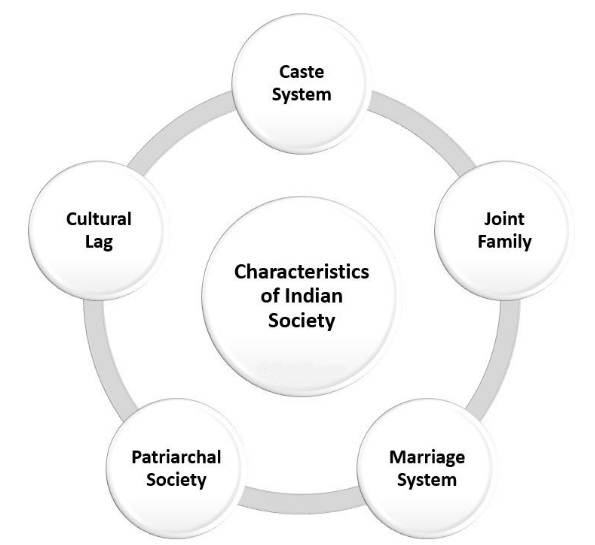
- Cultural diversity: India is a land of diverse cultures, religions, languages, and traditions. The society is a unique blend of various ethnic groups, each contributing to the vibrant tapestry of Indian culture.
- Social stratification: Indian society has a hierarchical structure with various social classes or castes. The caste system, although officially abolished, still influences social interactions and relationships to some extent.
- Joint family system: The joint family system is prevalent in many parts of India. Multiple generations of a family often live together under one roof and share resources, responsibilities, and decision-making.
- Respect for elders: Indian society places great emphasis on respecting and honoring elders. Older family members are considered to be the pillars of wisdom and are often given a position of authority within the family.
- Patriarchal society: Indian society has traditionally been patriarchal, with men holding dominant roles in decision-making and social structures. However, women have been breaking barriers and achieving significant progress in various fields, challenging gender norms.
- Value for education: Education is highly valued in Indian society. There is a strong emphasis on academic achievement and obtaining professional qualifications. Parents often make significant sacrifices to ensure their children receive a good education.
- Religiosity: India is a deeply religious country with a multitude of faiths and beliefs. Hinduism, Islam, Christianity, Sikhism, Buddhism, and Jainism are some of the major religions practiced in India. Religion plays a vital role in shaping cultural practices, festivals, and daily life.
- Strong family and community ties: Indian society values strong family bonds and close-knit communities. People often rely on their families and communities for emotional support, social connections, and assistance during times of need.
- Festivals and celebrations: India is known for its vibrant and diverse festivals celebrated throughout the year. Diwali, Holi, Eid, Christmas, Navratri, and Pongal are just a few examples of the colorful and joyous festivals that bring people together.
- Traditional values and customs: Traditional values, customs, and rituals are an integral part of Indian society. Respect for elders, hospitality, humility, and the importance of duty and honor are some of the values that have been passed down through generations.
2. Caste System in India: Features, Changes, and Social Impact
The term ‘Caste’ comes from a Portuguese word ‘Casta’ which means race, breed, or group. In India, caste refers to a group which have common traditional occupation, common culture, and common social identity.
Features of Caste System in India
- Vertical and horizontal classification: There is both vertical and horizontal classification of these groups, in fact it is based on birth, therefore social mobility is impermeable.
- Varna system: The ‘Varna system’ is the basis of this hierarchical categorization and the Brahmins are placed at the top of the hierarchy, followed by the Kshatriyas, the Vaishyas and the Shudras.
- Untouchability: It is based on the concept of purity and pollution. Untouchables/Dalits are the people which are considered outside the caste system and they are kept below the Shudras.
- There are restrictions on interactions among the members of different castes and inter-caste marriages are prohibited.
- Traditionally the caste system also assigned occupations to the members of different castes (e.g., manual scavenging), but this has changed with time.
- Endogamy: Endogamy refers to marriage within the caste.

Role of the Caste System

Recent Changes in the Caste System
- Decline in supremacy of Brahmins: With the advent of scientific temper, secularization, and modernization the supremacy of Brahmins has declined. In the past, the Brahmin occupied the topmost position in the caste hierarchy.
- Inter caste marriages: With rising literacy rate and urbanization, there is a rise in inter-caste marriages. The Union Government launched the Dr. Ambedkar Scheme for social integration by incentivising inter-caste marriages.
- Abolition of Untouchability: Indian law does not permit the practice of untouchability. Article 17 of the Constitution of India bans the practice.
- Social mobility: Social status of certain castes has improved resulting from the process of Sanskritization. Sanskritization is the phenomenon of adoption of lifestyle of higher castes (e.g., vegetarianism)
- Urbanization and Industrialization has changed the Traditional occupational structures and created Interdependence among different castes. Dr. B.R. Ambedkar held the traditional village structures responsible for perpetuation of caste-based discrimination.
- Weakening of the caste system: Modern education system has imparted values like equality, democracy, and secularism, which has further weakened the caste system.
Despite efforts to eradicate the caste system, the problem persists. In recent years, there have been an increasing number of caste-based violence and discrimination cases, both in rural and urban areas. This has led to a lot of unrest and tension among different communities.
Dynamics of Caste SystemCaste today is active in three main ways.
|
Recent Incidences/data of Alleged Caste Based Discrimination
- In February 2023, a Dalit student at Indian Institute of Technology, Bombay (IIT Bombay) died by committing suicide allegedly after suffering caste discrimination on the campus.
- Recently tensions erupted between Dalits and Vanniyars in Tamil Nadu over entry to the shrine.
- In 2021, more than 50,000 cases of crimes against Scheduled Castes (SCs) were registered.
- According to National Crime Records Bureau (NCRB) data, over 130,000 anti-Dalit crimes were registered between 2018 and 2020.
The social reform movements, British policies before independence and rights & safeguards provided in the Indian constitution have somewhat led to changes in the caste system.
Caste Bases-Reservation in India
- The reservation system in India promotes social justice through affirmative action for historically disadvantaged communities based on caste, tribe, and other criteria.
- It includes reserved seats in education, employment, and politics, but faces debates and challenges.
- Ongoing evaluation and focus on socio-economic development and equal opportunities are crucial for its effectiveness.
- Constitutional Provisions:
- Article 15(4) capacitates the State to create special arrangements for promoting interests and welfare of socially and educationally backward classes of society.
- Article 16(4) empowers the state to provide reservations in public employment for SCs, STs, and OBCs to ensure their representation in government jobs.
Fighting Caste Based Discrimination

3. Religious and Linguistic Diversity in India: Unity in Plurality
“India is a country in which every great religion finds a home.” Annie Besant
India is among the countries having significant religious diversity. Almost all the major religion of the world are practised in India. Moreover, India is the birthplace of religions like Hinduism, Buddhism, Jainism and Sikhism.
- Hinduism is the largest religion and consists of many sub-groups i.e., Vaishnavas, Shaivites, Shaktas, and Smartas.
- Islam is the second largest religion and includes sub-groups like Shiaites, Sunnis, Ahmadis, etc.
- Many tribal groups follow animistic and naturistic religions.
- Every religion has diverse beliefs, customs and festivals associated with it.
- Indian population consists of the Hindus (82.41%), Muslims (11.6%), Christians (2.32%), Sikhs (1.99%), Buddhists (0.77%) and Jains (0.41%).
Linguistic Diversity
- According to census data, more than 19500 languages and dialects are spoken as mother tongue in India.
- There are 22 scheduled languages mentioned in the constitution of India and according to census 2011, 96.71% of the population of the country uses one of these 22 scheduled languages as mother tongue.
- Though officially there are 122 languages, Peoples Linguistic Survey of India has identified 780 languages, of which 50 are extinct in past five decades.
- As per census data, there are 121 languages having more than 10000 speakers each.
Issues With Linguistic Diversity

Way Forward
- Three Language Formula: as proposed by Kothari Commission promoting one regional language along with 2 widely used languages (Hindi and English) shall not only bridge linguistic gap but also preserve regional language and culture.
- Use of technology: can be used for providing online resources in regional languages, for translation related services. e.g., Use of AI for translation, e-Bhasin app, OTT platforms have given a strong voice to regional content.
- Preserving endangered languages: There is a need to preserve and protect endangered languages like great Andamanese, Asur and Balti.
- Awareness campaigns: to promote feeling of unity and integrity, to curb linguistic discrimination etc.
- Effective use of Language Bureau of Ministry of Education to implement and monitor the language policy.
- UNESCO has recommended use of use of mother tongue in the early years of schooling. This is also reflected in the NEP 2020.
4. Unity in Diversity in India: Meaning, Factors, and Way Forward
India is a land of immense diversity—ethnic, linguistic, cultural, and religious—yet it stands united as a nation. This unity in diversity is a defining strength of Indian society, rooted in its historical, constitutional, and cultural foundations.
|
“If God had so wished, he would have made all Indians speak with one language ... the unity of India has been and shall always be a unity in diversity.” Rabindranath Tagore |
Key Factors Contributing to Unity in Diversity in India
Despite having infinite diversities, the Indian society manifests a feeling of togetherness and integrity. These factors responsible for this Unity in Diversity are as below:
- Political structure: Indian constitution provides for single citizenship and a strong center, with coming together model of federalism
- Economic integration: The article 301 of constitution provides for freedom of trade throughout the country. Furthermore, the Goods and Services Tax (GST) has further strengthened the idea of single market.
- Secularism and tolerance: through constitution and cultural history of sarva thatma sambhava, dharmnirpheks like values.
- Religious and secular festivals: The fairs and festivals celebrated throughout the country to instil a feeling of e.g. Diwali, Eid, Republic day.
- Through Schemes: Ek Bharat Shreshtha Bharat aims to enhance understanding and bonding between states through cultural exchange, promoting unity and integrity of India.
|
“Unity in diversity” in India was not born out of necessity but as “our civilisational and cultural heritage” - Kerala Governor Arif Mohammad Khan |
Way Forward
- Balanced regional growth: Identify and target underdeveloped areas in the country. E.g. Aspirational Districts Program.
- Promote nationalism and patriotism: The feeling of nationalism and patriotism should be instilled in order to tackle regionalism. E.g., Delhi government announced introducing 'Deshbhakti' curriculum in schools to induce patriotism among kids.
- Promote religious tolerance: Inter religious harmony and tolerance should be promoted in order to curb communalism.
- Improved Connectivity: The connectivity and transportation to remote areas needs to be improved so that anti-social elements cannot exploit geographical isolation against national interest.
- Socio-economic Equality: There is a need for tackling growing inequalities using various social welfare and educational measures.
5. Kinship
Kinship means relations between members of society based on blood, marriage, or adoption. It is universal and socially accepted in almost all societies.Types of Kinship
Functions of Kinship
6. Family
Family is the fundamental unit of society. It is the immediate environment for a child where he learns basic behavioural patterns, language, prejudice, and customs.
Family may be classified into different types:
Functions of family

Changes in Indian Family system
- Declining trend of joint families: The nuclear families are replacing the age-old joint families. Although the existence of nuclear family is circumstantial.
- Fall of patriarchy: The families in India are no longer truly patriarchal and in nature and there is enough scope for individual autonomy specially in urban areas.
- Self-dependence of women: The women are no longer confined to homes. They are getting higher education and participating in job market.
- Evolving marriage system: The age of marriage has gone up and instance of child marriage are declining, rising trend of live-in etc.
- Neo-Local Residence: As a result of industrialization and urbanisation more and more young married couples set up their residence in the place of their work. Neo-local residence is, therefore, coming to existence more and more.
- Influence of western values: Values relating to modern science, rationalism, individualism, equality, free life, democracy, freedom of women etc. have exerted a tremendous change on the joint family system in India.
Factors Responsible for Changes in Family system

7. Marriage in Society: Types, Challenges & Legal Issues in India
Marriage as not a mere convention, but an implicit condition of human society.” Dr. Radhakrishnan
Marriage is a social sanction of the union and it is accomplished by different rituals and ceremonies. It is institution devised for the expression and development of love.
Types of Marriage in Society
Monogamy: Monogamy is the only form of marriage found in most societies; a man marries one woman, raises children within the wedlock and performs all rites with his mate.
Polygamy: Polygamy is defined as marriage between one person and two or more spouses simultaneously. It exists in two main forms:
- Polygmy, where one man is married to several women.
- Polyandry, where one woman is married to several men.
Levirate: Levirate is a form of marriage under which a woman is taken as the wife of the late husband’s younger brother.

Issue Related to Marriage in Society
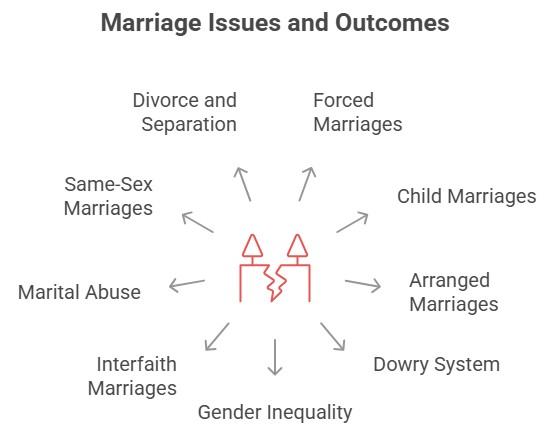
- Forced marriages: In some cultures, individuals may be coerced or forced into marriages against their will, often leading to a lack of consent and potential violation of human rights.
- Child marriage: Child marriage involves marrying children, usually below the age of 18. It deprives them of their childhood, education, and opportunities, and poses various health and social risks.
- Arranged marriages: Arranged marriages are a cultural practice in which families or intermediaries play a significant role in selecting spouses for individuals. While some arranged marriages are successful, others may result in compatibility issues, lack of personal choice, or unequal power dynamics.
- Dowry system: The dowry system involves the practice of giving substantial gifts or payments from the bride's family to the groom's family during marriage. This can lead to financial burden, exploitation, and gender-based violence.
- Gender inequality: In many societies, marriage is affected by gender inequality. Women may face discrimination, limited decision-making power, unequal distribution of household chores, and unequal access to resources and opportunities within the marriage.
- Interfaith or intercultural marriages: Marriages between individuals from different religious or cultural backgrounds can face challenges related to acceptance, understanding, and compatibility, particularly when families or communities hold rigid beliefs or traditions.
- Marital abuse: Domestic violence and abuse can occur within marriages, affecting both men and women. Physical, emotional, and financial abuse can lead to severe consequences and long-lasting trauma.
- Same-sex marriage: In some countries or societies, same-sex marriages face legal and societal challenges, including discrimination, lack of recognition, and denial of legal rights and protections.
- Divorce and separation: Marital breakdown, divorce, and separation can lead to emotional distress, legal disputes, financial instability, and challenges in co-parenting, affecting both individuals and their families
Current Issues Related to Marriage in Society
- The Court has been hearing multiple petitioners’ requests for legal recognition of same-sex marriages under a special law.
- The petitioners cited the Special Marriage Act, 1954, which provides a civil marriage for couples who cannot marry under their personal law, and appealed to the Court to extend the right to the LGBTQIA+ community, by making the “marriage between any two persons” gender neutral.
- NRI marriages in India face challenges of abandonment, fraud, and financial exploitation. Jurisdictional complexities and cultural differences complicate redressal. Government initiatives aim to provide support and raise awareness.
8. Tribes in India: Culture, Legal Provisions, and Challenges of Scheduled Tribes
A tribe usually consists of members of society having common culture, dialect, customs etc. The tribes are often confined to a definite area and may also consist of different sub groups.
The tribal communities in India have been recognized by the Indian Constitution under ‘Schedule 5’ of the constitution. Hence the tribes recognized by the Constitution are known as ‘Scheduled Tribes’

Legal Provisions for Tribes in India
- Protection of Civil Rights Act, 1955
- Scheduled Castes and the Scheduled Tribes (Prevention of Atrocities) Act, 1989: to prevent the atrocities against the members of the Scheduled Castes and the Scheduled Tribes.
- Provisions of the Panchayats (Extension to the Scheduled Areas) Act, 1996: extension of the provisions relating to the Panchayats to the Scheduled Areas.
- Scheduled Tribes and Other Traditional Forest Dwellers (Recognition of Forest Rights) Act, 2006: to recognize and vest the forest rights and occupation in forest land in forest dwelling scheduled tribes and other traditional forest dwellers.
Tribal Statistics in India
|
Government of India follows the following criteria for identification of PVTGs
- Pre-agricultural level of technology
- Low level of literacy
- Economic backwardness
- A declining or stagnant population
Committees Related to Tribes in India
- Kaka Kalelkar Commission,1953 appointed under Article 340, defined Scheduled Tribes as “They lead a separate exclusive existence and are not fully assimilated in the main body of the people. They may belong to any religion.”
- Elwin Committee (1959):To examine the functioning of Multi-Purpose Development Blocks, the basic administrative unit for all tribal development programmes.
- N. Dhebar Commission (1960) to address the overall situation of tribal groups, including the issue of land alienation in tribal areas.
- The Lokur Committee (1965) to look into criteria for defining Schedule Tribes.
- The Bhuria Committee (1991)recommendations paved the way for the enactment of the PESA Act, 1996.
- Xaxa Committee: to examine the socio-economic, educational and health status of tribal communities and recommend appropriate interventional measures to improve the same.
Changes In the Tribal Society
- Changes in Lifestyle: Particularly in those tribes living in or near the Urban areas.
- Discarding traditional practices and adopting modern lifestyle:
- For e.g., Study of Baiga tribe by R. Joshi (1984) observed the transition of fun loving baiga tribe to a stressful modern lifestyle.
- Loss of Languages: Many of the tribal languages are on the verge of extinction due to migration, globalisation and urban centric economic growth.
- For e.g., death of Boa language in Andaman and Nicobar Islands.
- Decline of Egalitarian values in Tribal societies and emergence of ‘economic classes’. Such changes are more visible in tribal people from Chotanagpur working as labourers in tea gardens of Assam and North Bengal.
Major Issues Faced by Tribes in India
- Land Rights: Tribal communities often face land alienation, displacement, and loss of traditional territories due to developmental projects, mining activities, and encroachment.
- Livelihood and Poverty: Many tribal communities struggle with poverty, limited access to livelihood opportunities, and lack of infrastructure. They often rely on subsistence agriculture, forest resources, and traditional occupations for their sustenance.
- Education and Healthcare: Access to quality education and healthcare facilities remains limited in tribal areas. High dropout rates, lack of schools, and inadequate healthcare infrastructure contribute to disparities in tribal communities.
- Forest Rights and Conservation: Many tribal communities have a deep connection with forests and depend on them for their livelihoods. Balancing conservation efforts with the rights of tribal communities is essential to ensure sustainable development.
- Social Discrimination: Tribal communities often face social discrimination, stigmatization, and marginalization. Caste-based discrimination, prejudice, and lack of awareness about their rights exacerbate their vulnerability.
|
Polavaram Dam Conflict:
Forest Rights Act (FRA) Violation:
|
Conclusion
Indian society exhibits resilience, unity in diversity, and a spirit of inclusivity. It has made significant strides in various fields, such as education, technology, arts, and sports, and has produced accomplished individuals who have made their mark globally. It is important for Indian society to continue fostering an environment of tolerance, acceptance, and respect for diversity. By promoting education, awareness, and social reforms, Indian society can strive towards creating a more equitable, harmonious, and progressive nation.
Overall, Indian society is a dynamic entity that is constantly evolving and adapting to meet the challenges of the present while preserving its cultural roots. With concerted efforts and collective participation, Indian society has the potential to overcome its challenges and create a brighter future for all its citizens.
9. Women in India: Gender Gap, Political Participation & Social Challenges
Despite significant progress since Independence, women in India continue to face numerous challenges across social, economic, and political spheres. Addressing these issues through legal reforms, empowerment initiatives, and awareness is crucial for achieving true gender equality and inclusive development.
- Global Gender Gap Report 2023: India ranked at 127.
- In the last 75 years of Independence, we are still lagging the global average political participation of women that stands at 14% in the current Lok Sabha.
- Nagaland elected her first women legislator (Hekani Jakhalu) in the recent election, showing the low participation rate of women in politics in states as well.
- Low female Literacy Rate, child marriage prevalence, son-meta preference, female infanticide etc. are still prevalent in India showing dismal condition of women in India.
|
Key Facts about Women in India
Education
Healthcare
Women in the Workforce
Crimes against women
Political Participation of Women in India
 |
Current Context of Women Empowerment in India
- India, under its G20 Presidency, took forward its women-led development agenda through the G20 EMPOWER 2023.
- The theme for the second EMPOWER meeting held in Thiruvananthapuram, Kerala, was “Women’s Empowerment: A Win-Win for Equity and Economy.”
- This inclusive, ambitious, and action-orientedG20 Presidency is perfectly timed to accelerate the global focus on empowering women.
|
“Empowerment of women leads to development of a good family, good society and, ultimately, a good nation. When the woman is happy, the home is happy. When the home is happy, the society is happy and when the society is happy the state is happy and when the state is happy there will be peace in the country and it will develop at greater pace.” APJ Abdul Kalam |
Profile of Women in India

Social Structure and Women in India
- Caste Structure: Women's subordination played a crucial role in the development of caste hierarchy, with higher castes imposing greater constraints on women.
- Control over female sexuality was integral to the formation of the social structure, driven by the need to maintain caste purity and economic power.
- Institution of Family: Patrilineal descent and patrilocality are predominant, resulting in property inheritance through male offspring and the transfer of women's residence after marriage.
- Sons are preferred, leading to son preference and daughter neglect in terms of resources and opportunities (missing daughter).
- Socialisation within the Family: Socialisation perpetuates gendered roles and relationships and encourages girls to have low self-esteem.
- Media, school books, and societal norms reinforce gender stereotypes and restrict opportunities for girls.
- Class Structure and Women's Work: Upper-caste women are often secluded and engaged in domestic activities, while middle-caste women may work in their own fields.
- In urban areas, upper-caste women from the middle class have emerged from seclusion to pursue education and employment.
- Access to Education: Access to quality education for women remains a challenge, particularly in rural and marginalised communities.
- Gender disparities persist in terms of enrolment rates, retention, and educational attainment levels.
- Economic Empowerment: They often face limited access to economic opportunities, including formal employment, equal pay, and entrepreneurship.
- Lack of property rights and financial inclusion further hinder their economic empowerment.
- Reproductive Health and Rights: Limited access to healthcare services, high maternal mortality rates, and inadequate family planning measures affect women's overall well-being and decision-making autonomy.
- Political Representation: Women's representation in political leadership and decision-making roles remains low.
- Although reservation policies have increased women's participation in local governance (Panchayati Raj Institutions), their representation at higher levels of government is still limited.
- Gender-based Violence: Women in India often face various forms of gender-based violence, including domestic violence, sexual harassment, dowry-related violence, and female infanticide.
- Domestic Violence and Dowry Deaths: Violence against women within the family was traditionally considered a family matter rather than a crime against women, but awareness has been growing.
- Female Feticide and Infanticide: According to a survey by the British medical journal Lancet, India has witnessed nearly 10 million female abortions in the past two decades.
- Rape, Sexual Harassment, and Abuse: These acts hinder women's freedom and reinforce the perception of women as the weaker sex.
- The Delhi gang rape case in December 2016 triggered widespread protests, led to the establishment of the Justice Verma panel, and facilitated fast-track judgments.
- Gender Pay Gap: Women often face disparities in wages and salaries compared to their male counterparts, resulting in a gender pay gap.
Women’s Organizations in Pre independence era |
Women's Organizations in Post-Independence era |
|
Important Women’s Movements in India |
Constitutional Provisions regarding Women in India |


Legal Protection for Women in India
Right to safe and legal abortion
News -
- The Supreme Court has held that all women, irrespective of their marital status, are entitled to safe and legal abortion till 24 weeks of pregnancy under the Medical Termination of Pregnancy (MTP) Act.
About MTP Act
- The Medical Termination of Pregnancy (MTP) Act, 1971 came into force on 1st of April 1972 based on the report of the Shantilal Shah Committee in India except the state of Jammu and Kashmir.
- Under the act, terminating a pregnancy between 12 to 20 weeks will require the medical advice of two doctors on the pretext of risk of life to the women, or risk of grave injury (Physical or mental), or a risk of child born being physically or mentally abnormal posing as a seriously handicapped.
Amendment in 2021
- New amendment allows for abortions based on the advice of one doctor for pregnancies up to 20 weeks and needs the opinion of two doctors for pregnancies between 20 and 24 weeks under seven categories to be eligible for seeking termination under section 3B of rules prescribed under the MTP Act,
- Survivors of sexual assault or rape or incest
- Minors
- Change of marital status during the ongoing pregnancy (widowhood and divorce)
- Women with physical disabilities (major disability as per criteria laid down under the Rights of Persons with Disabilities Act, 2016)
- Mentally ill women including mental retardation
- The foetal malformation that has a substantial risk of being incompatible with life or if the child is born it may suffer from such physical or mental abnormalities to be seriously handicapped
- Women with pregnancy in humanitarian settings or disasters or emergencies may be declared by the Government.
Surrogacy
News -
- A petition was filed before Delhi High Court, challenging the exclusion of a single man and a woman having a child from surrogacy and demanded the decriminalization of commercial surrogacy.
- The petitioners have challenged their exclusion from availing surrogacy under the Assisted Reproductive Technology (Regulation) Act, 2021 and Surrogacy (Regulation) Act, 2021.
Surrogacy Regulation Act, 2021 -
- It provided a gestation period of ten months from the date of coming into force to existing surrogate mother’s to protect their well-being.
- Only a married couple who has a medical condition necessitating gestational surrogacy can avail it.
- They must first obtain a certificate of recommendation from a District Medical Board.
- It also bans commercial surrogacy, which is punishable with a jail term of 10 years and a fine of up to Rs 10 lakhs.
Special Marriage Act
News - Several interfaith couples have chosen to marry under a secular personal law through the Special Marriage Act, 1954.
The Act
- It was passed by Parliament on October 9, 1954.
- It governs a civil marriage where the state sanctions the marriage rather than the religion.
Eligibility Criteria
- The Act extends to the people of all faiths, including Hindus, Muslims, Sikhs, Christians, Sikhs, Jains, and Buddhists, across India.
- The minimum age to get married under the SMA is 21 years for males and 18 years for females.
Solutions to the Challenges Faced by Women in India
- Education and Awareness: Promote gender equality education and awareness programs. -> Support girls' education and lifelong learning opportunities.
- Legal Reforms and Enforcement: Strengthen laws and ensure strict enforcement for women's rights. -> Establish specialized courts and fast-track procedures for gender-based crimes.
- Economic Empowerment: Address gender pay gap and support women entrepreneurs. -> Enhance financial inclusion and access to resources for women.
- Health and Well-being: Improve healthcare access, including reproductive and preventive care. -> Provide counselling and support for victims of violence.
- Political Participation: Increase women's representation through quotas and affirmative action. -> Support women candidates and equal political opportunities.
- Women's Reservation Bill: It can help in promoting women's political participation and addressing the gender disparity in decision-making roles.
- Social and Cultural Change: Challenge gender norms through awareness campaigns and media. -> Promote positive role models and narratives for gender equality.
- Support Systems and Services: Establish shelters, helplines, and counselling for women in need. -> Train professionals to respond sensitively to women's issues.
- Technology and Digital Inclusion: Bridge the digital gender divide and provide digital literacy programs. -> Promote women's participation in the digital economy.
Government of India's Women Empowerment Programs/Schemes
- Gender Budgeting: Introduced in Australia in the 1980s, India adopted it in 2005-06 to ensure a gender perspective in policy formulation and budgetary commitments.
- Nirbhaya Fund: Established in 2013 with a corpus of Rs. 1,000 crores to promote women's safety and empowerment.
- Maternity Benefit Act: The Maternity Benefit Act, 1961, amended in 2017, provides paid maternity leave and crèche facility. Maternity leave increased from 12 to 26 weeks, with the option for work from home based on mutual agreement.
- Beti Bachao, Beti Padhao: Campaign promoting awareness and enhancing welfare services for girls in India.
- Working Women Hostel: Aims to provide safe accommodation with daycare facilities for working women in urban, semi-urban, and rural areas.
- Support to Training cum Employment for Women (STEP): Launched in 1986, it offers training and employment opportunities for women below the poverty line in sectors like agriculture and animal husbandry.
- Swayamsidha: An integrated program promoting women's empowerment through awareness, economic independence, and convergence of services like literacy and health.
- Swa Shakti: Aims to establish self-reliant women Self-Help Groups (SHGs) to enhance women's access to resources and address their needs.
- Rashtriya Mahila Kosh: A national mechanism providing micro-credit to poor and asset-less women in the informal sector to meet their financial needs.
- Swadhar: Provides support and necessities to marginalised women and girls facing difficult circumstances, including survivors of violence and natural disasters.
|
The 'Purple Mela' organized by the Puducherry Corporation in March 2023 for the Development of Women and Differently-Abled Persons showcased empowerment initiatives for women and the differently-abled community. |
|
The theme for International Women's Day 2023 was 'DigitALL: Innovation and Technology for Gender Equality.' It recognizes the transformative power of digital technology in the post-pandemic world. |
Government response and Measures
- Institutional Measures: Union Ministry of Women and Child Development, National Commission for Women
- Schemes and Initiatives: Promotion of Women SHGs through National Rural Livelihood Mission, Swa Shakti
- Access to Credit: NABARD-SHG Bank Linkage program, Rashtriya Mahila Kosh
Conclusion
Women's issues in India continue to pose significant challenges despite efforts towards empowerment and gender equality. The prevalence of violence, discrimination, and limited economic opportunities hinder women's progress. However, through comprehensive legal reforms, awareness campaigns, and targeted programs, positive steps have been taken. Continued collective action is necessary to address deep-rooted social norms, ensure safety and equal opportunities, and create an inclusive society where women can thrive and achieve their full potential.
10. India’s Population: A Demographic Powerhouse and Economic Driver
India's population has become a defining feature of its economic and social landscape, offering both immense potential and complex challenges. As the world's most populous nation, it holds the key to a powerful workforce and sustainable development.
|
“Population is the strong driver of the economy as well as the quality of the labor force.” Ali Babcan |
Recent Population Context: India Surpassing China
- Recently published State of World Population report 2023, the United Nations Population Fund (UNFPA) predicts that by the middle of 2023, India would surpass China as the world's most populated nation.
- The Report on World Population Prospects, 2022 said the global population is growing at its slowest rate since 1950, having fallen under 1 per cent in 2020.
- The world’s population could grow to around 5 billion in 2030 and 9.7 billion in 2050. It is projected to reach a peak of around 10.4 billion people during the 2080s and to remain at that level until 2100.
Factors Influencing the Distribution of Population
|
Physical Factor |
|
|
Climate |
Low population density in extreme weather areas |
|
Landform |
Preference for flat plains and gentle slopes |
|
Natural Disasters |
Inhibition of population concentration due to frequent storms, earthquakes, floods, and wildfires |
|
Socio-economic -cultural Factors |
|
|
Industrialization |
Industrial belts attracting large populations, like the Kobe-Osaka region of Japan |
|
Urbanization |
Cities offering better economic possibilities, educational and medical resources |
|
Social Organization |
Promotion of migration and settlement in new regions through community networks |
|
Demographic Factors |
|
|
Migration |
Migration influenced by push factors (negative circumstances) at the place of origin and better opportunities in distant lands |
|
Political Factors |
|
|
Political turmoil |
Negative impact on population growth due to conflicts between political parties or persons of different religious beliefs |
|
Prejudice |
Negative impact on population growth due to prejudice or discriminatiE.g., Delhi Riots 2020, Manipur Riots 2023, etc. |
India’s Demographic Dividend and Population Structure
- Demographic dividend refers to the growth in an economy that is the result of a change in the age structure of a country’s population.
- India has 62.5% of its population in the age group of 15-59 years.
- According to the Economic Survey 2018-19, India’s Demographic Dividend will peak around 2041.
|
Interesting Facts: India surpassed China as the world’s most populous country in 2023 with India has catching up with China’s population of 1,426 million. |
India-Demographic Data
- Total Population: 1.22 billion (2011 Census) (17.71.% of World Population). India will be the most populous country by 2100.
- Rural Population: 68.84 % (Census, 2011)
- Urban Population: 31.16% (Census, 2011)
- Working Population: Working adults (20-64 years) will reduce from around 762 million in 2017 to around 578 million in 2100
- Total Fertility Rate: Reduce to 1.29 by 2100 from 2.1 in 2019
- Immigration: India will be the second-largest net immigration in 2100
|
Advantages of Demographic Dividend |
Challenges of Demographic Dividend |


Consequences of Overpopulation on Population and Economy
- Unemployment:
- It is extremely tough to generate jobs for a large population in a country like India. The number of illiterate people grows every year due to a variety of factors such as illiteracy, a lack of resources, the use of old technologies, a low level of investment, and so on.
- According to monthly time series statistics from the Centre for Monitoring Indian Economy (CIME), India’s overall unemployment rate was 8.10 percent in February 2023, but it declined to 7.6 percent in March.
- Manpower utilization: Due to the country's economic downturn and the slow growth and expansion of businesses, there are an increasing number of unemployed people in India.
- Pressure on infrastructure: Infrastructure development is not keeping pace with population increase which leads to lack of transportation, communication, housing, education and healthcare facilities.
- Resource Utilization: Forests, water resources, and land are all overused.
- Reduced Output and increased costs: The cost of producing food has increased. The main impact of excessive population is inflation.
- Inequitable income distribution: With an increasing population, there is an unequal distribution of income, and inequalities within the country are growing.
Current Context on Overpopulation and Global Population Scenarios
- In the new Earth4All Initiative report, the researchers advance two scenarios.
- In the first, called “Too Little, Too Late”, researchers predicted that if economic development continues as it has in the last five decades, the world’s population would peak at 8.6 billion in 2050, roughly 25 years from now, and decline to 7 billion by 2100.
- In the second scenario, called “The Giant Leap”, the researchers conclude that the population will peak at 8.5 billion by 2040 – a decade sooner than 2050 – but then rapidly decline to around 6 billion by 2100.
- This, they say, will be due to our investments in poverty alleviation, gender equity, education and health, ameliorating inequality, and food and energy security.
Planning for Population Control in India: Historical Overview
- First Five-Year Plan: India began a population control program in 1952.
- Third Five Year Plan: In 1965, the sterilization technique for both men and women was adopted under this plan.
- An independent department called the Family Planning Department was setup.
- Fourth Five-Year Plan: Birth control measures were encouraged.
- Fifth Five Year Plan: National Population Policy was announced on 16 April 1976 which increased the minimum age for marriage age for boys from 18 to 21 years and for girls from 14 to 18 years.
- Sixth, Seventh, and Eighth Plans: Focused on controlling the population for long term demographic advantage.
Population Control Bill Introduced in Lok Sabha:In December 2022, two Members of Parliament of the Bharatiya Janata Party, Ravi Kishan and Nishikant Dubey, introduced in the Lok Sabha a private members’ Bill aimed at population control in India. |
Ethical Consideration for Population Control
- Individual Autonomy: Respect individuals' rights and privacy in making decisions about family planning.
- Informed Consent: Ensure access to accurate information and empower individuals to make informed choices.
- Voluntary Nature: Encourage voluntary participation in population control measures.
- Non-Discrimination: Prevent discrimination based on gender, caste, religion, or socio-economic status.
- Reproductive Health Services: Provide comprehensive reproductive healthcare and family planning services.
- Sustainable Development: Balance population control with environmental sustainability and future well-being.
Government Steps for Population Control in India
- Mission Parivar Vikas:
- To accelerate the family planning in Indian families.
- Focus of this scheme is to reduce the TFR (Total fertility rate) to 2.1 by the year 2025 in 7 high populated states i.e., Madhya Pradesh, Uttar Pradesh, Bihar, Assam, Jharkhand, Chhattisgarh, and Rajasthan
- Compensation scheme for sterilization acceptors - Under the scheme MoHFW provides compensation for loss of wages to the beneficiary and to the service provider (& team) for conducting sterilizations.
- Clinical Outreach Teams (COT) Scheme - The scheme has been launched in 146 Mission Parivar Vikas districts for providing Family planning services through mobile teams from accredited organizations in far-flung, underserved and geographically difficult areas.
- Scheme for ASHAs to ensure spacing in births: Under this scheme, services of ASHAs to be utilized for counselling newly married couples to ensure a delay of 2 years in birth after marriage and couples with 1 child to have a spacing of 3 years after the birth of 1st

International Focus on Population
- SDG 3 aims to ensure universal access to sexual and reproductive healthcare services, including family planning, information, and education, and the integration of reproductive health into national strategies and programmes.
- SDG 10.7 aims to facilitate orderly, safe, regular and responsible migration and mobility of people through the implementation of planned and well-managed migration policy.
Conclusion
The government should offer programmes or courses that are employment-related and job-oriented to help people looking for work. The government might increase employment for the overall economic benefit of our nation by investing in career-focused training and related economic changes that result in new skill requirements for the global workforce.
11. Poverty and Hunger in India: Causes, Impact & Government Measures
Poverty And Hunger In India remain pressing socio-economic challenges that hinder inclusive growth and development. Despite notable progress over recent decades, millions still struggle to meet basic needs such as food, shelter, education, and healthcare. Poverty is multidimensional, affecting both income and access to essential services, while hunger reflects chronic undernourishment and food insecurity. Rooted in factors like unemployment, illiteracy, inequality, and governance gaps, these issues are further compounded by rising population and climate vulnerability. Addressing them requires targeted policies, sustainable livelihoods, and inclusive welfare schemes to uplift the most vulnerable sections of society.
|
“Poverty is the greatest violence. Pacifism that can see the cruelties only of occasional military warfare and is blind to the continuous cruelties of our social system is worthless.” Mahatma Gandhi |
Facts and Definition of Poverty and Hunger in India
- Poverty: A state or condition when people lack the means to satisfy their basic needs due to inadequate financial resources and essentials for a minimum standard of living.
- Development: Improvement in a country's economic and social conditions to create wealth and improve people’s lives.
|
International Definition:
|
|
Interesting Facts on Poverty: Multidimensional Poverty Index Report by UNDP 2022: Around 1.2 billion people in 111 developing countries live in acute multidimensional poverty.
Asian Development Bank figures: In India, 21.9% of the population lives below the national poverty line in 2011.
Global Hunger Index 2022: India ranks 107 out 121 of countries with sufficient data signifying serious hunger level. |
Types of Poverty and Hunger in India
There are two types of Poverty namely
- Absolute Poverty: Measured by taking into context the household income, if it is below a necessary level to maintain basic living standards such as food, shelter, housing etc.
- Relative Poverty: The percentage of the population with income less than some fixed proportion of median income defining income inequality.

Issues with Poverty and Hunger in India
- No Growth: Poor families experience extra stress without focusing on growth.
- Health Issues: Poor are prone to a variety of health issues, such as early adult death, mental illness, and infant mortality.
- Child Labor: Children belonging to poor families are often associated with work from the early age.
- Persistence of Poverty: Illiteracy perpetuates the cycle of poverty for coming generations.
- Criminalization: Poor people tend to move towards crime and they also account for the bulk of victims.
- Dimensions of poverty include:
- Hunger and malnutrition
- Social discrimination
- Social exclusion
- Lack of participation in decision-making

Feminization of Poverty
Feminization of poverty refers to a trend of increasing inequality in living standards between men and women due to the widening gender gap in poverty.
|
Interesting Fact: Asian Development Bank figures: In India, the proportion of the employed female population below $1.90 purchasing power parity a day in 2019 was 9.8%. |
The consequences of feminization of poverty can have wide-ranging impacts on individuals, families, and societies. Here are some key consequences:
- Limited access to resources: Women in poverty often have limited access to essential resources such as education, healthcare, clean water, and sanitation.
- This can result in adverse health outcomes, reduced economic opportunities, and perpetuate the cycle of poverty.
- Income disparities and economic vulnerability: Women tend to have lower incomes and face wage gaps and unequal pay compared to men. This economic vulnerability can lead to increased financial insecurity and limited ability to meet their own needs and those of their families.
- Limited educational opportunities: Poverty can hinder women's access to quality education, which can restrict their potential for personal and economic advancement. Limited educational opportunities can further perpetuate gender inequalities and reinforce the cycle of poverty across generations.
- Health risks and social exclusion: Women in poverty often face higher health risks due to inadequate healthcare access, poor nutrition, and exposure to unsafe living conditions. They may also experience social exclusion and marginalization, which can have negative psychological and emotional effects.
- Increased caregiving responsibilities: Women in poverty often shoulder disproportionate caregiving responsibilities for children, elderly family members, and the sick. These responsibilities can limit their ability to engage in income-generating activities, further exacerbating their economic vulnerability.
- Gender-based violence: Poverty and gender inequality are closely intertwined, and women in poverty are more vulnerable to various forms of gender-based violence, including domestic violence, sexual exploitation, and trafficking.
Addressing the feminization of poverty requires comprehensive strategies that promote gender equality, women's empowerment, and inclusive economic development.
Causes of Poverty and Hunger in India
Population Rise: The poverty graph (NITI Aayog) of a region is also influenced by its population density. When it comes to poverty, areas with a high density of people are designated red because of resource shortages and overcrowding.
- According to the analysis, metropolitan regions could account for as much as 70% of this rise. India's urban population would grow by 57% from 377 million people in 2011 to 594 million people in 2036.
Socio-Political
- Social Evils Like Untouchability: Still in practice like Bihar, Tamil Nadu etc., leading to poverty.
- Inequality of Opportunities: The weaker groups in society suffer an unfair loss of opportunity as a result of inequality, which increases their vulnerability.
- Casteism: People from lower castes may experience discrimination in the job market despite having comparable qualifications, which could result in lower-paying positions or unemployment.
- Lack of Education - Without education, poverty is a vicious cycle that doesn’t allow people to improve their situations.
- UNESCO Global Education Monitoring Report: Over 170 million people could be free of extreme poverty if they only had basic reading skills.
- Lack of good healthcare -Healthcare is often too expensive or inaccessible to those who need it. If people do seek treatment, the cost often ruins their finances. It’s a vicious cycle.
- Social injustice -Social injustice such as a gender discrimination, racism, or other forms and poverty are directly correlated. People who are victims of social injustice struggle with getting a good education, the right job opportunities, and access to resources that can lift them out of poverty.
Geographical Factor
- Lack of Seasonal Rainfall: Any irregularities in the seasonal rains can also result in significant socioeconomic issues. When the forecasted rainfall does not occur, agricultural production is disrupted, which leads to inflation-related poverty.
- Housing and Homelessness: The poor are, not surprisingly, more likely to be homeless than the not so poor but also more likely to live in dilapidated housing and unable to buy their own homes
|
As per the National Sample Survey Office (NSSO) data based on Rajasthan: In a drought year, the share of those, who are infrequently poor and are vulnerable to poverty, increases from 19 per cent to 27 per cent, apart from a doubling of those, who suffer from chronic poverty. |
Other factors
- Rise of Informal Sector: Over 90% population is employed in informal sector that hampers job and income security.
- According to recent Periodic Labour Force Survey (PLFS) for 2020-21 released by the Ministry of Statistics and Programme Implementation, the unemployment rate in India is 4.2%
- Issues in governance -Problem in implementation of programmes and policies, corruption, etc.
- Rise in Gig economy: Food delivery apps, cab etc.

Challenges in Estimating Poverty
- Components of PLB: One of the difficulties in estimating the poverty line is figuring out the components of the poverty line basket (PLB), because the prices of the items that make up the basket change from state to state and from one time period to the next.
- Variations across states:
- Some states such as Odisha and West Bengal supported the Tendulkar Poverty Line while others such as Delhi, Jharkhand, Mizoram etc. supported the Rangarajan report.
- The current official measures of poverty are based on the Tendulkar poverty line, fixed at the daily expenditure of ?27.2 in rural areas and ?33.3 in urban areas is criticised by many for being too low.
- Demographic and Economic Dynamics: Furthermore, when the macroeconomy and demography change, so do consumption patterns, nutritional needs, and component pricing.
- The problem of determining threshold: If the poverty line is set too high, many needy people may be excluded, while setting it too low is harmful for the government's fiscal health.
Government Measures to Reduce Poverty

Poverty Alleviation Programs in India
- Integrated Rural Development Programme (IRDP): Aiding the rural poor through subsidy and bank credit for productive employment opportunities.
- Pradhan Mantri Awas Yojana: Affordable housing will be provided to the poor families.
- National Old Age Pension Scheme (NOAPS): Providing pension to senior citizens
- Mahatma Gandhi National Rural Employment Guarantee Act: Providing 100 days of assured employment to every rural household
- Annapurna Scheme: Providing food grains to senior citizens who cannot take care of themselves
- Deen Dayal Antyodaya Yojana: Helping the poor by providing skill training
- Pradhan Mantri Kaushal Vikas Yojana: Focusing on skill development for fresh entrants to the labor market
- Pradhan Mantri Jan Dhan Yojana: Promoting financial inclusion by opening bank accounts for the unbanked poor.
- PM KISAN (Pradhan Mantri Kisan Samman Nidhi): Providing greater access of credit to the farmers
- Technology and digital initiatives for poverty alleviation:
- Mobile banking and digital payments: Enhancing financial inclusion.
- Aadhaar identification system: Streamlining welfare benefits.
- Jan Dhan Yojana: Promoting access to banking services.
|
Major committees dealing with poverty in India:
|
Ways to End Poverty
Ending poverty in all its forms is the first of the 17 Sustainable Development Goals (SDGs) of the 2030 Agenda for Sustainable Development.
- Income security: Strengthening Direct income transfer. E.g., Universal Basic Income.
- Agricultural - Food processing linkage: Agricultural revolution through technological Investment. Since more than 54.6% of the total workforce is engaged in agricultural and allied sector.
- Social Innovations: Recognising role of women and women’s organizations. For instance, Kudumbshree, Ladli Behena scheme (MP govt)
- Skilling and reskilling: Intensive and agile skill development process in emerging technologies. E.g., Global skill Parks.
- Inclusive and Balanced regional Growth through Programmes like Aspirational Districts Programmes.
Conclusion
According to UN India has remarkably in a remarkable lifted around 415 million people out of multidimensional poverty in a span of 15 years between 2005-06 and 2019-21. To eradicate all forms of poverty India’s needs social and administrative innovations, decentralized planning making it a people’s movement.
12. Hunger in India: Causes, Data, Government Initiatives, Solutions
|
“You might not feel it in the belly, but it strikes at the core of health and vitality” UNICEF |
Hunger is defined by the United Nations as the period when people experienced severe food insecurity—meaning that they go for entire days without eating due to lack of money, access to food, or other resources. Poverty and hunger are the two sides of same coin.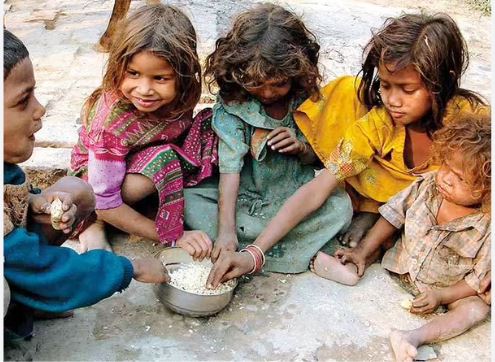
Hunger in India: Data Facts
- Global Hunger Index (GHI) 2022: India ranked at 107th out of 121 countries with a score of 29.1 putting India in the "serious" category.
- Rank and score: India ranks 107 out of 121 countries on the GHI and a score of 29.1 places it in the ‘serious’ category.
- India’s child wasting rate: 19.3% (worse than earlier levels recorded in 2014 (15.1%) and 2000 (17.15)) is the highest for any country in the world.
- Prevalence of undernourishment: Increased from 14.6% in 2018-2020 to 16.3% in 2019-2021. Thus, 224.3 million people in India are considered undernourished.
- Child stunting: Declined from 38.7% to 35.5% between 2014 and 2022.
- Child mortality: Dropped from 4.6% to 3.3% between 2014 and 2022.
- State of Food Security and Nutrition Report: India's undernourished population decreased from 247.8 million in 2004-2006 to 224.3 million in 2019–21.
- It stated that the number of stunted children under the age of 5 decreased from 52.3 million in 2012 to 36.1 million in 2020, and the number of overweight children under the age of 5 decreased from 3 million in 2012 to 2.2 million in 2020.
- Lancet Child & Adolescent Health Study: Rajasthan, Uttar Pradesh (UP), Bihar, and Assam have the highest levels of hunger and malnutrition, leading to faster deaths.
- Over and undernutrition, imbalances in energy, protein, and other nutrient intakes are common in children.

Causes of Hunger

Government Initiatives to Tackle Hunger Issue
|
Hunger Alleviation Programs in India |
Features |
|
Eat Right India Movement |
Outreach activity by FSSAI to promote healthy eating habits |
|
POSHAN Abhiyan |
Aims to reduce stunting, undernutrition, and anaemia among children and women |
|
Mid-day Meal (MDM) scheme |
Improves nutritional levels among school children, promoting enrolment, retention, and attendance |
|
Pradhan Mantri Matru Vandana Yojana |
Maternity benefit program for pregnant women |
|
Food Fortification |
Addition of key vitamins and minerals to staple foods to enhance nutritional content |
|
National Food Security Act, 2013 |
Entitles a percentage of the population to receive subsidized food grains |
|
Mission Indra Dhanush |
Immunization program targeting children under 2 years and pregnant women against 12 diseases |
|
Integrated Child Development Services (ICDS) Scheme |
Offers services to children (0-6 years), pregnant women, and lactating mothers |
Eliminating Hunger: Sustainable Development Goal 2 is about creating a world free of hunger by 2030.
Way Ahead in Tackling Hunger
- Doubling the agricultural productivity and incomes of small-scale food producers, in particular women, indigenous peoples.
- Increase investment, including through enhanced international cooperation, in rural infrastructure, agricultural research.
- Effective Implementation of Govt schemes. E.g., Portability of ration cards, Computerization of PDS, etc.
- Innovation: Nutri Gardens in schools, community places
- Role of Civil Society: Organizations like Akhshay Patra foundations, Kudumbshree have important role to play in ending hunger from the
- Technology in Agriculture: The use of technology in agriculture, such as remote sensing, drones, and precision farming, optimizes resource utilization, monitors crop health, and improves productivity.
- PDS Reforms: Ongoing reforms in the Public Distribution System (PDS), like digitized ration cards and Aadhaar-based authentication, improve efficiency, reduce leakages, and ensure food reaches the right beneficiaries. These reforms utilize technology for accurate record-keeping, transparency, and real-time tracking of food supplies.
- Climate Change and Food Security: Climate change impacts food security, necessitating climate-resilient practices. Strategies like water management, crop diversification, and climate-smart agriculture mitigate climate change effects, safeguard productivity, and ensure food security.
- International Collaboration: International collaboration and partnerships, exemplified by India's involvement in initiatives like the WFP, are crucial in addressing hunger and malnutrition. Supporting other countries in achieving food security strengthens global efforts and promotes sustainable development.
Conclusion
Even though concerted efforts are going on to fulfill SDG 2 which calls for zero hunger, it is time for a focused approach towards combating malnutrition to reach the Global Nutrition targets by 2025 (WHO) and build a thriving and productive human capital.
13. Inequality: Types, Dimensions, Statistics, Solutions for a Just Society
The United Nations describes inequality as “the state of not being equal, especially in status, rights and opportunities”.
Important Statistics on Inequality

Dimensions of Inequality
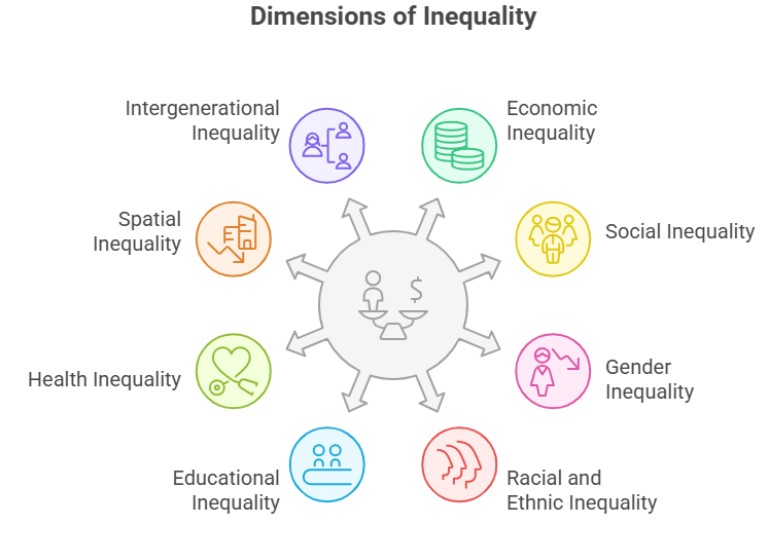
- Economic Inequality: Focuses on disparities in income, wealth, and economic resources among individuals and groups resulting in unequal access to necessities, education, healthcare, and opportunities for economic mobility.
- Social Inequality: Disparities in social status, power, and privileges based on characteristics such as gender, race, ethnicity, caste, religion, or disability.
- Gender Inequality: It encompasses issues such as unequal pay, limited access to education and healthcare, gender-based violence, and limited representation in leadership and decision-making roles.
- Racial and Ethnic Inequality: It includes unequal access to education, employment, housing, healthcare, and systemic discrimination based on race or ethnicity.
- Educational Inequality: It includes differences in educational resources, infrastructure, teacher quality, and opportunities for higher education, which can contribute to perpetuating social and economic inequalities.
- Health Inequality: Factors such as socioeconomic status, race, gender, and geographical location can influence access to healthcare, health conditions, and life expectancy.
- Spatial Inequality: It can contribute to uneven economic growth, limited opportunities, and disparities in living conditions and access to services.
- Intergenerational Inequality: It reflects how a person's social and economic circumstances at birth can shape their opportunities and outcomes throughout their lives.
|
Different Aspects of Inequality in India |
Measures to deal with Inequality |


Way Forward
- Foster Collaboration: Encourage collaboration among social movements, organizations, and grassroots initiatives.
- Policy Reforms: Advocate for policies promoting inclusive growth and equal access to opportunities.
- Education and Awareness: Promote education and awareness to challenge prejudices and foster inclusivity.
- Access to Quality Services: Advocate for equitable access to education, healthcare, and essential services.
- Sustainable Development: Emphasize sustainable practices for balanced economic and environmental growth.
- Address Digital Divide: Bridge the digital divide through digital literacy and expanded access to technology.
Conclusion
- Inequality is a pressing issue that affects societies worldwide and has wide-ranging implications for individuals, communities, and nations as a whole. It encompasses various forms such as economic inequality, social inequality, gender inequality, racial inequality, and educational inequality. Addressing inequality is crucial for creating a just and equitable society and fostering sustainable development.
14. Urbanization in India: Trends, Challenges & Solutions
Urbanization is the process by which people move from rural to urban regions, which results in a decline in the number of people living in rural areas, and the way communities adjust to this transition.
- According to NITI Aayog, cities in India occupy only 3% of the land, but they contribute 60% of the GDP.
- India is the world's second largest urban system, with almost 11% of the total global urban population residing in Indian cities.
- Within the next two decades, India's urban population is predicted to exceed 50% of the total population.
- By 2036, urban growth is predicted to account for 73% of overall population growth.
Trend of Urbanization in India
- Number of urban agglomeration /towns has grown from 1827 in 1901 to 7935 in 2011.
- Number of the total population has increased from 23.84 crores in 1901 to 121.7 crores in 2011 whereas number of the population residing in urban areas has increased from 2.58 crores in 1901 to 37.71 crores in 2011.

Factors leading to Urbanization in India
- It is influenced by both Push factors (that drive people away from rural regions) i.e., Poor living conditions, lack of educational, economic opportunities and poor health care facilities.
- Pull factor (that lure people to cities) i.e. Employment opportunities, educational institutions and urban lifestyle etc.

Problems and Issues with Urbanization in India
|
Issue |
Description |
|
Rapid Expansion |
|
|
Poor Local Governance |
There is a significant issue with poor local governance, weak finances, inappropriate planning leading to high costs of housing and office space, infrastructure shortages, and major service deficiencies, including erratic water and power supply and inadequate transportation systems. |
|
Planning Challenges |
|
|
Housing Challenges |
|
|
Service Delivery Challenges |
|
|
Infrastructure Challenges |
|
|
Environmental Challenges |
|
|
Financing Needs:
|
|
Remedies to Urban problems |
Government Measures for Urban Development |


Social Consequences of Urbanization in india
- Population Density Growth: Urbanisation leads to an increase in population density. Cities like Tokyo, Delhi, and New York are prime examples of areas where population density is extremely high due to urbanization.
- Changes in Family Structure: In rural areas, joint families are more prevalent. However, due to the small space in urban areas, nuclear families become more common, as seen in cities like London or San Francisco.
- Gentrification: This is a process of changing the character of a neighbourhood through the influx of more affluent residents and businesses.
- Cultural Diversity: With people migrating from various regions and countries, urban areas become cultural melting pots. For instance, cities like Toronto and New York are known for their multiculturalism.
- Increase in Crime Rates: With increased population density, crime rates often increase. For example, crime rates are typically higher in urban areas such as Chicago or Johannesburg compared to rural regions.
- Lack of Social Control: The process of urbanization also leads to breakdown in the functioning of traditional institutions and patterns of behaviour and of social control. It leads to a situation of continuity and change in the sense that the traditional forms often continue to persist, but their functions undergo major re-adaptations in the face of urbanization.
- Maladjustment: In the field of economic activities, even in a rapidly growing city, the number of opportunities for successful adjustment are smaller than the number of competitors. In such a situation, several among those, who are the losers, fail to suitably adjust to the reality, and become victims of frustration, inferiority complex and loss of a meaningful integration with the totality of city-life. All such failures give rise to the problem of maladjustment.
|
Marginal Man: The marginal-man is said to be one who is in the process of changing from one culture to another. It is a concept developed by Robert E. Park |
- Environmental Degradation: Rapid urbanization often results in environmental problems like pollution and habitat destruction. Beijing and Delhi, for instance, are grappling with severe air pollution issues.
- Social Inequality: Inequality can become more pronounced in urban areas, with visible divides between affluent and poor neighborhoods. Cities like Rio de Janeiro, with its stark contrast between favelas and upscale districts, exemplify this.
- Economic Opportunities and Disparities: Urban areas offer increased job opportunities but also heightened competition. Silicon Valley, for example, is a hub for tech jobs, but also has high costs of living and socioeconomic disparities.
- Loss of Community Bonding: In many urban areas, individuals can experience a sense of anonymity and isolation, compared to tight-knit rural communities. The relationships of community-living tend to become impersonal, formal, goal- oriented, contractual and transitory.
- Alienation: Urban citizens often report a loss of sense of belongingness as they move away from their cultural and social roots.
|
First Urban Climate Film Festival:
|
Impact of Urbanization on Rural Areas
- Rural-to-Urban Migration: Urbanisation attracts people from rural areas in search of better living conditions and opportunities. According to the 2011 census, approximately 35% of India's population lived in urban areas, up from 27.8% in 2001. This trend continues, leading to a reduction in rural populations.
- Changes in Agricultural Practices: Urbanisation can impact the agricultural practices in rural areas. With fewer people available to farm, mechanization increases, which can have both positive (efficiency) and negative (small farmers can't afford) impacts.
- Remittances: Migrants often send money back home, contributing to the rural economy. As per the World Bank, in 2020, India was the largest recipient of remittances globally, a significant portion of which flowed into rural areas.
- Urban Sprawl: As cities expand, they begin to encroach on rural lands, leading to loss of farmland and natural habitats. This is evident around cities like Delhi and Mumbai.
- Improved Infrastructure: Urbanisation can lead to improved infrastructure in nearby rural areas, such as better road connectivity, electricity, and internet access. However, disparities persist between remote rural areas and those close to cities.
- Education and Health Services: Urbanisation can lead to better access to education and healthcare in rural areas, with more schools, colleges, and hospitals being built in these regions. However, quality and accessibility remain significant issues.
- Environmental Impact: Urbanisation can cause environmental degradation in rural areas, due to increased pollution and waste from nearby urban areas, as well as deforestation for construction purposes.
- Social Changes: Rural societies are traditionally organized along caste and kinship lines. Urban influences can disrupt these social structures, sometimes leading to tension but also possibly fostering greater social mobility and equity.
- Economic Diversification: With urban influence, rural economies often diversify, with increases in non-agricultural occupations such as rural tourism, retail, and small-scale industries. However, this also leads to changes in traditional livelihoods.
Urban Planning and Role of Urban Bodies
Urban Planning in India
- Master Planning: Urban planning in India often involves creating master plans for cities. These plans dictate the use of land, transportation lines, and locations for different types of buildings like residential, commercial, and industrial.
- Zoning Regulations: Urban planning includes creating zoning regulations that control the types of structures and activities that can take place in different parts of the city, ensuring orderly growth.
- Infrastructure Development: Urban planning involves designing and implementing infrastructure like roads, parks, sewage and waste disposal systems, and public transport networks.
- Sustainability and Environment: Modern urban planning places emphasis on sustainable growth and green initiatives, ensuring that the impact on the environment is minimized.
Role of Urban Local Bodies in Urbanization in India
- Basic Amenities Provision: Urban local bodies (ULBs), like Municipal Corporations, are responsible for providing basic amenities like water supply, sewage treatment, garbage disposal, and street lighting.
- Implementing Urban Plans: ULBs have the role of implementing the master plans drawn up by urban planners, including the construction of infrastructure and regulation of building activities.
- Regulatory Functions: ULBs also have regulatory functions such as granting building permits, ensuring compliance with city codes and regulations, and managing public health and safety.
- Local Governance and Citizen Engagement: ULBs serve as the primary point of contact for citizens, addressing grievances, and facilitating citizen participation in local governance. They are essential for ensuring the democratic process at the local level.
Problems of Slums
The Government of India, for purposes of the implementation of various schemes relating to urban development, has defined a slum area as follows: “A slum area means any area where such dwellings predominate, which by reason of dilapidation, overcrowding, faulty arrangement and design of buildings, narrowness and faulty arrangement of street, lack of ventilation, lack of sanitation facilities, inadequacy of open spaces and community facilities or any combination of these factors, are detrimental to safety, health or morale. “
Challenges associated with Slums
- Social exclusion and marginalization due to stigmatization, discrimination, and limited opportunities for social and economic mobility.
- Limited access to basic services, lack of adequate healthcare services
- Inadequate sanitation and hygiene
- High crime rates and insecurity due to factors such as unemployment, limited law enforcement presence, and social disorganization
- Inadequate waste management, pollution, and lack of access to clean water sources.
- low-wage informal employment and a lack of access to skill development and training programs.
- Poor housing conditions: Slum dwellings often lack basic amenities and infrastructure, such as clean water, sanitation facilities, and proper ventilation. The housing structures are often overcrowded, poorly constructed, and vulnerable to natural disasters, posing significant health and safety risks.
|
Key Facts: India has a population of 65.49 million people living in 13.7 million slum households across the country. As much as 65% of Indian cities have adjoining slums where people live in small houses adjacent to each other. |
Initiatives by Government of India for Slum Dwellers
- PM AWAS Yojna-Urban: The provision of “in-situ” redevelopment for providing houses to all eligible slum dwellers.
- National Urban Housing & Habitat Policy 2007
- Atal Mission for Rejuvenation and Urban Transformation (AMRUT)
- Deendayal Antyodaya Yojana (National Urban Livelihoods Mission)
- Pradhan Mantri Garib Kalyan Yojana
- National Slum Development Programme (NSDP)
- Integrated Housing and Slum Development Programmes
- SwarnaJayanti Shahari Rozgar Yojana (SJSRY)
- Interest Subsidy Scheme for Housing the Urban Poor (ISHUP),
Conclusion
Urban development plays a vital role in shaping the social, economic, and environmental aspects of a city or urban area. It encompasses various factors such as infrastructure, housing, transportation, sustainability, and quality of life. Effective urban development practices can contribute to the growth and prosperity of cities, while addressing the challenges and opportunities they face.
15. Globalization in India: Impact, Factors, and Social Dimensions
Globalisation is the phenomenon of rising integration, interdependence, and interconnectedness of the global community (socially and economically).
Factors Affecting Globalization in India
- Economic reforms: In 1991, India implemented a series of economic reforms that aimed to liberalize the economy, open up to foreign investment, and encourage private sector participation which played a crucial role in integrating India into the global economy and attracting foreign companies to invest and operate in the country.
- Information technology boom: India's skilled workforce, particularly in the field of software development and IT services, has made it a global hub for outsourcing and offshoring.
- Trade liberalization: Reductions in tariffs, removal of trade barriers, and the facilitation of cross-border trade have increased India's participation in international trade and boosted globalization.
- Foreign direct investment (FDI): The opening up of key sectors to foreign investment and the relaxation of FDI regulations have attracted multinational corporations (MNCs) to establish a presence in India.
- Infrastructure development: Investments in infrastructure, including transportation, logistics, and communication networks, have improved connectivity within India and with the rest of the world.
- Demographic advantage: The availability of a vast labour pool has attracted outsourcing and offshoring activities, making India a preferred destination for certain industries seeking cost-effective solutions.
- Technological advancements: Advancements in technology, especially in communication and information technology, have played a significant role in India's globalization. E.g., Access to affordable mobile phones, widespread internet penetration, and the growth of digital platforms have enabled greater connectivity, communication, and access to global markets for businesses and individuals.
- Cultural exchange: Indian diaspora communities across the world have also fostered connections between India and other countries, facilitating trade, investment, and knowledge exchange.

Forms of Globalization in India and its Social Impact
- Cultural Globalization: This refers to the transmission and diffusion of ideas, meanings, and values around the world in such a way as to extend and intensify social relations.
- Economic Globalization: This involves the increasing integration and interdependence of national economies around the world.
- Political Globalization: This refers to the growing influence and cohesion of transnational governmental actors and the increasing role of international organizations such as the United Nations.
- McDonaldization: A term used by sociologists to describe a societal shift toward efficiency, predictability, calculability, and control in societies.
- Global Culture: This refers to the notion of a single global culture emerging, mainly Western, facilitated by the rise of mass media and the internet.
- Homogenization: The process by which cultures are becoming more alike through globalization.
- Hybridization: This concept refers to the blending of elements from different cultures as a result of globalization.
- Cultural Imperialism: This term refers to the domination of other cultures by a powerful nation, particularly in terms of cultural values and norms.
- De-territorialization: This is the severance of social, political, or cultural practices from their native places and populations.
Glocalization
- Glocalization is a term that combines "globalization" and "localization." It refers to the concept of developing or tailoring products, services, and strategies in accordance with both global and local requirements.
- The goal of glocalization is to create a global product or service that has been adapted to the local culture, taste, laws, and market demands where it is being sold.
- Glocalization is particularly relevant in the world of business and marketing, where a balance must be struck between reaching a global audience and catering to local tastes, customs, and regulations.
Key features
- Understanding Local Culture: This involves gaining knowledge about local customs, values, and tastes. This is a crucial aspect of glocalization, as businesses aim to make their products or services relevant and appealing to local markets while maintaining their global brand identity.
- Adapting Products or Services: Adapting a product or service to cater to local preferences can involve changes in design, packaging, colors, features, and even the product name to resonate with the local market.
- Compliance with Local Regulations: Businesses often need to modify their products, services, or operations to comply with local laws and regulations. This can include safety standards, environmental regulations, import/export rules, and other legal requirements.
- Local Marketing Strategies: Marketing strategies can be modified to suit local preferences. This can involve using local languages, appealing to local cultural values, and using local media and advertising channels.
Some Examples of Glocalization
|
Company |
Glocalization Approach |
|
McDonald's |
Adapts its menu to local tastes (McAloo Tikki in India, Teriyaki Burger in Japan) |
|
Coca-Cola |
Uses different formulas and sweeteners based on local taste preferences and health regulations |
|
IKEA |
Adapts furniture sizes to local living situations (bigger beds/kitchens in the US) |
|
Netflix |
Invests in local content production (Indian movies and series, "Money Heist" in Spain) |
|
Unilever |
Has a portfolio of local brands alongside international ones, often through acquiring local companies |
Impacts of Globalization in India on Indian Culture
- Cultural Exchange: Globalization has facilitated increased cultural exchange between India and other countries, leading to the assimilation of foreign ideas, practices, and values into Indian culture.
- Influence of Western Culture: The influx of Western media, technology, and consumerism has significantly impacted Indian culture, particularly among the younger generation, leading to changes in lifestyle, fashion, and social norms.
- Culinary Fusion: Globalization has introduced international cuisine to India, leading to a fusion of flavors and culinary practices. Indian cuisine has also gained popularity worldwide, contributing to cultural diversity.
- Language and Communication: Globalization has led to the adoption and widespread use of English as a global language of communication. This has affected regional languages and dialects, altering linguistic patterns and communication dynamics in India.
- Entertainment Industry: The global reach of Indian cinema (Bollywood) and television shows has popularized Indian culture and traditions abroad. However, it has also influenced Indian entertainment, leading to a blend of local and international styles.
- Consumerism and Materialism: The rise of global brands and consumer culture has influenced Indian society, leading to an increased emphasis on material possessions and changing values related to wealth and status.
- Cultural Preservation and Revival: Globalization has also sparked a renewed interest in Indian traditions and cultural practices, leading to efforts to preserve and revive indigenous art forms, crafts, music, and dance.
- Education and Employment: Globalization has provided new opportunities for Indian professionals in various sectors, leading to cultural exchange and exposure to different work cultures and practices.
- Religious and Spiritual Influence: Globalization has brought diverse religious and spiritual beliefs to India, leading to an interchange of ideas and practices. It has also led to the growth of global religious movements within the country.
- Challenges to Cultural Authenticity: Globalization has posed challenges to preserving the authenticity of Indian culture, as commercialization and commodification of traditions can dilute their true essence.
Impacts of Globalization in India on Women
Positive Impacts
- Greater Employment Opportunities: Globalization has led to the growth of industries and the service sector, creating new job opportunities. Women have been able to find employment in sectors like technology, hospitality, and healthcare.
- Improved Access to Education: Globalization has played a role in spreading awareness about the importance of education for girls. There's an increased emphasis on women's education, resulting in more educated women in the workforce.
- Increased Social Empowerment: With access to global media, the internet, and various forms of communication, many women are more aware of their rights and have been empowered to fight for them. Globalisation has brought feminist movement to India and hence gave voice to their ideas and concerns. e.g. #MeToo movement.
- Economic Independence: Many women now have more financial freedom and independence, which can empower them in their personal and professional lives.
- Exposure to New Ideas and Lifestyles: Globalization brings in a flow of ideas and cultures from around the world, leading to more progressive attitudes towards women's rights and roles in society.
- Greater Representation: There has been a significant increase in the representation of women in various fields such as politics, science, and technology.
Negative Impacts
- Wage Disparity: Despite an increase in employment opportunities, wage disparity remains a significant issue. Women often earn less than their male counterparts for the same work.
- Exploitation in Unorganized Sector: Many women work in the informal sector with little or no job security or benefits. They may also be subject to exploitation and abuse.
- Inadequate Social Security: Many women employed in the global economy lack access to essential social security benefits like maternity leave, health insurance, and pension schemes.
- Dual Burden: Women often face the dual burden of paid work outside the home in addition to unpaid domestic work, leading to long work hours and stress.
- Increased Consumerism: The rise in consumerism due to globalization can lead to financial stress and societal pressure.
- Cultural Displacement: The influx of western culture can lead to a sense of cultural displacement and conflicts between traditional and modern values, particularly in terms of gender roles.
- Marginalization of Rural Women: While urban women may benefit from globalization, rural women are often left behind, further exacerbating rural-urban inequalities.
Impact of Globalization on Family
- Nuclear Family: With the movement of younger generation for education and employment, nuclear families have replaced joint families.
- New forms of family: With westernisation and modernisation, new forms of family are evolving e.g. dual career family, single parent family and live in relationship.
- Individual interests: are becoming more important than the family interests.
- Decline in caring functions: The caring and nurturing functions of family are declining due to employment of women, rising physical distance etc.
- Declining role in finding life partners: Online dating sites have reduced family’s role in finding life partners.
- Decline of traditional authority: The traditionally accepted authority of Husband or Father is declining.
- Modernisation of the industrial sector: India became a favourite offshore market for pharmaceutical manufacturing, chemical, and petroleum industries.
- Privatisation of the financial sector: Prior to globalization and privatization, India’s financial sector had been mismanaged by a combination of corrupt and inept government officials.
- Agriculture sector: The new technological capabilities of farmers have increased helping drive global exports of Indian products such as tea, coffee and sugar.
|
“India is not seeking to reverse the benefits of globalization, but is asking that it be made more transparent” - Union Finance Minister Nirmala Sitharaman |
Impact of Globalization on Sections of Society
|
Sections of Society |
Key Impacts |
Examples |
|
Children |
Exposure to global culture, influence on education |
Access to global children's content like cartoons, books, and educational platforms. Adoption of global educational practices. |
|
Youth |
Access to global education and job opportunities, influence of Western lifestyle |
More opportunities for studying abroad and working with global companies; increased consumption of global brands and entertainment. |
|
Elderly |
Impact on traditional support systems, increased exposure to global health practices |
Changes in family structure with youth moving abroad for work; access to advanced healthcare technologies and practices. |
|
Vulnerable Sections (e.g., low-income groups, marginalized communities) |
Potential exploitation, but also opportunities for empowerment |
Job displacement due to competition from global markets; but also opportunities for artisanal and traditional products to reach |
The Phenomenon of Anti-globalization
- Economic Inequality: Globalization has led to uneven distribution of wealth, with certain individuals and corporations benefiting significantly more than others. According to a report by Oxfam, the world's richest 1% have more than twice as much wealth as 6.9 billion people. This has led to feeling of alienation from the process of globalization.
- Rise of Protectionism: Countries imposing tariffs and trade barriers to protect their domestic industries and jobs can undermine the free flow of goods and services that characterizes globalization.
- Populist Movements: The rise of populism in various parts of the world, driven by economic dissatisfaction, often manifests in resistance to globalization. This can lead to policies aiming to regain national control over economic affairs.
- Geopolitical Tensions: Political and economic rivalries between major powers can lead to 'decoupling', where the global exchange of goods, services, and information is disrupted.
- Technology Disruptions: While technology can accelerate globalization, concerns over issues like data privacy, cybercrime, and digital divides are leading some countries to impose restrictions on the free flow of digital information.
- COVID-19 Pandemic: The pandemic has disrupted global supply chains and led to calls for increased domestic production of key goods. This could result in a more localized approach to production in the future.
- Environmental Concerns: The environmental impact of globalization is leading to calls for more sustainable, localized practices.
- Issues of Sovereignty: There's an increasing call for national sovereignty against perceived overreach by global institutions, which may prompt a shift away from multilateral agreements.
- Migration Crisis: As large numbers of people move across borders due to economic disparity, conflict, or climate change, it can fuel anti-globalization sentiments and policies.
- Rise of Nationalism: Increasing nationalism can lead to a backlash against globalization, as citizens seek to prioritize national interests over global ones.
The Resilience of Global Trade: Continuity Amidst Changing Dynamics
- Global Trade Defies Headwinds: Despite challenges, global trade remains robust. e.g., COVID-19 pandemic, Russia-Ukraine war effects.
- Selective Changes in Global Trade: The structure of global trade is evolving selectively. Example: De-globalization or regionalization may occur in specific industries and countries over the next five to ten years.
- Regionalization as a Response: Countries and regions pursue self-sufficiency and regional trade. Example: Rising regionalization of supply chains, such as Asia's increasing share of machinery imports into China.
- Shift from Unipolar to Multipolar: The global economy moves away from a unipolar framework. Example: Sino-U.S. relations deteriorate, leading to a fragmented global economy with multiple ecosystems.
- Implications for Inflation and Growth: Changes in globalization dynamics may impact inflation and growth. Example: Increased regionalization and potential inflationary pressures could lead to structurally higher interest rates and lower growth.
Conclusion
The economic and social shifts that have occurred as a direct result of globalisation are also encompassed within the definition of globalisation. Consumers in today’s world have access to a diverse array of options for both the products and services they purchase. Globalization brought positive social changes in the society; however, it becomes a point of concern when an overwhelming impact of globalisation can be observed on the Indian culture and environment.
16. Social Empowerment & Tribal Rights: Enabling Vulnerable Groups for Self-Sufficiency
Social Empowerment is the process of enabling people to emerge from their subordinate position (vulnerable section) and achieve self-sufficiency.
- It means to have control over the factors and decisions to improve conditions, increase build capacities through access to education, and other developmental services.
- It is viewed as the process of fostering a sense of independence and self-assurance etc.
- Perceptions of being empowered vary across time, culture, and domains of a person’s life:
- A person from a low caste feels empowered when they are given a fair hearing in a public gathering
- A woman from a traditional home feel empowered if she is permitted to leave the house unaccompanied by a guy.
- A transgender feel empowered when she is given employment.
Key Concepts Related with Social Empowerment
- Agency: This is the capacity of individuals to act independently and make their own free choices.
- Social Mobility: This refers to the ability of an individual or family to move up or down the social and economic ladder within a society.
- Empowerment: It focuses on processes that enable participation, enhance control, and foster action that leads to the individual's or community's desired outcomes.
- Social Capital: This refers to the networks of relationships among people who live and work in a particular society, enabling that society to function effectively.
- Intersectionality: This is the interconnected nature of social categorizations such as race, class, and gender, creating overlapping and interdependent systems of discrimination or disadvantage.
- Conscientization: A term that refers to the process of developing a critical awareness of one's social reality through reflection and action.
- Relative Deprivation: This refers to the conscious feeling of negative discrepancy between legitimate expectations and present actualities, often driving empowerment movements.
- Social Inclusion: This is the process by which efforts are made to ensure equal opportunities for all, regardless of their background.
- Collective Action: This is action taken together by a group of people whose goal is to enhance their status and achieve a common objective, often used as a means of social empowerment.
Who is Vulnerable Section?
A vulnerable section or socially disadvantaged group is one that has some specific characteristics that make it at higher risk of falling into poverty than others.
- Scheduled tribes
- Women
- Scheduled castes
- Minorities
- Senior citizens
- Persons with disabilities
Challenges Faced by Socially Disadvantaged Groups in Social Empowerment

Need for Social Empowerment
- Reduce Social Inequality: Empowerment can help bridge gaps caused by social, economic, and political disparities.
- Foster Self-efficacy: Empowerment boosts individuals' confidence in their capacity to control their lives and claim their rights.
- Promote Social Justice: It can enable marginalized groups to achieve equitable access to resources and opportunities.
- Facilitate Social Integration: By empowering excluded groups, it can promote social cohesion and inclusivity.
- Enhance Democratic Participation: Empowered individuals can participate more effectively in societal decision-making processes.
- Enable Resource Access: Empowerment can help individuals or groups access key resources and services.
- Encourage Collective Action: It can inspire individuals to work together to drive societal change.
- Contribute to Individual and Societal Well-being: Empowered individuals can contribute to stronger, healthier communities.
- Challenge and Change Power Structures: Empowerment can lead to a reshaping of societal norms and power relations.
- Encourage Social Innovation: Empowered individuals or groups are more likely to challenge the status quo and innovate for the betterment of society.
Social Empowerment of Scheduled Tribes
Article 366 of the constitution defines the scheduled tribe as “such tribes or tribal communities or part of or
groups within such tribes or tribal communities as are deemed under Article 342 to the Scheduled Tribes (STs) for this Constitution”.
Areas of Concern for Social Empowerment of Tribes
- Land and resource rights: Encroachments, displacement, and lack of recognition of their traditional land rights can lead to loss of livelihoods and cultural heritage.
- Socio-economic marginalization: Limited economic opportunities and inadequate infrastructure further exacerbate socio-economic marginalization, including poverty, lack of access to education, healthcare, sanitation, and basic amenities.
- Cultural preservation and identity: Tribal communities face the risk of losing their cultural traditions, language, and identity due to assimilation, acculturation, and modernization.
- Discrimination and exclusion: Prejudice and stereotyping can perpetuate social inequalities and hinder tribal’s socio-economic progress.
- Health disparities: Factors such as geographical remoteness, inadequate healthcare infrastructure, and lack of culturally sensitive healthcare provision contribute to health disparities among tribal populations.
- Displacement and forced relocation: Development projects, infrastructure initiatives, and conflicts often result in the displacement of tribal communities from their ancestral lands, disrupts their social fabric, traditional livelihoods, and cultural practices, leading to loss of identity and economic hardships.
- Exploitation and vulnerability: Tribal communities are vulnerable to exploitation, including labor exploitation, human trafficking, and marginalization in the context of natural resource extraction.
- Educational challenges: Tribal communities often face significant challenges in accessing quality education.
- Environmental degradation: Environmental degradation, deforestation, climate change, and loss of biodiversity adversely impact their livelihoods and traditional practices dependent on natural resources.
- Lack of representation and voice: Tribal communities often have limited representation in decision-making processes, both at local and national levels. Their voices are often marginalized, leading to inadequate policies and initiatives addressing their specific needs and aspirations.
Government Initiatives for Social Empowerment of Tribal Communities
- Separate Tribal ministry was set up in 1999.
- The Stand-Up India scheme (2016) grants SC/ST/Women with a loan from Rs.10 lakhs to Rs.1 crore to promote traditional entrepreneurship.
- Van Dhan Scheme (2018): 10 SHGs of 30 tribal gatherers (Van Dhan Vikas Samuh) will be formed with an aid of working capital to enhance the forest products.
- Van Dhan Vikas Kendra (2018): To provide skill upgradation, capacity building, training, and setting up of primary processing and value addition facilities.
- PM Janjatiya Vikas Scheme (2021) seeks to achieve tribal development in the next five years through the formation of Van Dhan groups.
- Tribal and Harijan Research Institutes are set up in the following states- MP, Odisha, Bihar, West Bengal, and Rajasthan to study the tribal lifestyle, art, and customs for their protection and documentation.
- Marketing And Logistics Development for Promotion of Tribal Products from North Eastern Region (PTP-NER) (2023) to transform of the tribal Ecosystem in the North-East by strengthening livelihood opportunities for tribal artisans through increased efficiency in procurement, logistics, and marketing of tribal products from North Eastern States.
Conclusion
It is important to note that the challenges faced by tribes are complex and multifaceted, requiring comprehensive approaches that respect their rights, preserve their culture, and address socio-economic disparities. Efforts towards inclusive development, participatory governance, and the protection of their rights can contribute to addressing these problems and promoting their well-being.
17. Women
According to the Census, 2011, the population of women is around 48 % which signifies the importance of empowering women.
Issues faced by Women
- Patriarchal norms and values: It often lead to unequal treatment of women in many areas including education, employment, and access to resources.
- Restricted Mobility: In some areas, women face restrictions on their ability to move freely, which can limit their access to education, healthcare, and employment.
- Economic Dependency: Due to societal norms, many women are dependent on their husbands or families for economic support.
- Inheritance Rights: Despite legal provisions, many women do not have equal inheritance rights as their male counterparts due to deeply rooted social customs.
- Gender inequality: Women often face discrimination and unequal treatment in various aspects of life, including education, employment, healthcare, and political participation.
- Violence against women: Violence against women is a grave concern worldwide that includes physical, sexual, and emotional abuse, domestic violence, sexual harassment, human trafficking, and harmful traditional practices like female genital mutilation and child marriage.
- Reproductive health and rights: Issues such as lack of access to reproductive healthcare, inadequate family planning services, maternal mortality, and restrictions on reproductive choices and autonomy pose significant challenges to women's well-being.
- Political underrepresentation: The gender gap in political representation limits women's influence in shaping policies and agendas that affect their lives and rights.
- Social and cultural norms: Practices such as child marriage, dowry, honour killings, and gender-based discrimination reinforce gender roles and limit women's opportunities for personal development and self-expression.
- Health disparities: Women may face specific health challenges and disparities, including reproductive health issues, maternal mortality, limited access to healthcare services, and gender-based violence.
- Intersectionality: Women from marginalized and disadvantaged groups, such as women of colour, indigenous women, LGBTQ+ women, women with disabilities, and migrant women, face additional layers of discrimination and unique challenges due to the intersection of gender with other forms of identity-based discrimination.
|
Case Study: Women's Representation in Nagaland: This case study explores women's representation in Nagaland, highlighting achievements in education and empowerment, as well as challenges in political participation. Key Findings:
Women's Political Representation:
|
Steps taken by Government for Women Empowerment
|
Initiatives and Programs |
Year |
Objective |
|
Working Women Hostel |
1972-73 |
Provide safe accommodation and day-care facilities for working women |
|
Support to Training and Employment Programme for Women |
1986-87 |
Empower women with skills for gainful employment |
|
National Commission of Women |
1992 |
Review constitutional safeguards, recommend measures, assist with grievance redressal, advise on policy matters |
|
National health programs |
2005 |
Address maternal healthcare needs through programs like NRHM and Family Welfare Programme |
|
National Mission for Empowerment of Women |
2011-12 |
Convergence of schemes and programs to holistically empower women |
|
Weekly Iron and Folic Acid Supplementation Programme |
2012 |
Address anaemia among adolescent girls and boys |
|
Beti Bachao Beti Padhao Yojana |
2015 |
Create awareness, improve welfare services, and address declining Child Sex Ratio |
|
Sukanya Samriddhi Yojana |
2015 |
Savings scheme specifically for the girl child |
|
Mahila-E-Haat |
2016 |
Online marketing platform for women entrepreneurs, SHGs, and NGOs |
|
Mahila Shakti Kendra |
2017 |
Empower rural women with skill development, digital literacy, employment, health, and nutrition |
|
Pradhan Mantri Matru Vandana Yojna |
2017 |
Maternity Benefit Programme implemented in sync with the National Food Security Act |
|
SWADHAR Greh |
2018 |
Provide basic needs for women in distress |
|
Project Stree Swabhiman |
2018 |
Sustainable model for providing affordable sanitary products in rural areas |
|
Nari Portal |
2018 |
Mission Mode Project for women empowerment |
|
Universalisation of Women Helpline (Dial 181) |
2019 |
Provide 24x7 emergency/non-emergency response to women affected by violence |
Conclusion:
Addressing the issues related to women requires a comprehensive approach involving legal and policy reforms, gender-responsive programming, awareness campaigns, education and empowerment initiatives, and efforts to challenge and change harmful social norms and stereotypes. It is crucial to promote gender equality, women's rights, and ensure equal opportunities for all women to thrive and contribute to society.
18. Challenges Faced by Scheduled Castes in India & Government Empowerment Initiatives
Scheduled Castes (SCs), historically marginalized under India's rigid caste system, continue to face deep-rooted social and economic challenges. Despite constitutional safeguards, issues like discrimination, poverty, and limited access to education and justice persist.
Issues Faced by Scheduled Castes
- Caste-based discrimination: Dalits continue to face caste-based discrimination and social exclusion.
- Economic marginalization: Scheduled Castes have historically been economically marginalized, with limited access to resources, education, and employment opportunities. Poverty, unequal land distribution, and lack of access to credit and markets contribute to their economic disadvantages.
- Education disparities: Educational disparities persist among Scheduled Castes, with lower enrolment rates, high dropout rates, and limited access to quality education.
- Violence and atrocities: Dalits face violence and atrocities, including physical and sexual abuse, harassment, and discrimination.
- Limited political representation: Despite constitutional provisions for reservation of seats in legislatures, Scheduled Castes often face challenges in accessing political representation.
- Landlessness and land rights: Many Dalit families are landless or have limited access to land. Landlessness contributes to their economic vulnerability and perpetuates social inequalities.
- Limited access to healthcare: Dalits often have limited access to quality healthcare services, resulting in health disparities and higher morbidity and mortality rates.
- Manual scavenging: Manual scavenging, a dehumanizing practice involving the cleaning of human waste, predominantly affects Dalit women. Despite legal prohibitions, manual scavenging persists in some parts of the country, exposing Dalits to health hazards and perpetuating their marginalization.
- Social stigma and identity-based violence: Dalits face social stigma and derogatory stereotypes, which further marginalize and dehumanize them.
- Limited access to justice: Dalits often encounters challenges in accessing justice, including delays, biased law enforcement, and inadequate legal support., and obtaining justice for caste-based crimes and atrocities.
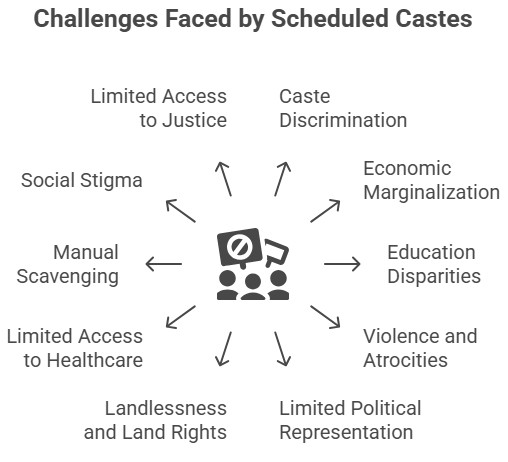
Steps taken by Government for Empowerment of Scheduled Castes
|
Initiative |
Objective |
|
Educational |
|
|
Upgradation of Merit of SC Students |
Provide facilities for education in residential/non-residential schools for SC students |
|
Dr Ambedkar Foundation |
Promote Dr Ambedkar's ideology and administer schemes emerging from Centenary Celebration |
|
Post Matric Scholarship for Scheduled Caste Students (PMS-SC) |
Empower SC students through education as the largest intervention by the central government |
|
Pre-Matric Scholarships to SC students |
Support parents of SC children in educating their wards to minimize dropouts |
|
Dr Ambedkar National Centre at Janpath |
Establish a world-class library and e-learning centre |
|
Scholarships for higher education and coaching |
Multiple schemes for SC students, including fellowships and overseas study |
|
Social |
|
|
The Protection of Civil Rights Act, 1955 |
Enacted to prevent untouchability and promote civil rights |
|
SC and ST (Prevention of Atrocities) Act, 1989 |
Provide financial assistance to states/UTs for implementing these acts |
|
Prohibition of Employment as Manual Scavengers and their Rehabilitation Act, 2013 |
Promote eradication of dry latrines, manual scavenging, and rehabilitation of manual scavengers |
|
Economic |
|
|
National Scheduled Castes Finance and Development Corporation (NSFDC) |
Finance income-generating activities of SCs below the poverty line limits |
|
National Safai Karmachari Finance and Development Council (NSKFDC) |
Provide credit facilities to Safai Karmacharis, manual scavengers, and their dependents |
|
Babu Jagjivan Ram Chatrawas Yojana |
Construction of hostels for SC students under the PM Anusuchit Jati Abhyuday Yojana |
|
Self-employment scheme for Rehab of Manual Scavengers |
Support self-employment opportunities for rehabilitating manual scavengers |
|
Credit Enhancement Guarantee Scheme for SC |
Provide credit guarantee facility to young and start-up entrepreneurs belonging to the SC community |
|
PM-DAKSH |
Provide long and short-term skills training to target youth |
|
PM AJAY |
Merger of centrally sponsored schemes: Special Central Assistance to Scheduled Castes Sub Plan (SCA to SCSP) and Pradhan Mantri Adarsh Gram Yojana (PMAGY) |
Conclusion
Addressing the issues requires a multi-dimensional approach, including effective law enforcement, intelligence gathering, community engagement, socio-economic development, political stability, diplomatic efforts, and international cooperation in combating transnational threats.
19. Minorities in India: NCM Act 1992, Issues, Schemes & Government Initiatives
Minorities in India, as defined under the National Commission for Minorities (NCM) Act, 1992, include six notified communities. Their protection and empowerment are vital to ensure equality, social justice, and inclusive growth in the country.
- Those communities notified under section 2(c) of the NCM (National Commission for Minorities) Act, 1992, by the central government are regarded as minority.
- Muslims, Sikhs, Christians, Buddhists, Jains and Zorastrians (Parsis) have been notified as minority communities under Section 2 (c) of the National Commission for Minorities (NCM) Act, 1992.
- Despite the Supreme Court's 11-judge bench judgment in T.M.A Pai case, which clearly determined that linguistic and religious minorities must be identified at the state level rather than at the national level, section 2(c) of the National Commission for Minorities (NCM) Act 1992 gave the Centre "unbridled power" to inform minorities.
Issues Faced by Minorities in India
- Discrimination: Minorities may face discrimination based on their race, ethnicity, religion, language, or other characteristics that can manifest in various forms, including unequal access to opportunities, prejudice, stereotyping, and hate crimes.
- Marginalization and Exclusion: Minorities may experience marginalization and exclusion from mainstream society. In the form of barriers in accessing education, healthcare, employment, housing, and political representation. This can lead to social and economic disparities between minority and majority groups.
- Socioeconomic Inequality: Minorities often face higher levels of poverty, unemployment, and income inequality compared to the majority population. They may have limited access to quality education, healthcare, and financial resources, which can perpetuate cycles of poverty and hinder upward mobility.
- Cultural Preservation and Identity: Minorities may struggle to preserve and maintain their cultural heritage and identity in the face of assimilation pressures. Language loss, erosion of traditional practices, and cultural homogenization are common challenges faced by minority communities.
- Political Underrepresentation: Minorities may have limited representation in political institutions and decision-making processes. This can result in a lack of voice, influence, and representation in shaping policies that directly impact their lives and interests.
- Violence and Intolerance: Minorities may be vulnerable to violence, hate crimes, and intolerance fueled by prejudice and bigotry. This can create an atmosphere of fear, insecurity, and social unrest within minority communities.
- Lack of Legal Protection: In some cases, minorities may face inadequate legal protection and enforcement of their rights. Discriminatory laws or policies can perpetuate systemic inequalities and hinder the pursuit of justice for minority individuals and communities.
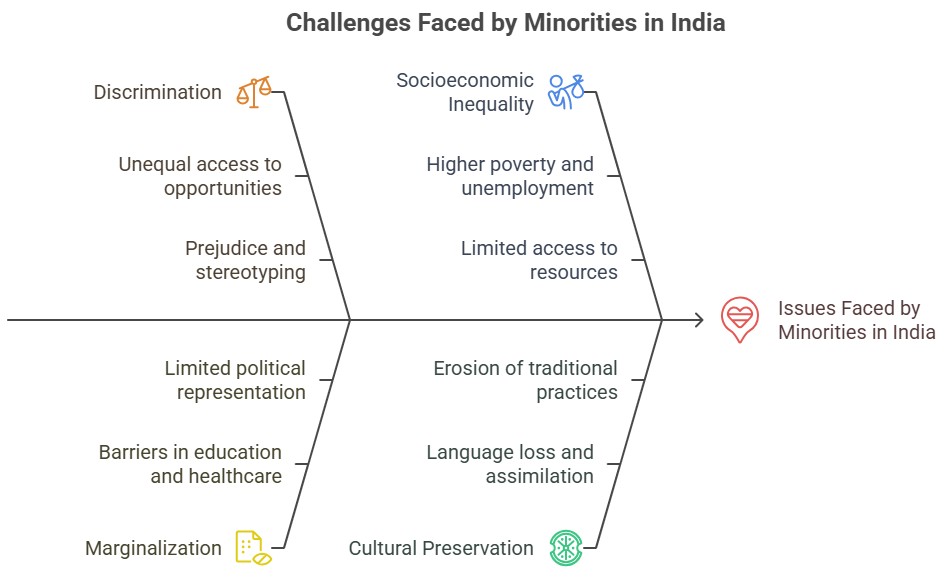
Government Steps for Empowerment of Minorities in India
Government Steps for Empowerment of Minorities in India are;
|
Schemes and Other Initiatives |
Description |
|
Pre and post-matric scholarship schemes for minorities (2007 and 2012) |
Scholarships provided to minorities for pre- and post-matric education |
|
Nai Roshni scheme (2013) |
Leadership development program for women of minority communities |
|
Learn and Earn scheme (2014) |
Skill upgradation scheme for minorities |
|
Minority Cyber Gram (MCG) (2014) |
Introducing digital literacy skills in identified minority clusters |
|
Nai Manzil scheme (2015) |
Education and skill development program for youth from the minority community |
|
Upgrading The Skills and Training In Traditional Arts/Crafts For Development (USTAAD) (2015) |
Upgrading skills and training in the preservation of traditional arts and crafts of minorities |
|
Hamari Dharohar (2015) |
Preserving the rich and diverse heritage of the minority community in India |
|
PM Jan Vikas Karyakram (2018) |
Improving basic needs and socio-economic conditions in minority concentration areas |
|
Naya Savera (2019) |
Free coaching and allied scheme for minorities |
|
Nai Udaan |
Support for minority students after clearing prelims of UPSC, State PSC, and SSC |
|
Strengthening of State Waqf Boards |
Support provided for training and administrative costs for State Waqf Boards |
|
Khwaja Garib Nawaz Senior Secondary School |
School established at Ajmer by Maulana Azad Education Foundation to boost minority education |
|
Maulana Azad fellowship scheme for minority students |
Fellowship scheme for minority students |
Delhi Government’s Proposal on Migrated Minorities in India
|
Conclusion
It is important to note that the specific issues faced by minorities can vary greatly depending on the cultural, social, and political context. Additionally, intersectionality should be considered, as individuals belonging to multiple minority groups may face compounded forms of discrimination and disadvantage.
20. Senior Citizens
Issues faced by Senior Citizens
- Healthcare: Senior citizens often face health-related challenges, including chronic illnesses, limited access to healthcare facilities, high medical expenses, and a lack of specialized geriatric care.
- Financial Security: Many seniors struggle with financial issues such as inadequate retirement savings, limited income sources, rising living costs, and difficulties in meeting daily expenses.
- Social Isolation: Senior citizens may experience social isolation and loneliness due to the loss of friends and family members, reduced mobility, limited social interactions, and a lack of community support.
- Elder Abuse: Senior citizens can be vulnerable to various forms of abuse, including physical, emotional, financial, and neglect. This can occur within families, caregiving settings, or institutional environments.
- Ageism and Discrimination: Older individuals may face ageism and discrimination in employment, housing, healthcare, and other areas, limiting their opportunities and quality of life.
- Safety and Security: Senior citizens may be more susceptible to crime, scams, and fraudulent activities. They may also face challenges in accessing transportation, navigating public spaces, and maintaining home safety.
- Access to Services: Limited access to essential services such as transportation, legal assistance, social support programs, and community resources can pose difficulties for senior citizens.
- Mental Health: Senior citizens may experience mental health issues such as depression, anxiety, cognitive decline, and dementia. Access to mental health services and support is crucial for their well-being.
- Age-related Discrimination: Older individuals may encounter challenges in accessing employment opportunities, being denied insurance coverage, facing age-related stereotypes, and experiencing unequal treatment.
- Elderly Caregiving: Many senior citizens require assistance with daily activities and caregiving. Lack of proper support and resources for family caregivers can create significant challenges and burdens.
- Loss of Independence: Older adults may face loss of independence due to physical frailty or illnesses, which can lead to feelings of frustration and dependency.
- Lack of Suitable Housing: Access to age-friendly housing that caters to their specific needs, like accessibility features and supportive services, can be a challenge.
- Mental Health: Older adults are at a higher risk of experiencing mental health issues like depression and anxiety, often underdiagnosed and undertreated in this age group.
- Neglect of Traditional Roles: In traditional societies, elderly individuals held positions of respect and authority. The erosion of these roles can lead to feelings of worthlessness.
- Access to Technology: Rapid technological advancements can make it hard for some elderly individuals to keep up, leading to their digital exclusion.
|
Survey Highlights Economic Dependence and Desire to Work among Elderly in India: A national survey carried out by the NGO HelpAge India has shown that as many as 47% of elderly people are economically dependent on their families for income and 34% are relied on pensions and cash transfers, while 40% of the surveyed people have expressed the desire to work “as long as possible”, highlighting the need to pay greater attention to social security of senior citizens in the country. |
Steps taken for betterment of Senior Citizens
|
Government Initiatives for Senior Citizens |
Features |
|
Integrated Programme of Older persons (IPOP) |
Improve elders' quality of life by providing basic needs. |
|
National Social Assistance Programme |
Provides social assistance to the destitute. |
|
National Policy on Older Persons (NPOP) |
Ensures financial and food security, healthcare, shelter, and other needs of older people. |
|
National Programme for Healthcare of Elderly |
Addresses the healthcare needs of elderly individuals based on international commitments. |
|
Vayoshreshtha Samman |
Recognizes the work of the elderly in various fields. |
|
Maintenance and Welfare of Parents and Senior Citizens Act |
Provides need-based maintenance and welfare for parents and senior citizens. |
|
Indira Gandhi National Old Age Pension Scheme |
Supports elders who are members of families below the poverty line. |
|
Rashtriya Vayosri Yojana |
Provides aid to elderly individuals with age-related problems like vision impairment, etc. |
|
PM Vaya Vandana Yojana |
Offers social security for senior citizens. |
|
Setting up a helpline for senior citizens/elder line |
Establishes a dedicated helpline for senior citizens. |
|
Pradhan Mantri Suraksha Bima Yojana |
Provides accident insurance coverage for senior citizens. |
|
Atal Pension Yojana |
Offers a pension scheme for senior citizens. |
|
Health Insurance for Senior Citizens |
Provides health insurance coverage specifically for senior citizens. |
|
Varishtha Pension Bima Yojana 2017 |
Offers a pension scheme for senior citizens. |
|
Assisted Living Devices to Senior Citizens below Poverty Line |
Provides assisted living devices to senior citizens below the poverty line. |
|
Senior Citizens Welfare Fund |
A fund dedicated to the welfare and support of senior citizens. |
Conclusion: Due to existing social barriers, socially disadvantaged groups frequently lack the skills and confidence to participate in communal decision-making. As a result, it is critical to especially target underprivileged populations in order to secure their social empowerment and inclusive and sustainable development.
21. Persons with Disability in India: Issues, Rights, Schemes, Accessibility
Persons with Disability form a significant section of society, yet they continue to face multiple barriers in accessing equal opportunities. Ensuring their inclusion and empowerment is essential for building an equitable and progressive nation.
Data Related to Persons with Disability
- The estimation in Census 2011, that 2.21% of India’s population is disabled is a gross underestimation.
- According to the World Health Organization, about 16% of the global population is disabled. If that figure is extrapolated to the Indian context, it would mean at least 192 million disabled people.
Issues Faced by Persons with Disability
- Social Isolation: Persons with disabilities may face social isolation due to societal stigma, physical barriers, and lack of social support.
- Limited Political Participation: There are often barriers preventing people with disabilities from fully participating in political processes, such as inaccessible polling places or information.
- Violence and Abuse: People with disabilities are at increased risk of physical, sexual, and emotional abuse.
- Intersectional Discrimination: The challenges faced by people with disabilities can be compounded by other forms of discrimination, such as based on gender, caste, or economic status.
- Lack of Representation: There is limited representation of people with disabilities in media, popular culture, and decision-making positions, leading to lack of visibility and advocacy.
- Inadequate Infrastructure: From public transportation to residential facilities, the lack of disability-friendly infrastructure is a major challenge.
- Mental Health: The mental health of persons with disabilities is often neglected, leading to additional health and social issues.
- Rehabilitation Services: There's a significant gap in the availability and accessibility of quality rehabilitation services for persons with disabilities.
- Health: The health sector, particularly in rural India, has not been proactive in addressing disabilities.
- Education: The education system lacks inclusivity, posing a significant challenge in integrating children with mild to moderate disabilities into regular schools.
- Employment: Disabled adults, despite their capability for productive work, face significantly lower employment rates compared to the general population.
- Accessibility: Physical accessibility in buildings, transportation, and access to services remains a major challenge.
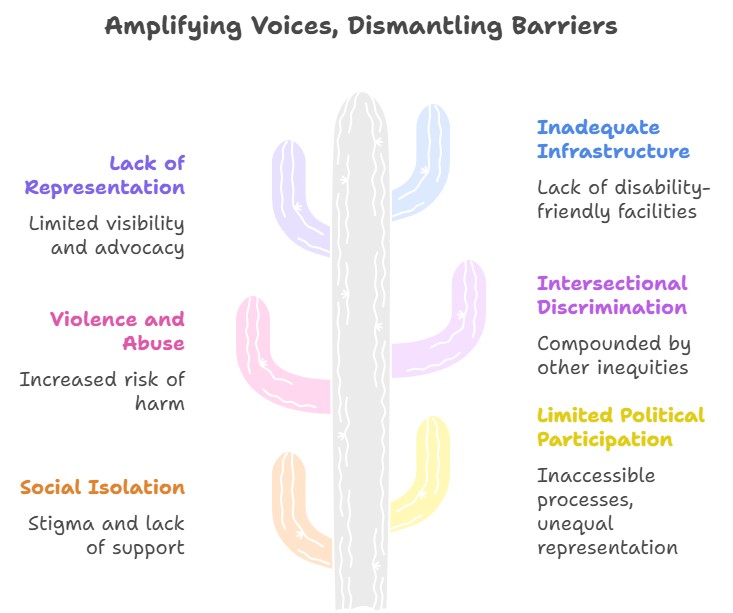
Government Schemes for Persons with Disability
|
Scheme Name |
Description |
|
Assistance to Disabled Persons for Purchase/fitting of Aids and Appliances (ADIP) (1981) |
Brings suitable, durable, scientifically-manufactured, modern aids and appliances within the reach of disabled individuals. |
|
Deen Dayal Disabled Rehabilitation Scheme (2003) |
Provides financial assistance to NGOs for offering various services to persons with disabilities, such as vocational training centers, community-based rehabilitation, preschool and early intervention, special schools, etc. |
|
National Fellowship for Students with Disabilities (RGMF) (2012) |
Aims to increase opportunities for students with disabilities to pursue higher education by providing them with financial support. |
|
Accessible India Campaign (2015) |
A nationwide flagship campaign focused on achieving universal accessibility for persons with disabilities. |
|
Scheme for Implementation of the Rights of Persons with Disabilities Act, 2016 (SIPDA) |
Provides grant-in-aid to State Governments, central and state government bodies, autonomous bodies, and universities for implementing the Rights of Persons with Disabilities Act. |
|
Schemes of the National Trust |
Covers the welfare of persons with autism, cerebral palsy, mental retardation, and multiple disabilities, providing various programs and support services. |
Conclusion
India faces challenges in ensuring the inclusion and empowerment of persons with disabilities. Efforts have been made through legislation and policies, but more work is needed to address economic dependence, limited access to education and employment, and social stigmas. Collaboration between government, organizations, and society is crucial for creating an inclusive environment.
22. Communalism in India: Causes, Types & Solutions
Communalism, specifically in the Indian context, is commonly understood as the occurrence of religious differences between groups, often resulting in tension and even violent clashes. It can also manifest in forms of discrimination against religious communities in areas like employment and education.
|
Interesting Fact: According to NCRB data, a total of 378 cases of communal and religious rioting were registered in 2021. |
Features of Communalism
- Communalism is a multifaceted phenomenon characterised by orthodoxy and intolerance.
- It promotes a strong aversion and hostility towards other religions.
- It advocates for the exclusion and eradication of other religions and their values.
- It may resort to extremist tactics, including employing violence against other individuals or groups.
- Communalism exhibits an exclusive outlook, where adherents consider their own religion as superior to others.
Three Stages of Communalism in India

Types of Communalism
Communalism, an ideology can be classified into:
- Religious Communalism: This type of communalism is based on religious differences and involves the promotion of the interests of one religious community at the expense of others. It can result in religious tensions, discrimination, and conflicts.
- Ethnic Communalism: Ethnic communalism focuses on the interests of a particular ethnic group and can involve the exclusion or marginalization of other ethnic groups. It often leads to identity-based conflicts and challenges to national unity.
- Political Communalism: Political communalism refers to the instrumental use of religious or ethnic identities by political parties or leaders to gain power, mobilize support, or polarize communities for electoral or political gains. It exploits communal divisions for political purposes, leading to communal tensions and conflicts.
- Cultural Communalism: Cultural communalism emphasizes the cultural identity and heritage of a particular group and can result in the marginalization or suppression of other cultural groups. It can manifest in cultural dominance, cultural clashes, or the imposition of a dominant culture on others.
- Economic Communalism: Economic communalism involves the preferential treatment or economic exploitation of a particular religious or ethnic community in terms of access to resources, employment, business opportunities, or economic benefits. It can lead to economic disparities, resentment, and social tensions.
- Regional Communalism: Regional communalism focuses on the interests and aspirations of a particular region or geographic area, often leading to conflicts with other regions. It can involve demands for regional autonomy or the perception of unfair distribution of resources and opportunities between regions.
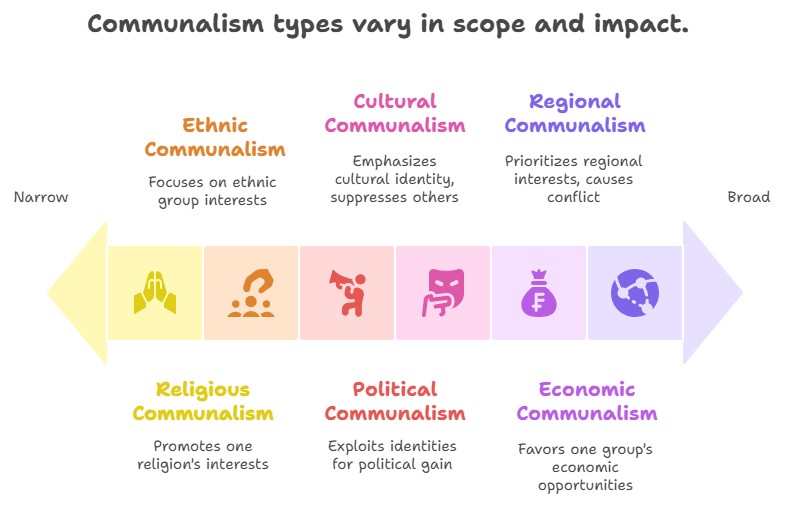
Key Social Concepts of Communalism
|
Factors Leading to the Rise of Communalism in India
Historical Causes
- Policy of Divide and Rule: The colonial rule of the Britishers implemented a policy of dividing communities along religious lines to maintain control and exploit divisions for their own benefit. For instance, the policy of separate electorates by Morley Minto Reforms.
- Partition legacy: The traumatic experience of partition and the formation of Pakistan based on religious lines have left a lasting impact on communal relations.
Political Causes
- Communal politics: Politicians exploiting religious sentiments for electoral gains and promoting divisive agendas. g., Recently the Supreme Court raised concerns about Hate speeches
- Failure of secular governance: Ineffective implementation of secular policies and inability to address communal tensions.
Economic Causes
- Socio-economic disparities: Unequal distribution of resources and opportunities leading to feelings of marginalisation among certain communities.
- Economic competition: Perceived competition for limited resources, jobs, and economic benefits leading to communal tensions. g., Issue of alleged illegal migrants consuming local resource and jobs is often seen the context of Assam and Bengal.
Social Causes
- Identity politics: The promotion of religious identity as a primary marker of social and political affiliation, leading to the strengthening of communal divisions.
- Social segregation: Communities living in separate enclaves and limited social interactions contributing to the development of communal attitudes.
- For e.g., Issues like Cow Slaughter, Religious processions often lead to communal clashes
Psychological Causes
- Prejudices and biases: Deep-rooted prejudices, stereotypes, and biases against other religious communities leading to communal tensions.
- Fear and insecurity: Perceptions of threat and fear, fuelled by communal propaganda and incidents, leading to the rise of communalism.
|
Recent Incidences of Communal Violence |
Measures to Address the Problem of Communalism |


Conclusion
Communalism, with its roots in political, economic, historical, social, and psychological causes, has had a profound impact on Indian society. It has led to divisions, conflicts, and a sense of mistrust among different religious communities. Overcoming communalism requires a comprehensive approach that addresses the underlying causes and promotes unity, tolerance, and harmony.
23. Regionalism in India: Causes, Types & Impact Explained
Regionalism in the contemporary world is characterised by loyalties to a specific region of origin. It involves asserting regional identity and demands for special privileges as a remedy for past neglect or deprivation.
|
Interesting Fact: 12th five-year focusses on “Faster, sustainable and more inclusive growth”, for balanced regional growth. |
Characteristics of Regionalism in India
- Regionalism arises from disparities in the economic, social, political, and cultural aspects between regions.
- Regionalism can be driven by emotional and psychological factors.
- Regionalism is based on the expression of group identity and loyalty to a specific region.
- Regionalism prioritises the development of one's own region without considering the interests of other regions.
- Regionalism restricts the benefits of a particular region to people from outside that region.
Types of Regionalism in India
- Supra-State Regionalism: Supra-state regionalism involves shared interests among people residing in multiple states, working towards promoting regional autonomy and local agendas. It suggests that a larger state with common interests has higher chances of success than smaller states.
- g., North Eastern states in India.
- Inter-State Regionalism: Inter-state regionalism creates divisions among two or more states, often due to territorial and identity-related factors. It can undermine the interests of certain groups within the states involved.
- g., Disputes between Karnataka and Tamil Nadu over the distribution of Kaveri water.
- Intra-State Regionalism: Intra-state regionalism emerges when a specific region or state seeks autonomy, self-identity, and self-reliance. It can be seen as a positive form of regionalism as it promotes self-dependence for the region.
- g., Saurashtra in Gujarat, East U.P. in Uttar Pradesh, Vidarbha in Maharashtra etc.

Types of Regional Movements
- Secessionism: Secessionist movements involve fundamentalist groups advocating for separatism and the formation of separate entities.
- g., The National Socialist Council of Nagaland (Isac Muivah) and Islamic fundamentalist groups in Jammu and Kashmir.
- Separatism: Separatist movements demand the creation of separate states.
- g., The formation of Telangana, Jharkhand, Uttarakhand, and others.
- Demand for Full Statehood: This type of movement arises from Union territories seeking full statehood, such as the case of the National Capital Territory of Delhi.
- Such demands are generally accepted, as seen with Arunachal Pradesh (former NEFA) and Sikkim.
- Demand for Autonomy: The demand for autonomy arises due to excessive central political interference, gaining strength since the 1960s.
- Demand for Regional Autonomy within a State: In this type of movement, people from a specific region demand recognition based on their regional identities within a larger state.
- Son of Soil theory: It connects individuals to their place of birth, granting them specific privileges and responsibilities. It is evident in movements like Shiv Sena's defence of Maharashtrians and conflicts between Bodos and Bengali-speaking Muslims in Assam.
Factors Responsible for the Rise of Regionalism in India

Impact of Regionalism in India
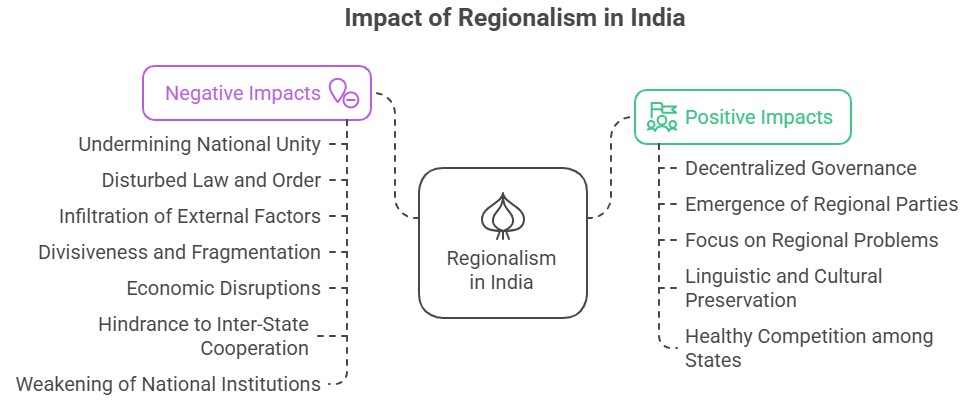
Positive Impacts of Regionalism in India
- Decentralized Governance due to creation of Smaller States
- For instance: The creation of smaller states like Telangana and Uttarakhand required the establishment of new administrative structures to govern these regions effectively.
- Emergence of New Regional Political Parties: The rise of new regional political parties, such as the Telugu Desam Party (TDP), driven by regionalism, advocating for separate regions or states.
- Focus on Specific Regional Problems:The formation of regional parties provides an opportunity to address and prioritise region-specific issues and challenges.
- Example: The Shiv Sena in Maharashtra emerged to address the concerns of Marathi-speaking people, particularly related to job opportunities and cultural preservation.
- Linguistic and Cultural Preservation:
- Regionalism can contribute to the preservation and promotion of regional languages, cultures, and traditions, allowing for the diversification of cultural fabric.
- Example: The Dravidian movement in Tamil Nadu has played a significant role in preserving and promoting the Tamil language and culture.
- Healthy Competition among the states: Regionalism often encourages a sense of competition for growth among different states.
Negative Impacts of Regionalism in India
- Undermining National Unity: Regionalism can undermine national integration, as loyalty and allegiance to a specific region may overshadow loyalty to the nation.g., Secessionist Movements (Demand for greater Nagaland.)
- Disturbed Law and Order: Agitations and conflicts arising from regional demands can disrupt the law-and-order situation, leading to social unrest, protests, and violence. g., Division of Andhra Pradesh saw violent agitations across the state.
- Infiltration of External Factors: It can create opportunities for external factors, such as terrorist groups or extremist organisations, to exploit the situation and incite disruptions within the region.
- Divisiveness and Fragmentation: Intense regionalism can create divisions and fragmentation within the country, as regional identities and interests take precedence over national unity and solidarity.
- Economic Disruptions: Regionalism can disrupt economic activities and investments, as uncertainty and conflicts arising from regional demands can deter business growth and hinder economic stability.
- Hindrance to Inter-State Cooperation: Regionalism can strain inter-state relations and hinder cooperation among different states, as regions compete for resources, infrastructure projects, and economic opportunities. Recent developments along the Maharashtra and Karnataka border
- Weakening of National Institutions: It can weaken national institutions and governance structures potentially leading to challenges in effective governance and decision-making.
Is Regionalism a Threat to National Integration?
- Coexistence and Development: Regionalism and national integration can coexist, emphasising development.
- Federal and Democratic System: A federal and democratic political system reconciles regionalism and national integration.
- Preserving National Solidarity: Regionalism, when managed well, does not disrupt national solidarity.
- Strengthening Federalism: Regionalism enhances federalism through equal regional partnership.
- Decentralisation of Power: Regionalism reduces centralization, empowering states.
- Inevitability in a Diverse Nation: Regionalism is natural and inevitable in diverse countries like India.
- Fundamental to Federalism: Regionalism is foundational to federalism, respecting regional identities
Combating Social Evils: Casteism, Regionalism, and Linguistic Fanaticism
|
Conclusion
Regionalism in India has both positive and negative effects on the social, political, and economic landscape of the country. While it provides a platform for addressing region-specific issues and preserving linguistic and cultural diversity, it can also lead to tensions, conflicts, and challenges to national unity. Finding a balance between regional aspirations and national integration is crucial for maintaining harmony and sustainable development in a diverse country like India.
24. Secularism in India: Principles, Constitutional Provisions & Supreme Court Interpretations
Secularism is a principle that advocates the separation of religion from politics and governance. It seeks to establish a society where religious institutions and state institutions are independent of each other.

Supreme Court recent interpretation on Secularism
- Two-judge bench rejects PIL to restore original names of ancient cultural, historical and religious places that had purportedly been rechristened by Mughals.
- Supreme Court said “The State “must be guided by the sublime realisation that Bharat is a secular nation committed to securing fundamental rights to all sections as contemplated in the Constitution.
|
Indian Secularism
|
Western Secularism
|
|
Constitutional Provisions on Secularism in India
|
Judicial Pronouncements on Secularism in India
|
Constitutional Secularism and Party-Political Secularism
Constitutional Secularism
- It is marked by critical respect for all religions and is not anti-religious.
- It acknowledges the need for the state to maintain a principled distance from all religions and intervene when religious groups promote communal disharmony or discrimination.
- Such intervention could be either due to inter-religious issues or intra-religious issues, such as the inability of religious groups to protect their own members from oppression.
- This form of secularism requires a collective commitment from the judiciary, media, civil society activists, and citizens.
Party-Political Secularism
- It is characterized by opportunism and alliances with religious communities for immediate electoral benefits.
- It has often been involved in controversial issues, such as the Babri Masjid/Ram temple case and the Shah Bano case.
- It is a doctrine that has removed the values from the core idea of secularism, replaced them with opportunism, and has been complicit in igniting communal violence.
Positive and Negative Secularism
|
Positive Secularism This approach of secularism is generally more proactive and interactive. In positive secularism, the state takes an active role in ensuring religious harmony and respect for all religions. It doesn't advocate the total separation of religion from the state. Instead, the state acknowledges and respects all religions equally without favoring one over the other. Example: India's approach to secularism often falls under positive secularism. The Indian constitution provides every citizen the right to practice, preach, and propagate any religion of their choice. The state often intervenes to maintain religious harmony, protect minorities, and ensure that religious institutions are free from discrimination. India's approach of positive secularism is reflected in its motto of 'Unity in Diversity', where diverse religions co-exist and are respected. |
Negative Secularism This type of secularism emphasizes the complete separation of religion from the state. In negative secularism, the state neither recognizes nor intervenes in religious affairs. Religion is considered to be a private matter that should have no influence on state affairs. Example: The French concept of "laïcité", often falls under negative secularism. The French state maintains a strict separation between the state and religious affairs, aiming to keep public life and public institutions secular. This principle is so rigidly applied that it often leads to policies like banning religious symbols in public schools and prohibiting public employees from displaying their religious beliefs at work. |
The Need for Secularism to Preserve Diversity in India
- Promotes Equality: Secularism ensures that all religions are treated equally by the state, which is crucial in a diverse country like India where a multitude of religions coexist.
- Prevents Discrimination: By separating the state from religion, secularism helps to prevent discrimination on the basis of religion. It provides a framework for the state to make decisions without favoring or disadvantaging any particular religion.
- Upholds Democratic Values: Secularism upholds democratic values by ensuring freedom of religion. It gives individuals the freedom to choose, change, and practice their religion, or to not follow any religion at all.
- Promotes Unity: By treating all religions equally, secularism can help to promote unity among people of different faiths. It helps to foster a sense of shared citizenship and national identity, despite religious differences.
- Protects Minority Rights: In a diverse society, secularism is crucial for protecting the rights of religious minorities. It ensures that minority religions are not marginalized or disadvantaged by the state.
- Supports Social Harmony: By providing a neutral platform where religious differences are respected, secularism supports social harmony. It helps to reduce religious conflict and promote peaceful coexistence.
Positive Aspects of Secularism in India
- Religious Freedom: Secularism guarantees the freedom of individuals to practice and propagate their religion without interference or discrimination.
- Preventing Religious Conflict: By keeping religion separate from politics, secularism helps mitigate potential conflicts and tensions arising from religious differences
- Protection of Religious Freedom: Secularism guarantees the freedom of individuals to choose and practise their religion without discrimination or persecution.
- Social Cohesion: Secularism promotes unity and harmony among people from different religious backgrounds, fostering a sense of inclusivity and national integration.
- Equality and Justice: Secularism ensures equal treatment and protection of rights for all citizens, regardless of their religious beliefs.
- Protection of Minority Rights: It safeguards the rights and interests of religious minorities, preventing their marginalisation and ensuring their participation in society.
- Democratic Values: Secularism upholds the democratic principles of pluralism, tolerance, and respect for diverse opinions and beliefs.
|
“Welfare without discrimination is true secularism” - Prime Minister of India Narender Modi · "Secularism and Harmony” is not "political fashion" but it is "perfect passion" for India and Indians. This inclusive culture and commitment has united the country with fabric of “Unity in Diversity” – Former Union Minister for Minority Affairs Shri Mukhtar Abbas Naqvi |
Challenges to Secularism

Promoting Secularism and Inclusive Education: Examples from India
- Ayodhya Verdict: In 2019, the Supreme Court delivered a landmark judgment on the Ayodhya land dispute, providing a peaceful resolution to the long-standing dispute between Hindu and Muslim communities. The judgment focused on the secular principles of law and ensured the construction of a temple for Hindus and a mosque for Muslims in separate locations.
- National Education Policy 2020: It aims to promote a secular and inclusive education system. It emphasizes the importance of imparting values of tolerance, harmony, and respect for diversity among students, fostering a secular mindset from an early age.
|
Current Developments on Uniform Civil Code (UCC)
|
Conclusion
Secularism in India is a foundational principle that ensures religious freedom and equality for all citizens. It has promoted social harmony and diversity, allowing people of different faiths to coexist peacefully. However, challenges such as communal tensions and political exploitation of religious identities persist. Upholding secular values, fostering interfaith dialogue, and promoting inclusive policies are crucial for maintaining a pluralistic society and strengthening the fabric of Indian democracy.

2026-27 UPSC Mains English QEP Power Pages
View DetailsSubmit Your Details to Learn More



