

- Biodiversity: Importance, Threats, and Conservation Efforts
- Conservation of Biodiversity
- Initiatives for Biodiversity Conservation
- Rio Declaration COP 15: Global Biodiversity Framework and Sustainable Development
- India’s Biodiversity Conservation: Laws & Initiatives
- Plant Genetic Resources for Food and Agriculture
- Coastal Region Conservation
- Mangroves
- Wildlife Conservation in India: Importance, Challenges, 2022 Amendment Act
- International Conventions
- Human Wild Life Conflict
- Landmark Programs related to Wildlife Protection
- Air Pollution in India: Causes, Policies, and Fly Ash Utilization for Sustainable Future
- India’s Water Pollution Crisis: Causes, Impact, and Sustainable Solutions
- Soil Pollution in India: Causes, Effects, Government Schemes & Sustainable Solutions
- E-Waste
- Light Pollution: Causes, Effects, and Measures to Protect Night Skies
- Waste Management
- Role of governments, businesses, and individuals
- Greenhouse Gas Effect & Climate Change
- Sea Level Rise In India Due to Climate Change
- Glaciers and Climate Change: Impacts, Adaptation & Preservation Strategies
- Arctic Amplification
- Illegal Wildlife Trade and Climate Change
- Synthesis Report for the Sixth Assessment Cycle: IPCC
- Various initiatives to fight climate change
- Carbon Border Adjustment Mechanism
- Mission LIFE (Lifestyle for Environment)
- Climate resilient infrastructure
- Blue Green Infrastructure
- Climate Finance
- Climate Justice and Global Action: Challenges, Solutions & the Legacy of Stockholm
- Ozone and Ozone Hole Depletion
- India’s Bioenergy Roadmap: Achieving Net Zero Emissions by 2050 through Renewable Bioenergy
- Environmental Impact Assessment (EIA) in India: Key Provisions, Benefits & Challenges
1. Biodiversity: Importance, Threats, and Conservation Efforts
Biodiversity encompasses the variety of life on Earth at genetic, species, and ecosystem levels, providing essential services that sustain life. Protecting this rich natural heritage is critical for environmental health, economic prosperity, and future generations.
"Preserving biodiversity is our duty towards the planet and future generations. It is our collective responsibility to protect and conserve the rich flora and fauna that make our planet unique. Let us strive to create a harmonious balance between development and nature, ensuring that biodiversity thrives and sustains for the well-being of all." - Prime Minister Narendra Modi
|
Keywords from Aaj Ka Quality Enrichment (http://bit.ly/aaj-ka-enrichment)
|
“The interest in conservation is not a sentimental one, but the rediscovery of a truth well known to our ancient sages. The Indian tradition teaches us that all forms of life — human, animal and plant — are so closely interlinked that disturbance in one gives rise to imbalance in the other.” – Indira Gandhi (1980)
Introduction to Biodiversity
The United Nations Earth Summit 1992 defined Biodiversity as ‘the variability among living organisms from all sources, including terrestrial, marine and other aquatic ecosystems and the ecological complexes of which they are a part; this includes diversity within species, between species, and of ecosystems.
Types of Biodiversity
Biodiversity is considered to exist at three levels: genetics, species, and ecosystems.

|
Type of Biodiversity |
Definition |
Causes |
Examples |
|
Genetic Biodiversity |
Variation of genes within a species |
Mutation, gene flow, sexual reproduction, natural selection |
Variations in human blood types, dog breeds |
|
Species Biodiversity |
Variety of species in a region or habitat |
Speciation, migration, adaptation |
Tropical rainforests, coral reefs |
|
Ecosystem Biodiversity |
Diversity of habitats, ecological processes, and communities |
Geographic features, climate, disturbance patterns |
Desert, forest, ocean, tundra ecosystems |
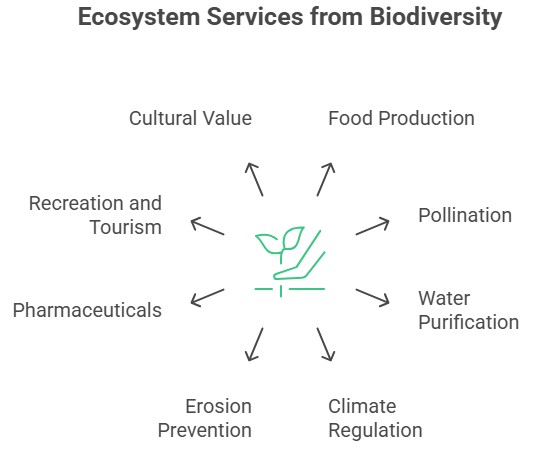
Ecosystem Services Provided by Biodiversity
- Food Production
- Pollination of Plants
- Water Purification
- Climate Regulation
- Erosion Prevention and Soil Formation
- Pharmaceuticals and Medicines
- Recreation and Tourism
- Cultural Value
Importance of Biodiversity
- Ecosystem services: Biodiversity provides a range of ecosystem services, including air and water purification, soil formation, nutrient cycling, pollination, and pest control.
- Economic value: through the production of food, medicine, and other products. It also supports industries such as tourism and recreation.
- Climate change mitigation: by sequestering carbon and maintaining the balance of greenhouse gases in the atmosphere.
- Cultural value: Biodiversity is an integral part of many cultures around the world, providing spiritual and aesthetic value.
- Conservation of genetic resources: Biodiversity is a source of genetic diversity, which is essential for the development of new crops and medicines.
- Ethical responsibility: We have an ethical responsibility to protect biodiversity for future generations and to maintain the integrity of the Earth's ecosystems.
Reasons for Loss to Biodiversity
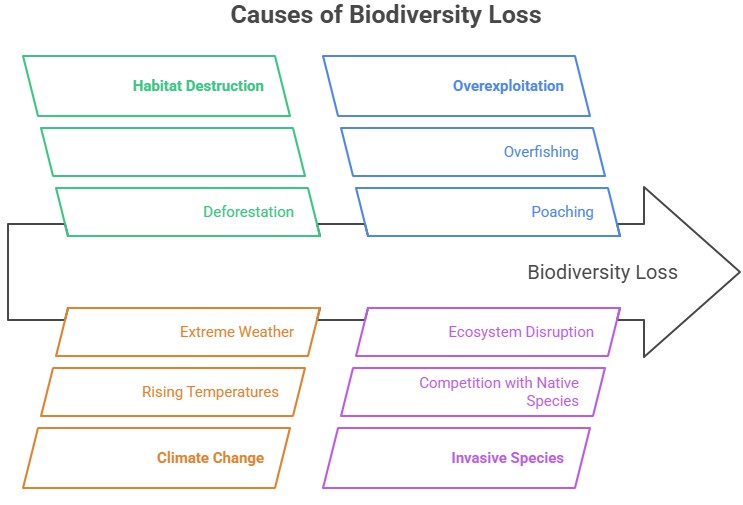
- Habitat Destruction: Habitat destruction, often due to human activities like deforestation, urbanization, and agriculture, is a primary cause of biodiversity loss.
- For instance, the World Wildlife Fund (WWF) reported in 2020 that the Amazon rainforest, one of the most biodiverse places on Earth, has lost over 17% of its forest cover in the last 50 years.
- Climate Change: The rapid rate of climate change is threatening species that cannot adapt quickly enough.
- The IPCC has predicted that 20-30% of species will be at risk of extinction if global temperature rises exceed 1.5-2.5°C.
- Overexploitation: Overfishing, poaching, and overhunting are causing dramatic declines in many species.
- According to the International Union for Conservation of Nature (IUCN), overfishing has left nearly one-third of assessed fish species threatened with extinction as of 2020.
- Invasive Species: Non-native species can disrupt ecosystems by out-competing native species.
- For example, the introduction of the brown tree snake to Guam after WWII has led to the extinction of 9 out of 12 native bird species.
- Pollution: Contamination of air, water, and soil can harm or kill species.
- The 2020 WWF Living Planet report highlighted that plastic waste alone is predicted to double by 2030, posing a major threat to marine life.
- Disease: Diseases can devastate populations and even lead to species extinction.
|
‘Cool-spots’ (the world’s last refuges where high numbers of threatened species still persist). |
|
Important facts:
|
Loss of Biodiversity
Sixth Mass Extinction

A mass extinction is a short period of geological time in which a high percentage of biodiversity, or distinct species—bacteria, fungi, plants, mammals, birds, reptiles, amphibians, fish, invertebrates—dies out.
- The present era of loss of biodiversity is often described as the ‘Sixth Mass Extinction.”
- Unlike previous extinction events caused by natural phenomena, the sixth mass extinction is driven by human activity, primarily (though not limited to) the unsustainable use of land, water and energy use, and climate change.
The Evil Quartet Causing Sixth Mass extinction
- Today, the extinction rate is approximately 40,000 times higher than this background rate due to human depredations. For the first time an enormous proportion of terrestrial plant species that form the basis of land ecosystems remains threatened. Previous mass extinctions had no palpable effect on terrestrial plants.

|
Conclusion
Biodiversity conservation is essential for maintaining the health of ecosystems, supporting human well-being, mitigating climate change, preserving cultural heritage, conserving genetic resources, and fulfilling our ethical responsibilities.
2. Conservation of Biodiversity
Restoring biodiversity on large tracts of land is one of the major commitments that India has made under the Paris Accords. This direct connection between biodiversity and climate change was strongly affirmed by most nations in the Conference of the Parties in Glasgow
Fostering the return of biodiversity to degraded lands and enhancing blue carbon in oceans have immense environmental and considerable economic benefits. Restoration has the potential of creating millions of jobs, diversifying farming systems and agriculture-based livelihoods.
To qualify as a hotspot, a region must meet two criteria:
- it must contain at least 1,500 species of vascular plants (> 0.5% of the world’s total) as endemics;
- it has to have lost ≥ 70% of its original native habitat.
Methods of Conservation
- In Situ Method: Conserving the animals and plants in their natural habitats.
-
- Example: Protected Area Network, National Parks, Wilf Life Sanctuaries, Biosphere Reserves
- Ex Situ Method: Conserving biodiversity outside the areas where they naturally occur.
-
- Example: Zoological Parks, Botanical Gardens, etc
Ecological Hotspots and Eco-Sensitive Zones
|
Ecological Hotspot |
Eco-Sensitive Zones |
|
An ecological hotspot is a biogeographic region that is significantly rich in biodiversity but is threatened with destruction. To qualify as a hotspot, a region must meet two strict criteria:
Biodiversity Hotspots in India
|
|
3. Initiatives for Biodiversity Conservation
1. Nature-Based Solutions (NBS)Introduction
Nature-Based solutions (NBS) are approaches that utilize and work with nature to address environmental and societal challenges, integrating ecological processes and biodiversity conservation into decision-making processes.
Components of Nature-based Solutions:
- Refer the diagram ????

Challenges of Implementing Nature-based Solutions
- Funding and resources: Limited financial resources and inadequate funding mechanisms hinder the widespread implementation of NBS.
- Policy and institutional barriers: Inadequate integration of NBS into policies, regulations, and planning frameworks at various scales.
- Knowledge and capacity gaps: Limited understanding and awareness of NBS among decision-makers, practitioners, and communities.
- Scale and replication: Scaling up and replicating successful NBS projects to achieve broader impacts can be challenging.
- Monitoring and evaluation: Establishing robust monitoring and evaluation frameworks to assess the effectiveness and long-term benefits of NBS.
Solutions and Strategies
- Refer the Diagram????

Conclusion:
- NBS harnesses ecosystems and biodiversity to address environmental challenges, mitigate climate change, conserve biodiversity, improve water management, and promote socio-economic development. Strengthened policies, funding, and collaboration will shape a harmonious future where NBS drives resilience and sustainability for nature and humanity.
Introduction:
- Haryana has launched the 'Green Wall' project, creating a 5-km-wide green belt to restore the ecology and preserve biodiversity in the Aravalis and surrounding Gurugram-Delhi regions.
- The Aravali Green Wall Project is an ambitious initiative aimed at restoring and conserving the Aravali Mountain range in India. It involves creating a 1,400km long and 5km wide green belt buffer around the Aravali range, covering states such as Haryana, Rajasthan, Gujarat, and Delhi.


Challenges:
- Land Degradation: Restoring degraded land and ensuring tree survival is a challenge due to the extent of damage and the need for long-term management.
- Water Scarcity, Encroachment and Illegal Activities
- Wildlife Corridor Establishment: For instance, Constructing elevated canopy bridges across highways and strategically placed underpasses beneath roads to enable safe passage for arboreal species like monkeys and squirrels, reducing habitat fragmentation and enhancing wildlife connectivity within the green wall project area.
- Green Wall Maintenance and Monitoring is a challenge, requiring advanced technological solutions and effective management strategies.
Way forward
- Nature-Based Solutions: Incorporate nature-based solutions, such as green infrastructure and ecosystem-based approaches, to enhance project effectiveness.
- Encourage active participation of local communities.
- Nano-Biotechnology for Plant Growth Example: Develop Nano fertilizers tailored to the specific nutrient requirements of native plant species in the Aravalli region, promoting their healthy growth and survival.
- Nature-Based Engineering: Example: Implement erosion control blankets and use region-specific native plant species with robust root systems to reinforce slopes and prevent erosion in vulnerable areas of the Aravalli Green Wall project.
Conclusion:
By embracing innovative approaches and engaging all stakeholders, the Aravali Green Wall Project has the potential to create a sustainable and resilient ecosystem, benefitting both the environment and the communities living in the region.
Recently, FAO has emphasized the significance of sustainable forestry for biodiversity conservation.
Introduction:
- Meaning: Mainstreaming biodiversity in forests involves integrating biodiversity conservation objectives and practices into forest management and decision-making processes. This recognizes the value of biodiversity in maintaining healthy ecosystems within forest landscapes.
Mainstreaming biodiversity
- Protected Areas and Wildlife Corridors, Reforestation, and Habitat Restoration, Community-based Forest Management, Example: Khasi tribes, Gond tribes, etc.
- Payment for Ecosystem Services: Providing financial incentives for conserving biodiversity and delivering ecosystem services.
- Sustainable Logging Practices: Adopting sustainable logging techniques to minimize habitat disturbance and promote forest regeneration.
Importance of mainstreaming biodiversity in forests
- Sustaining Ecosystem Functions: Efficient recycling of nutrients within ecosystems, promoting healthy soil and supporting plant growth, Forests act as natural filters, Carbon Sequestration
- Genetic Resources and Bioprospecting:
- Medicinal Resources: serve as sources for traditional medicines and the development of new pharmaceuticals.
- Crop Improvement: Genetic diversity in forest species contributes to the development of improved crop varieties
- Product Innovation: Forest biodiversity offers potential for the discovery of novel materials, fibers, and chemicals for various industries.
- Enhancing Ecosystem Resilience:
- Adaptability to Climate Change: they harharborvariety of species with different ecological roles and adaptations.
- Ecosystem Stability: reduces the vulnerability of ecosystems to disturbances such as invasive species or natural disasters.
- Ecological Restoration: Forest biodiversity supports the restoration of degraded ecosystems by providing a diverse pool of species for ecosystem rehabilitation.
- Cultural and Spiritual Significance: Indigenous Knowledge Systems, Sacred Sites and Rituals Ex. Devrais in Maharashtra
- Traditional Practices: Forest biodiversity supports traditional livelihoods, crafts, and cultural practices that are rooted in the sustainable use of natural resources.
Challenges in mainstreaming biodiversity in forests
- Deforestation and habitat loss: 33% forests under threat due to expanding agriculture)
- Invasive species: The introduction of non-native species into forest ecosystems can disrupt native species and alter ecological processes. Ex. Lantana camera in Nilgiri forest.
- Climate change: Rising temperatures, changing rainfall patterns, and increased frequency of extreme weather events pose challenges to forest ecosystems and their biodiversity. Ex. Recent forest fires in Western ghat .
- Unsustainable resource extraction: Overexploitation of forest resources, such as timber, wildlife, and non-timber forest products, can lead to biodiversity loss.
|
Extra Marks Fetching component by theIAShub
|
Conclusion
The slogan of the Hyderabad CBD CoP-11, inscribed on the logo, in Sanskrit, “Prakruthi: Rakshathi Rakshitha,” and the same in English, “Nature Protects if She is Protected,” truly underscores that humans should realise the symbiotic relation between themselves and nature, so imperative for their mutual survival on planet Earth.
4. Rio Declaration COP 15: Global Biodiversity Framework and Sustainable Development
The Rio Declaration on Environment and Development, adopted at the 1992 Earth Summit, laid the foundation for global environmental governance and sustainable development. It led to key conventions on biodiversity, climate change, and desertification.
- The Rio Declaration on Environment and Development was a short document produced at the 1992 United Nations “Conference on Environment and Development” (UNCED), informally known as the Earth Summit.
- Its major outcomes were the Establishment of Convention on Biological Diversity, Framework Convention on Climate Change (UNFCCC), and United Nations Convention to Combat Desertification (UNCCD)

Recent Developments in the Context of UNCBD (COP 15): Kunming-Montreal Global Biodiversity Framework (GBF) (2022)
- Recently the 15th Conference of Parties to the UNCBD (COP 15) was held in Montreal, Canada. The conference resulted in the adoption of the Global Biodiversity Framework also known as the Kunming- Montreal Global Biodiversity Framework.
Kunming-Montreal Global Biodiversity Framework (GBF): A “Paris Movement” for Biodiversity
- The plan includes concrete measures to halt and reverse nature loss, including putting 30 per cent of the planet and 30 per cent of degraded ecosystems under protection by 2030.
- It also contains proposals to increase finance to developing countries – a major sticking point during talks.

Way Forward
- Innovative Financing Mechanisms
- Green Technologies: Bioenergy, sustainable agriculture practices, and clean energy solutions to minimise negative impacts on biodiversity.
- Digital Monitoring and Surveillance: Utilise advanced technologies like satellite imagery, drones, and artificial intelligence for real-time monitoring.
- Science-Policy Interface: Strengthen the science-policy interface by fostering collaboration between scientists, policymakers, and local communities to inform evidence-based decision-making.
- Global Cooperation and Partnerships: Foster international cooperation and partnerships among governments, civil society organizations, private sector entities, and indigenous communities to collectively address biodiversity challenges and achieve conservation targets.

Conclusion
- By setting ambitious targets, promoting sustainable development, and strengthening governance and financing mechanisms, COP 15 provides an opportunity to create a more sustainable and biodiverse future for all.
|
Extra Marks Fetching component by theIAShub
|
5. India’s Biodiversity Conservation: Laws & Initiatives
India is one of the world’s most biodiverse countries, committed to preserving its rich ecological heritage through robust laws, national missions, and conservation programs. These initiatives aim to ensure sustainable use and protection of biodiversity.
1. National Guidelines, Legislations & Other Programmes related to Biodiversity Conservation
|
Key Initiatives Associated with Biodiversity Conservation in India |
|
|
|
2. The National Biodiversity Action Plan (NBAP)
India's National Biodiversity Action Plan (NBAP) is a comprehensive plan that seeks to protect, conserve, and augment biodiversity resources within the country.
Thematic Areas: The NBAP identifies several thematic areas of intervention including:
- Strengthening and integration of in-situ and ex-situ conservation measures.
- Regulation of the introduction of invasive alien species and their management.
- Integration of biodiversity concerns in economic and social development.
Integration of Biodiversity Concerns:
- Livelihood Security: The NBAP emphasizes that the conservation of biodiversity should lead to enhancement of livelihood security, poverty alleviation, and ensuring equitable sharing of benefits.
- Biodiversity Management Committees (BMCs): The NBAP proposes the strengthening of BMCs at the local level for conservation of biodiversity.
- The NBAP emphasizes public participation
- Research and Training: The NBAP encourages research in the area of biodiversity.
- International Cooperation:
- Strengthening the regulatory framework for biodiversity conservation.
- Monitoring and Evaluation: The NBAP has provisions for monitoring and evaluating the effectiveness of the measures taken for biodiversity conservation.
3. Biodiversity Act, 2002
The Biodiversity Act, of 2002 aims to regulate access to biological resources, protect traditional knowledge rights, and ensure equitable benefit sharing.
Key Features of the Act
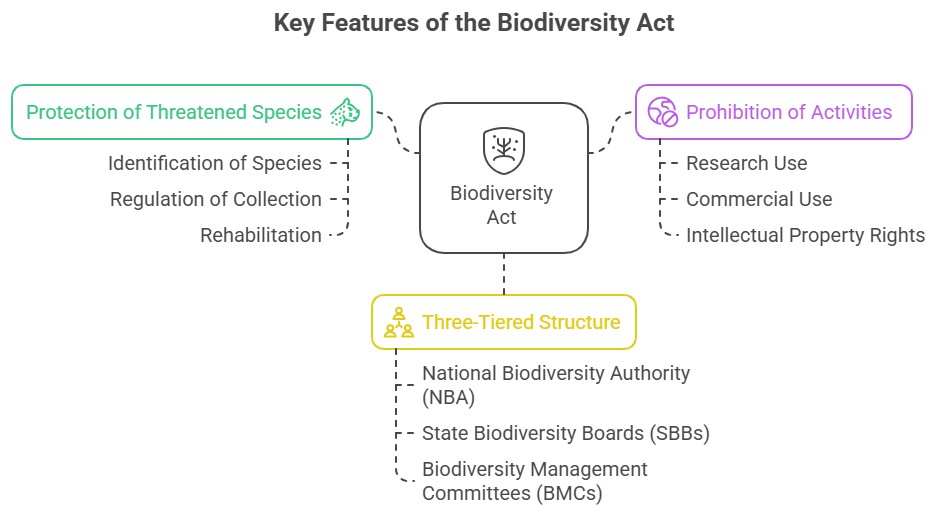
Protection of Threatened Species and Repositories Designation:
- The Act empowers the Central Government, in consultation with the NBA, to identify threatened species and regulate their collection, rehabilitation, and conservation.
- Prohibition of activities: without prior approval from the National Biodiversity Authority. These activities include:
- Obtaining biological resources found in India for research or commercial use, whether by individuals or organizations, regardless of their location.
- Transferring the outcomes of research conducted on biological resources found in or obtained from India.
- Asserting any intellectual property rights over inventions based on research conducted on biological resources obtained from India.
- Envisions three-tiered structure:
- National Biodiversity Authority (NBA): The NBA is the central regulatory authority responsible for implementing the Act at the national level.
- State Biodiversity Boards (SBBs): SBBs are established in each state to implement the Act at the state level, regulating access and promoting biodiversity conservation.
- Biodiversity Management Committees (BMCs): BMCs at the local level facilitate biodiversity conservation, awareness, and implementation of related activities
Biodiversity Amendment Bill, 2021
The Biological Diversity (Amendment) Bill, 2021 was introduced in Lok Sabha in December 2021 and referred to a Joint Parliamentary Committee. The Bill seeks to amend the Biological Diversity Act, 2002 to encourage the Indian system of medicine and cultivation of wild medicinal plants, fast-track research, patent application, and transfer of research results, decriminalise offences, and encourage
Features of the Bill
- Domestic companies' compliance requirements are simplified by the Bill.
- Codified traditional knowledge and AYUSH practitioners won't have to share advantages with local populations.
- Research and bio-survey operations are exempt from benefit sharing obligations under the Bill.
- The user and the local management committee represented by the National Authority will agree on benefit-sharing conditions.
- All offenses are decriminalized.
- The Bill adds Nagoya Protocol references to the Act.
Issues with the Bill
- No definition exists for codified traditional knowledge.
- Benefit sharing may not apply to all local traditional knowledge.
- Inconsistent definition of foreign-controlled firm: A "foreign-controlled" firm "incorporated in India" must get NBA authorisation for certain actions, according to the Bill.
- The Bill defines a "foreign-controlled firm" as a foreign company under Section 2(42) of the Companies Act, 2013, controlled by a foreigner.
- Section 2(42) of the Companies Act defines a foreign company as a company or body corporate incorporated outside India.
- the Bill contradicts itself by seeking NBA clearance for a company incorporated in India (Clause 5) yet incorporated outside India (Section 2(42) of the Companies Act).
- Local communities no longer determine benefit-sharing provisions under the Bill.
- Instead of criminalizing Act offenses, the Bill imposes a variety of sanctions. Additionally, the Law authorizes government inquiries and fines.
- It's debatable whether government personnel should have such discretion.
Measures Needed
- Conserving Biological Resources: The JPC suggested empowering biodiversity management committees under the proposed law and indigenous communities by clearly designating benefit claimants as biological resource conservers.
- Cultivating medical plants reduces pressure on wild medicinal plants.
- Codified traditional knowledge should promote Indian medicine.
- Promoting indigenous research and Indian firms through fast-tracking research, patent applications, and research outcomes while using India's biological resources without breaching the International biodiversity convention.
- Promote Sustainable Use: Develop national biological resource conservation, promotion, and sustainable use strategies with the state government.
- Civil Offence: The committee also advised that any violation of the Biological Diversity Act, 2002 should result in civil penalties with corresponding fines to deter violators.
- Defining foreign companies as per the Companies Act and defining a protocol for Indian biological resource use are needed to attract more foreign investments in biological resource research, patent, and commercial use without compromising national interest.
- Exempt AYUSH Practitioners: The committee underlined that AYUSH practitioners who practice traditional medicine, including Indian systems of medicine, for sustenance and subsistence are exempt from prior intimation to state biodiversity boards to access biological resources.
|
Important terminologies
|
Bioresources for Commercial Purposes"Dabur accused of unauthorised commercial use of bioresources by National Biodiversity Board, informs NGT." Introduction
Components/Principles of Bioresources
Benefits of Bioresources for Commercial Purposes
Challenges and Threats
ConclusionGlobally, bioresources play a vital role in achieving sustainable development, climate change mitigation, food security, biodiversity conservation, and human health and well-being. Their responsible management, sustainable practices, knowledge sharing, and policy frameworks are crucial for unlocking their full potential. International collaboration, equitable.
|
4. The National Mission on Biodiversity and Human Well-Being
The National Mission on Biodiversity and Human Well-Being is an initiative launched in 2018 that aims to prioritize biodiversity and conservation in Indian science, policy, and society. It is intended to be inclusive, involving scientific institutions, government agencies, non-government organizations, and people from various walks of life?1?.
Key points about the mission include
- It aims to help India realize the United Nation’s Sustainable Development Goals by using India’s rich biodiversity to create solutions for challenges in agriculture, health, and climate change?. The mission is designed to enhance biodiversity science?.
- The mission proposes a two-component program. The first component, titled the ‘Cataloguing and Mapping Life of India’ program, will focus on building an inventory of India’s biodiversity.
- The second component is divided into six programs, which will focus on biodiversity with regard to ecosystem services; climate change and disaster risk reduction; agriculture; health; bio-economy; and capacity building and outreach?.
|
One Health: Opportunities and Challenges Introduction:
Opportunities and Challenges  Measures to achieve one health: Policy Coordination and Governance: Establish coordinated policies and decentralized governance structures, such as at the panchayat level.
Conclusion: A multi-faceted approach involving collaboration among policymakers, researchers, healthcare professionals, veterinarians, environmentalists, and the public can pave the way for sustainable lives in the future. |
5. Biodiversity Heritage Sites
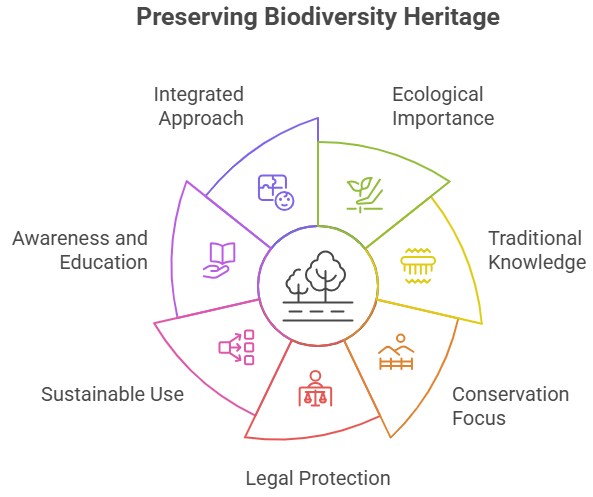
Biodiversity Heritage Sites: Biodiversity Heritage Sites, defined by the Biodiversity Act of 2002, are areas of ecological significance that possess unique, rare, or endemic biodiversity. These sites are legally protected and recognized for their crucial role in conserving biological diversity.
Importance of BHS
- Ecological Importance: BHS are recognized for their unique biodiversity. These sites aim to preserve and protect Traditional Knowledge and Cultural Practices
- Examples:
- Medicinal Knowledge: Sacred Groves in Meghalaya and Vaidyars in Kerala represent such Forested areas which are protected on the basis of traditional beliefs,
- Indigenous Agriculture and Festivals: Indigenous agriculture in Arunachal Pradesh promotes biodiversity conservation,
- Conservation Focus: The main objective of designating BHS is the conservation and preservation of the rich biodiversity found within these sites.
- Legal Protection, Sustainable Use, Awareness and Education and Integrated Approach
6. National Wildlife Action Plan (2017-2031)
- The National Wildlife Action Plan is landscape-based, rather than being based on sanctuaries or national parks, with a focus on preserving genetic diversity and promoting sustainable development. The NWAP contains five components:
- Strengthening and promoting the integrated management of wildlife and their habitats.
- Adaptation to climate change and promoting integrated sustainable management of aquatic biodiversity in India.
- Promoting eco-tourism, nature education, and participatory management.
- Strengthening wildlife research and monitoring the development of human resources in wildlife conservation.
- Enabling policies and resources for the conservation of wildlife in India.
6. Plant Genetic Resources for Food and Agriculture
Introduction: Plant genetic resources for food and agriculture (PGRFA) refer to the diverse collection of genetic material found in plants that are essential for food production, nutrition, and agricultural sustainability. Examples include wild variety, gene pool, gene bank etc.
Importance of Plant Genetic Resources (PGR)

International Agreements and Initiatives:
- International Treaty on Plant Genetic Resources: Fact: Over 150 countries are parties to the International Treaty on Plant Genetic Resources for Food and Agriculture.
- Access and Benefit Sharing: Nagoya Protocol: Example: Farmers in developing countries receive compensation for the commercial use of their traditional crop varieties, promoting fair sharing of benefits.
- Crop Trust and Global Crop Diversity Trust: The Crop Trust's Crop Wild Relatives project focuses on collecting, conserving, and utilizing wild relatives of crops for future food security.
- Global Seed Vault Network: Example: The African Orphan Crops Consortium has established a seed bank network across Africa, preserving neglected and underutilized crop species.
- Farmers' Rights and Local Governance: Recognizing farmers' rights and empowering local communities in the governance of PGRFA fosters sustainable agriculture and community resilience.
- Example: The Biodiversity Act in India grants farmers' rights to conserve, use, and exchange seeds, protecting traditional knowledge and promoting agricultural biodiversity.
Challenges and threats:
Way forward:
- Crop Wild Relatives Conservation: Conserving wild plant relatives maintains genetic diversity for crop improvement.
- Seed and Gene Banks: Storing seeds and genetic materials ensures future availability for breeding and research.
- Participatory Plant Breeding: Involving farmers integrates local knowledge for adaptable crop varieties.
- Open-Source Plant Breeding: Sharing genetic resources fosters collaborative innovation among breeders.
- Digital Agriculture and Big Data: Digital tools accelerate crop breeding and resilient variety development.
- Policy and Partnerships: Robust frameworks and collaborations promote equitable use and conservation.
Conclusion:
In the future, the effective management and utilization of plant genetic resources for food and agriculture will be crucial for addressing global challenges such as climate change, food security, and sustainable agriculture. By prioritizing conservation, innovation, and equitable partnerships, we can harness the potential of these resources to create resilient and productive agricultural systems that nourish current and future generations.
|
Extra Marks Fetching component by theIAShub
|
7. Coastal Region Conservation
"The sea, once it casts its spell, holds one in its net of wonder forever." - Jacques Yves Cousteau
Global mapping project reveals widespread human impact on coastal areas, with 97% of coastlines worldwide affected by major land-based and marine stressors, according to University of Queensland researchers.
Important Facts:
- According to a survey by the United Nations, coastal areas support over 50% of the world's population and contribute to more than 60% of global GDP.
- In India, a study conducted by the National Centre for Sustainable Coastal Management (NCSCM) highlighted that coastal ecosystems contribute significantly to the country's economy, with coastal tourism alone contributing around 3-4% of India's GDP.
Importance of Coastal Region Conservation:
- Biodiversity hotspot: Coastal regions are home to diverse species of plants, animals, and marine life, supporting intricate food webs and ecological balance.
- Climate regulation: Coastal ecosystems, such as mangroves and seagrasses, play a significant role in carbon sequestration, mitigating climate change impacts.
- Examples:
- Mangroves along the Sunderbans in India act as carbon sinks, storing large amounts of carbon dioxide and helping mitigate climate change.
- Seagrass meadows in the Great Barrier Reef, Australia, absorb and store carbon dioxide, contributing to climate regulation.
- Coastal protection: Healthy coastal habitats act as natural buffers, absorbing wave energy, reducing erosion, and protecting against storm surges and flooding.
- Economic value: Coastal regions support industries like tourism, fisheries, and aquaculture, contributing to local economies and livelihoods.
- Cultural significance: Coastal areas often hold cultural and historical importance, including traditional practices, indigenous communities, and archaeological sites.
Threats and Conservation Strategies

Conservation Strategies for Coastal Regions:
- Protected areas and marine reserves, Sustainable coastal development, Sustainable fisheries and aquaculture practices, Community engagement and participation
- Ecosystem restoration: Restoring and rehabilitating degraded coastal habitats, such as mangroves, salt marshes, and coral reefs, enhances their resilience and functionality.
Initiatives for Coastal Region Conservation:
- Marine Protected Areas (MPAs)
- Integrated Coastal Zone Management (ICZM)
- Ecosystem-Based Adaptation (EBA)
- Sustainable Fisheries and Aquaculture Practices
- International Agreements and Conventions: Example: Ramsar Convention on Wetlands.
- Community-Based Conservation: Example: Community-Based Coastal Resource Management (CBCRM) program in the Odisha
- Coastal Cleanup and Pollution Prevention Campaigns:. Example: Ocean Conservancy's International Coastal Cleanup.
Conclusion:
Conserving coastal regions is essential to safeguard biodiversity, protect against natural hazards, support local economies, and preserve cultural heritage. Through sustainable coastal development, protected areas, ecosystem restoration, and community engagement, we can ensure the long-term resilience and sustainability of these invaluable ecosystems.
|
Extra Marks Fetching component by theIAShub
|
8. Mangroves
A mangrove is a tiny tree or shrub that grows along coasts and establishes itself in saline sediments, frequently beneath water.
The term "mangrove" can apply to either the mangrove swamp's trees and bushes or the ecosystem as a whole.
Threats to mangroves:
- The sale of goods in Coastal Areas: These salt-tolerant trees and the ecosystems they sustain are being quickly replaced by aquaculture, coastal development, rice and palm oil farming, and industrial activities.
- At least 35% of the entire decline in mangrove forests can be attributed to the establishment of shrimp farms.
- Temperature: A 10-degree change in temperature over a brief period of time is enough stress to harm the plant, and even a few hours of freezing temperatures can be fatal to some mangrove species.
- Human intervention: Mangroves have been able to migrate farther inland with previous fluctuations in sea level, but in many locations, human activity has become a barrier that restricts how far a mangrove forest may migrate.
Initiatives taken:
MISHTI (Mangrove Initiative for Shoreline Habitats and Tangible Incomes) scheme
Introduction: The Mangroves - MISHTI (Mangrove Initiative for Shoreline Habitats & Tangible Incomes) scheme is a comprehensive program initiated by the Ministry of Environment, Forest and Climate Change in India. It aims to promote the development of mangroves across 11 states and 2 union territories, focusing on conservation, sustainable livelihoods, and ecological restoration.
Components:
- Mangrove Development: The Development of approximately 540 square kilometers of mangroves across 11 states and 2 union territories.
- Convergence: The scheme integrates existing schemes and programs of the central and state governments.
Need:
- Ecological Importance: Mangroves provide essential ecosystem services, including shoreline protection, carbon sequestration, and habitat for numerous plant and animal species.
- Livelihood Support: Many local communities depend on mangroves for their livelihoods, such as fishing, aquaculture, and tourism.
- Climate Change Resilience: Mangroves play a significant role in climate change adaptation by acting as carbon sinks and reducing the vulnerability of coastal areas to natural disasters.
|
Sundarbans Mangrove Forest, Bangladesh Successful community-based conservation in the world's largest mangrove forest. |
Conclusion
The Mangroves - MISHTI scheme stands as an innovative endeavor that combines environmental conservation, sustainable development, and community engagement. By fostering ecological resilience, promoting green livelihoods, and leveraging cutting-edge approaches, this scheme paves the way for a greener and more prosperous future for coastal regions in India.
|
Initiatives related to Mangroves
|
9. Wildlife Conservation in India: Importance, Challenges, 2022 Amendment Act
Wildlife conservation is the practice of protecting plant and animal species and their habitats. As part of the world’s ecosystems, wildlife provides balance and stability to nature’s processes. The goal of wildlife conservation is to ensure the survival of these species and to educate people on living sustainably with other species.
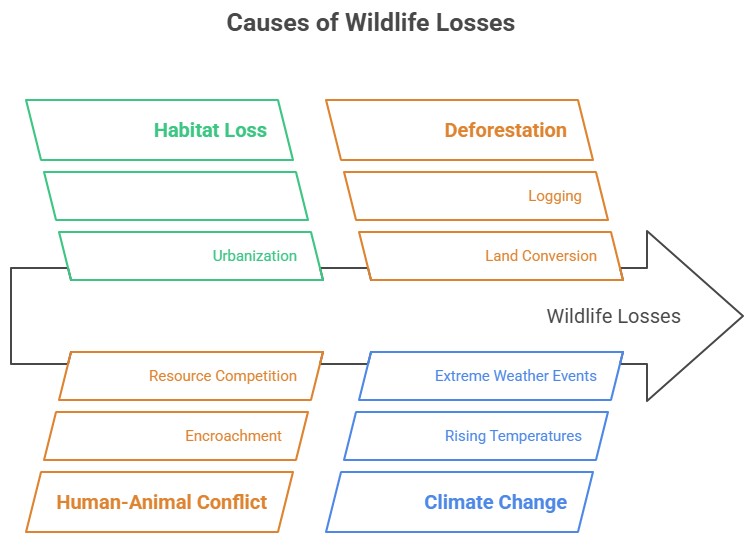
Causes of Wildlife Losses
- Habitat loss
- Human-animal conflict
- Deforestation
- Climate Change
- The IUCN currently classifies around 23% (1,130 species) of mammals and 12% (1,194 species) of birds as threatened.
Wild Life (Protection) Amendment Act, 2022
Introduction:
- The Wild Life (Protection) Amendment Act, 2022 is a significant legislation for wildlife conservation in India.
- It aims to strengthen the protection of endangered species and fulfill India's international obligations under CITES.
- The act enhances punishment for illegal wildlife trade, promotes better management of protected areas, and protects forest lands while respecting the rights of local communities.

Objectives: Protection of Endangered Species, Better Management of Protected Areas, and Protection of Forest Lands
Key Amendments for Wildlife Conservation in India
|
Concerns Associated with the Act
- Vagueness.
- Unaddressed Issues of Human-Wildlife Conflict and Eco-Sensitive Zone Rule
- Incompleteness of Species Listings in the Act's Schedules
- Hindrance to Research: With the new system of schedules scientists may require two levels of permissions from the state and the Centre to collect specimens.
Conclusion
The recent amendments mark a crucial milestone in wildlife conservation, however there is a need to address concerns raised by experts. These updates demonstrate a proactive approach toward ensuring effective protection and management of our valuable wildlife resources.
10. International Conventions
Convention on International Trade in Endangered Species of Wild Fauna and Flora (CITES)
Introduction: Established in 1975, CITES is an international treaty governing the trade of endangered species. Administered by the United Nations Environment Programme (UNEP) and headquartered in Geneva, Switzerland.
Purpose: CITES aims to ensure that international trade does not threaten the survival of wild animals and plants. Balances the conservation of species with sustainable utilization and economic considerations.
Permit System and Monitoring
- Permit system: CITES operates through a permit system, requiring parties to issue permits or certificates for the import, export, or re-export of CITES-listed species.
- Monitoring: Trade routes are monitored to ensure compliance with permit requirements and detect illegal wildlife trafficking.
Significance of CITES:
- Preservation of Endangered Species: Since its inception in 1975, CITES has significantly contributed to the preservation and recovery of several species. It has helped reduce illegal wildlife trafficking of endangered species like tigers, elephants, and rhinoceros.
- Wide Participation: With nearly all countries (183 as of my last training cut-off in September 2021) being signatories, the agreement has global reach and impact, making the rules almost universally applicable.
- Flexible Mechanism: The CITES Agreement's appendix system allows for adaptive management, where species can be moved between Appendix I, II, and III based on the changes in their conservation status.
- Strong Regulatory Framework: CITES provides a strong and legally binding framework for regulation of international wildlife trade, which has played a crucial role in curbing illicit activities.
- Increased Awareness: CITES has contributed significantly to raising global awareness about the threats to biodiversity from unregulated or illegal trade, leading to broader efforts for wildlife conservation.
Challenges of CITES Agreement: Implementation and Enforcement, Funding Issues, Illegal Trade, Scientific Limitations, Politics Over Conservation.
Way Forward:
- Importance of Strict Enforcement for Wildlife Conservation: Stresses the need for effective enforcement of wildlife conservation laws.
- Responsibility of Businesses and Corporations in Environmental Protection: Highlights the role of businesses in adhering to environmental regulations.
- Impact of Development Projects on Wildlife and Local Communities: Addresses the environmental impact of development projects on wildlife and local communities.
- Importance of Public Awareness and Engagement in Conservation Efforts: Underlines the significance of raising public awareness and involving communities in wildlife conservation.
Conclusion: The Convention on International Trade in Endangered Species of Wild Fauna and Flora (CITES) have the
potential to cause significant strides in safeguarding wildlife, combating illegal trade, and preserving biodiversity for future generations. However, rigorous measures should be taken to make it happen.
11. Human Wild Life Conflict
Introduction: Human-wildlife conflict refers to the negative interactions or conflicts that arise when human activities intersect with the natural behaviour and habitat of wildlife.Causes of Human-Wildlife Conflict:
- Habitat Loss and Fragmentation
- Competition for Resources
- Encroachment into Wildlife Territories
- Changes in Land Use
- Human Waste and Food Availability
- Climate Change
- Insufficient knowledge and understanding
Impacts of Human-Wildlife Conflict:
- Livelihood and Economic Losses: For instance, studies estimate that farmers in some regions of India experience annual crop losses of up to 20%, leading to economic losses of millions of dollars.
- Conservation Challenges: According to a survey conducted in India, 40% of respondents expressed negative perceptions of wildlife, associating them with threats to agriculture and human safety.
- Human Casualties and Injuries: In 2020, India recorded approximately 800 reported cases of human injuries caused by wildlife attacks, with the majority occurring in conflict-prone regions.
- Displacement and Relocation: Over the past decade, an estimated 100,000 people in India have been displaced or forced to relocate due to human-wildlife conflicts, resulting in social and cultural disruptions in affected communities.
- Impaired Food Security: Jeopardized food security due to crop destruction and livestock loss.
Mitigation and Management Strategies
- Physical Barriers: Fencing, trenches, or barriers to prevent wildlife access to human settlements or agricultural areas.
- Non-lethal Deterrents: Use of noise devices, visual deterrents, or guard animals to discourage wildlife from approaching human settlements.
- Lion Lights Project: LED lights placed around livestock enclosures in Kenya to mimic human presence, deterring lions and reducing livestock predation.
- Compensation and Insurance Schemes: Providing compensation or insurance coverage for losses suffered by farmers due to wildlife damage.
- Snow Leopard Trust Compensation Program: Herders in Central Asia receive compensation for livestock losses caused by snow leopards, promoting conservation and reducing retaliatory killings.
- Community Engagement
- Habitat Restoration and Corridor Creation: Enhancing habitat connectivity and creating buffer zones to reduce human-wildlife conflicts.
- Policy and Legal Frameworks: Governments enact policies and regulations to address human-wildlife conflict,.
Conclusion: Human-wildlife conflict necessitates a balance between conservation goals and the needs of communities living close to wildlife. The resolution lies in fostering coexistence through innovative, locally-tailored strategies that prioritize both human welfare and wildlife conservation.
12. Landmark Programs related to Wildlife Protection
Project Tiger
Introduction:
- India has only 2.4 percent of the world’s land area but it contributes toward 8 percent to known global biodiversity. India is the largest tiger range country in the world, the largest Asiatic elephant range country in the world with nearly thirty thousand elephants, and also the largest single-horn rhino country with a population of nearly three thousand.
|
Tiger Census According to a recent census of 2022, the Tiger Population in India 2023 is 3,167. According to the latest census, the total number of tigers in India has seen a remarkable increase of 200, surging from 2,967 to 3,167 over the last four years. |
Achievements and Successes:
- Increase in Tiger Population: 1,400 in 1973 to over 2,900 in recent years. T
- Protected Tiger Habitats: Project Tiger has established and managed over 50 tiger reserves, covering an area of about 71,000 square kilometers.
- Conservation of Ecosystems: Umbrella species: Tigers serve as umbrella species, Community Engagement: For example, in Ranthambore Tiger Reserve, local villagers are employed as nature guides, creating a positive relationship between conservation and communities.
- International Recognition: Inspiration: It has inspired similar initiatives in other tiger range countries, such as Nepal, Bhutan, and Russia.
- To commemorate 50 years of Project Tiger, the Prime Minister launched the International Big Cat Alliance (IBCA) for the conservation of seven big cats namely Tiger, Lion, Leopard, Snow Leopard, Cheetah, Jaguar, and Puma harbouring our planet.
- The PM also released the summary report of All India Tiger Estimation (5th cycle). He also released a commemorative coin on the completion of 50 years of Project Tiger.
International Big Cat Alliance (IBCA)
- In July 2019, the Prime Minister called for an Alliance of Global Leaders to obliterate demand and firmly curb poaching and illegal wildlife trade in Asia.
- In this regard, the International Big Cats Alliance is being launched which will focus on the protection and conservation of seven major big cats of the world - Cat Family and Genus, Tiger (Panthera Tigris), Lion (Panthera Leo), Jaguar (Panthera Onca), Leopard (Panthera Pardus), Snow leopard (Panthera Uncia), Cougar (Puma concolor), Cheetah (Acinonyx jubatus)
- The alliance aims to reach out to 97 range countries covering the natural habitats of Tiger, Lion, Snow Leopard, Puma, Jaguar, and Cheetah. IBCA would further strengthen global cooperation and efforts to conserve the wild denizens, especially the big cats.
Significance of the Alliance
- The alliance seeks to bring together countries, conservationists, and experts from around the world to collaborate on conservation efforts for these seven big cat species.
- Through IBCA, India hopes to share knowledge, expertise, and best practices in conserving these species with other countries that have significant big cat populations, such as Indonesia, Brazil, and South Africa.
- The alliance also aims to facilitate collaborations between governments, NGOs, and the private sector to create sustainable solutions for conservation.
Conclusion: With significant achievements in tiger population recovery, habitat protection, community engagement, and international recognition, the project continues to play a vital role in safeguarding the majestic Bengal tiger. Challenges remain, but with sustained efforts, collaboration, and adaptive strategies, we can ensure the long-term survival and conservation of tigers in India and beyond.
Project Elephant
- Project Elephant, India's dedicated initiative for elephant conservation, marks its 30th anniversary.
- Introduction: Project Elephant was launched in 1992 to address the growing challenges faced by Indian elephants and their habitats.
Achievements and Successes
- Population Management:
- According to the Asian Elephant Specialist Group, the population of Indian elephants has grown from around 20,000 in 1992 to approximately 27,000 in recent years.
- Habitat Protection
- Mitigation of Human-Elephant Conflict: The use of elephant-proof trenches and electric fences protects agricultural lands and minimizes conflict incidents.
- Elephant Rescue and Rehabilitation: The Wildlife Rescue Centre in Kaziranga National Park has successfully rehabilitated and released many elephants.
- Awareness and Education
Challenges:
- Habitat Fragmentation: Approximately 60% of elephant habitats in India are fragmented, posing a risk to their long-term survival (Biological Conservation study).
- Poaching and Illegal Trade: Fact: The Wildlife Protection Society of India reported 148 cases of elephant poaching between 2015 and 2020,
- Lack of Connectivity: The Dandeli-Anshi Elephant Corridor in Karnataka faces hurdles due to encroachments and development activities.
Other Steps Taken for the Conservation of Elephants:
- Asian Elephant has been given the highest level of protection in India by its inclusion in Schedule 1 of the Indian Wildlife (Protection) Act 1972.
- They are also included in Appendix I of the Convention on International Trade in Endangered Species of Wild Fauna and Flora.
- Plan Bee Northeast Frontier Railway (NFR) to keep wild elephants away from railway tracks, has won the best innovation award by Indian Railways.
- MIKE stands for Monitoring the Illegal Killing of Elephants (MIKE) Programme: A site-based system designed to monitor trends in elephant illegal killing and build capacity in sites across Africa and Asia.
Future Perspectives
- Securing Elephant Corridors, Strengthening Conservation Partnerships, Sustainable Land Use Planning and Community-Based Conservation.
|
Extra Marks Fetching component by theIAShub The Elephant Whisperers is a 2022 Indian documentary film that won the Academy Award for Best Documentary Short Film at the 95th Academy Awards, making it the first Indian film to win an Academy Award in that category at the Oscars.Set in the Mudumalai National Park on the border of Karnataka and Tamil Nadu states of India, the documentary also highlights the natural beauty of the location. It explores the life of the tribal people in harmony with nature. |
Conclusion:
Project Elephant's 30-year journey showcases India's dedication to conserving its majestic elephants. Achievements in population management, habitat protection, and human-elephant conflict mitigation have been notable. By addressing challenges, implementing effective strategies, and considering future perspectives, we secure elephants' survival and well-being in India, making a valuable contribution to global conservation.
13. Air Pollution in India: Causes, Policies, and Fly Ash Utilization for Sustainable Future
Air pollution is the contamination of the atmosphere by harmful substances, such as gases, particulates, and biological molecules, which can cause detrimental effects on human health, ecosystems, and the Earth's climate. According to the World Health Organization (WHO), 9 out of 10 people worldwide breathe air containing high levels of pollutants.
- Definition: Air pollution refers to the presence of harmful substances or pollutants, including particulate matter (PM), nitrogen oxides (NOx), sulfur dioxide (SO2), volatile organic compounds (VOCs), and carbon monoxide (CO) in the air that can adversely impact human health, ecosystems, and the overall quality of the environment.
Types of Air Pollutants in India
- Particulate Matter (PM)
- Nitrogen Oxides (NOx)
- Sulfur Dioxide (SO2)
- Volatile Organic Compounds (VOCs)
- Carbon Monoxide (CO)
- Ozone (O3)
Major Sources of Air Pollution in India
- Industrial Emissions, Vehicular Emissions:
- Agricultural Practices: Crop residue burning
- Domestic Activities: The use of solid fuels for cooking in rural areas
- Natural Sources: Dust storms prevalent in arid regions like Rajasthan.
National Air Pollution Policy Framework in India
Legislative Framework
- Constitutional Provisions: The Constitution of India recognizes the right to a clean and healthy environment, providing a legal basis for formulating air pollution policies.
- Environmental Legislation: Acts such as the Air (Prevention and Control of Pollution) Act, 1981, and the Environment (Protection) Act, 1986, establish the regulatory framework for addressing air pollution in the country.
- The National Green Tribunal (NGT) Act, 2010: Provides a specialized forum for the effective and expeditious disposal of cases related to environmental protection and air pollution control.
- Key Policies and Programs: National Clean Air Programme (NCAP), Air Quality Index (AQI), Pradhan Mantri Ujjwala Yojana (PMUY)
- Objectives of air pollution policy: Emission Reduction Targets, Promotion of Clean Technologies, Strengthening Monitoring and Enforcement, Public Awareness and Participation, International Cooperation.
Initiatives to Control Air Pollution in India
- National Clean Air Programme (NCAP): to tackle the air pollution problem across the country in a comprehensive manner with targets to achieve 20 % to 30 % reduction in PM10 and PM2.5 concentrations by 2024.
- Graded Response Action Plan (GRAP) for prevention, control and abatement of air pollution in Delhi and NCR.
- Green Crackers Awareness Campaign, Green Good Deeds
- SAMEER app air quality information is available to the public along with a provision for registering complaints against air polluting activities.

Important Programs to Control Air Pollution in India
Fly Ash Utilization
Introduction
- Meaning: Fly ash utilization refers to the beneficial reuse of fly ash, a by-product generated from coal combustion in power plants. Instead of being disposed of as waste, fly ash can be utilized in various applications, offering environmental and economic benefits.
- Fly ash: Fine powder consisting of inorganic particles, primarily composed of silica, alumina, and iron oxide, obtained from coal combustion.
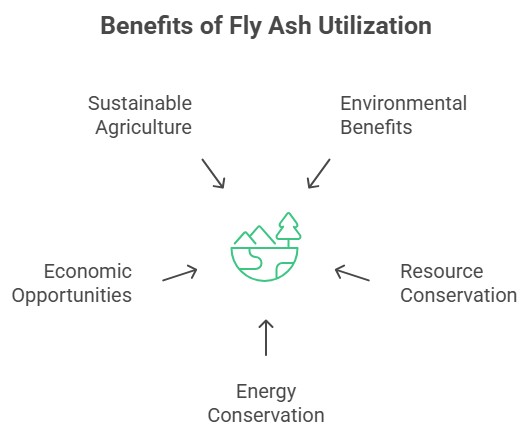
Importance of Fly Ash Utilization
- Environmental benefits: Reduces the need for landfill space, minimizing the release of pollutants into air, water, and soil.
- Resource conservation: Reduces the extraction of natural resources by utilizing fly ash as a substitute material.
- Energy conservation: Reduces the energy required for producing alternative materials, such as cement or bricks.
- Economic opportunities: Creates new industries and employment opportunities in fly ash processing and utilization.
- Sustainable agriculture: Enhances soil fertility, water retention, and crop productivity when used as a soil amendment.
Applications of Fly Ash: Cement and concrete industry, Construction materials, Road construction, Agriculture and soil improvement, Waste management, Geopolymer production
Challenges in Fly Ash Utilization
- Quality variation: Fly ash characteristics can vary, requiring proper testing and quality control measures for different applications.
- Market demand: Promoting the benefits of fly ash utilization and creating a market demand for fly ash-based products can be challenging.
- Regulatory and policy framework: Ensuring proper regulations, guidelines, and incentives to encourage fly ash utilization and ensure safe handling and disposal.
- Technological limitations: Some applications may require further research and development to improve the performance and compatibility of fly ash-based materials.
- Stakeholder engagement: Collaboration and coordination among stakeholders, including power plants, industries, and government agencies, is essential for effective fly ash utilization.
- Public perception: Addressing concerns and misconceptions regarding the safety and performance of fly ash-based products is crucial.
Conclusion
Fly ash utilization offers vast potential for sustainable development and environmental stewardship. By raising awareness, investing in research and innovation, strengthening policies, and fostering collaboration, we can maximize its benefits, create a circular economy, and build a greener, more sustainable future.
14. India’s Water Pollution Crisis: Causes, Impact, and Sustainable Solutions
As per NITI Aayog, overall, 70 percent of the freshwater sources in the country were found to be contaminated and India ranks 120 out of 122 countries in terms of water quality.
Causes of Water Pollution
Water pollutants come from either point sources or dispersed sources. A point source is a pipe or channel, such as those used for discharge from an industrial facility or a city sewerage system.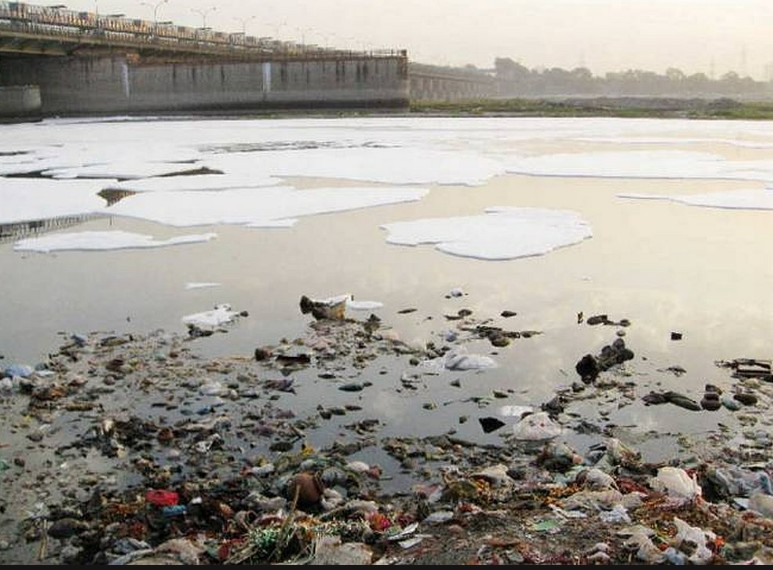
A dispersed (or nonpoint) source is a very broad unconfined area from which a variety of pollutants enter the water body, such as the runoff from an agricultural area.
- Domestic Sewage
- Solid waste
- Toxic waste
Impacts of Water Pollution: Destruction of biodiversity. Water pollution depletes aquatic ecosystems and triggers unbridled proliferation of phytoplankton in lakes — eutrophication. Contamination of the food chain
National Initiatives to Control Water Pollution
National Measures
- Legal Measures: Water (Prevention & Control of Pollution) Act of 1974 and the Environment (Protection) Act of 1986. Preparation of action plan for sewage management and restoration of water quality in aquatic resources by State Governments
- Financial assistance for installation of Common Effluent Treatment Plants for cluster of Small Scale Industrial units
- Issuance of directions for implementation of Zero Liquid Discharge
- Implementation of National Lake Conservation Plan (NLCP) and National Wetland Conservation Programme (NWCP)for conservation and management of identified lakes and wetlands
International efforts
- The Convention on the Protection and Use of Transboundary Watercourses and International Lakes (Water Convention) is a unique international legal instrument which aims to ensure the sustainable use of transboundary water resources
- The Protocol on Water and Health, jointly serviced by UNECE and WHO-Europe, is a unique legally binding instrument aiming to protect human health by better water management and by reducing water-related diseases.
- SDG-6: By 2030, achieve universal and equitable access to safe and affordable drinking water for all
Way Forward
- Eliminating dumping and minimizing release of hazardous chemical into water.
- Efficient Plastic waste management
- Minimizing the proportion of untreated wastewater and substantially increasing recycling and safe reuse globally
- Increase water-use efficiency across all sectors and ensure sustainable withdrawals
- Support and strengthen the participation of local communities in improving water and sanitation management
- Access to safe water, sanitation and hygiene is the most basic human need for health and well-being.
Arth Ganga Initiative for Water Pollution Management
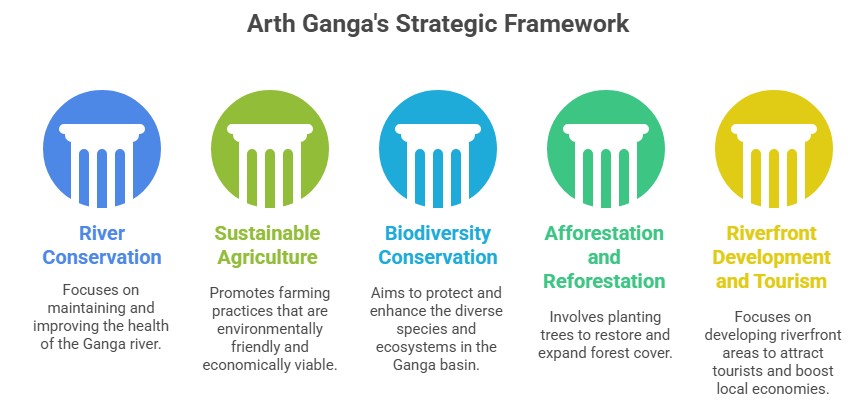
- Introduction: Arth Ganga is a transformative initiative to rejuvenate the Ganga river and foster sustainable development in the Ganga basin region. It aims to integrate economic activities with ecological considerations, ensuring the conservation and revitalization of the Ganga river and its surrounding ecosystem.
- Key objectives: River Conservation, Sustainable Agriculture, Biodiversity Conservation, Afforestation and Reforestation, Riverfront Development and Tourism:
- Key features: Monetization and Reuse of Sludge & Wastewater, Livelihood Generation Opportunities, Increased, Public Participation, Promotion of Cultural Heritage and Tourism, Institution building
Conclusion
Arth Ganga serves as a pioneering model of river rejuvenation, merging economic growth with environmental sustainability. Through initiatives in pollution control, sustainable farming, biodiversity conservation, reforestation, and promoting cultural heritage, it embodies a holistic approach to transforming the life and landscape of the Ganga basin.
Water-Sensitive Cities: A Response to Urban Water Pollution
"Water-sensitive cities are not just about managing water, they are about creating vibrant, resilient, and livable urban spaces. They are cities that understand the value of water,embrace its presence and integrate it into every aspect of urban life."
News in Focus:
Water-sensitive cities in the Global South emphasize the need to address inequalities in access, functionality, and reuse of water resources for sustainable urban development.
Introduction
- Definition: Water-sensitive cities are urban areas that adopt integrated, sustainable water management approaches to ensure efficient use of water resources, reduce water pollution, and enhance overall water resilience.
- Aim: They aim to minimize the environmental impact of urban development on water systems while maximizing the social, economic, and ecological benefits associated with water.
Key Principles of Water Sensitive Cities

Benefits
- Water Security: Efficient water management systems like Singapore's NEWater meet a significant portion of water demand, ensuring a reliable water supply.
- Flood Risk Reduction: Amsterdam's multifaceted flood management, including the "Room for the River" program, mitigates flood risks and enhances urban resilience.
- Water Conservation: Melbourne's water-sensitive urban design, rainwater harvesting, and reduced water consumption practices contribute to sustainable water use and conservation.
- Biodiversity Preservation: Portland's ecosystem restoration efforts, such as improving water quality in Johnson Creek, support biodiversity conservation.
- Climate Change Adaptation: Copenhagen's Cloudburst Management Plan and similar strategies enhance urban resilience to extreme rainfall events caused by climate change.
- Sustainable Urban Development: Freiburg's Vauban district exemplifies sustainable practices, including rainwater infiltration and decentralized stormwater management, promoting environmentally friendly urban development.
|
Challenges Rapid Urbanization Pollution and Water Quality
|
Solutions
|
|
Urban Water Agenda 2030: An initiative launched by the United Nations Environment Programme (UNEP) to promote sustainable and equitable water management in urban areas, aligning with the Sustainable Development Goals (SDGs). |
Conclusion
Water-sensitive cities are essential for addressing the growing challenges of water scarcity, pollution, and climate change. By integrating sustainable water management practices, promoting community engagement, and adopting innovative technologies, cities can achieve resilience, improve quality of life, and ensure a sustainable future for all.
|
Extra Marks Fetching component by theIAShub Initiatives in India
|
One Water Approach for Tackling Water Pollution Holistically
"Adopting a 'One Water' approach means recognizing that water is a finite and interconnected resource, requiring us to manage it holistically and make decisions that consider the social, economic, and environmental dimensions of water sustainability."
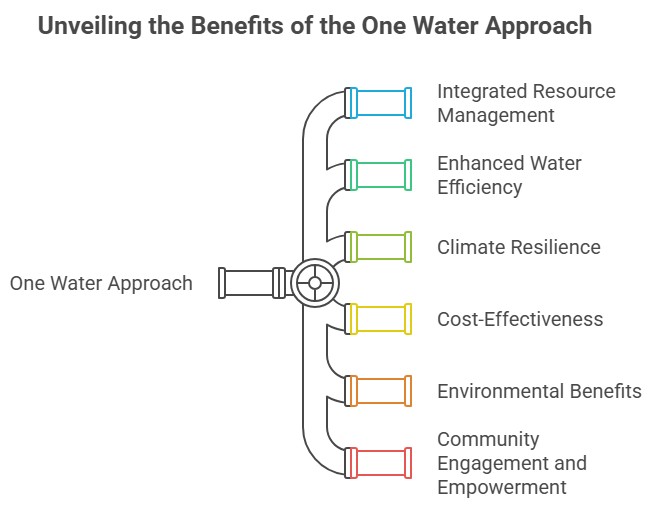
- Definition and Overview: The One Water Approach, also known as “Integrated Water Resources Management (IWRM)”, recognizes the value of all water sources.
- Emphasis: It emphasizes the integrated, inclusive, and sustainable management of water resources involving multiple stakeholders.
Why is the “ONE WATER” approach better than conventional water management practices?
- Integrated resource management: all water sources, such as drinking water, wastewater, and stormwater, leading to more efficient and sustainable water resource management.
- Enhanced water efficiency: By promoting water recycling and reuse, the One Water Approach optimizes resource utilization.
- Climate resilience: The One Water Approach considers climate change impacts and develops strategies to enhance resilience.
- Cost-effectiveness: Integrated water management approaches can provide cost savings.
- Environmental benefits: The One Water Approach incorporates green infrastructure, such as wetlands and green roofs, which provide multiple environmental benefits.
- Community engagement and empowerment: The One Water Approach encourages community involvement, leading to more inclusive and participatory decision-making processes.
Conclusion
The One Water Approach holds immense potential for the future of water resource management. By integrating all water sources, promoting efficiency, resilience, and community engagement, it offers a pathway towards sustainable and holistic management, ensuring reliable water supplies for both human and ecological needs.
15. Soil Pollution in India: Causes, Effects, Government Schemes & Sustainable Solutions
Soil pollution is a chemical degradation process that consumes fertile soils, with implications for global food security and human health. As per the 2019-20 Soil Health Survey conducted by the Indian government, 55 percent of the country’s soil is deficient in nitrogen, 42 percent in phosphorus and 44 percent in organic carbon.
Causes of Soil Pollution
It is pollution caused by (i) pesticides, herbicides, and fumigants (ii) chemical fertilizers and
(iii) Air pollutants washed down from atmosphere through rain
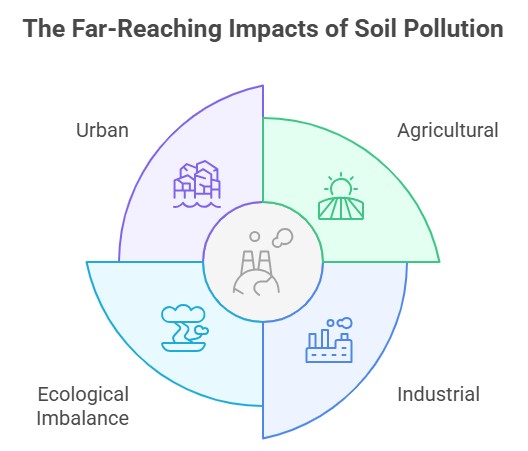
Effects of Soil Pollution
- Agricultural: Reduced soil fertility, Reduced nitrogen fixation, Increased erodibility, Reduced crop yield
- Industrial: Dangerous chemicals entering underground water
- Ecological imbalance: Release of pollutant gases, Increased salinity, Reduced vegetation
- Urban: Clogging of drains, Inundation of areas, Public health problems, Pollution of drinking water sources,
- Foul smell and release of gases, Waste management problem
Government Measures to Address Soil Pollution
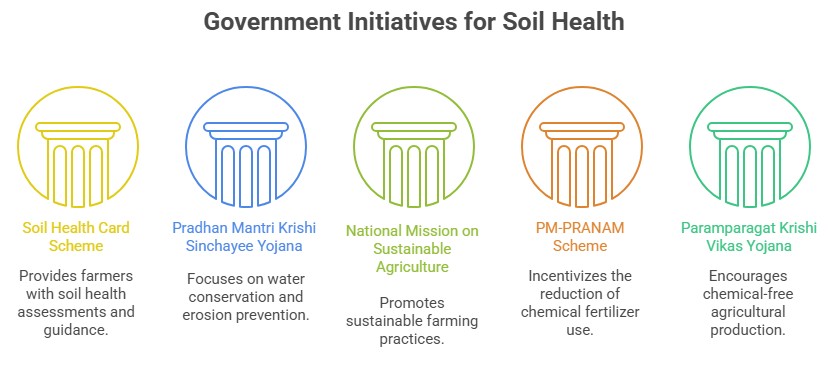
The components include making soil chemical-free, saving soil biodiversity, enhancing SOM, maintaining soil moisture, mitigating soil degradation and preventing soil erosion.
- Soil Health Card (SHC) scheme: Which assess the current status of soil health and guides farmers to make necessary soil amendments.
- Pradhan Mantri Krishi Sinchayee Yojana: To prevent soil erosion, regeneration of natural vegetation, rainwater harvesting and recharging of the groundwater table.
- National Mission on Sustainable Agriculture to promote sustainable agriculture practices.
- PM-PRANAM Scheme: To reduce the use of chemical fertilizers by incentivizing states to adopt alternative fertilizers.
- Paramparagat Krishi Vikas Yojana (PKVY): To produce agricultural products free from chemicals and pesticides residues by adopting eco- friendly, low- cost technologies
Way Forward
- Reusing of materials Glass containers, plastic bags, paper, fabric, and other materials can be reused at home rather than disposed of, minimising solid waste pollution.
- Recycling and recovery of materials: Paper, various types of plastics, and glass can all be recycled, and they are.
- Reforesting: Land loss and soil erosion can be slowed by restoring forest and grass cover, which helps to prevent wastelands, soil erosion, and floods.
- Crop rotation or mixed cropping can help to increase soil fertility.
- The proper strategies for managing solid waste disposal should be used.
SDG target 15 on land degradation neutrality mentions, by 2030 to combat desertification, restore degraded land and soil, including land affected by desertification, drought and floods, and strive to achieve a land degradation-neutral world.
16. E-Waste
Definition: E-waste encompasses electronic devices that have reached the end of their useful life or are no longer wanted by the owner. These devices may contain hazardous substances and valuable resources.
Constituents of e-waste
- Consumer Electronics: Mobile phones, laptops, tablets, televisions, cameras, and gaming consoles.
- Household Appliances: Refrigerators, washing machines, air conditioners, and microwave ovens.
- IT Equipment: Printers, scanners, servers, routers, and computer accessories.
- Medical Devices: X-ray machines, MRI scanners, monitoring devices, and laboratory equipment.
- Lighting Equipment: Bulbs, fluorescent tubes, and LED lights.
- Renewable Energy Systems: Solar panels, wind turbines, and batteries.
Causes of e-waste:
- Technological Advancements and Rapid Obsolescence
- Increased Affordability and Accessibility
- Lack of Recycling Infrastructure
- Illegal Trade and Dumping
Impacts of e-waste:
Environmental Degradation:
- Soil Contamination: E-waste contains hazardous substances like lead, mercury, and cadmium.
- Water Pollution: Improper e-waste disposal contaminates water bodies.
- Air Pollution: Burning or dismantling e-waste releases toxic fumes.
- In Delhi, India, the air quality index during the e-waste burning season reached hazardous levels.
- Ecosystem Disruption: Dumping e-waste in natural habitats disrupts ecosystems.
Health Impacts:
- Human Exposure to Toxins, Occupational Hazards, International Trade and Global Impact
- Contaminated Food Chain: Studies have shown elevated levels of heavy metals in food crops near e-waste recycling sites.
- Illegal Trade: E-waste is often illegally exported to developing countries. Basel Action Network found that 50-80% of e-waste collected in Europe for recycling ends up being exported, often to countries in Africa and Asia.
- Climate Change: E-waste contributes to greenhouse gas emissions through the release of hazardous substances
Efforts
- Extended Producer Responsibility (EPR) Programs:
-
- India's E-Waste Management Rules: Mandates manufacturers to be accountable for safe disposal and recycling of their products.
- European Union's WEEE Directive: Sets targets for member states, making manufacturers responsible for financing and managing e-waste.
- Public-Private Partnerships:
-
- Dell's Recycling Programs: Offers free take-back programs in over 78 countries for responsible recycling.
- Sony's Green Management 2020: Focuses on reducing environmental impact and achieving zero environmental footprint by 2050.
- Awareness and Education Campaigns:
-
- Earth911's Recycling Database: Provides information on local recycling centers and proper e-waste disposal.
- Greenpeace's Detox Campaign: Raises awareness about hazardous chemicals in electronics and advocates for safer production practices.
- International Collaboration:
- Basel Convention: Controls transboundary movement of hazardous waste, including e-waste.
- United Nations Sustainable Development Goals (SDGs): Goal 12 promotes sustainable waste management and responsible consumption.
E-waste management rules 2023: addressing the growing challenge of e-waste
Aim: The E-Waste Management Rules, 2023, notified by the government, aims to tackle the increasing problem of electronic waste or e-waste.
- Application: These rules apply to manufacturers, producers, refurbishers, dismantlers, and recyclers involved in the manufacture, sale, transfer, purchase, refurbishing, dismantling, recycling, and processing of e-waste or electrical and electronic equipment (EEE).

Implications
- Environmental Protection: Proper management of e-waste will prevent hazardous substances such as lead, mercury, and cadmium from polluting the environment.
- Resource Conservation: Recycling e-waste can recover valuable metals and materials, reducing the need for new resource extraction.
- Job Creation and Economic Opportunities: Effective e-waste management can lead to the creation of green jobs and the development of a circular economy.
- Compliance and Enforcement: The rules ensure compliance through the registration of entities, filing of returns, and the imposition of environmental compensation for violations.
Conclusion:
A potential way forward could involve partnering with start-ups and companies to develop effective recycling programs and technologies, while also formalizing and integrating the informal recycling sector.
17. Light Pollution: Causes, Effects, and Measures to Protect Night Skies
Light pollution is the presence of excessive or misdirected artificial lighting in the environment, which disrupts the natural darkness of the night sky; examples include bright streetlights, billboard lights, and illuminated buildings.
Causes of Light Pollution
- Outdoor Lighting: Unshielded streetlights and floodlights that emit light in all directions, contributing to sky glow and glare. (Example: Las Vegas Strip)
- Urbanization: Increased artificial lighting due to the rapid growth of cities. (Example: Tokyo, New York City)
- Industrialization: Intense lighting in industrial facilities.
- Advertising and Signage: Brightly lit billboards and neon signs.
- Inefficient Lighting Practices: Outdated lighting technologies emit excessive light.
- Security Lighting: Poorly designed or overly bright security lighting.
- Sports Facilities and Stadiums: Intense lighting for night events. (Example: Olympic stadiums)

Measures to Control Light Pollution
- Energy-efficient and downward-directed lighting with motion sensors to reduce unnecessary illumination.
- Dark Sky Parks and Reserves: Establish designated areas with strict regulations to minimize light pollution and protect natural darkness for stargazing and wildlife.
- Light-Optimized Urban Design
- Lighting Regulations and Policies: Implement and enforce lighting ordinances that control the intensity, direction, and timing of outdoor lighting.
- Innovative Lighting Technologies: Encourage adoption of low-intensity, energy-efficient lighting solutions like LEDs and smart lighting systems.
Global Initiatives to Reduce Light Pollution
- International Dark-Sky Association (IDA): Global organization protecting the night sky and reducing light pollution through guidelines and dark sky preserves.
- Globe at Night: Citizen science campaign reporting light pollution levels to raise awareness and support reduction efforts.
- International Year of Light (IYL): UN initiative promoting sustainable lighting practices and addressing light pollution.
- The Dark Sky Scotland Project: Promotes dark skies in Scotland through collaboration and implementation of effective lighting solutions.
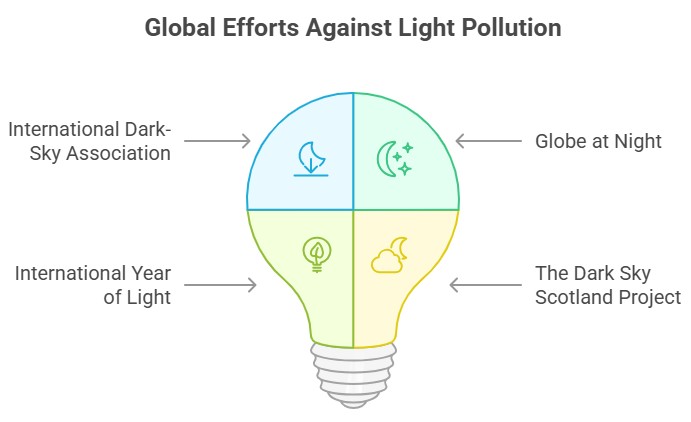
Conclusion
By reducing light pollution collectively, we can restore the wonder of star-filled night skies, protect the environment, and foster a harmonious coexistence through responsible lighting, conservation efforts, and increased awareness.
18. Waste Management
Zero Waste
Introduction:
Zero waste is a philosophy and environmental initiative aimed at eliminating waste by rethinking resource life cycles to conserve and recover resources, rather than disposing of them. It involves reducing, reusing, and recycling materials to prevent waste generation, ultimately aiming for a circular economy where no trash is sent to landfills, incinerators, or the ocean.
|
Waste crisis: 2.24 billion tons of municipal solid waste are generated annually.Only 55% are managed in controlled facilities.Approximately 931 million tons of food are lost or wasted each year.
|
Purpose:
- Promote sustainable consumption and production patterns.
- Support the shift towards circularity.
- Raise awareness of the contribution of zero-waste initiatives to the 2030 Agenda for Sustainable Development.
|
Benefits of Zero Waste
|
Responsible approach
|
Collective action
|
Conclusion: International Day of Zero Waste propels the transition to a sustainable future, inspiring action, promoting responsible waste management, and fostering the adoption of circular economy principles. By raising awareness and supporting zero-waste practices, we contribute to a paradigm shift towards a more sustainable and environmentally conscious society.
Circular Economy
Introduction: A circular economy maximizes resource utilization by designing products for longevity, reuse, and recycling, creating a closed-loop system that minimizes waste and promotes sustainable development.
Key principles and strategies
- Reducing Waste and Pollution: Circular economy emphasizes waste prevention, efficient design, and eco-friendly production.
- Extending Prduct Life Cycles: Products designed to be durable, repairable, and upgradable for resource efficiency.
- Promoting Reuse and Recycling: Circular economy encourages repair, refurbishment, remanufacturing, and recycling.

19. Role of governments, businesses, and individuals
- Government Policies and Regulations: Governments incentivize circular practices, support research, and promote sustainable consumption.
- Business Innovation and Collaboration: Businesses adopt circular principles, and collaborate for innovation and knowledge-sharing.
- Individual Actions and Consumer Behaviour: Consumers drive change through conscious choices, supporting circular models, responsible consumption, and waste management.
Challenges:
- Resistance and Cultural Barriers: societal resistance and cultural norms that hinder the adoption of circular practices.
- Design and Innovation Challenges, Inadequate Infrastructure and Supply Chain, Scalability and Collaboration Issues
- Consumer Behaviour and Demand Constraints: Encouraging consumers to adopt sustainable consumption habits
- Economic implications: Include short-term costs, infrastructure investments, process adjustments
- Regulatory Hurdles: Establishing supportive policies and regulations for transitioning to a circular economy is challenging due to legal complexities, industry resistance, and stakeholder coordination.
Way forward:
- Collaborative Resource Networks: Establish platforms for businesses to exchange waste materials and resources, reducing waste generation and promoting resource efficiency.
- Digital Platforms for Circular Exchange: Develop online platforms for individuals and businesses to exchange used goods, promoting reuse and prolonging product lifecycles.
- Industrial Symbiosis: Encourage collaboration between industries to turn one industry's waste into another's valuable resource, promoting resource efficiency.
- Circular Business Models: Support innovative business models focused on sharing platforms, product take-back, and resource recovery.
- Blockchain Technology for Supply Chain Traceability: Explore blockchain technology to enhance supply chain transparency and traceability, ensuring sustainable product sourcing.
- Circular Economy Incubators and Accelerators: Establish programs to support start-ups and entrepreneurs in developing circular economy-focused businesses.
Conclusion: A circular economy transforms sustainability through waste reduction, resource efficiency, and innovation, benefiting conservation, job creation, and climate action. Transition success requires collaboration, policies, technology, and behavioural change for a sustainable and prosperous future.
20. Greenhouse Gas Effect & Climate Change
Introduction:
The greenhouse gas effect is a natural process where certain gases in Earth's atmosphere trap heat from the sun, maintaining the planet's warm, habitable temperature. However, human activities, notably the burning of fossil fuels and deforestation, have significantly increased concentrations of greenhouse gases like carbon dioxide and methane. This enhanced greenhouse effect is causing the Earth's average temperature to rise, a phenomenon known as global warming.
|
Keywords from Aaj Ka Quality Enrichment (http://bit.ly/aaj-ka-enrichment) Common but differentiated responsibilities and respective capabilities, Climate Anxiety, Triple environment crisis of Climate Change, Biodiversity loss, and pollution, Blue Infra, Climate denier vs climate realist, Climate Disaster, Climate Bomb, Greenium – Green + Premium, Sweet Synthesis/Winning Combination of ‘Traditional Sensibilities & Modern Ambitions’, From Climate Disaster to Climate Opportunity, Climate denier vs climate realist/ Climate denial vs Climate realism. |
Causes of Global Warming:
Natural Causes of Greenhouse Gas Effect and Global Warming:
|
Anthropogenic Causes of Greenhouse Gas Effect and Global Warming:
|
21. Sea Level Rise In India Due to Climate Change
Introduction:
- Sea level rise poses significant challenges to India's coastline, with recent research highlighting land subsidence rates along the Indian Coast.
Consequences of Sea Level Rise in India:
- Coastal Erosion and Land Loss: Example: The Sundarbans Delta in West Bengal, home to millions of people and a UNESCO World Heritage site, is at risk of submergence due to sea level rise.
- Increased Flooding Risks: Approximately 40 million people in India are vulnerable to coastal flooding caused by sea level rise.
- Salinization of Groundwater: Example: In the coastal areas of Tamil Nadu, increased salinity in agricultural lands threatens crop production and livelihoods.
- Impacts on Biodiversity and Ecosystems: The Gulf of Mannar Marine National Park, located along the south-eastern coast of India, is vulnerable to habitat loss and species displacement due to rising sea levels.
- Economic and Infrastructure Vulnerabilities: Example: Mumbai, a major financial hub, faces significant economic risks as coastal flooding and erosion threaten its infrastructure and real estate developments.
Initiatives and Adaptation Measures:
- Coastal Protection and Infrastructure Resilience: The construction of the Bandra-Worli Sea Link in Mumbai includes measures to withstand rising sea levels and increased storm surges.
- Conservation and Restoration of Coastal Ecosystems: Example: The Gulf of Kutch Marine National Park in Gujarat is actively involved in mangrove conservation and restoration
- Climate Change Adaptation and Planning: Example: The National Action Plan on Climate Change (NAPCC) emphasizes the importance of coastal zone management to address sea level rise and its impacts.
- International Collaboration: Example: India participates in the United Nations Framework Convention on Climate Change (UNFCCC) negotiations to advocate for effective international action
Solutions to Mitigate Sea Level Rise:
- Climate-Resilient Infrastructure: Example: The Chennai Metro Rail project incorporates climate-resilient design features to adapt to sea level rise and extreme weather events.
- Community Engagement and Capacity Building: Example: The Community-Based Disaster Risk Management (CBDRM) program in coastal areas of Odisha
- Sustainable Coastal Agriculture: Example: The Integrated Coastal Zone Management (ICZM) program in Kerala promotes sustainable aquaculture practices and mangrove conservation.
Conclusion:
India faces significant challenges from sea level rise along its extensive coastline. By implementing adaptation measures, promoting sustainable practices, and engaging in international collaborations, India can protect its coastal communities, ecosystems, and economic interests while building resilience to future sea level rise.
22. Glaciers and Climate Change: Impacts, Adaptation & Preservation Strategies
The Intergovernmental Panel on Climate Change (IPCC) reports that glaciers worldwide have lost approximately 9000 billion metric tons of ice since the early 20th century. This has contributed significantly to the observed rise in sea levels which have increased by an average of 15-20 centimeters.
Glaciers and Climate Change: Glaciers, sculpted over millennia, hold valuable information about past climates and offer insights into our planet's future. However, rising temperatures are rapidly melting these icy giants, impacting water resources, sea-level rise, and ecological balance.
Climate Change and its Impact on Glaciers

- Global warming: Climate change leads to global warming, causing increased temperatures and altering precipitation patterns, which contribute directly to the glacial retreat.
- Acceleration of glacier melting: Rising temperatures accelerate glacier melting, leading to retreat, thinning, and loss of ice mass.
Glacier Tourism and its Environmental Implications
- Activities: Glacier tourism involves activities like hiking, mountaineering, and skiing in glacier-covered regions.
- Consequences:
- High visitor numbers and infrastructure development can have detrimental effects on fragile glacial ecosystems, causing habitat disruption and pollution.
- Climate change impacts, such as glacier retreat, pose a threat to the future of glacier tourism.
- Example: The Swiss Alps, known for their scenic glaciers, attract millions of tourists each year, contributing to the local economy but also exerting pressure on the environment.
Adaptation Strategies for Glacier-Dependent Communities
Glacier-dependent communities need to adapt to the changing conditions and reduced glacial resources.
Strategies: Strategies may include:
- Water conservation, diversification of livelihoods, improving water storage and management, promoting sustainable practices.
- Engaging local communities in decision-making and providing them with necessary resources and support is also crucial.
- Example: In the Peruvian Andes, communities are implementing water storage systems, terracing for agriculture, and sustainable tourism initiatives to adapt to glacial retreat.
Policy Measures for Preserving Glaciers
Policymakers need to prioritize climate change mitigation by
- Reducing greenhouse gas emissions and transitioning to renewable energy sources.
- Implementing policies: to protect and preserve glacier ecosystems, including establishing protected areas and regulating tourism activities.
- Investing in research, technology, and infrastructure to promote sustainable practices and resilience in glacier-dependent regions.
- Example: The Swiss government has implemented strict regulations on tourism, waste management, and emissions to protect its glaciers and mitigate climate change.
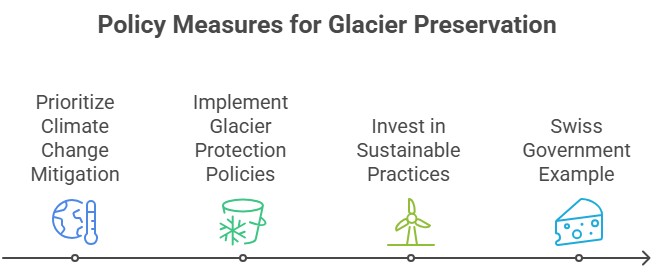
|
Extra Marks Fetching component by theIAShub
|
Conclusion
Climate change intertwines with the fate of glaciers, showcasing the delicate relationship between human activities and Earth's ecosystems. Preserving dwindling ice formations requires innovative solutions and collective action. By forging sustainable paths and nurturing resilient societies, we navigate ecological challenges and safeguard our planet's fragile equilibrium.
23. Arctic Amplification
Introduction
- Arctic amplification refers to the phenomenon of the Arctic region warming at a faster rate than the global average. This process is driven by various feedback mechanisms and interactions between the atmosphere, ice, and ocean in the Arctic.
- Arctic Warming: The Arctic has been experiencing rapid warming over the past few decades. According to the National Snow and Ice Data Center (NSIDC), the Arctic has warmed at a rate of almost twice the global average over the past 30 years.
Factors affecting arctic amplification:
- Ice-Albedo Feedback: Arctic ice reflects solar radiation back into space. As the region warms, ice melts, exposing darker surfaces that absorb more radiation, leading to further warming and ice melting.
- Atmospheric Circulation Changes: Reduction in sea ice affects temperature and pressure patterns, influencing the polar jet stream and weather systems. This can result in more persistent weather patterns, like heatwaves or cold snaps, affecting both the Arctic and other regions.
- Permafrost Thaw: Rising temperatures cause the thawing of Arctic permafrost, releasing stored carbon in the form of methane and carbon dioxide. These greenhouse gases contribute to global warming, creating a positive feedback loop.
Impacts

Conclusion : Arctic amplification represents a critical aspect of climate change, with the Arctic region experiencing accelerated warming compared to the global average. Mitigating greenhouse gas emissions, transitioning to sustainable energy sources, protecting Arctic ecosystems, and supporting vulnerable communities are vital steps toward addressing this complex issue.
24. Illegal Wildlife Trade and Climate Change
Context: Deforestation in the Amazon rainforest, driven in part by illegal logging contributes to the release of approximately 500 million metric tons of carbon dioxide annually. (source: Rainforest Foundation).
The United Nations Office on Drugs and Crime (UNODC) recently published a report titled 'Joining the dots: Illegal wildlife trade and Climate Change.
Introduction: Illegal wildlife trade: Illegal wildlife trade refers to the illegal activities involving the capture, collection, transport, and trade of wildlife and their products, including live animals, animal parts, and derivatives.
Illegal Wildlife Trade Impact on Climate Change:
- Deforestation: Illegal logging for timber and conversion of forests to agricultural land contribute to deforestation, releasing carbon dioxide and reducing carbon sinks.
- Carbon Storage: Large-bodied species targeted in the illegal wildlife trade, such as elephants, play a crucial role in carbon storage through their interactions with vegetation and soil.
- Disrupted Ecosystems: Illegal trade disrupts ecosystems, impacting their ability to sequester carbon and maintain ecological balance.
How climate change impacts on illegal wildlife trade?

Integrated solutions for addressing illegal wildlife trade and climate change
- Sustainable land-use planning: Integrate wildlife conservation and climate change considerations into land-use planning by designating protected areas and promoting sustainable agriculture to reduce deforestation and habitat conversion.
- Strengthened law enforcement and regulation: Enforce stricter penalties and regulations, including CITES, to discourage illegal activities.
- Promotion of sustainable alternatives and livelihoods: like community-based ecotourism, reducing reliance on illegal wildlife trade, and contributing to climate change mitigation.
- Enhanced conservation efforts and habitat protection: Safeguard crucial habitats such as rainforests and coral reefs, which play a vital role in carbon sequestration
- Technology-driven solutions for monitoring and enforcement: Utilize advanced technologies such as DNA testing and satellite imagery
- Effective international border management and combatting organized crimes: taking inspiration from examples like the India-Myanmar border, to tackle organized crimes related to this illicit trade
Conclusion
Tackling the issues of illegal wildlife trade and climate change is crucial for sustainable development and preventing the sixth mass extinction. By addressing these interconnected challenges, we can protect biodiversity, mitigate climate impacts, and secure a more sustainable future for our planet.
|
Extra Marks Fetching component by theIAShub Efforts to control illegal Wild life trade
|
25. Synthesis Report for the Sixth Assessment Cycle: IPCC
The IPCC's Sixth Assessment Report (AR6) and Synthesis Report, released in August 2021, February 2022, April 2022, and March 2023 respectively, mark a crucial milestone in understanding and addressing climate change.|
Projected scenarios
|
Importance of urgent action
- Enhanced international and regional cooperation: The IPCC report stresses the crucial need for increased cooperation among countries to effectively address climate change.
- Global challenges require collective efforts: No region or country can tackle climate change alone, and the report emphasizes the necessity of full and coordinated cooperation.
- Immediate and aggressive strategies: The report highlights that taking immediate and aggressive action to reduce greenhouse gas emissions is essential.
- Closing window of opportunity: The report warns that time is running out, and this decade represents the final opportunity to implement climate policies and strategies that can effectively address the critical global challenges posed by climate change.
Way forward:
- Collaborative Innovation Platforms: The Climate Technology Centre and Network (CTCN) fosters innovative partnerships for technology transfer and capacity building.
- Stimulating Entrepreneurship and Start-ups: The Clean Energy Innovation Fund in Australia provides financial support to innovative clean energy start-ups.
- Empowering Youth as Agents of Change: For instance, The "Youth Climate Labs" program enables young leaders to implement innovative solutions in their communities.
- Driving the transition to clean energy by employing innovative manufacturing methods.
Conclusion:
The IPCC's report on temperature change and its impacts serves as a wake-up call to take immediate and decisive action against climate change. By embracing ambitious climate policies, reducing emissions, and promoting sustainable practices, we can strive to limit global temperature rise and create a sustainable and resilient future for generations to come.
Adaptation Gap Report 2022
- The Adaptation Gap Report 2022, published by the United Nations Environment Programme (UNEP), highlights the urgent need to increase efforts in adapting to the impacts of climate change.
Key highlights:
- Progress in Adaptation Planning: The report reveals that 84% of Parties to the UN Framework Convention on Climate Change (UNFCCC) have established adaptation plans, strategies, laws, and policies.
- Financing Gap: International adaptation finance flows to developing countries fall 5-10 times below the estimated needs, and this gap is widening.
- Implementation Challenges: Without substantial support, these actions may be unable to keep pace with accelerating climate risks, exacerbating the implementation gap.
- Co-benefits of Adaptation: Nature-based solutions and integrated approaches offer co-benefits, contributing to both mitigation and adaptation efforts.
Conclusion
The Adaptation Gap Report 2022 urges urgent prioritization of climate adaptation, emphasizing financing and implementation challenges. Integrated approaches, increased funding, and nature-based solutions can effectively address climate risks and promote a sustainable future.
26. Various initiatives to fight climate change
COP 27 of UNFCCC- Long Term Low emission Development strategy
- India recently submitted its Long-Term Low Emission Development Strategy to the United Nations Framework Convention on Climate Change (UNFCCC) during the 27th Conference of Parties (COP27).
- The 27th Conference of Parties (COP27) was an "implementation" conference, focusing on outstanding questions on climate finance.
- Developed countries committed to providing financial support to developing countries for transitioning to low-carbon development and adapting to climate change impacts.
Introduction : LTLED is a strategic plan adopted by countries to transition to a low-carbon economy and achieve sustainable development goals by reducing emissions, promoting renewable energy, and adopting sustainable practices.
Key highlights
- Expansion of Forest Area: India has enhanced forest and tree cover alongside economic growth and is a net sink, absorbing 15% of CO2 emissions in 2016.
- NDC Fulfilment: It is on track to fulfill its NDC commitment of additional carbon sequestration in forest and tree cover by 2030.
- Phase out of Fossil Fuels: It includes increased use of biofuels, electric vehicles, and green hydrogen in the transport sector.
- Resilient Urban Development: Smart city initiatives, integrated planning of cities, effective green building codes, and innovative waste management
- Sustainable Capital: The provision of climate finance by developed countries is crucial for the successful implementation of the low-carbon development strategy.
|
Nationally Determined Contributions (NDCs):
|
Advancing climate action: Regional perspectives
- European Union (EU): The EU has made relatively better progress in cutting emissions, with the United Kingdom halving its emissions from 1990 levels.
- United States (USA): The USA has been a laggard, cutting emissions by only 7% from 2005 levels by 2020. The new administration has signalled commitment by re-joining the Paris Agreement and proposing ambitious emission reduction targets.
- China: As the world's largest emitter, China's efforts are crucial. It has made progress in renewables and energy efficiency, but rapid economic growth increased emissions. China aims to peak emissions before 2030 and achieve carbon neutrality by 2060.
- Developing Countries: They face challenges in transitioning to low-carbon development due to limited resources and competing priorities. They require financial and technical support from developed countries for climate measures.
Future potential
- Renewable Energy: The future lies in adopting solar, wind, and hydropower, given their advancing technology and decreasing costs.
- Energy Efficiency: Investing in energy-efficient technologies and practices across sectors can significantly cut emissions.
- Carbon Capture and Storage (CCS): Advancements in CCS can capture and store CO2 emissions from power plants and industries.
- Nature-Based Solutions: Protecting and restoring natural ecosystems helps absorb carbon dioxide, aiding climate mitigation and adaptation.
Way forward
- Green Hydrogen Production:
- Develop technologies for producing green hydrogen using renewable energy sources.
- Utilize green hydrogen as a clean fuel for transportation, power generation, and industries, reducing carbon emissions.
- Circular Economy Initiatives:
- Promote circular economy principles to minimize waste and maximize resource efficiency.
- Encourage recycling, upcycling, and waste-to-energy projects to reduce environmental impact.
- Biochar Production and Utilization: Promote biochar as a soil amendment to enhance fertility and carbon sequestration, utilizing biomass waste to create sustainable solutions for agriculture, waste management, and renewable energy.
- Distributed Renewable Energy Systems:
- Encourage decentralized and community-based renewable energy systems, such as microgrids and rooftop solar installations.
- Improve energy access in remote areas and reduce transmission losses.
- Climate-Smart Cities:
- Develop climate-smart cities by integrating advanced technologies, data analytics, and resilient urban planning.
- Implement energy-efficient buildings, intelligent transportation systems, and green infrastructure.
Conclusion: Funding and global cooperation are crucial for successfully implementing India's LTLED strategy, which aims to transition toward a sustainable and low-carbon future. India's focus on renewable energy, energy efficiency, sustainable agriculture, and nature-based solutions will contribute to combating climate change and creating a greener, more resilient world.
27. Carbon Border Adjustment Mechanism
- The European Parliament enacted legislation in April, 2023, to implement the Carbon Border Adjustment Mechanism (CBAM) as part of the EU's Green Deal for reducing greenhouse gas emissions by 55% by 2030.
Introduction to CBAM:
- Meaning: CBAM is a proposed mechanism aimed at addressing the issue of carbon leakage, where industries relocate to countries with lax climate policies, leading to an increase in global emissions.
- It is designed to prevent carbon leakage by imposing a carbon price on imported goods based on their embedded carbon content.
- The European Union (EU) has announced the introduction of CBAM during its transitional phase starting October 2023.
Key Objectives of CBAM:
- Protecting domestic industries: CBAM ensures fair competition by imposing carbon emission standards on imported goods, protecting domestic industries from unfair advantages. Imported products with higher carbon footprints face additional costs, levelling the playing field for domestic industries.
- Encouraging global emission reduction: CBAM translates into a 20-35% tax on select imports into the EU from 2026. Higher carbon prices on imports motivate non-EU countries to adopt stringent environmental regulations to avoid higher taxes on their exports.
- Promoting cleaner production worldwide: Non-EU countries invest in cleaner technologies to reduce emissions and avoid higher carbon costs on exports to the EU market.
- Generating revenue for climate policies: Revenue can be invested in renewable energy projects and research, reducing greenhouse gas emissions and combating climate change.
|
Mechanism of CBAM:
|
Potential Benefits of CBAM:
|
Challenges and Concerns:
|
India's Implications:
- Impact on India's exports: Significant adverse impact on India's exports of metals such as iron, steel, and aluminium products to the EU market.
- Increased costs and competitiveness challenges: The carbon levies imposed by CBAM, ranging from 19.8% to 52.7%, could raise the costs of Indian exports,
- Vulnerability of sectors: Industries such as refined petroleum products, organic chemicals, pharma medicaments, and textiles, which are among India's top exports to the EU
- Implications for employment and economic growth:
- Influence on global environmental regulations: CBAM adoption by the EU sets a precedent, influencing the adoption of similar mechanisms worldwide and impacting global environmental regulations and trade practices.
Measures:
- Diversify export markets: Explore new non-EU markets to offset the impact of CBAM on Indian exports.
- Enhance energy efficiency: Improve energy efficiency in manufacturing to meet EU carbon standards and boost competitiveness.
- Invest in low-carbon technologies: Research and develop low-carbon technologies to comply with CBAM and stay competitive.
- Strengthen domestic carbon pricing: Implement a domestic carbon pricing mechanism to align with international standards and reduce CBAM impact.
- Collaborate with EU on green initiatives: Engage in joint projects with the EU to demonstrate commitment to sustainability and foster cooperation.
- Invest in renewable energy infrastructure: Increase investments in renewable energy sources to reduce emissions and enhance competitiveness.
International Cooperation and CBAM:
- Need for global consensus: CBAM's effectiveness and fairness require international cooperation and consensus-building to ensure a level playing field and avoid trade tensions.
- Climate diplomacy and negotiations: CBAM discussions should be an integral part of international climate negotiations, such as the United Nations Framework Convention on Climate Change (UNFCCC), to ensure fair and equitable implementation.
Conclusion:
CBAM's implementation by the EU carries significant global implications, providing both challenges and opportunities for international collaboration on climate action. With effective dialogue and cooperation, it has the potential to drive sustainable practices and a prosperous future for all.
28. Mission LIFE (Lifestyle for Environment)
Introduction
- The mission aims to address environmental degradation and climate change through collective action at the individual, community, and institutional levels.
Importance of Individual Actions
- Environmental degradation and climate change have global consequences, necessitating a focus on individual behaviours and attitudes.
- Adopting environment-friendly behaviors on a large scale can significantly reduce global carbon emissions and contribute to sustainable development goals.
Objectives of Mission life
- Promoting Environmentally Conscious Lifestyles: Mission LiFE seeks to replace the prevalent 'use-and-dispose' economy with a circular economy based on mindful and deliberate resource utilisation.
- It aims to promote an environmentally conscious lifestyle that emphasises sustainable consumption and responsible resource management.
- Mobilising Global Collective Action: By encouraging individuals across the world to undertake simple climate-friendly actions in their daily lives, Mission LiFE aims to create a global network of 'Pro-Planet People' (P3).
- The mission leverages social networks to influence social norms and foster a culture of climate-conscious behaviour.
India's previous accomplishments and relevant programs
- Success of National Missions: India's past experiences, such as the Swachh Bharat Mission, demonstrate the country's ability to mobilize individuals and communities for collective well-being.
- Mission LiFE builds upon India's proven track record of translating national aspirations into whole-of-society efforts.
- International Collaborations
- Glasgow Climate Meet (COP26),
- International Solar Alliance (ISA), and
- Coalition for Disaster Resilient Infrastructure (CDRI)
Future prospects
- Global Vision and Collaboration: Mission LiFE is a global vision that aims to create a collective movement for climate action.
- India, along with the United Nations and other partner entities, is dedicated to revitalizing climate action through this mission.
- Importance of Guiding Frameworks and Global Movement:
- The Paris Agreement and COP26 summit highlight the urgency and collective efforts required to limit emissions.
- Mission LiFE seeks to provide guiding frameworks, information sharing, and the scale of a global movement to accelerate climate action.
Conclusion:
Mission LiFE strives to make a transformative impact on global climate action by promoting sustainable lifestyles and fostering collective responsibility at the individual level. By harnessing the power of individual behaviours, the mission aims to create a global movement that drives positive change towards a more sustainable future.
29. Climate resilient infrastructure
The Coalition for Disaster Resilient Infrastructure (CDRI)’ s annual meet aims to scale up potential solutions for a more resilient world.
Resilient infrastructure refers to infrastructure systems designed to withstand and recover quickly from shocks and stresses, such as natural disasters and climate change impacts.
Key aspects of resilient infrastructure:

Benefits of resilient infrastructure
- Economic Stability: Resilient infrastructure reduces economic losses, ensures continuity of critical services, and facilitates swift recovery.
- Community Well-being: Resilient infrastructure safeguards access to essential services, promoting public safety and health.
- Climate Change Adaptation: Resilient infrastructure helps communities adapt to climate change impacts and extreme weather events.
- Environmental Sustainability: Resilient infrastructure reduces emissions, preserves natural habitats, and promotes sustainable resource management.
Examples of Resilient Infrastructure: Flood-resistant Buildings, Smart Grid Systems, Green Infrastructure:
Challenges:

Way forward
- Nature-based Solutions: Using green infrastructure to enhance resilience and absorb floodwaters.
- Climate-Resilient Design Standards: Incorporating climate projections into infrastructure design.
- Smart Grids and Energy Systems: Deploying advanced technologies for energy efficiency and reliability.
- Resilient Transportation Systems: Developing robust networks to withstand extreme weather events.
- Flood Management and Water Storage: Constructing infrastructure to control floods and manage water.
- Innovative Construction Materials: Using durable and sustainable materials for long-lasting infrastructure.
- Information and Communication Technology (ICT) Integration: Using sensors and data analytics for real-time infrastructure management.
- Community Engagement and Social Resilience: Involving communities in planning and building social resilience.
- Climate-Resilient Urban Planning: Considering the climate in urban planning and land use practices.
- Disaster Risk Reduction Measures: Implementing early warning systems and emergency response plans.
Conclusion: Resilient infrastructure plays a critical role in safeguarding communities and ensuring the continuity of essential services in the face of natural disasters, climate change, and other disruptive events. By incorporating innovative solutions and practices, infrastructure systems can better withstand and recover from crises in this era of climate change.
30. Blue Green Infrastructure
"Blue-green infrastructure is not only an ecological necessity but also a source of beauty and inspiration. It has the power to transform cities, creating spaces that are not only functional but also visually appealing, fostering a sense of well-being and connection with nature.” Herbert Dreiseitl
The European Union (EU) has unveiled its ambitious Climate Adaptation Strategy, placing significant emphasis on the implementation of Blue and Green Infrastructure (BGI) projects.
Definition: Blue Green Infrastructure (BGI) refers to a network of natural and man-made features that provide multiple environmental, social, and economic benefits, particularly in urban areas. It integrates water management with green spaces to create sustainable and resilient environments.
Components of Blue Green Infrastructure:
Benefits of Blue Green Infrastructure:
- Flood Risk Reduction: BGI features absorb and store stormwater, reducing flood risk and minimizing damage to infrastructure and properties.
- Water Quality Improvement: Natural features like wetlands and green spaces act as filters, improving water quality by removing pollutants and enhancing natural water purification processes.
- Biodiversity Conservation: BGI provides habitats, food sources, and movement corridors for diverse plant and animal species, contributing to biodiversity conservation in urban areas.
- Climate Change Adaptation: BGI helps mitigate the impacts of climate change by reducing heat island effects, improving air quality, and enhancing overall climate resilience.
- Economic Benefits: BGI attracts tourism, enhances property values, and supports green job creation, contributing to local economies.
- Social Benefits, Enhanced Urban liveability.
- Community Engagement and Social Cohesion: BGI projects involve communities in planning, design, and management, fostering a sense of ownership, social cohesion, and community pride.
Challenges:

Conclusion: Blue Green Infrastructure holds tremendous potential in creating sustainable and resilient urban environments by integrating nature into the built environment. Embracing BGI as a forward-thinking approach can lead to a greener future, enhancing biodiversity, improving quality of life, and mitigating the impacts of climate change.
31. Climate Finance
- Definition: Climate finance refers to financial resources provided by developed countries to support climate mitigation and adaptation efforts in developing nations.
- Importance: of climate finance in addressing global climate change challenges and promoting sustainable development.
|
Sources of Climate Finance:
|
Climate Finance Mechanisms:
|
The Green Climate Fund (GCF):
- Creation and mandate of the GCF under the United Nations Framework Convention on Climate Change (UNFCCC).
- Objectives: Mobilize climate finance, promote low-emission and climate-resilient development, and enhance the capacity of developing countries to address climate change.
- One of the largest vehicles for climate finance connected to the UNFCCC is GCF:
- It offers financing through “a flexible combination of grants, concessional debt, guarantees or equity instruments”.
Adaptation fund
- The Adaptation Fund is a financial mechanism that plays a crucial role in addressing the challenges of climate change by providing targeted climate finance for adaptation efforts.
- It focuses on supporting vulnerable communities, promoting equity, and ensuring the resilience of countries most affected by climate change impacts.
Shortcomings in green financing
- Insufficient funding: as the available funds fall short of the required resources to address the scale of climate change.
- Complex approval process and Limited direct access
Way forward
- Scaling Up Funding: Mobilize additional financial resources to bridge the funding gap Strengthening Access and Capacity: Provide technical assistance and capacity-building support
- Streamlining Application Processes: to reduce administrative burdens and expedite project implementation.
- Enhancing Collaboration: financial institutions, development agencies, and private sector entities leverage additional resources and expertise.
Carbon markets and trading:
Carbon markets are trading systems in which carbon credits are sold and bought. Companies or individuals can use carbon markets to compensate for their greenhouse gas emissions by purchasing carbon credits from entities that remove or reduce greenhouse gas emissions.
- Article 6 of the Paris Agreement provides for the use of international carbon markets by countries to fulfill their NDCs (Nationally Determined Contributions).
- The right to emit a tonne of CO2 is often referred to as a carbon ‘credit’ or carbon ‘allowance’.
- There are broadly two types of carbon markets: compliance and voluntary.
- European Union’s Emissions Trading System (ETS)
- The Clean Development Mechanism (CDM), adopted under the Kyoto Protocol in 1997.
Uniform Carbon Trading Market
Context: India has recently announced its intention to establish a domestic uniform carbon market within a year.
Introduction: A Uniform Carbon Trading Market is a globally coordinated system where countries and entities can trade standardized emissions allowances, driving emission reductions, promoting global cooperation, and fostering sustainable development.
Key Aspects of a Uniform Carbon Trading Market:
- Standardized Emission Allowances: The EU ETS enables over 11,000 installations and airlines to trade allowances based on a common metric ton of CO2, ensuring transparency, comparability, and fairness across different regions and sectors.
- Cap-and-Trade Mechanism: RGGI has successfully reduced power sector emissions by over 50% since 2005 through the cap-and-trade mechanism, incentivizing emission reductions and the adoption of cleaner technologies.
- Market-Based Economic Instrument: The EU ETS has stimulated €130 billion investment in renewable energy and energy efficiency projects by 2020, incentivizing entities to reduce emissions by integrating environmental concerns into economic decision-making processes.
- International Cooperation and Equity: The UNFCCC fosters global collaboration, equity, and shared responsibility in a uniform carbon trading market.
Benefits of a Uniform Carbon Trading Market:
- Cost-Effectiveness: Carbon pricing mechanisms like carbon markets can deliver emissions reductions at just $6-42 per ton of CO2.
- Flexibility and Innovation: California's cap-and-trade program has promoted innovation, with over $5 billion invested in clean technology
- Environmental Integrity: The Verified Carbon Standard ensures the credibility of emission reductions by requiring rigorous monitoring, reporting, and verification processes,
- Sustainable Development: Initiatives like the Green Climate Fund support climate projects in developing countries, contributing to sustainable development goals.
Challenges:
- Policy Harmonization: Ensuring consistent policies and regulations across countries, like the EU ETS and California's cap-and-trade program, faces challenges due to differences in carbon pricing and emission reduction targets. Example: Varied carbon pricing mechanisms exist, such as Sweden's high carbon taxes and the United States' cap-and-trade systems.
- Fair Allocation: Example: Some industries received excessive allowances, creating a surplus that lowered their market value.
- Market Manipulation: Example: Industries may move production to countries with less stringent emission controls, potentially resulting in the transfer of emissions rather than actual reductions on a global scale.
- Monitoring and Verification: Establishing robust systems for accurate measurement and verification of emissions reductions is a significant challenge, especially in verifying offset projects.
Way forward:
- Carbon Price Collar Mechanism: Setting a price floor and ceiling to stabilize carbon markets, ensuring market confidence, and reducing price volatility.
- Blockchain-enabled Carbon Offset Platform: Utilizing blockchain technology to enhance transparency, traceability, and accountability in carbon offset projects, improving market integrity and trust.
- Carbon Dividend Policy: ensuring an equitable distribution of costs and incentivizing public support for carbon pricing.
- Carbon Removal Innovations Fund: Establishing a dedicated fund to support research and development of carbon removal technologies
- Global Carbon Market Linkages: Promoting international cooperation and market integration by linking regional carbon markets, fostering a more comprehensive and interconnected global trading system.
Indian Scenario:
- Economic Benefits: The establishment of a carbon trading market in India has the potential to generate significant economic benefits, with projections estimating a potential gain of $11 trillion over 50 years.
- Boosting Green Investments: The uniform carbon trading market will incentivize green investments by allowing green plants and energy-efficient units to estimate earnings through carbon trade, thus promoting sustainable development.
- Exporting Decarbonization Solutions: India's carbon trading market could position the country as a leader in exporting decarbonization solutions to the world, contributing to global efforts in combating climate change.
- Encouraging Green Technologies: The carbon trading market will encourage the adoption of green technologies by providing economic incentives and creating a competitive market for low-carbon solutions.
- Enhancing Climate Ambition: The establishment of a uniform carbon trading market reflects India's commitment to enhancing its climate ambition and contributing to global climate change mitigation efforts.
Conclusion:
A Uniform Carbon Trading Market offers a comprehensive and effective solution for tackling the challenges of climate change. By implementing carbon pricing, promoting international cooperation, and fostering sustainable development, it not only drives significant emission reductions but also incentivizes innovation and facilitates the transition to a low-carbon economy.
32. Climate Justice and Global Action: Challenges, Solutions & the Legacy of Stockholm
"Climate change is not just an environmental issue; it's a matter of social justice human rights, and economic opportunity. We have a responsibility to act now, for the sake of future generations and the well-being of our planet." Ban Ki-moon,
Introduction to Climate Justice
- Definition: Climate justice refers to the fair and equitable distribution of the burdens and benefits of climate change mitigation and adaptation, taking into account historical responsibility, the rights of vulnerable populations, and the need for global cooperation.
Need for Climate Justice

Challenges in Achieving Climate Justice
- Developing vs. Developed Countries: The challenge of climate justice lies in reconciling capacities and responsibilities of developing vs. developed countries, with developing nations advocating for equitable support from historically responsible developed nations through initiatives such as financial assistance, technology transfer, and capacity-building.
- Economic considerations: Transitioning to a low-carbon economy poses challenges for fossil fuel-dependent countries.
- Legal and institutional frameworks: Developing robust frameworks to enforce climate justice principles.
- Knowledge and awareness gaps: Ensuring widespread understanding and awareness of climate justice.
- Power imbalances: Challenging existing power structures and amplifying marginalized voices.
- Financing and resource allocation: Mobilizing funds for climate justice initiatives.
- Adaptation and mitigation trade-offs: Balancing regional priorities in adaptation and mitigation efforts.
Solutions for Climate Justice
- Global cooperation: Strengthening global collaborations, such as the binding Paris Agreement, which has been ratified by 194 countries and aims to limit global warming through binding commitments and financial support.
- Adaptation and resilience-building: Investing in climate adaptation measures and supporting vulnerable communities, including coastal regions and small island nations, through resilient infrastructure and community-based programs.
- Technology transfer and capacity building: Facilitating the transfer of clean technologies to developing countries and promoting knowledge-sharing platforms to enable low-carbon transitions.
- Climate finance: Mobilizing funds to support climate justice initiatives.
- Mobilizing funds to support climate justice initiatives, including fulfilling the goal of providing $100 billion USD annually in climate finance to assist developing nations.
- Participatory decision-making: Ensuring the meaningful involvement of marginalized communities, indigenous peoples, and vulnerable groups in climate policy-making processes.
- Informative instruction and perceptual understanding: Promoting climate justice through educational programs, awareness campaigns, and capacity-building initiatives to enhance understanding and encourage collective action.
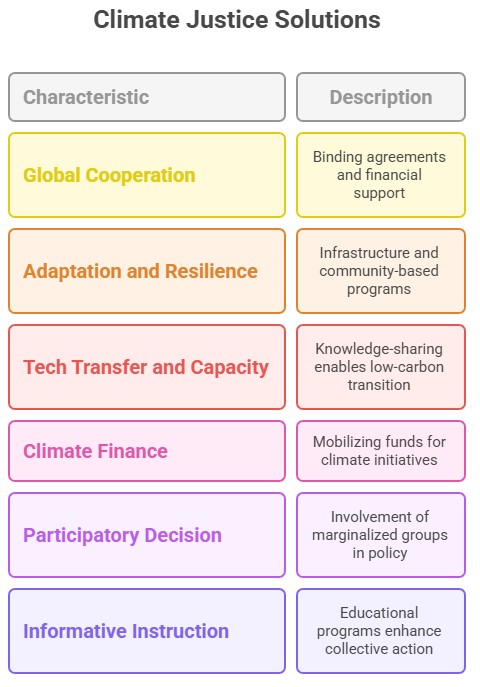
Conclusion
As we move forward, embracing climate justice will empower us to create a world where the burdens of climate change are shared equitably, marginalized communities are uplifted, and sustainable practices flourish, fostering a future that is resilient, fair, and harmonious for all.
|
Extra Marks Fetching component by theIAShub Climate-induced Displacement in Bangladesh
|
50 Years of Stockholm ConferenceStockholm Conference marks 50 years of global environmental action, reflecting on achievements and paving the way for a sustainable future. The Stockholm Conference in 1972 laid the foundation for global environmental governance and sustainable development. Significance of the Stockholm Conference
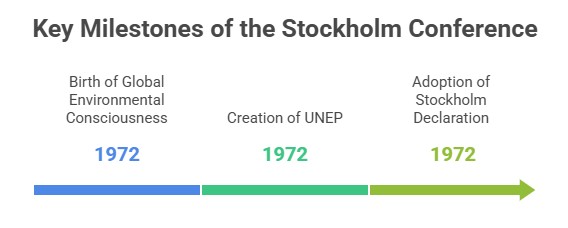 Challenges
Way forward
ConclusionThe Stockholm Conference's impact over 50 years highlights the need for sustainable development. Collaboration, innovation, and political will are crucial for a resilient future. Embracing green tech, circular economy, nature-based solutions, sustainable urbanization, innovative financing, digital monitoring and continued commitment from all stakeholders will be helpful in ensuring a sustainable future. |

33. Ozone and Ozone Hole Depletion
Recent News: UN-backed experts have reported significant progress in ozone layer recovery, contributing to climate change mitigation.
Introduction
- Ozone hole: The ozone hole refers to a significant thinning of the ozone layer specifically over Antarctica.
- Montreal Protocol: It is an international environmental agreement aimed at protecting the Earth's ozone layer.
- Adoption and purpose: It was adopted in 1987 to address the alarming depletion of the ozone layer and the
- formation of the ozone hole.
- Importance: Through global cooperation and efforts, the protocol has played a crucial role in enabling ozone hole recovery and safeguarding the planet's climate system.
Understanding the Ozone Layer:
- Protective shield: in the Earth's stratosphere.
- Filters out: harmful ultraviolet (UV) radiation from the Sun.
- Role: is vital in safeguarding human health and the environment.
- Prevention: It helps prevent health conditions such as skin cancer, cataracts, and immune system suppression.
Objectives of the Montreal Protocol:
- ODS Control: Control and phase out the production and consumption of ozone-depleting substances (ODS).
- Ozone Layer Protection: Safeguard the ozone layer, critical for human health and the environment.
- International Cooperation: Foster global collaboration and information sharing for effective implementation.
- Scientific Research: Promote scientific understanding of ozone depletion mechanisms and its impact.
- Technology Transfer: Facilitate the adoption of ozone-friendly technologies as alternatives to ODS.
Achievements of the Montreal Protocol:
- ODS Reduction: Since the implementation of the Montreal Protocol, over 99% of controlled ODS have been phased out worldwide. The global consumption of CFCs, one of the most damaging ODS, has decreased by more than 98% since 1987.
- Ozone Hole Recovery: In recent years, the ozone hole has shown signs of healing, with a record-breaking decrease in its size observed in 2019.
- Environmental Benefits: The reduction in ODS has resulted in several environmental benefits, including like
- Reduced UV Radiation: Hydrofluorocarbons (HFCs), which have lower ozone depletion potentials, were developed as alternatives for various applications, including refrigeration and air conditioning.
Shortcomings of the Montreal Protocol:
- Long-lasting ODS Effects: Some ODS have long atmospheric lifetimes, leading to persistent ozone depletion effects even after their production has ceased.
- Example: The release of CFCs in the past continues to impact the ozone layer, as these substances can remain in the atmosphere for decades.
- Emerging Substances: New ozone-depleting substances, such as hydrochlorofluorocarbons (HCFCs), pose challenges.
- Example: HCFCs were introduced as transitional substitutes for CFCs but still contribute to ozone depletion, albeit at a lower level.
- Compliance and Monitoring: Ensuring full compliance and effective monitoring across all countries remains a challenge.
- Example: Some countries may struggle with enforcing regulations and adequately reporting their ODS production and consumption data.
- Solutions: Strengthened Compliance, Phase-out HCFCs, Global Awareness, Research and Development
Findings of the UN report:
- Ozone Layer Recovery: The ozone layer is on track to recover within four decades, reducing harmful UV exposure.
- Positive Climate Impact: The Montreal Protocol and Kigali Amendment have avoided 0.3-0.5°C warming by 2100.
- Future Outlook: Ozone layer expected to recover by 2066 (Antarctica), 2045 (Arctic), and 2040 (rest of the world).
- Caution on Geoengineering: Stratospheric aerosol injection (SAI) needs careful consideration due to potential unintended consequences.
- Successful International Cooperation: Montreal Protocol demonstrates effective global collaboration.
- Call for Awareness: Raising global awareness is vital for protecting the ozone layer and addressing climate change.
Conclusion: The Montreal Protocol has played a crucial role in protecting the ozone layer by reducing ozone-depleting substances. As we move forward, it is imperative to maintain strong compliance and foster technological innovations to sustain the progress made and deal with the shortcomings to ensure a healthier environment for future generations.
34. India’s Bioenergy Roadmap: Achieving Net Zero Emissions by 2050 through Renewable Bioenergy
India unveils a roadmap for achieving net zero emissions by 2050 through increased reliance on bioenergy sources.
Introduction to Bioenergy
- What is it? Bioenergy refers to the energy derived from biomass, which includes organic materials such as agricultural residues, wood, and dedicated energy crops.
- A Renewable Powerhouse: It is a renewable energy source that can be converted into various forms of energy, including heat, electricity, and liquid fuels.
The Potential of Bioenergy in India
- Biomass potential: India has an estimated biomass potential of around 18,000 MW.
- Biomass-based power capacity: Currently, India has approximately 9,868 MW of biomass-based power capacity.
- Ethanol blending target: India aims to achieve a 20% blending of ethanol with petrol (gasoline) by 2030.
- Biodiesel blending target: India targets a 20% blending of biodiesel with diesel by 2030.
Types of Bioenergy
- Biofuels
- Biomass Power
- Biogas
- Biochar
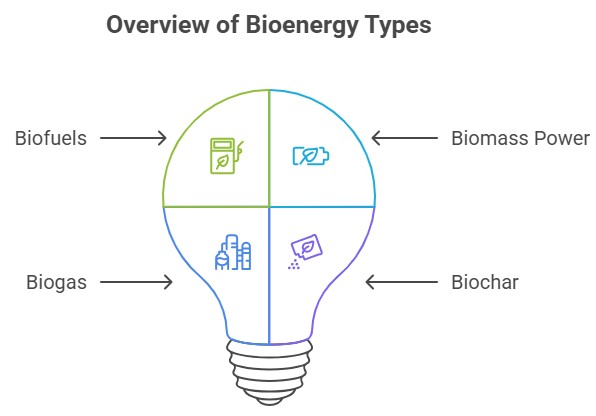
Advantages of Bioenergy
- Renewable: Bioenergy sources can be continuously replenished, making them sustainable in the long run.
- Reduction of greenhouse gas emissions: Bioenergy has the potential to reduce carbon dioxide emissions when compared to fossil fuels.
- Waste management: Bioenergy production can utilize organic waste materials, contributing to waste management and reducing landfill volumes.
- Rural development: Bioenergy projects can stimulate rural economies by creating job opportunities and providing energy access to remote areas.
Challenges and Concerns in Bioenergy Development

|
Measures: Sustainable Feedstock Selection: Promote the use of non-food crops and agricultural residues as feedstock for bioenergy production to minimize competition with food production.Technological Advancements: Explore emerging technologies like algae-based biofuels and genetically engineered energy crops for enhanced bioenergy production.Integrated Approach: Promote the concept of biorefineries that integrate the production of various bioenergy products, such as biofuels. |
Policy and Initiatives in India:
|
Conclusion
Bioenergy presents a promising avenue for meeting energy demands while reducing environmental
impacts. However, careful planning, sustainable practices, and technological advancements are essential for maximizing the benefits of bioenergy and minimizing potential drawbacks.
National Bioenergy Programme
The National Bioenergy Program is a government initiative aimed at promoting the production and utilization of bioenergy in the country. It focuses on harnessing the potential of renewable biomass resources for meeting energy needs, reducing dependence on fossil fuels, and mitigating greenhouse gas emissions.
Objectives of the National Bioenergy Programme
- The program aims to establish a robust bioenergy sector that contributes to national energy security, rural development, and environmental sustainability.
- It seeks to enhance the share of bioenergy in the overall energy mix, diversifying the sources of energy generation.
Key Components of the Bioenergy Programme
- Policy Framework: The Indian government introduced the National Biofuel Policy in 2018, which sets targets for blending biofuels in transportation fuels and provides incentives for bio energy projects.
- Feedstock Development: For instance, energy crops such as sugarcane, maize, and Jatropha are being cultivated on marginal lands and wastelands to serve as feed stocks for biofuel production.
- Infrastructure Development: Dedicated biomass processing facilities, bio refineries, and bio fuel blending facilities are being established across the country to support the scaling up of bio energy production.
- Capacity Building and Skill Development: Training programs, workshops, and collaborations with educational institutions and research centers are being conducted to enhance the capabilities of stakeholders involved in bioenergy production and research.
- Awareness and Outreach: Campaigns, seminars, and exhibitions are conducted to disseminate information, showcase successful bioenergy projects, and encourage the adoption of bioenergy technologies.
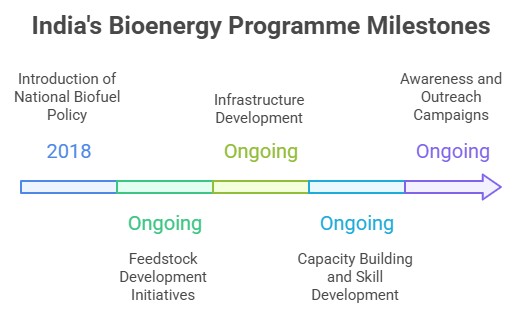
|
Impacts and Achievements of Bioenergy Programmes
|
Conclusion
India's National Bioenergy Program drives sustainable bioenergy production and utilization through policies, feedstock development, technology advancements, infrastructure, capacity building, and awareness, ensuring a cleaner and more sustainable energy future.
Ethanol Blending Programme
"Prime Minister Narendra Modi takes a major step towards a greener future by introducing 20% ethanol-blended petrol in 11 States/UTs, bolstering renewable energy adoption and combating carbon emissions."
Current Status and Future Targets of Ethanol Blending
|
|
Objectives:
Enhance energy security.
|
Benefits of Ethanol Blending:
|
Ethanol Production and Supply:
|
Challenges in Expanding Bioenergy via Ethanol Blending
Availability and Supply, Technical Compatibility Problem, Infrastructure Development, Limited availability of ethanol-blended fuels at fuel stations, Feedstock Dependence, Economic Viability.
Way forward
- Advanced Ethanol Production Technologies: such as cellulosic ethanol production using agricultural residues, waste biomass, or algae
- Decentralized Ethanol Production: Reduce transportation costs, encourage local job creation, and boost rural economies.
- Integrated Biorefineries:
- Technological Innovations for Blending: such as inline blending systems and automated blending processes.
- Sustainable Feedstock Production: To minimize the environmental impact of feedstock cultivation, promote efficient land use, and ensure long-term availability of biomass for ethanol production.
- Carbon Capture and Utilization: Create additional revenue streams by utilizing captured CO2 for various applications.
Conclusion
The Ethanol Blending Programme plays a crucial role in India's energy transition and sustainable development through offering multiple benefits, including reduced environmental impact, enhanced energy security, and economic opportunities for farmers and industries. Continued efforts and investments are required to overcome challenges and achieve higher blending targets, contributing to a cleaner and more sustainable transport sector in India.
Transition to Clean Economy: Prospects and Challenges
- Definition: The shift from fossil fuel-based systems to sustainable and low-carbon alternatives, involving the adoption of renewable energy sources, implementation of energy-efficient measures, and promotion of sustainable practices across sectors.
- This transition aims to mitigate climate change, reduce pollution, enhance energy security, and foster long-term economic growth.
Components of Transition and Benefits/Prospects

Challenges
- Initial Costs: The upfront investment required for clean energy infrastructure and technologies can be a challenge for widespread adoption.
- Policy and Regulatory Frameworks: Effective policies and regulations are necessary to support the transition and overcome barriers.
- Market Barriers: Existing fossil fuel subsidies and market distortions can hinder the competitiveness of clean technologies.
- Workforce Transition: Ensuring a smooth transition for workers in industries affected by the shift, providing training and new job opportunities.
- Social Equity: Addressing equity concerns and ensuring access to clean energy and its benefits for marginalized communities.
Solutions
- Green Financing: Establish financial mechanisms and incentives for clean energy projects, such as green bonds and renewable energy investment funds. An example is the UK's Green Investment Group, which provides funding for renewable energy projects.
- Technology Innovation: Invest in research and development of advanced clean technologies, including energy storage systems and smart grids. Tesla's development of affordable electric vehicles and energy storage solutions serves as an example.
- Carbon Pricing: Implement carbon pricing mechanisms like carbon taxes and cap-and-trade systems to create economic incentives for reducing emissions. The European Union Emissions Trading System (EU ETS) is an example.
Conclusion
The transition to a clean economy holds vast potential for a sustainable future. By embracing innovation, investing in renewable energy, and fostering collaboration, we can create a greener world, ensuring long-term environmental protection, economic growth, and an improved quality of life for future generations.
Green Hydrogen
- Meaning: Green hydrogen is hydrogen gas produced through electrolysis using renewable energy sources, making it a sustainable and zero-emission fuel.
Key Benefits and Objectives of Green Hydrogen
- Carbon Neutrality and Climate Change Mitigation
- According to the Hydrogen Council, green hydrogen could meet 18% of the world's energy demand, potentially reducing CO2 emissions by 6 gigatons by 2050.
- Energy Independence and Security: Green hydrogen reduces reliance on imported fossil fuels, enhancing energy independence and security.
Impacts of Green Hydrogen
- Decarbonization of Hard-to-Abate Sectors: Green hydrogen enables decarbonization in sectors such as steel, chemicals, and heavy transportation, which are challenging to electrify. For example, in Europe, hydrogen is being explored for steel production, with initiatives like the H2 Green Steel project in Sweden.
- Energy Transition Synergies: Green hydrogen is complementing other renewable energy sources, facilitating an integrated and sustainable energy system.
- The Western Australia Renewable Hydrogen Strategy aims to create a hydrogen export industry, capitalizing on the region's abundant wind and solar resources.
- Scalability and Long-Term Potential: With advancements and cost reductions, green hydrogen has the potential to become a scalable and cost-competitive energy solution.
- The International Renewable Energy Agency (IRENA) estimates that green hydrogen costs could fall by 64-71% by 2050.
Concerns and Challenges
- Cost and Economic Viability: Green hydrogen production currently has higher costs compared to conventional hydrogen methods.
- Infrastructure Development: unavailable comprehensive infrastructure
- Energy Intensity and Efficiency: The electrolysis process used to produce green hydrogen requires a substantial amount of electricity.
- Scaling Up Renewable Energy Sources: In 2020, renewable energy accounted for 29.9% of global electricity generation.
Way Forward
- Scientific Advancements: Foster research and development to enhance electrolysis efficiency and lower the cost of green hydrogen production.
- Ecological Synergy: Integrate green hydrogen projects with renewable energy installations, such as wind and solar farms, to optimize resource utilization and reduce environmental impact.
- Circular Economy Approach: Promote the use of green hydrogen in sectors like agriculture, where it can replace fossil fuel-based fertilizers, reducing emissions and enhancing sustainability.
- International Collaboration: Strengthen international partnerships for knowledge-sharing, joint research, and technology transfer to accelerate the development and deployment of green hydrogen.
- Investment Incentives: Provide financial incentives, subsidies, and tax benefits to attract private investments in green hydrogen projects and infrastructure development.
Conclusion
Effective air pollution policies are vital for mitigating the adverse impacts on human health, the environment, and sustainable development. By integrating scientific research, robust policy frameworks, technological advancements, and community participation, governments can address air pollution challenges and strive for cleaner air and a healthier planet.
|
Extra Marks Fetching component by theIAShub
|
Energy Conservation (Amendment) Act, 2022The Energy Conservation (Amendment) Act, 2022 is a recent legislative amendment to the Energy Conservation Act, 2001. Features and Highlights
Criticism
Way Forward
Key differences between the Energy conservation act, 2001 and Energy conservation (amendment) act, 2022:
ConclusionThe Energy Conservation (Amendment) Act, 2022 signifies a positive step towards a sustainable future by promoting renewable energy, carbon credit trading, and energy-efficient practices. Its implementation and enforcement, along with a focus on innovation and collaboration, will be essential in realizing a cleaner and greener India.
|

35. Environmental Impact Assessment (EIA) in India: Key Provisions, Benefits & Challenges
Environmental Impact Assessment (EIA) is a comprehensive approach employed to scrutinize and assess the probable consequences, both favourable and detrimental, that a proposed project or development may exert on the environment, economy, and society.
Need for Environmental Impact Assessment in India
- Rapid industrialization and development: EIA is essential to address the potential environmental impacts of India's rapid industrial growth and infrastructure development.
- Protection of natural resources: EIA helps assess and protect India's rich biodiversity, water resources, forests, and ecosystems.
- Public participation and transparency: EIA ensures public involvement and transparency in project decision-making processes.
- Compliance with environmental regulations: EIA is a legal requirement in India, ensuring compliance with environmental laws and regulations.
Evolution of Environmental Impact Assessment in India

Key Provisions of Environmental Impact Assessment 2020
- Categorization: Projects classified as Category A and Category B based on scale and impact.
- Post-Facto Clearance: Provision for retrospective approval of projects already under construction.
- Expanded Project Scope: Inclusion of additional projects requiring environmental clearance.
- Online Submission and Processing: Emphasis on using online platforms for project applications, consultations, and compliance monitoring.
- Reduction in time for Public Consultation: from 30 days to 20 days.
- Post-Clearance Monitoring: Focus on monitoring compliance and reporting after clearance.
- Expert Committees: Establishment of expert committees at central and state levels for project assessment.
- Violations and Penalties: Penalties and legal action for non-compliance and false information.
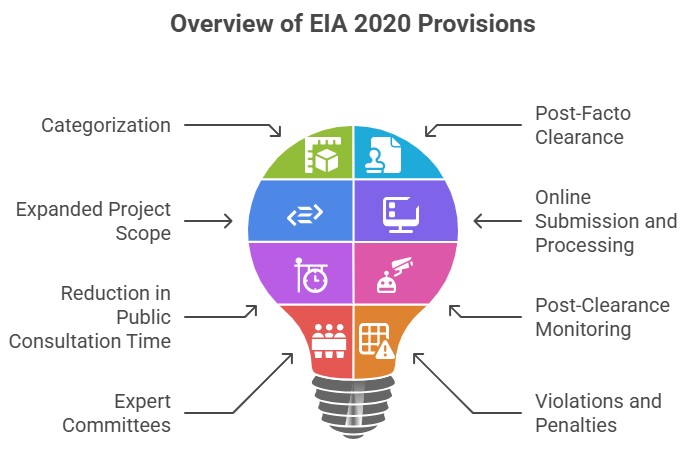
Benefits of Environmental Impact Assessment in India
- Environmental protection and conservation: EIA identifies and mitigates potential environmental impacts, safeguarding air, water, soil, and ecosystems.
- Sustainable development: EIA integrates environmental considerations, promoting sustainable use of resources.
- Social benefits: EIA assesses social impacts, benefiting local communities, livelihoods, health, and cultural heritage.
- Decision-making support: EIA provides comprehensive information for informed project decision-making.
- Legal and regulatory compliance: EIA ensures adherence to national and international environmental standards.
Shortcomings of Environmental Impact Assessment in India
- Easy clearance for ‘Strategic’ projects: because new EIA rules empower the government to declare any project as a ‘Strategic’ project without explaining why.
- Opening the routes for violations: Provision of post-facto clearance will encourage the industries to go with the project without getting worried about the environmental clearance.
- Inadequate assessment quality: Some EIA reports lack thorough assessments and scientific rigor.
- Limited public participation: EIA 2020 has reduced the time for public participation from 30 days to 20 days. It means reduced awareness and limited public participation.
- Weak enforcement and monitoring: Inconsistent enforcement and monitoring of EIA conditions undermine its effectiveness.
- Influence of vested interests: Sometimes, EIA processes is influenced by biased assessments and approvals due to vested interests.
- Non-compliance with the International frameworks and conventions: EIA, 2020 is not in compliance with various International pledges such as Paris Climate Agreement. It will weaken India’s stance as a global leader in environmental governance and climate politics.
Way forward
- Online Platforms: Implement online platforms for project submissions, public comments, and information dissemination, improving accessibility and efficiency of the EIA process.
- Technology Integration: Utilize remote sensing, satellite imagery, and data analytics to enhance accuracy and objectivity in environmental impact assessments.
- Independent Expert Panels: Establish independent expert panels to review and validate EIA reports, ensuring impartiality and expertise.
- Capacity Building: Enhance the knowledge and skills of regulatory authorities and experts involved in the EIA process through training programs and workshops.
- Cumulative Impact Assessment: Include provisions for assessing the cumulative environmental impacts of multiple projects in a region.
- Timely and Comprehensive Reviews, Strengthening Monitoring Mechanisms, Public Awareness and Education, International Best Practices
Recent Updates:
Key Differences Between EIA Rules, 2020 and EIA Notification, 2006:
|
Aspect |
EIA Rules, 2020 |
EIA Notification, 2006 |
|
Applicability |
Applicable to all projects |
Applicable to projects falling under specific categories |
|
Project Categories |
Includes a wider range of projects |
Limited categories of projects covered |
|
Screening Process |
Categorization based on thresholds and parameters |
Categorization based on size and capacity |
|
Public Consultation |
Extensive public consultation requirements |
Less emphasis on public consultation |
|
Timeline |
Streamlined process with reduced timelines |
Longer timelines for obtaining environmental clearance |
|
Expert Committees |
Reconstitution of expert committees with defined roles |
Less defined guidelines for expert committee formation |
|
Post-Facto Clearance |
Restricted provision for post-facto clearance |
No specific provision for post-facto clearance |
|
Violations and Penalties |
Stringent provisions for violations and penalties |
Relatively lenient provisions |
|
Environmental Impact Assessment (EIA) Report |
Expanded scope and detailed requirements |
Relatively limited scope and requirements |
|
Monitoring and Compliance |
Strengthened provisions for monitoring and compliance |
Less emphasis on monitoring and compliance |
|
Public Disclosure |
Mandatory public disclosure of EIA reports |
Limited public disclosure requirements |
Conclusion
EIA has potential for sustainable development and environmental protection by incorporating robust measures, promoting public participation, and integrating scientific advancements to safeguard the environment and foster a balance between development and conservation.

2026-27 UPSC Mains English QEP Power Pages
View DetailsSubmit Your Details to Learn More



