2 Minute Series_26th August 2025
26th August 2025
- Letter of Intent for Global Hunger: Recently, the Government of India took a major step to tackle global hunger by signing a Letter of Intent (LoI) with the World Food Programme (WFP), marking an important milestone in international humanitarian cooperation.
- Key Highlights: The Department of Food and Public Distribution (DFPD) will supply fortified rice from India to vulnerable populations in crisis zones worldwide.
- Glob al Partnership: The initiative leverages India’s agricultural surplus to deliver life-saving aid.
- Humanitarian Philosophy: India follows the principle of Vasudhaiva Kutumbakam (“the world is one family”) in its humanitarian efforts.
- WFP Appreciation: WFP officials appreciated India’s commitment to global food security amid rising food insecurity and constrained humanitarian funding.
- Background: The LoI follows discussions at the February 2025 Executive Board side event in Rome between Indian government and WFP representatives.
- Future Collaboration: Discussions also covered ongoing and potential projects like Supply Chain Optimization, Fortified Rice Rollout, Grain ATMs, Jan Poshan Kendra, Smart Warehousing, and Mobile Storage Units (Flospans).
- Key Participants: Senior officials from DFPD, Food Corporation of India, and WFP were part of the event.
- Fiji: Recently, India announced that it will provide training and equipment to strengthen Fiji’s maritime security, as stated by the Prime Minister of
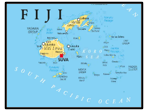
- About Fiji: Location: South Pacific Ocean, northeast of New Zealand, southwest of Hawaii.
- Geography: Archipelago with ~300 islands and 540 islets over ~1,000,000 sq miles (3,000,000 sq km).
- No land borders with other countries.
- About 100 islands are inhabited.
- Capital: Suva, located on the southeast coast of the largest island, Viti Levu.
- Languages: English (official), Fijian
- Currency: Fiji dollar (FJD).
- Largest Island: Viti Levu accounts for more than half of Fiji’s land area.
- Terrain: Rugged, with a central mountain range; Mount Tomanivi (1,324 m / 4,344 ft) is the highest peak.
- Geology: Formed mainly by volcanic action, sedimentary deposits, and coral formations.
- Land Cover: Nearly 50% forested, with dry grasslands in western areas.
- Population: Majority are mixed Melanesian-Polynesian, with a significant South Asian minority.
- OpenAI: Recently, OpenAI launched its India-first Learning Accelerator, an initiative designed to transform education through the use of artificial intelligence.
- Key highlights: A $500,000 research partnership with IIT Madras aims to study how AI can improve learning outcomes and innovative teaching methods, informed by cognitive neuroscience.
- OpenAI’s ChatGPT Study Mode is tailored to deliver high-quality answers aligned with Indian curricula, with plans to expand support for local languages.
- Over the next six months, ~500,000 ChatGPT licenses and training will be provided to educators and students via partnerships with the Ministry of Education, AICTE, and ARISE.
- AI is positioned as a personal tutor for students and a tool to free up educators for core teaching tasks, while helping institutions improve teaching and research infrastructure.
- OpenAI recognizes India’s diverse education ecosystem, from IITs to rural schools with limited resources.
- OpenAI plans to work with both central and state governments to integrate AI into education effectively.
- Bloom Syndrome: Recently, Bloom Syndrome, a rare genetic disorder with fewer than 300 reported cases worldwide (294 registered in the Bloom Syndrome Registry as of 2023), drew attention.
- A patient with the syndrome underwent a bone marrow transplant using donated stem cells.
- About Bloom Syndrome: A genetic disorder caused by mutations in the BLM gene, which is responsible for DNA maintenance and repair.
- Other Names: Bloom-Torre-Machacek syndrome, congenital telangiectatic erythema.
- Cause: Autosomal recessive inheritance – occurs when a child inherits defective BLM genes from both parents.
- High-risk Population: More common among Eastern European (Ashkenazi) Jewish population.
- Symptoms & Health Implications: Growth delays, abnormal features, sun-sensitive skin, immune deficiencies, insulin resistance, reproductive issues, and higher early-onset cancer risk.
- Treatment: No specific cure; managed through a multi-disciplinary approach to alleviate symptoms. Interventions like bone marrow transplants may help in severe cases.
- Study on Microbes: Recently, researchers at IIT-Bombay found that even small changes in how microbes get their nutrients can make them develop in completely different ways.
- The study was published in npj Systems Biology and Applications and BMC Ecology and Evolution.
- Key Highlights: Microbes were fed chemically related sugars (glucose and galactose) either as simple mixes or as complex sugars (lactose, melibiose) to see how “meal presentation” affects evolution.
- Evolutionary Divergence: Over 300 generations, microbes evolved along distinct paths: some coli grew faster, others produced more biomass; yeast showed similar divergence.
- Genetic Basis: Multiple mutations contributed to these adaptations, showing that nutrient presentation can influence which mutations are beneficial.
- Pleiotropic Response: When evolved microbes were placed in new sugar environments, their growth patterns showed predictable side effects, linking past adaptations to performance in new environments.
- Applications: Findings can help direct microbial evolution for faster growth or efficiency, with potential uses in food, pharmaceuticals, biofuels, and strategies to combat antibiotic resistance.
- Key Insight: Evolution is both flexible and constrained; understanding hidden rules of adaptation can help anticipate evolutionary outcomes despite unpredictability.
- Anamalai Tiger Reserve: Recently, a year-long study by the Tamil Nadu Forest Department focused on the dense forests of the Anamalai Tiger Reserve, famous for the rare synchronous flashing of
- The study found that these forests are home to at least eight different species of fireflies.
- About Anamalai Tiger Reserve: Situated at an altitude of 1,400 m in the Anamalai Hills, covering parts of Pollachi and Coimbatore districts in Tamil Nadu.
- Lies south of the Palakkad Gap in the Southern Western Ghats.
- Bordered by Parambikulam Tiger Reserve (east), Chinnar Wildlife Sanctuary and Eravikulam National Park (southwest), and Nenmara, Vazhachal, Malayattur, and Marayur reserved forests of Kerala.
- Establishment: Declared a tiger reserve in 2007.
- Indigenous Communities: Home to six tribes: Kadar, Muduvar, Malasar, Malai Malasar, Eravalar, and Pulayar.
- Flora: Rich in wild relatives of cultivated plants like mango, jackfruit, wild plantain, ginger, turmeric, pepper, and cardamom.
- Fauna: Key wildlife includes tiger, Asiatic elephant, sambar, spotted deer, barking deer, jackal, leopard, and jungle cat.
- Space-Based Projects: Recently, the Indian Space Research Organisation (ISRO) has stepped up its activities in Ladakh through several space-based projects.
- These initiatives aim to improve remote sensing, communication, natural resource management, and disaster preparedness.
- Key Highlights: Projects include Resourcesat-3/3A, Resourcesat-3S/3SA, HRSAT, G20 Satellite, and TRISHNA mission, expected to be operational by 2027–28, enhancing monitoring of land, water, and environmental changes.
- Current Satellite Support: Ladakh already benefits from satellites such as Cartosat, Resourcesat, RISAT-1A, INSAT-3DR/3DS, Oceansat-3, SARAL, and Indo-US NISAR for remote sensing, telecommunication, and broadband coverage.
- Communication Expansion: 12 Indian satellites provide telecommunication and broadband; permissions granted to 10 foreign satellites and three LEO/MEO constellations for operations over India, including Ladakh.
- Natural Resource Monitoring: Ladakh is part of ISRO’s Natural Resources Census Programme and Mountain Ecosystem Studies, tracking land degradation, desertification, natural hazards, and geodynamic changes.
- Ladakh-Specific Projects: Ladakh Modelling and Space Applications Programme: Geoportal-based climate, environment, and resource studies.
- Geo-Ladakh portal: Supports agriculture, horticulture, water conservation, artificial glaciers, renewable energy, and flood hazard assessment.
- AMRUT-1.0 and 2.0: Satellite-based urban planning and waterbody information systems for Leh and Kargil.
- National Youth Award 2024: Recently, the Ministry of Youth Affairs & Sports, India, announced the call for nominations for the National Youth Award 2024.
- About National Youth Award: Sponsored by Ministry of Youth Affairs & Sports, Government of India.
- Purpose: To recognize and motivate Indian youth (aged 15–29 years) for outstanding contributions in social service and national development.
- Objectives: Encourage youth to achieve excellence in national development or social service. Recognize voluntary organizations working with youth for national development/social service.
- Award Details: Categories: Individual Category – usually up to 20 awards per year and Organization Category – usually up to 5 awards per year.
- Prize Money: Individuals: ₹1,00,000, medal, and certificate and Organizations: ₹3,00,000, medal, and certificate.
- Eligibility: Individuals or organizations showing excellent work in: Health, research & innovation, culture, human rights, arts & literature, tourism, traditional medicine, active citizenship, community service, sports, academic excellence, and smart learning.
- Lesser flamingo: Recently, a rare lesser flamingo, also called Raj Hamsa, was spotted near the Fish Mill in Malpe, exciting bird watchers and ornithologists. This marks the first-ever sighting of this species on the Udupi coast.
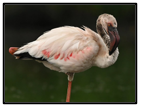
- About Lesser Flamingo (Phoeniconaias minor): Smallest and most numerous of all flamingo species.
- Distribution: Native to sub-Saharan Africa and western India; occasional sightings further north are considered vagrants.
- Habitat: Prefers highly alkaline or saline lakes, lagoons, and mudflats.
- Features: Appearance: Vivid pink color, long thin legs, striking red eyes.
- Hind Toe (Hallux): Present, unlike some other flamingos.
- Size: Adult males are larger than females.
- Behavior: Serially monogamous – pairs stay together while raising young.
- Gregarious – found in large flocks with synchronized movements. - Conservation Status:
- IUCN Red List: Near Threatened
- CITES:Appendix II.
 Detailed Solutions & Explanations

