2 Minute Series_12 September 2025
12th September 2025
1. Red Ivy Plant: Recently, the Jawaharlal Nehru Tropical Botanic Garden & Research Institute (JNTBGRI), Palode, developed an innovative multi-layered wound-healing pad by unlocking the therapeutic properties of the red ivy plant.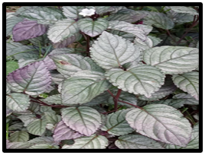
-
Key Highlights: Plant source: Red ivy plant (Strobilanthes alternata), locally called murikooti pacha, Acanthaceae family.
-
Key discovery: Identification and isolation of acteoside molecule from red ivy plant for the first time.
-
Product developed: Multi-layered wound-healing pad using nanomaterials (electro-spun nanofibers).
-
Key ingredient: Acteoside molecule (effective even at 2% concentration) + antibiotic neomycin sulfate.
-
Pad design: Electro-spun nanofiber layer (biodegradable, non-toxic, allows gas exchange).
-
Sodium alginate-based super absorbent sponge (absorbs wound exudate).
-
Activated carbon layer (absorbs and prevents odour).
-
Benefits: Prevents microbial growth, speeds healing, absorbs secretions, controls odour.
-
Efficacy: Animal studies show significantly faster wound healing.
-
Availability: First multifunctional wound dressing pad of this kind in India.
-
Affordability: Materials are accessible and cost-effective, enabling large-scale production.
2. Household Surveys: Recently, the National Statistics Office (NSO) under MoSPI announced two flagship nationwide household surveys — the All India Debt and Investment Survey (AIDIS) and the Situation Assessment Survey (SAS) of Agricultural Households.
- About AIDIS: India’s most detailed survey on household finance.
-
Originated as the All India Rural Credit Survey (1951-52); expanded in 1961-62 to cover both debt and investment.
-
Conducted once every 10 years; latest round in 2019 (77th Round) on request of the RBI.
-
Provides insights on: Levels of household indebtedness
-
Asset ownership and distribution in rural vs. urban areas
-
Credit markets and financial inclusion trends
-
- About SAS of Agricultural Households: Introduced in 2003 to study the economic status of farming households. Expanded in 2013 to cover all agricultural households; further strengthened in 2019 round.
-
Tracks a wide set of indicators such as: Household income and expenditure
-
Indebtedness and access to credit
-
Land and livestock ownership
-
Crop and livestock production patterns
-
Farming practices and adoption of technology
-
Access to government schemes and crop insurance
3. Samudra Pradakshina: Recently, Raksha Mantri Shri virtually flagged off ‘Samudra Pradakshina’, the world’s first Tri-service all-women circumnavigation sailing expedition from the Gateway of India, Mumbai.
-
The mission was described as a symbol of Nari Shakti, Armed Forces unity, Aatmanirbhar Bharat, and India’s global vision, highlighting the courage of the 10 women officers on this voyage.
-
About Samudra Pradakshina Vessel: Indian Army Sailing Vessel (IASV) Triveni, an indigenously built 50-foot Class A yacht from Puducherry.
-
Duration: 9 months (September 2025 – May 2026).
-
Route: Approx. 26,000 nautical miles on an easterly course.
-
Rounds the three great Capes – Leeuwin, Horn, and Good Hope.
-
Covers all major oceans including the challenging Southern Ocean and Drake Passage.
-
Crew to conduct scientific research with the National Institute of Oceanography:
-
Study of microplastics.
-
Documentation of ocean life.
-
Awareness campaigns on marine health.
-
-
IASV Triveni represents Aatmanirbhar Bharat in defence innovation and maritime self-reliance.
4. Special Economic Package: Recently, Mauritius and India held discussions to strengthen ties, leading to the announcement of a Special Economic Package covering health, infrastructure, maritime cooperation, and strategic projects.
- About Projects: Construction of New Sir Seewoosagur Ramgoolam National Hospital.
-
Establishment of an AYUSH Centre of Excellence.
-
Setting up of a Veterinary School and Animal Hospital.
-
Provision of helicopters.
- Projects on Grant-cum-Line of Credit (LOC): Completion of new ATC tower at SSR International Airport.
-
Development of Motorway M4.
-
Development of Ring Road Phase II
- Strategic Cooperation (Agreed in principle): Redevelopment and restructuring of Port in Mauritius.
-
Assistance in development and surveillance of Chagos Marine Protected Area.
5. Biosignatures: Recently, NASA announced its strongest evidence that life may have once existed on Mars, after the Perseverance rover detected potential biosignatures in a rock sample.
-
Key Findings: Initial scans revealed chemical compositions and structures suggesting possible microbial activity from billions of years ago.
- Presence of: Organic carbon, Sulphur, Oxidised iron (rust), Phosphorus, Clay and silt, in rocks
-
On Earth, such materials are excellent preservers of microbial life.
-
Biosignature: Any object, structure, or chemical composition that may suggest a biological origin.
-
Cheyava Falls minerals could have formed via electron-transfer reactions, a process microbes use to generate energy.
-
But: Similar mineral combinations can also arise abiotically (without life).
6. Non-Communicable Diseases: Recently, a Lancet study revealed a rise in deaths from non-communicable diseases in India between 2010 and 2019, contrasting with a global decline.
- Key Findings India-Specific: Rising NCD mortality risk in India, especially among women, unlike the global decline.
-
Males: Probability of dying from NCDs (birth–80 years) rose from 56% (2001) → 8% (2010) → 57.9% (2019).
-
Females: Probability was 7% (2001) → dipped slightly to 46.6% (2010) → then sharply increased to 48.7% (2019).
-
Major contributors: heart disease and diabetes.
-
Lung cancer mortality rose in India (along with Armenia, Iran, Egypt, Papua New Guinea), while globally male lung cancer mortality declined in 92% of countries.
-
Global: From 2010–2019, NCD mortality declined in ~80% of countries, covering 70%+ of global population.
-
Reductions in cardiovascular disease mortality (heart attacks, strokes) drove much of global improvement.
-
Gains offset by rising deaths from dementia, neuropsychiatric conditions (alcohol use disorder), and cancers like pancreatic & liver.
7. Isobutanol Blending: Recently, India started exploring isobutanol blending with diesel after unsuccessful ethanol-diesel trials. This move aims to boost biofuels, support farmers, reduce oil imports, and promote sustainable energy use.
- About Isobutanol: A four-carbon alcohol (C₄H₁₀O), colorless, flammable, and long used as a solvent in paints, coatings, and chemical industries.
-
Produced through both petrochemical routes and biomass fermentation.
- Properties (Compared to Ethanol): Higher energy density than ethanol, making it closer to diesel in performance.
-
Lower hygroscopicity – absorbs less water than ethanol, which reduces corrosion risks in engines and fuel pipelines.
- Blending & Fuel Trials: ARAI is conducting trials with 10% isobutanol–diesel blends.
-
Also being studied as a standalone fuel.
-
Under evaluation for CNG–isobutanol flex-fuel applications, especially in tractors and agricultural machinery.
- Benefits for India: Strengthens energy security by providing a cleaner alternative to fossil fuels.
-
Aligns with National Biofuel Policy (2018) targets for energy transition.
-
Supports farmer incomes by creating new markets for bio-based fuel feedstock.
8. Pallas’s Cat: Recently, a wildlife survey in Arunachal Pradesh captured the first-ever photographic evidence of the elusive Pallas’s cat in the state. This rare finding adds to the region’s rich biodiversity significance.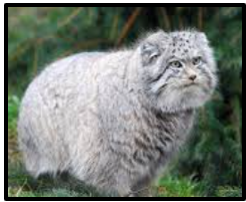
- About Pallas’s Cat (Otocolobus manul): A small wild feline, well camouflaged and adapted to survive in cold continental climates.
-
It was first described in 1776 by naturalist Peter Simon Pallas, after whom it is named, based on specimens from near Lake Baikal, Russia.
- Distribution: Native to Central Asia, with a range spanning: Western Iran, Mongolia, China, Russia (Mongolia–China border), Kazakhstan, and Kyrgyzstan.
-
Prefers rocky montane grasslands and shrublands where snow cover remains under 15–20 cm.
-
Primary prey includes lagomorphs (hares, pikas) and rodents
- Key Features: Roughly the size of a domestic cat, with soft, dense fur.
-
Fur colour: pale silvery-gray to light brown.
-
Distinctive traits: Broad head, high-set eyes, and low-set ears.
-
Tail tipped and ringed with black.
-
Some individuals show faint dark body markings.
-
Adaptation: longer fur on the underparts (twice the length of upper fur) to provide insulation while lying on cold ground.
-
Conservation Status:
-
CITES: Appendix II
-
IUCN Red List: Least Concern
 Detailed Solutions & Explanations

