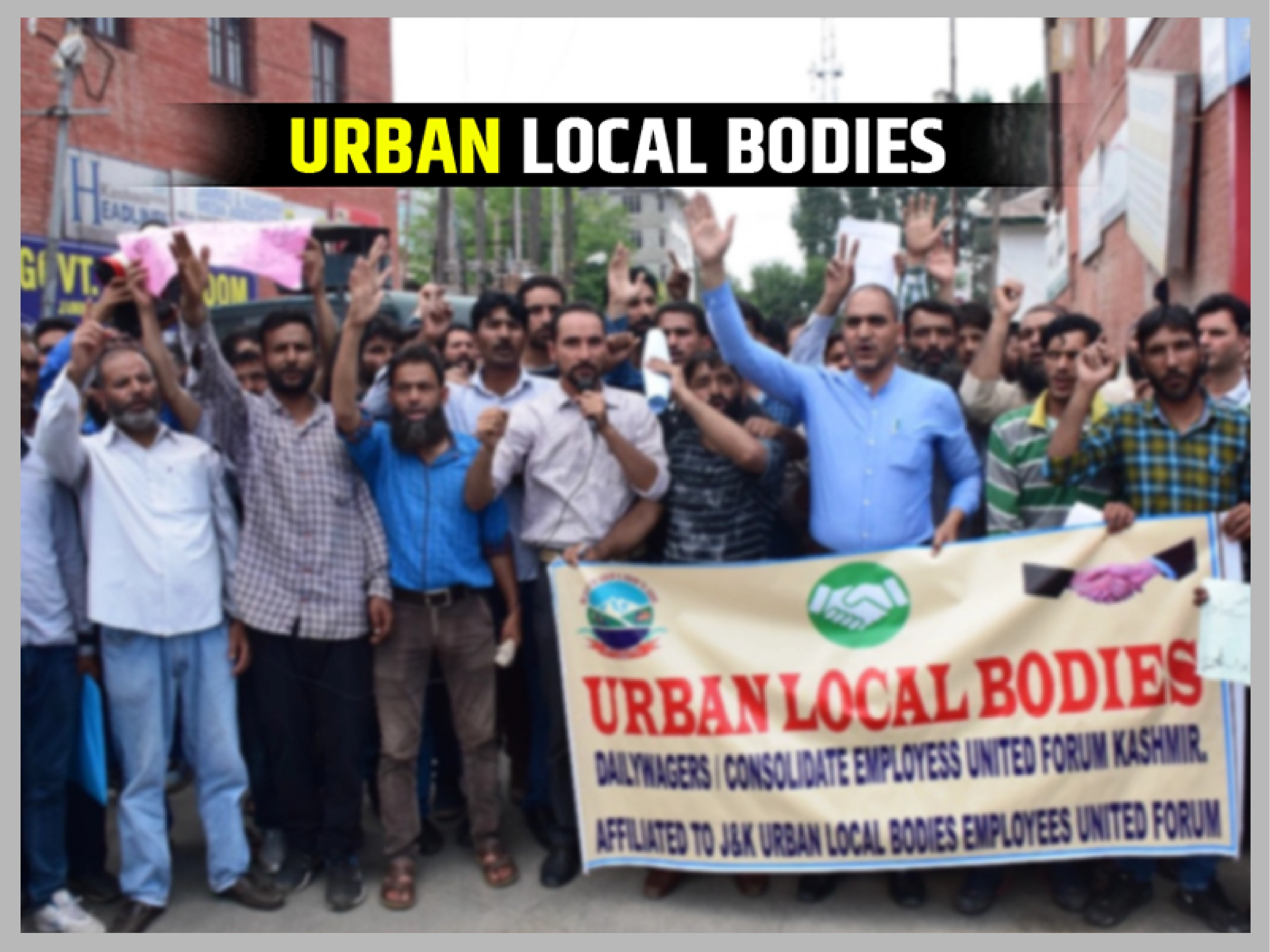
Urban Local Bodies in India Challenges, Importance, and the Way Forward

Urban Local Bodies are key to India's urban development. Learn about their structure, challenges, financial constraints, and ways to improve municipal governance.

THEIASHUB
Get an Instant Call Back from Our Expert Mentors Now!
+91

Introduction

Urban Local Bodies (ULBs) play a crucial role in India’s governance structure, ensuring effective urban administration and development. Established by the 74th Constitutional Amendment Act of 1992, ULBs are responsible for providing essential services, infrastructure development, and overall urban management. With India’s urban population expected to reach 50% by 2050, the need for efficient urban governance has never been more critical.

This article explores the importance of urban local governance, challenges faced by ULBs, and potential solutions for strengthening urban administration in India.

Urban Local Bodies (ULBs)

The 74th Amendment Act introduced a new Part IX-A (Articles 243-P to 243-ZG) and the 12th Schedule to the Indian Constitution, which defines the structure and functions of ULBs. There are three types of urban local bodies:

  • Nagar Panchayat – Governs areas transitioning from rural to urban.
  • Municipal Council – Administers smaller cities and towns.
  • Municipal Corporation – Manages larger metropolitan areas.

These institutions play a fundamental role in urban development, ensuring efficient governance and service delivery in cities.

The Need for Robust Urban Governance

1. Cities as Engines of Economic Growth

Indian cities contribute nearly 60% of the GDP, despite only 30% of the population residing in urban areas. Strengthening urban governance is crucial to achieving the national target of a $5 trillion economy, rapid job creation, and attracting investments.

2. Urbanization Trends and Population Growth

By 2050, nearly half of India's population will live in cities. Without a well-structured urban governance system, this rapid transition can lead to an urban crisis, causing stress on infrastructure, housing, and basic amenities.

3. Infrastructure Development and Investment

ULBs are key stakeholders in big-ticket infrastructure projects such as Smart Cities Mission, National Infrastructure Pipeline (NIP), Gati Shakti, and Industrial Corridors. A well-governed urban system ensures the successful implementation of these initiatives.

4. Addressing Environmental and Health Concerns

  • Pollution Crisis: India is home to 39 out of the 50 most polluted cities in the world, highlighting the need for better urban planning.
  • Health Emergencies: The COVID-19 pandemic exposed vulnerabilities in urban health systems, emphasizing the importance of robust governance in cities.

5. Global Commitments and Sustainable Development

Cities play a critical role in achieving India's commitments to global frameworks like the United Nations Sustainable Development Goals (SDGs), Paris Agreement, and UN-Habitat’s New Urban Agenda (2016). Strengthening ULBs ensures sustainable urban growth aligned with these international obligations.

Challenges in Urban Governance

Despite their importance, urban local bodies face multiple challenges that hinder effective governance and service delivery.

1. Limited Devolution of Powers

State governments often retain control over urban functions, violating the principle of subsidiarity. The 12th Schedule lists 18 functions for ULBs, but no state has devolved all of them. This weakens municipal autonomy.

2. Financial Constraints

ULBs struggle with financial independence due to:

  • Limited taxation powers
  • Delayed and inadequate fund transfers from states
  • Dependence on grants instead of self-generated revenue
  • Underutilization of innovative financial tools like municipal bonds, REITs, and INVITs

3. Weak Executive Leadership

The Mayor system in India is weak, with municipal commissioners holding executive authority instead of elected representatives. This leads to a lack of accountability and undermines democratic governance.

4. Bureaucratic and Political Corruption

Urban areas suffer from rampant corruption, resulting in:

  • Illegal land acquisition
  • Rent-seeking behavior
  • Poor infrastructure development
  • Vote-bank politics

5. Infrastructure Deficiencies

  • Housing shortage and slum proliferation
  • Inadequate public transportation and poor road networks
  • Unplanned urban expansion, leading to traffic congestion and lack of green spaces

6. Poor Urban Planning and Land Utilization

  • Three-fourths of Indian cities lack a master plan
  • Fragmented land ownership leads to sub-optimal land use
  • Poor coordination between different urban agencies like MCD, NDMC, PWD, and Jal Board in Delhi

7. Lack of Inclusive Governance

Marginalized groups such as women, SC/ST communities, migrants, and the elderly are often excluded from urban decision-making processes. This results in inequitable development.

The Way Forward

1. Strengthening Institutional Framework

  • Clearly define roles and responsibilities of ULBs to avoid functional overlap
  • Ensure timely municipal elections and introduce Right to Recall for underperforming officials

2. Financial Empowerment of ULBs

  • Assign greater taxation powers to municipal bodies
  • Explore innovative financing models like municipal bonds, PPP projects, and land value capture
  • Implement transparent budgeting and auditing mechanisms to curb corruption

3. Capacity Building and Leadership Development

  • Establish dedicated urban governance training programs for municipal officials
  • Encourage lateral entry of private sector professionals for better urban management
  • Build a cadre of trained urban planners to handle city development efficiently

4. Public Participation and Digital Governance

  • Strengthen ward committees and area sabhas for better citizen engagement
  • Implement e-Governance solutions like e-Municipality and Smart Cities Mission
  • Improve access to grievance redressal mechanisms for residents

5. Urban Infrastructure and Sustainability

  • Expand public transport systems to reduce congestion
  • Promote eco-friendly urban development, focusing on green spaces and pollution control
  • Strengthen urban housing programs like PMAY-U and RAY to eliminate slums

6. Regional and Integrated Planning

  • Develop regional plans instead of standalone city plans to decongest metropolitan areas
  • Modernize land records and titling systems to reduce legal disputes and optimize land use

Conclusion

Urban Local Bodies are the backbone of India’s urban development. While they face significant challenges, a strategic and well-implemented governance framework can transform Indian cities into vibrant economic hubs. Strengthening municipal autonomy, financial independence, and public participation will ensure sustainable and inclusive urban growth. As India moves towards becoming a global economic powerhouse, well-governed cities will be key drivers of progress.



UPSC QEP 2026 Batch 5 - English
UP-PCS 2026 Pre+Mains Integrated Program (English Batch-2)
View Details
Submit Your Details to Learn More
I agree to give my consent to receive updates through SMS/Email & WhatsApp*.

UPSC QEP 2026 Batch 5 - English
UP-PCS 2026 Pre+Mains Integrated Program (Hindi Batch-2)
View Details


Join theIAShub’s Mains Answer Writing Program

Refine your answer writing skills and elevate your UPSC preparation with personalized support and expert feedback.

Fill out the form to get started with the program or any other enquiries !

I agree to give my consent to receive updates through SMS/Email & WhatsApp*.

Best IAS Coaching In Delhi, UPSC Online & Offline Classes by IAShub

Are you dreaming of becoming an IAS officer? Then, IAShub can be your best guide. It is one of the Best IAS Coaching in Delhi. Many students who want to clear the UPSC exam join IAShub for learning. The institute gives both online and offline classes. Their teachers are experienced and helpful. They easily explain every topic. Students also get notes, tests, and tips to do well in the exam.

UPSC Online Classes by IAShub

IAShub is in Delhi and is trusted by many UPSC students. It offers coaching for every part of the UPSC exam – Prelims, Mains, and Interview. The classes are simple and easy to understand. The teachers are experts and guide students in the right way. IAShub is also known for its helpful notes, test series, and answer-writing practice. IAShub is the best coaching in Delhi and also gives UPSC Online Classes. This helps students from any place in India to learn. The online classes are live and also recorded. So, students can watch them anytime. These classes cover the full UPSC syllabus.

Key Offerings Provided by IAShub

Here are some important services provided by IAShub:

  • UPSC Prelims: IAShub teaches for Prelims with a focus on basics. It also gives daily current affairs and monthly magazines.
  • Classroom Courses: IAShub has classroom learning for students in Delhi. The environment is good and peaceful for study.
  • Live Classes: Students who live far can join live UPSC online classes. These classes are just like real classes.
  • QEP for Mains: The Quality Enrichment Program (QEP) is special for Mains preparation. It helps students write better and faster.
  • Answer Writing: Regular answer writing practice is given. Teachers also check answers and give tips to improve.
  • Free Resource: IAShub gives free notes by toppers and helpful Main Booster material.
  • Test Series: Test series are available for every subject. These help students know their weak points and improve.
  • Interview Guidance Session: IAShub also gives interview practice sessions with experts. These help students feel confident.

UPSC Exam Overview

The UPSC Civil Services Exam has three parts:

  • Prelims: It has two papers: General Studies and CSAT.
  • Mains: It has nine papers, including essays and optional subjects.
  • Interview: It tests the personality and confidence of the student.

This exam is tough, but with the right guidance, it becomes easy to manage. Students must study smart and stay regular.

How IAShub Helps in the UPSC Journey

IAShub supports students from the beginning to the end. It gives the right books, tests, and notes. The classes are easy to follow, and the teachers are always ready to help. Students get personal doubt sessions too. The test series and answer checking help students learn where they need to do better. Also, free study materials save time and money.
IAShub also guides students during the final stage – the interview. Experts take mock interviews and give useful tips. This full support makes IAShub one of the best IAS coaching in Delhi.

Best IAS Coaching In Delhi FAQs

Yes, IAShub offers live and recorded online classes. Students can attend from any part of India.

Classes are available in both English and Hindi, so students can choose the language they are comfortable with.

The classroom centre is located in Delhi. Students can visit and join offline batches there.

IAShub gives interview guidance sessions to help students prepare for the final round of UPSC.