


Explore the challenges and reforms needed in Drug Regulation in India to ensure global trust, safety, and public health through updated laws and systems.
 theIASHub | 05 Jun, 2025 | 1152

India is a global powerhouse in the pharmaceutical sector, ranking 3rd worldwide in drug production by volume. It exports to nearly 200 countries and is a major supplier of critical vaccines, including DPT, BCG, and measles. However, despite its global standing, Drug Regulation in India faces numerous challenges that threaten public health, economic growth, and the country’s international reputation. This article examines the current state, systemic flaws, and the much-needed reforms in Drug Regulation in India.
India plays a crucial role in global healthcare:
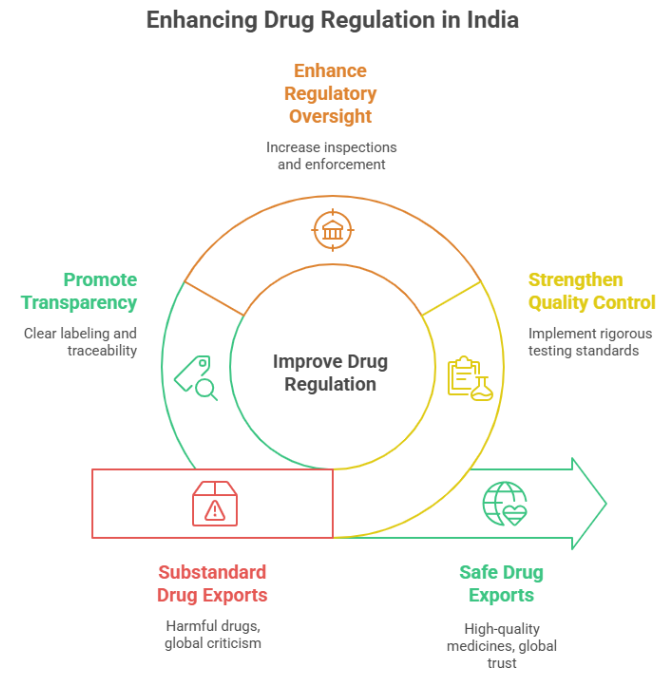
Despite these achievements, the country has faced international criticism due to substandard or harmful drug exports. Incidents in countries like Gambia, Uzbekistan, Sri Lanka, and the USA have raised alarms over the Drug Regulation in India.
The Drugs and Cosmetics Act, 1940, still governs the Indian pharmaceutical sector. This legislation is outdated and fails to address modern challenges like:
Drug regulation is shared between the Centre and States, leading to:
This severely impacts the ability to enforce safety and quality standards effectively.
The Drug Regulation in India suffers from:
The Central Drugs Standard Control Organization (CDSCO):
This reduces accountability and trust in India's drug regulatory system.
Several pharmaceutical companies:
These unethical practices further erode confidence in Drug Regulation in India.
Many manufacturers are unaware of the regulatory requirements for different international markets. Quality assurance systems are often either absent or poorly implemented.
Substandard or contaminated drugs can result in:
Consumers and healthcare providers lose confidence in Indian pharma products, which directly affects medicine adherence and health outcomes.
Global recalls and bans affect the revenue of Indian pharma companies and reduce competitiveness in international markets.
Substandard drug exports hurt India’s reputation as a global healthcare provider, impacting its role in international health partnerships.
Amend the Drugs and Cosmetics Act, 1940 to include:
Establish a single, autonomous regulatory authority for the entire pharma sector with:
Encourage pharma companies to:
This will improve credibility and ensure adherence to global standards.
Reform CDSCO by:
Promote training, research, and awareness programs to instill a culture of drug safety and ethics among manufacturers and regulators.
Alongside pharmaceutical drug regulation, India is taking strict action against narcotics and substance abuse:
This approach needs to be synchronized with better awareness, rehab support, and legal mechanisms.
Strengthening Drug Regulation in India is essential for safeguarding public health, enhancing global trust, and maintaining the growth trajectory of the pharmaceutical industry. A modern legal framework, unified regulatory structure, industry accountability, and public transparency are the pillars on which India must rebuild its drug regulation system.


Refine your answer writing skills and elevate your UPSC preparation with personalized support and expert feedback.
Fill out the form to get started with the program or any other enquiries !

Are you dreaming of becoming an IAS officer? Then, IAShub can be your best guide. It is one of the Best IAS Coaching in Delhi. Many students who want to clear the UPSC exam join IAShub for learning. The institute gives both online and offline classes. Their teachers are experienced and helpful. They easily explain every topic. Students also get notes, tests, and tips to do well in the exam.
IAShub is in Delhi and is trusted by many UPSC students. It offers coaching for every part of the UPSC exam – Prelims, Mains, and Interview. The classes are simple and easy to understand. The teachers are experts and guide students in the right way. IAShub is also known for its helpful notes, test series, and answer-writing practice. IAShub is the best coaching in Delhi and also gives UPSC Online Classes. This helps students from any place in India to learn. The online classes are live and also recorded. So, students can watch them anytime. These classes cover the full UPSC syllabus.
Here are some important services provided by IAShub:
The UPSC Civil Services Exam has three parts:
This exam is tough, but with the right guidance, it becomes easy to manage. Students must study smart and stay regular.
IAShub supports students from the beginning to the end. It gives the right books, tests, and notes. The classes are easy to follow, and the teachers are always ready to help. Students get personal doubt sessions too. The test series and answer checking help students learn where they need to do better. Also, free study materials save time and money.
IAShub also guides students during the final stage – the interview. Experts take mock interviews and give useful tips. This full support makes IAShub one of the best IAS coaching in Delhi.
Join 39,000+ UPSC Aspirants! 🚀
Get Free UPSC/State PSC Study Materials, Daily Current Affairs Question & Exam Updates.
Join Telegram Channel
