Root Causes Behind the Naxalite Movement in India

Explore the key causes behind the Naxalite Movement, including tribal discontent, poor governance, economic inequality, and lack of development in rural India.

THEIASHUB
Get an Instant Call Back from Our Expert Mentors Now!
+91

The Naxalite Movement in India, a left-wing extremist insurgency, has persisted for decades in rural and tribal regions. While it is often seen through the lens of violence and security threats, the true roots of the Naxalite Movement lie deep within socio-economic inequalities, government neglect, and historical injustice.

Rather than being a simple law-and-order issue, the Naxalite Movement is a symptom of long-standing grievances among marginalized communities. Understanding these causes is essential for developing long-term, sustainable solutions to end the insurgency and bring peace and development to affected regions.
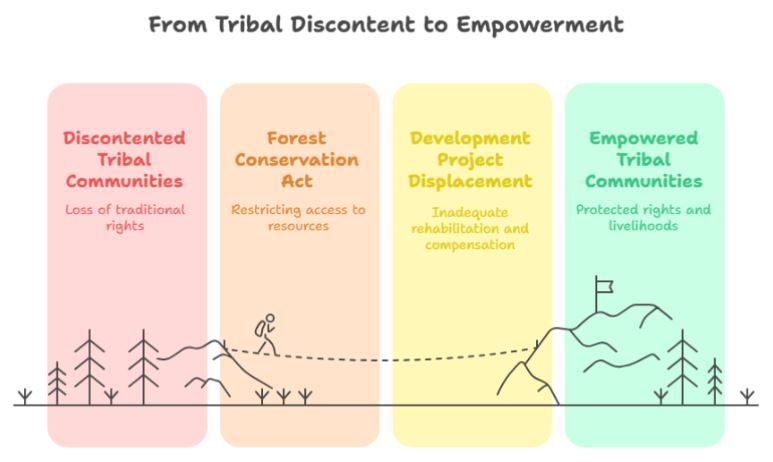
Tribal Discontent and Alienation

Forest Conservation Laws and Resource Restrictions

One of the most significant drivers of the Naxalite Movement has been tribal discontent, especially in forested and mineral-rich areas.

  • The Forest Conservation Act of 1980 restricted tribal communities' traditional rights to access forest resources for food, fuel, and livelihood.
  • This act failed to consider the cultural and economic dependence of tribes on forests, causing resentment and a sense of alienation.

Displacement from Development Projects

Massive development projects—dams, mining, and industrial zones—often lead to displacement without adequate rehabilitation.

  • Tribal lands have been acquired for projects without consent or compensation.
  • These communities are pushed into poverty, losing access to land, water, and livelihoods.
  • The Naxalite Movement capitalizes on this anger and positions itself as the protector of tribal rights.

Exploitation of Vulnerable Populations

Poverty and Unemployment

In the rural heartlands of India, poverty is widespread. Lack of access to quality education, healthcare, and employment creates desperation and frustration among the youth.

  • The Naxalite Movement provides a sense of belonging and purpose to these individuals.
  • Armed groups recruit young men and women by promising empowerment and revenge against perceived oppressors.

Use of Arms and Financial Incentives

Maoist cadres offer weapons training, financial rewards, and ideological indoctrination to those who feel ignored or wronged by the system.

  • Recruits are told that joining the Naxalite Movement is the only way to fight back against systemic exploitation and inequality.

Governmental Neglect and Underdevelopment

Infrastructure Deficit in Naxal-Affected Regions

Regions affected by the Naxalite Movement are among the least developed in India.

  • Poor roads, unreliable electricity, lack of schools and hospitals, and weak digital connectivity hinder growth.
  • These shortcomings reflect chronic neglect by successive governments, making people more receptive to Naxalite ideologies.

Focus on Security, Not Development

The government’s approach has largely been militaristic, focusing on crushing the movement rather than addressing root socio-economic causes.

  • Security operations, while necessary, often displace locals, further deepening resentment.
  • The absence of coordinated development plans means insurgency flourishes in these neglected areas.

Weak Intelligence and Administrative Infrastructure

Remote Terrain and Lack of Connectivity

Most Naxalite-affected districts lie in densely forested, mountainous, or remote regions, making it hard for security forces and administrators to function effectively.

  • The lack of roads, mobile networks, and surveillance technology weakens the state’s ability to gather intelligence.
  • Maoist groups exploit this isolation to set up camps, run parallel governments, and train cadres.

Inadequate Counter-Insurgency Mechanisms

  • Without timely and actionable intelligence, security operations often fail or backfire.
  • In some cases, civilians get caught in crossfires, further alienating the population and strengthening the Naxalite Movement.

Inconsistent Governance and Policy Gaps

Failure of Follow-up Governance

Even when security forces succeed in reclaiming Naxal-hit areas, the absence of long-term administrative presence leads to a power vacuum.

  • Local administration often fails to deliver basic services like ration cards, pensions, or land records.
  • This inconsistency allows Maoists to regroup and regain control.

State vs. Central Responsibility Conflicts

There is a frequent lack of coordination between state and central governments regarding policy formulation and implementation.

  • States sometimes see the Naxalite Movement as a central issue, delaying their proactive role.
  • This blame-shifting and fragmentation result in inadequate strategies and half-hearted interventions.

Historical Injustices and Social Inequities

Caste-Based Exploitation

The Naxalite Movement draws significant strength from communities who have historically faced oppression by upper castes and feudal landlords.

  • Denied access to land, education, and justice, these groups see Maoist ideology as a means to challenge the status quo.
  • The promise of land redistribution and dignity under Naxal rule appeals to those who feel permanently excluded.

Rewriting Power Structures

The movement appeals to the idea of justice through revolution—a compelling vision for those who have faced generations of injustice.

  • Maoist courts and community trials, though illegal, offer swift decisions in regions where judicial access is a faraway dream.

Public Distrust in Government Institutions

Corruption and Bureaucratic Apathy

Local governance in Naxal-affected areas is often riddled with corruption. Funds meant for development are misused, and beneficiaries are denied entitlements.

  • This erodes the legitimacy of the state and makes the Naxalite Movement appear more accountable and responsive.

Broken Justice Systems

  • Police atrocities, delayed court trials, and arbitrary arrests further alienate the local population.
  • In the absence of trust in the system, people either remain silent or side with Naxalites for protection and justice.

Conclusion: The Way Forward

To effectively counter the Naxalite Movement, India must go beyond guns and boots. A holistic strategy that addresses the root causes—tribal alienation, poverty, corruption, poor governance, and social injustice—is essential.

Key Actions Needed:

  • Land reforms and forest rights must be properly implemented.
  • Education, healthcare, and livelihood opportunities should reach even the remotest corners.
  • Local governance must be made transparent and inclusive.
  • Confidence-building measures, dialogue with affected communities, and rehabilitation of surrendered Naxalites can turn the tide.

Only by addressing the real grievances behind the Naxalite Movement can India ensure lasting peace and development in these regions.



UPSC QEP 2026 Batch 5 - English
UPSC Foundation Course English 2027
View Details
Submit Your Details to Learn More
I agree to give my consent to receive updates through SMS/Email & WhatsApp*.

UPSC QEP 2026 Batch 5 - English
UP-PCS 2026 Pre+Mains Integrated Program (English Batch)
View Details


Join theIAShub’s Mains Answer Writing Program

Refine your answer writing skills and elevate your UPSC preparation with personalized support and expert feedback.

Fill out the form to get started with the program or any other enquiries !

I agree to give my consent to receive updates through SMS/Email & WhatsApp*.

Best IAS Coaching In Delhi, UPSC Online & Offline Classes by IAShub

Are you dreaming of becoming an IAS officer? Then, IAShub can be your best guide. It is one of the Best IAS Coaching in Delhi. Many students who want to clear the UPSC exam join IAShub for learning. The institute gives both online and offline classes. Their teachers are experienced and helpful. They easily explain every topic. Students also get notes, tests, and tips to do well in the exam.

UPSC Online Classes by IAShub

IAShub is in Delhi and is trusted by many UPSC students. It offers coaching for every part of the UPSC exam – Prelims, Mains, and Interview. The classes are simple and easy to understand. The teachers are experts and guide students in the right way. IAShub is also known for its helpful notes, test series, and answer-writing practice. IAShub is the best coaching in Delhi and also gives UPSC Online Classes. This helps students from any place in India to learn. The online classes are live and also recorded. So, students can watch them anytime. These classes cover the full UPSC syllabus.

Key Offerings Provided by IAShub

Here are some important services provided by IAShub:

  • UPSC Prelims: IAShub teaches for Prelims with a focus on basics. It also gives daily current affairs and monthly magazines.
  • Classroom Courses: IAShub has classroom learning for students in Delhi. The environment is good and peaceful for study.
  • Live Classes: Students who live far can join live UPSC online classes. These classes are just like real classes.
  • QEP for Mains: The Quality Enrichment Program (QEP) is special for Mains preparation. It helps students write better and faster.
  • Answer Writing: Regular answer writing practice is given. Teachers also check answers and give tips to improve.
  • Free Resource: IAShub gives free notes by toppers and helpful Main Booster material.
  • Test Series: Test series are available for every subject. These help students know their weak points and improve.
  • Interview Guidance Session: IAShub also gives interview practice sessions with experts. These help students feel confident.

UPSC Exam Overview

The UPSC Civil Services Exam has three parts:

  • Prelims: It has two papers: General Studies and CSAT.
  • Mains: It has nine papers, including essays and optional subjects.
  • Interview: It tests the personality and confidence of the student.

This exam is tough, but with the right guidance, it becomes easy to manage. Students must study smart and stay regular.

How IAShub Helps in the UPSC Journey

IAShub supports students from the beginning to the end. It gives the right books, tests, and notes. The classes are easy to follow, and the teachers are always ready to help. Students get personal doubt sessions too. The test series and answer checking help students learn where they need to do better. Also, free study materials save time and money.
IAShub also guides students during the final stage – the interview. Experts take mock interviews and give useful tips. This full support makes IAShub one of the best IAS coaching in Delhi.

Best IAS Coaching In Delhi FAQs

Yes, IAShub offers live and recorded online classes. Students can attend from any part of India.

Classes are available in both English and Hindi, so students can choose the language they are comfortable with.

The classroom centre is located in Delhi. Students can visit and join offline batches there.

IAShub gives interview guidance sessions to help students prepare for the final round of UPSC.
