
theIAShub
30 Jul, 2025

Table of Contents

Get an Instant Call Back from Our Expert Mentors!
Context
- An 8.8 magnitude earthquake struck Russia triggering a tsunami that impacted Russia, Japan, and issued warnings as Kamchatka Peninsula as far as Hawaii and New Zealand.
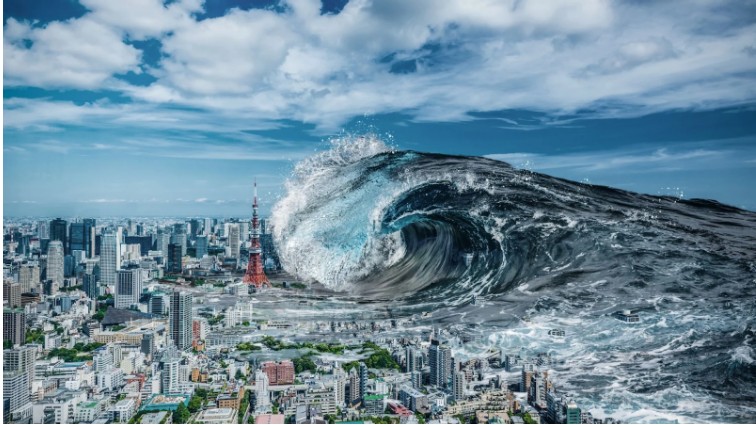
About Tsunami: What is it?
- Tsunamis consist of huge ocean waves formed because of disturbances underwater, such as earthquakes, volcanic eruptions, or landslides.
- Travelling at high speeds across vast distances, these waves grow in height as they approach shorelines, unleashing huge destruction, inundation, and loss of human life. They are natural, forceful, and unpredictable occurrences.
Other Facets
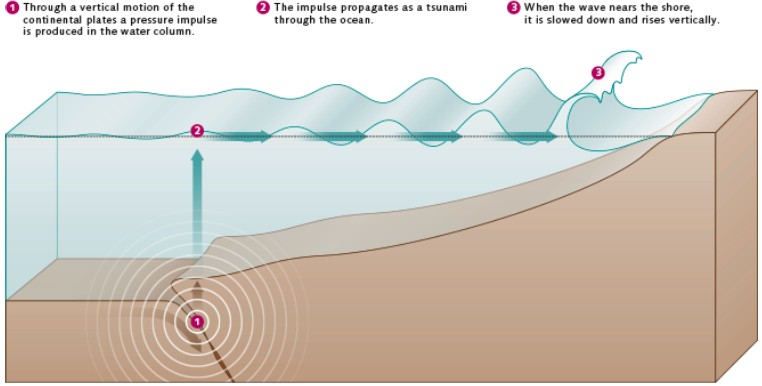
- A tsunami signifies a natural calamity where a sequence of large ocean waves are generated, ordinarily having been occasioned by some submarine disturbance such as an earthquake, volcanic eruption, or landslide.
- These disturbances displace a huge quantity of water, disallowing waves to travel at speeds of more than 800 kilometers per hour in the open ocean.
- In the deep ocean, the tsunami waves usually go unnoticed due to their very low wave heights; they get HUGE somewhere along the coastline and hit to cause devastation.
Characteristics of a Tsunami
- Cause and Origin:
- An underwater earthquake, volcanism, landslide, or meteorite impact in the ocean can move huge volumes of water and cause tsunamis.
- High Speed:
- The speed of tsunami waves in the deep sea is more than 800 kilometers per hour (500 miles per hour), almost like one of the fastest jet planes.
- Long Wavelength:
- One special characteristic of tsunami waves is that they have very long wavelengths. They can vary from about 100 kilometers to 500 kilometers, whereas normal ocean waves measure very few meters of wavelength.
- Low Wave Height in Deep Water:
- In the open ocean, tsunamis generally remain unnoticed with wave heights less than one meter.
- Wave Amplification Near Shore:
- When the tsunami waves enter these territories of shallow waters near coasts, their velocity is decreased, yet their wave height increases, sometimes even more than 30 meters (100 feet).
- Multiple Waves:
- Most of the time, a tsunami will consist of a series of waves with the first wave not always being the largest or the most destructive.
- Variable Timing:
- Time lag between successive waves may be from just a few minutes to many hours-a factor that adds to the unpredictability.
- Global Reach:
- Across entire ocean basins, tsunamis travel and affect coasts that are away from the original disturbance.
- Immense Destructive Power:
- The combined energy of tsunami waves can cause widespread devastation, flooding, and erosion upon landfall.
- Warning Signs:
- Receding ocean water, unusual sounds, and ground shaking near coastlines are natural warning signs of an impending
Causes of Tsunami
- Underwater Earthquakes:
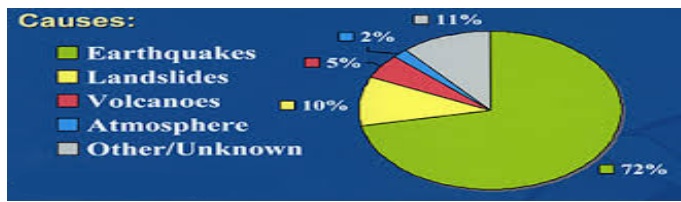
- The most common cause for tsunami is underwater earthquake occuring at tectonic plate boundaries. With the plates shifting suddenly, huge amounts of water are displaced and tsunami waves begin.
- Volcanic Eruptions:
- Explosive volcanoes, especially those arising underwater or near shorelines, can cause the displacement of water and consequently tsunamis. Examples include eruptions that cause the collapse of volcanic islands.
- Landslides:
- Huge landslides under the sea or along the coast, often triggered by earthquakes, can displace large quantities of water and cause tsunamis.
Impact of TSUNAMI
- Human Casualties:
- Tsunamis cause extreme calamities; thousands die in the affected areas due to a sudden and colossal rise of the sea.
- Destruction of Infrastructure:
- Coastal regions witness considerable tearing to homes and buildings and to roads and bridges, so much so that it may take many years to rebuild the damaged infrastructure.
- Economic Issues:
- Property damage and loss of life, along with disruption in business and tourism, pose enormous economic problems to the affected communities and nations.
- Environmental Damage:
- Tsunamis bring about severe erosion, contamination of fresh water supplies, destruction of coral reefs, and the loss of coastal ecosystems, including mangroves and wetlands.Floods:
- Seawater inundation causes severe flooding throughout the vicinity, contaminating drinking water and agricultural land, making them unsuitable for cultivation.
- Health Issues:
- Usually, tsunamis lead to health-related issues such as waterborne diseases, injuries, and psychological trauma to the victims.
- Tsunamis bring about severe erosion, contamination of fresh water supplies, destruction of coral reefs, and the loss of coastal ecosystems, including mangroves and wetlands.Floods:
TSUNAMI Warning system around the World
- Pacific Tsunami Warning System
- Region Covered: Pacific Ocean, including North and South America, Asia, and Oceania.
- Managed By: Intergovernmental Oceanographic Commission (IOC) of UNESCO.
- Features: A network of seismic stations and DART (Deep-ocean Assessment and Reporting of Tsunamis) buoys to monitor underwater disturbances.
Indian Ocean Tsunami Warning and Mitigation System
- Region Covered: Indian Ocean countries such as India, Indonesia, Sri Lanka, and Thailand.
- Established After: The 2004 Indian Ocean tsunami.
- Features: Regional centers in India, Indonesia, and Australia providing alerts.
Japan Meteorological Agency
- Region Covered: Japan and nearby coastal areas.
- Features: Highly advanced system that issues warnings within minutes of detecting seismic activity.
Way Forward
- Global partnership in advanced early warning systems, public education, and preparedness are necessary to enhance tsunamis’ resilience. Making the coastal infrastructure resilient to tsunamis, restoring natural barriers like mangroves, and putting in place evacuation plans are ways to reduce hazards associated with tsunamis.
- With further research and awareness creation featuring international collaboration, communities can be better prepared for timely response and post-tsunami recovery.

2026-27 UPSC Mains English QEP Power Pages
View DetailsSubmit Your Details to Learn More



