
1. Panchayat Advancement Index (PAI)
Panchayat Advancement Index (PAI) : Recently, the Ministry of Panchayati Raj (MoPR) organized a two-day National Writeshop on the Panchayat Advancement Index (PAI) 2.0.
o The event marked the nationwide rollout of PAI 2.0 for the financial year 2023–24, reaffirming India’s commitment to data-driven rural governance.
- About PAI : A multidimensional assessment tool designed to evaluate the performance of Gram Panchayats across nine Localized Sustainable Development Goals (LSDG)-aligned themes, including: Poverty alleviation , Health , Education , Water sufficiency, Clean environment, Infrastructure, Governance, Social justice and Women’s empowerment.
- Key Enhancements in PAI 2.0:
o Streamlined Indicators: Reduced from 516 in PAI 1.0 to 147 indicators, enhancing usability and lowering the reporting burden.
o Outcome-Oriented Metrics: Emphasis on quality, measurability, and actionable insights.
o Portal Upgrades: Mobile-friendly interface with improved dashboards for real-time tracking and visualization.
o Integrated Data Systems: Auto-integration from national ministry portals ensures authenticity and reduces duplication.
o Built-in Validation: Mechanisms to flag data anomalies and enhance accuracy.
o Decision Support System: Assists Panchayats in identifying development gaps and prioritizing resource allocation.
2. India Rises to Fourth Largest Economy
India Rises to Fourth Largest Economy : Recently, India officially became the world’s fourth-largest economy, surpassing Japan, according to the latest data from the International Monetary Fund (IMF).
- As per IMF's World Economic Outlook, India :
o Recently reaffirmed as the fastest-growing major economy globally.
o The only major economy projected to sustain growth above 6% over the next two years.
o India’s GDP has more than doubled from $2.1 trillion in 2015 to $4.3 trillion in 2025.
o Projected to reach $5.5 trillion by 2028, surpassing Germany to become the world’s third-largest economy.
3. Siang River
Siang River : The Arunachal Pradesh government has intensified efforts to conduct a Pre-Feasibility Report (PFR) for the 12.5 GW Siang Upper Multipurpose Project (SUMP)—envisioned as India’s largest hydropower project.
- About the Siang River: The river originates in Tibet, where it is called Tsangpo or Yarlung Zangbo.
o Upon entering Arunachal Pradesh, it is known as the Siang or Dihang River.
o Flows eastward for over 1,000 km in Tibet before curving around the Namcha Barwa peak.
o Enters India through Arunachal Pradesh and flows south into Assam.
o In Assam, Siang is joined by the Lohit and Dibang rivers. After their confluence, it is called the Brahmaputra.
o The river flows through regions inhabited by indigenous communities like the Adis of Arunachal Pradesh, shaping their culture and livelihoods.
4. India’s coastline
India’s coastline : Recently, India officially revised its coastline length from 7,516.6 km to 11,098.8 km, according to the Union Ministry of Home Affairs.
o This change reflects improved measurement techniques rather than the addition of any new land.
- Major Highlights:
- The Coastline Paradox: First identified by Lewis Fry Richardson and later explored by Benoît Mandelbrot.
o Mandelbrot showed that coastlines act like fractals—irregular, self-similar shapes that become longer as measurement scale gets finer.
o A coastline’s length increases when smaller "rulers" are used to capture every inlet, curve, and feature.
- Old Tools vs. New Technology:
o Earlier Estimate (7,516.6 km): Based on 1970s maps at a coarse 1:4,500,000 scale, which ignored smaller features.
o Revised Estimate (11,098.8 km): Based on a finer 1:250,000 scale using advanced tools such as: Satellite altimetry, LIDAR and GPS mapping, Drone imaging and Geographic Information Systems (GIS).
o Survey of India and National Hydrographic Office now use high-water line data and electronic navigation charts for accuracy.
- Why the New Coastline Length Matters
o Maritime Security: Expanded coastline increases the area needing surveillance and protection.
o Exclusive Economic Zones (EEZs): Redefined maritime boundaries impact trade, marine exploration, and fishing rights.
o Disaster Management: Improves planning for cyclones, tsunamis, and other coastal disasters.
o Climate Research: Enhances modelling for sea-level rise, coastal erosion, and ecosystem vulnerability.
o Policy Impact: Influences governance in 11 coastal states and 2 island territories, especially in adapting to oceanic changes.
5. AI Matryoshka
AI Matryoshka: Recently, at its 2025 I/O developer conference, Google unveiled a unified AI-centric vision, moving beyond isolated product updates.
o Like a Matryoshka doll, the strategy places advanced foundational AI models at the core, powering all connected products and platforms.
- Core AI Models:
o Gemini 2.5 Pro: Enhanced reasoning via new “Deep Think” mode.
- Achieved top-tier performance on USAMO 2025 benchmark.
- Initially accessible through the Gemini API.
o Gemini 2.5 Flash: Offers 20–30% better token efficiency.
- Supports multilingual, multi-speaker text-to-speech in 24+ languages.
- Expected to become the default model in the Gemini app.
o Hardware & Infrastructure : TPU v7 “Ironwood”: Delivers 42.5 exaFLOPS per pod – a 10x performance improvement.
- Powers training of cutting-edge models like Imagen 4, Veo 3, and Lyria 2.
6. Worldwide Threat Assessment 2025 Report
Worldwide Threat Assessment 2025 Report: Recently, the U.S. Defence Intelligence Agency’s (DIA) Worldwide Threat Assessment 2025 report outlined India’s strategic threat perceptions and defence priorities amid ongoing regional tensions.
- India’s Threat Perception:
o India views China as its primary security threat, focusing efforts on countering Chinese influence and military power.
o Pakistan is regarded as a more “ancillary” or secondary security challenge, to be carefully managed despite recent cross-border skirmishes involving both Indian and Pakistani forces in mid-May.
o In contrast, Pakistan considers India an “existential” threat, underscoring the asymmetry in threat perception between the two neighbours.
- According to the DIA report:
o Global Leadership: Prime Minister of India aims to position India as a global leader.
o Countering China: Central to India’s defence strategy is countering China’s growing regional influence.
o Military Modernisation: India is committed to enhancing its military capabilities to meet these challenges.
7. Perovskite Solar Cell (PSC)
Perovskite Solar Cell (PSC): Recently, researchers at IIT Bombay's National Centre for Photovoltaic Research & Education (NCPRE) developed a semi-transparent perovskite solar cell (PSC) stacked over a conventional silicon solar cell, forming an efficient 4-terminal (4T) tandem structure.
- About PSC: Type of photovoltaic (PV) technology that use perovskite-structured compounds to convert sunlight into electricity.
o These compounds share the crystal structure of the mineral calcium titanium oxide (CaTiO₃). The general formula is ABX₃, where: A and B are cations and X is an anion
o Advantages: High power conversion efficiency and lower manufacturing cost compared to traditional silicon-based PVs.
o Applications :Rooftop installations , Vehicle-integrated photovoltaics (VIPV) and Building-integrated photovoltaics (BIPV)
8. Schistura densiclava
Schistura densiclava : A newly discovered species of cave-dwelling loach, Schistura densiclava, has been found in the Krem Mawjymbuin cave located in Meghalaya's East Khasi Hills district.
- About Schistura densiclava: Belonging to the Nemacheilidae family—freshwater, bottom-dwelling fishes adapted to benthic stream habitats.
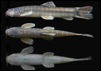
o It is identified as a troglophile species, capable of surviving in both cave (subterranean) and surface (epigean) water environments.
o Named densiclava due to the presence of a distinct dark stripe near the dorsal fin (Latin: "thick stripe").
o Unlike many cave-dwelling species that lose pigmentation and eyesight, they retains functional eyes and body pigment, making it adaptable across diverse environments.
o Inhabits a cool, fast-flowing stream with a temperature of 18°C and low oxygen levels—typical of underground aquatic ecosystems.
o Exhibits a pale yellow-green body with 14–20 vertical greyish-black or faint black bars.
o Sexual dimorphism: Males are slimmer with irregular body markings and puffier cheeks. Females appear sturdier with more uniform patterns.
9. Bharat Forecast System (BFS)
Bharat Forecast System (BFS): Recently, the India Meteorological Department (IMD) received the Bharat Forecast System (BFS), developed by IITM Pune.
- About BFS: Under the Ministry of Earth Sciences, the Bharat Forecast System (BFS) is a deterministic, high-resolution weather model designed to provide more accurate forecasts for localized weather events.
o While existing models like the Coupled Forecasting System (CFS) and Global Forecasting System (GFS) operate at a 12 km by 12 km resolution, BFS offers a much finer spatial resolution of 6 km by 6 km.
o This allows weather predictions to be made for smaller 36 sq. km grids instead of the previous 144 sq. km units.
oI MD plans to operationalize BFS starting with the upcoming monsoon season, significantly enhancing its ability to forecast extreme weather events.

2026-27 UPSC Mains English QEP Power Pages
View DetailsSubmit Your Details to Learn More



