

1. Javelin Missile
Javelin Missile : Recently, in a major step to enhance indigenous defence capabilities, India formally submitted a Letter of Request (LoR) to the United States for the co-production of Javelin Anti-Tank Guided Missiles (ATGMs) within the country.
o Aligned with the ‘Make in India’ and ‘Atmanirbhar Bharat’ initiatives, the proposal seeks to boost operational readiness and reduce reliance on foreign military suppliers.
- About Javelin Missile: A man-portable, fire-and-forget anti-tank guided missile system developed jointly by U.S. defence giants Raytheon and Lockheed Martin.
o It is specifically designed to destroy heavily armoured vehicles such as main battle tanks, as well as lighter military vehicles.
o In addition to its primary anti-tank role, the missile is also effective against a range of other targets, including bunkers, fortifications, and even low-flying helicopters.
o Key Features : Range: It has an effective operational range of up to 2.5 km.
- Fire-and-forget capability: The missile locks onto the target before launch and guides itself automatically, allowing the operator to take cover immediately after firing.
- Guidance System: It employs an advanced infrared imaging system for automatic target tracking.
- Top-Attack Capability: Equipped with a High-Explosive Anti-Tank (HEAT) warhead, it can destroy modern tanks by striking them from above where armour is weakest.
- Versatility: It can also be used for direct attacks on fortifications and hardened positions.
2. Pradhan Mantri Divyasha Kendra (PMDK)
Pradhan Mantri Divyasha Kendra (PMDK) : Recently, the 75th Pradhan Mantri Divyasha Kendra (PMDK) was inaugurated at the Government Medical College in Badaun, Uttar Pradesh. The announcement was made by the Union Ministry of Social Justice and Empowerment.
- About PMDK: A flagship initiative to provide integrated services under one roof for Divyangjan (persons with disabilities) and senior citizens.
o Services include assessment, evaluation, counselling, distribution, and post-distribution care of assistive devices.
o Implemented through ALIMCO (Artificial Limbs Manufacturing Corporation of India), a Central Public Sector Enterprises (CPSE) under the Department of Empowerment of Persons with Disabilities (DEPwD).
o Assistive devices will be distributed free of cost under the following government welfare schemes: Assistance to Disabled Persons for Purchase/Fitting of Aids and Appliances (ADIP) Scheme – for persons with disabilities (Divyangjan)
- Rashtriya Vayoshri Yojana (RVY) – for senior citizens
o The initiative has already benefited over 1.40 lakh individuals by providing them with essential assistive devices and support services.
3. Genome Sequencing Project
Genome Sequencing Project : Recently, Gujarat became the first state in India to launch a dedicated genome sequencing project for its tribal population.
- About Genome Sequencing Project : The project, titled "Creation of Reference Genome Database for Tribal Population in Gujarat"
o Aims to sequence the genomes of 2,000 individuals from various tribal communities across 17 districts.
o Objectives : Identify genetic predispositions to hereditary diseases such as sickle cell anemia and thalassemia
- Detect genetic markers for conditions like cancer, innate immunity, and other inherited disorders
- Enable early diagnosis and targeted healthcare services based on genetic profiles
- Facilitate personalised health strategies and preventive public health policies
- About Genome Sequencing : Process of determining the entire DNA sequence of an organism’s genome.
o A genome refers to the complete set of DNA, including all of an organism’s genes.
o The process involves identifying the precise order of four DNA bases:
→ Adenine (A) → Cytosine (C)
→ Guanine (G) → Thymine (T)
o Enabled by automated sequencing technologies and advanced computer software, which help assemble and interpret the large volumes of sequence data.
4. Prime Minister Dhan-Dhaanya Krishi Yojana (PMDDKY)
Prime Minister Dhan-Dhaanya Krishi Yojana (PMDDKY): Recently, the Union Cabinet approved the launch of the Prime Minister Dhan-Dhaanya Krishi Yojana (PMDDKY), a transformative initiative aimed at strengthening India’s agricultural sector.
- About PMDDKY : Announced in the Union Budget 2025–26,to be implemented over six years with an annual outlay of ₹24,000 crore.
o Expected to directly benefit over 1.7 crore farmers across India.
o One of the largest integrated agricultural missions through convergence of 36 schemes from 11 Central Ministries/Departments.
o District-Centric Approach : Targets 100 districts, selected based on: Low crop productivity, Low cropping intensity and Low agricultural credit disbursement
- At least one district per State/UT; number varies based on Net Cropped Area and operational land holdings.
- Aims to focus efforts on areas with maximum agricultural potential yet underperformance.
- Institutional Mechanism for Implementation: Formation of District-level Dhan-Dhaanya Samitis, involving progressive farmers and local stakeholders.
o State and National Steering Committees for strategic direction and coordination.
o Preparation of a District Agriculture and Allied Activities Plan (DAAAP) tailored to: Crop diversification, Soil and water conservation, Organic/natural farming, Self-sufficiency in inputs and outputs.
Monthly monitoring to ensure real-time evaluation and adaptive governance5. Zographetus Mathewi
Zographetus Mathewi : Recently, in a remarkable discovery highlighting India’s rich biological heritage, a team of lepidopterists identified a new butterfly species named Zographetus Mathewi in the Western Ghats, one of the world’s most critical biodiversity hotspots.
- About Zographetus Mathewi : A newly described species of skipper butterfly in the family Hesperiidae.
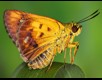
o Proposed common name: Sahyadri Spotted Flitter, paying tribute to the Western Ghats (Sahyadri Hills).
o Scientific Features and Classification: Belongs to the Zographetus satwa species-group, recognized by:
- Distinctive wing venation patterns
- Swollen forewing veins in males (a secondary sexual trait)
- Basal hair tuft on the underside of the forewing
- Yellow-ochre scaling on the hindwing underside
- Unique genital structures in both sexes
- Differentiated from the similar-looking Zographetus ogygia through these traits.
o Endemic to Kerala, specifically the low-elevation forests (<600 m) of the southern Western Ghats.
6. Cysteine
Cysteine: Recently, a groundbreaking study revealed that removing just one amino acid—cysteine—from the diet of mice resulted in an astonishing 30% reduction in body weight within a single week. This striking outcome highlights the vital role of cysteine in regulating metabolism and maintaining energy balance.
- About Cysteine : A sulfur-containing, non-essential amino acid crucial for various biological functions. Though less abundant, it is often found in key protein sites due to its regulatory and catalytic roles.
o Key Functions of Cysteine: Structural Support: Found in beta-keratin, it strengthens nails, skin, and hair.
- Collagen Formation: Enhances skin elasticity.
- Antioxidant Role: Precursor to glutathione, which protects cells from oxidative damage.
- Taurine Production: Supports digestion, heart, and brain health.
- Detoxification: Helps eliminate toxins from the body.
o Deficiency lead to: Fatigue, weakness, Stunted growth in children & Weakened immunity
- Sources: Meat, eggs, and dairy products.
- About Amino Acids : Fundamental units of proteins, with 20 standard types used by the body.
Of these, 9 are essential (from diet), while 11 are non-essential (synthesized by the body).
7. Agricultural Outlook 2025–2034
Agricultural Outlook 2025–2034 : Recently, the Organisation for Economic Co-operation and Development–Food and Agriculture Organization (OECD–FAO) released their Agricultural Outlook 2025–2034, highlighting key trends shaping global food and agricultural markets over the next decade.
- Key Highlights : By 2034, only 40% of global cereal production will be used directly for human consumption.
o 27% will be diverted to biofuel and industrial uses, up from 23% in the 2023 projection and remaining 33% will be used as animal feed.
o Biofuel demand is projected to grow at 0.9% annually, led by India, Brazil, and Indonesia.
o Despite sustainability concerns, food-based feedstocks will continue to dominate biofuel production.
o Advanced biofuels (e.g., from crop residues or woody biomass) will remain marginal.
o Global cereal production will grow by 1.1% annually over the next decade.
o Harvested area expansion: Slows to just 0.14% annually (down from 0.33%).
o Regional Shifts in Cereal Demand: India and Southeast Asia will contribute 39% of global cereal consumption growth by 2034 (up from 32%).
- China’s share will drop to 13%, from 32% in the previous decade.
- About OECD: Established in 1948 as the Organisation for European Economic Co-operation (OEEC); renamed OECD in 1961 with the inclusion of the USA and Canada
o HQ : Paris, France
o Membership: Primarily high-income, democratic countries with high Human Development Index and market economies.
o Role: Acts as a global statistical agency and a UN observer; publishes comparable international statistics.
- About FAO : Specialized agency of the United Nations, leading global efforts to defeat hunger.
o Established: October 1945; the oldest permanent specialized UN agency.
o Mandate: Improve nutrition, boost agricultural productivity, uplift rural livelihoods, and support global economic growth.
o HQ: Rome, Italy.

2026-27 UPSC Mains English QEP Power Pages
View DetailsSubmit Your Details to Learn More



