A Tectonic Shift in Thinking to Build Seismic Resilience

The 4.4 magnitude Delhi earthquake on July 10, 2025, has raised alarms over India’s seismic vulnerability, poor enforcement of safety codes, and unprepared urban spaces. Urgent reforms in building norms, retrofitting, and public awareness are critical.

editorial-analysis
THEIASHUB
Get an Instant Call Back from Our Expert Mentors Now!
+91

Context

  • The editorial discusses a 4.4 magnitude earthquake that struck Delhi on July 10, 2025. Though moderate, it has reignited concerns about India's seismic vulnerability due to its location on a tectonically active plate and poor compliance with seismic codes in major urban centres like Delhi. 

Background

  • India lies on the seismically active Indian Plate, which is colliding with the Eurasian Plate at 4-5 cm/year, giving rise to the Himalayan seismic belt. 
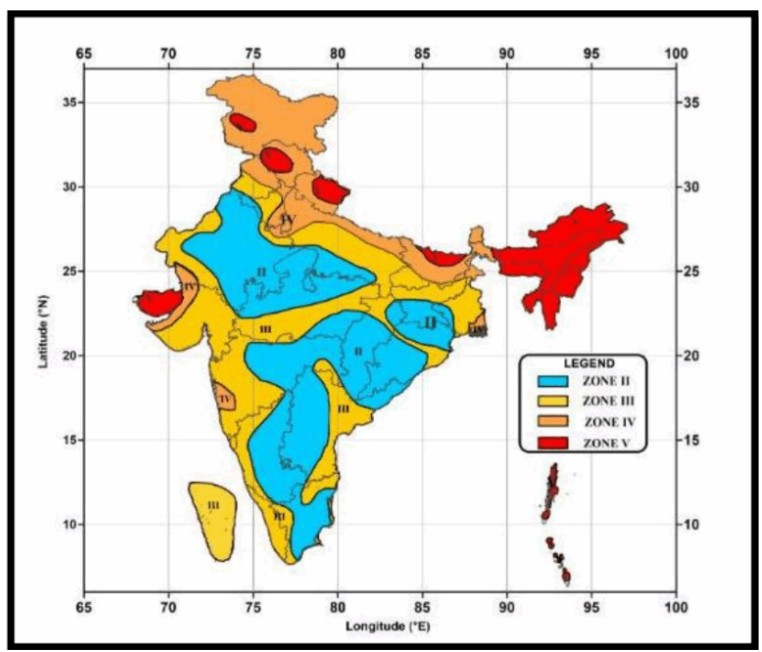
  • Delhi, located in Seismic Zone IV, recently experienced a 4.4 magnitude quake on July 10, 2025, with an epicentre 20 km southwest of the city.
  • Over 80% of Delhi's buildings, especially pre-2000, do not comply with the IS 1893:2016 seismic code.

India's Earthquake Preparedness 

  • National Centre for Seismology (NCS): Operates under the Ministry of Earth Sciences; monitors seismic activity through 115 observatories and shares realtime data with disaster management authorities.
  • National Mitigation Centrally Earthquake Project sponsored Risk (NERMP): NDMA scheme in seismic zones IV & V; focuses on enforcing techno-legal regimes, institutional strengthening, and public awareness. 
  • Earthquake-Resistant Building Codes: Guidelines from BIS, ВМТРС, and HUDCO ensure adoption of resilient construction practices, circulated widely among stakeholders. 
  • Earthquake Disaster Risk Index: NDMA-developed index assesses risk in high-seismic zones (IV & V), guiding cities in disaster planning and mitigation strategies.
Challenges Highlighted 

  • High Vulnerability: Delhi houses 33.5 million residents and over 5,000 high-rises, most of which are non-compliant with seismic norms. Areas like East Delhi have liquefaction-prone soils, increasing collapse risk.
  • Unprepared Urban Spaces: Rapid, unregulated urbanisation, especially in high-risk zones (Zone IV & V), exacerbates seismic risks. 
  • Poor Code Enforcement: IS 1893:2016 is not enforced properly across cities. Even critical areas like Guwahati and Bhuj face enforcement gaps. 
  • Limited Public Awareness and Early Warning Usage: Tools like IndiaQuake app exist, but public awareness and integration with emergency systems remain weak.
  • Himalayan Seismic Gap: The region is overdue for a "Great Himalayan Earthquake" (>8 magnitude), with potential impacts on 300+ million people in India, Nepal, and Bhutan.

Way Forward

  • Rigorous Enforcement of Seismic Codes: Strengthen implementation of IS 1893:2016 in all seismic zones, particularly in Zones IV and V.
  • Retrofitting & Resilient Construction: Retrofit older buildings using steel jacketing. 
  • - Mandate deep pile foundations and base isolation in vulnerable areas. 
  • - Avoid construction in floodplains like the Brahmaputra basin. 
  • Public Awareness & Community Preparedness: Launch public education campaigns on emergency kits, evacuation drills, and safe construction.
  • Institutional Reforms & Investments: Annual retrofitting investment of 50,000 crore is needed and train community-level disaster response teams.
  • National Dialogue & Leadership: Government must initiate a national discourse and strategy for seismic resilience and disaster risk reduction. 
  • Global Best Practices: Emulate Bangkok's high-strength concrete standards and ductile detailing, and avoid Myanmar's mistakes of weak code enforcement.


UPSC QEP 2026 Batch 5 - English
Buy now View Details
Submit Your Details to Learn More
I agree to give my consent to receive updates through SMS/Email & WhatsApp*.

NEEV GS + CSAT Foundation 2026/27
Buy now View Details


Join theIAShub’s Mains Answer Writing Program

Refine your answer writing skills and elevate your UPSC preparation with personalized support and expert feedback.

Fill out the form to get started with the program or any other enquiries !

I agree to give my consent to receive updates through SMS/Email & WhatsApp*.

Best IAS Coaching In Delhi, UPSC Online & Offline Classes by IAShub

Are you dreaming of becoming an IAS officer? Then, IAShub can be your best guide. It is one of the Best IAS Coaching in Delhi. Many students who want to clear the UPSC exam join IAShub for learning. The institute gives both online and offline classes. Their teachers are experienced and helpful. They easily explain every topic. Students also get notes, tests, and tips to do well in the exam.

UPSC Online Classes by IAShub

IAShub is in Delhi and is trusted by many UPSC students. It offers coaching for every part of the UPSC exam – Prelims, Mains, and Interview. The classes are simple and easy to understand. The teachers are experts and guide students in the right way. IAShub is also known for its helpful notes, test series, and answer-writing practice. IAShub is the best coaching in Delhi and also gives UPSC Online Classes. This helps students from any place in India to learn. The online classes are live and also recorded. So, students can watch them anytime. These classes cover the full UPSC syllabus.

Key Offerings Provided by IAShub

Here are some important services provided by IAShub:

  • UPSC Prelims: IAShub teaches for Prelims with a focus on basics. It also gives daily current affairs and monthly magazines.
  • Classroom Courses: IAShub has classroom learning for students in Delhi. The environment is good and peaceful for study.
  • Live Classes: Students who live far can join live UPSC online classes. These classes are just like real classes.
  • QEP for Mains: The Quality Enrichment Program (QEP) is special for Mains preparation. It helps students write better and faster.
  • Answer Writing: Regular answer writing practice is given. Teachers also check answers and give tips to improve.
  • Free Resource: IAShub gives free notes by toppers and helpful Main Booster material.
  • Test Series: Test series are available for every subject. These help students know their weak points and improve.
  • Interview Guidance Session: IAShub also gives interview practice sessions with experts. These help students feel confident.

UPSC Exam Overview

The UPSC Civil Services Exam has three parts:

  • Prelims: It has two papers: General Studies and CSAT.
  • Mains: It has nine papers, including essays and optional subjects.
  • Interview: It tests the personality and confidence of the student.

This exam is tough, but with the right guidance, it becomes easy to manage. Students must study smart and stay regular.

How IAShub Helps in the UPSC Journey

IAShub supports students from the beginning to the end. It gives the right books, tests, and notes. The classes are easy to follow, and the teachers are always ready to help. Students get personal doubt sessions too. The test series and answer checking help students learn where they need to do better. Also, free study materials save time and money.
IAShub also guides students during the final stage – the interview. Experts take mock interviews and give useful tips. This full support makes IAShub one of the best IAS coaching in Delhi.

Best IAS Coaching In Delhi FAQs

Yes, IAShub offers live and recorded online classes. Students can attend from any part of India.

Classes are available in both English and Hindi, so students can choose the language they are comfortable with.

The classroom centre is located in Delhi. Students can visit and join offline batches there.

IAShub gives interview guidance sessions to help students prepare for the final round of UPSC.