2 Minute Series_6th December 2025
06th December 2025
- Slender-Billed and White-Rumped: Recently, the Bombay Natural History Society announced plans to release six critically endangered vultures, slender-billed and white-rumped, into the wild in Assam.
- About Slender-Billed Vulture (Gyps tenuirostris): A critically endangered Old-World vulture once widespread across South Asia but now surviving only in fragmented populations.
- Found across the Gangetic plains, Assam, northern Bangladesh, southern Nepal, Myanmar, and Cambodia.
- Builds nests on tall trees in open spaces near human settlements, slaughterhouses, and riverbanks.
- Key Characteristics: Size: 80–95 cm in length; 196–258 cm wingspan
- Notable features: Slender, narrow bill, long bare neck, darker head, grey plumage with a pale rump and Juveniles show white down on the neck
- About White-Rumped Vulture (Gyps bengalensis): A medium-sized Asian vulture, once one of the most common raptors in India, now among the fastest-declining bird species globally.
- Occurs widely in cities, villages, plains, and open fields.
- Nests on large trees or cliffs and often roosts close to human habitation.
- IUCN Status: Critically Endangered
- Key Characteristics: Size: 75–85 cm length; 180–210 cm wingspan
- Weight: 5–7.5 kg
- Distinguishing traits: Dark plumage, White neck ruff, Prominent white rump patch and Bright white underwing coverts visible in flight
- Health Security Se National Security Cess Bill, 2025: Recently, the Union Finance Minister introduced the Health Security Se National Security Cess Bill, 2025, proposing a new cess on demerit goods like pan masala to sustain revenues post-GST compensation and fund public health and national security.
- About the Health Security Se National Security Cess Bill, 2025: The cess is designed to replace the GST compensation cess on specific “sin goods.”
- Ensures the overall tax burden remains unchanged on demerit goods even after the existing cess is phased out.
- Revenue generated will support: Public health programmes and National security initiatives
- The cess is calculated based on the production capacity of manufacturing machines, not on actual output.
- Proceeds go directly to the Consolidated Fund of India and are not shared with States.
- DRDO: Recently, DRDO handed over seven indigenous technologies developed under the TDF (Technology Development Fund) scheme to the Indian Armed Forces and approved 12 new strategic projects.
- Key Highlights: DRDO transferred the following technologies to the Army, Navy, and Air Force:
- Indigenous High-Voltage Power Supply for airborne self-protection jammers
- Tide-Efficient Gangway for naval jetties
- Advanced VLF–HF Switching Matrix Systems
- VLF Loop Aerials for underwater platforms
- Indigenous Waterjet Propulsion System for fast interceptor craft
- Novel Process for Recovery of Lithium Precursors from used lithium-ion batteries
- Long-Life Seawater Battery System for underwater sensing and surveillance
- The Committee approved 12 new TDF projects across: Strategic systems
- Aerospace technologies
- Naval systems
- Electronic warfare technologies
- These approvals highlight India’s focus on building domestic capability and reducing reliance on foreign technologies in critical and emerging sectors.
- Rainbow Water Snake: Recently, the Rainbow Water Snake was recorded for the first time in Uttar Pradesh, with a sighting from Dudhwa Tiger Reserve, expanding its known distribution in India.

- About the Rainbow Water Snake (Enhydris enhydris): Also known as the Rainbow Mud Snake.
- A mildly venomous, rear-fanged aquatic species native to Asia.
- Appearance: Stout-bodied snake with a small head.
- Features two dark longitudinal stripes and a yellowish underbelly.
- Exhibits rainbow-like iridescence on its smooth scales when exposed to sunlight.
- Habitat Preference: Prefers stagnant or slow-moving freshwater with muddy bottoms.
- Common habitats include: Paddy fields, Canals, Rivers & Wetlands
- Global Range: Found across Southeast Asia: Cambodia, Thailand, Vietnam, Malaysia, Indonesia.
- Present in parts of South Asia: India, Bangladesh, Nepal.
- Conservation Status: IUCN Status: Least Concern
- Inno-Yoddha 2025: Recently, the Indian Army conducted its annual Idea & Innovation Competition and Seminar, Inno-Yoddha 2025, at the Manekshaw Centre in New Delhi.
- About Inno-Yoddha: The Indian Army’s flagship innovation platform, held annually.
- Identifies, nurtures, and scales in-house soldier-driven innovations that address real-world capability gaps.
- Empowers personnel who operate in diverse, extreme environments to conceptualise practical and field-ready solutions.
- Received a record 89 innovations across all arms and services.
- 5 innovations transferred to industry via ToT: Exploder (FC Tech), Agniastra (Red Kite Digital Tech), Vidyut Rakshak (IS Trading Co), Baaz Attack Drone and Multi-purpose Octacopter
- Hate Speech and Hate Crimes (Prevention) Bill, 2025: Recently, Karnataka moved to become the first Indian state to introduce a dedicated legal framework against hate speech and hate crimes through the proposed Karnataka Hate Speech and Hate Crimes (Prevention) Bill, 2025.
- Aim of the Bill: To establish a specific legal framework to prevent the spread of hatred, intolerance, and social disharmony.
- To fill existing gaps in national laws that do not explicitly define hate speech.
- The Bill defines hate speech as: Expressions intended to cause harm or animosity based on: Religion, Race, Caste, Sex / Gender, Sexual orientation, Place of birth / Residence, Language, Disability and Tribe
- Definition of Hate Crimes: Acts of making, publishing, circulating, or promoting hate speech.
- Also includes inciting, abetting, or attempting to commit such acts.
- Regulation of Online Hate Content: A designated officer can order blocking or removal of online content linked to hate crimes.
- Executive Magistrates and senior police officers have authority to take preventive action if a hate crime appears imminent.
- The Bill does not apply to: Genuine works of science, literature, art, or heritage
- Bona fide religious practices
- Contextual or academic discussions without harmful intent
- India and Russia: Recently, India and Russia agreed to deepen cooperation on Arctic-related issues and expand collaboration in the nuclear energy sector.
- Key Highlights: Both nations committed to holding regular bilateral consultations on Arctic matters.
- They welcomed progress in ongoing collaboration on the Northern Sea Route (NSR), a key maritime corridor likely to gain global significance as polar ice melts and new sea routes open.
- India’s Long-Standing Interest in the Arctic: India’s Arctic engagement predates independence, beginning with the 1920 Svalbard Treaty, which allows signatory nations equal rights to conduct non-military scientific and commercial activities in the Svalbard archipelago.
- Activities permitted include hunting, fishing, mining, and research—while military bases and fortifications are prohibited.
- Humpback Whales: Recently, the global population of Humpback whales rose from about 10,000 to nearly 80,000, driven by long-term protection measures and their adaptive feeding behaviour.
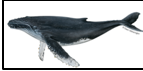
- About the Humpback Whale (Megaptera novaeangliae): A baleen whale species belonging to the rorqual family Balaenopteridae.
- Known for its massive size, acrobatic breaches, and complex vocalisations.
- Migration: Among the longest migrants in the animal kingdom.
- Travels between: Polar feeding grounds in summer and Tropical/subtropical breeding zones in winter
- Physical Appearance: Distinguished by a hump on its back.
- Possesses unusually long pectoral fins, which inspired its name Megaptera meaning “big-winged”.
- Females are larger than males.
- Distribution: Found in all major oceans, ranging from sub-polar waters to the equator.
- Behaviour: Famous for bubble-net feeding, a sophisticated cooperative hunting technique where whales release bubbles while spiralling upward to trap dense schools of prey.
- Conservation Status: IUCN: Least Concern
- Mahad Satyagraha: Recently, the Mahad Satyagraha re-entered public debate as researchers reassessed how Dr. B. R. Ambedkar’s movement shaped the ethical foundations of India’s Constitution and modern human rights discourse.
- About Mahad Satyagraha: A historic non-violent movement led by B. R. Ambedkar demanding Dalit access to public water and rejecting caste-based exclusion.
- Recognised as one of India’s earliest human rights movements.
- Causes Behind the Movement: Caste-based denial of access to the Chavdar Tank, a public water source.
- The 1923 Bole Resolution legally permitted Dalits to use public facilities, but upper-caste elites blocked implementation.
- Increasing caste violence in Goregaon, Dasgaon, and nearby villages highlighted the need for collective assertion of rights.
- Indian Coast Guard Ship Vigraha: Recently, the Indian Coast Guard Ship Vigraha undertook an operational visit to Indonesia as part of its overseas deployment to ASEAN countries, strengthening maritime cooperation with Southeast Asia.
- About ICGS Vigraha: An Offshore Patrol Vessel (OPV) of the Indian Coast Guard, commissioned in 2021.
- Indigenously built by L&T Ship Building Limited.
- Based in Visakhapatnam, it operates along India’s eastern seaboard.
- Key Features: Designed to carry: One twin-engine helicopter
- Four high-speed boats for boarding operations and search-and-rescue tasks
- Equipped with multiple modern systems, including:
- Integrated Bridge System (IBS)
- Integrated Platform Management System (IPMS)
- Automated Power Management System (APMS)
- High-Power External Firefighting (EFF) system
- State-of-the-art radars, sensors, navigation, and communication equipment suitable for tropical sea conditions
 Detailed Solutions & Explanations

