2 Minute Series_3rd January 2026
03rd January 2026
1. Galaxy Frogs: Recently, seven galaxy frogs (Melanobatrachus indicus) are presumed to have died due to disturbances caused by photo tourism.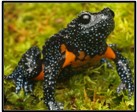
-
About Galaxy Frogs: Species is among the world’s rarest amphibians, endemic to Kerala’s Western Ghats.
-
Galaxy frogs are 2–3.5 cm long, silent, and believed to communicate via skin patterns.
-
Listed as Vulnerable by the IUCN.
-
Live exclusively under rotten logs, requiring precise temperature and humidity
-
Traditional threats include forest conversion, firewood collection, and landslides.
-
Photographers disturbed the habitat by overturning logs and trampling vegetation.
-
Handling and flash exposure can dry frog skin, disrupt respiration, and transfer pathogens.
-
Human presence may also interfere with breeding behaviour.
-
Study calls for ethical wildlife photography standards, including: No capturing, handling or chasing animals
-
Minimal use of intense lighting and use of diffusers
-
Avoiding disturbance to microhabitats
-
Suggests training of tour operators and guides by forest and tourism departments.
2. Interventions for MSME Exporters: Recently, the Government of India has launched two major financial interventions for MSME exporters under the Niryat Protsahan sub-scheme of the Export Promotion Mission.
-
Key Highlights:
-
First Intervention: Interest Subvention on Export Credit
-
Interest support for pre- and post-shipment rupee export credit for MSMEs.
-
Objective: Reduce cost of export credit and ease working capital constraints.
-
Focus on sectors with high MSME participation, labour intensity, capital intensity, and value addition.
-
Excludes restricted/prohibited items, waste & scrap, and overlapping incentive products.
-
Interest rates to be reviewed bi-annually (March & September).
-
Second Intervention: Collateral Guarantee for Export Credit
-
Introduced to address collateral constraints faced by MSME exporters.
-
Guarantee coverage: Up to 85% for micro & small exporters and up to 65% for medium exporters
-
Designed to complement existing credit guarantee schemes and boost bank lending.
3. Methane Emissions: Recently, lowering methane emissions in paddy fields offers Indian rice farmers an opportunity to earn extra income through carbon credit markets.
-
Key Highlights: India has 86% small and marginal farmers, making low-cost, low-effort climate practices crucial.
-
Traditional paddy cultivation involves continuous flooding for ~65 days to suppress weeds.
-
Flooded, anaerobic soils promote methane-producing microbes, increasing greenhouse gas emissions.
-
Methane has 28× higher global warming potential than CO₂ over 100 years.
-
Alternate Wetting and Drying (AWD) is a climate-smart alternative to continuous flooding.
-
Under AWD, fields are periodically dried and re-flooded to disrupt methane formation.
-
Uses direct methane measurement, geo-tagging, satellite imagery, and lab verification.
-
Carbon credit buyers include data centres, airlines, and energy-intensive industries.
-
Good Rice Alliance (Bayer, Shell Energy India, GenZero) also promoting AWD and direct seeding.
-
Alliance covers 12,000+ farmers, 35,000 ha, 120,000 t CO₂e reduction annually.
-
India being the world’s largest rice producer and exporter strengthens scalability of this model.
4. Bulgaria: Recently, Bulgaria officially adopted the euro, becoming the 21st member of the eurozone and phasing out its national currency, the Bulgarian lev.
-
About Bulgaria: A Balkan country in southeastern Europe.
-
Member of the European Union since 2007 and NATO since 2004.
-
Adopted the euro after meeting the EU convergence (Maastricht) criteria.
-
The Bulgarian lev, in circulation since 1881, has been replaced by the euro.
-
Location: Situated in the eastern Balkan Peninsula, at the crossroads of Europe, the Black Sea region, and West Asia.
-
-
Shares borders with Romania, Greece, Turkey, Serbia, North Macedonia, and has a Black Sea coastline.
-
About the Eurozone: Comprises EU member states that use the euro (€) as their official currency and operate under a common monetary policy.
-
Key Features: Single common currency across member states.
-
European Central Bank (ECB) formulates and implements unified monetary policy.
-
Supports free movement of goods, services, capital, and labour.
-
Member states have representation in the ECB Governing Council.Top of FormBottom of Form
5. Sirkeer Malkoha: Recently, the rare Sirkeer Malkoha (Taccocua leschenaultii) was recorded for the first time in Uttarkashi district, indicating a notable range extension.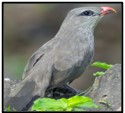
-
About Sirkeer Malkoha: Also known as the Sirkeer Cuckoo, belongs to the cuckoo family. Unlike many cuckoos, it does not practice brood parasitism and raises its own chicks.
-
Distribution: Widely found across the sub-Himalayan Indian subcontinent, including Bangladesh and Sri Lanka, with scattered presence in Pakistan and Rajasthan.
-
Habitat: Prefers scrublands and open, thin forests, commonly in hilly areas, generally below 1,500 metres altitude.
-
Conservation status: Listed as Least Concern on the IUCN Red List.
-
Key Features: Medium-sized bird measuring 42–44 cm in length.
-
-
Characterised by a long tail and olive-brown upper plumage.
-
Distinctive curved red beak with a yellow tip.
-
Grey legs and a generally shy, quiet nature.
-
Males and females look alike.
-
Possesses zygodactyl feet (two toes forward, two backward), aiding in gripping branches and ground movement.
-
Diet: Feeds on insects, small lizards, berries, and seeds.
6. e-Bill System: Recently, the Union Government introduced an integrated e-Bill System to digitally manage fertiliser subsidy payments amounting to nearly ₹2 lakh crore.
-
About e-Bill System: A comprehensive digital platform that enables end-to-end submission, processing, tracking, and payment of fertiliser subsidy bills, replacing the earlier manual and paper-based system.
-
Nodal Ministry: Ministry of Chemicals and Fertilizers
-
Objectives: Ensure timely, transparent, and accountable release of fertiliser subsidies.
-
-
Improve financial discipline, auditability, and administrative efficiency through digital governance.
-
Key Features: Removes physical handling of bills and manual intervention.
-
Fertiliser companies can submit claims digitally and monitor payment status in real time.
-
Verifies claims against predefined norms and ensures compliance.
-
Records all actions to enable transparency and effective audits.
-
Ensures predictable, uniform, and rule-based bill clearance.
-
Enables timely weekly disbursal of fertiliser subsidies.
-
Significance: Strengthens transparency and accountability in managing one of India’s largest subsidy programmes.
-
Minimises fraud, delays, and discretionary decision-making through automation.
7. Asteroid Bennu: Recently, NASA’s research on asteroid Bennu revealed the presence of basic building blocks of life, reinforcing the theory that asteroids may have delivered life’s ingredients to early Earth.
-
Key Highlights: Detected compounds include amino acids, ribose (RNA sugar), glucose (metabolic sugar), and all five nucleobases of DNA and RNA.
-
Ribose and glucose are the first large (6-carbon) sugar molecules ever found on an asteroid.
-
Their formation likely required liquid brine, suitable pH, extremely low temperatures, and protected internal pockets on the asteroid.
-
Findings strongly support the RNA World Hypothesis, suggesting early life relied on RNA before DNA and proteins evolved.
-
A Nature Astronomy study found nitrogen- and oxygen-rich polymer molecules (carbamates) on Bennu.
-
These polymers were likely soft and gummy when formed, later hardening over time.
-
Such long polymer chains had never before been observed in asteroid samples.
-
Bennu samples contain an unusually high amount of presolar grains formed before the Sun.
-
Presolar grain concentration is at least six times higher than in other asteroid or meteorite samples.
-
Many grains originated from supernova explosions, indicating Bennu’s parent body formed in a region rich in supernova material.
-
Evidence suggests liquid movement on Bennu disturbed and redistributed these grains.
8. Sudarshan Chakra: Recently, the Defence Minister officially announced that the Defence Research and Development Organisation (DRDO) will lead the Sudarshan Chakra air defence initiative.
-
About Mission Sudarshan Chakra: A national security mission aimed at creating a fully indigenous, AI-driven, multi-layered air defence system for India by 2035.
-
Designed as a hybrid framework, functioning both as a defensive shield and an offensive deterrent, marking a shift from passive defence to active deterrence.
-
Incorporates Artificial Intelligence and Big Data for real-time threat assessment, automated target allocation, and predictive interception.
-
Built on a layered architecture comprising: Outer layer: Space-based, long-range surveillance and detection
-
Middle layer: Missile-based interception systems
-
Inner layer: Point defence using directed-energy lasers and anti-drone technologies
-
-
Features robust cyber warfare protection, safeguarding power grids, communication networks, and command-and-control systems.
-
Operates as an integrated network, linking systems like the Integrated Air Command and Control System (IACCS), Akashteer, Trigun, and Project Kusha.
9. Drinking Water Contamination: Recently, drinking water contamination in Indore’s Bhagirathpura area caused fatalities and widespread illness, tarnishing the city’s reputation as one of India’s cleanest.
-
Key Highlights: Cause: Mixing of sewage water with drinking water pipelines.
-
Health Department report confirmed contaminated water; cholera-like bacteria suspected.
-
Tap water is generally not potable without purification (alum/chlorine), supplied once every two days.
-
CAG Report (2019) flagged serious flaws in water management in Indore and Bhopal. Despite findings, no corrective action taken.
-
Key CAG Findings: 4,481 water samples unfit for drinking (2013–18).
-
45 lakh cases of waterborne diseases reported in the period.
-
Overhead tanks not regularly cleaned; lack of water audits.
-
Experts termed pipeline contamination as “criminal negligence”.
- Activists warn unchecked urbanisation is increasing public health risks.
- Incident seen as a symptom of systemic failure in urban water governance.

 Detailed Solutions & Explanations