2 Minute Series_31 January 2026
31st January 2026
- Menstrual Health in Schools: Recently, the Supreme Court of India firmly recognised menstrual health in schools as an integral component of the Right to Life and Dignity.
- Key Highlights: Menstrual health and access to menstrual hygiene management (MHM) are part of the right to life and dignity under Article 21.
- The Court ruled that lack of MHM facilities in schools subjects girls to stigma, humiliation, and exclusion. Absence of hygienic menstrual facilities forces girls into absenteeism or unsafe practices, undermining bodily autonomy.
- Menstrual poverty creates a gender-specific barrier to education and violates equality in access to learning.
- MHM is broader than sanitation; it includes autonomy, decisional freedom, privacy, and choice.
- The Court stressed the need to educate and sensitise male teachers and students about menstruation. States and Union Territories were directed to ensure functional, gender-segregated toilets in all schools.
- Schools must provide free oxo-biodegradable sanitary napkins, preferably through vending machines inside toilets. Schools must establish ‘MHM corners’ with spare uniforms, innerwear, disposal bags, and essential materials.
- Government schools will be held accountable under Section 19 of the RTE Act for non-compliance.
- Three Ancient Bronze Sculptures: Recently, the Smithsonian’s National Museum of Asian Art announced the return of three ancient bronze sculptures to India after confirming they were illegally removed from temples in Tamil Nadu during the 1950s.
- The sculptures include: Shiva Nataraja: Chola period, 10th century. Linked to Sri Bhava Aushadesvara Temple, Thiruthuraipoondi, Thanjavur district
- Somaskanda: Chola period, 12th century. From Visvanatha Temple, Alattur village, Mannargudi taluk
- Saint Sundarar with Paravai: Vijayanagar period, 16th century. From Shiva Temple, Veerasolapuram village, Kallakurichi taluk
- All three bronzes were sacred temple idols, traditionally carried in religious processions.
- The Shiva Nataraja was traced to the Sri Bhava Aushadesvara Temple, Thiruthuraipoondi taluk, Thanjavur district.
- The Shiva Nataraja will be displayed in the exhibition “The Art of Knowing in South Asia, Southeast Asia, and the Himalayas”.
- The move strengthens India’s efforts to reclaim stolen cultural heritage from international institutions.
- Pechora Surface-to-Air Missile System: Recently, Bengaluru-based Alpha Design Technologies Ltd successfully completed a major modernisation of the Pechora surface-to-air missile system used by the Indian Air Force.
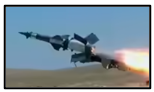
- About Pechora: Officially designated as the S-125 Neva/Pechora, is a Soviet-origin medium-range surface-to-air missile system. It has formed a crucial component of India’s air defence architecture since the 1970s, particularly for low- and medium-altitude interception.
- System Architecture: The system comprises a radar-guided missile launcher integrated with a fire-control unit, typically deploying the V-600 missile. Target detection, tracking, and engagement are enabled through the 4R90 Yatagan radar, featuring multiple parabolic antennas.
- Performance Parameters: Range: Firing range of 30–35.4 km, depending on upgrade level
- Altitude: Engagement capability from 20 metres up to 20–25 km
- Detection Range: Radar detection up to 100 km
- Accuracy: Kill probability of approximately 92%
- Target Engagement: Can engage two targets simultaneously at speeds up to 900 m/s
- Digital Food Currency: Recently, the Government of India announced plans to roll out a pilot programme of Central Bank Digital Currency (CBDC), popularly termed Digital Food Currency, in February 2026.
- About Digital Food Currency: Represents a programmable form of the e-Rupee, designed specifically for food subsidy delivery.
- Instead of distributing physical foodgrains or cash, beneficiaries receive digital tokens that can be redeemed only for foodgrains at authorised ration outlets.
- It functions as a Proof of Concept (PoC) for scaling CBDC use across social welfare schemes.
- Institutions Involved: Regulator: Reserve Bank of India
- Implementing Ministry: Ministry of Consumer Affairs, Food and Public Distribution
- Technical Support: National Payments Corporation of India
- Logistics Provider: Food Corporation of India, along with State Governments
- Objectives of the Initiative: Ensure food subsidies are used strictly for foodgrains
- Prevent diversion and misuse of welfare funds
- Enable real-time monitoring of foodgrain distribution
- Reduce dependence on biometric authentication failures at ration shops
- Promote digital financial inclusion through RBI-backed wallets
- The initiative will initially cover Chandigarh, Puducherry, and three districts of Gujarat (Anand, Sabarmati, and Dahod) to improve delivery under the world’s largest food security system.
- Autism Spectrum Disorder (ASD): Recently, the Supreme Court of India held that stem cell therapy cannot be offered as a clinical service for Autism Spectrum Disorder (ASD).
- About ASD: A neurodevelopmental condition caused by differences in brain development, affecting communication, behaviour, and social interaction.
- ASD usually appears before the age of three and continues throughout life, though symptoms may change or reduce over time.
- Core Characteristics: Individuals with ASD experience challenges in social communication, display restricted or repetitive behaviours, and often have intense, focused interests
- Learning and Behavioural Patterns: People with ASD may show unique learning styles, differences in movement, sensory responses, and attention regulation.
- ASD includes a wide range of conditions, with severity and abilities varying significantly from one individual to another.
- Autism is not an intellectual disability. Many individuals possess exceptional skills in areas such as art, music, writing, or technical domains. Intellectual capacity ranges from profound impairment to superior intelligence.
- Causes: ASD arises from a combination of genetic predisposition and environmental influences.
- Treatment and Management: Although ASD is not curable, timely evidence-based interventions, behavioural therapies, caregiver training, health services, and rehabilitation can significantly improve functional outcomes and quality of life.
- Functionality Assessment of Household Tap Connections (2024) Survey: Recently, the Functionality Assessment of Household Tap Connections (2024) survey revealed that despite near-universal rural tap connections under the Har Ghar Jal initiative, a critical gap persists between coverage and actual service delivery.
- Key Highlights: The survey was commissioned by the Ministry of Jal Shakti and conducted by IPSOS.
- The sample covered 37 lakh households across 19,812 Har Ghar Jal villages.
- Only 83% of households reported receiving water through taps at least once in the seven days preceding the survey.
- States/UTs like Goa, Gujarat, Andhra Pradesh reported over 97% tap usage, while Bihar (61%), Uttar Pradesh (72%), and Nagaland (74%)
- Only 80% of households received the mandated 55 litres per capita per day (lpcd).
- Sikkim (24%) and Gujarat (58%) reported the lowest compliance with minimum water supply norms.
- Water quality tests showed that only 76% of households met safety standards for coli, faecal coliform, and pH levels.
- Overall functionality—considering availability, regularity, and water quality—was achieved in only 76% of households.
- The survey covered only certified Har Ghar Jal villages, limiting nationwide generalisation.
- India has about 72 lakh HGJ villages out of 5.8 lakh total villages.
- The Ministry clarified that the 2024 survey is not directly comparable with earlier assessments due to methodological differences.
- Photo-Capacitor: Recently, Indian scientists developed a sunlight-powered self-charging supercapacitor called a photo-capacitor.
- About Photo-Capacitor: The device can capture and store solar energy simultaneously in a single integrated system.
- Developed by Centre for Nano and Soft Matter Sciences (CeNS), Bengaluru, under DST, Government of India.
- Innovation addresses limitations of conventional systems that use separate solar panels and storage units.
- Eliminates need for power management electronics, reducing cost, complexity, energy loss, and device size.
- Uses binder-free nickel-cobalt oxide (NiCo₂O₄) nanowires grown on nickel foam via in situ hydrothermal process.
- Nanowires form a porous, conductive 3D network acting as both solar energy harvester and storage electrode.
- Retained 85% capacity after 10,000 charge–discharge cycles, showing high durability.
- Asymmetric photo-supercapacitor delivered stable 1.2 V output.
- Maintained 88% capacitance after 1,000 photo-charging cycles.
- Operated efficiently under indoor light to 2-sun intensity, proving real-world adaptability.
- Enables self-charging power systems suitable for portable, wearable, and off-grid applications.
- Can significantly reduce dependence on fossil fuels and conventional batteries.
- Coronal Mass Ejection (CME): Recently, scientists reported that a subtle and nearly invisible solar eruption, known as a stealth Coronal Mass Ejection (CME), triggered an intense geomagnetic storm on Earth, highlighting limitations in current space-weather forecasting systems.
- About CMEs: These are massive expulsions of plasma and magnetic fields from the Sun’s atmosphere.
- When Earth-directed, they can:
- Disrupt satellites
- Damage power grids
- Affect communication and navigation systems
- Traditionally, large and energetic CMEs associated with solar flares are considered the main drivers of intense geomagnetic storms.
- The CME travelled from the Sun to Earth through a coronal hole, allowing high-speed solar wind leakage.
- Study shows that subtle or weak CMEs can trigger severe space weather events, complicating forecasting.
- About 10% of intense geomagnetic storms are caused by stealth CMEs, not visible large solar eruptions.
- Stealth CMEs lack X-ray flares or radio bursts, making them difficult to detect with current instruments.
- Data from multiple spacecraft were used: Solar Dynamics Observatory, Solar Orbiter, STEREO-A, and WIND.

 Detailed Solutions & Explanations

