2 Minute Series_2nd January 2026
02nd January 2026
- Inclusive Technology Business Incubators (i-TBIs): Recently, the Department of Science & Technology (DST) has established 15 Inclusive Technology Business Incubators (i-TBIs)
- Key Highlights: This is under the National Initiative for Developing and Harnessing Innovations (NIDHI) programme, aiming to democratize innovation beyond metropolitan centers.
- About NIDHI: A pioneering initiative aimed at fostering innovation, supporting startups, and building a robust entrepreneurial ecosystem in India.
- Key Components: NIDHI–PRAYAS (Promoting and Accelerating Young and Aspiring Innovators and Startups): Supports conversion of innovative ideas into prototypes through mentoring and Proof-of-Concept funding.
- NIDHI Entrepreneurs-in-Residence (EIR): Provides fellowship support to students and early-stage entrepreneurs to pursue full-time entrepreneurship.
- NIDHI Seed Support Programme: Provides seed funding to support early-stage startups.
- NIDHI Accelerator Programme: Improves investment readiness by accelerating startup growth, market access and scaling.
- Technology Business Incubators (TBIs) and Centres of Excellence (CoE): Create advanced incubation infrastructure and promote technology-driven innovation in key sectors.
- NIDHI–Inclusive Technology Business Incubators (iTBI): Strengthens startup incubation in Tier II and III cities with an inclusive focus on regions, gender and persons with disabilities.
- Piprahwa Relics: Recently, the Prime Minister of India is set to inaugurate the Grand International Exposition of the Sacred Piprahwa Relics, highlighting India’s rich spiritual and cultural heritage.
- Key Highlights: The exposition is titled “The Light & the Lotus: Relics of the Awakened One.”
- Piprahwa relics are among the earliest and most historically significant relics directly associated with Bhagwan Buddha.
- Relics were discovered in 1898 and are central to the study of early Buddhism.
- Archaeological evidence links Piprahwa with ancient Kapilavastu, where Bhagwan Buddha spent his early life.
- The exposition is thematically organised, featuring:
- A central reconstructed model inspired by the Sanchi Stupa
- Sections such as Piprahwa Revisited, Life of Buddha, Buddhist Aesthetic Traditions, Spread of Buddhist Art, and Repatriation of Cultural Artefacts.
- Supported by audio-visual and digital elements, including immersive films, projections and multimedia displays.
- Exhibition offers insights into Bhagwan Buddha’s life, the relics’ discovery, their historical journey and associated art traditions.
- Voice over WiFi (VoWiFi): Recently, Bharat Sanchar Nigam Limited (BSNL) launched nationwide Voice over WiFi (VoWiFi) services across all telecom circles.
- About VoWiFi: Allows users to make voice calls and send messages using a Wi-Fi network instead of mobile towers.
- Key Feature: Calls use the same mobile number and phone dialer
- No need for third-party apps like WhatsApp or Skype
- VoWiFi operates on IP Multimedia Subsystem (IMS), enabling seamless handover between Wi-Fi and mobile networks without call drops. - Benefits: Ensures clear calls in homes, offices, basements, and high-rise buildings.
- Useful where mobile towers are weak, provided Wi-Fi or broadband exists.
- Reduces pressure on mobile networks by offloading calls to Wi-Fi.
- Provided free of cost, with no extra charges for Wi-Fi calls. - This move aligns with India’s broader goal of inclusive digital connectivity, especially for rural and underserved regions.
- MoSPI: Recently, the Ministry of Statistics & Programme Implementation (MoSPI) unveiled its new logo and mascot, marking a major step towards modernising institutional identity and strengthening data-driven governance in India.
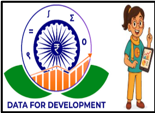
- About New Logo: Reflects MoSPI’s vision of “Data for Development.”
- Ashoka Chakra symbolises truth, transparency and good governance.
- Rupee symbol (₹) highlights the role of statistics in economic planning, policymaking and national growth.
- Use of numbers and symbols represents modern data systems and statistical science.
- Upward growth bar signifies progress and sustainable economic growth supported by reliable data.
- Colours saffron, white, green and deep blue denote national values—growth, truth, sustainability, stability and knowledge.
- About Mascot – “सांख्यिकी”: Introduced as a citizen-centric and friendly mascot to simplify statistics for the public.
- Represents MoSPI’s core values of accuracy, transparency and data-driven governance.
- Designed to explain complex statistical concepts in a simple and visual manner.
- Will be used in national sample surveys, awareness campaigns, educational content, digital platforms and public events.
- Aims to encourage public participation in NSO surveys and strengthen trust in official statistics.
- Climate-Resilient Agriculture (CRA): Recently, analysis highlighted India’s urgent need for a national Climate-Resilient Agriculture (CRA) roadmap to protect productivity and farmer livelihoods.
- About CRA: It integrates biotechnology with complementary technologies to sustain or enhance farm productivity.
- Emphasises reduced dependence on chemical inputs through biofertilizers, biopesticides and soil microbiome management.
- Uses genome-edited crops tolerant to drought, heat, salinity and pests.
- Employs AI-driven analytics for locally customised, data-based farming decisions.
- Why India Needs CRA: India has a growing population and rising demand for reliable agricultural output.
- Around 51% of net sown area is rainfed, producing nearly 40% of total food output, making it climate-vulnerable.
- Climate models project 3–22% decline in rice yields by century-end, exceeding 30% in worst cases.
- CRA can improve productivity, protect ecosystems, reduce food imports and strengthen food-sector strategic autonomy.
- Alo Prabhat: Dance of the Dawn: Recently, Dong village in Anjaw district of Arunachal Pradesh celebrated India’s first sunrise of the year through “Alo Prabhat: Dance of the Dawn”, showcasing a unique blend of culture, geography, and sustainable tourism.
- Key Highlights: Dong is India’s easternmost village and the first human habitation to receive sunrise.
- Event featured “Alo Prabhat: Dance of the Dawn”, rooted in Meyor and Mishmi indigenous cultures.
- Performance combined chants, songs, traditional rhythms, contemporary dance and poetry.
- Indigenous musical instruments were used to highlight the spirit of the Dong Valley and its people.
- Programme formed part of the inaugural Sunrise Festival organised by the Arunachal Pradesh Tourism Department.
- A Sunrise Pledge was taken to promote collaborative cultural exchanges.
- Festival aimed to bring together communities, artists and global visitors.
- Initiative promotes responsible, eco-friendly tourism in the region.
- Festival envisioned as a platform for local entrepreneurs and small businesses to showcase cultural and natural heritage.
- Savannas: Recently, a study published in the British Ecological Society Journal People and Nature revealed that savannas in western Maharashtra are ancient ecosystems, not degraded forests, challenging afforestation-centric conservation policies.
- Key Findings: A total of 62 plant species were identified, with a dominant presence of savanna-indicator species.
- Only three species associated with forest ecosystems were recorded, strongly indicating a historically savanna-dominated landscape.
- Many species exhibit adaptations to fire, grazing and browsing, such as thick bark, spines, clonal growth and resprouting.
- Two distinct savanna types were recognised: fine-leaf savannas in drier regions and broadleaf savannas in relatively wetter zones.
- The findings are reinforced by 11 independent lines of evidence, including:
- Colonial-era paintings, photographs and land revenue records
- Hero stones, pastoral artefacts and hunting accounts
- Chalcolithic pottery featuring blackbuck imagery
- Faunal remains and Holocene pollen records
- Evolutionary histories of savanna-endemic plants and reptiles
- Hanimaadhoo International Airport: Recently, the Ministry of Civil Aviation directed the Airports Authority of India (AAI) to assess the Maldives’ proposal for involving Indian companies in the management of Hanimaadhoo International Airport.
- Key Highlights: The move follows the 2012 termination of a USD 511 million GMR airport contract in the Maldives. In 2014, construction work was awarded to Beijing Urban Construction Group (China).
- The dispute was resolved in 2016, when the Singapore Arbitration Centre awarded USD 270 million to GMR for wrongful termination.
- Hanimaadhoo International Airport: Located on Hanimaadhoo Island in Haa Dhaalu Atoll.
- Maldives: A chain of low-lying coral islands and atolls in the north-central Indian Ocean, southwest of India and Sri Lanka, spanning the equatorial region.
- Strategic Significance: The proposal reflects renewed India–Maldives engagement.
- It strengthens India’s role in regional connectivity, development assistance and strategic influence in the Indian Ocean Region (IOR).
- Airports Authority of India (AAI): A statutory body under the Ministry of Civil Aviation, established under the AAI Act, 1994. Responsible for developing, maintaining and managing India’s civil aviation infrastructure, including airports and passenger and cargo terminals.
- Tobacco Products: Recently, a new tax system for tobacco products will come into effect from February 1, 2026, bringing revised excise duty rates under the Central Excise (Amendment) Act, 2025.
- Key Highlights: Provisions of the Health Security–cum–National Security Act, 2025 to apply from the same date, levying cess on pan masala and tobacco-related products.
- Earlier, excise duty on cigarettes under GST had become nominal, while GST compensation cess rates remained unchanged since July 2017.
- Ministry noted that tobacco affordability has stagnated or increased, contrary to global public health norms.
- Policy shift aims to ensure real cigarette prices rise faster than incomes through higher specific excise duties.
- New GST rates on tobacco products notified: Bidis shifted to 18% GST from earlier 28%.
- All other tobacco products placed in a 40% GST slab. - Health Security–cum–National Security cess justified to ensure dedicated, non-lapsable funding for national security needs.
- Government stated the cess avoids increasing general tax burden or broad-based GST rates.
 Detailed Solutions & Explanations