2 Minute Series_28 January 2026
28th January 2026
- Urban Tap Water Coverage: Recently, urban tap water coverage has increased by 64% since 2011, mainly due to the rollout of Atal Mission for Rejuvenation and Urban Transformation and AMRUT 2.0, as per data released by the Ministry of Housing and Urban Affairs.
- Key Highlights: Urban tap water coverage rose from 49% in 2011 to about 77% by 2025, marking a 64% increase.
- 228 lakh household tap connections have been provided in urban areas, according to the Ministry of Housing and Urban Affairs (MoHUA).
- 20 lakh sewer connections have been added, including systems under Faecal Sludge and Septage Management (FSSM).
- Treated wastewater reuse has expanded to nearly 6,000 MLD across States and Union Territories.
- Water Security & Urban Environment: 7,480 acres of water bodies have been rejuvenated.
- 2,704 acres of green spaces have been developed. - Under ‘Jal Hi Amrit’, Water Resource Recovery Cells (WRRCs) have been established in 25 States and UTs to promote treated water reuse and biosolids management.
- Through the AMRUT Mitra initiative, over 28,000 women SHG members are involved in water demand management, quality testing, billing, and system maintenance.
- Hydrogen Zone: Recently, at India Energy Week (IEW) 2026, Union Minister for Petroleum and Natural Gas inaugurated the Hydrogen Zone in Goa.
- About Hydrogen Zone: Hosted by Oil India and highlights advanced hydrogen technologies supporting India’s low-carbon energy transition.
- The zone showcases innovations across the entire hydrogen value chain — production, storage, and utilisation.
- It demonstrates how hydrogen can decarbonise hard-to-abate sectors, including: Refining, Fertilisers, Steel and Mobility.
- The initiative positions India as a competitive and reliable player in emerging global hydrogen markets.
- The Hydrogen Zone is one of 11 strategically curated thematic zones at India Energy Week 2026.
- These thematic zones enable direct engagement among policymakers, industry leaders, investors, and technology providers on solutions, business models, and partnerships.
- About IEW: India’s flagship global energy platform. Acts as a neutral international forum driving investment, policy alignment, and technological collaboration toward a sustainable energy future.
- Hoya Nagaensis: Recently, researchers from Nagaland University recorded a new plant species Hoya Nagaensis, reinforcing Northeast India’s status as a biodiversity hotspot.
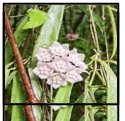
- About Hoya nagaensis: Genus: Hoya — widely valued for decorative, wax-coated flowers; Geographical range: High-altitude temperate forests of Nagaland
- Confirmed location: Kavünhou Community Reserved Forest
- The species represents a new scientific record, identified during detailed botanical exploration in remote and poorly studied forest landscapes.
- Characteristics: Exhibits unusual leaf morphology and distinct floral structures, clearly differentiating it from known species.
- Produces star-shaped flowers, a hallmark of the genus.
- Secretes milky latex, a defining trait of plants belonging to the Apocynaceae (milkweed) family. - About Hoya Genus: Commonly referred to as wax plants, Hoyas are popular among horticulture enthusiasts.
- Native distribution: Southeast Asia, Australia, and Polynesia.
- Floral traits: Flowers are typically star-like with a glossy, waxy texture.
- TomTom Traffic Index 2025: Recently, India’s urban mobility crisis has come into sharp focus, as the TomTom Traffic Index 2025 highlights the growing mismatch between rapid motorisation and inadequate urban transport capacity in Indian cities.
- Key Findings: Bengaluru ranked 2nd globally in congestion, behind Mexico City, and 3rd among the world’s slowest cities.
- Bengaluru recorded an average congestion level of 74.4% in 2025.
- Bengaluru and Kolkata featured among the top five slowest cities globally.
- Kolkata ranked 4th slowest
- Pune overtook Mumbai to become the 5th most congested city globally, with 152 hours lost annually.
- New Delhi ranked 23rd, while Jaipur, Chennai, Hyderabad, Ernakulam, and Ahmedabad also featured.
- India’s global position: 5th most congested country worldwide and 2nd most congested in Asia, after the Philippines
- Index Methodology: Rankings are based on average travel time, congestion levels, and vehicle speeds.
- Analysis draws on 65 trillion km of global trip data.
- “Slowest cities” focus on actual travel speed, while congestion measures delay compared to free-flow traffic.
- Agarwood: Recently, the Union Minister of the Ministry of Development of North Eastern Region laid the foundation stone for an ₹80 crore Agarwood Value Chain Development Scheme at North Fulkabari in Tripura.
- About Agarwood: Aquilaria malaccensis is a forest tree species belonging to the Thymelaeaceae family.
- Commonly called Oud, Gaharu, or Agar, it is regarded as the costliest incense material in the world.
- The prized resin forms when the tree undergoes severe biological stress, usually after infection by specific moulds such as Phaeoacremonium (Phialophora parasitica), triggering a natural defence response.
- The Aquilaria tree is fast-growing and adapted to subtropical forest conditions.
- Native to the Himalayan foothills of South Asia, across Southeast Asia, and extending to Papua New Guinea’s rainforests.
- In India, agarwood occurs naturally in the Northeastern states, especially Assam, Tripura, Arunachal Pradesh, Nagaland, Mizoram, and Manipur.
- Uses & Economic Value: Resin-infused wood is used for incense and traditional medicine.
- Distilled agarwood oil serves as a key ingredient in high-end perfumes and cosmetics.
- Agarwood ranks among the most valuable non-timber forest products - Growth & Ecological Characteristics: Grows from near sea level up to ~1,000 metres, with around 500 metres considered optimal.
- Seedlings need dense shade and abundant moisture, but once established, growth is rapid.
- India and the European Union: Recently, India and the European Union concluded negotiations on a comprehensive Free Trade Agreement (FTA), described as the “Mother of All Deals”, marking a historic upgrade in bilateral ties.
- Key Highlights: Announced during the visit of the European Council President and European Commission President, the FTA aligns with India@2047 and a future-ready strategic partnership.
- Covers the 4th and 2nd largest economies globally, creating a combined market of USD 24 trillion (~₹2,091.6 lakh crore).
- Impacts nearly 2 billion people, positioning the deal as one of the world’s most consequential trade agreements.
- Designed as a modern, rules-based framework to strengthen market integration, supply-chain resilience, and long-term cooperation.
- Indian exports to EU: Preferential access across 97% of EU tariff lines and over 70% tariff lines (90%+ export value) get immediate zero duty.
- Major beneficiaries: Labour-intensive sectors — textiles, apparel, leather, footwear, marine products, gems & jewellery, toys, sports goods, tea, coffee, spices.
- Agricultural gains: Preferential access for tea, coffee, spices, grapes, gherkins, cucumbers, dried onion, fruits, vegetables, and processed foods.
- Sensitive sectors protected: Dairy, cereals, poultry, soymeal, select fruits & vegetables.
- Opens pathways for future Social Security Agreements and supports Indian students’ mobility and post-study work.
- Traditional medicine (AYUSH): Enables practice and establishment of AYUSH wellness centres in EU states where regulations permit.
- Strobilanthes Riteshii: Recently, scientists from the Botanical Survey of India officially documented a new flowering plant species Strobilanthes riteshii, from Arunachal Pradesh.
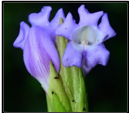
- About Strobilanthes riteshii: Family: Acanthaceae; Genus: Strobilanthes
- India harbours significant diversity of Strobilanthes, with the Himalayan and Northeast regions contributing nearly 50% of known species.
- Members of this genus are recognised for showy flowers and synchronised mass-blooming cycles.
- Nomenclature: It honours Dr Ritesh Kumar Choudhary, a noted Indian taxonomist at the Agharkar Research Institute, acknowledging his work in plant taxonomy and molecular systematics.
- Discovery & Habitat: Location: Chayangtajo area, East Kameng district.
- Distribution: Endemic to the Eastern Himalayan region of Arunachal Pradesh. Extremely limited population, with around 25 mature individuals recorded so far.
- Conservation Status: IUCN Red List: Data Deficient (DD)
- Ecological Importance: Reinforces the Eastern Himalaya as a crucial biogeographical corridor linking India, China, and Tibet. Highlights the region’s highly endemic and fragile floral diversity.
- Reports on the Circular Economy: Recently, NITI Aayog launched three reports on the circular economy covering ELVs, waste tyres, e-waste, and lithium-ion batteries.
- Key Highlights: Launch at: MRAI–International Material Recycling Conference (IMRC), Jaipur.
- Objective: Strengthen India’s circular economy ecosystem through policy and institutional reforms.
- Focus areas of reports: Infrastructure development for recycling
- Sector formalisation
- Strengthening Extended Producer Responsibility (EPR)
- Enhancing revenue and economic potential - Strategic context: Circular economy is central to Viksit Bharat @2047, enabling low-carbon, resource-efficient growth.
- Role of key sectors: Electronics and electrical equipment form the backbone of digital infrastructure.
- Lithium-ion batteries enable energy storage and electrification.
- Automotive vehicles drive modern mobility. - Projected surge in waste streams: Lithium-ion batteries: 29 GWh (2025) → 248 GWh (2035)
- End-of-Life Vehicles: 23 million (2025) → 50 million (2030)
- E-waste:19 MMT (2024) → 14 MMT (2030)
Related Blogs
 Detailed Solutions & Explanations

