2 Minute Series_21st August 2025
21st August 2025
- Agni-5: Recently, India successfully test-fired its intermediate-range ballistic missile Agni-5 from the Integrated Test Range (ITR) at Chandipur, Odisha.
- About Agni-5: Indigenously developed Intercontinental Ballistic Missile (ICBM).
- Strike range: ~5,000 km.
- Designed by Defence Research and Development Organisation (DRDO).
- Powered by a three-stage solid-fuel engine.
- Designed to carry nuclear warheads.
- Primarily intended to counter strategic challenges from China.
- The latest variant is equipped with MIRV (Multiple Independently Targetable Re-entry Vehicle) technology.
- Integral to India’s long-term strategic security planning and credible minimum deterrence.
- MIRV Breakthrough: Enables a single missile to carry and deploy multiple warheads against different targets.
- Promotion and Regulation of Online Gaming Bill, 2025: Recently, the Lok Sabha passed the Promotion and Regulation of Online Gaming Bill, 2025 by voice vote, marking a major step towards banning real-money online gaming platforms such as fantasy sports and card games.
- Key Provisions of the Online Gaming Bill, 2025: Categorisation of Gaming:
- E-Sports: Recognised as a creative and recreational industry with significant growth potential; promoted as a mainstream sector.
- Online Social Games: Encouraged as safe entertainment, provided they do not involve monetary risks or addictive gambling features.
- Online Money Games: Completely banned, covering activities like fantasy sports, poker, rummy, and other real-money platforms where players invest funds for financial returns.
- Penalties for Violations: First-time offence: Imprisonment up to 3 years and fines up to ₹1 crore.
- Repeat offence: Imprisonment between 3–5 years and fines up to ₹2 crore.
- Global Capability Centre: Recently, the International Solar Alliance (ISA) announced plans to set up a Global Capability Centre in India, envisioned as a “Silicon Valley for solar”, to boost innovation and capacity building in renewable energy.
- Key Highlights: 17 Centres of Excellence: To be set up in 17 countries (names not disclosed) by end of 2025, providing testing, lab training, and startup ecosystem support; could expand to 50 centres.
- Collaboration Model: Centres to be linked with “IIT-like” universities, with India as the connecting hub.
- Proposal includes 2,000 km undersea cable between India & UAE, to leverage different peak solar hours for cross-border electricity trade.
- About ISA: Founded: 2015, during Paris COP, by India and France.
- Headquarters: Gurugram, Haryana.
- Membership: ~100 countries.
- Mission: Unlock $1 trillion in solar investments by 2030, reduce technology & financing costs.
- India’s Solar Progress: Installed solar capacity: ~119 GW as of July 2025.
- Energy mix milestone: 50% of total installed power capacity (484 GW) now from non-fossil sources.
- Solar’s share: ~48% of India’s non-fossil capacity.
- Gap: Despite installed capacity, actual clean energy supply is below 30%; coal still supplies ~75% of electricity.
- India advancing the One Sun, One World, One Grid (OSOWOG)
- SAKSHAM-3000: Recently, the Centre for Development of Telematics (C-DOT), the R&D arm of the Department of Telecommunications, developed SAKSHAM-3000, a state-of-the-art switch-cum-router designed to cater to the growing demands of modern digital infrastructure.
- About SAKSHAM-3000: Indigenously designed high-performance switch-cum-router by C-DOT (Centre for Development of Telematics), R&D arm of the Department of Telecommunications.
- Switching capacity: 25.6 terabits per second.
- Supports: Multiple types of network connections.
- Rack-compatible: Built to fit standard equipment racks
- Features: Backup (redundant) power supplies for uninterrupted operation.
- Hot-swappable cooling fans (replaceable without system shutdown).
- Flexible configuration to support a wide range of network functions and communication methods.
- Application Areas: Data Centres: Functions as a Leaf Switch, Spine Switch, or Super-Spine Switch.
- Telecom & IP Networks: Can serve as an Edge Router or Core Router.
- Pamba River: Recently, the Central Government initiated steps to bring the Pamba River under the National River Conservation Plan (NRCP), a key programme aimed at protecting India’s major rivers.
- About Pamba River: Third longest river in Kerala, after Periyar and Bharathappuzha.
- Origin: Pulachimalai Hill (1,650 m altitude) in the Peerumedu plateau, Western Ghats.
- Length: Travels 176 km before joining the Arabian Sea, branching into multiple channels.
- Basin Area: 2,235 sq. km, entirely within Kerala.
- Boundaries: East – Western Ghats; West – Arabian Sea.
- Cultural Significance: Known as ‘Dakshina Bhageerathi’ or the Ganga of Kerala.
- Closely linked with Sabarimala Temple; pilgrims traditionally take a holy dip in its waters before and after the trek.
-
Also called Thriveni Sangam, where it meets Achankovil and Manimala
-
Tributaries: Major tributaries: Kakki Ar, Azhuta Ar, Kakkad Ar, Kallar, Manimala, and Achenkovil.
- Ideonella Sakaiensis: Recently, scientists have been exploring the use of microbes (bacteria and fungi) to break down plastics, offering an eco-friendly solution to combat plastic pollution. One such microbe is Ideonella sakaiensis, which has the unique ability to degrade polyethylene terephthalate (PET), a widely used plastic.
- About Ideonella sakaiensis: Taxonomy: Genus: Ideonella
- Family: Comamonadaceae / Sphaerotilaceae
- Discovery: Identified by Japanese researchers Kohei Oda and Kenji Miyamoto (Kyoto Institute of Technology & Keio University).
- Habitat: Found in PET-contaminated soil, oxygen-rich moist soil, and sewage sludge.
- Characteristics: Gram-negative, rod-shaped, and motile.
- Non-sporing, non-pigmented, monotrichous bacterium.
- Advantages: Can completely degrade PET into harmless building blocks.
- These breakdown products serve as food for sakaiensis and other organisms.
- ·Other Plastic-Degrading Microbes & Organisms
- Microbes for Natural Polymers: Cellulose → degraded by cellulolytic microbes.
- Chitin (fungi, insects) → degraded by chitin-degrading microbes.
- Cutin (leaf surfaces) → degraded by cutinases.
- Plastic-Degrading Bacteria: Gordonia → degrades polypropylene (~23%).
- Arthrobacter → degrades polystyrene (~19.5%).
- Waxworms (Galleria mellonella): Can chew and digest plastic bags.
- Normally pests in beehives, feeding on honeycomb (structurally similar to polyethylene, the main component of plastic bags).
- Snow Leopards: Recently, a three-year camera-trapping study confirmed the year-round presence and breeding activity of snow leopards in Jammu & Kashmir, underscoring the ecological significance of the Kishtwar Himalayas.
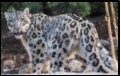
- About Snow Leopard: A medium-sized big cat inhabiting the rugged terrains of Central and South Asia.
- Nicknamed the “ghost of the mountains” due to its elusive nature.
- Distribution: Prefers steep, rocky terrains and ravines, typically at 3,000–5,000 metres or higher in the Himalayas.
- Global presence in 12 countries, including China, Bhutan, Nepal, India, Pakistan, Russia, and Mongolia.
- In India, mainly found in high-altitude, cold, and arid landscapes of: Jammu & Kashmir, Himachal Pradesh, Uttarakhand, Sikkim and Arunachal Pradesh
- Key Features: Fur: Pale grey coat with dark rosettes, providing camouflage in rocky habitats.
- Size: About 7 feet long, with the tail making up nearly half the length.
- Tail Function: Aids in balance while climbing and serves as a wrap for warmth during rest.
- Behaviour: Solitary, except during mating and rearing cubs.
- Conservation Status: IUCN Red List: Vulnerable
- CITES: Appendix I
- Wildlife (Protection) Act, 1972: Schedule I
- About Soap: Sodium (Na) or Potassium (K) salts of fatty acids.
- Derived from vegetable oils or animal fats.
- General formula: RCOONa / RCOOK.
- Base materials: Coconut, palm, olive, and soybean oils/fats.
- Alkalis: Caustic soda (NaOH) or caustic potash (KOH).
- Additives: Perfumes (sandalwood, synthetic scents), colours, fillers (talc, sodium silicate), surfactants (SLS), antibacterial/antifungal agents (neem oil, triclosan).
- About Detergents: Synthetic cleaning agents, mainly from petrochemicals.
- Contain surfactants, bleaches, and fragrances.
- Surfactants: Linear alkyl benzene sulphonate (LABS), sodium lauryl sulphate (SLS).
- Builders: Sodium carbonate, phosphates.
- Others: Enzymes, bleaches, dyes, perfumes.
- MY Bharat & SOUL: Recently, the Government of India signed a Memorandum of Understanding (MoU) with the School of Ultimate Leadership Foundation (SOUL) to promote youth leadership and capacity building.
- About the Institutions:
- My Bharat: An autonomous body under the Department of Youth Affairs, Ministry of Youth Affairs & Sports. Works to empower Indian youth through leadership, innovation, and service.
- SOUL (School of Ultimate Leadership Foundation): A privately funded leadership institution founded by like-minded individuals. Promotes value-based leadership, experience-sharing, fellowship, and curiosity to advance public good.
- Objectives of the Partnership: Support 1,00,000 youth leaders (18–29 years) across India.
- Enhance skills in governance, public policy, and social entrepreneurship, digital and financial literacy.
- Key Features of the MoU: Validity: 3 years (extendable by mutual consent).
- Pan-India inclusive approach: Representation from rural & urban areas, aspirational districts, tribal regions, women, and marginalised communities.
 Detailed Solutions & Explanations

