2 Minute Series_20th December 2025
20th December 2025
- Antariksh Prayogshala: Recently, the Indian National Space Promotion and Authorisation Centre (IN-SPACe) have invited proposals to establish Antariksh Prayogshala (Space Labs) across select academic institutions.
- About Antariksh Prayogshala: A pioneering initiative to create state-of-the-art space laboratories within Indian academic institutions.
- Aims to bridge the gap between theoretical learning and practical application in space technologies.
- Objectives: Provide hands-on training and real-world exposure to students pursuing space-tech related courses.
- Enable industry–academia collaboration and promote applied research and innovation.
- Support long-term capacity building in India’s space sector.
- Labs will also be accessible to Non-Government Entities (NGEs) operating in the respective zones.
- Encourages shared use of advanced infrastructure across academia and industry.
- Government Assistance: IN-SPACe to provide financial support up to 75% of total project cost.
- ICG Ship ‘Amulya’: Recently, India’s push towards maritime security and defence self-reliance received a boost with the commissioning of ICG Ship ‘Amulya’.
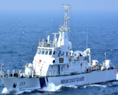
- About ICG Ship ‘Amulya’: A new-generation Fast Patrol Vessel, reflecting the growing success of Make-in-India and Aatmanirbhar Bharat in the defence sector.
- Third vessel in the Adamya-class Fast Patrol Vessel (FPV)
- Designed and built by Goa Shipyard Limited (GSL).
- Vessel length: 51 metres.
- Powered by two 3000 KW advanced diesel engines.
- Achieves a top speed of 27 knots.
- Operational endurance of 1,500 nautical miles, enabling prolonged missions in India’s maritime zones.
- Equipped with indigenous state-of-the-art weapons and systems.
- ICGS Amulya will undertake: Maritime surveillance, Interdiction operations, Search and Rescue (SAR), Anti-smuggling missions and Marine pollution response
- NSSH Scheme: Recently, to strengthen inclusive entrepreneurship and social justice in economic growth, the Ministry of MSME has been implementing the National Scheduled Caste and Scheduled Tribe Hub (NSSH) Scheme.
- About NSSH Scheme, aimed at promoting SC/ST-owned enterprises and ensuring compliance with the mandated 4% public procurement from SC/ST MSEs under India’s procurement policy.
- Objectives: Promote entrepreneurship among Scheduled Castes and Scheduled Tribes.
- Enable fulfilment of 4% procurement mandate from SC/ST MSEs by government entities.
- Integrate marginalized entrepreneurs into formal supply chains and public procurement.
- Policy Alignment: Linked to Public Procurement Policy for Micro and Small Enterprises (MSEs).
- Supports the broader goals of inclusive growth and economic empowerment.
- Key Features: Training programmes for entrepreneurial and managerial skills.
- Workshops and awareness programmes to improve business readiness.
- Special Vendor Development Programmes (SVDPs) to connect SC/ST MSEs with PSUs and government buyers.
- Subsidy on purchase of plant, machinery, and equipment.
- Financial assistance for registration under the Single Point Registration Scheme (SPRS).
- Support for enrolment on government-promoted e-commerce portals.
- Indi Lime: Recently, India’s agri-export momentum gained further strength as GI-tagged Indi Lime from Karnataka entered the Oman market, showcasing the early benefits of the India–Oman Comprehensive Economic Partnership Agreement (CEPA).
- About Indi Lime: Primarily cultivated in the Vijayapura district of Karnataka.
- It has received the Geographical Indication (GI) tag for its regional uniqueness.
- The lime is known for its superior quality, zesty aroma, high juice yield and balanced acidity.
- Its distinctive flavour and geographical identity make it a symbol of the region’s agricultural excellence.
- In addition to culinary applications, it is also valued in traditional medicine and cultural practices.
- Erivan Anomalous Blue: Recently, Armenia unveiled the official logo of COP17 under the Convention on Biological Diversity (CBD), featuring the Erivan Anomalous Blue (Polyommatus eriwanensis), a rare butterfly species endemic to the country.
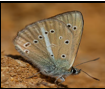
- About Erivan Anomalous Blue: A blue butterfly species endemic to Armenia.
- It is named after Yerevan (Erivan) and is found only in southern Transcaucasia.
- The species inhabits calcareous grasslands at elevations of about 1,200–2,200 metres.
- It has one generation per year, with adult activity from mid-June to mid-July.
- The larval host plant is unknown, limiting detailed ecological assessment.
- It is not listed in the Global or European IUCN Red Lists.
- The species is classified as Endangered in the Red Book of Animals of Armenia (2010).
- Its distribution partly overlaps with Khosrov Forest State Reserve and Gnishik Protected Landscape.
- Being endemic and range-restricted, it is highly sensitive to environmental changes.
- Butterflies act as indicator species reflecting ecosystem health.
- Population density and trends remain uncertain due to identification challenges and unknown host plant.
- Doppler Weather Radars (DWRs): Recently, India has significantly strengthened its weather monitoring capacity, with Doppler Weather Radars (DWRs) now covering 87% of the country’s total area.
- Key Highlights: 47 Doppler Weather Radars operational across India.
- Government plans to extend coverage to the remaining uncovered regions.
- Enhanced radar infrastructure in the Western Himalayas.
- DWRs operational at 10 strategic locations, including: Srinagar, Jammu, Banihal Top, Leh, Kufri, Jot, Mukteshwar, Lansdowne, Surkanda Devi and Murari Devi
- Purpose: Real-time monitoring and nowcasting (short-range forecasts of a few hours).
- Early detection of heavy rainfall, snowfall, cloudbursts, and extreme events.
- Basic Radar Principle: Radar emits radio wave pulses from an antenna. When these waves strike atmospheric objects like raindrops or snowflakes, part of the energy is reflected back.
- What Makes Doppler Radars Special: Unlike conventional radars, DWRs detect both position and movement of weather targets. They measure the phase shift between transmitted and received radio waves.
- Web Portal for Forest Rights: Recently, the Union Government has been developing a national web portal to take the entire process of recognition and management of forest rights under the Forest Rights Act (FRA), 2006 online.
- Key Highlights: Proposed as a one-stop portal for all FRA-related processes.
- Covers the entire chain: Filing of claims
- Processing at multiple levels
- Issuance of titles
- Long-term record management
- Claims processing from: Gram Sabha Forest Rights Committees
- Sub-Divisional and District Committees
- State-Level Monitoring Committees
- Creation of an FRA Atlas to map potential forest areas where rights may be claimed in future.
- About FRA, 2006: Officially known as the Scheduled Tribes and Other Traditional Forest Dwellers (Recognition of Forest Rights) Act, 2006.
- Aims to recognise generationally held forest rights of: Scheduled Tribes and Other Traditional Forest Dwellers
- Types of Rights Recognised: Individual Forest rights
- Community forest resource rights
- Rights over habitation and minor forest produce
- Rural Growth: Recently, a new global study revealed that rural settlement expansion causes significantly greater damage to nature than urban growth, exposing a major blind spot in global conservation and land-use policies.
- Key Findings: Biodiversity loss linked to rural settlements is 3.5 times higher than that caused by urban expansion.
- Between 2000 and 2020, rural settlement-driven biodiversity loss equalled or exceeded urban-driven loss in most regions.
- Published in Communications Earth & Environment.
- By 2020: Urban settlements: ~62.9 million hectares and Rural settlements: ~82.8 million hectares
- Urban growth is often compact and vertically dense.
- Rural growth is: Low-density, Dispersed and Outward-spreading
- Areas affected by settlement-related disturbance were over 30 times larger than the land directly built upon.
- Asia accounts for over 50% of global biodiversity loss linked to settlement growth.
- Africa follows as the second most affected region.
- Biodiversity loss is highest in tropical and subtropical regions, where even small land-use changes have disproportionate impacts.
- Decline of species such as: Grey francolin, Black-shouldered kite and Drongos
- Child Trafficking and Sexual Exploitation: Recently, the Supreme Court of India described child trafficking and commercial sexual exploitation as a “deeply disturbing reality” in the country, persisting despite the existence of protective legal frameworks.
- Key Highlights: Child trafficking is driven by organised cartels operating through: Recruitment, Transportation, Harbouring and Sexual exploitation
- These networks function through seemingly independent verticals, whose intersections are deliberately concealed to deceive victims and evade detection.
- Guidelines on Appreciation of Evidence in Trafficking Cases: Courts must not disbelieve a trafficked child’s testimony merely due to: Minor inconsistencies and lack of chronological precision
- A trafficked child must be treated as an injured witness, not as an accomplice.
- Sole testimony of the victim can be sufficient for conviction if it appears credible and convincing.
- Judicial scrutiny should be guided by realism, empathy, and sensitivity, not rigid technical standards.
- Large Language Model: Recently, Bank of America identified India as the world’s largest and most dynamic market for Large Language Model
- Key Highlights: India leads globally in daily and monthly active users of AI applications like ChatGPT and Gemini.
- A massive digital base of around 700–750 million mobile internet users enable rapid AI diffusion.
- Ultra-low data costs significantly reduce barriers to widespread AI adoption.
- A young, tech-curious population under 35 years drives experimentation with AI tools.
- Telecom-led bundling of AI services is expanding adoption beyond early users.
- India is transitioning from an IT services hub to a frontline AI consumption and innovation market.
 Detailed Solutions & Explanations

