2 Minute Series_1st January 2026
01st January 2026
- Nimesulide: Recently, the Union Ministry of Health and Family Welfare, invoking its powers under the Drugs and Cosmetics Act, 1940, banned oral formulations of nimesulide above 100 mg in immediate-release form.
- About Nimesulide: A Non-Steroidal Anti-Inflammatory Drug (NSAID) used for relieving pain, reducing inflammation, and lowering fever. It is approved for short-term; second-line use when other NSAIDs are ineffective.
- Nimesulide is prescribed for: Acute pain, symptomatic relief in painful osteoarthritis, primary dysmenorrhea, fever, acute tendinitis, and postoperative dental pain
- Its use is approved for individuals above 12 years of age.
- What Has Been Banned: Oral immediate-release formulations of nimesulide with strengths exceeding 100 mg.
- What Has Not Been Banned: Oral formulations containing less than 100 mg
- Higher-strength formulations in sustained-release or extended-release forms
- Non-oral formulations such as topical gels, creams, and suppositories - Health Risk Concerns: Scientific evidence indicates a risk of liver toxicity, particularly with higher-dose immediate-release formulations. The associated risks were considered unacceptable in relation to the therapeutic benefits.
- Pralay Missiles: Recently, the Defence Research and Development Organisation (DRDO) successfully conducted a salvo launch of two indigenous Pralay missiles from the same launcher off the Odisha coast.
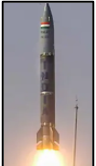
- About Pralay Missiles: An indigenously developed, short-range, quasi-ballistic missile.
- It uses solid propellant, enabling rapid launch readiness.
- Designed for high-precision conventional strikes.
- Capable of carrying multiple types of conventional warheads.
- Equipped with advanced guidance and navigation systems.
- Has a strike range of approximately 150–500 km & payload capacity ranges between 500-1000 kg.
- Launched from a road-mobile platform, enhancing survivability.
- Achieves terminal speeds of around Mach 6.1.
- Features mid-course manoeuvrability, allowing trajectory changes during flight.
- Salvo launch: Two missiles fired in quick succession from the same launcher.
- Conducted as part of user evaluation trials, indicating near-operational readiness.
- Amazonian Stingless Bees: Recently, Amazonian stingless bees from the Peruvian Amazon became the first insects in the world to be granted legal rights.
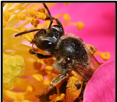
- About Amazonian Stingless Bees: These bees are stingless, unlike European honeybees, and are vital rainforest pollinators.
- The bees have been granted the right to exist and flourish, setting a global legal precedent.
- The recognition comes through the Declaration of Rights for Native Stingless Bees, adopted by the provincial municipality of Satipo, Peru, via a municipal ordinance.
- The campaign was led by Rosa Vásquez Espinoza, founder of Amazon Research Internacional, in collaboration with Indigenous Amazonian communities.
- The Earth Law Center played a key role in advancing the legal framework under the broader Rights of Nature
- Significance: Stingless bees are among the oldest bee species on Earth.
- They pollinate over 80% of Amazonian plant species, including crops like coffee, cocoa, avocados, and blueberries.
- They have been integral to the ecological balance, livelihoods, and cultural practices of Amazonian communities for centuries.
- National Drug Use Survey (NDUS): Recently, the Union government announced that the next National Drug Use Survey (NDUS) will be conducted during 2025–26, covering nearly 20 lakh individuals across India.
- Key Highlights: For the first time, the survey will document indigenous and traditionally sanctioned forms of substance use, examining their social, economic, and health implications.
- It will explore whether long-standing ritualistic use of substances such as traditional alcoholic beverages, opium, and cannabis necessarily leads to addiction.
- The survey will assess State- and district-level prevalence and patterns of substance use and substance use disorders.
- It will continue to study commonly used substances including alcohol, cannabis, opioids, sedatives, inhalants, cocaine, stimulants, and hallucinogens, while also tracking emerging and rare psychoactive substances.
- A special focus will be placed on previously underrepresented populations, including prison inmates, school students, and college and university students.
- The survey will also examine the feasibility of wastewater-based drug surveillance to estimate community-level drug use.
- It recognises that drug-use patterns are dynamic, particularly in the post-COVID-19 period.
- The findings will help evaluate the impact of initiatives such as the Nasha Mukt Bharat Abhiyaan and support evidence-based policy formulation for drug demand reduction and harm prevention.
- 3D Flex Aqueous Angiography: Recently, the Army Hospital (Research & Referral) achieved a national first by successfully performing 3D Flex Aqueous Angiography combined with iStent implantation.
- Key Highlights: The procedure combines advanced imaging technology with minimally invasive glaucoma surgery, marking a major milestone in Indian ophthalmology.
- The surgery was carried out using a new stand-mounted Spectralis imaging system along with a state-of-the-art 3D operating microscope.
- This achievement places the Armed Forces Medical Services among global leaders in advanced ophthalmic care.
- 3D Flex Aqueous Angiography with iStent represents a first-of-its-kind procedure in India.
- The iStent is part of Minimally Invasive Glaucoma Surgery (MIGS).
- The integration enhances intraoperative imaging, reduces surgical trauma, and supports better long-term vision outcomes. - Broader Impact: Sets a new benchmark in glaucoma treatment in the country.
- Strengthens vision care capabilities for the Armed Forces community.
- Contributes to maintaining operational readiness through improved eye health.
- World Weather Attribution (WWA) Annual Report 2025: Recently, the World Weather Attribution (WWA) Annual Report 2025 warned that climate change–driven extreme weather in 2025 pushed millions of people close to their limits of adaptation, even during La Niña conditions.
- About World Weather Attribution (WWA): WWA is an international scientific collaboration.
- It studies how human-induced climate change influences extreme weather events such as: Heatwaves, Floods, Storms, Droughts and Wildfires
- Key Findings: Since 2015, heatwaves have become significantly more intense.
- Some heatwave events are now nearly 10 times more likely, indicating that small rises in global temperature cause disproportionate impacts.
- The three-year global average temperature is projected to exceed 5°C above pre-industrial levels for the first time.
- Several extreme events showed that existing adaptation measures are no longer adequate, particularly for vulnerable populations in the Global South.
- Marginalised communities faced the most severe consequences.
- Inadequate data and weaker climate models constrained analysis of many events in developing regions.
- Heatwaves emerged as the deadliest hazard, causing tens of thousands of deaths in individual events.
- Ammonium Nitrate: Recently, Rajasthan Police seized 150 kg of ammonium nitrate-based explosives in Tonk district, averting a potential disaster and underscoring ongoing internal security challenges.
- About Ammonium Nitrate (NH₄NO₃): A white, crystalline solid produced on a large industrial scale.
- It is a salt formed from ammonia and nitric acid.
- Widely used in agriculture as a high-nitrogen fertilizer.
- Also functions as an oxidising agent in explosive formulations.
- Has a melting point of about 170°C.
- Highly soluble in water; on heating, its aqueous solution decomposes to release nitrous oxide (laughing gas).
- Serves as a key raw material in commercial explosives, especially slurry explosives used in mining operations.
- Why Ammonium Nitrate Can Be Explosive: Ammonium nitrate is not explosive in its pure form.
- It becomes explosive only when mixed with other substances such as fuels.
- Detonators or initiators are required to trigger an explosion in such mixtures.
- Mitochondrial DNA: Recently, a new evolutionary biology study published in Proceedings of the Royal Society B revealed an unexpected link between insect sex determination and the rate of mitochondrial DNA evolution.
- Key Findings: Researchers found a link between chromosome number (haploid vs diploid) and how fast mitochondrial genomes evolve.
- This connection was unexpected because mitochondrial DNA evolves independently of nuclear chromosomes.
- Sex-Determination Systems Explained: Haplo-diploid (HD) system: Seen in ants, bees, and wasps.
- Females develop from fertilised eggs (diploid).
- Males develop from unfertilised eggs (haploid). - Diplo-diploid (DD) system: Both males and females are diploid.
- Sex is determined by different sex chromosomes. - Researchers analysed 86,000 insect species from 783 families across 26 orders.
- 131 families used the HD system; 652 families used the DD system.
- Focused on the COI (cytochrome c oxidase I) gene, commonly used in DNA barcoding.
- Compared consensus COI protein sequences across families and with a non-insect outgroup.
- Insects with HD systems showed 7 times more changes in the COI protein than DD species.
- HD species also exhibited more insertions and deletions in mitochondrial proteins.
- This indicates faster mitochondrial evolution in haplo-diploid insects.
- Reserve Bank of India (RBI): Recently, the Reserve Bank of India (RBI) released its Report on Trend and Progress of Banking in India 2024–25, reviewing the performance, stability, and regulatory developments of the banking sector.
- Key Findings: Number of fraud cases declined, but the amount involved increased.
- Fraud cases fell to 23,879 (2024–25) from 36,052 (2023–24).
- Amount involved rose sharply to ₹34,771 crore, compared to ₹11,261 crore last year.
- Private Sector Banks (PVBs): Accounted for 3% of fraud cases.
- Public Sector Banks (PSBs): Accounted for 7% of the total fraud amount.
- Card/Internet frauds declined across all bank groups (by number and value).
- Asset quality improved further.
- Gross NPAs (GNPA) declined to: 2% at end-March 2025; 2.1% at end-September 2025
- Urban Co-operative Banks (UCBs): Recorded higher balance sheet growth.
- NBFCs: Maintained double-digit credit growth.
- Continued to have strong capital buffers.


 Detailed Solutions & Explanations

