2 Minute Series_19 January 2026
19th January 2026
1. INS Sagardhwani: Recently, INS Sagardhwani, DRDO’s oceanographic research vessel, was flagged off from Kochi for the fifth edition of the Sagar Maitri initiative (SM-5).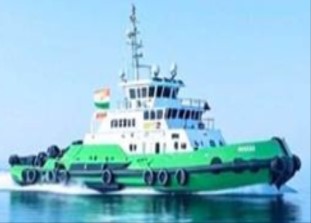
-
About Sagar Maitri: A flagship collaborative initiative of: The Indian Navy and the Defence Research and Development Organisation
-
Objective: Promote scientific cooperation, socio-economic collaboration, and ocean research among Indian Ocean Rim (IOR)
-
It operationalises India’s maritime vision of Mutual and Holistic Advancement for Security and Growth Across Regions (MAHASAGAR).
-
About INS Sagardhwani: It is an indigenously built marine acoustic research vessel designed and developed by Naval Physical and Oceanographic Laboratory (NPOL) under Defence Research and Development Organisation (DRDO), Kochi.
-
The ship was constructed by Garden Reach Shipbuilders & Engineers Ltd (GRSE).
-
It was launched in July 1994.
-
NPOL specialises in research related to the ocean environment, underwater acoustics, and allied scientific domains.
2. Guillain-Barré Syndrome (GBS): Recently, Madhya Pradesh issued a public health alert after two children died of Guillain-Barré Syndrome (GBS) in Neemuch, with 18 cases reported within days.
-
About GBS: A rare autoimmune neurological condition in which the body’s immune system damages the peripheral nerves.
-
The peripheral nervous system operates outside the brain and spinal cord.
-
It regulates voluntary muscle movement and sensory functions such as pain, touch, and temperature.
-
Since the immune system itself causes nerve injury, GBS is classified as an autoimmune disorder.
-
Clinically referred to as acute inflammatory demyelinating polyradiculoneuropathy (AIDP).
-
Can develop at any age, but is most commonly observed in individuals aged 30–50 years.
-
Symptoms: Often starts with a mild or unexplained fever.
-
Followed by gradually increasing muscle weakness and nerve-related symptoms.
-
Severe cases can result in near-total paralysis and respiratory failure.
-
Treatment and outcome: No definitive cure is currently available. Treatment focuses on symptom management and faster recovery.
3. First Open-Sea Marine Fish Farming Project: Recently, India launched its first open-sea marine fish farming project at North Bay in the Andaman Sea, marking a major shift in harnessing maritime potential.
-
About Open-Sea Marine Fish Farming Project: India’s first open-ocean, cage-based marine aquaculture initiative. Operated in natural deep-sea conditions, moving beyond conventional near-shore aquaculture practices.
-
Emphasises advanced, science-driven marine farming systems.
-
Focus areas include: Marine finfish culture in open-sea cages and Seaweed cultivation in offshore environments
-
Aims to integrate technological innovation with sustainable livelihood creation for coastal communities.
-
Significance: Positions oceans as core economic assets, strengthening India’s Blue Economy alongside land and Himalayan resources.
-
Ends coastal overdependence by expanding resource use into offshore maritime zones.
-
Supports national goals of sustainable fisheries, coastal employment, and ocean-led growth.
-
Applies advanced NIOT technology through robust open-sea cages built for harsh marine conditions.
-
Enables resilient, scalable offshore aquaculture suited to strong currents and open-ocean environments.
4. River Deltas: Recently, a global study published in Nature found that more than half of India’s major river deltas are sinking faster than rising sea levels, significantly heightening flood risk.
-
Key Findings: The Ganga–Brahmaputra, Brahmani, Mahanadi, Godavari, Cauvery and Kabani deltas show significant land subsidence, threatening millions of inhabitants.
-
Excessive groundwater extraction is identified as the dominant cause of accelerated subsidence, far outweighing natural geological compaction.
-
India’s Brahmani, Mahanadi and Ganga–Brahmaputra show subsidence across over 90% of their area
-
Fastest sinking Indian deltas: Brahmani: ~77% area subsiding, Mahanadi: ~69% area subsiding
-
Seven deltas, including Ganga–Brahmaputra, account for 57% of global subsiding delta area, amplifying regional and global risk.
-
Major delta cities such as Kolkata are subsiding at rates comparable to or higher than surrounding landscapes, heightening infrastructure and displacement risks.
5. Kaziranga Elevated Corridor: Recently, the Prime Minister of India laid the foundation stone of the Kaziranga Elevated Corridor in Assam and flagged off two Amrit Bharat Express trains, boosting wildlife-sensitive infrastructure and Northeast connectivity.
-
About Kaziranga Elevated Corridor Project: A 45 km wildlife-friendly elevated corridor passing through the Kaziranga landscape.
-
Part of the four-laning of the Kaliabor–Numaligarh stretch of NH-715.
-
Includes bypasses at Jakhalabandha and Bokakhat to divert heavy traffic away from sensitive zones.
-
Key Objectives: Facilitate safe wildlife movement by maintaining ecological connectivity between fragmented habitats.
-
Minimise vehicular accidents on NH-715 through effective wildlife–road mitigation measures.
-
Safeguard biodiversity during monsoon floods by providing secure natural passageways.
-
Encourage eco-tourism and sustainable local livelihoods aligned with conservation goals.
-
Create employment opportunities for local communities during both construction and operational phases.
-
Ecological Significance of Kaziranga: Home to the world’s largest population of one-horned rhinoceroses. Supports: Tigers, Asian elephants, Wild water buffalo and Swamp deer
-
A UNESCO World Heritage Site, representing a globally important grassland–wetland ecosystem.
6. Child Trafficking: Recently, child trafficking continues to be rampant even after large-scale rescues, with convictions distressingly low at just 4.8% (2018–22).
-
Key Highlights: The Supreme Court categorically held child trafficking to be a serious violation of the right to life and laid down stringent preventive directions.
-
International legal framework: The Palermo Protocol (2000) adopts a victim-centric definition, emphasising exploitation as the core element, irrespective of consent.
-
Strengthened Indian legal definition: Bhartiya Nyaya Sanhita, 2023 (Section 143) widens the scope of trafficking to include coercion, deception, inducement, slavery, sexual exploitation, and organ removal.
-
Robust constitutional protection for children:
-
Articles 23 and 24 prohibit trafficking, forced labour, and employment of children in hazardous occupations.
-
Article 39(e) and (f) mandate State protection against abuse, exploitation, and moral or material abandonment.
-
Comprehensive statutory framework against trafficking:
-
BNS Sections 98–99 criminalise the buying and selling of minors.
-
Immoral Traffic (Prevention) Act, 1956 addresses trafficking for sexual exploitation.
-
Juvenile Justice Act, 2015 ensures care, protection, and rehabilitation of victims.
-
Criminal Law Amendment Act, 2013 treats trafficking as an offence irrespective of victim consent
7. Bagurumba Dwhou 2026: Recently, the Prime Minister of India addressed Bagurumba Dwhou 2026 at Sarusajai Stadium in Guwahati, highlighting the cultural heritage of the Bodo community.
-
About Bagurumba Dwhou: A mega cultural festival that showcases and celebrates the identity, heritage, and traditions of the Bodo community.
-
Built around Bagurumba, the classical folk dance that forms the cultural core of Bodo society.
-
In 2026, the festival witnessed a historic synchronised performance by over 10,000 Bodo artists.
-
Performers represented 81 Assembly constituencies from 23 districts of Assam, highlighting wide community participation.
-
Embodies the deep harmony between nature, culture, and collective community life.
-
Cultural Significance: Deeply inspired by natural elements such as butterflies, birds, flowers, and leaves.
-
-
Traditionally performed by young Bodo women, accompanied by male musicians playing indigenous instruments.
-
Symbolises peace, fertility, joy, and social harmony.
-
Closely linked with important Bodo festivals like Bwisagu (Bodo New Year) and Domasi, reinforcing its ritual and cultural importance.
8. Domestic Workers: Recently, a committee constituted on the directions of the Supreme Court of India concluded that domestic workers do not need a standalone legislation, stating that existing labour codes provide adequate coverage.
-
Key Highlights: The committee stated that protection is available through: Code on Wages, 2019
-
Code on Industrial Relations, 2020
-
Code on Occupational Safety, Health and Working Conditions, 2020
-
Code on Social Security, 2020
-
Ground reality of domestic workers: Millions of domestic workers continue to face long working hours, low wages, absence of leave, and no social security, reflecting life at the margins.
-
The Court sought examination of a dedicated legal framework to ensure welfare, protection, and regulation of domestic workers’ rights.
-
Labour rights organisations argue the committee underestimates structural vulnerabilities unique to domestic work.
-
Studies by the International Labour Organization, WIEGO, and the Martha Farrell Foundation highlight systemic exclusion and informality in domestic work.
-
Gaps in labour codes: Labour codes are built around formal employer–employee relationships and institutional workplaces.
-
Domestic workers are explicitly included only under the Social Security Code, and excluded in practice from the other three.
-
Migrants face exclusion from welfare schemes due to documentation gaps and lack of awareness.
9. Board of Peace for Gaza: Recently, the United States invited India to join the Board of Peace for Gaza, marking a significant diplomatic development.
-
About Board of Peace for Gaza: A S.-led multilateral body proposed under Trump’s Gaza peace plan.
-
Intended to supervise Gaza’s post-conflict governance.
-
Will oversee a temporary transitional governance committee of technocratic, apolitical Palestinian and international experts.
-
Role of the Board in Gaza’s Governance: Supervises the transitional governance committee.
-
Channels international funding for reconstruction.
-
Coordinates redevelopment until Palestinian Authority reforms are completed.
-
Acts as a political guarantor of stability and security.
- International Stabilisation Force (ISF): Separate from the Board, the U.S. plans a temporary solution, intended to maintain order during Gaza’s transition.
- The U.S. is in talks with several countries for troop contributions.
 Detailed Solutions & Explanations

