2 Minute Series_18th December 2025
18th December 2025
- ICGS Sarthak: Recently, the Indian Coast Guard (ICG) ship Sarthak made its first-ever port call at Iran’s Chabahar Port, marking a strategic milestone in India–Iran maritime engagement.
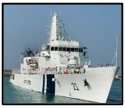
- About ICGS Sarthak: The fourth Offshore Patrol Vessel in a series of five OPVs being constructed by Goa Shipyard Limited for the Indian Coast Guard.
- These Offshore Patrol Vessels are designed as multi-mission platforms capable of conducting multiple operations simultaneously.
- ICGS Sarthak was commissioned into service on October 28, 2021.
- Features: The vessel is 105 metres long, has a displacement of 2,450 tonnes, and is powered by two 9,100-kilowatt diesel engines.
- It is capable of achieving a maximum speed of 26 knots.
- The ship is equipped with advanced machinery, sensors, and weapon systems.
- It features an Integrated Bridge System and an Integrated Machinery Control System.
- These systems enable the vessel to operate as a command platform while performing the Indian Coast Guard’s mandated duties. - Its roles include search and rescue operations, prevention of maritime crimes, and protection and conservation of the marine environment.
- ICGS Sarthak is based at Porbandar, Gujarat, and operates along India’s western seaboard.
- India and Argentina: Recently, strengthening South–South cooperation in agriculture, India and Argentina signed the ICAR–INTA Work Plan 2025–27.
- Key Highlights: Collaboration spans natural resource management, sustainable agronomy, digital agriculture, biotechnology, and value chain development.
- Emphasis on zero tillage, mechanisation, micro-irrigation, fertigation, and climate-resilient production technologies.
- Joint work on crop and animal biotechnology, livestock improvement, precision livestock farming, and veterinary diagnostics.
- Enhanced cooperation in oilseeds, pulses, horticulture, and related infrastructure and planting material exchange.
- Planned training and study visits in greenhouse vegetables, floriculture, temperate fruits, post-harvest management, functional foods, and digital agriculture.
- Collaboration on zero-tillage equipment, cotton harvesters, drones, and modern farm machinery.
- Joint efforts on Foot-and-Mouth Disease (FMD) elimination, locust surveillance, biosafety, and phytosanitary systems.
- RESPOND Basket 2025: Recently, ISRO released the RESPOND Basket 2025 to invite research proposals from academic institutions aligned with its present and future mission requirements.
- About RESPOND Basket: A curated collection of mission-oriented research problem statements identified by ISRO and various Department of Space centres.
- It is designed to steer academic research towards areas that directly support ISRO’s upcoming space missions and long-term R&D priorities.
- The primary objective is to strengthen collaboration between academia and national space missions through focused and outcome-oriented research.
- It aims to harness academic innovation, advanced research capabilities, and skilled human resources to address complex space technology challenges.
- The Basket includes mission-aligned problem statements based on ISRO’s immediate as well as future programmatic needs.
- Research proposals must be submitted digitally through the I-GRASP portal.
- The initiative strengthens ISRO–academia collaboration, a key pillar of India’s space ecosystem.
- DESERT CYCLONE–II: Recently, as part of expanding defence cooperation, an Indian Army contingent departed for Exercise DESERT CYCLONE–II, a joint military exercise with the UAE (United Arab Emirates) in Abu Dhabi.
- About DESERT CYCLONE: The exercise aims to enhance interoperability and strengthen defence cooperation.
- Key features of 2025 Ex: Joint training focused on urban warfare environments.
- Emphasis on sub-conventional operations under a United Nations mandate.
- Training covers peacekeeping, counter-terrorism, and stability operations.
- Tactical drills include fighting in built-up areas and heliborne operations.
- Detailed joint mission planning forms a key component of the exercise.
- Integration of Unmanned Aerial Systems (UAS) and counter-UAS techniques in urban operations. - Builds on momentum from recent high-level UAE military leadership visits.
- Reinforces India–UAE military diplomacy and strategic partnership.
- Enhances mutual understanding of tactics, techniques, and procedures.
- Contributes to development of interoperable capabilities for regional peace and security.
- Inhalable Microplastics: Recently, emerging research indicated that inhalable microplastics have become a largely invisible yet serious air pollutant in Indian cities, worsening public health challenges.
- About Inhalable Microplastics: These are microscopic plastic particles of 10 micrometres or smaller that can penetrate deep into the lungs, bypass natural respiratory defences and cause prolonged exposure.
- Urban exposure levels are high, with a multi-city study by IISER Kolkata reporting an average concentration of 8.8 µg/m³, translating to an estimated daily inhalation of about 132 µg per person.
- Concentrations increase significantly during winter, with evening levels rising by 74 percent, mirroring India’s seasonal air pollution and smog patterns.
- Major metropolitan areas show stark disparities, with Delhi and Kolkata recording particularly high concentrations of around 14 µg/m³.
- Microplastics act as “Trojan horses” by carrying toxic heavy metals such as lead and cadmium, along with endocrine-disrupting chemicals like diethyl phthalates.
- Studies have detected fungi such as Aspergillus fumigatus and antibiotic-resistance genes on microplastic particles, increasing infection risks and chances of treatment failure.
- Occupational groups such as traffic police and construction workers face higher exposure, especially from tire-wear microplastics known for their carcinogenic properties.
- Sabka Bima Sabki Raksha Bill, 2025: Recently, Parliament passed the Sabka Bima Sabki Raksha (Amendment of Insurance Laws) Bill, 2025.
- Key Highlights: The Bill proposes amendments to existing insurance laws to strengthen IRDAI’s supervisory, investigative, and enforcement powers.
- It shifts insurance regulation from a compliance-based approach to a proactive, enforcement-driven framework.
- The proposed changes apply to insurers as well as insurance intermediaries such as agents, brokers, corporate agents including banks and NBFCs, web aggregators, TPAs, surveyors, and insurance marketing firms.
- IRDAI will be empowered to order disgorgement of illegal gains earned through excess commissions, rebates, or mis-selling practices.
- The regulator will have enhanced authority to issue binding directions to insurers in the public interest, including for policyholder protection, prevention of mismanagement, and improvement of corporate governance.
- These measures aim to curb commission-driven mis-selling, particularly in the expanding digital and fintech-led insurance ecosystem.
- e-B4 Visa: Recently, the Department for Promotion of Industry and Internal Trade (DPIIT) launched a digital sponsorship letter generation module under the e-Production Investment Business Visa (e-B4 Visa).
- Key Highlights: Indian companies can generate sponsorship letters through NSWS (National Single Window System) to invite foreign professionals.
- Initiative forms part of Government reforms to improve ease of doing business in India.
- Certain activities earlier under Employment Visa shifted to Business Visa regime.
- “Production Investment Visa (B-4)” introduced as a sub-category of Business Visa.
- Installation & commissioning, quality checks, maintenance, production, IT/ERP (Enterprise Resource Planning) ramp-up, training, supply chain development, plant design, and senior management visits.
- Existing e-PLI (Production Linked Incentive) business visa category has been dispensed with.
- e-B-4 Visa to be applied through the online e-Visa portal.
- Indian companies must generate sponsorship letters digitally for visa facilitation.
- Faster, transparent, and seamless visa facilitation for production-linked foreign expertise.
- Peptide Therapy: Recently, amid India’s growing burden of eye infections, researchers identified peptide-based therapy as a promising alternative for fungal keratitis, a sight-threatening corneal disease.
- About Fungal Keratitis: A major public health concern in India, especially among agricultural workers and contact lens users.
- Amphotericin B is currently the only antifungal drug available, but its use is limited due to nephrotoxicity and high haemolytic activity.
- The study addresses the urgent need for safer and more effective antifungal therapies.
- Researchers designed a 15-residue antimicrobial peptide named SA-XV derived from host-defense peptide S100A12.
- SA-XV demonstrated strong antifungal activity against Fusarium and Candida species.
- The peptide is non-toxic to mammalian cells and remains stable in serum.
- SA-XV effectively inhibits both planktonic and biofilm forms of fungal pathogens.
- Mechanism involves interaction with fungal cell wall and membrane, followed by cytoplasmic and nuclear entry.
- SA-XV binds to fungal DNA, halts the cell cycle, and disrupts mitochondrial function.
- Fungal cell death is induced through apoptosis.
- The peptide also shows potential to promote corneal wound healing.
- SA-XV offers a novel, safer alternative to existing antifungal treatments for eye infections.
- United Nations General Assembly: Recently, global leaders at the 80th United Nations General Assembly adopted a political declaration focused on noncommunicable diseases and mental health.
- Key Highlights: The declaration provides a strategic roadmap to achieve the Sustainable Development Goal of reducing premature deaths from NCDs by one-third by 2030.
- It commits to controlling hypertension in an additional 150 million individuals worldwide.
- Mental health and neurological conditions are formally recognised as the fifth pillar of the global NCD framework.
- The four traditional NCDs continue to include cardiovascular diseases, cancers, diabetes, and chronic respiratory diseases.
- For the first time, the declaration expands disease coverage to include oral health, kidney disease, liver disease, childhood cancers, and rare diseases.
- It acknowledges emerging digital health risks such as excessive screen time, algorithm-driven psychological distress, and the spread of health misinformation.
- It broadens the understanding of NCD determinants beyond air pollution to include lead exposure, hazardous chemicals, and lack of clean cooking solutions.
- To ensure implementation, the declaration proposes a global accountability framework to monitor and review national progress every two years.
 Detailed Solutions & Explanations

