2 Minute Series_17 January 2026
17th January 2026
- Chabahar Port: Recently, regarding the strategic Chabahar Port, the Ministry of External Affairs affirmed that India is in active talks with the United States and Iran to sustain operations.
- About Chabahar Port: Lies at the entrance of the Gulf of Oman in Iran’s energy-rich Sistan-Balochistan province of southeastern Iran, close to the China-operated Gwadar Port.
- Chabahar is Iran’s only ocean-facing port and its first deep-water port, giving the country direct access to global maritime trade routes.
- It forms a key component of the proposed International North-South Transport Corridor (INSTC).
- Project was initiated in 2003 and envisages development in four phases.
- The port complex consists of two main ports—Shahid Kalantari and Shahid Beheshti. The Shahid Kalantari port was originally developed during the 1980s.
- India’s Role in Chabahar Port: 2002: India’s participation in the project was first discussed at the level of National Security Advisors.
- 2003 Vajpayee–Khatami Agreement: During Iranian President Mohammad Khatami’s visit to India, the New Delhi Declaration was signed, identifying Chabahar as a priority project.
- 2015 MoU: India and Iran signed a Memorandum of Understanding under which India committed to developing the Shahid Beheshti terminal.
- 2016 Trilateral Agreement: India, Iran, and Afghanistan agreed to establish an international transport and transit corridor.
- Startup India Initiative: Recently, on National Startup Day 16 January 2026, the Prime Minister of India addressed the 10-year milestone of the Startup India programme at Bharat Mandapam, New Delhi.
- About Startup India Initiative: Launched by the Government of India in 2016, is a comprehensive programme aimed at promoting entrepreneurship and nurturing startups across the country.
- Its primary objective is to build a robust ecosystem for innovation that stimulates economic growth and generates employment, through policy support such as tax incentives, simplified regulatory compliance, and improved access to finance.
- Key Features: Simplified startup registration with clear eligibility norms for official recognition.
- Reduced compliance through self-certification, simplified procedures, and single-window clearances.
- Income tax exemption on profits for three consecutive financial years to support early growth.
- Targeted initiatives for sectors such as biotechnology, agriculture, and renewable energy.
- Startup India Hub provides mentorship, investor access, and industry expertise for capacity building.
- Pufferfish Poisoning: Recently, India reported its first scientifically confirmed case of pufferfish poisoning, highlighting an overlooked riverine public health risk.
- About Pufferfish Poisoning: Certain pufferfish species contain tetrodotoxin (TTX), one of the most powerful neurotoxins found in nature. Tetrodotoxin blocks sodium channels in nerve cells, leading to paralysis, respiratory failure, and potentially death.
- Chemically, TTX consists of an oxygenated 2,4-dioxaadamantane core along with a guanidinium group.
- About Pufferfish: Members of the order Tetraodontiformes. They are commonly known by various local names, including toadfish, patkafish, balloonfish, and fugu.
- These fishes are omnivorous in nature and primarily inhabit benthic zones.
- In India, pufferfish are mainly distributed across the Western Ghats and major river basins such as the Ganga, Brahmaputra, and Mahanadi.
- A distinctive defensive feature of pufferfish is their ability to inflate their bodies into a spherical shape to deter predators. Indian waters are home to eight genera and 32 species of pufferfish.
- According to the IUCN Red List, pufferfish are classified as Vulnerable.
- Degraded Forest Land: Recently, the Ministry of Environment, Forest and Climate Change revised guidelines under the Van (Sanrakshan Evam Samvardhan) Adhiniyam, 1980, enabling non-government actors to restore degraded forest land.
- Key Highlights: It categorises certain plantation and afforestation activities carried out on forest land as “forestry activities,” even when executed by private or non-government entities, provided they conform to approved Working or Management Plans and function under the supervision of State Forest Departments.
- Key Changes Introduced: Afforestation and plantation works on forest land are no longer classified as non-forest use.
- Since such activities are not treated as diversion of forest land, compensatory afforestation requirements are removed.
- NPV (Net Present Value) payments, earlier mandatory for plantation-related use of forest land, are no longer applicable.
- State governments are permitted to engage private and non-government players in afforestation and restoration initiatives.
- activities must strictly follow plans approved by State Forest Departments.
- States can formulate case-specific mechanisms for plantation use and revenue-sharing arrangements.
- While private participation is allowed, ownership and management authority over forest land remains with the government, subject to central oversight.
- CFCFRMS: Recently, the Ministry of Home Affairs approved a new Standard Operating Procedure for the Cyber Financial Crime Reporting and Management System (CFCFRMS).
- Key Highlights: The primary objective of this SOP is to strengthen public confidence in digital payment systems and provide quicker relief to victims of cyber-related financial fraud.
- Under the SOP, two dedicated digital modules will be developed on the National Cybercrime Reporting Portal (NCRP)—one focused on grievance redressal and the other on restoration of defrauded money.
- The NCRP, managed by the Indian Cyber Crime Coordination Centre (I4C), serves as a single platform for citizens to report all types of cybercrime.
- The CFCFRMS functions as a real-time mechanism within the NCRP, specifically designed to enable prompt reporting, tracking, and freezing of funds involved in online financial fraud.
- Key Provisions of the SOP:
- Refund mechanism: Banks are permitted to refund amounts below ₹50,000 without seeking court approval, and frozen funds must be released within 90 days if no court order or restoration directive is in place.
- Uniform operating framework: The SOP brings standardised procedures for banks, payment aggregators, non-banking financial companies (NBFCs), and e-commerce platforms once a cybercrime complaint is registered.
- Grievance redressal system: A three-tier grievance redressal structure has been introduced to ensure timely, transparent, and accountable resolution of complaints.
- Synthetic Cattle Breeds: Recently, India officially registered two new synthetic cattle breeds—Karan Fries and Vrindavani—developed by the National Dairy Research Institute.
- About Karan Fries: Developed by the National Dairy Research Institute (NDRI), located in Karnal, Haryana.
- It has been produced through crossbreeding indigenous Tharparkar cows with Holstein-Friesian
- The breed is capable of yielding more than 3,500 kg of milk during a standard 10-month lactation period.
- It successfully combines high milk productivity with resilience, achieving peak daily milk yields of up to 46.5 kg.
- About Vrindavani: Developed by the ICAR-Indian Veterinary Research Institute (IVRI) in Bareilly, Uttar Pradesh.
- This breed has been created by blending exotic dairy breeds—Holstein-Friesian, Brown Swiss, and Jersey—with the indigenous Hariana cattle, aiming to balance high productivity with adaptability to Indian conditions.
- About Synthetic cattle breeds: Developed through planned crossbreeding of two or more breeds—typically indigenous Bos indicus cattle with exotic Bos taurus breeds—followed by stabilisation of desirable traits over successive generations. Once stabilised, these breeds reproduce true to type and are recognised as distinct breeds.
- Significance: Higher milk productivity compared to indigenous cattle
- Greater climate adaptability than pure exotic breeds
- Enhanced income potential for dairy farmers
- Reduced mortality rates and improved reproductive efficiency
- Gegeneophis valmiki: Recently, Indian researchers discovered a rare underground-dwelling amphibian in the northern Western Ghats of Maharashtra and named it Gegeneophis valmiki.
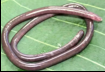
- About Gegeneophis Valmiki: The species is an underground-dwelling (subterranean) amphibian and is extremely rare.
- It is named after the historic Maharshi Valmiki Mandir located near the discovery site.
- It belongs to the genus Gegeneophis, commonly known as blind caecilians.
- Caecilians are limbless, worm-like “hidden amphibians” that spend most of their lives underground.
- They closely resemble earthworms in appearance and movement.
- Unlike frogs, caecilians do not croak or call.
- Their eyes are covered by skin and bone, making field identification very difficult.
- Ecologically, caecilians improve soil aeration and structure through burrowing.
- They help regulate soil invertebrate populations and form part of the food web.
- Caecilians represent an important evolutionary link between aquatic and terrestrial vertebrates.
- Gegeneophis valmiki is the first new species added to this genus in more than a decade.
- Globally, caecilians account for only 231 of the world’s 8,983 known amphibian species.
- India has 42 caecilian species out of 457 recorded amphibians.
- The Western Ghats hosts 26 endemic caecilian species, including 11 from the Gegeneophis genus.
- National Board for Wildlife: Recently, the Standing Committee of the National Board for Wildlife (SCNBWL) drafted guidelines to regulate religious structures in wildlife sanctuaries and national parks, balancing faith and conservation.
- Key Highlights: Triggered by a first-of-its-kind proposal (2024) seeking diversion of sanctuary land for a religious institution.
- July 2024: SCNBWL initially approved use of 35 ha forest land for a temple trust, citing pre-existing establishment.
- Concern raised that allowing religious allotment in sanctuaries could set a nationwide precedent.
- Decision taken to frame a Standard Operating Procedure (SOP) for proposals involving religious institutions.
- Core guideline principle: Any construction or expansion on forest land after 1980 is to be treated as encroachment.
- Exceptional regularisation only if the State issues a reasoned, documented justification, reviewed case-by-case by the Ministry.
- Expansion of religious structures generally discouraged; only limited expansion allowed for ecological conflict mitigation or managing public pressure.
- December 2025: SCNBWL deferred decision on 16 ha diversion for renovation of Jamwa Mataji Temple in Jamwaramgarh Wildlife Sanctuary.

 Detailed Solutions & Explanations

