2 Min Series 8 November 2025
08th November 2025
- Rhesus Macaque: The Standing Committee of the National Board for Wildlife (SC-NBWL) has recommended reinstating the Rhesus Macaque under Schedule II of the Wildlife (Protection) Act), 1972.
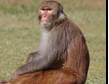
- About Rhesus Macaques: A group of Old World monkeys native to South Asia and are among the most extensively researched non-human primates. Several subspecies are recognized, such as the Indian and Chinese rhesus macaques.
- Physical Characteristics: Coloration: They generally have brown or grey fur with a pinkish face.
- Tail: Their tails are relatively short compared to langurs.
- Facial Structure: The face is rounder and less elongated than that of langurs.
- Eyes: They commonly have red or brown eyes.
- Habitat: Highly adaptable and occupy a diverse range of environments including forests, open grasslands, and even densely populated urban areas. Their ability to coexist in human-dominated landscapes is well documented.
- The move aims to restore stronger legal protection, prevent illegal capture, curb cruelty, and better regulate scientific management of the species.
- Atlases on Brain Development: Recently, scientists released the first draft of atlases that illustrate how the brain develops from the embryonic stage through to adulthood.
- Key Highlights: The project charts how thousands of brain cell types form, differentiate, and mature, including how gene activity changes over time.
- The work involved human, mouse, and some monkey brain cells, allowing comparisons across species.
- Researchers identified key genes involved in brain development and discovered previously unknown human brain cell types.
- The findings were published in Nature and related journals, as part of the NIH’s BRAIN Initiative Cell Atlas Network (BICAN).
- The atlas provides new insight into the neocortex (higher thinking, cognition) and hypothalamus (body regulation, emotion, sleep, hunger, etc.).
- Scientists found that some brain tumor cells resemble embryonic progenitor cells, suggesting tumors may reuse developmental mechanisms to grow.
- Human brain development is slower and more prolonged compared to animals, especially in cortical cell development.
- The atlas will support future research into autism, ADHD, schizophrenia, neurodevelopmental disorders, and brain cancers.
- The long-term goal is to use this knowledge to develop targeted gene- and cell-based therapies.
- DAY–NRLM: Recently, Ethiopia decided to adopt India’s Deendayal Antyodaya Yojana–National Rural Livelihoods Mission (DAY–NRLM) model to tackle rural poverty and advance women-led livelihood development, acknowledging it as a globally successful framework for community empowerment.
- About DAY–NRLM: India’s flagship rural poverty alleviation and women’s empowerment program, implemented by the Ministry of Rural Development.
- Launched in 2011 (after restructuring SGSY) and renamed in 2016, the mission shifts from subsidy-based support to self-reliance through institution-building.
- Aim: To enable rural poor households, especially women, to access self-employment, skilled wage opportunities, credit, and market linkages through Self-Help Groups (SHGs) and community institutions.
- Community Resource Models like Bank Sakhis, Krishi Sakhis, and Pashu Sakhis ensure last-mile service delivery in finance, agriculture, and livestock management.
- Ethiopia views DAY–NRLM as aligned with SDG-1 (No Poverty) and SDG-5 (Gender Equality) and aims to adapt its SHG-led livelihood model for rural transformation.
- CEEW: Recently, the Council on Energy, Environment and Water (CEEW) reported that India may produce nearly 11 million tonnes of solar waste by 2047, largely originating from crystalline-silicon solar modules.
- Key Highlights: Managing this waste will require ~300 dedicated solar recycling plants
- Recovery of materials like silicon, copper, aluminium, and silver could create a ₹3,700 crore circular-economy market by 2047.
- Efficient recycling could supply 38% of raw material needs for domestic solar manufacturing and avoid 37 million tonnes of CO₂ emissions.
- Concerns: India’s solar recycling ecosystem is underdeveloped, with only a few active commercial recyclers.
- Recycling is currently loss-making, with recyclers losing ₹10,000–₹12,000 per tonne of processed waste.
- Buying back waste panels forms roughly two-thirds of recycling operational cost.
- Without supportive policy intervention, most solar panels may end up in landfills, causing environmental and toxic-leaching risks.
- Policy Recommendations: Introduce Extended Producer Responsibility (EPR) under the E-Waste Management Rules, 2022, mandating manufacturers to collect and recycle end-of-life modules.
- Create a centralised solar inventory to track waste generation and material composition.
- Establish a Circular Solar Taskforce under MNRE to coordinate policy, financing, and industry collaboration.
- SC-NBWL: Recently, the Standing Committee of the National Board for Wildlife (SC-NBWL) cleared 12 defence projects in Ladakh to enhance India’s operational readiness near the Line of Actual Control (LAC).
- Key Highlights: The Defence Ministry said the projects are necessary due to increasing assertiveness of China’s PLA and the need for high-level operational preparedness.
- Approved projects include: A training node at Tara in Ladakh
- An artillery battery in Leh
- Two Formation Ammunition Storage Facilities (FASF)
- A brigade headquarters at Chushul
- Border outposts of the Indo-Tibetan Border Police (ITBP) near Depsang
- Construction of an Army camp in Leh
- The projects fall within or near Changthang Cold Desert Sanctuary and Karakoram Wildlife Sanctuary, both ecologically sensitive wildlife habitats.
- The committee also approved a 158-meter permanent bridge (Pinjoli Bridge) on the Balipara-Charduar-Tawang Road in Arunachal Pradesh’s Eaglenest Wildlife Sanctuary, improving connectivity for military movement.
- The Fujian: Recently, China commissioned its newest aircraft carrier, the Fujian, marking a significant advancement in its naval modernization efforts.
- About Fujian: China’s first fully domestically designed and built carrier, and is the third in its fleet, after the Liaoning and Shandong.
- It features an electromagnetic aircraft launch system (EMALS), comparable to U.S. Ford-class carriers, allowing: Smoother, more efficient aircraft launches
- Launch of heavier, more advanced aircraft
- Higher sortie (mission) rates
- China now has the second-highest number of aircraft carriers globally, behind the U.S. (which has 11).
- The Fujian has tested operations with J-35 stealth fighters, J-15T heavy fighters, and the KJ-600 early warning aircraft, giving it full-deck operational capability.
- The carrier enhances China’s ability to project military power far from its shores, advancing its ambitions to build a “blue-water navy” capable of global reach.
- China’s broader military modernization also includes: Hypersonic anti-ship missiles
- Underwater drones
- Electronic warfare aircraft
- New submarine-launched and road-mobile ICBMs, confirming a land–air–sea nuclear triad.
- Project Suncatcher: Recently, Google announced Project Suncatcher, an initiative to establish AI-powered data centres in space, running entirely on continuous solar energy.
- About Project Suncatcher: It involves deploying high-performance TPUs (Trillium v6e) aboard orbiting satellites, designed to run AI workloads without relying on Earth-based electricity or water.
- The system uses solar panels in space, which are up to 8× more efficient than on Earth due to uninterrupted sunlight and lack of atmospheric loss.
- Satellites will communicate through high-speed free-space optical links, capable of tens of terabits per second, forming an interconnected orbital computing network.
- Two prototype satellites are scheduled for launch in early 2027 to test radiation durability and optical communication.
- Satellite “clusters” may operate hundreds of meters apart, enabling scalable space-based data hubs.
- By the mid-2030s, if launch costs fall to around $200/kg, orbital AI data centres could become economically competitive with Earth-based facilities.
- Key objectives: Reduce carbon and water footprint of AI computing.
- Provide round-the-clock solar-powered computation.
- Develop a long-term sustainable cloud computing architecture.
- Koraga Tribe: Recently, a genomic study by Mangalore University and Yenepoya (Deemed-to-be University) identified that the Koraga tribe holds a unique ancestral lineage potentially connected to the Indus Valley Civilisation.
- About the Koraga Tribe: An indigenous tribal community mainly concentrated in: Dakshina Kannada, Udupi districts of Karnataka and Kasaragod district of Kerala
- They are listed as a Particularly Vulnerable Tribal Group (PVTG).
- Population (2011 Census): 1,582 (778 males; 804 females).
- Language: They speak Koraga Bhasha, and also commonly use Tulu.
- Culture & Social Structure: Traditionally forest and agriculture-based livelihoods.
- Known for basket weaving, folk dances, and ritual performances.
- Follow a matrilineal system and clan divisions called “Bali”.
- The community is led by a senior elder known as Mooppan.
- Follow Hinduism mixed with indigenous beliefs.
- Worship Bhutas (spirit deities).
- This discovery highlights the ancient genetic continuity of the Koraga people, suggesting they may represent one of the oldest surviving indigenous population groups in South India.
- Operation White Cauldron: Recently, under “Operation White Cauldron,” the Directorate of Revenue Intelligence (DRI) uncovered a clandestine illegal manufacturing unit producing Alprazolam in Valsad, Gujarat.
- About Alprazolam: A psychotropic substance regulated under the NDPS Act, 1985.
- It belongs to the benzodiazepine class of drugs.
- It is a central nervous system (CNS) depressant, meaning it slows brain and nerve activity.
- Medical Uses: Treatment of anxiety disorders, Panic disorders and Anxiety associated with depression
- Misuse can lead to: Addiction, memory impairment, cognitive decline
- Severe withdrawal symptoms if discontinued abruptly
- Key Features of the NDPS Act, 1985: Prohibits the: Production, Cultivation, Sale, Purchase, Transport, Storage and Consumption of narcotic drugs and psychotropic substances.

 Detailed Solutions & Explanations

