2 Min Series 28 November 2025
28th November 2025
- Tex-RAMPS: Recently, the government approved the Tex-RAMPS (Textiles Focused Research, Assessment, Monitoring, Planning and Start-up)
- About Tex-RAMPS: Aims to future-proof India’s textiles & apparel (T&A) ecosystem.
- Financial Outlay & Duration: ₹305 crore, period 2025–26 to 2030–31.
- Implemented as a Central Sector Scheme, fully funded by Ministry of Textiles.
- Significance: Research & Innovation: Promotes advanced work in smart textiles, sustainable materials, process efficiency, and emerging textile technologies.
- Data, Analytics & Diagnostics: Establishes robust systems for employment studies, supply-chain mapping, and the India-Size study.
- Ensures evidence-based policymaking.
- Integrated Textiles Statistical System (ITSS)
- Real-time integrated data & analytics platform.
- Supports monitoring, planning, and strategic decisions.
- Generates new jobs in the textile value chain.
- Deepens cooperation among States, industry, academia, and government institutions.
- Bamboo Stem: Recently, researchers discovered an exceptionally well-preserved 37,000-year-old fossil bamboo stem in the Chirang River deposits of the Imphal Valley, Manipur.
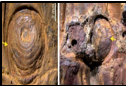
- Key Highlights: It carries clear thorn-scar marks, a feature almost never preserved in fossils.
- Scientific Importance: Represents the earliest thorny bamboo fossil from Asia.
- May rewrite botanical history by providing first direct evidence of ancient bamboo defence structures.
- Why Bamboo Fossils Are Rare: Bamboo has hollow, fibrous stems that decompose quickly.
- Fossilization of such delicate tissues is exceedingly uncommon, making this find scientifically valuable.
- Detailed lab examination of nodes, buds, and thorn scars led to its classification as Chimonobambusa manipurensis.
- Comparative study with modern species like Bambusa bambos and Chimonobambusa callosa helped reconstruct its morphology and ecological role.
- First Evidence of Thorniness in Ice Age Asia: Confirms that thorn-based defence mechanisms in bamboo already existed during the Ice Age (~37,000 years ago).
- Shows ancient bamboos evolved strategies to deter herbivores similar to present-day.
- Persons with Disabilities: Recently, the Supreme Court urged the Central government to explore creating a stringent law similar to the SC/ST (Prevention of Atrocities) Act to criminalise derogatory acts or comments targeting persons with disabilities (PwDs) and individuals with rare medical conditions.
- Key Highlights: Court emphasised protection of PwDs from online ridicule, mocking, and insensitive content.
- Stressed the need for effective legal safeguards in the digital age.
- Court’s Approach: SC refrained from imposing legal punishment on the influencers. Instead, it reminded them of their social responsibility as public figures.
- Influencers asked to conduct at least two programmes/shows per month highlighting:
- Success stories of specially-abled persons, and direct engagement with PwDs.
- Aim: Use their online reach to create awareness and dignity for PwDs.
- Larger Implication: Reflects Judiciary’s concern over rising digital insensitivity, trolling, and hate content.
- Indicates a possible policy push towards stronger protection for persons with disabilities.
- India and Indonesia: Recently, India and Indonesia made significant headway in strengthening their defence cooperation, including a forward push on the proposed BrahMos supersonic missile
- Key Highlights: Both countries reiterated commitment to a rules-based Indo-Pacific, upholding sovereignty and international law.
- Strong synergy highlighted between the ASEAN Outlook on the Indo-Pacific (AOIP) and India’s Indo-Pacific Oceans Initiative (IPOI).
- Agreement to deepen cooperation through platforms such as the Indian Ocean Rim Association (IORA), where India holds the chair. g.: Alignment strengthens regional maritime order.
- Indonesia welcomed India’s proposal to establish a Joint Defence Industry Cooperation Committee.
- Focus areas include: Technology transfer, Joint research & development, Certification harmonisation and Supply-chain integration
- Both sides committed to strengthening cooperation in: Maritime domain awareness, Cyber resilience and Joint operational readiness
- Plan to expand officer exchanges and training programmes was also discussed. g.: Tri-services coordination continues to deepen.
- Cyclone Ditwah: Recently, the India Meteorological Department (IMD) warned that Cyclone Ditwah, which formed over the southwest Bay of Bengal, may undergo rapid intensification.
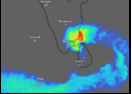
- About Cyclone Ditwah: Origin: Southwest Bay of Bengal, near the Sri Lankan coast.
- It is the fourth tropical cyclone of the North Indian Ocean season.
- Initially a depression, then quickly intensified to a deep depression, and further to a cyclone.
- Expected movement: North-northwestwards across Sri Lanka and the adjoining Bay of Bengal.
- Likely to approach: North Tamil Nadu, Puducherry & Southern Andhra Pradesh
- Rapid Intensification: Defined as wind speed increase of 55 km/hr or more within 24 hours.
- More common now due to warmer oceans, but often poorly captured by weather models, leading to limited early warning.
- Sirpur Archaeological Site: Recently, the Government of India began preparing Chhattisgarh’s 5th-century Sirpur archaeological site for nomination to the UNESCO World Heritage List.
- About Sirpur Archaeological Site: Location: Mahasamund district, Chhattisgarh, on the banks of the Mahanadi River.
- Represents a 5th–12th century urban settlement.
- Served as the capital of Dakshina Kosala, ruled by the Panduvanshi and later the Somavamshi
- Identified in 1871 (reported in 1882) by Alexander Cunningham.
- Known as a multi-religious cultural centre.
- Cultural Importance: Sirpur was a major Buddhist hub with extensive viharas, meditation halls, and stupas.
- Also contained a 6th-century market complex, highlighting its role as both a religious and commercial
- Key Archaeological Features: Excavations have uncovered: 22 Shiva temples, 5 Vishnu temples, 10 Buddhist viharas and 3 Jain viharas
- Notable Monuments: Lakshmana Temple: Dedicated to Lord Vishnu. One of India’s best-preserved brick temples, built around the 7th century.
- Surang Tila: Temple complex built on a high raised terrace. Designed in panchayatana style — one central shrine with four subsidiary shrines.
- Tivaradeva Mahavihara: A major Buddhist monastery. Contains an important Buddha sculpture.
- International Monetary Fund (IMF): Recently, the International Monetary Fund (IMF) assigned India’s national accounts statistics, including GDP and GVA estimates, a ‘C’ grade, the second-lowest rating in its four-tier system.
- Key Highlights: The IMF noted that India’s datasets suffer from methodological weaknesses, insufficient reflection of the informal sector, and outdated base years, all of which “hamper surveillance”.
- ‘C’ Grade Means: The IMF categorises data quality as A, B, C, or D.
- A ‘C’ indicates that the data “have some shortcomings that somewhat hamper surveillance.”
- This review comes just ahead of India’s release of Q2 national accounts on November 28, 2028. g.: Gaps in methodology reduce the reliability of economic monitoring.
- IMF gave India’s Consumer Price Index (CPI) a ‘B’ grade, meaning “some shortcomings but broadly adequate”. The IMF assigned a ‘B’ grade for: Government finance statistics
- External sector statistics
- Monetary and financial statistics
- Inter-sectoral consistency
- Key Weaknesses: IMF highlights reliance on an old base year for GDP and GVA calculations.
- GDP deflators still depend on wholesale price indices due to the absence of updated producer price indices.
- IMF says there is “room for improvement” in other statistical methods used in quarterly accounts.
- Mini-Lightning,” on Mars: Recently, NASA’s Perseverance rover recorded the first direct audio evidence of electrical discharges, or “mini-lightning,” on Mars. The findings were published in Nature.
- Key Findings: The rover’s microphone recorded a static-like pop, signalling a tiny electric discharge during the passage of a dust devil.
- This marks the most direct observational evidence yet of atmospheric electricity on Mars.
- No visible lightning bolt was observed — only its audio signature, comparable to hearing mini-thunder.
- Scientists estimate the discharge occurred just six feet from the rover. g.: Smaller zaps were detected even closer, just inches away.
- These discharges resemble the tiny shock you get after walking on carpet and touching metal.
- Martian mini-lightning is only centimeter-scale, unlike Earth’s massive cloud-to-ground bolts.
- Despite their miniature size, the sparks could affect chemical reactions in Mars’s atmosphere.
- They pose no risk to astronauts, but could threaten electronics and spacesuits over time. g.: Repeated micro-shocks may degrade sensitive instruments.
- Bnei Menashe: Recently, Israel approved a plan to bring the remaining 5,800 members of the Bnei Menashe community from India’s northeast to Israel over the next five years.
- About the Bnei Menashe: Are an ethnic group from Mizoram and Manipur who believe they descend from the biblical tribe of Manasseh, one of Israel’s “lost tribes.”
- Originally Christians who later adopted Judaism, they follow Jewish customs and festivals such as Sukkot.
- Historians estimate their arrival in India around 300–500 years ago, though their ancestral exile predates the Roman dispersion.
- Their renewed engagement with Israel and global Jewry began in the 1980s, leading to the adoption of modern Jewish practices.
- Nearly half the community has already migrated to Israel and gained citizenship.
- Under the new plan, around 1,200 members will move to Israel by 2026, followed by 4,600 more by 2030, completing the community’s relocation.


 Detailed Solutions & Explanations

