2 Min Series 27 October 2025
27th October 2025
- GSAT-7R: Recently, the Indian Space Research Organisation (ISRO) announced plans to launch the CMS-03 satellite, also known as GSAT-7R, from the Satish Dhawan Space Centre in Sriharikota.
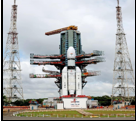
- About GSAT-7R: CMS-03 is a multi-band communication satellite designed primarily for defence and armed forces communication.
- It will provide secure, high-capacity connectivity across a wide oceanic region including the Indian landmass.
- The satellite aims to strengthen naval and strategic communication networks, ensuring better interoperability among armed services.
- Launch Vehicle: LVM3 (Launch Vehicle Mark 3)
- Technical Specifications: Weight: Around 4,400 kg — the heaviest communication satellite launched to Geosynchronous Transfer Orbit (GTO) from Indian soil.
- It will operate in multiple frequency bands, enhancing coverage and redundancy for military communication systems.
- Significance: The CMS-03 mission marks a major milestone in India’s defence space capabilities, strengthening self-reliance in strategic communication infrastructure.
- E-Courts Project: Recently, the United Kingdom expressed strong interest in India’s ambitious e-Courts Project, a flagship initiative focused on digitising the nation’s entire judicial record system.
- About e-Courts Project: An ambitious digital transformation programme for India’s judiciary, currently in its third phase (Phase III).
- It was conceptualised under the “National Policy and Action Plan for Implementation of ICT in the Indian Judiciary – 2005.”
- Its main objective is to digitise, integrate, and modernise the functioning of the subordinate judiciary across the country.
- Major Targets under Phase III: Migration to cloud technology: The judicial data system will move to cloud infrastructure.
- Estimated cloud storage: 25 petabytes, with a cost of ₹1,205.20 crore.
- Virtual courts: Plan to establish 1,150 virtual courts at an estimated cost of ₹413.08 crore.
- The project includes integration of key justice institutions — courts, jails, police stations, and forensic labs — through the Inter Operable Criminal Justice System (ICJS).
- This integration aims to enable seamless data sharing, improving efficiency, coordination, and transparency within the justice ecosystem.
3. ashtriya Vigyan Puraskar 2025: Recently, the Government of India announced the Rashtriya Vigyan Puraskar 2025, the country’s highest honour recognizing exceptional and inspiring contributions in the fields of science, technology, and innovation.
- About Rashtriya Vigyan Puraskar: The Puraskar is conferred under four categories:
- Vigyan Ratna: Recognises lifetime achievements and contributions in any field of science and technology.
- Vigyan Shri: For distinguished contributions in any field of science and technology.
- Vigyan Yuva – Shanti Swarup Bhatnagar: For young scientists up to 45 years of age who have made exceptional contributions.
- Vigyan Team: For teams of three or more scientists/researchers who have made exceptional collaborative contributions.
- Selection Process: Selections were made through rigorous evaluation by a panel of eminent scientists, including: Principal Scientific Advisor to the Government of India, Chairperson, Rashtriya Vigyan Puraskar Committee, Secretaries of Science Departments,Heads of Scientific Academies and Domain experts.
- Burevestnik: Recently, Russia successfully tested a new nuclear-capable, nuclear-powered cruise missile named
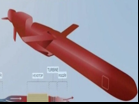
- About Burevestnik: The Burevestnik, meaning “storm petrel” in Russian, is a nuclear-powered, nuclear-capable ground-launched cruise missile developed by Russia. It is designed to fly at low altitudes and deliver strategic, long-range capability while evading enemy detection systems.
- NATO codename: SSC-X-9 Skyfall.
- Its nuclear propulsion system theoretically enables it to circumnavigate the globe multiple times before reaching its target.
- Key Features: Propulsion System: Powered by a miniaturized nuclear reactor, which heats air to propel the missile.
- Provides virtually unlimited range, far exceeding traditional fuel-based cruise missiles.
- Range: Up to 14,000 miles (≈22,000 km).
- Flight Profile: Low-altitude flight path, making it difficult for radar systems to detect. Designed for long endurance and unpredictable trajectories, enhancing its ability to penetrate missile defence systems.
- Asia Pacific Accident Investigation Group (APAC-AIG): Recently, India announced that it will, for the first time, host the Asia Pacific Accident Investigation Group (APAC-AIG) meeting and workshop.
- About APAC-AIG: It will be organised by the Aircraft Accident Investigation Bureau (AAIB) on behalf of the Ministry of Civil Aviation.
- Participation: Around 90 aircraft accident investigators and representatives are expected to participate.
- Delegates will include members from ICAO (International Civil Aviation Organization) and aircraft accident investigation authorities from Asia-Pacific countries.
- The meeting aims to: Enhance cooperation and information sharing among Asia-Pacific accident investigation authorities.
- Exchange expertise and best practices related to aircraft accident and incident investigations.
- Strengthen regional capabilities in investigation procedures and reporting mechanisms.
- The APAC-AIG serves as a regional platform under ICAO to promote collaboration and safety improvement across member states.
- The event reinforces India’s commitment to aviation safety and its growing role in global air transport governance.
- It will help build technical capacity, foster cross-border collaboration, and advance ICAO’s global safety objectives in the Asia-Pacific region.
- Cyclone Montha: Recently, the IMD issued a red alert for coastal Andhra Pradesh and Odisha, as Cyclone Montha intensified into a severe cyclonic storm, prompting the evacuation of thousands.
- About Cyclone Montha: A deep depression over the southeast Bay of Bengal.
- It is expected to make landfall near Kakinada on the Andhra Pradesh coast.
- Montha will be the first cyclone to make landfall over the Indian mainland in 2025.
- Wind speeds: Likely to reach 90–100 km/hr, gusting up to 110 km/hr.
- Movement: Likely to track west-northwestwards and intensify further over the southwest and west-central Bay of Bengal.
- Extremely heavy rainfall (>210 mm/24 hrs) expected over Rayalaseema (Andhra Pradesh)
- Very heavy to heavy rainfall (115–210 mm) expected in northern Tamil Nadu, Kerala, and coastal Karnataka.
- Odisha’s southern districts — Malkangiri, Koraput, Rayagada, Gajapati, Ganjam, Kandhamal, Nabarangpur, and Kalahandi— to receive extremely heavy rain.
- Heavy rain forecast also for Yanam, Telangana, and Chhattisgarh.
7. Maha MedTech Mission: Recently, the Mission for Advancement in High-Impact Areas (MAHA)–Medical Technology was launched jointly by the Anusandhan National Research Foundation (ANRF), the Indian Council of Medical Research (ICMR), and the Gates Foundation.
- About Maha MedTech Mission: The mission seeks to accelerate innovation in India’s medical technology (MedTech) sector, reduce dependence on costly imports, and promote equitable access to affordable, high-quality medical devices and technologies.
- Key Goals: Public Health Impact: Support development of technologies that target priority disease areas and improve access to safe, quality healthcare.
- Enabling Ecosystem Initiatives: Patent Mitra – for IP protection and technology transfer.
- MedTech Mitra – for regulatory guidance and clearances.
- Clinical Trial Network – for validation and evidence generation.
- Mentorship from leading industry experts to facilitate commercialization.
- National Household Income Survey (NHIS): Recently, the Ministry of Statistics and Programme Implementation (MoSPI) has initiated efforts to roll out India’s first National Household Income Survey (NHIS).
- Key Highlights: In MoSPI’s pre-testing: 95% of respondents found the income-related questions “sensitive”.
- 95% felt “uncomfortable” disclosing income from different sources.
- Most refused to share details about income tax paid.
- However, 73% found the questionnaire relevant, and 84% understood its purpose.
- Past Attempts: Earlier efforts (1950s, 1960s, 1980s) to measure household income were abandoned.
- Data often showed income estimates lower than consumption plus savings, making results unreliable.
- These inconsistencies prevented a national rollout in previous decades.
- PM-ABHIM: Recently, the Ministry of Health and Family Welfare (MoHFW) highlighted significant progress under PM-ABHIM(Pradhan Mantri Ayushman Bharat Health Infrastructure Mission), a mission aimed at strengthening India’s healthcare system to be pandemic-ready, resilient, and accessible across the nation.
- About PM-ABHIM: A pan-India health infrastructure programme focused on pandemic preparedness, disease surveillance, and comprehensive healthcare delivery across all levels — primary, secondary, and tertiary.
- Objectives: Build a robust and self-reliant public health infrastructure capable of managing pandemics and health emergencies.
- Establish an IT-enabled, integrated disease surveillance system connecting national, state, and district networks.
- Advance progress towards Universal Health Coverage (UHC) and Sustainable Development Goal 3 (SDG-3) — Good Health and Well-being.
- Model: A hybrid structure combining Centrally Sponsored and Central Sector
- National Surveillance Network: Real-time, digital National Disease Surveillance Platform linking laboratories at local, state, and national levels.
- Integrated Health Framework: Strengthens and complements the National Health Policy (2017), National Health Mission (NHM), and Ayushman Bharat Scheme.
- Focus Areas: Strengthening rural and urban health centres.
- Enhancing research on infectious diseases.
- Building community-level health capacity and training.
 Detailed Solutions & Explanations