2 Min Series 26 November 2025
26th November 2025
- Exercise Suryakiran: Recently, the 19th edition of the Joint Military Exercise SURYAKIRAN XIX – 2025 commenced at Pithoragarh, Uttarakhand.
- About Exercise Suryakiran: An annual, bilateral, battalion-level military exercise conducted alternately by India and Nepal to enhance defence cooperation, coordination, and operational preparedness.
- Aim: To improve interoperability in jungle warfare, mountain warfare, counter-terrorism operations, and to integrate modern technologies for more effective joint operations.
- Suryakiran Ex. 2025: Participating Contingents: India: 334 personnel from the ASSAM Regiment|
- Nepal: 334 personnel from the DEVI DATTA Regiment - Operational Focus: Conduct of sub-conventional operations under Chapter VII of the UN Mandate, with emphasis on: Jungle warfare
- Counter-terrorism in mountainous terrain
- HADR (Humanitarian Assistance & Disaster Relief)
- Medical response
- Environmental conservation
- Integrated ground–aviation operations - Interoperability & UN Alignment: Focus on improving operational harmony, reducing risks to life and property in peacekeeping roles, and aligning drills with UN standards.
- Hoya Dawodiensis: Recently, a major scientific breakthrough was reported from Itanagar, Arunachal Pradesh, with the discovery of a new plant species named Hoya dawodiensis.
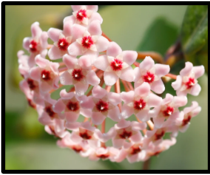
- About Hoya Dawodiensis: Family: Apocynaceae
- Genus: Hoya — a diverse group of tropical flowering plants
- Habitat: Found growing on streamside trees in the remote, biodiversity-rich Vijoynagar valley. The region lies along the Myanmar border and near Namdapha National Park.
- Key Features: Growth Form: A delicate, climbing plant.
- Flowers: Glossy, white, star-shaped blooms arranged in clusters.
- Flowering Period: Late September to November.
- Conservation Status: Classified as Critically Endangered (IUCN)|
- Only 3–4 individual plants are currently known in the wild.
- Major Threat: Habitat pressure from shifting cultivation in the area. - Additional Findings: Hoya yingjiangensis has been recorded for the first time in India.
- Hoya nummularia has been documented for the first time in Arunachal Pradesh.
- Bioremediation Method: Recently, the Hyderabad Metropolitan Development Authority (HMDA) proposed an advanced in-situ bioremediation technique to restore the water quality of Hussain Sagar Lake.
- About Bioremediation Method: The process uses enzyme solutions and Bokashi balls to activate beneficial microorganisms that naturally degrade pollutants.
- Objectives: Remove foul odour, Control algal growth, Improve water and sediment quality, Enhance dissolved oxygen levels and Restore the lake’s ecological balance
- About Bokashi Balls: Bokashi balls are tennis-ball-sized organic spheres packed with Effective Microorganisms (EM) for treating polluted water.
- How They Work: They sink to the bottom and slowly break apart, releasing EM cultures directly into the sediment.
- Benefits: Microbes break down organic sludge
- Neutralise harmful substances
- Reduce foul odours and anaerobic decomposition
- Fujiwhara Effect: Recently, global weather models signalled the development of two cyclonic storms in the Bay of Bengal, raising the possibility of a rare Fujiwhara interaction that greatly complicates cyclone forecasting.
- About Fujiwhara Effect: A rare meteorological phenomenon in which two nearby cyclonic systems begin to rotate around a common centre due to interaction between their wind circulations.
- First described by Sakuhei Fujiwhara in 1921.
- Most often observed when cyclones in the tropical belt come within ~1,400 km of each other.
- Conditions Favouring: Both storms rotating counter-clockwise (Northern Hemisphere).
- Warm sea surface temperatures above 26°C that sustain convection.
- Low vertical wind shear, ensuring structural stability. - Key Features: Mutual Rotation: Both cyclones circle a common centre anti-clockwise, altering trajectory and speed.
- Energy Exchange: The stronger cyclone may draw momentum or moisture from the weaker one.
- Track Uncertainty: Steering winds become disrupted, making landfall and intensity predictions more difficult.
- Potential Stalling: Slower movement may increase rainfall duration and flood risk.
- Road Dust: Recently, road dust has surfaced as a significant source of PM₁₀ pollution in Indian cities, especially in the context of the NCAP target of reducing PM₁₀ levels by 40% by 2025–26.
- Consequences of Road Dust: Health Impacts: Continuous exposure to coarse and fine dust particles leads to more respiratory ailments and eye irritation. ICMR reports show increased OPD visits during high-pollution episodes.
- Ambient Air Pollution: Road dust accounts for 20–52% of PM₁₀ and 8–25% of PM₂.₅, worsening AQI and intensifying winter smog in metropolitan clusters.
- Heat Amplification: Bare verges and open soil surfaces raise local temperatures and promote dust resuspension. IPCC AR6 indicates that urban greening can lower heat by 2–4°C.
- Economic Losses: Pollution-related illness reduces labour productivity, contributing to an estimated 4% GDP loss (World Bank).
- Why Road Dust Reduction Matters: Largest PM₁₀ Source: With a 20–52% share across 17 surveyed cities, road dust control is essential for meeting NCAP targets and reducing premature deaths.
- Regional Necessity: Northern India’s high silt loads make dust suppression critical to stabilising urban air quality; for instance, Delhi records an average 47 g/m² silt load.
- Policy Priority: Nearly 64% of NCAP budget has already been allocated for dust mitigation measures.
- Capital Gains Account Scheme (CGAS): Recently, the Ministry of Finance issued the Capital Gains Accounts (Second Amendment) Scheme, 2025, introducing key changes to the Capital Gains Account Scheme (CGAS),
- About CGAS, 1988: Introduced in 1988 to help taxpayers claim exemptions on long-term capital gains.
- Under Section 54 of the Income Tax Act, capital gains must be reinvested within 3 years to avoid tax. When taxpayers cannot reinvest before the ITR filing due date, they may deposit the unutilised gains into CGAS.
- Deposits must be made before filing the income tax return.
- Money deposited in CGAS is treated as reinvestment, making the taxpayer eligible for exemption.
- Short-term capital gains are not eligible under this scheme.
- Second Amendment: Earlier, CGAS deposits were limited to public sector banks and a few older institutions.
- Now, 19 major private banks (all non-rural branches) can accept and maintain CGAS deposits.
- Non-rural means branches in locations with population ≥ 10,000 (2011 Census).
- The amended scheme formally includes electronic modes of deposit, such as:
UPI, IMPS, NEFT, RTGS, credit/debit cards, net banking, BHIM/Aadhaar Pay, etc.
- Pigeons: Recently, a study published in Science indicated that pigeons sense Earth’s magnetic field through tiny electrical currents produced in their inner ears.
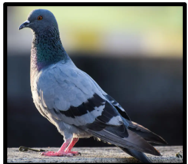
- Key Findings: Many animals like birds, insects, turtles, also detect magnetic fields for migration and locating feeding grounds.
- Researchers exposed six pigeons to a magnetic field slightly stronger than Earth's, with the birds’ heads immobilised.
- The magnetic field was rotated to simulate how a pigeon’s head would naturally move relative to Earth’s geomagnetic field.
- Scientists mapped brain activity and compared the results with pigeons not exposed to the magnetic field.
- Vestibular nuclei (brainstem region receiving input from the inner ear) were activated by magnetic fields.
- Signals travelled to: Mesopallium — integrates sensory information and Hippocampus — responsible for spatial navigation
- Single-cell sequencing revealed proteins in inner-ear cells that are sensitive to electromagnetic changes.
- Conclusion: When pigeons bob their heads, their inner-ear loops detect electric currents linked to Earth's magnetic field. This allows them to navigate long distances back to their home location.
- Assam Prohibition of Polygamy Bill, 2025: Recently, the Assam government tabled the Assam Prohibition of Polygamy Bill, 2025, which proposes strict penalties.
- Key Highlights: The Bill makes polygamy a criminal offence, with: Up to 7 years’ imprisonment + fine for entering into a second marriage while the first is valid.
- Up to 10 years’ imprisonment if the person hides an existing marriage.
- Punishment doubled for repeat offenders.
- Jurisdiction & Coverage: Applicable across Assam except Sixth Schedule areas.
- Does not apply to Scheduled Tribes under Article 342, whose customary laws permit multiple marriages.
- Covers residents of Assam entering polygamous marriages outside the State.
- Includes non-residents who own immovable property in Assam or receive State-funded benefits/subsidies.
- SC Over CCTV Non-Compliance: Recently, the Supreme Court strongly rebuked the Union government for not adhering to its 2020 order directing the installation of CCTV cameras in police stations and interrogation rooms of central agencies.
- Key Highlights: It has been five years since the 2020 judgment made CCTV installation mandatory in all police stations and central agencies with interrogation powers.
- Court expressed shock over continued custodial torture, citing 11 custodial deaths in 8 months in Rajasthan.
- Only 11 States/UTs have filed compliance reports; Centre has filed none.
- SG argued that CCTVs outside police stations may be counter-productive, citing security concerns.
- Court suggested open correction centres to reduce overcrowding and prison expenditure.
- 2020 Supreme Court judgment mandated CCTV and audio-video recording in:
- All police stations
- Offices of central investigative agencies (NIA, CBI, ED, NCB, DRI, SFIO, etc.)
- Any agency with interrogation and arrest powers
- CCTV installation aimed to safeguard the right to dignity and life and act as a deterrent to custodial torture.
 Detailed Solutions & Explanations

