2 Min Series 19 November 2025
19th November 2025
1. QS World University Rankings: Recently, India secured a major presence in the newly released QS World University Rankings: Sustainability 2026, with 103 universities making it to the global list.
-
Key Highlights: India has, 4th-highest universities after U.S., China, and U.K.
-
Rankings assess environmental & social sustainability, including environmental research, sustainability education, equality, employability, knowledge exchange, health & wellbeing.
-
Top 15 globally dominated by the U.K., Canada, Sweden, Australia, and the U.S.; Lund University (Sweden) ranked 1st.
-
IIT Delhi is India’s best performer at rank 205; India has 12 universities in the top 500, equal to China and the Netherlands.
-
Across all 103 Indian institutions: 30 declined, 32 improved, 15 unchanged.
-
Top global ranks for indicators: IIT Delhi (93rd) and IIT Kharagpur (96th) in Employability & Outcomes
-
University of Delhi at 94th for Knowledge Exchange
-
IIT Bombay 100th for Environmental Impact
-
Environmental Education is India’s strongest area; nearly half of Indian universities improved.
2. Ginkgo-Toothed Beaked Whale: Recently, researchers achieved a landmark scientific breakthrough by confirming, for the first time, sightings of the extremely elusive ginkgo-toothed beaked whale (Mesoplodon ginkgodens) in the wild.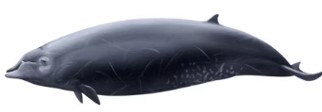
-
Key Findings: Researchers confirmed the species by collecting a tiny skin sample using a modified crossbow. Beaked whales are extremely elusive — deepest-diving mammals on Earth, surfacing only briefly and far from coasts.
-
Ginkgo-Toothed Beaked Whale: One of 24 beaked whale species, the second most diverse cetacean group after dolphins.
-
Known mostly from rare stranding records.
-
Both sexes grow up to 3 feet, weighing 1.5–3.6 tonnes.
-
Appearance: Robust body, fewer scars, small pointed flippers.
-
Males: Dark blue-black with white spots; Females: Mid-grey with paler belly.
-
Helps fill knowledge gaps about one of the least-known large animals on Earth.
-
Beaked whales are highly sensitive to military sonar, which can disrupt feeding and cause fatal rapid ascents.
3. Project Gaja-Lok: Recently, the Indian National Trust for Art and Cultural Heritage (INTACH) launched Project Gaja-Lok: Elephant Lands and their Cultural Symbolism in Asia.
-
About Project Gaja-Lok: Project aims to document culture–nature connections, highlighting elephants as symbols of wisdom, power, spirituality, and climate resilience across Asia.
-
Organised by INTACH’s Intangible Cultural Heritage (ICH) Division with participation from scholars, cultural experts, and conservationists.
-
What Gaja-Lok showcases: Exhibits trace elephants’ journey through Asian civilizations:
-
Indus Valley seals, Bharhut railings, Konark temple sculptures
-
Statues of Ganesha (India, Cambodia)
-
Thai, Sri Lankan, Southeast Asian elephant art
-
Mughal-era depictions, Panchatantra manuscripts, royal processions, temple festivals
-
Explores elephants in Arthaśāstra, Buddhist and Jain traditions, royal courts, and temple iconography.
-
About INTACH: A leading national organisation working for the conservation of natural, cultural, tangible, intangible, and living heritage in India.
4. Antimicrobial Resistance (NAP-AMR) 2.0: Recently, the Union government unveiled the National Action Plan on Antimicrobial Resistance (NAP-AMR) 2.0.
-
About AMR: A major public health threat, especially affecting surgeries, cancer care, and critical treatments.
-
Overuse and misuse of antibiotics is widespread; NAP-AMR 2.0 aims to correct gaps from the first plan.
-
Key focus areas: Greater ownership of AMR-related initiatives
-
Stronger inter-sectoral coordination
-
Increased private sector engagement
-
Enhanced laboratory capacity
-
Improved infection-control systems in healthcare facilities
-
AMR has serious health, political, and economic implications, leading to delayed treatment, increased spread of resistant microbes, and higher healthcare costs for families and society.
5. Digital Personal Data Protection: Recently, the government notified the Digital Personal Data Protection (DPDP) Rules, 2025, with a separate section for persons with disabilities (PwDs).
-
Key Highlights: Earlier draft rules had clubbed PwDs with children for guardian-based consent; activists called this “infantilisation.”
-
DPDP Act, 2023 still uses clubbed language, grouping children and PwDs together.
-
New rules remove child-specific restrictions (behavioural monitoring, tracking, targeted ads) from applying to PwDs.
-
However, PwD Section in rules lacks illustrations or scenarios, unlike the children’s section.
-
Surveys cited by Saksham show low awareness among PwDs about which law governs their guardianship.
-
Notified rules still reference both laws; activists highlight contradiction.
-
Rules define “designated authority” under RPWD Act, yet include physical disabilities where guardianship is not provided under RPWD — creating ambiguity.
6. Dugongs: Recently, a new global report released at the IUCN World Conservation Congress in Abu Dhabi raised alarms about the rapidly declining population of dugongs, also known as sea cows, in Indian waters.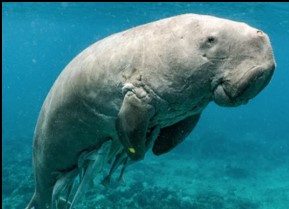
- About Dugongs: Found mainly in the Gulf of Kutch, Gulf of Mannar–Palk Bay, and the Andaman & Nicobar Islands.
- Marine mammals resembling manatees, believed to have inspired mermaid legends.
- Herbivorous—depend entirely on seagrass meadows; adults grow up to 10 ft and 420 kg.
- Need 30–40 kg of seagrass daily; live in shallow, calm coastal waters.
- Global IUCN Red List: Vulnerable; In India: Schedule I of Wildlife (Protection) Act—highest protection.
- Their grazing maintains healthy seagrass meadows, preventing overgrowth.
- Support carbon storage in sediments — crucial for climate regulation.
- Enhance nutrient cycling, boosting fish and shellfish productivity.
7. YUVA AI for ALL: Recently, the Ministry of Electronics and Information Technology (MeitY), under the IndiaAI Mission, launched ‘YUVA AI for ALL’.
-
About YUVA AI for ALL: Initiative under MeitY and the IndiaAI Mission; goal is to empower 1 crore (10 million) Indians with foundational AI knowledge.
- Course duration: 5 hours, self-paced, simple, practical, and filled with Indian real-life examples.
- Available free on FutureSkills Prime, iGOT Karmayogi, and major ed-tech platforms; includes an official Government certificate.
- What learners get (6 modules): Understand what AI is and how it works
- Learn how AI is transforming education, creativity, and work
- Guidance on safe, ethical, and responsible AI use
- Explore real-world AI applications from India
- Insights into future AI opportunities
- Implementation & Partnerships: Schools, colleges, and organisations can partner with IndiaAI to expand coverage.
8. Public Distribution System (PDS): Recently, the Union Ministry of Food and Public Distribution launched a series of digital initiatives aimed at modernising warehousing systems, strengthening the Public Distribution System (PDS), and enhancing transparency for crores of beneficiaries.
-
Key Initiatives: Launched ASHA (Anna Sahayata Holistic AI Solution) — an AI-driven platform for real-time beneficiary feedback on ration distribution.
- Through AI-enabled multilingual calls, beneficiaries can report entitlement received, grain quality, and issues at Fair Price Shops.
- System powered by multilingual translation, sentiment analysis, automated grievance sorting, and real-time dashboards for administrators.
- Reaches 20 lakh beneficiaries per month; developed with Wadhwani Foundation and supported by IndiaAI (Bhashini).
- Supports the government’s focus on reducing logistics costs, faster movement of goods, and integrated planning under PM Gati Shakti.
- Central Warehousing Corporation launched Bhandaran 360, an ERP integrating 41 operational modules (HR, finance, marketing, warehouse management, contracts, projects, etc.).
- Two more digital systems launched:
-
Smart EXIM Warehouse System for container freight stations and general warehouses
-
ANNA DARPAN, a microservices-based platform replacing the Depot Online System
-
ANNA DARPAN integrates procurement, storage, movement, sales, quality checks, labour management, and contract monitoring — forming a single unified data backbone for FCI and DFPD.
9. New Kind of Magnetism: Recently, scientists discovered a new kind of magnetism in a rare-earth compound that could revolutionise quantum and spintronic technologies.
-
Key Highlights: Breakthrough achieved in neodymium nitride (NdN) thin films grown as single-crystalline structures.
- Unlike conventional magnets where magnetism comes from electron spin, NdN shows ferromagnetism driven by orbital angular momentum — a major paradigm shift.
- This opens the field of “orbitronics”, which uses orbital motion of electrons for faster, energy-efficient magnetic and quantum devices.
- Discovery reveals how crystal symmetry, electronic hybridization, and rare-earth orbital states stabilize this unique orbital-based magnetism.
- NdN thin films show: Ferromagnetic hysteresis
- Could lead to next-generation quantum information, memory devices, ultra-low energy electronics.
- Breakthrough is significant amid global race for rare-earth materials; neodymium magnets are strategic in clean-energy systems, EVs, wind turbines, and defence tech.
- India holds ~8% of global rare-earth reserves, positioning it strongly for future materials innovation.

 Detailed Solutions & Explanations