2 Min Series 18 November 2025
18th November 2025
- Sentinel-6B Satellite: Recently, the Sentinel-6B satellite, the newest addition to a long-running international ocean-monitoring program, was successfully launched from the Vandenberg Space Force Base in California.
- About Sentinel-6B: Developed jointly by NASA, NOAA, and the European Space Agency (ESA).
- Designed to deliver high-precision measurements of global sea-level rise and its far-reaching impacts.
- Equipped with six advanced scientific instruments.
- Orbits Earth at 2 km/s, completing one orbit in 112 minutes.
- Data will improve: Weather forecasting
- Storm & flood prediction
- Coastal protection planning
- Safety of undersea pipelines & cables
- Shipping operations
- Part of a long series of satellites monitoring sea level since the 1990s.
- Works alongside its twin Sentinel-6 Michael Freilich (operational since 2020).
- Together, they provide sea-level measurements accurate to ~1 inch across 90% of the world’s oceans.
- Adam Chini Rice: Recently, BHU scientists successfully revived the aromatic black rice Adam Chini using mutagenesis, making it shorter, faster-maturing, higher-yielding, and still retaining its trademark aroma.
- About Adam Chini Rice: A traditional, aromatic, short-grained black rice from Eastern Uttar Pradesh.
- Known for its sugar crystal–like grains, strong fragrance, and excellent cooking quality.
- Cultivated mainly in Chandauli, Varanasi, Mirzapur, and Sonbhadra—the Vindhyan foothill agro-ecosystem.
- GI Tag: Awarded GI status on 22 February 2023 (valid till November 2030).
- Key Characteristics: Short, bold, aromatic grains with strong natural fragrance.
- Drought-tolerant and disease-resistant, suited to Eastern UP’s semi-arid climate.
- Intermediate amylose → soft, flavourful cooked texture.
- Traditional type: tall (165 cm), long-duration (155 days), low-yielding (20–23 q/ha).
- AJEYA WARRIOR Exercise: Recently, the eighth edition of the India–UK Joint Military Training Exercise ‘AJEYA WARRIOR-25’ commenced at the Foreign Training Node, Mahajan Field Firing Ranges in Rajasthan.
- About AJEYA WARRIOR Exercise: It is a bilateral training exercise between the armies of India and the UK.
- Conducted every two years since 2011 and now considered a key defence exercise.
- Exercise 2025: 2025 edition strengthens India–UK cooperation, professionalism & commitment to regional stability and global peace.
- Total 240 personnel, with equal participation from Indian Army & British Army.
- Indian Army represented by Sikh Regiment troops.
- Conducted under United Nations mandate.
- Focus: Counter-terrorism operations in semi-urban environments.
- Training includes: Brigade-level joint mission planning
- Integrated tactical drills
- Simulation-based scenarios
- Company-level field training replicating real-life contingencies
- Objective: Share best practices, enhance tactical proficiency & develop coordinated responses to complex operations.
- Foraminifera: Recently, a global scientific review identified 57 new living species of foraminifera, tiny marine organisms widely used in ocean research.
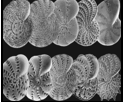
- About Foraminifera (forams): Single-celled marine organisms found in the open ocean, coastal waters, and estuaries.
- Most possess protective shells and are either:
- Planktonic — floating in the water column (only ~40 species), or
- Benthic — living on the sea floor (majority of the ~8,000 living species).
- They occupy diverse seabed habitats and move by crawling with pseudopodia.
- Generally <500 microns in size, though some tropical species can reach 20 cm.
- With no rigid cell wall, they are highly flexible and capable of changing shape.
- Meaning of “Foraminifera”: Their shells contain many tiny holes called foramen (Latin for “window”).
- Through these holes, the organism extends pseudopodia (false feet) to capture food.
- Smart Technological Solutions: Recently, Gati Shakti Vishwavidyalaya (GSV) and the Defence Research and Development Organisation (DRDO) signed a significant Memorandum of Understanding (MoU) to collaborate on developing smart technological solutions aimed at strengthening India’s national security.
- Key Highlights: Collaboration areas include: Logistics Management, Operational logistics at tactical, operational & strategic levels, Chip design & hardware security and Homomorphic / blockchain-based encryption
- Focus on capacity building of researchers & scientists in operational/military science, logistics, and technical research.
- Planned activities: Joint research, seminars, conferences, workshops, and round-table discussions.
- GSV already collaborates with Indian Army, Air Force & Navy for logistics and supply chain research.
- New MoU strengthens GSV’s role in cutting-edge defence research.
- GSV: India’s first university dedicated to transportation & logistics; Central University under Ministry of Railways (est. 2022).
- Covers full transport ecosystem: Railways, Highways, Ports, Aviation, Maritime, Shipping, Inland waterways, Urban transport & logistics networks.
- LPG Import: Recently, the Minister of Petroleum and Natural Gas announced that Indian public sector oil companies have concluded the country’s first major structured LPG import contract with the United States.
- Key Highlights: Indian PSU oil companies sign a one-year structured contract to import ~2.2 MTPA LPG from the US Gulf Coast for 2026.
- This volume equals ~10% of India’s annual LPG imports.
- Marks the first structured US LPG contract for the Indian market.
- Contract negotiations followed a visit by officials from IOCL, BPCL & HPCL to the US (21–24 July 2025).
- Purchases benchmarked to Mont Belvieu prices, the global hub for LPG pricing.
- India continues diversification of LPG sources to secure affordable & reliable supply.
- Under PM Modi’s leadership, PSU companies maintained LPG availability at lowest global prices for households.
- Despite >60% surge in global LPG prices last year, Ujjwala beneficiaries received cylinders at ₹500–550, while actual cost exceeded ₹1100.
- Government absorbed ₹40,000+ crore subsidy burden to protect families, especially women.
- New 2026 sourcing deal strengthens India’s energy security and supports affordable clean cooking fuel access.
- Pumped Storage Projects (PSPs): Recently, the Ministry of Power convened a meeting of the Consultative Committee of Members of Parliament to review the status and future trajectory of Pumped Storage Projects (PSPs) across the country.
- About PSPs: Highlighted as crucial for storing surplus green power and supplying electricity during non-solar hours.
- Floating solar suggested as a solution to reservoir evaporation losses.
- States play a pivotal role: site & water allocation, faster clearances, and removal of charges like green energy cess, water tax, and reservoir lease fees.
- 224 GW PSP potential identified across India.
- 10 PSPs (≈7 GW) commissioned
- 10 PSPs (≈12 GW) under construction
- 56 PSPs (≈78 GW) in planning & development
- Key Government initiatives to accelerate PSP development: Guidelines for PSP development
- Exemption from free power & LADF obligations
- 25-year ISTS charge waiver for projects awarded by 30.06.2028
- Budgetary support for enabling infrastructure
- Renewable Consumption Obligations for storage systems
- Off-stream closed-loop PSPs exempted from CEA concurrence
- United Nations Convention against Cybercrime: Recently, the Supreme Court asked the Central Government to decide whether India should ratify the United Nations Convention against Cybercrime.
- About United Nations Convention against Cybercrime: Adopted by the UN General Assembly (UNGA) in December 2024 to boost global cooperation against cybercrime.
- Aims to enhance international collaboration, improve prevention strategies, and support capacity-building, especially for developing nations.
- Will come into force 90 days after 40 countries ratify it.
- India has not signed the treaty yet.
- It is the first universal, legally binding global instrument dedicated to strengthening collective cybercrime defences.
- Drafted and developed by the UN Office on Drugs and Crime (UNODC).
- Pseudomonas Aeruginosa: Recently, a new study confirmed that roundworms (C. elegans) can pass on learned avoidance of the deadly bacterium Pseudomonas aeruginosa PA14 to their descendants.
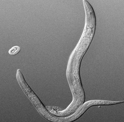
- Key Findings: Earlier studies had conflicting results; this study was an independent replication using the same protocol to resolve the disagreement.
- Worms were trained for 24 hours on PA14, and their behaviour—and that of their next two generations—was tested.
- Choice assay used: worms chose between harmless coli (OP50) and pathogenic PA14; sodium azide was used to freeze worms instantly at their first choice.
- Naïve worms were initially attracted to PA14; trained worms strongly avoided it.
- Importantly, their descendants (F1 & F2)—who never encountered PA14—also showed increased avoidance, though the effect weakened each generation.
- The inherited avoidance remained statistically significant up to the second generation, under tightly controlled conditions.
- Findings highlight that microbial signals (including small RNAs) can imprint heritable behavioural changes in worms.
- A comparison article emphasized that reliable claims of transgenerational inheritance require strict, reproducible protocols.
- Studies using alternate immobilization methods (like cooling instead of azide) failed to detect these effects, suggesting methodology strongly influences outcomes.
 Detailed Solutions & Explanations

