1. Maitri II: Recently, the Finance Ministry approved the establishment of Maitri II, India’s newest Antarctic research station, to be built in eastern Antarctica.
About Maitri II Station: Maitri II will serve as India’s latest and largest research base on the icy continent, designed with a strong focus on sustainability and green technology.
- Renewable Energy Integration: The station will rely on solar energy during summer and wind power to harness strong Antarctic winds for continuous operations.
- Automated Systems: Equipped with automated instruments to record and transmit scientific data to India, even during unmanned periods.
- Completion Timeline: The construction is expected to be completed by January 2029.
- Nodal Agency: The project is led by the National Centre for Polar and Ocean Research (NCPOR) under the Ministry of Earth Sciences (MoES), which manages India’s polar missions.
2. Van Rakshak Project (VRP): Recently, a report by the Wildlife Trust of India (WTI) highlighted the crucial role of India’s forest protectors, or Van Rakshaks, in safeguarding the nation’s wildlife and ecosystems.
About VRP: Also known as the “Guardians of the Wild”, the Van Rakshak Project is a flagship initiative of WTI, launched in 2000, to strengthen and support India’s frontline forest staff.
Aim: To build a strong, well-equipped, and motivated force of forest personnel dedicated to protecting wildlife and their habitats within India’s Protected Areas (PAs).
Van Rakshaks: They are forest rangers and frontline staff responsible for the protection of over 1,100 protected areas and numerous other natural habitats across India.
Key Features of the Project: Four Core Areas of Focus:
- Training – on wildlife crime prevention, human-wildlife conflict mitigation, and rescue operations.
- Equipping – provision of essential field gear for safety and patrolling.
- Awareness – promoting conservation ethics among forest personnel and local communities.
- Morale Boosting – through financial aid and public recognition.
Community Engagement: The initiative also focuses on empowering local and indigenous communities, recognizing their critical role on the frontlines of conservation.
3. Civil Registration System (CRS) Report 2023: Recently, the Vital Statistics of India based on the Civil Registration System (CRS) Report 2023 revealed that India recorded 2.52 crore births in 2023 — a decline of about 2.32 lakh compared to 2022.
Key Findings: The report, prepared by the Registrar General of India (RGI), also noted that 6 lakh deaths were registered in 2023, a slight increase from 86.5 lakh deaths in 2022.
Sex Ratio at Birth (2023): Lowest: Jharkhand (899), Bihar (900), Telangana (906), Maharashtra (909), Gujarat (910), Haryana (911), Mizoram (911)
Highest: Arunachal Pradesh (1,085), Nagaland (1,007), Goa (973), Ladakh & Tripura (972), Kerala (967)
Institutional Births: Share of institutional births: 74% in 2023 (data excludes Sikkim).
Overall birth registration:4%.
Timely Registration (within 21 days): Above 90%: Gujarat, Puducherry, Chandigarh, Dadra & Nagar Haveli and Daman & Diu, Tamil Nadu, Lakshadweep, Andaman & Nicobar Islands, Haryana, Himachal Pradesh, Goa, Punjab.
80–90%: Odisha, Mizoram, Maharashtra, Chhattisgarh, Andhra Pradesh.
50–80%: Assam, Delhi, Madhya Pradesh, Tripura, Telangana, Kerala, Karnataka, Bihar, Rajasthan, Jammu & Kashmir, Jharkhand, West Bengal, Meghalaya, Uttar Pradesh.
4. Virtual Museum of Stolen Cultural Objects: Recently, UNESCO unveiled the Virtual Museum of Stolen Cultural Objects during its MONDIACULT conference.
About Virtual Museum: This groundbreaking digital platform seeks to reconnect communities with their stolen cultural treasures.
- A Nataraja sculpture, depicting Lord Shiva in his cosmic dance.
- A Brahma sculpture, showing the creator god seated in lalitasana, with three visible faces and four arms holding sacred symbols such as a rosary and the Vedas.
5. National Critical Mineral Stockpile (NCMS): Recently, India began preparations to launch the National Critical Mineral Stockpile (NCMS) to secure the availability of rare earth elements (REEs) vital for clean energy, defense, and high-tech industries.
About NCMS: A strategic reserve of critical minerals vital for economic resilience and national security.
6. Indian wolf: Recently, the International Union for Conservation of Nature (IUCN) conducted, for the first time, a separate evaluation of the Indian wolf (Canis lupus pallipes).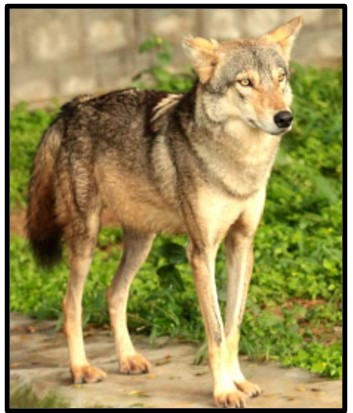
About Indian Wolf: A subspecies of the Grey Wolf, native to the Indian subcontinent and parts of Southwest Asia.
7. Blue Flag Certification: Recently, the prestigious international Blue Flag certification was awarded to five beaches in Maharashtra.
About Blue Flag Certification: The Blue Flag is a globally recognized eco-label granted by the Foundation for Environment Education (FEE), Denmark.
8. Operation Golden Sweep: Recently, the Directorate of Revenue Intelligence (DRI) launched Operation Golden Sweep, dismantling a transnational gold smuggling syndicate at Mumbai’s Chhatrapati Shivaji Maharaj International Airport.
About Operation Golden Sweep: A strategic intelligence-driven operation by the DRI, targeting an international gold smuggling network that used transit passengers and airport insiders to illegally transport gold into India.
Aim: To disrupt organized smuggling cartels, protect India’s economic security, and reduce illicit gold inflows that harm legitimate trade and drain foreign exchange reserves.
Key Features: Gold Seized:488 kg of 24-carat gold worth ₹12.58 crore.
Modus Operandi: Smugglers arriving from Dubai, Singapore, Bangkok, and Dhaka concealed gold in egg-shaped wax capsules inside their bodies.
Insider Nexus: Investigations exposed the involvement of airport personnel who facilitated the movement of contraband from secure zones — highlighting a serious insider threat within aviation infrastructure.
9. IUCN Kenton Miller Award: Recently, Sonali Ghosh, Director of Kaziranga National Park and Tiger Reserve, achieved a historic milestone by becoming the first Indian to be honoured with the prestigious IUCN Kenton Miller Award at the IUCN World Conservation Congress in Abu Dhabi.
Named After: Kenton R. Miller, a global pioneer in conservation and a former Director General of IUCN.
Established in: 2006
Presented by: The IUCN World Commission on Protected Areas (WCPA).
Purpose: To honor innovators who have made a significant, measurable impact on conservation and protected area management at local, national, or international levels.
Award Components: USD 5,000 grant
- International recognition by conservation peers
- Formal citation acknowledging their contribution
Award Categories: Recognizes innovations in:
- Planning and Management
- Finance and Economics
- Governance
- Assessment, Monitoring, and Evaluation
- Communication
 Detailed Solutions & Explanations
Improve Your Answer Writing & Strategy
Join 40,000+ UPSC Aspirants! 🚀
Get Free UPSC/State PSC Study Materials, Daily Current Affairs Question & Exam Updates.
Join Telegram Channel